southern italy

From Puglia to Calabria

Journey from heel to toe through southern Italy, from Puglia’s Baroque cities to Calabria’s ancient Greek sites.

TOUR STATUS

Places Available | Maximum 16

TOUR DATES

October 2-19, 2027 | 18 Days

TOUR LEADER

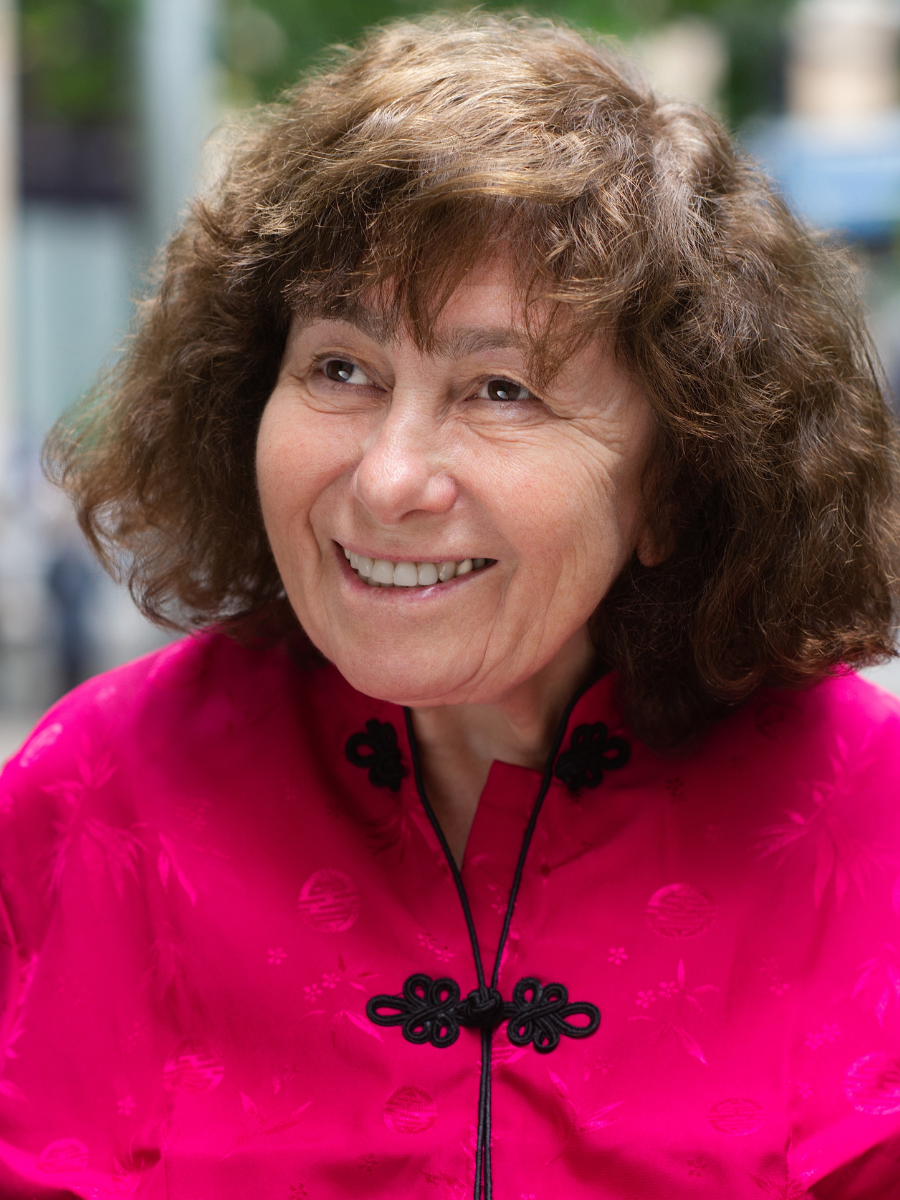
Dr Estelle Lazer | View Bio

snapshot

OVERVIEW

Southern Italy represents the most vibrant vestige of the classical Mediterranean. Along the coasts of this narrow peninsula, ancient writers counted so many Greek cities they spoke of Magna Graecia – “Great Greece” – and over the centuries that followed, Romans, Byzantines, Normans and Aragonese each built over what came before, leaving
a coastline layered with temples, fortresses and hill towns few travellers ever reach.

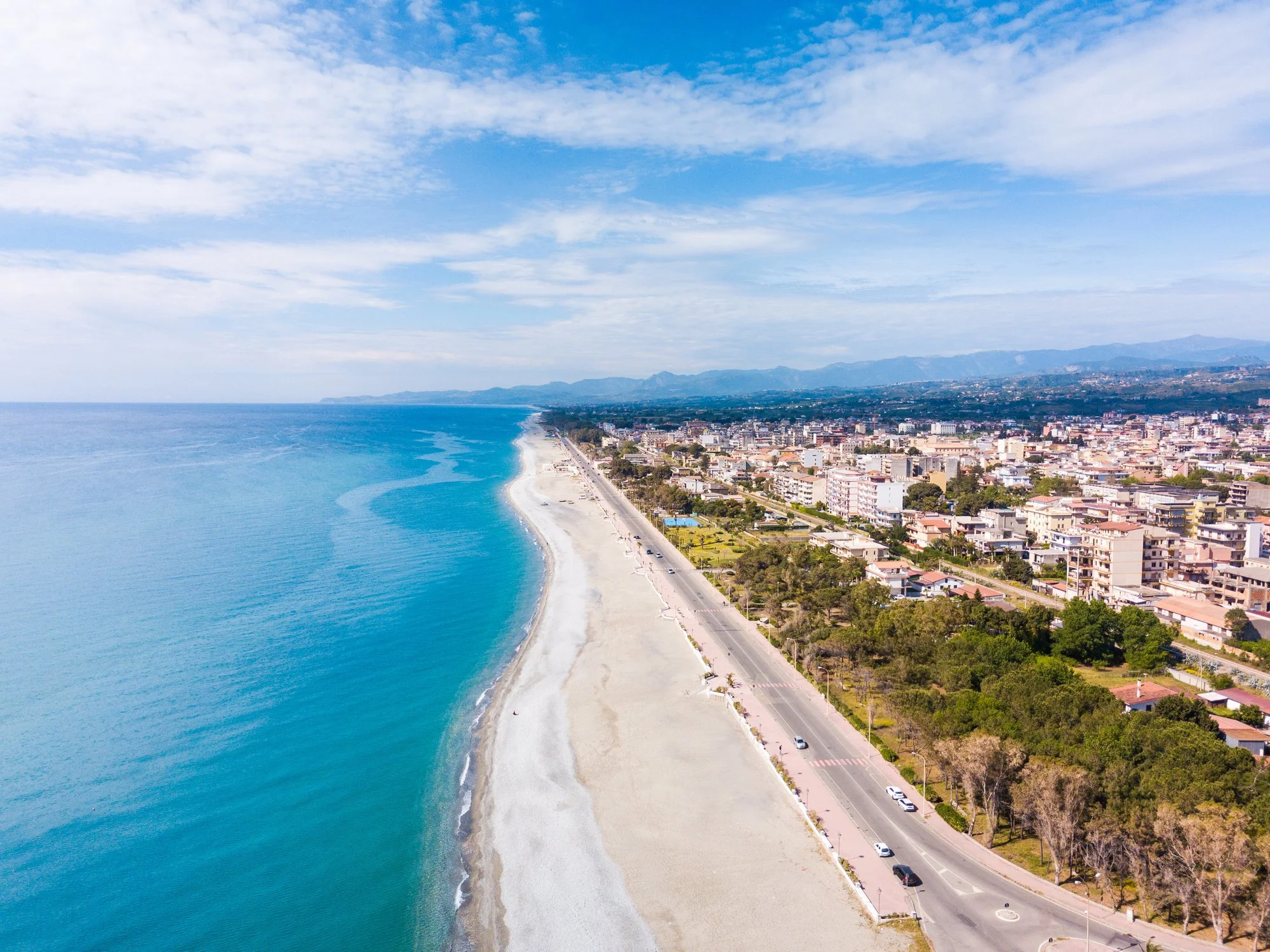
On this 18-day tour, world-renowned archaeologist Dr Estelle Lazer leads us along the full length of the Italian south from heel to toe: beginning in the Baroque splendour of Lecce in Puglia, crossing to the cave city of Matera, then following Calabria’s Ionian coast – through Byzantine Rossano, Greek Locri and ancient Scylletium – to Reggio Calabria, facing Sicily across the strait at the very tip of the toe.

It is a journey through Italy at its least travelled – from silver-green olive groves and villages where Greek is still spoken to the Riace Bronzes at the road’s end – with regional food and wine providing another window into the traditions of the south.

tour highlights

Discover the ancient Greek cities and medieval towns of Puglia, Basilicata and Calabria

Dr estelle lazer

your expert tour leader

Estelle is an Honorary Research Associate at the University of Sydney. Her work on the human victims from Pompeii has been published in academic journals and books, most notably, in an academic volume, Resurrecting Pompeii. Estelle’s research has been included in three documentaries over the past few years: Pompeii: New Secrets Revealed with Mary Beard for the BBC (and the Smithsonian and Arte), Pompeii’s Final Hours: New Evidence (a three-part series for Channel Five in the UK) and Pompeii: Secrets of the Dead for National Geographic.

Read full bio >

Accompanied by an Experienced Tour Manager

Alongside your expert tour leader, an experienced tour manager will accompany for the entirety of the tour. They oversee logistics, ensure your comfort and safety, and provide friendly support – whether offering tips for free time, sharing a chat over dinner, or giving you space to relax.

tour ITINERARY

Lecce (3 nights), Trani (3 nights), Matera (2 nights), Rossano (2 nights), Catanzaro (2 nights), Tropea (2 nights), Reggio Calabria (3 nights)

Included meals are shown with the letters B, L and D
  • Day 1 | Saturday 2 October
    Arrive
    For centuries, travellers bound for the East departed Rome along the Appian Way, the ‘Queen of Roads’, to its terminus at the port of Brindisi – and our journey south begins by retracing that route in a single evening. Meeting our tour leader and tour manager at Rome’s Fiumicino airport in the late afternoon, we take a short group flight to Brindisi, where a column near the harbour still marks the road’s end, before a coach transfer brings us to Lecce, our base in the heel of Italy’s boot. After checking into our hotel, we gather for a light dinner. Overnight Lecce (D)

  • Day 2 | Sunday 3 October
    Lecce
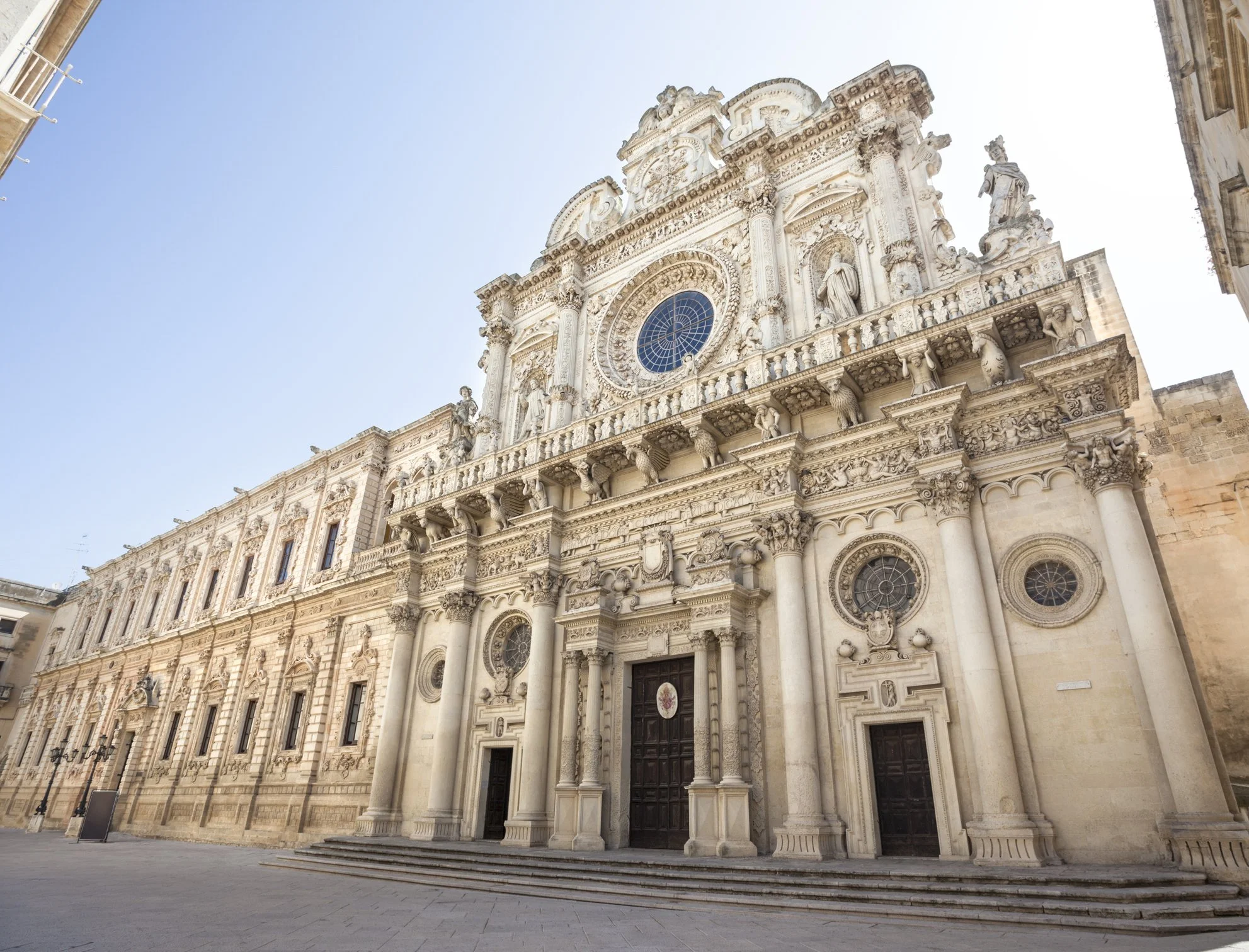
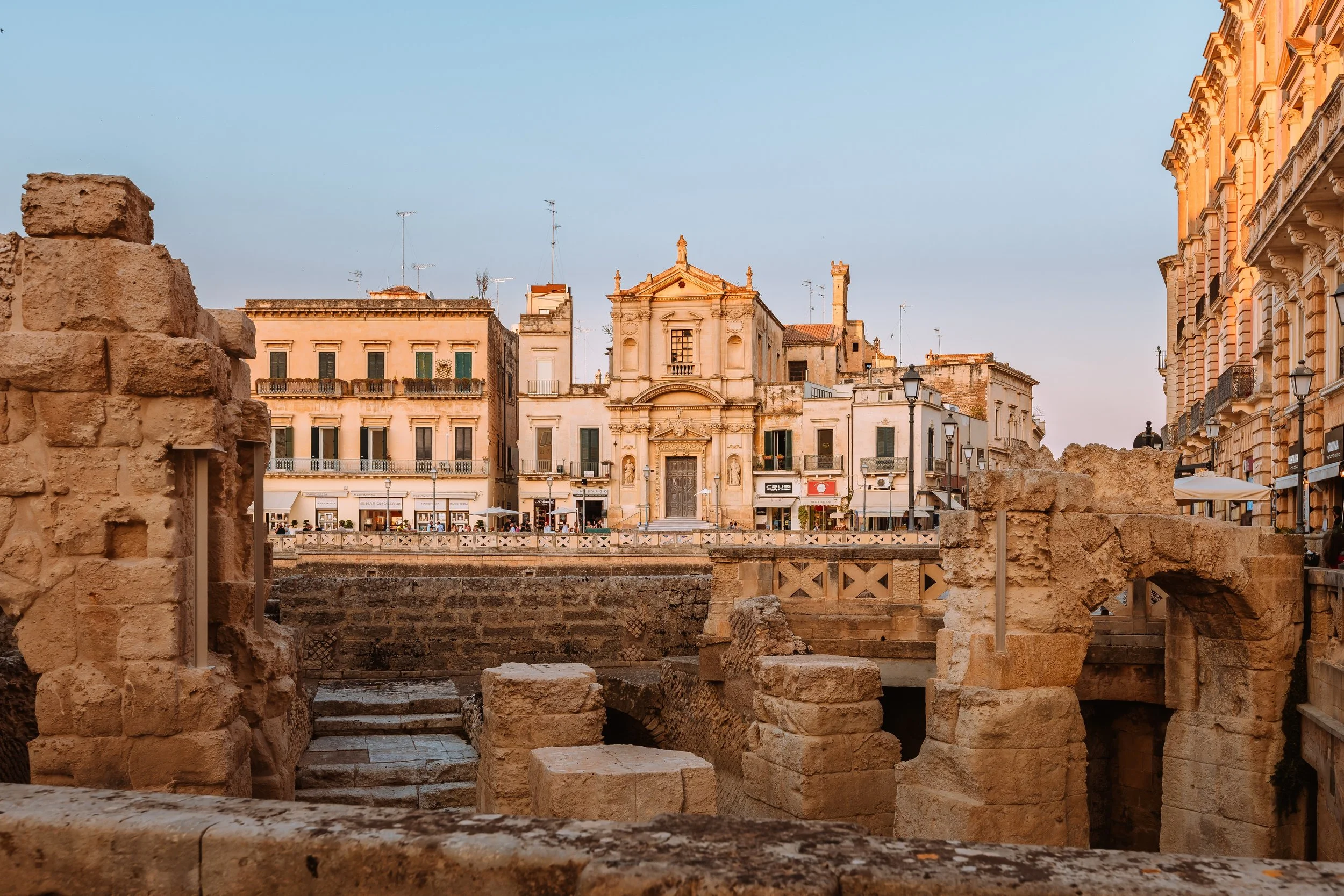
    In the 16th and 17th centuries, church wealth and a soft, easily carved local limestone combined to produce the ‘Southern Baroque’ – gargoyles, garlands and cavorting figures spilling across facades, in a style found nowhere else in Italy. After a talk in the hotel, our morning walking tour explores this theatrical city, taking in the Basilica of Santa Croce, whose sculpted facade is the style’s masterpiece, and the cathedral, transformed into a Baroque showpiece by the architect Giuseppe Zimbalo. The afternoon is then at leisure to explore Lecce’s lanes, courtyards and cafés independently before we reconvene this evening for our welcome dinner at a local restaurant. Overnight Lecce (B, D)

  • Day 3 | Monday 4 October
    Otranto & Galatina
    As Italy’s easternmost town, Otranto has always faced the Greek world – a frontier port whose history turned tragic in 1480, when Ottoman forces sacked the city and killed over 800 of its inhabitants. Our full-day excursion down the Salentine Peninsula begins inside Otranto’s walled centre at the 12th-century cathedral, where a remarkable mosaic pavement – a vast ‘tree of life’ teeming with biblical scenes, monsters and myths – spreads the length of the nave, and the crypt holds the bones of the martyrs of 1480. We also visit the Aragonese castle, whose ramparts command the port and old town. Lunch is enjoyed together at a local restaurant before we travel inland to Galatina and the Basilica of Santa Caterina, a 14th-century church whose walls are covered in a vivid fresco cycle blending Gothic and Byzantine traditions. We return to Lecce in the late afternoon, with the evening at leisure. Overnight Lecce (B, L)

  • Day 4 | Tuesday 5 October
    Alberobello
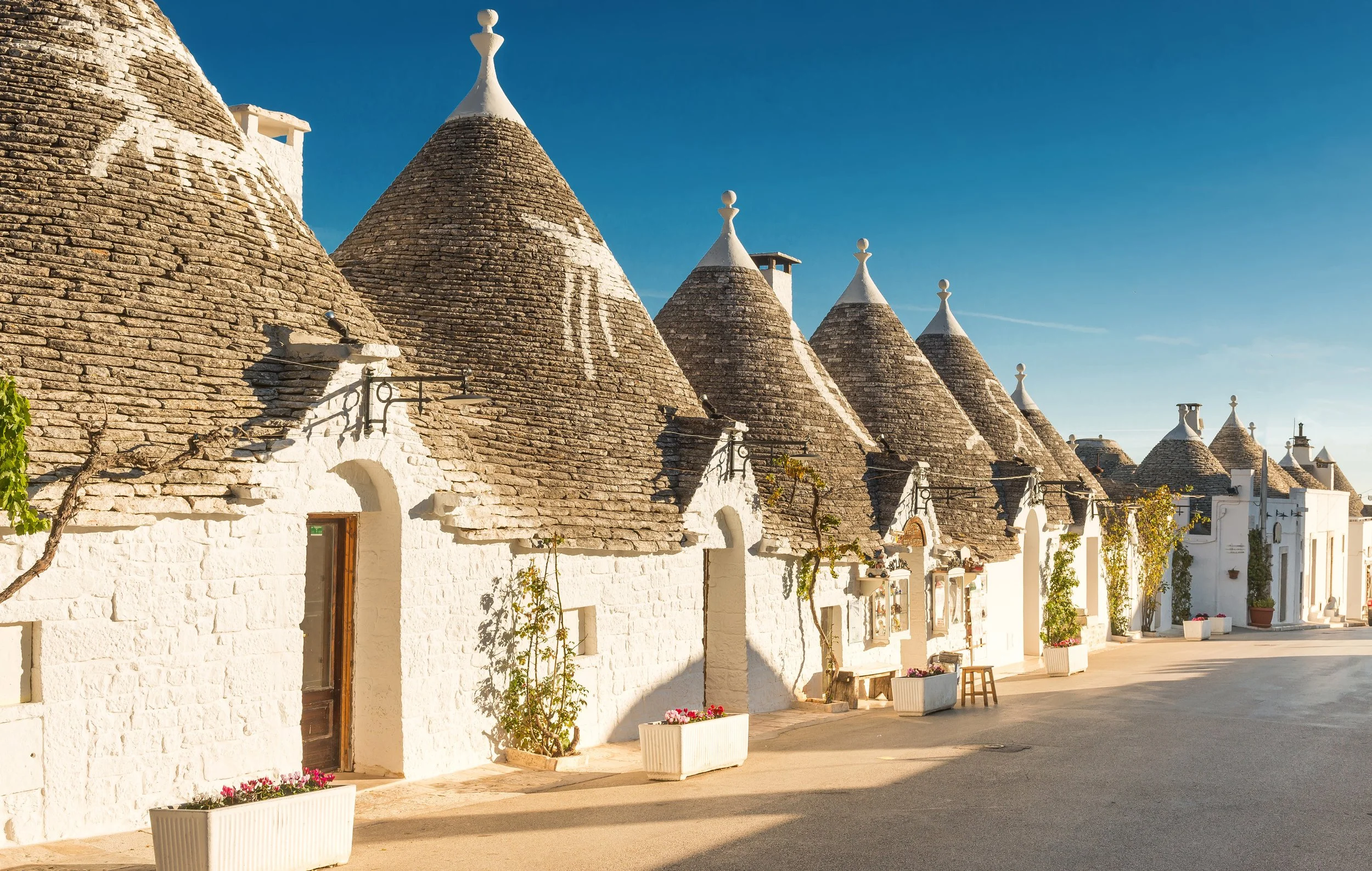
    The Itria Valley holds a townscape without parallel in Europe: Alberobello, where entire quarters are built of trulli – whitewashed drystone huts with conical roofs, raised in their thousands by peasant farmers and still inhabited today, now protected as a UNESCO World-Heritage site. Their origins remain debated, though tradition holds the mortarless construction let tenants dismantle their homes ahead of the tax collector. As we continue our journey north today, we pause first in Brindisi, the great embarkation port of antiquity and the Crusades, with time to explore the old town overlooking its harbour. We then travel into the Itria Valley to Alberobello, where there is free time for lunch before we wander the steep lanes of Rione Monti, lined with the distinctive limestone trulli for which the town is renowned. Later in the afternoon, we complete today’s journey to the Adriatic seaport of Trani, where we check into our hotel before reconvening for dinner at a renowned waterfront restaurant overlooking the harbour. Overnight Trani (B, D)

  • Day 5 | Wednesday 6 October
    Trani
    Medieval prosperity along the Adriatic was built on maritime trade, and few ports flourished quite like Trani. A thriving Jewish merchant community, commercial ties with the Levant and some of Europe’s earliest maritime statutes helped establish the town’s wealth, reflected today in one of Italy’s finest Romanesque cathedrals. Rising directly from the water’s edge, its pale limestone walls stand against the blue of the Adriatic. The cathedral is dedicated to St Nicholas the Pilgrim, a young Greek who arrived in Trani in 1094 chanting ‘Kyrie eleison’, died shortly afterwards and was acclaimed
    a saint by the townspeople. Built above an earlier church and crypt, it remains the defining monument of the harbour. This morning, a local guide introduces us to the cathedral and the surrounding old quarter, including the imposing waterfront fortress built by Emperor Frederick II in the 13th century. The day is then at leisure, perhaps for lunch overlooking the fishing harbour, a stroll through the seafront gardens or time exploring the old town independently. We reconvene in the early evening for a talk in the hotel. Overnight Trani (B)

  • Day 6 | Thursday 7 October
    Bari & Bitonto
    For more than nine centuries, pilgrims have travelled to Bari to venerate the relics of St Nicholas, the fourth-century bishop whose legend would eventually inspire the figure of Santa Claus. In 1087, sailors from Bari brought his remains from Myra in Asia Minor, and the great basilica built to house them became a defining example of Puglia’s Romanesque architecture. Today, his shrine remains an important place of pilgrimage for both Catholic and Orthodox Christians. Our full-day excursion begins in Bari, Puglia’s capital, where a local guide leads us through the narrow, winding streets of the old town to the Basilica of San Nicola and the nearby cathedral. After free time for lunch, we continue inland to Bitonto, whose remarkably preserved medieval centre is home to another of the region’s finest Romanesque cathedrals. Here, we admire the richly carved pulpit, elaborate rose window and elegant arcaded galleries that distinguish this outstanding example of Apulian architecture. Returning to Trani in the late afternoon, we gather at the hotel for a talk before an evening at leisure. Overnight Trani (B)

  • Day 7 | Friday 8 October
    Barletta & Castel del Monte
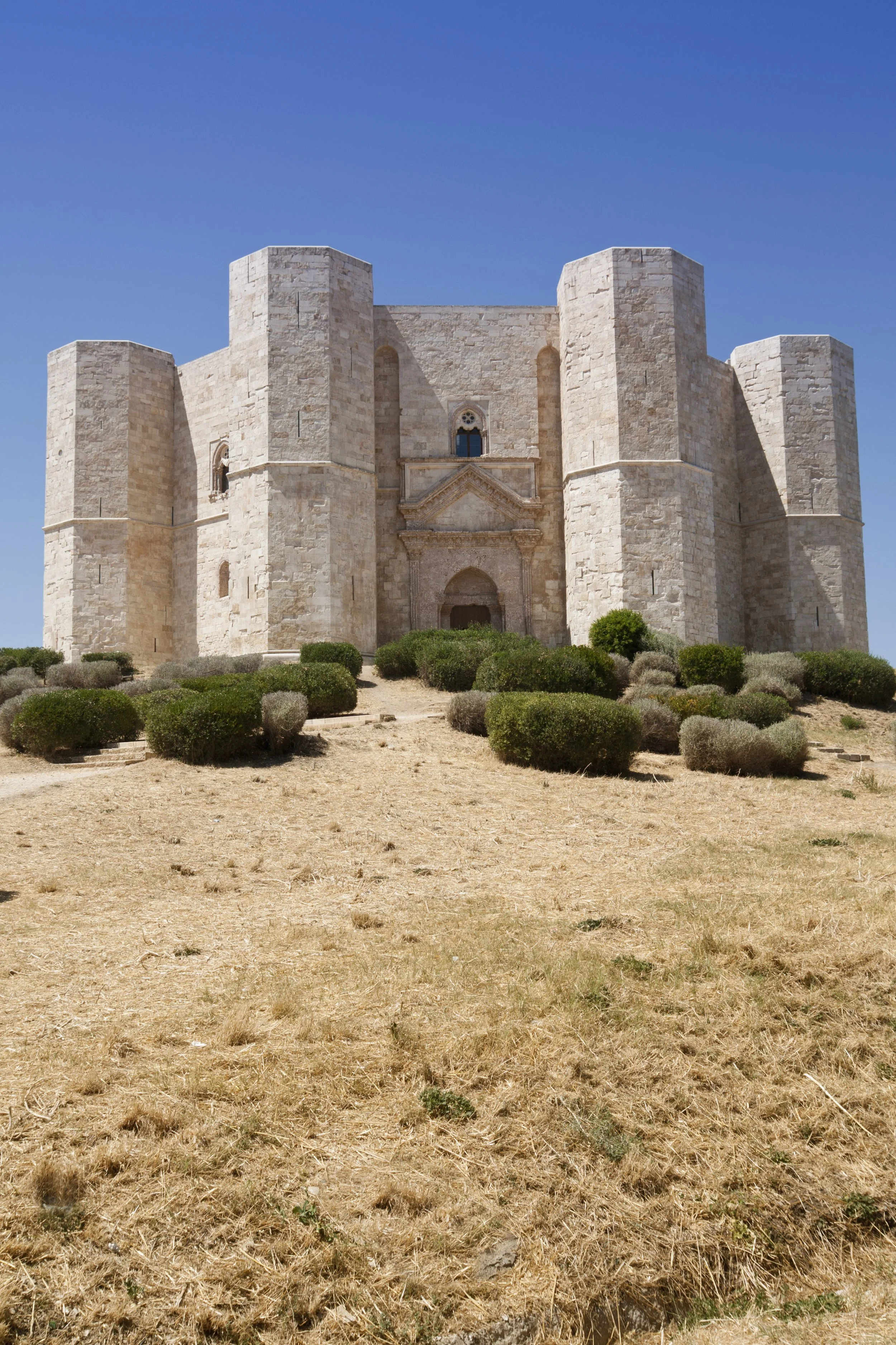
    Few medieval rulers have left a legacy as intriguing as Frederick II, Holy Roman Emperor and King of Sicily, celebrated by his contemporaries as stupor mundi – the ‘wonder of the world’. His court brought together scholars from the Latin, Greek, Arabic and Hebrew worlds, an intellectual curiosity reflected in the extraordinary architecture of Castel del Monte. Departing Trani this morning, we travel first to Barletta, where a local guide introduces us to the historic centre and the imposing Colossus of Barletta. Standing nearly three times life-size, this remarkable bronze statue of a late Roman emperor has watched over the town for centuries, although its identity and origins remain uncertain. We also explore the old quarter and its formidable medieval castle before we continue to the UNESCO World Heritage-listed Castel del Monte, built by Frederick II in the 13th century. Rising from an isolated hilltop, its striking octagonal plan, eight towers and precise geometric proportions combine classical, Islamic and Gothic influences. Whether conceived as a hunting residence, symbol of imperial authority or something more enigmatic, its original purpose remains a subject of debate. In the late afternoon, we cross into Basilicata and continue to Matera, where we check into our remarkable hotel occupying restored cave dwellings in the ancient Sassi district. Later in the evening, we gather for dinner at a local restaurant. Overnight Matera (B, D)

  • Day 8 | Saturday 9 October
    Matera
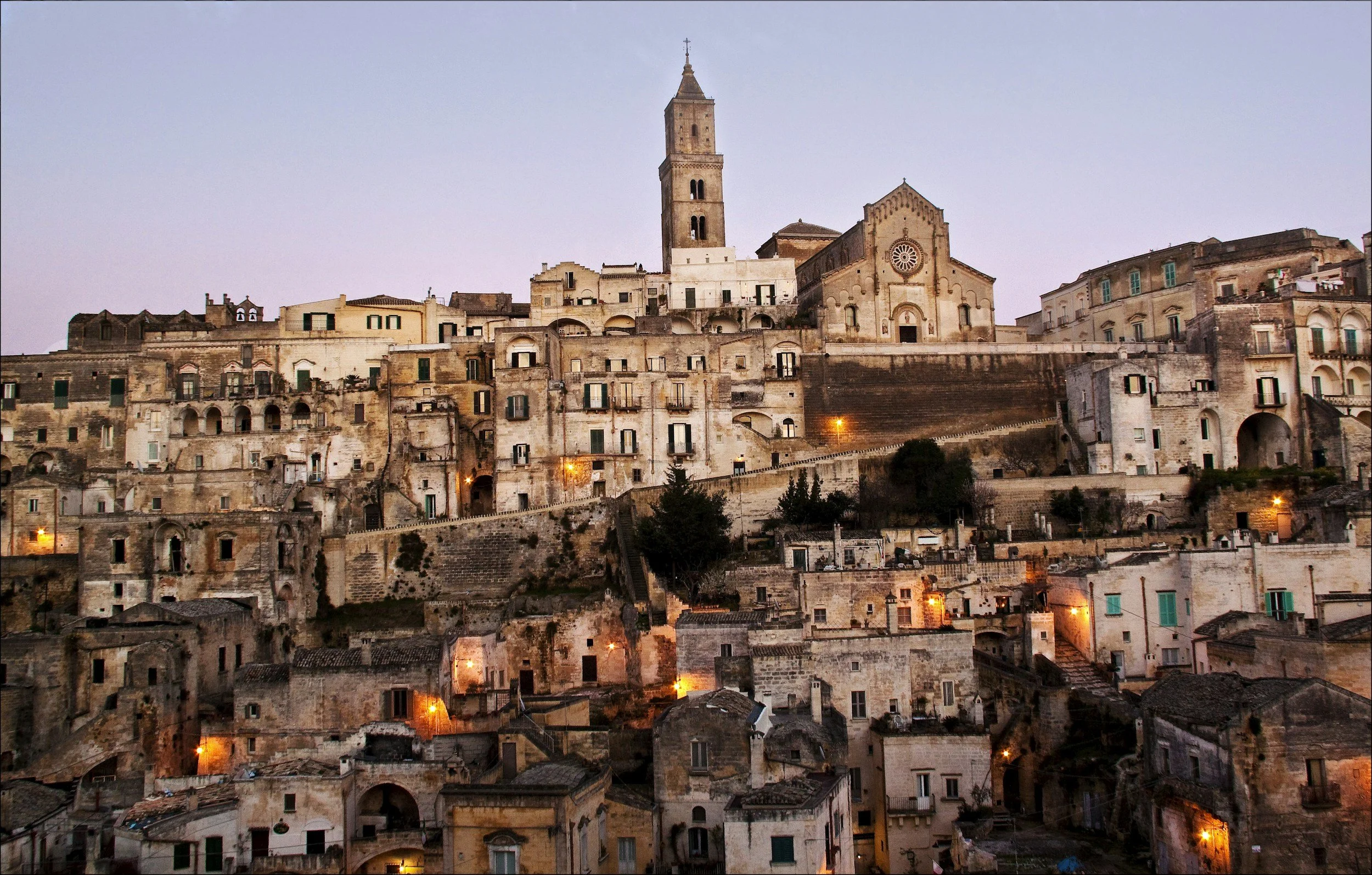
    Carved into the limestone slopes of a deep ravine, the ancient Sassi districts form one of the world’s oldest continuously inhabited settlements, with evidence of human occupation stretching back to prehistory. By the 1950s, however, overcrowding and poverty had led to the Sassi being declared a national disgrace, prompting the relocation of thousands of residents. Their remarkable transformation in the decades since culminated in its inscription on the UNESCO World-Heritage List in 1993, and today the restored cave dwellings house hotels, workshops and restaurants alongside centuries-old rock-cut churches adorned with Byzantine frescoes. This morning, we wander through the winding lanes and stairways of the Sassi, revealing a remarkable network of cave dwellings, underground cisterns and frescoed chapels that illuminate the daily lives of generations of inhabitants. The afternoon is then at leisure, perhaps to visit the Romanesque cathedral overlooking the ravine or wander the elegant streets and Baroque piazzas of the upper town. Overnight Matera (B)

  • Day 9 | Sunday 10 October
    Taranto
    Sparta founded only one colony in its history, and it became the greatest city of Magna Graecia: Taranto, famed across the ancient world for its purple dye, philosophers and goldsmiths. Under Archytas, the mathematician and friend of Plato who governed here in the 4th century BCE, it stood at the height of its power, and its archaeological museum ranks among the most important in Italy. Leaving Matera behind, we travel south for a guided visit to the museum, whose treasures include the famed gold of Taranto – diadems, earrings and funerary wreaths worked with a delicacy scarcely matched since. After a break for lunch, we continue down the Ionian coast into Calabria, following the great arc of the gulf where Greek ships once traded, and arrive at our hotel outside Rossano in the late afternoon. There is time to settle in before dinner at a local restaurant this evening. Overnight Rossano (B, D)

  • Day 10 | Monday 11 October
    Corigliano, Civita & Sybaris
    Calabria’s history has been shaped by successive periods of Greek settlement, Byzantine rule and Norman conquest, leaving a rich architectural and cultural legacy across its coastal towns and mountain villages. The Normans established a network of fortifications throughout the region, including the imposing Castello Ducale in Corigliano, which was gradually transformed from a military stronghold into an elaborate aristocratic residence. Our day begins with a guided visit to the castle before we continue into the foothills of the Pollino mountains to Civita, founded by Albanian refugees fleeing the Ottoman advance in the 15th century. Here, we explore its narrow lanes and distinctive case parlanti, or ‘talking houses’, whose windows and doorways resemble human faces. The village also preserves the Arbëreshë language and Byzantine religious traditions of its founders. Our next stop is the Archaeological Park of Sybaris, once among the wealthiest Greek colonies of Magna Graecia. Our visit takes us through the remains of three successive cities – Greek Sybaris, Hellenistic Thurii and Roman Copiae – including the Roman theatre, baths and streets, before examining finds from the site at its museum. On our return to Rossano, we conclude the day with dinner in our hotel. Overnight Rossano (B, D)

  • Day 11 | Tuesday 12 October
    Rossano
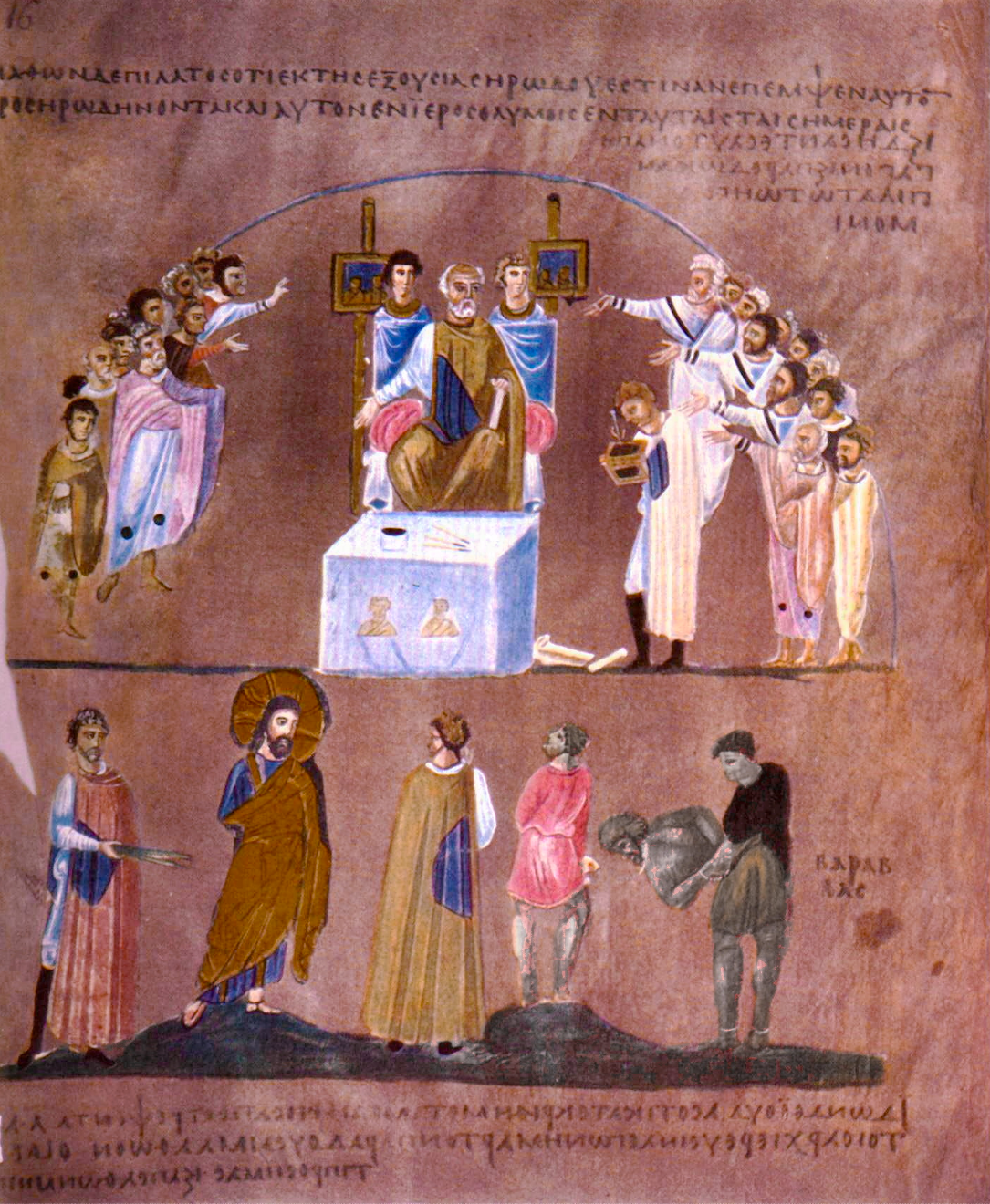
    During the centuries of Byzantine rule in southern Italy, Rossano emerged as an important centre of Greek religious life, renowned for its monasteries, churches and manuscript traditions. This heritage survives in the abbey church of Santa Maria del Patire, founded under Norman rule in the 12th century, where remarkable mosaic pavements depict griffins, lions and other creatures. Our morning begins with a visit to this historic church in the hills outside Rossano before returning to the town for a guided walking tour of its medieval centre. We then visit the Diocesan Museum to examine the extraordinary Codex Purpureus Rossanensis, a 6th-century Greek Gospel manuscript written in silver and gold ink on purple-dyed parchment. Among the earliest surviving illustrated manuscripts of the New Testament, it is recognised on UNESCO’s Memory of the World Register. After a break for lunch, we depart Rossano and continue south along Calabria’s Ionian coast to Catanzaro, arriving in the late afternoon. Dinner this evening is at our hotel. Overnight Catanzaro (B, D)

  • Day 12 | Wednesday 13 October
    Stilo & Scylletium
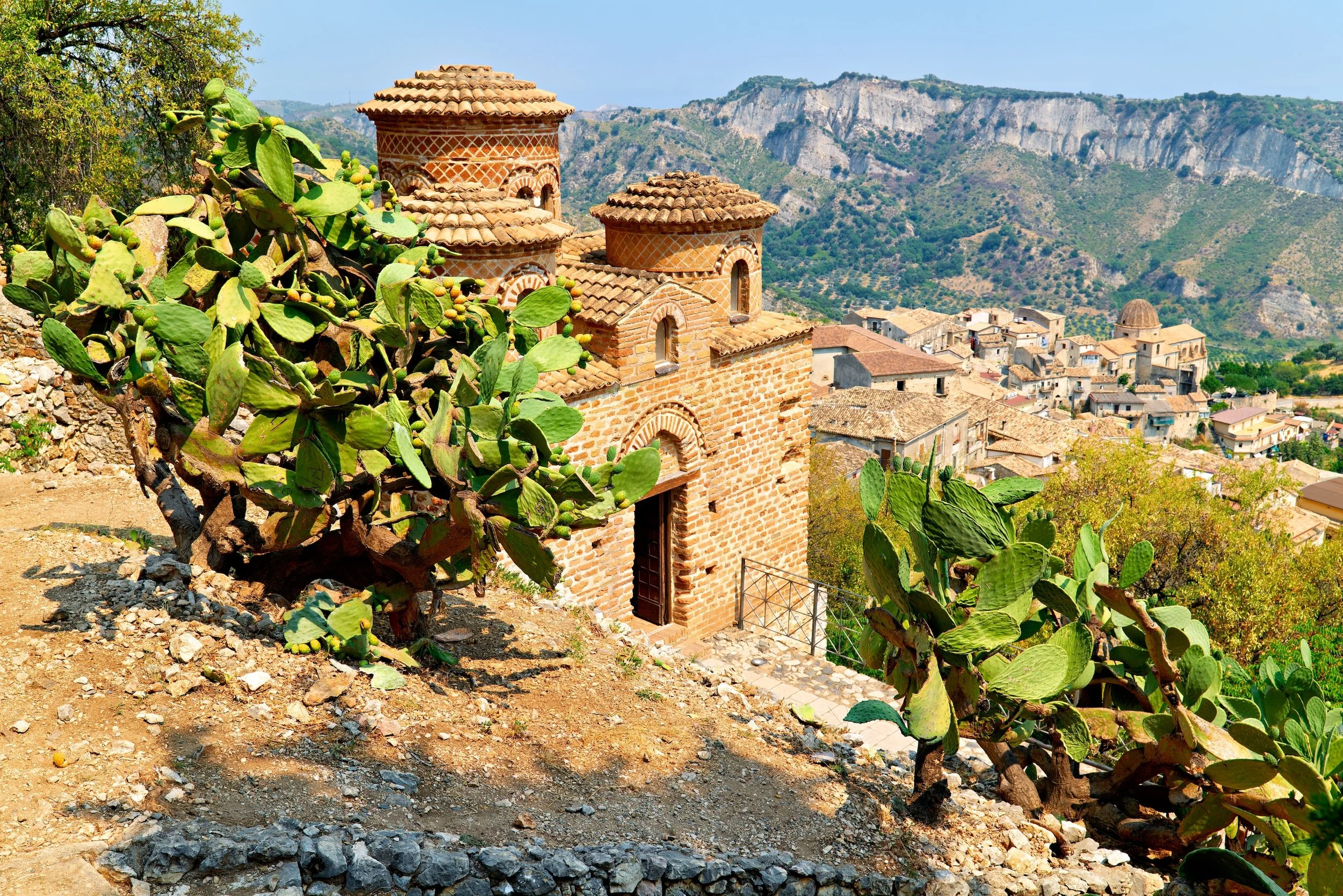
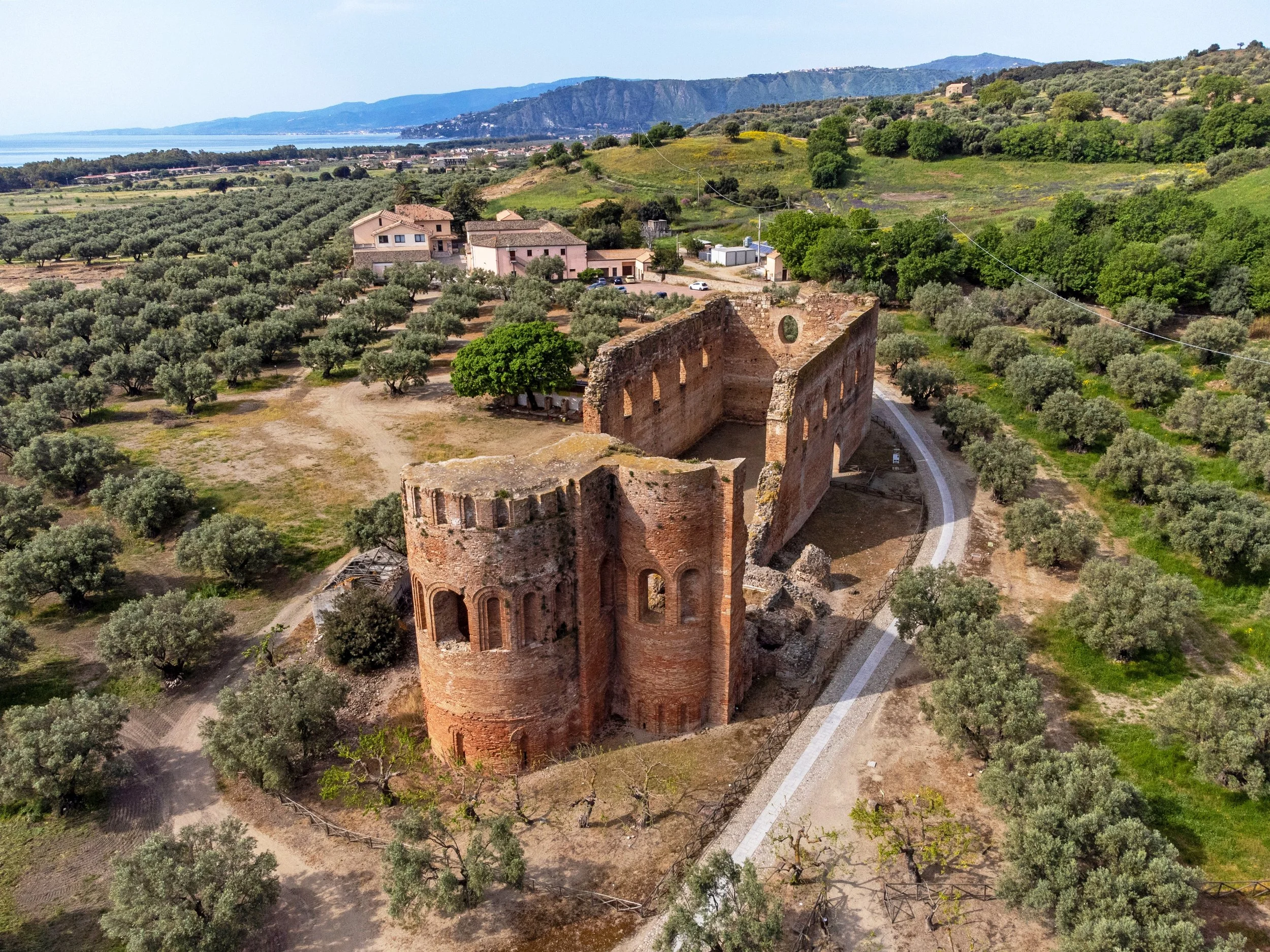
    Perched on the slopes of Monte Consolino, overlooking Calabria’s Ionian coast, Stilo preserves an important legacy of Byzantine religious life, particularly through its churches and monastic settlements. Our morning excursion takes us into the historic town, where we visit the Cattolica di Stilo,
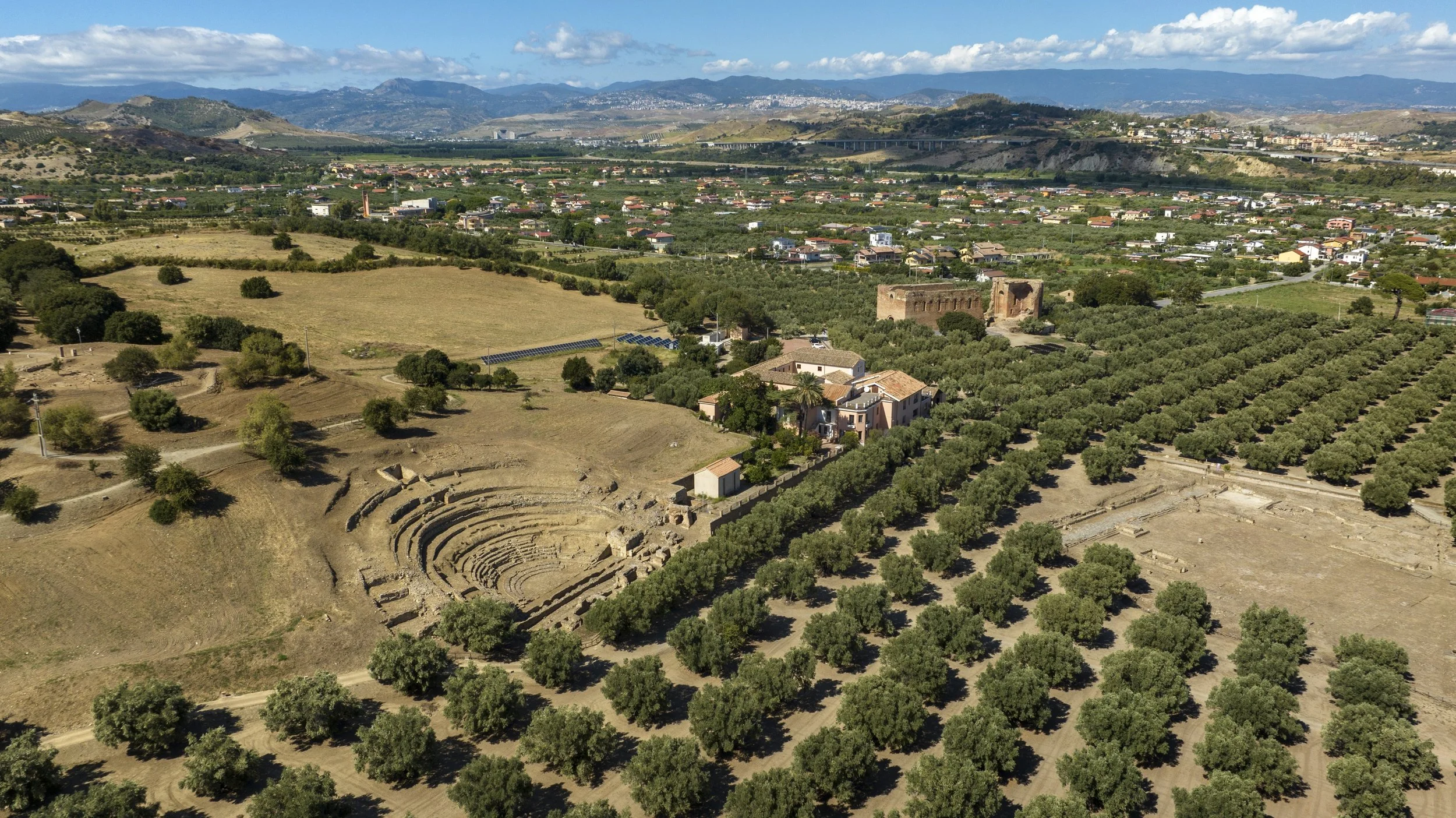
    a remarkable 10th-century Byzantine church crowned by five brick domes arranged in a cross-shaped plan. Inside, four columns divide the compact interior into nine bays, with surviving fragments of medieval frescoes decorating its walls. We also explore the town’s medieval streets and the rock-cut laure, or hermit caves, once occupied by Basilian monks. After a break for lunch, we continue to the Scolacium Archaeological Park, where the remains of ancient Scylletium lie scattered among centuries-old olive trees. Originally a Greek settlement and later a Roman colony, the site preserves the remains of a forum and theatre, alongside the imposing ruins of Santa Maria della Roccella, a monumental Norman basilica. After exploring the site, we return to Catanzaro in the late afternoon, with the evening at leisure. Overnight Catanzaro (B)

  • Day 13 | Thursday 14 October
    Locri & Gerace
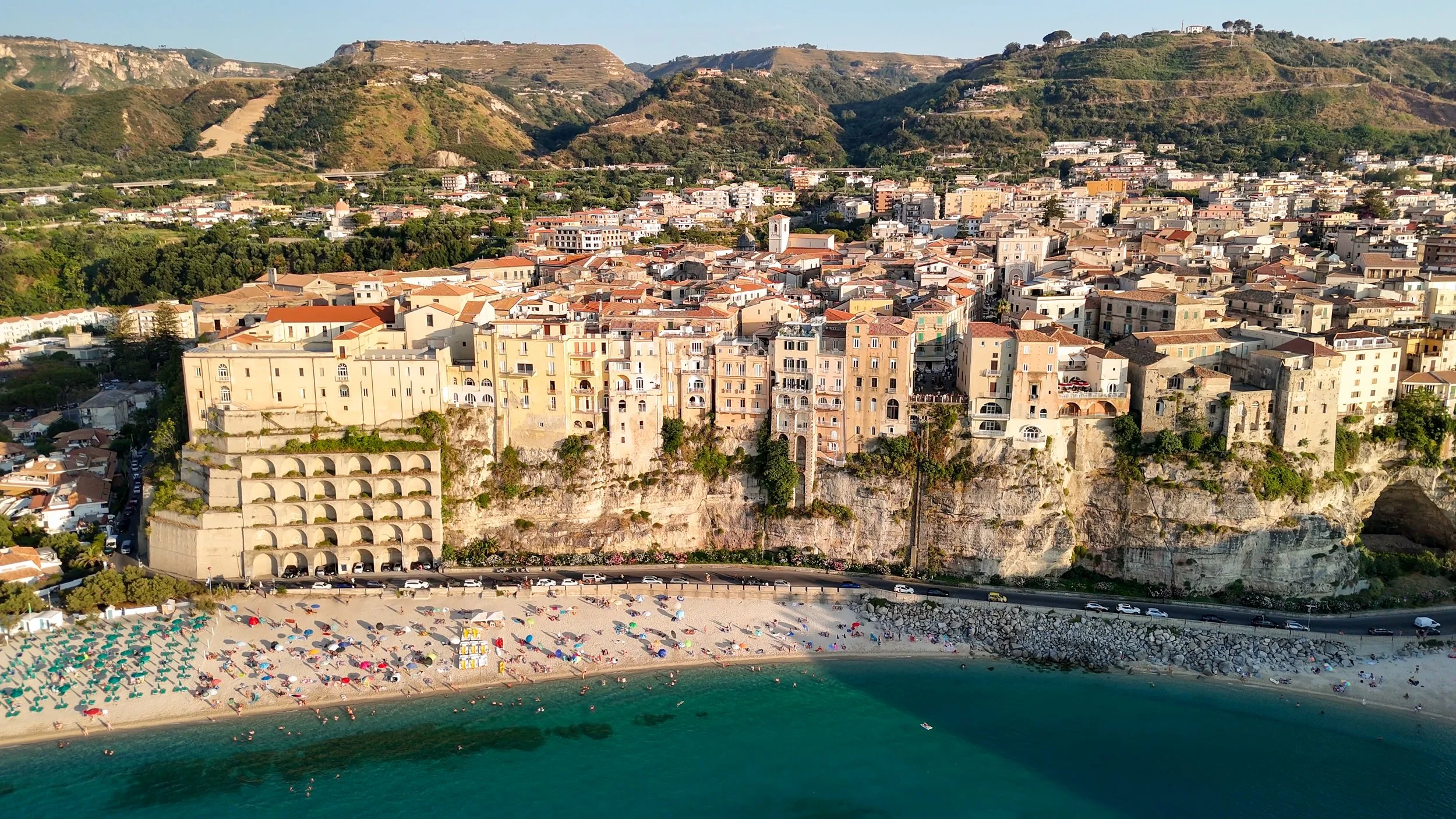
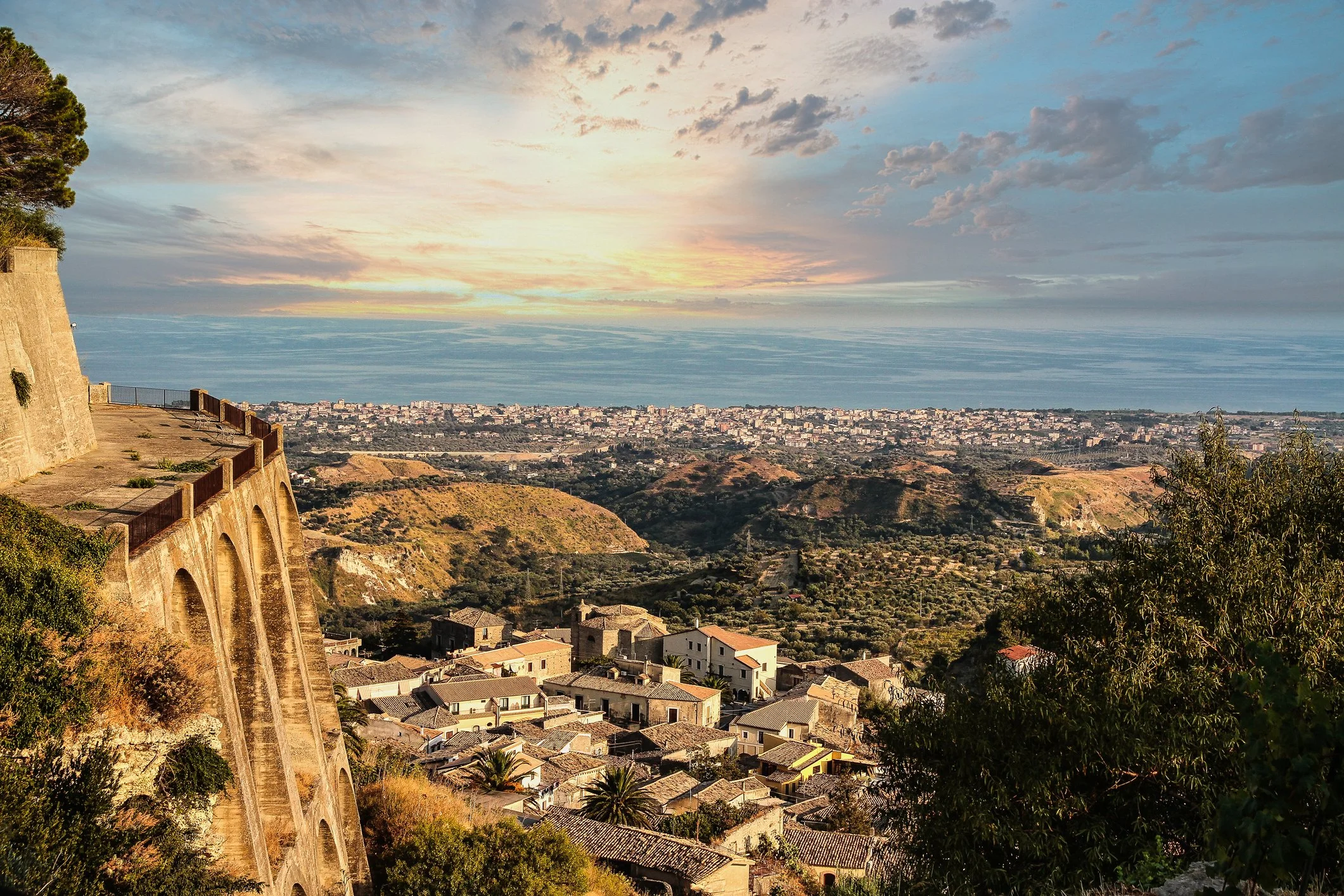
    Founded by Greek colonists in the 7th century BCE, Locri Epizefiri became one of the most influential cities of Magna Graecia, renowned for its religious sanctuaries and an early written law code attributed to the legislator Zaleucus. As coastal settlements became vulnerable to raids in the early Middle Ages, the population gradually shifted inland to the fortified hilltop town of Gerace, where much of the region’s medieval heritage survives. Departing Catanzaro this morning, we travel south along the Ionian coast to explore the archaeological remains of ancient Locri, including its defensive walls, sanctuaries and theatre. We then continue into the hills to Gerace, where a local guide introduces us to its remarkably preserved medieval centre, before we visit the imposing 11th-century cathedral, the largest in Calabria, whose vast nave is divided by 20 ancient granite and marble columns. After a break for lunch, we cross the Calabrian peninsula to Tropea, dramatically situated on cliffs overlooking the Tyrrhenian Sea. Arriving in the late afternoon, we check into our hotel before gathering for dinner at a local restaurant. Overnight Tropea (B, D)

  • Day 14 | Friday 15 October
    Pizzo & Tropea
    Perched on cliffs overlooking the Gulf of Sant’Eufemia, Pizzo is best known for its association with Joachim Murat, Napoleon’s brother-in-law and former King of Naples, who was captured and executed here in 1815 following a failed attempt to reclaim his throne. The town’s Aragonese castle, where Murat met his end, still dominates the historic centre. Today we travel north along the Tyrrhenian coast to Pizzo, where our first visit is to the remarkable Chiesetta di Piedigrotta, a church carved into the sandstone cliffs, its interior filled with religious figures sculpted directly from the rock. We then continue into Pizzo’s historic centre, with time to wander its narrow streets and main piazza overlooking the sea. Here, we also sample the town’s celebrated tartufo, a traditional gelato dessert with a rich chocolate centre. Returning to Tropea, the afternoon is at leisure to explore the old town or relax at our hotel. We reconvene in the late afternoon for a talk in the hotel, with the evening at leisure. Overnight Tropea (B)

  • Day 15 | Saturday 16 October
    Scilla
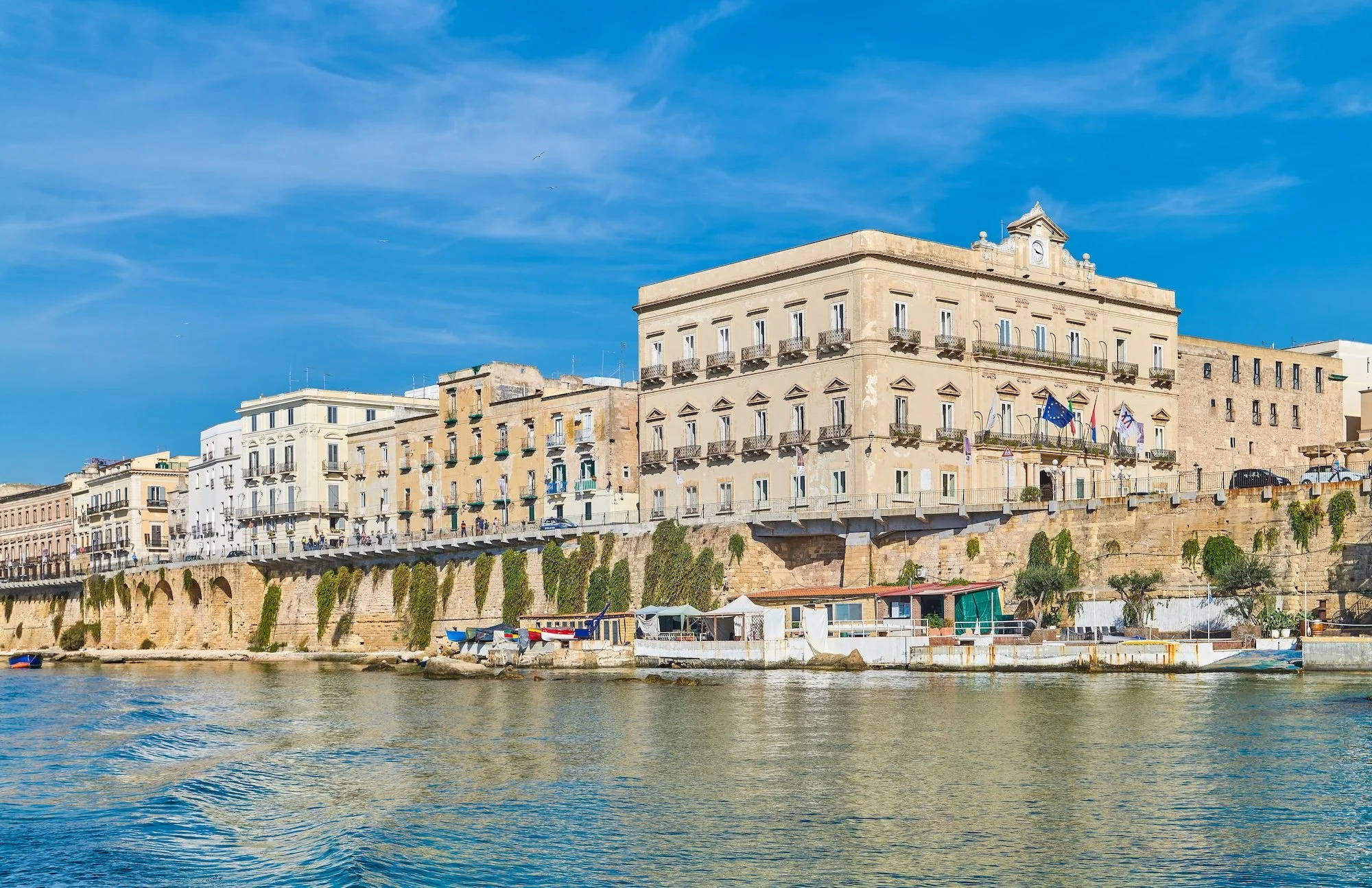
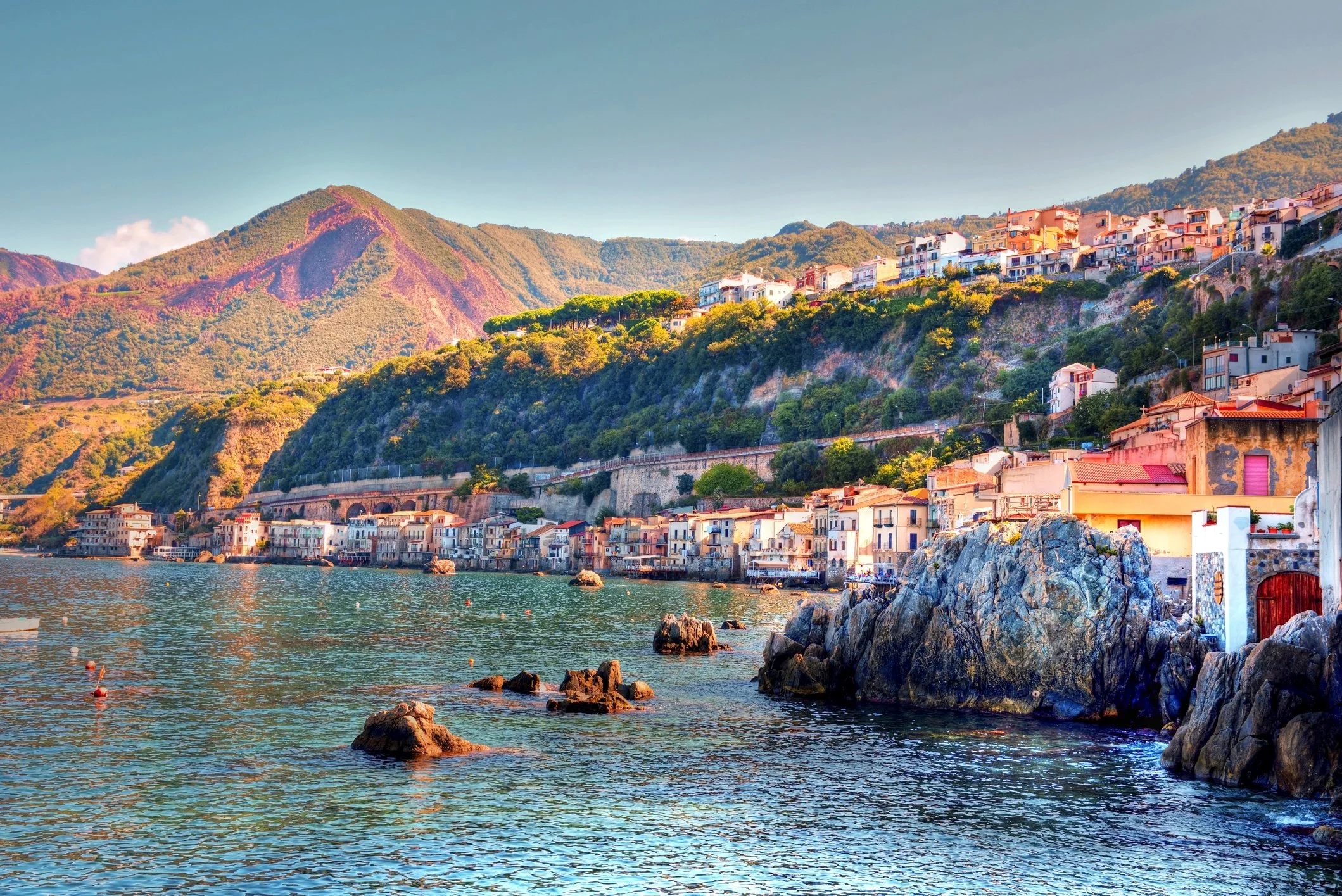
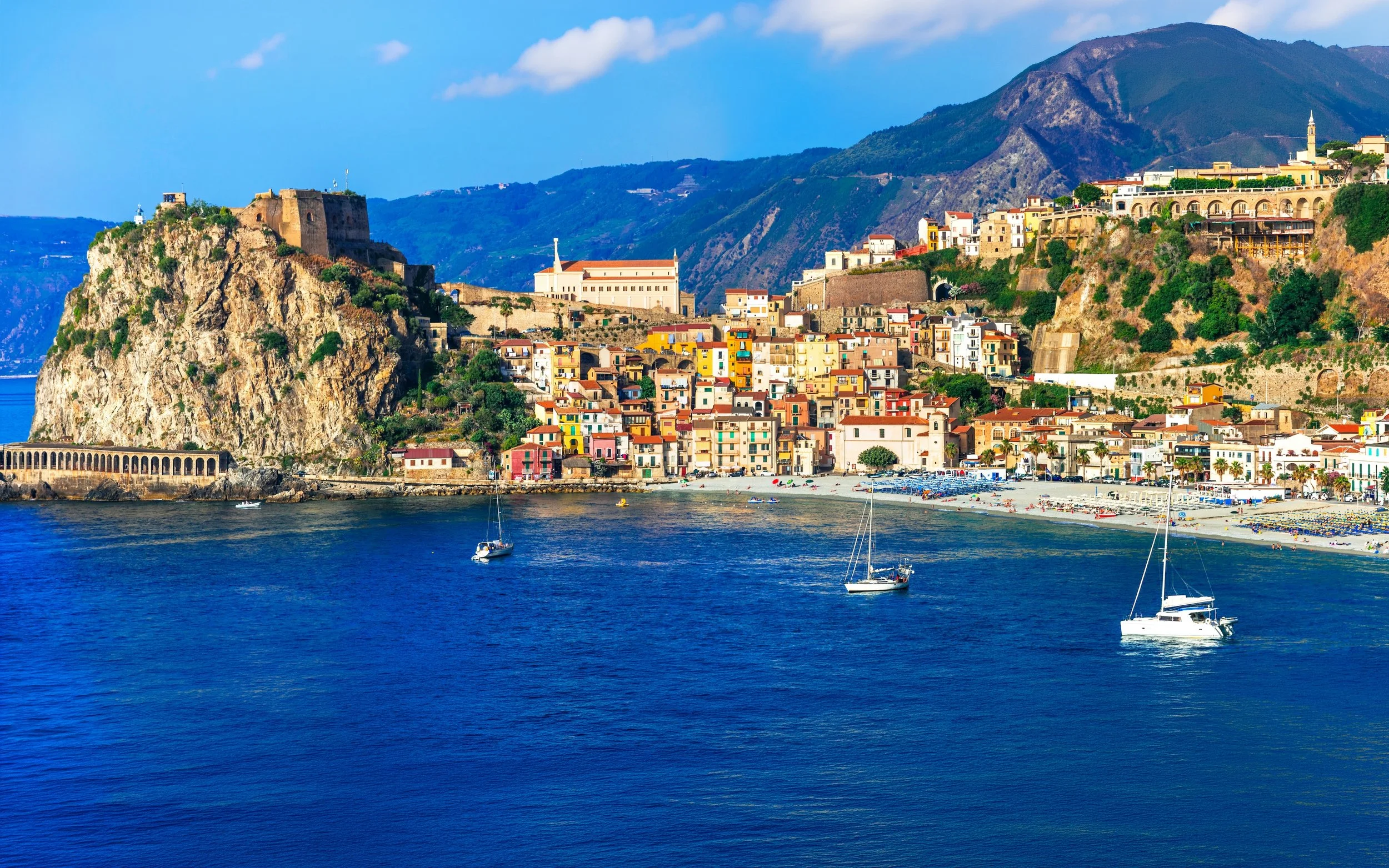
    At the southern tip of Calabria, the Strait of Messina has long held a place in Greek mythology, its narrow waters associated with the fearsome monsters Scylla and Charybdis. In Homer’s Odyssey, the six-headed Scylla threatened passing ships from the Calabrian shore, while Charybdis lurked in a deadly whirlpool on the Sicilian side. Departing Tropea this morning, we travel south to the fishing village of Scilla, traditionally identified with the monster’s lair, where we explore the narrow lanes of the historic centre beneath the imposing Castello Ruffo – a medieval fortress crowning the rocky headland overlooking the strait. We also discover the picturesque waterfront of Chianalea, where fishermen’s houses rise directly from the water’s edge. Lunch is enjoyed together at a local restaurant before we continue along the coast to our final destination, Reggio Calabria, arriving in the late afternoon. After checking into our hotel, the evening is at leisure. Overnight Reggio Calabria (B, L)

  • Day 16 | Sunday 17 October
    Reggio
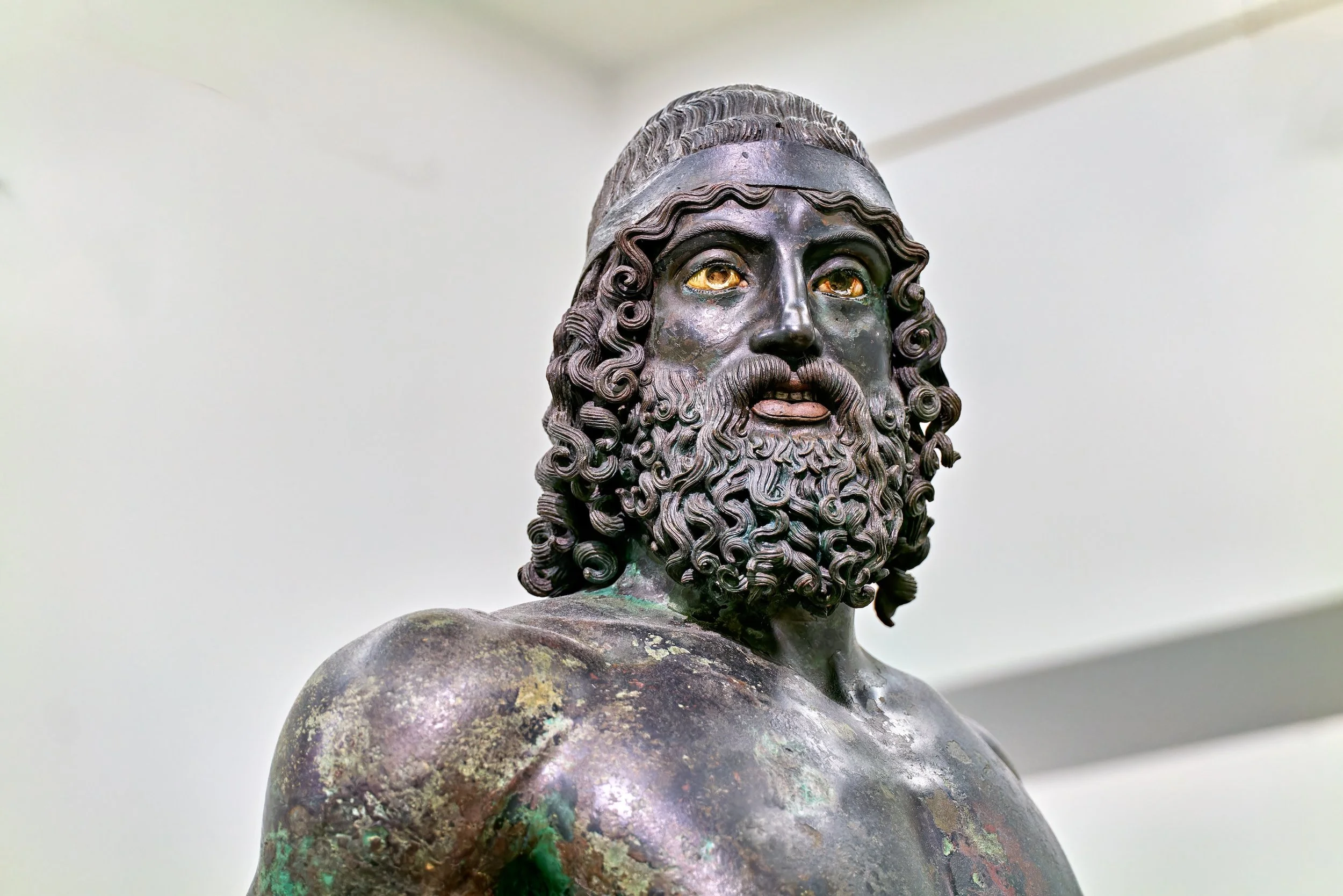
    Ancient Rhegion was among the earliest Greek colonies in Italy, though its modern heir has been shaped by harder forces – a series of earthquakes, above all the catastrophe of 1908, and wartime bombing have left a city rebuilt in elegant early 20th-century style. After a talk in the hotel this morning, we embark on a walking tour along the pedestrianised Corso Garibaldi, taking in the Aragonese castle, the cathedral, the Teatro Francesco Cilea and the lungomare, the seafront promenade with its views across the strait to Sicily. After a break for lunch, the afternoon brings our encounter with the magnificent Riace Bronzes, in the National Archaeological Museum of Magna Graecia. Found by chance in 1972 by a diver off the Ionian coast, these two warriors – over life-size, cast in the 5th century BCE and lost at sea for some two millennia – survive with their copper lips, silver teeth and bone-and-ivory eyes intact, masterpieces of the greatest age of Greek sculpture. Returning to our hotel, the remainder of the afternoon is at leisure. Overnight Reggio Calabria (B)

  • Day 17 | Monday 18 October
    Bova & Pentedattilo
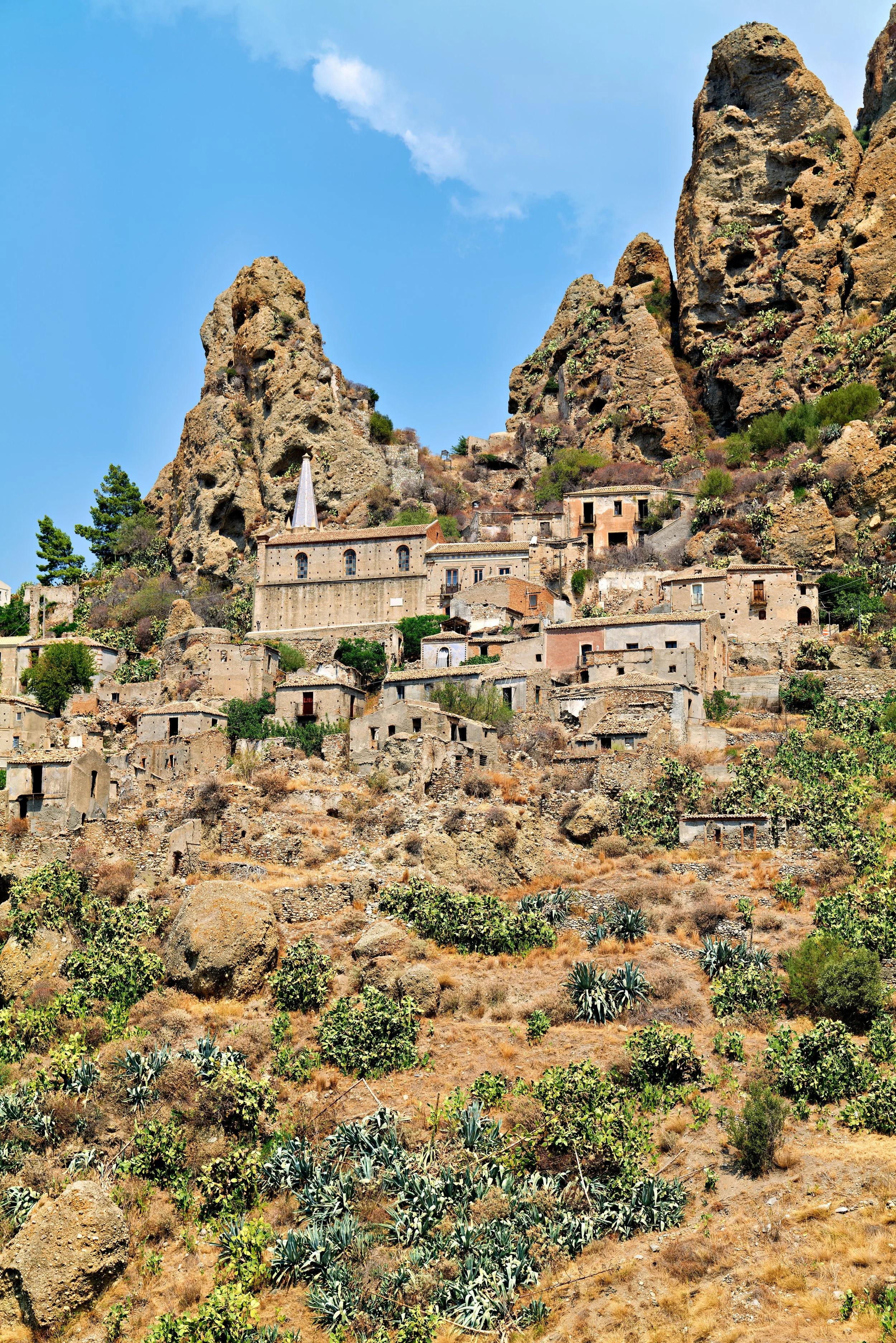
    In the mountains of the Aspromonte, the Greek story of Calabria has never quite ended: in a handful of villages, elders still speak Greko, a dialect carrying echoes of the language the first colonists brought across the Ionian Sea nearly three millennia ago. Our full-day excursion takes us into the mountains to Bova, the historic centre of this Greek-speaking enclave. Its narrow lanes and stone houses climb towards the ruins of a hilltop castle, with sweeping views towards the sea. There is time to explore the village at leisure. In the afternoon we continue to Pentedattilo, named from the Greek for ‘five fingers’ after the clawed crag from which it hangs. Its people drifted away after an earthquake in 1783, and the village stands today as a near-ghost town of empty doorways and silent lanes, stirred back to life each summer by a film festival. Our walking tour traces its dramatic history before we return to Reggio, where there is time to relax before our farewell dinner at a local restaurant this evening. Overnight Reggio Calabria (B, D)

  • Day 18 | Tuesday 19 October
    Depart to Rome

    Having travelled the length of the Italian boot from heel to toe, our tour concludes this morning with a transfer to Reggio Calabria’s airport for the group flight to Rome, arriving in time for onward connections. (B)

Throughout the tour, we stay in a carefully selected collection of hotels and historic properties, chosen for their character, comfort and location. From a former palace in Lecce and a converted convent overlooking Trani’s harbour to restored cave dwellings in Matera and a country estate among Calabria’s olive groves, our accommodation reflects the character of southern Italy.

Tour Accommodation

tour booking

$17,640 AUD per person, twin share (land content only)
$3,840 AUD supplement for sole use of a hotel room

A $2,000 deposit is required per person to confirm your booking on tour. This deposit is non-refundable.

Hold a Place

Still deciding? We are happy to hold a tentative place for 7 days while you make your final arrangements.

Book Online

To secure your place(s) on tour, book online below with “Athena”, our virtual tour consultant.

DOWNLOAD FORM

Download a printable booking form. You can also complete the form on screen and submit via email.

your tour consultant

The consultant for this tour is Sharon Williams. For further information or to discuss the tour, please call 9235 0023 (Sydney) or 1800 639 699 (outside Sydney) or email sharon@academytravel.com.au

have you thought about?

Academy Travel is more than just a tour operator. We are also a full-service travel agency who can assist you with all aspects of your travel, including flights, transfers, pre-tour arrival, additional travel and comprehensive travel insurance.

can’t make this departure?

If these dates don't work for you, register to hear about the next tour.