
Hallelujah! for Irish Music and its Great Gardens
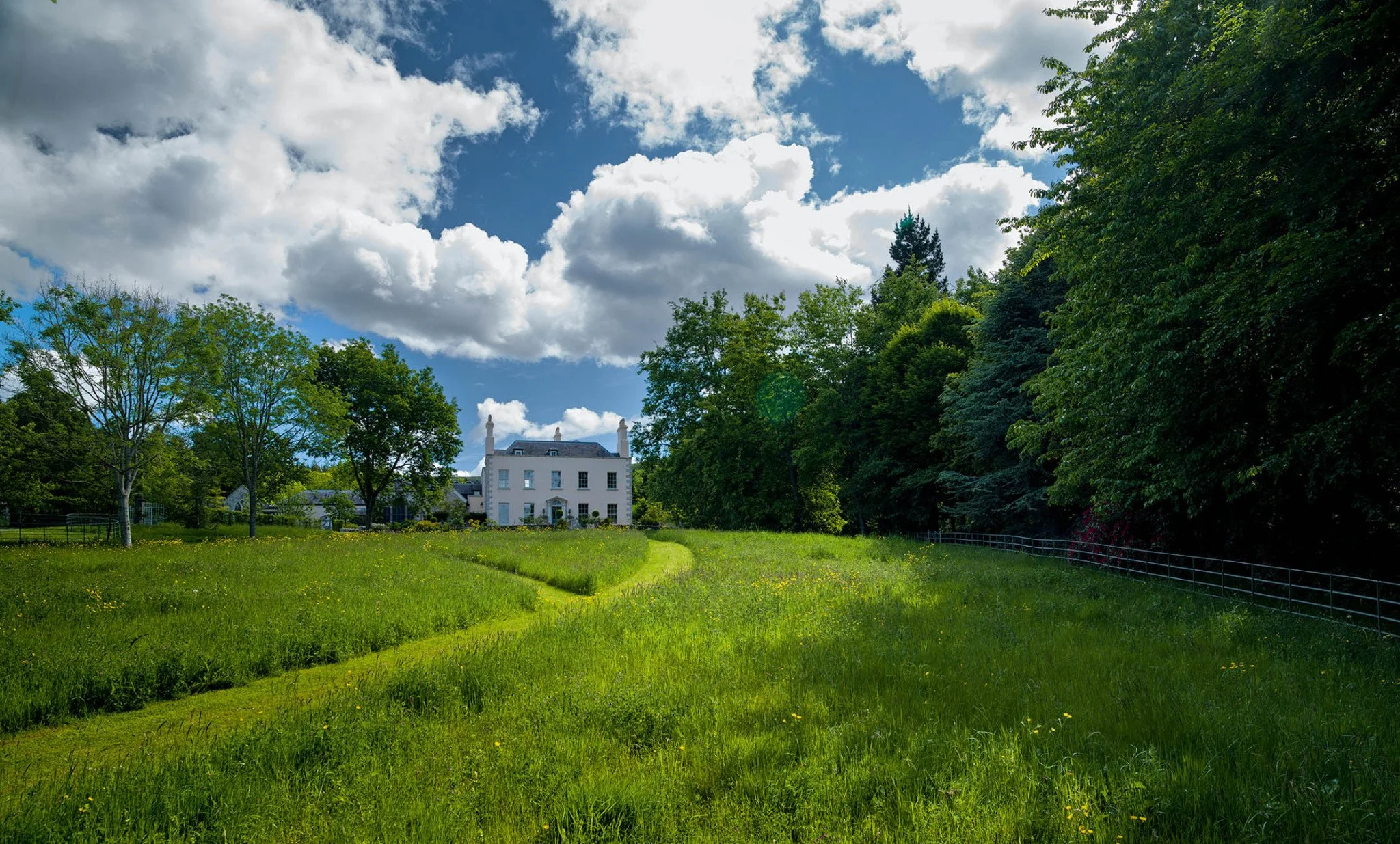
Let us sing in praise of one of Ireland’s finest gardens, Danesmoate House, home of Adam Clayton, rock legend and bass player of the Irish band U2 and of another rock legend, well maybe that’s not quite the right word to describe a musical genius as famous in his day as U2 are in this – George Frideric Handel and his connection to Dublin.
By Garden Historian Mike Turner
Aged just eight, I was sent away to boarding school. I loved it. Mostyn House in Parkgate in Cheshire was both nurturing and enlightened. It instilled in me a love of the ancient world (all those myths, and Latin and Greek) and of the arts. Founded in 1855, the school was built around a 16th century coaching inn, The George, on the seafront of the River Dee estuary separating England from North Wales. Parkgate had once been a thriving packet-boat port for the ferry to Dublin before the estuary silted up in the 19th century. The school included a beautiful and ornate Victorian chapel complete with stained glass windows, an impressive organ, a very rare full carillon of bells – and a choir angelic in red cassocks and white surplices.
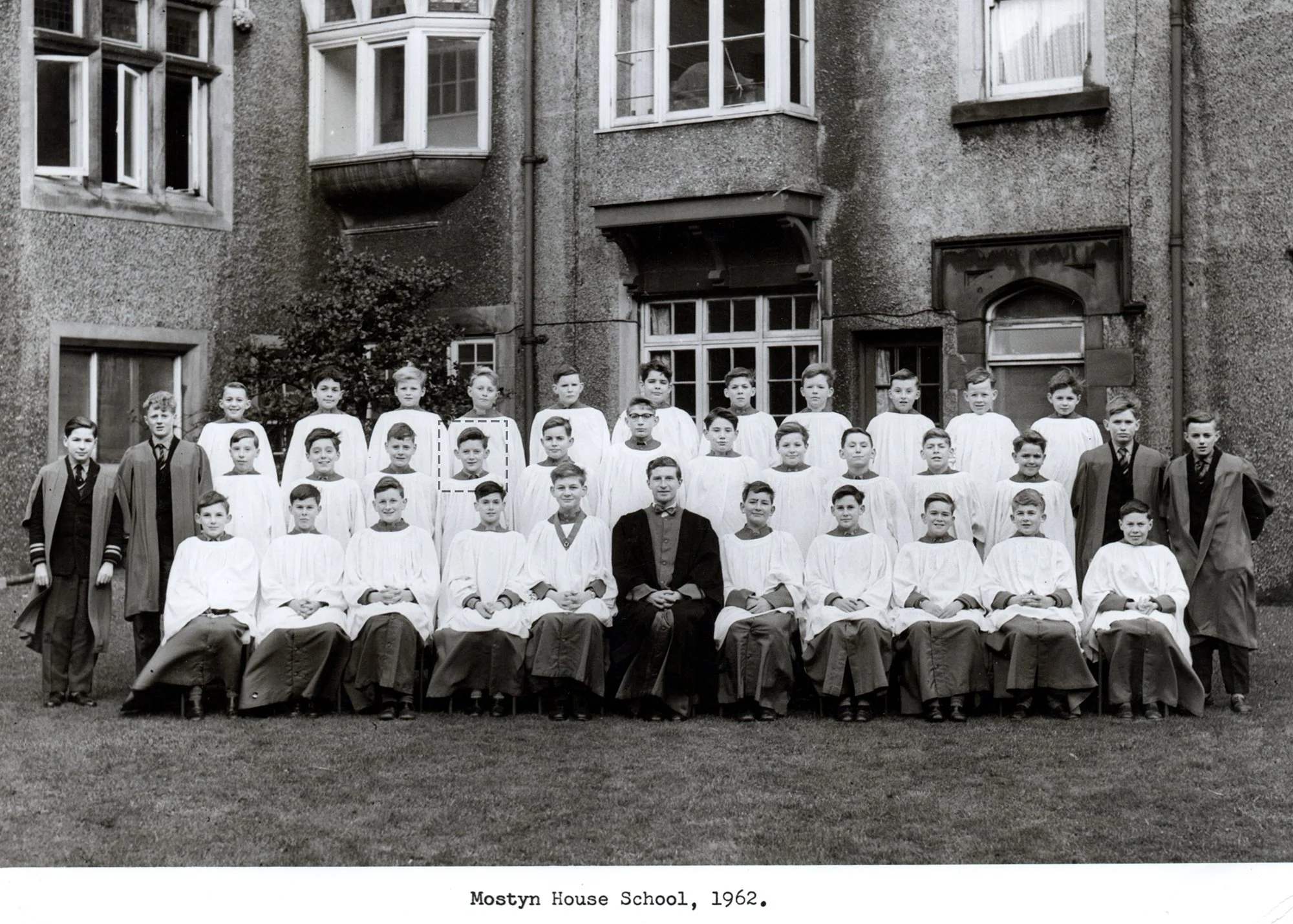
The choir in 1962: I’m the chorister 4th from the left in the middle row
At Christmas 1962, the choir, together with professional singers, performed, to a sell-out audience in the chapel, elements from Handel’s Messiah including the famous Hallelujah Chorus. It was a glorious night which I remember clearly to this day. Only subsequently did I learn the full history of Handel’s connection to the very spot on which we were singing.
In 1741, George Frideric Handel (1685-1759), at the height of his fame, was invited by William Cavendish, the 3rd Duke of Devonshire, Lord Lieutenant of Ireland and of Chatsworth House and Lismore Castle fame, to perform a series of concerts in Dublin. [We’ll be visiting Lismore next June to admire one of the most romantic gardens in Ireland.]
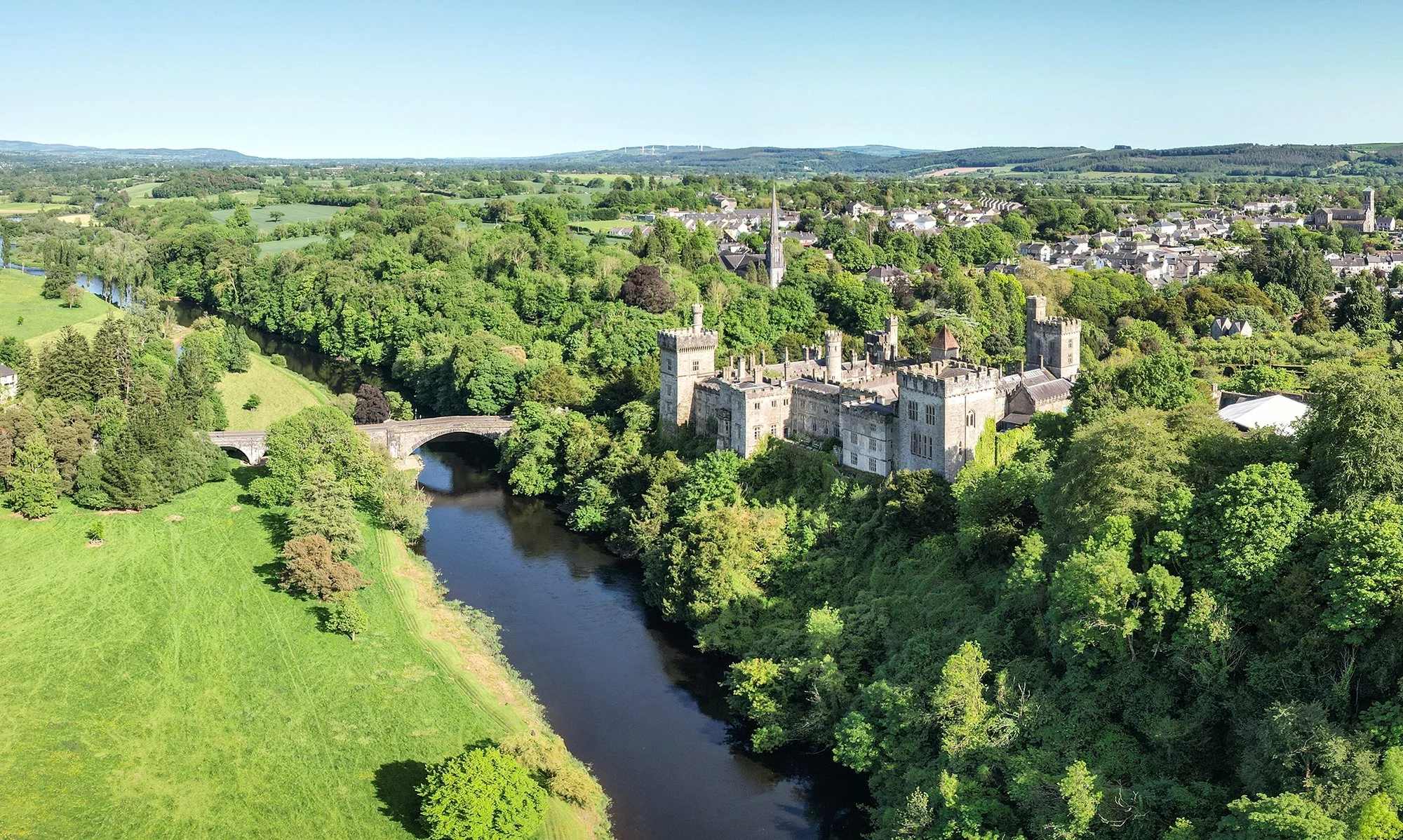
Lismore Castle, County Waterford, Ireland
At the time, prior to the Rebellion of 1798, Dublin was a thriving and cosmopolitan European city. In November, Handel left London his head full of the new piece he’d just finished – The Messiah, all 259 pages of which had been completed in an astonishingly intense 24-day period between 22 August and 14 September, 1741. Unfavourable winds meant that his boat was delayed for a couple of days and so, stopping off in Chester, Handel used the time to rehearse the oratorio with the choir of Chester Cathedral. A contemporary story relates how Handel famously tested the sight-reading abilities of a local bass singer and printer named John Jenson, erupting in rage when Jenson stumbled over the notes. Defending his blunder, Jenson quipped that he could indeed sing at sight, just ‘not at first sight’, which amused Handel and defused the outburst.
From Chester, Handel took the carriage to Parkgate where he stopped the night at The George before taking the morning boat. Local legend has him making last-minute amendments in his room in The George – later Mostyn House.
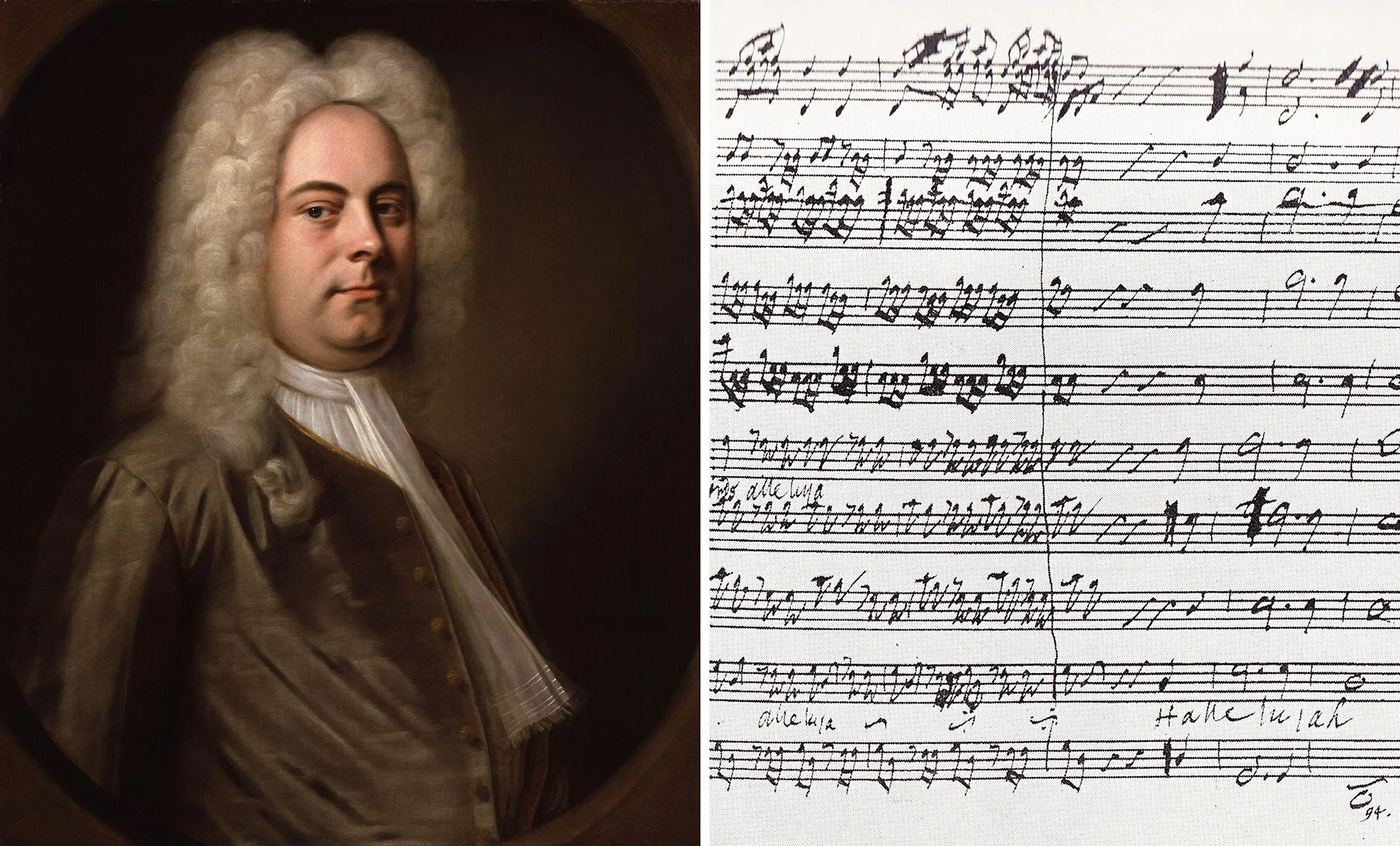
Handel and part of the original score of the Hallelujah Chorus
Once in Dublin, Handel rehearsed the Messiah with the choirs of St Patrick’s Cathedral and Christ Church Cathedral before its historic first public performance at noon on Tuesday 13 April 1742 in the newly built Neal’s Musick Hall on Fishamble Street. The hall, which Handel praised writing that ‘the Musick sounds delightfully in this charming room’, could hold 600.
700 tickets were however sold prompting the famous request for ladies to come without hooped skirts and for gentlemen to leave their swords at home. The premiere was an enormous success, raising significant funds which were distributed to local hospitals and the relief of imprisoned debtors. In fact, so rapturous was the response that Handel agreed to stay on in Dublin for another four months for a second performance on 3 June 1742. When he finally returned to England later that summer, the momentum from Ireland helped establish Messiah as a cornerstone of Western classical music.
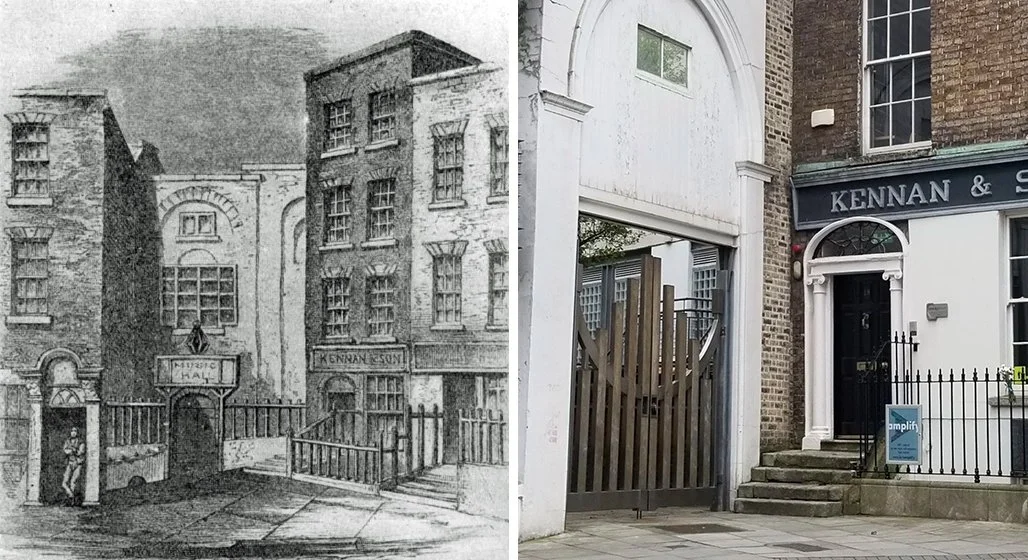
Neal's Musick Hall was a purpose-built music hall that existed on Fishamble Street in Dublin city centre
Neal’s Musick Hall on Fishamble Street has long gone. All that survives is its entrance archway now one of the city’s historic landmarks. Behind the gates, in what is now a residential courtyard, on the very spot where Handel conducted his oratorio, is a most strange, naked ‘Apollo-like’ statue of the great man standing on top of organ pipes holding a conductor's baton (pictured below). I’m not so sure what the great man would have made of this! Rather than sparking intense public outrage or controversy when it was erected in 2002, the eccentric statue is generally treated as a quirky hidden landmark and a humorous talking point for walking tours discovering Dublin's musical heritage.
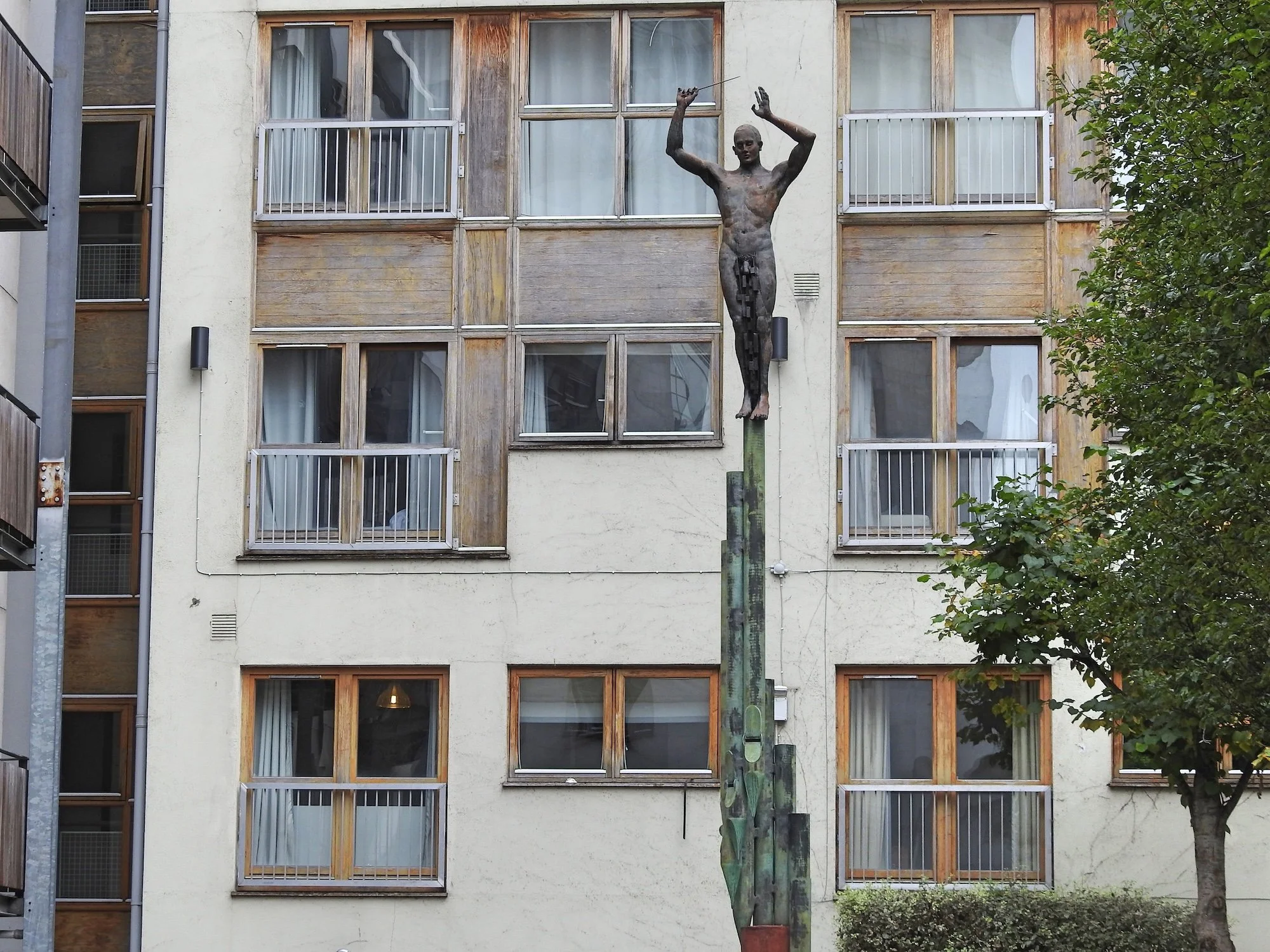
Statue of Handel behind the "Musick Hall" Arch in Dublin
Exactly 50 years ago, in September 1976, another milestone in Dublin’s musical history took place when a 14-year-old schoolboy, Larry Mullen Jr. pinned a note to the noticeboard at his school: ‘Drummer seeks musicians to form a band’.
A few days later, auditions were held where there was more talking than playing. Adam Clayton, a bassist who couldn’t play bass, was selected on account of having ‘the best hair’, and Paul Hewson (later to be known as Bono), who wanted to be the guitarist, didn’t bring a guitar. But from that day when the initial line-up was decided, four school friends have remained firm friends to be the longest surviving, unchanged and most famous rock band in the world – Larry Mullen Jr. (drums); Adam Clayton (bass); Bono (vocals); and Dave Evans, better known as The Edge (lead guitar).
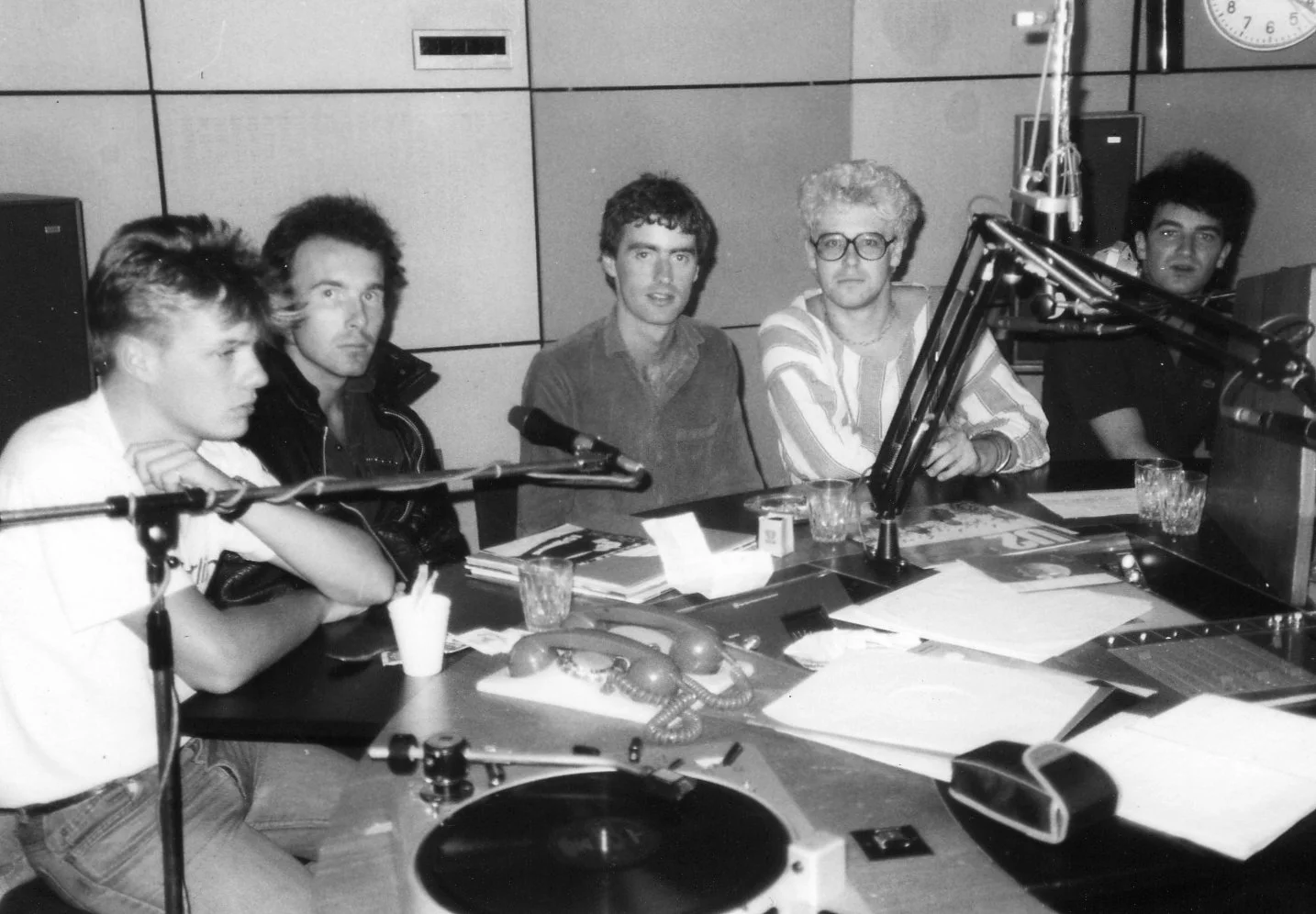
Radio host Dave Fanning in the studio with Irish rock band U2 in 1982. From left to right: Larry Mullen Jr., The Edge, Dave Fanning, Adam Clayton, and Bono. Photo credit: Ian Wilson, Wiki
On 24 September this year, the band returned to Mount Temple Comprehensive to play an impromptu gig for the pupils on the very same outdoor stage where it all began.
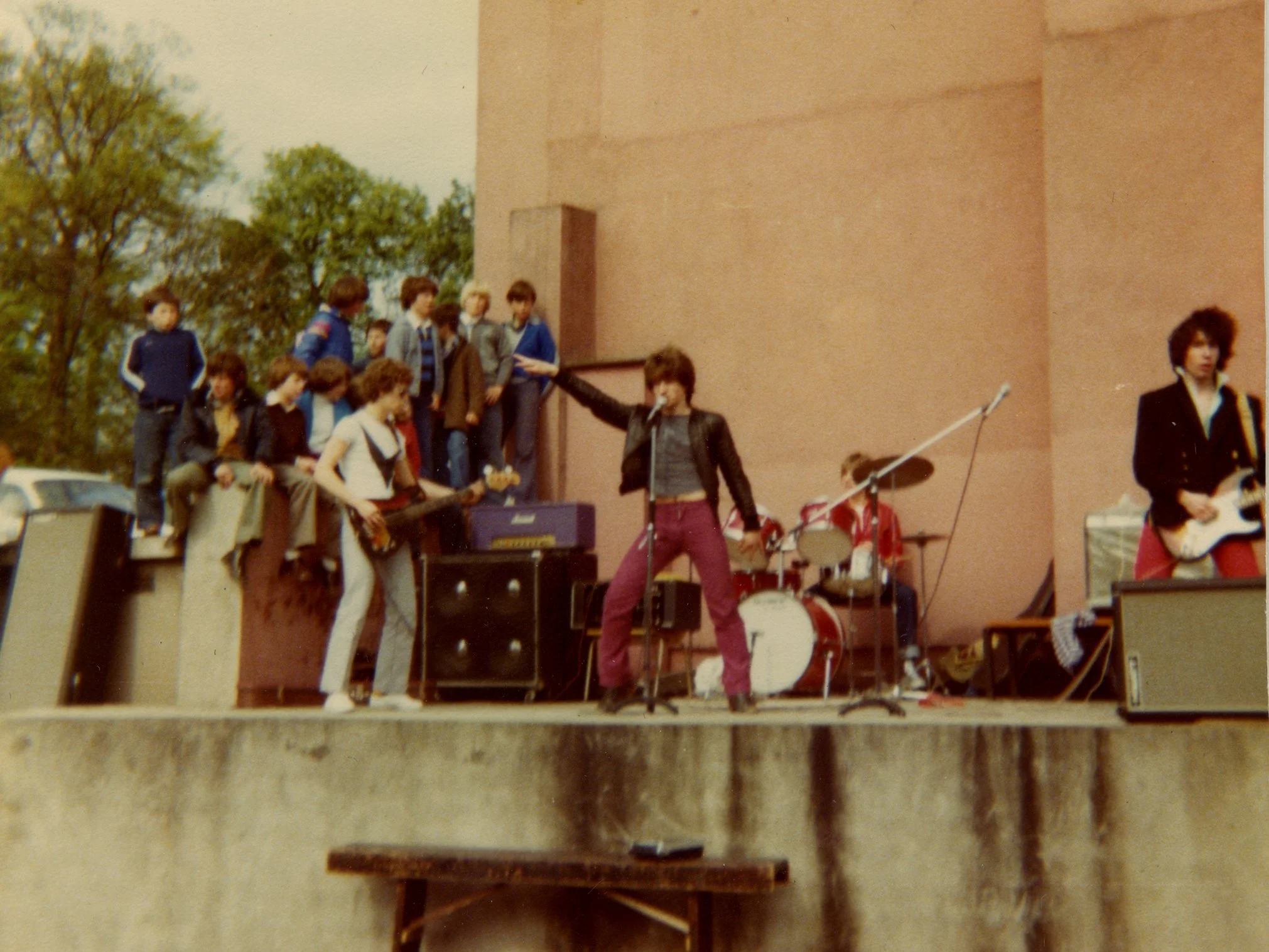
The image shows the Irish rock band U2 performing live at Mount Temple Comprehensive School in Dublin, Ireland, in early 1978
In March 1987, U2 released their fifth and what many consider to be their finest album, The Joshua Tree. It had been recorded in the acoustically perfect drawing room at Danesmoate House, an empty Georgian mansion rented by the band, on the outskirts of Dublin at the foot of the Dublin Mountains. At the time, the owner said that if anyone wanted to buy the house, he’d subtract the rental they’d already paid. So, Clayton, thinking ‘Oh! There’s a bit of a deal’, aged just 28, did just that and the following year was the owner of the mansion, numerous ancillary buildings (including a dovecote and a two-seater privy) as well as 17 acres of gardens, fields and a river valley of the wonderfully named Little Dargle — all in need of serious attention. To add spice to his purchase, Clayton remembers his days as a boarder at the neighbouring St Columba’s College, ‘We used to sneak in the back to smoke and charm girls.’
Danesmoate House, an 18th-century Georgian mansion located in Rathfarnham, Dublin ©Jonathan Hession for Country Life
I’m afraid I cannot show you too much of Danesmoate House itself. This is, after all, Adam Clayton’s private home, and some things are best left for those fortunate enough to visit. What I can do, however, is take you into its remarkable gardens, whose story began long before U2 entered the picture.
The oldest parts of the garden had been created between 1766 and 1802 in the fashionable Picturesque style, where the untamed ‘sublime’ power of Nature’s natural rugged beauty was celebrated in carefully tweaked vistas. Gothic buildings and other rustic features added to its drama; the steep valley with its tumbling river and mossy boulders lent itself admirably to the arousing of awe. The place was widely admired at the time, not least by John Wesley (founder of Methodism), who observed in a letter: ‘Although many places may exceed this in grandeur, I believe none can exceed it in beauty.’
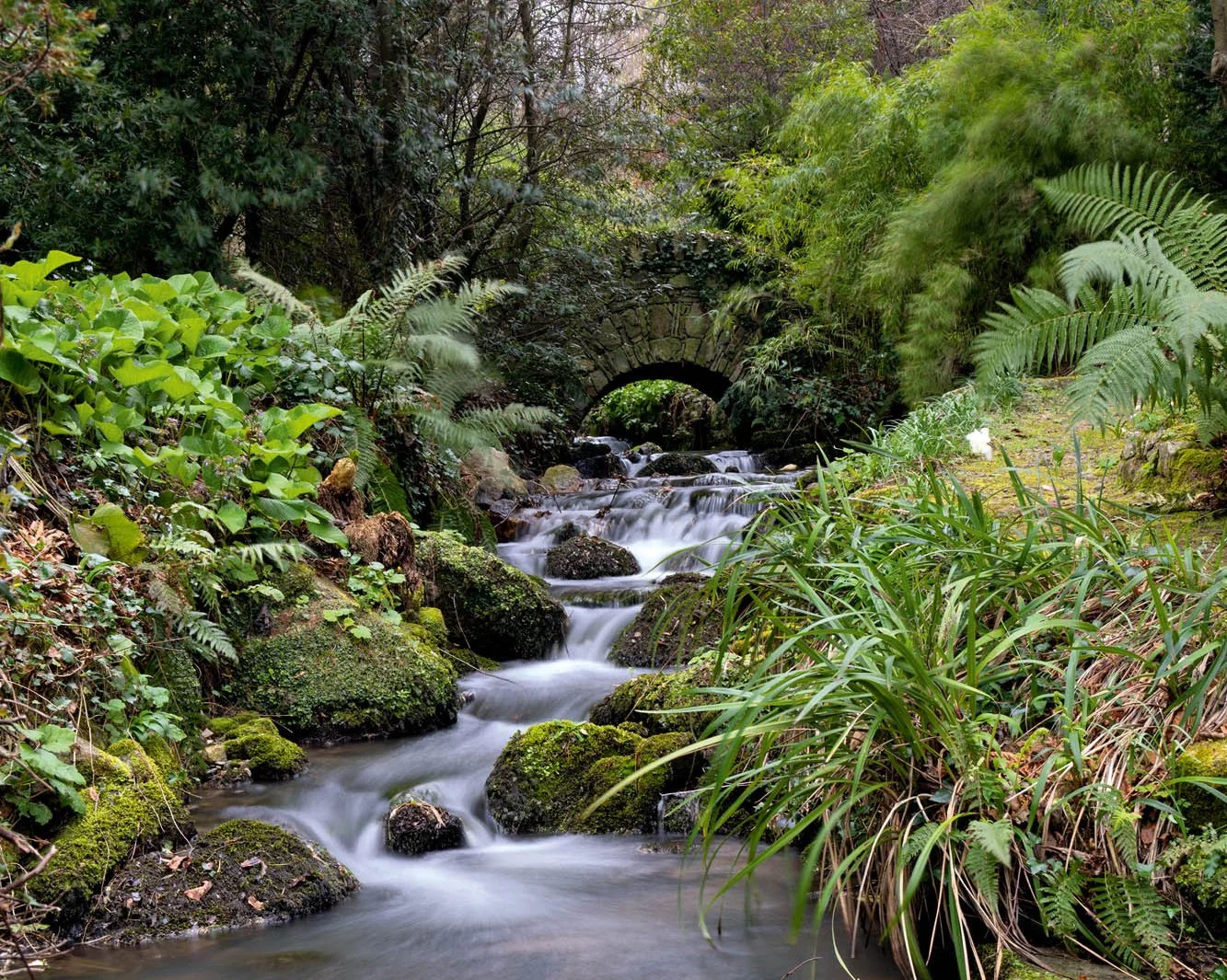
The Little Dargle (a tributary of the Dodder) earned its name because its pretty glen was like a miniature version of the River Dargle’s glen at Powerscourt ©Jonathan Hession for Country Life
In 2024, Clayton welcomed the BBC’s popular Gardeners’ World to Danesmoate House. He told presenter Adam Frost that when he took it over the garden was ‘seriously over-mature’ and had been ‘let go’ and so had immediately set about clearing laurel (I hate laurel!) which was ‘suffocating’ some areas, and planting trees – lots of trees – to date over 4,000. Seeking inspiration, he visited the gardens at Mount Congreve in Waterford, famous for its brilliant displays of acid-loving plants, such as camellias, rhododendrons and magnolias. There, on the banks of the River Suir, the industrialist and garden lover, Ambrose Congreve (1907-2011), had planted not in twos or threes, but in 10s and 20s – just what Clayton wanted. ‘We went a bit bonkers on the magnolias’, he admits; there are now over fifty varieties at Danesmoate, and over 100 rhododendrons.
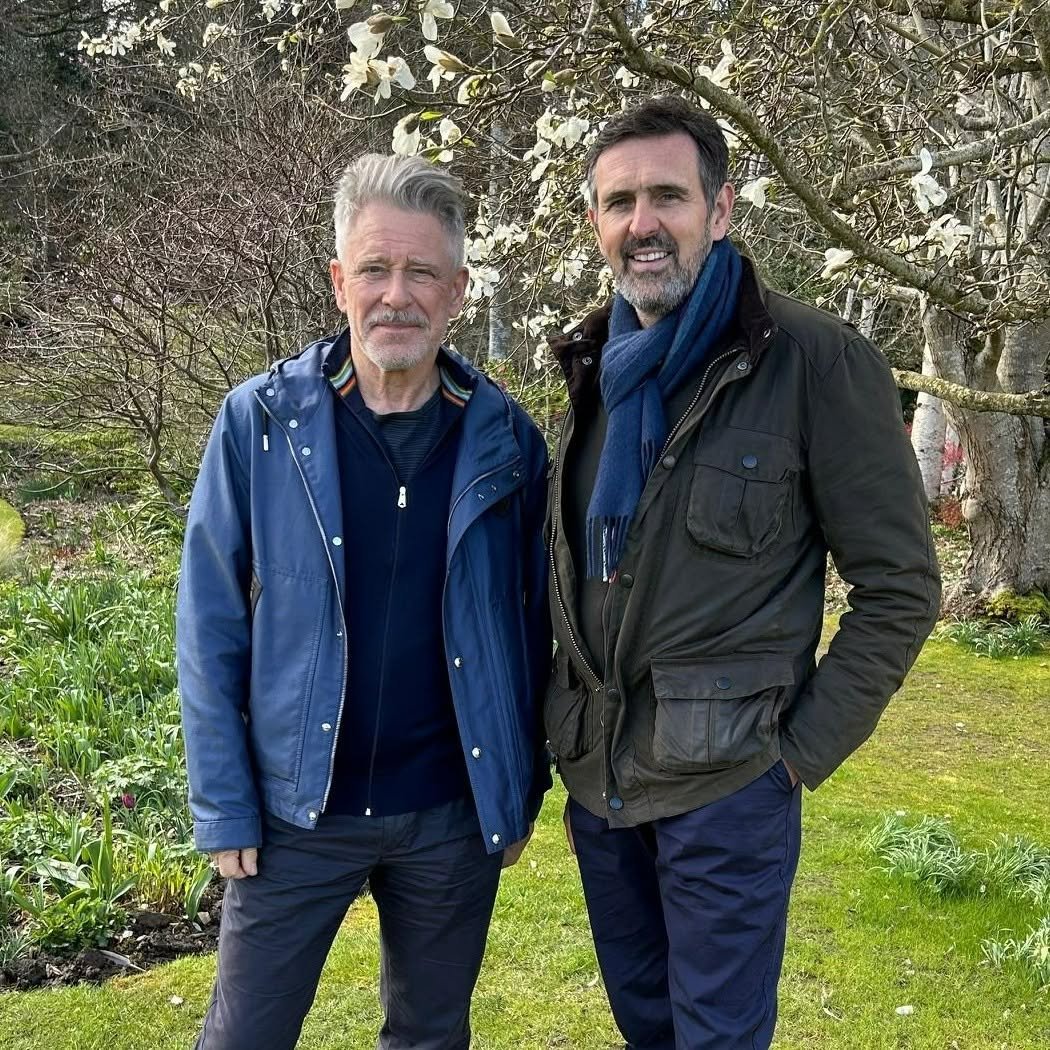
Adam Clayton and Adam Frost in the garden at Danesmoate, 2024
The 17 acres include a formal garden and a woodland area. Although he started his garden project 30 years ago, Clayton sees it as only an ‘adolescent garden’, adding that he can ‘only now begin to see what it’s going to be like in maturity’.
Asked what gardening means to him, Clayton said, ‘It just takes my mind out of myself. I start to see the colours, I start to see the form, I start to note the time of year, and I just go into a different world’. He added, ‘I think the garden tells you what it needs. You just have to pay attention. I look at gardening the way painters do – shape, form, colour, and perspective and I just bring all those things to it and just let the garden lead me’. Monty Don, the main presenter on Gardeners’ World, said this was ‘fantastic advice’ for gardeners, and something that resonated with him personally.
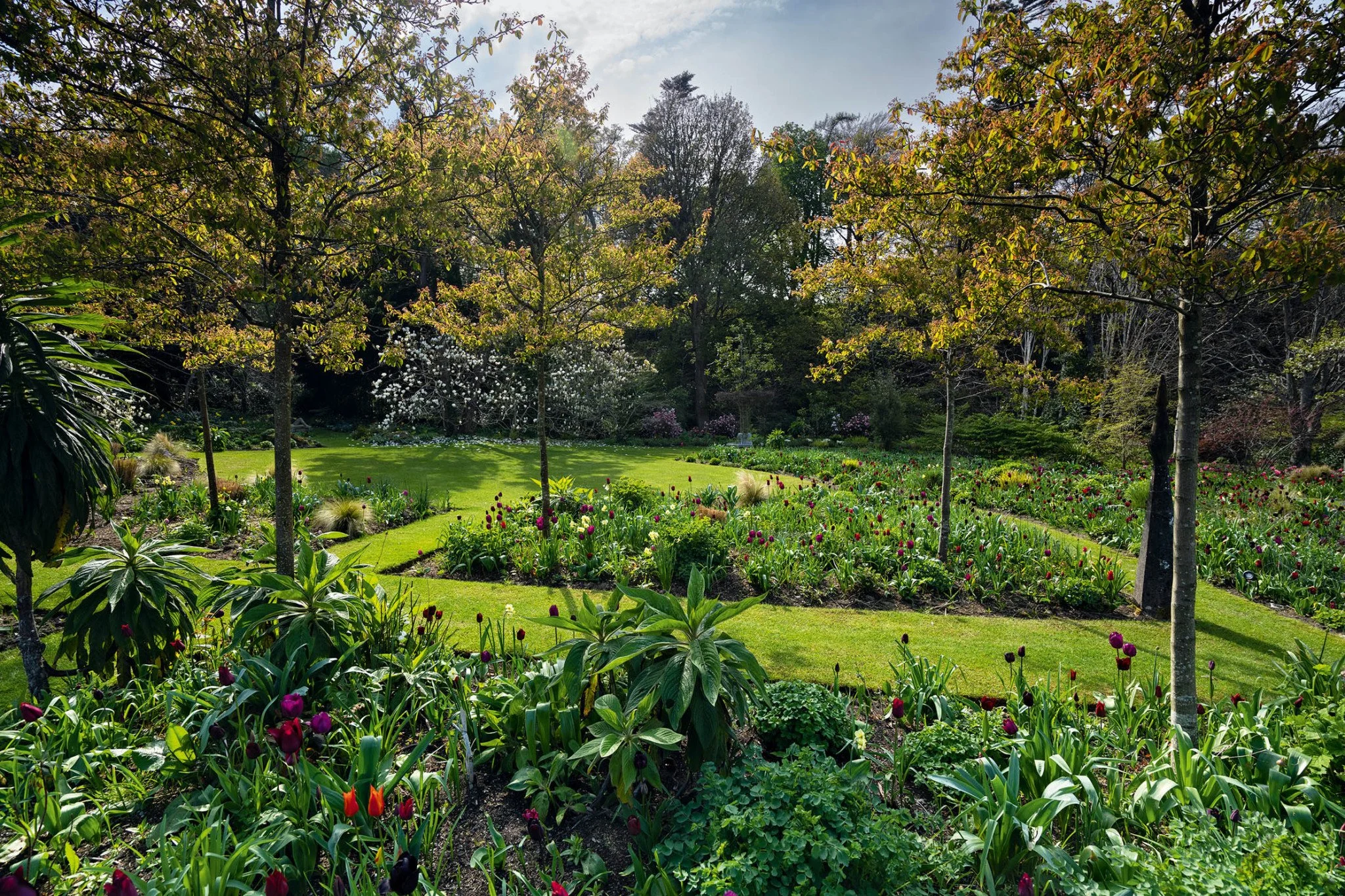
The formal gardens. Tulips shaded by the foliage of the near-tender Echium pininana – proof of the mild climate ©Jonathan Hession for Country Life
Around the house, a framework of highly structured garden rooms was created by British designer Elizabeth Staveley with June Blake, whose beautiful Blessington garden is half an hour away, responsible for much of the original planting. More recently, Darragh Stone, head gardener since 2020, has tweaked and augmented this floral paradise.
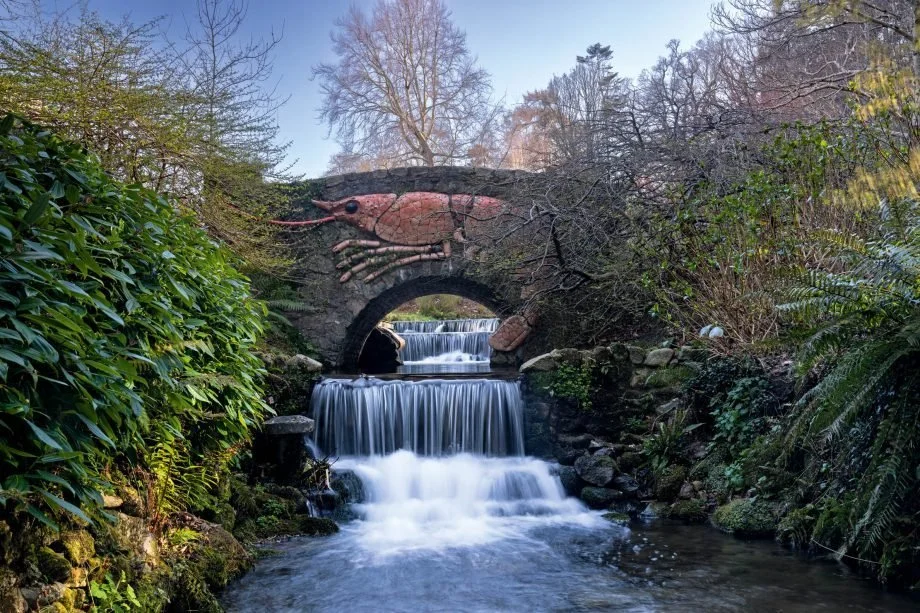
Clayton is an avid art collector: the huge, ceramic mosaic Dublin Bay prawn is the work of Belfast artist John Kindness. ©Jonathan Hession for Country Life
Plans for the immediate future are centred on the 19th-century walled garden, which will soon have an elegant glasshouse and orangery as its focal point. A newly acquired five-acre field is also being developed as a woodland with meadowy clearings. Clayton approves heartily of rewilding and adding even more trees to his estate. He looks forward, he says, to ‘tree planting for the next 40-odd years!’.
Let equal fire our souls inflame,
And equal zeal employ,
That we the glorious spring may know,
Whose streams appear'd so bright below.George Frideric Handel. From O Love Divine, 1749
Today, its magnificent gardens are not ordinarily open to the public, with visits possible only by prior arrangement. On next year’s Gardens of the Emerald Isle tour, we’ll be Adam Clayton’s guests at Danesmoate House when his head gardener, Darragh Stone will be taking us on a private, extended two-hour exploration of the estate.
Other gardens mentioned in the article that we shall also be visiting are Lismore Castle; Mount Congreve; as well as Hunting Brook, the extraordinary garden of June Blake’s brother, Jimi – and of course we’ll be paying homage at Fishamble Street.
gardens of the emerald Isle
A Journey Through Ireland
Created and led by garden historian Mike Turner, this 16-day tour explores 18 of the most exciting gardens across Ireland.
Beginning in Belfast, we explore the celebrated landscapes of Northern Ireland before travelling south via the Neolithic wonder of Newgrange to Dublin. From the capital we strike out to Cork and the garden-rich countryside of Ireland’s south-west, before the road home draws us back to Dublin to conclude where the island’s gardening story is told in full.
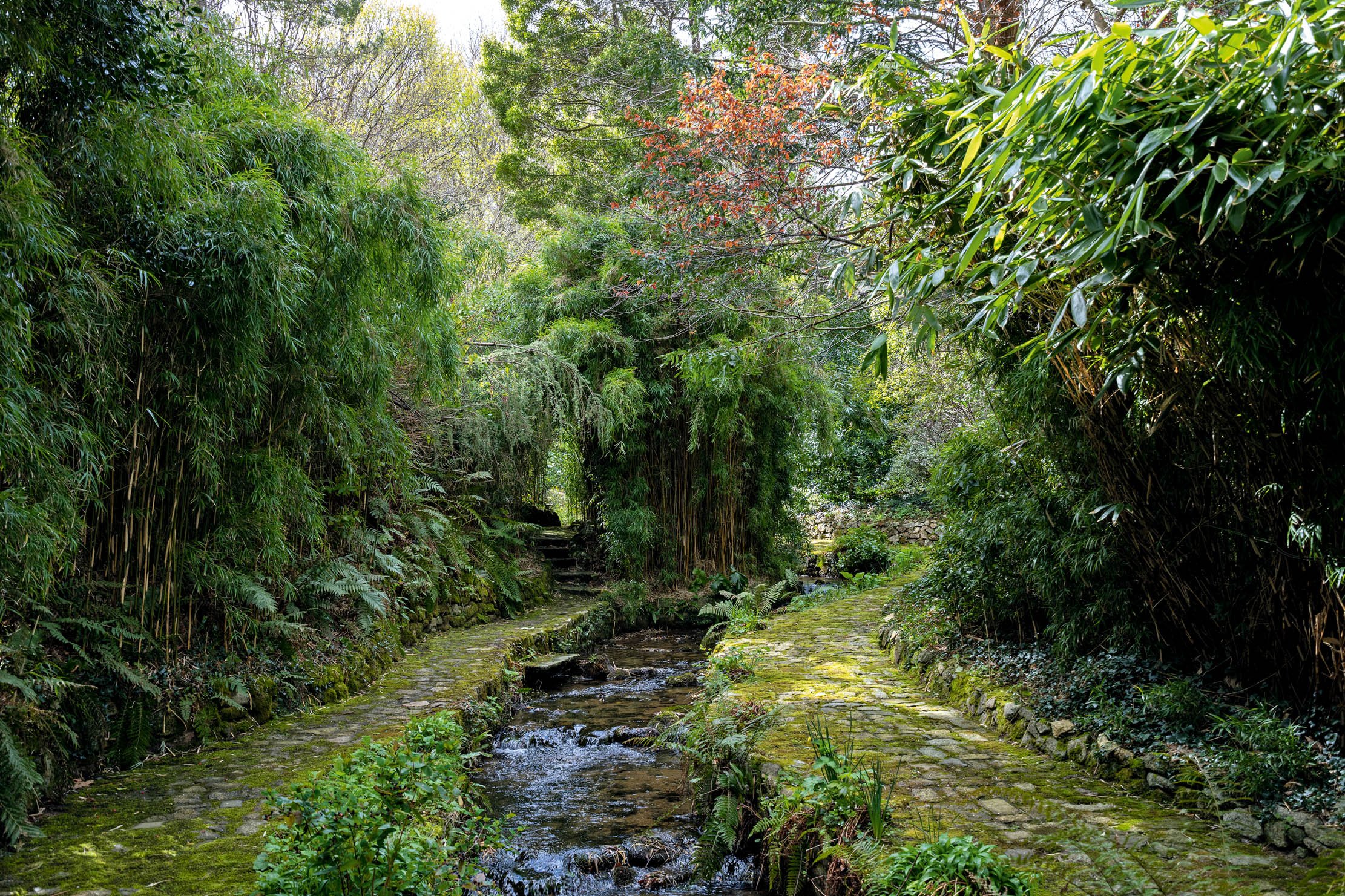
The mood along the waterway changes frequently through the garden at Danesmoate. Clumping bamboo, Fargesia robusta, from Sichuan Province in China, line the winding paths of Adam Clayton’s home. © Jonathan Hession for Country Life
