Denmark & Norway

Vikings, Fjords & the Arctic North

Trace Denmark’s Viking origins and venture north through Norway’s majestic fjords to the Arctic realm of the Lofoten Islands.

TOUR STATUS

Places Available | Maximum 16

TOUR DATES

July 9-24, 2027 | 16 Days

TOUR LEADER

Dr Matthew Dal Santo | View Bio

snapshot

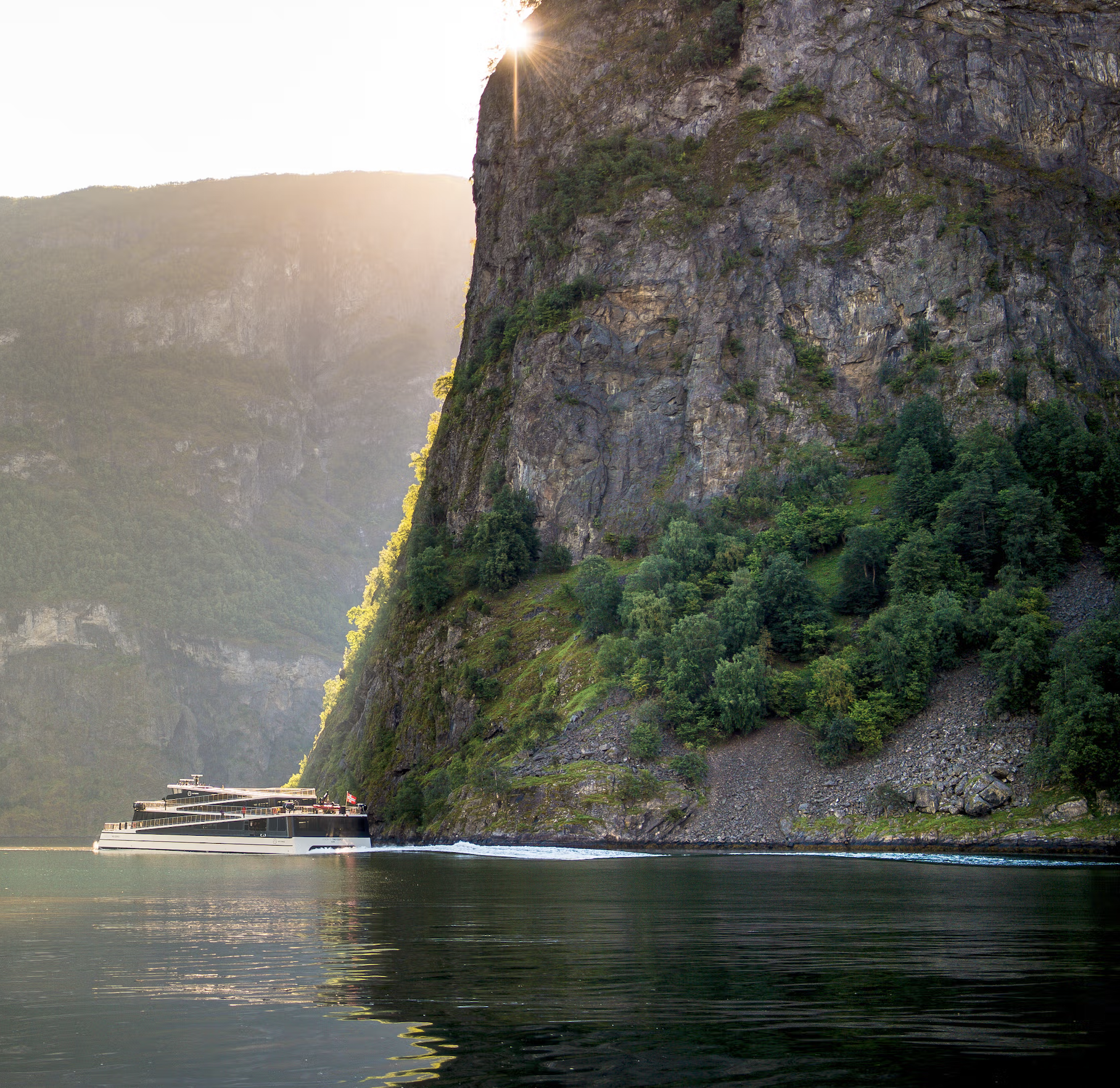
OVERVIEW

For more than a thousand years, the histories of Denmark and Norway have been shaped by the sea – from Viking ships carrying traders, warriors and settlers across Europe to the maritime routes that connected royal capitals, trading ports and remote coastal communities. Across both countries, this history survives in archaeological finds, medieval churches, royal centres and the coastal landscapes that defined them.

This 16-day tour, led by historian and longtime Denmark resident Dr Matthew Dal Santo, traces that story from Zealand to the Norwegian Arctic. In Copenhagen, Lejre and Roskilde, we trace the development of Viking society, kingship and conversion before crossing to Oslo and continuing west through Norway’s mountain and fjord country, visiting the stave churches of Sogn, the Nærøyfjord and Hanseatic Bergen.

From Bergen, we embark MS Nordnorge for four nights on Hurtigruten’s Coastal Express North, sailing through the Geirangerfjord and Trondheim, across the Arctic Circle and through the Lofoten archipelago before concluding in Tromsø.

tour highlights

Trace the Viking world from Denmark to Norway’s Arctic coast

Hurtigruten
Arctic Cruise

Featured Experience

ABOARD MS NORDNORGE

Length 123.3 m (404 ft) | Beam 19.5 m (64 ft) | 211 cabins | Up to 452 guests | Speed 18 knots | Refurbished 2016

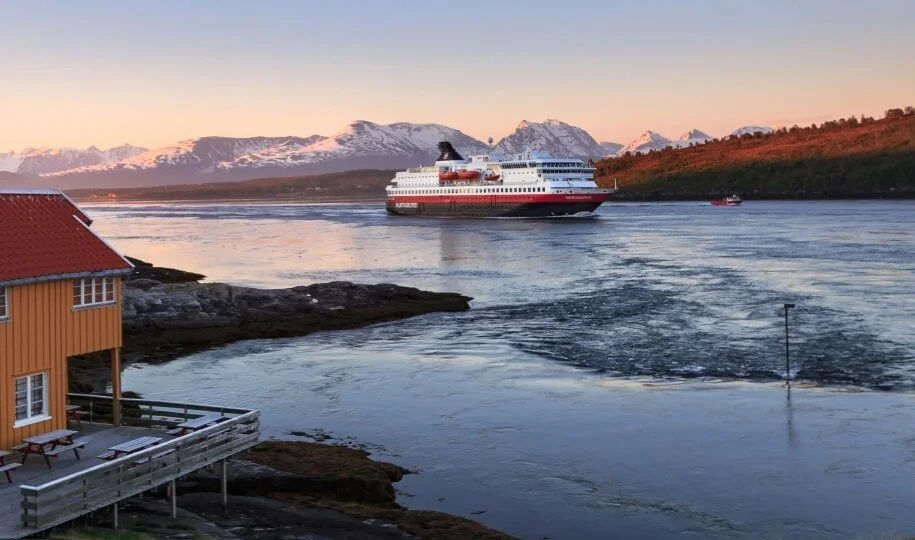
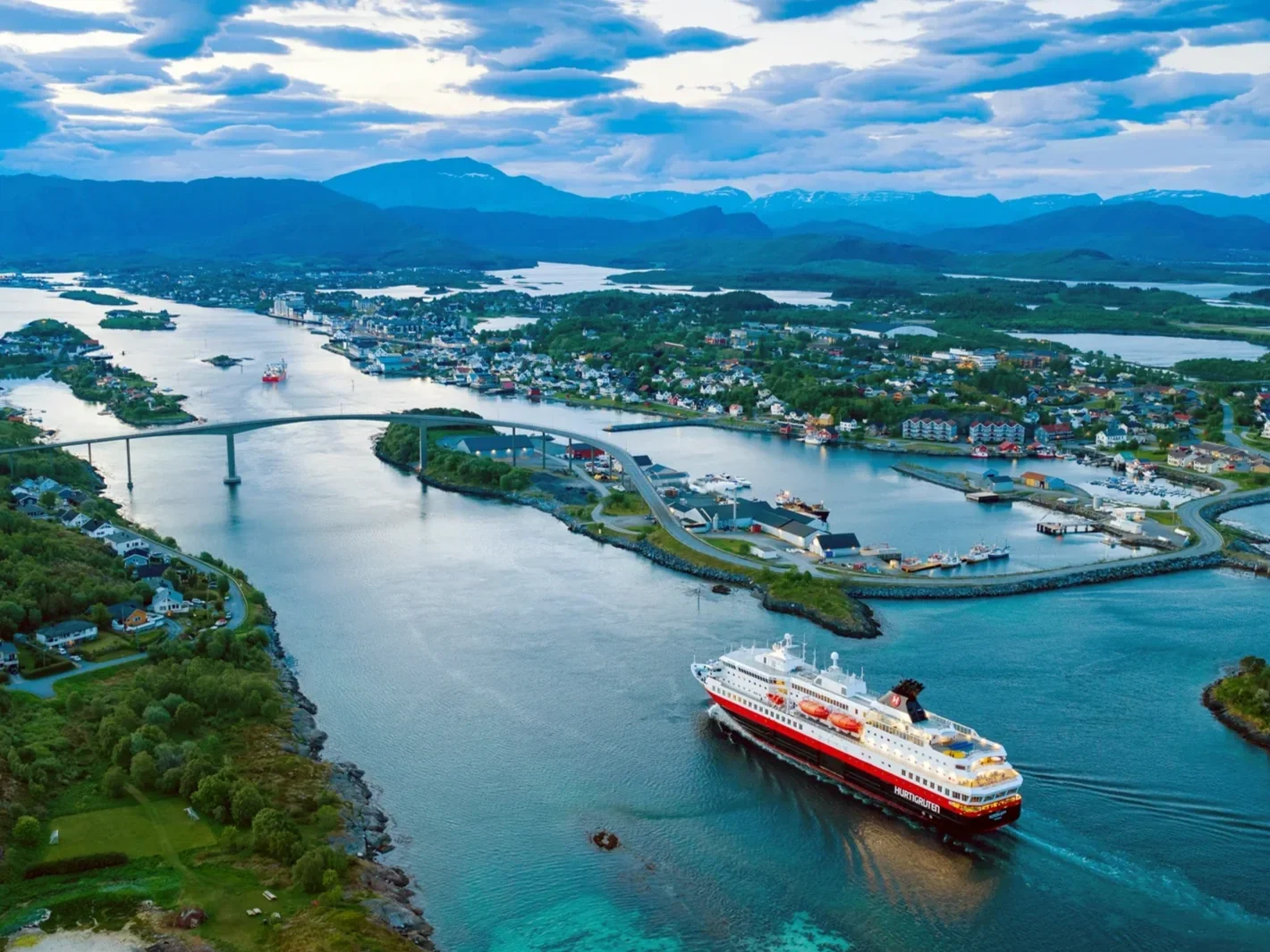
The featured experience of this tour is a four-night voyage aboard MS Nordnorge on Hurtigruten’s historic Coastal Express North. Established in 1893 to connect communities along Norway’s long coastline, the route remains part passenger voyage and part working coastal service, calling at towns and smaller ports as it travels north into the Arctic.

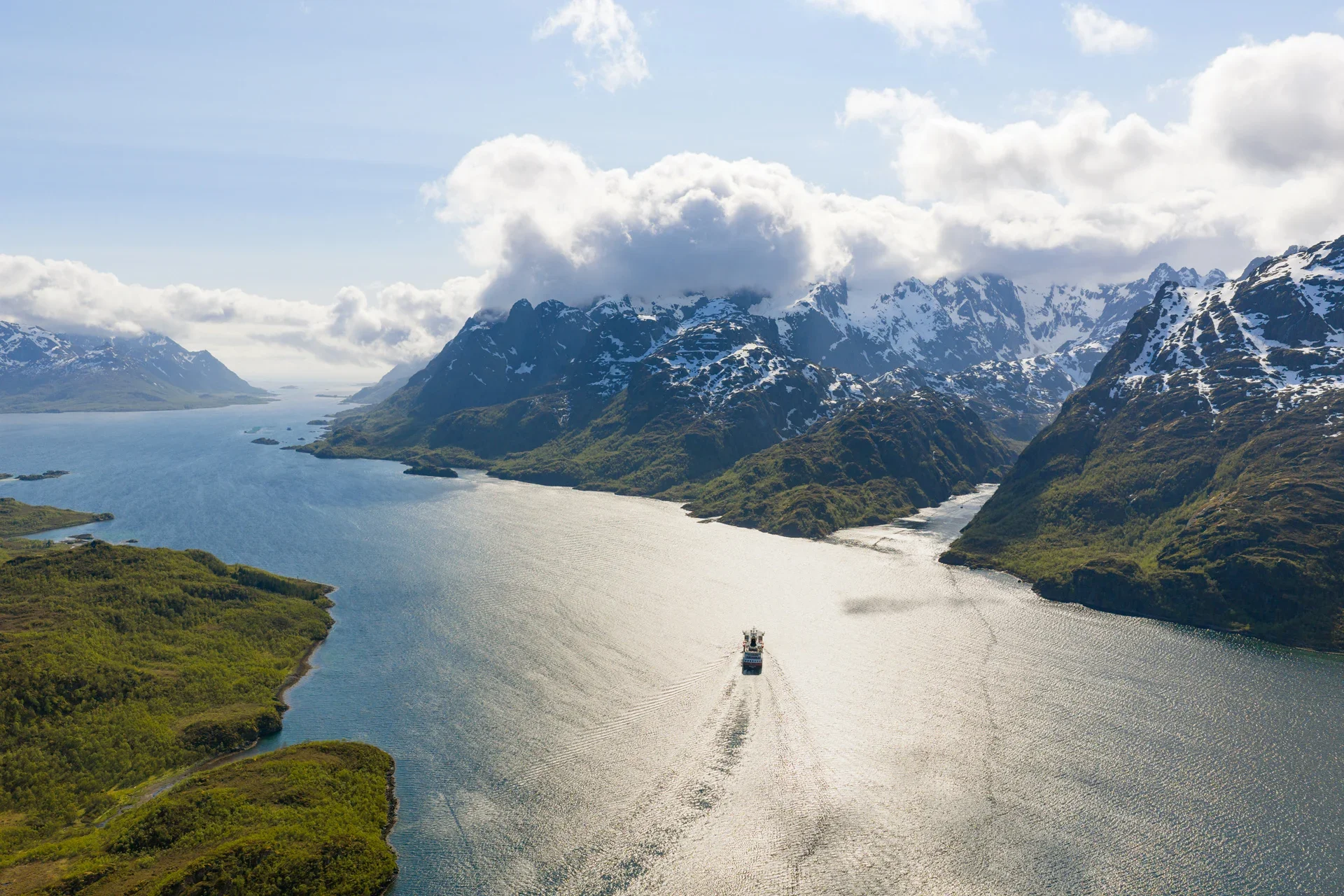
Our carefully planned section begins in Bergen and follows the coast north to Tromsø. We sail into the UNESCO-listed Geirangerfjord, call at Ålesund and Trondheim, cross the Arctic Circle and continue through the islands and narrow waterways of Nordland. Beyond Bodø, the mountains of the Lofoten archipelago rise directly from the sea as we call at Stamsund and Svolvær before disembarking.

Life onboard is designed around the passing coastline. MS Nordnorge features Arctic-inspired interiors, a panoramic lounge and generous outdoor decks, together with two outdoor hot tubs, a sauna and fitness room. Breakfast, lunch and dinner are included throughout the voyage, with Hurtigruten’s Norway’s Coastal Kitchen showcasing ingredients sourced from along the Norwegian coast.

Between meals, the ship’s lounges and open decks offer expansive views of the fjords, islands and fishing communities as we travel north.

Dr Matthew Dal Santo

your expert tour leader

A long-time student of the intersection of history, politics and religion in Western Eurasia, Dr Matthew Dal Santo is Professor of Church History and Historical Theology at St Patrick's Seminary University in Menlo Park ("Silicon Valley"), California. Educated at the Universities of Sydney and Cambridge (PhD, 2009), he is a former fellow of Trinity College, Cambridge (UK), the University of Copenhagen (Denmark), and the Kennan Center for Russian and Eastern European Studies, Washington, DC (USA).

Read full bio >

Accompanied by an Experienced Tour Manager

Alongside your expert tour leader, an experienced tour manager will accompany for the entirety of the tour. They oversee logistics, ensure your comfort and safety, and provide friendly support – whether offering tips for free time, sharing a chat over dinner, or giving you space to relax.

tour ITINERARY

Copenhagen (4 nights), Overnight Ferry (1 night), Oslo (2 nights), Flåm (2 nights), Bergen (1 night), MS Nordnorge (4 nights), Tromsø (1 night)

Included meals are shown with the letters B, L and D
  • Day 1 | Friday 9 July
    Arrive Copenhagen

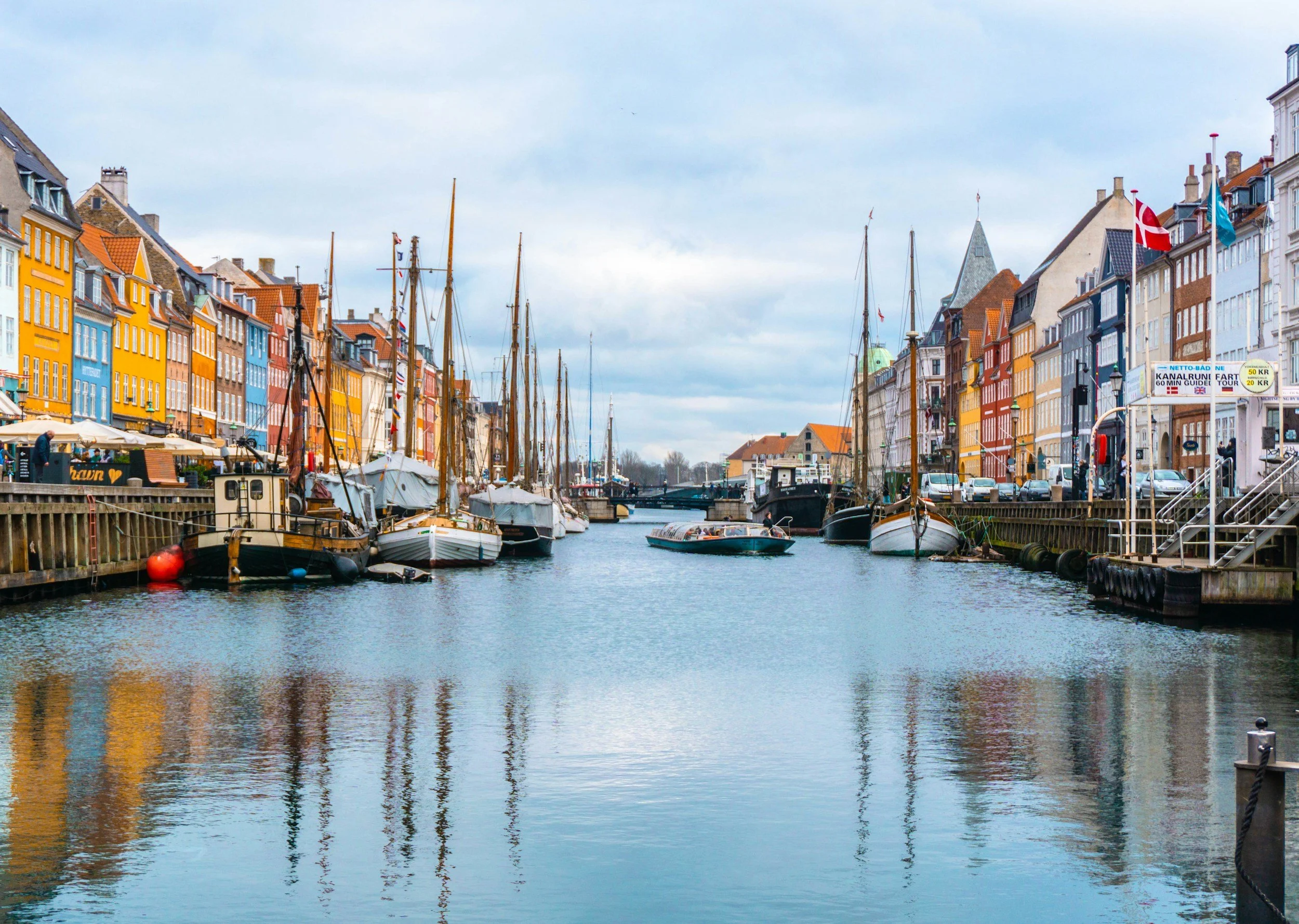
    Set on the eastern coast of Zealand, Copenhagen grew from a small medieval fishing and trading settlement into the commercial and political centre of the Danish Kingdom. On arrival, individual transfers arranged by Academy Travel take us to the Admiral Hotel, placing us directly within this maritime setting on the Inner Harbour between Nyhavn and Amalienborg. Housed in an 18th-century grain warehouse, the Admiral’s quayside setting evokes Copenhagen’s former working waterfront, and it is here that the tour begins with an introductory lecture setting the framework for the journey ahead. We then make our way along the waterfront to Nyhavn for a welcome dinner. Overnight Copenhagen (D)

  • Day 2 | Saturday 10 July
    Harbour, Trade & Royal Copenhagen

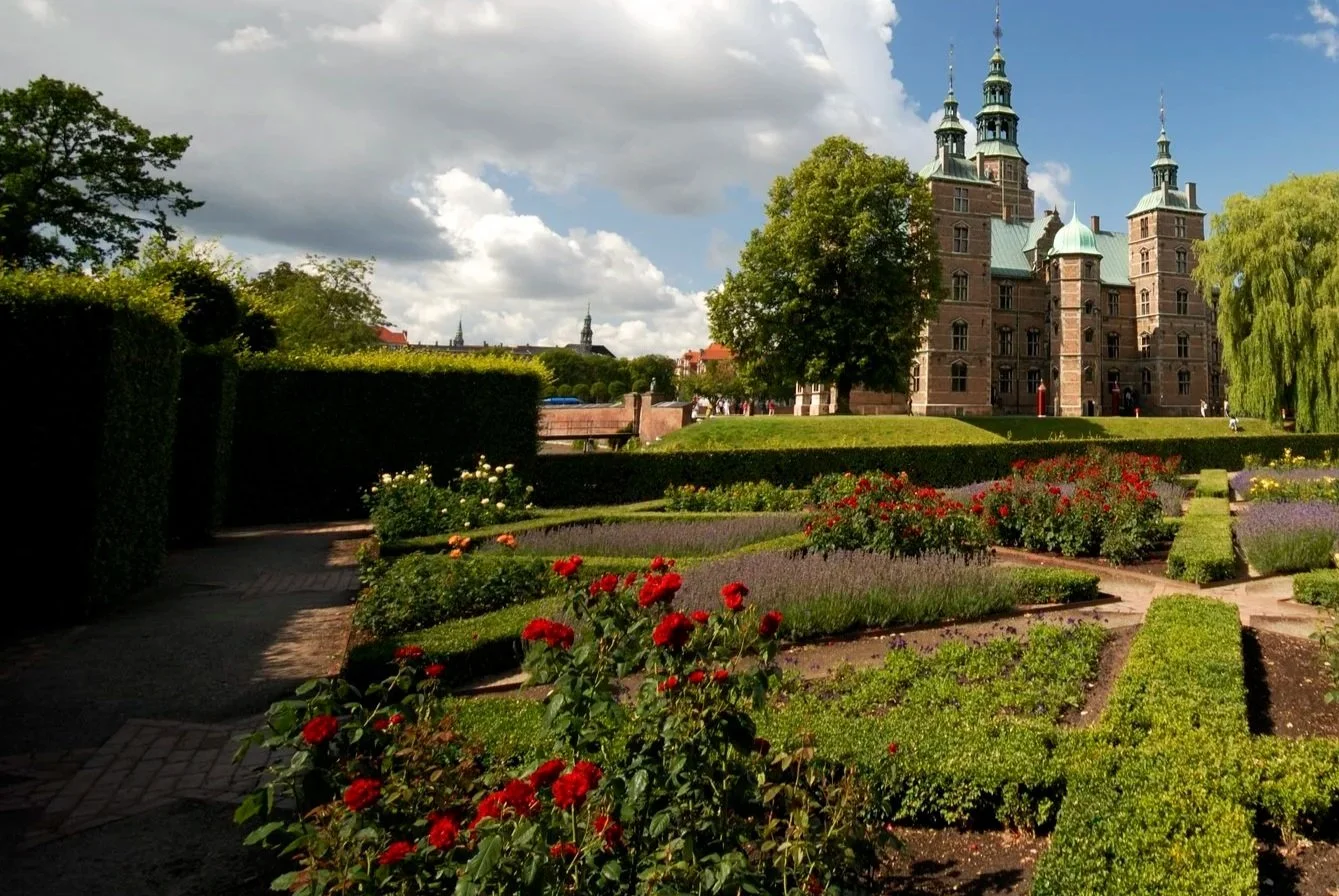
    Copenhagen’s growth was closely tied to the Øresund, the narrow strait linking the Baltic with the North Sea and placing the city astride one of northern Europe’s major maritime routes. As trade expanded, Nyhavn was created in the 1670s as a new commercial harbour, cutting a canal from the waterfront to Kongens Nytorv so that merchant ships could unload their cargo closer to the heart of the city. Warehouses, merchants’ houses and sailors’ taverns soon lined the quays, giving Nyhavn much of the colourful character it retains today, and we begin by exploring the district on foot before taking to the water for a cruise through Copenhagen’s canals. Returning ashore, we then enjoy a selection of Danish smørrebrød for lunch before continuing to Rosenborg Castle. Built in the early 17th century as a country residence for Christian IV, the castle preserves richly furnished royal interiors together with the Danish Crown Jewels and regalia. Our walk back to the hotel then takes us past the great dome of the Marble Church and across Amalienborg, the 18th-century palace complex that remains the principal residence of the Danish monarchy. Overnight Copenhagen (B, L)

  • Day 3 | Sunday 11 July
    Origins of Viking Denmark

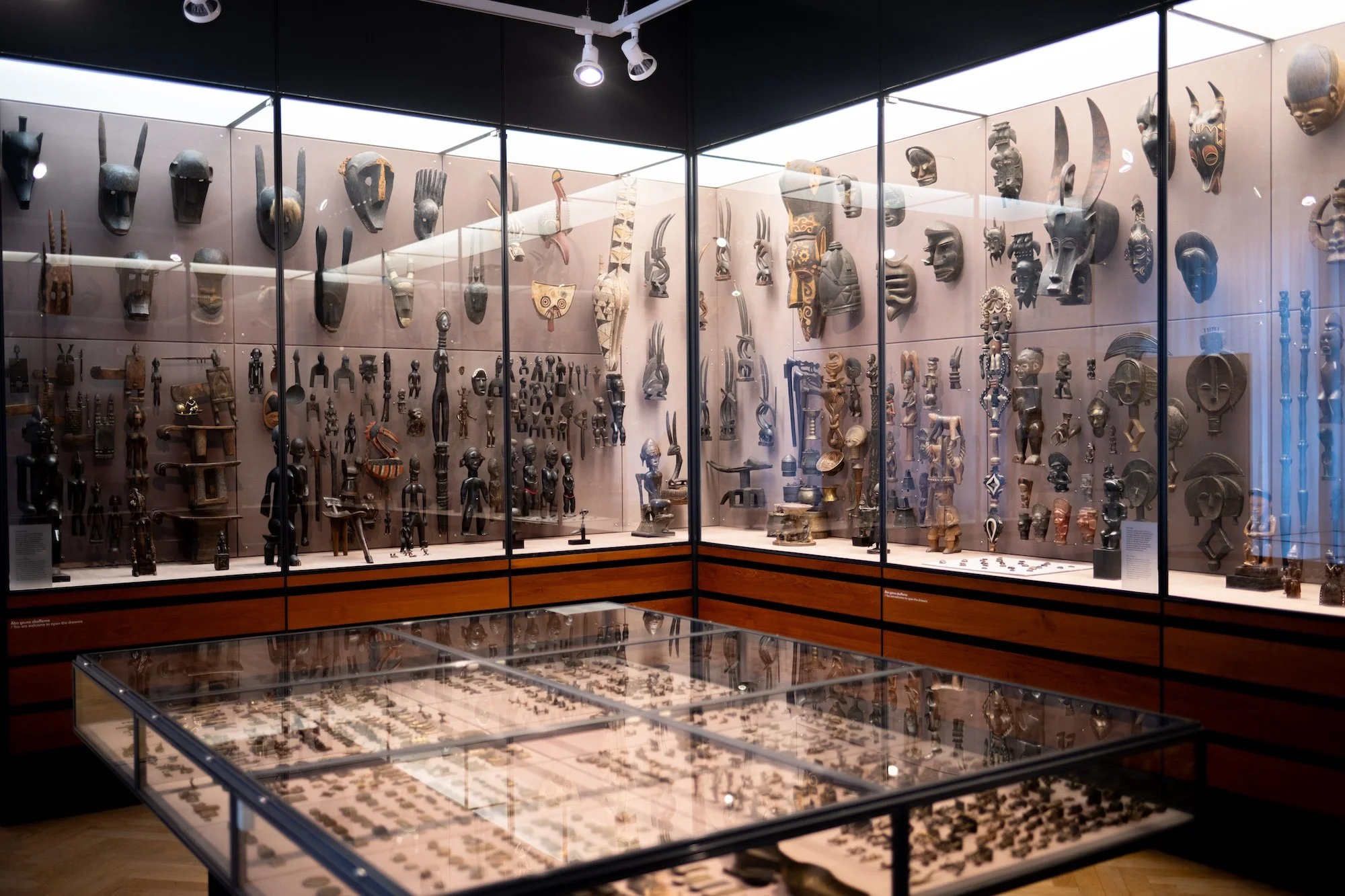
    Long before Denmark was ruled by Viking Kings, successive communities had shaped its landscape – from Mesolithic hunters and early farming societies to the increasingly powerful elites of the Iron Age. Their burial places, ritual deposits and surviving objects form the background to the Viking world we explore over the coming days, with a morning lecture tracing the development of Danish society into the Viking Age. We then walk through central Copenhagen to the National Museum of Denmark, where a guided visit through the Danish Prehistory galleries follows the archaeological record towards the Viking Age. Among the finds are the Aurochs from Vig, the preserved Huldremose Woman and the remarkable Gundestrup Cauldron. Returning towards the hotel on foot, we continue our exploration of central Copenhagen before an afternoon at leisure. In the evening, we reconvene at the Tivoli Gardens, where dinner is enjoyed at Fru Nimb within the illuminated grounds. Overnight Copenhagen (B, D)

  • Day 4 | Monday 12 July
    Lejre and Roskilde

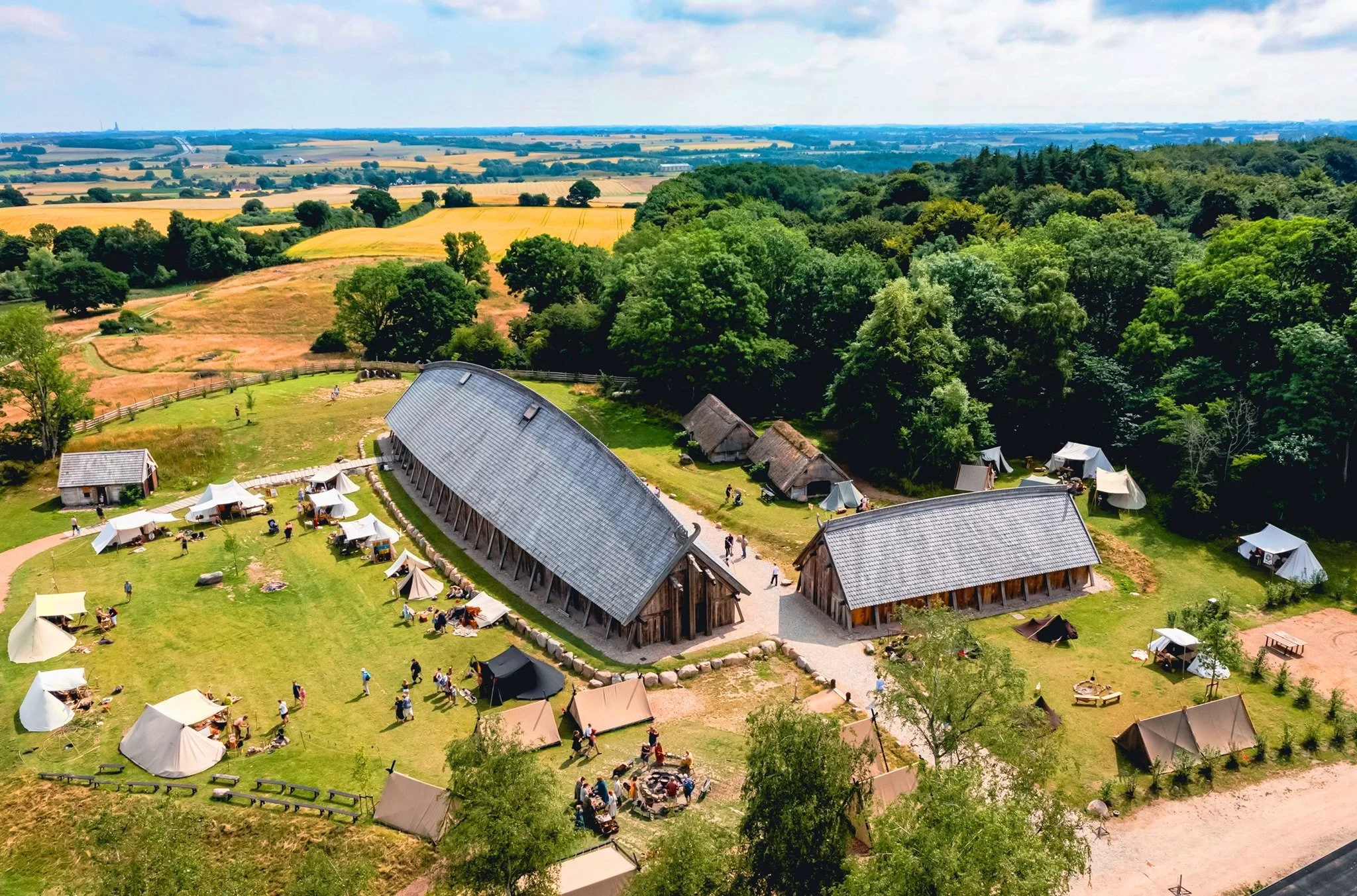
    Across Zealand, centres of royal power were taking shape long before Denmark emerged as a unified Christian Kingdom. One of the most important was Lejre, where excavations have revealed a succession of monumental halls built between the 6th and 10th centuries. As we travel to Lejre this morning, a lecture on Viking religion considers the beliefs of this changing world, before our visit centres on Sagnlandet Lejre – an open-air museum where reconstructed settlements culminate in a full-scale King’s Hall based on archaeological evidence from the site. We then continue to Roskilde for lunch beside the fjord before visiting the Viking Ship Museum, home to five original vessels deliberately sunk in the 11th century to protect the approaches to the town. From the waterfront, we continue to Roskilde Cathedral, where the day’s story of kingship and conversion culminates. Over the centuries, the monarchy represented here would come to rule a wider Danish–Norwegian realm, with Copenhagen at its centre. We return to the city in the late afternoon. Overnight Copenhagen (B, L)

  • Day 5 | Tuesday 13 July
    To Norway

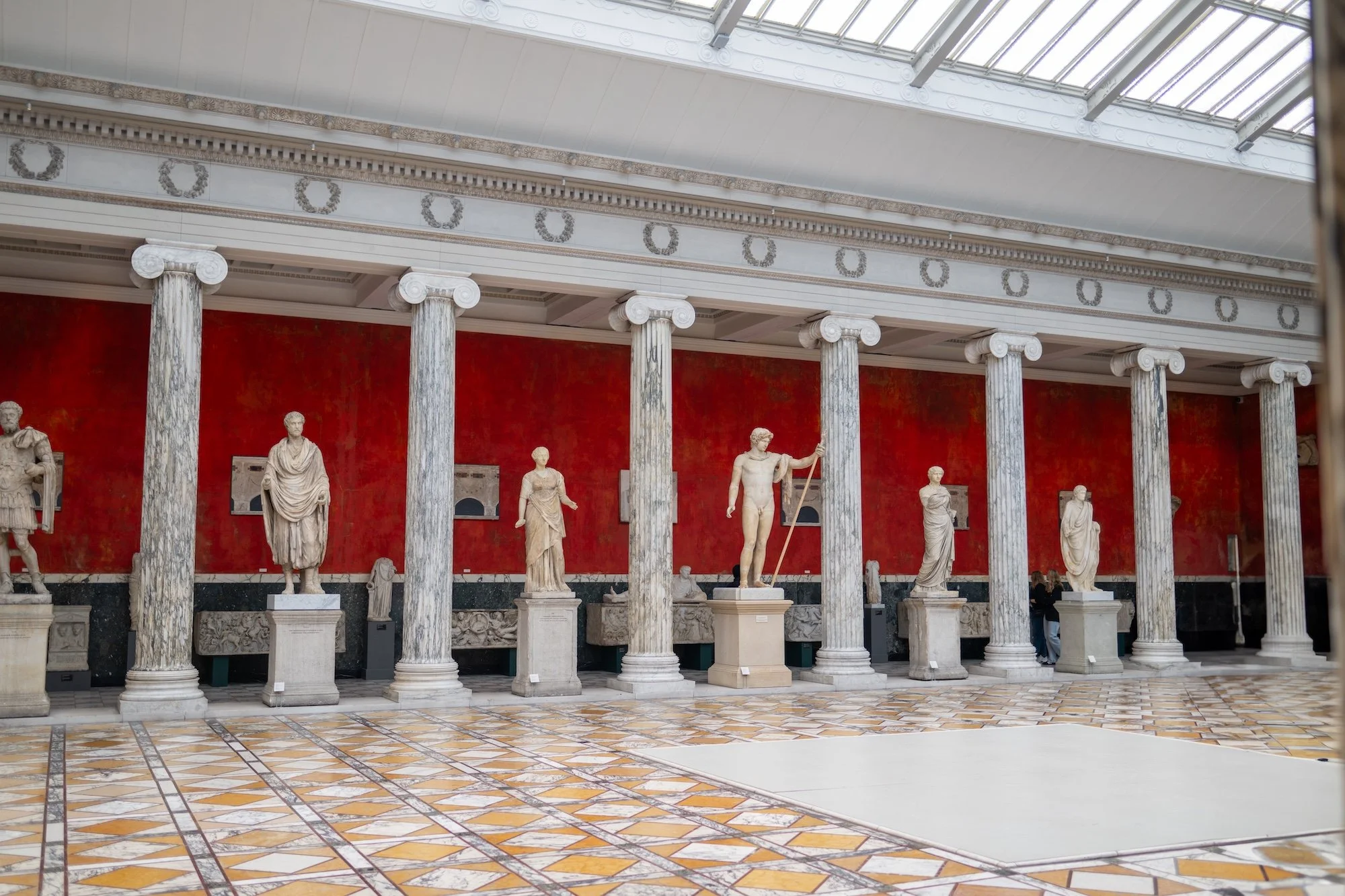
    After more than four centuries under a shared crown, Denmark and Norway separated in 1814. Copenhagen remained the centre of the Danish Kingdom, and during the 19th century industrial fortunes helped create a new generation of museums and buildings. Among them was the Ny Carlsberg Glyptotek, founded by brewing magnate Carl Jacobsen to house his extensive collection of ancient and modern art. A morning guided visit takes us from Egyptian and Roman antiquities to works by Rodin, Degas and Gauguin, with the galleries arranged around the museum’s glass-domed Winter Garden. After a break for lunch, we continue to Copenhagen City Hall, completed in 1905 as the city expanded beyond its historic centre. We then return to our hotel and transfer to the harbour, boarding the overnight ferry to Oslo. Our sea-view cabins provide private ensuite facilities, while the ship’s restaurants, lounges and open decks allow us to enjoy the crossing as Copenhagen recedes behind us. Dinner is served onboard as we sail north towards the Oslofjord. Overnight Ferry (B, D)

  • Day 6 | Wednesday 14 July
    A Norwegian Capital

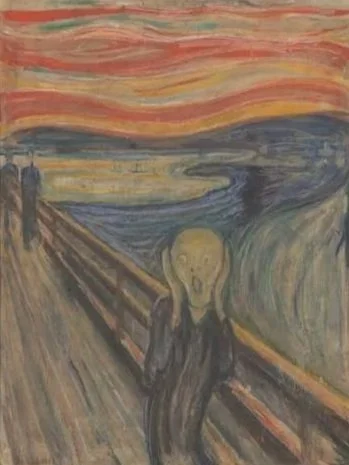
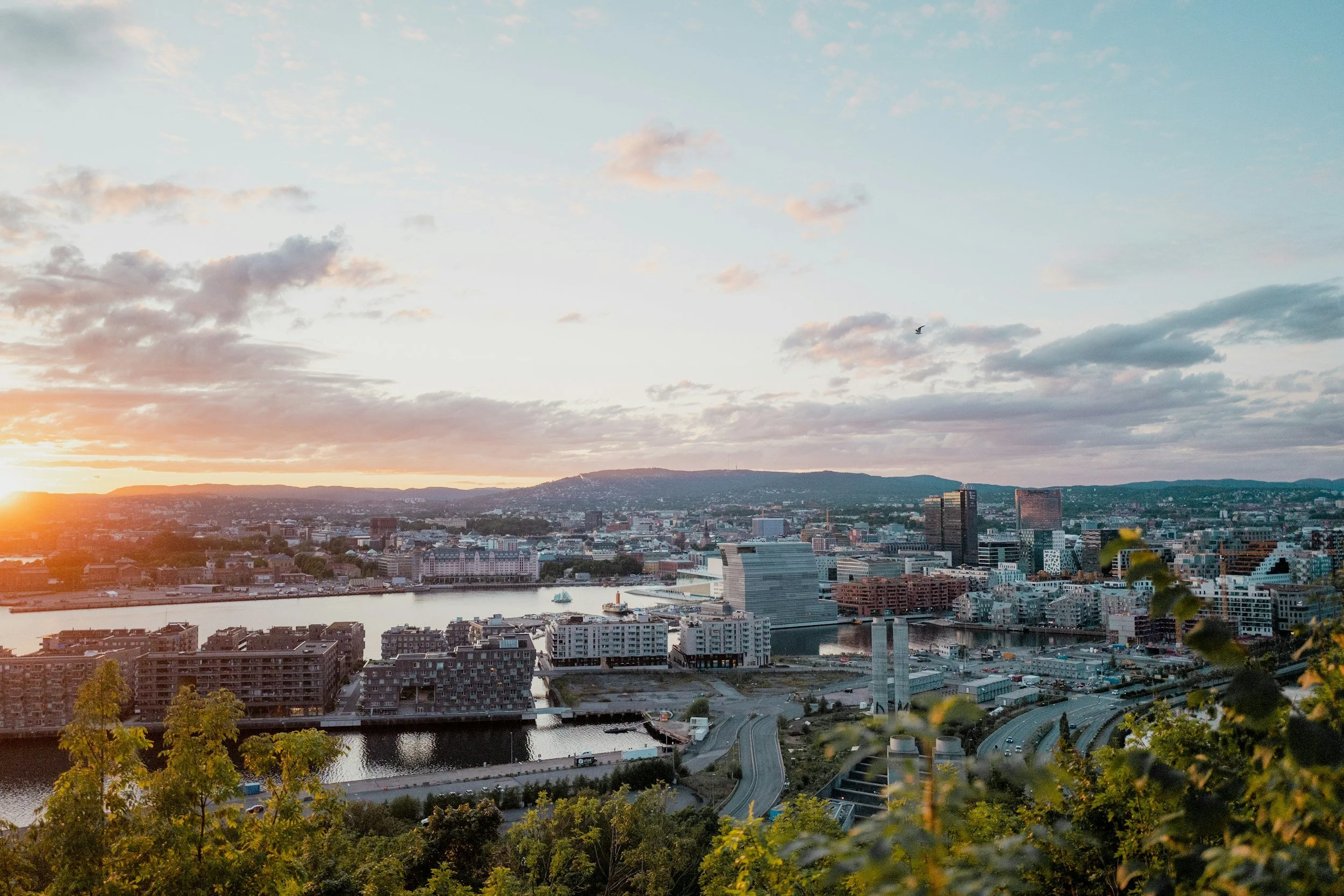
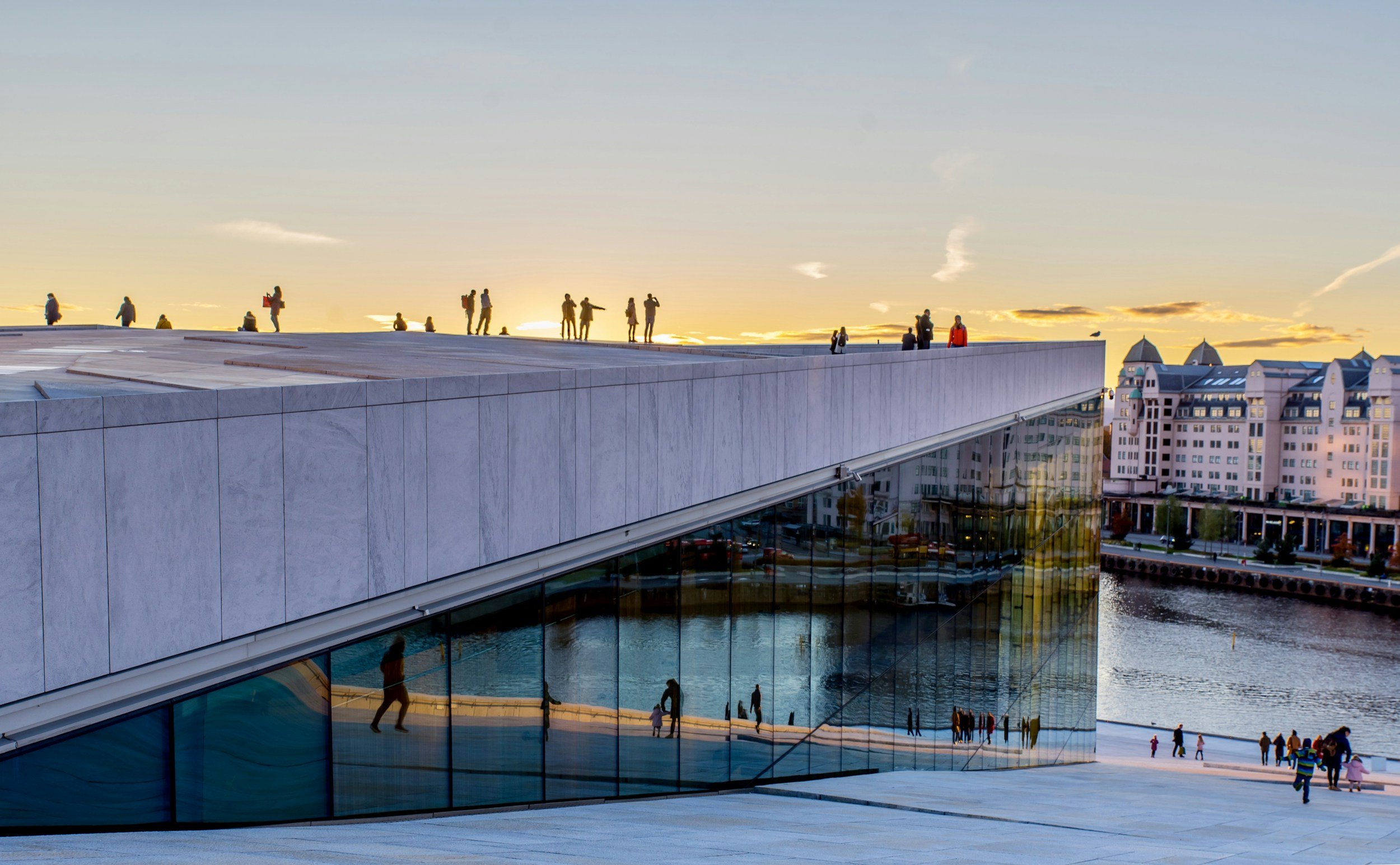
    Growing around its harbour beneath Akershus Fortress, Oslo was rebuilt after a devastating fire in 1624 and renamed Christiania by King Christian IV. After 1814, the city became the seat of Norway’s government, and during the 19th century its centre expanded westwards along Karl Johans gate towards the new Royal Palace. The name Oslo was restored in 1925, but these successive layers still shape the capital we explore today. After disembarking, we begin with a guided coach tour past Akershus Fortress, Oslo City Hall and the Royal Palace before continuing to the Bygdøy peninsula. Here, the Norsk Folkemuseum brings together farmhouses from regions across Norway, including Trøndelag and Hardanger. We also explore King Oscar II’s pioneering open-air collection, established at Bygdøy in 1881, whose centrepiece is the medieval Gol Stave Church, with its carved portals, dragon motifs and surviving runic inscriptions. We then cross the harbour by ferry to Aker Brygge and continue to the National Museum, home to the most comprehensive collection of Norwegian art from the late 18th century to the Second World War. Our guided visit includes the museum’s major holdings of Edvard Munch, including the 1893 painted version of The Scream, before we return on foot along Karl Johans Gate. Overnight Oslo (B)

  • Day 7 | Thursday 15 July
    Viking Norway
    Norway’s long coastline, deep fjords and scattered farming communities shaped a Viking society closely tied to the sea. From the late 8th century, Norwegian seafarers pushed west across the North Atlantic, while regional chieftains competed for wealth and authority at home. A morning lecture explores this world before we walk to the Historical Museum, where the VIKINGR galleries bring its people, beliefs and material culture into focus. Among the highlights are the 10th-century Gjermundbu helmet and chain mail, the richly decorated sword from Langeid and silver and luxury goods carried to Scandinavia through trading networks that reached as far as the Islamic world. Other objects trace the changing religious landscape, from Thor’s hammer to the Christian cross – anticipating the transformation we encounter in Norway’s medieval churches later in the tour. After lunch together at a local restaurant, the afternoon is at leisure to continue exploring Oslo independently. Overnight Oslo (B, L)

  • Day 8 | Friday 16 July
    Across the Mountains to Flåm

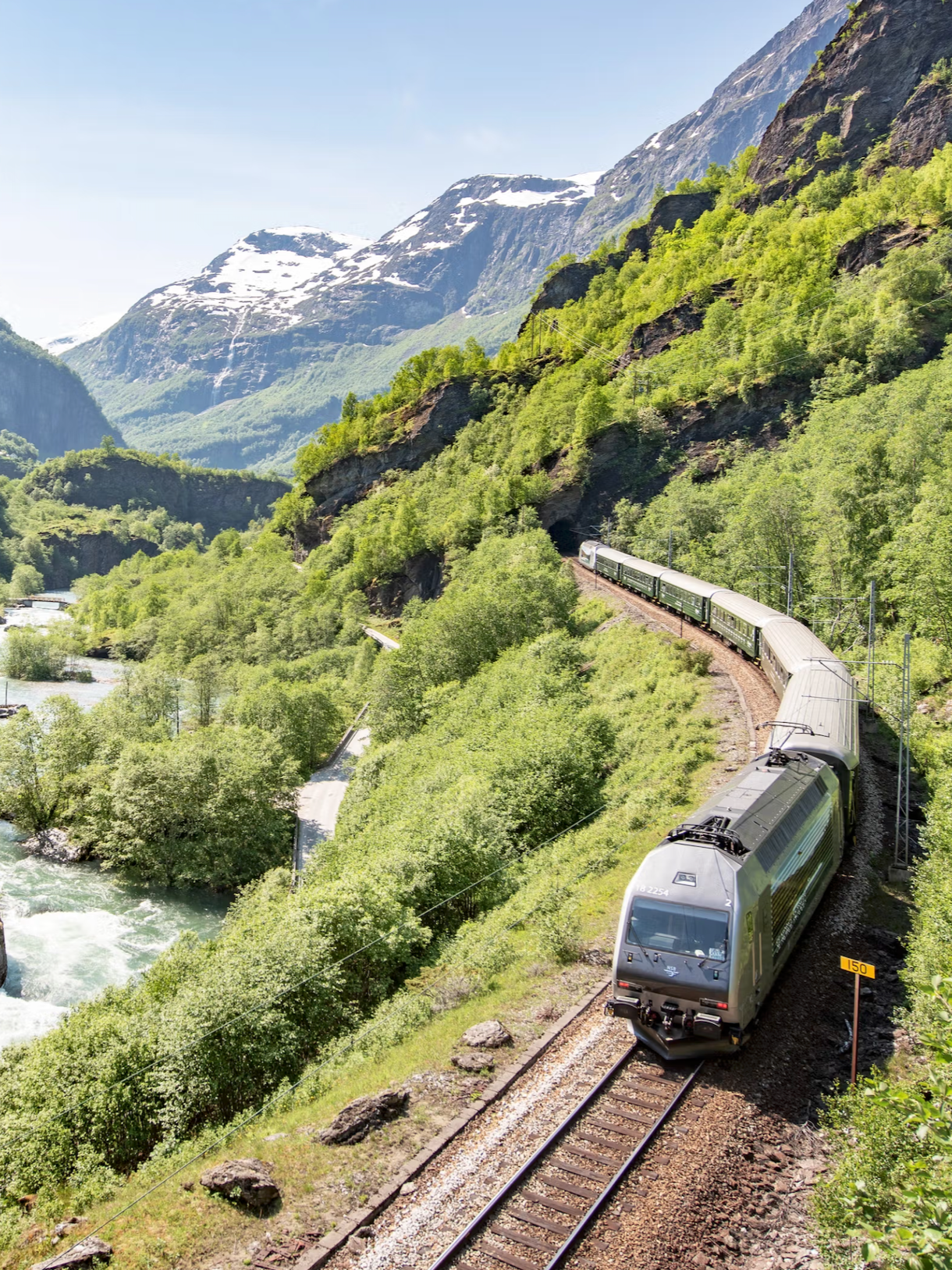
    Norway’s geography has always imposed its own patterns of movement, with mountains dividing the interior while fjords opened routes deep into the landscape. The railway across southern Norway transformed these connections in the early 20th century, linking Oslo with the west coast across the high plateau of the Hardangervidda. Continuing our journey into Norway’s fjord country, we board the morning train from Oslo, with lunch provided for the trip. As we travel west, forests gradually give way to mountain lakes and bare uplands as the line climbs towards Myrdal, where we change to the Flåm Railway for the dramatic descent towards the Aurlandsfjord. Dropping 866 metres in under an hour, the railway winds through a steep valley of waterfalls and mountain farms, pausing beside the thundering Kjosfossen. A recorded lecture on Viking art accompanies the route, preparing us for the medieval timber churches we encounter tomorrow. On arrival in Flåm, we check into our hotel, where dinner is served this evening. Overnight Flåm (B, L, D)

  • Day 9 | Saturday 17 July
    The Stave Churches of Sogn

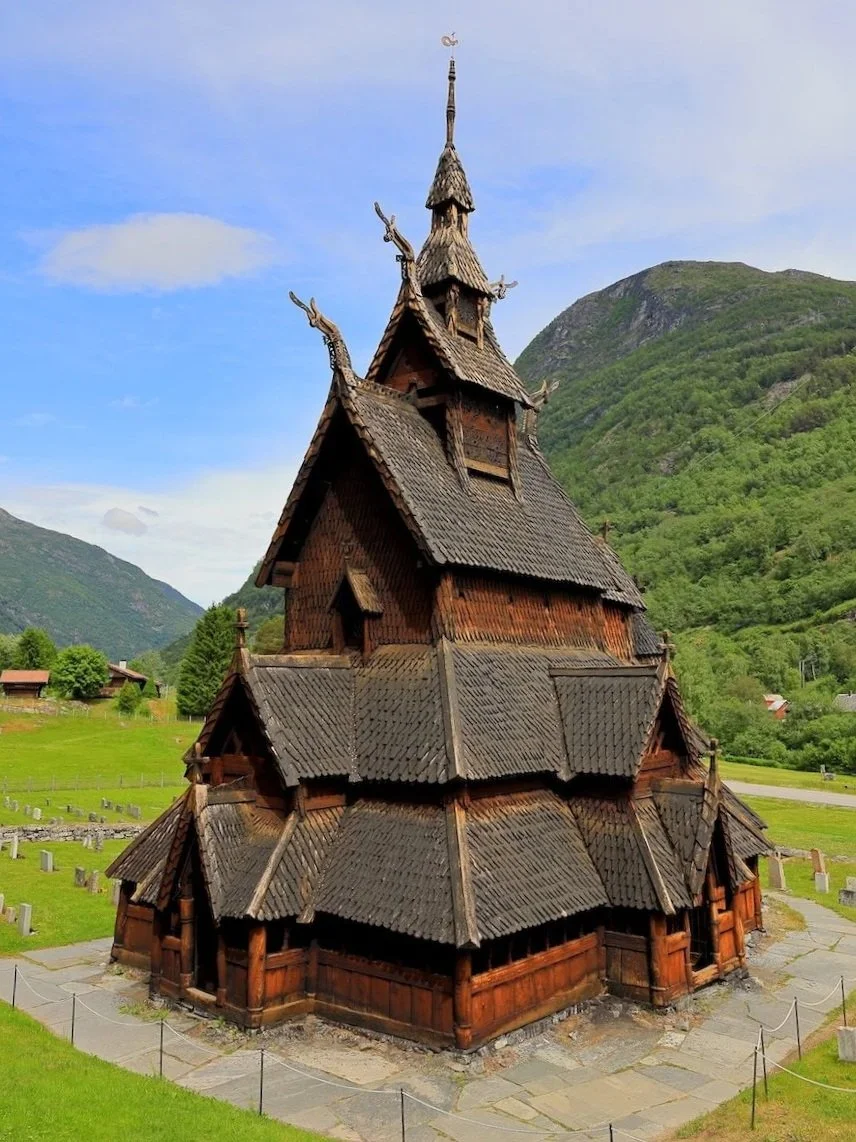
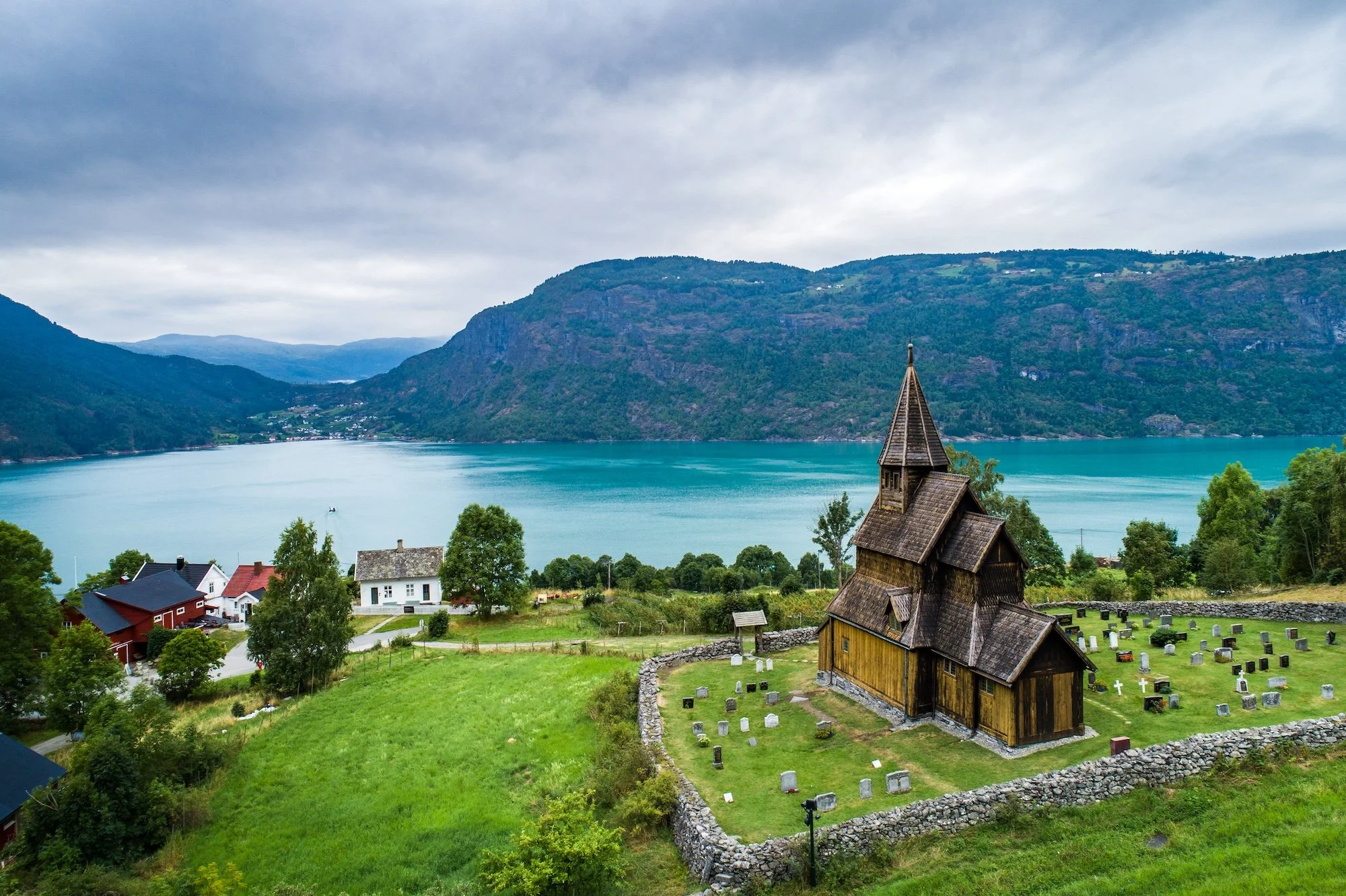
    Norway’s conversion to Christianity around the year 1000 transformed religious life without erasing older artistic traditions. Churches were raised in timber using established Scandinavian building techniques, while carved portals continued to carry the interlaced animals and gripping beasts of Viking ornament into a Christian setting. Only 28 stave churches survive in Norway and today we visit two of the finest examples. Travelling through the mountain landscape, we begin at Borgund Stave Church, built around 1180 and remarkably complete with its tiered roofs. We then continue to the village of Solvorn on the Lustrafjord, pausing for a lunch break before taking the ferry across the water to Urnes. Standing above the fjord, Urnes Stave Church dates from around 1130 and its celebrated north portal, reused from an earlier church on the site, preserves the sinuous interlaced animals of the Urnes style. On return across the fjord, we travel back towards Flåm via the mountain road to Stegastein, where the lookout projects high above the Aurlandsfjord. Dinner is served at our hotel this evening. Overnight Flåm (B, D)

  • Day 10 | Sunday 18 July
    The Nærøyfjord and Bergen

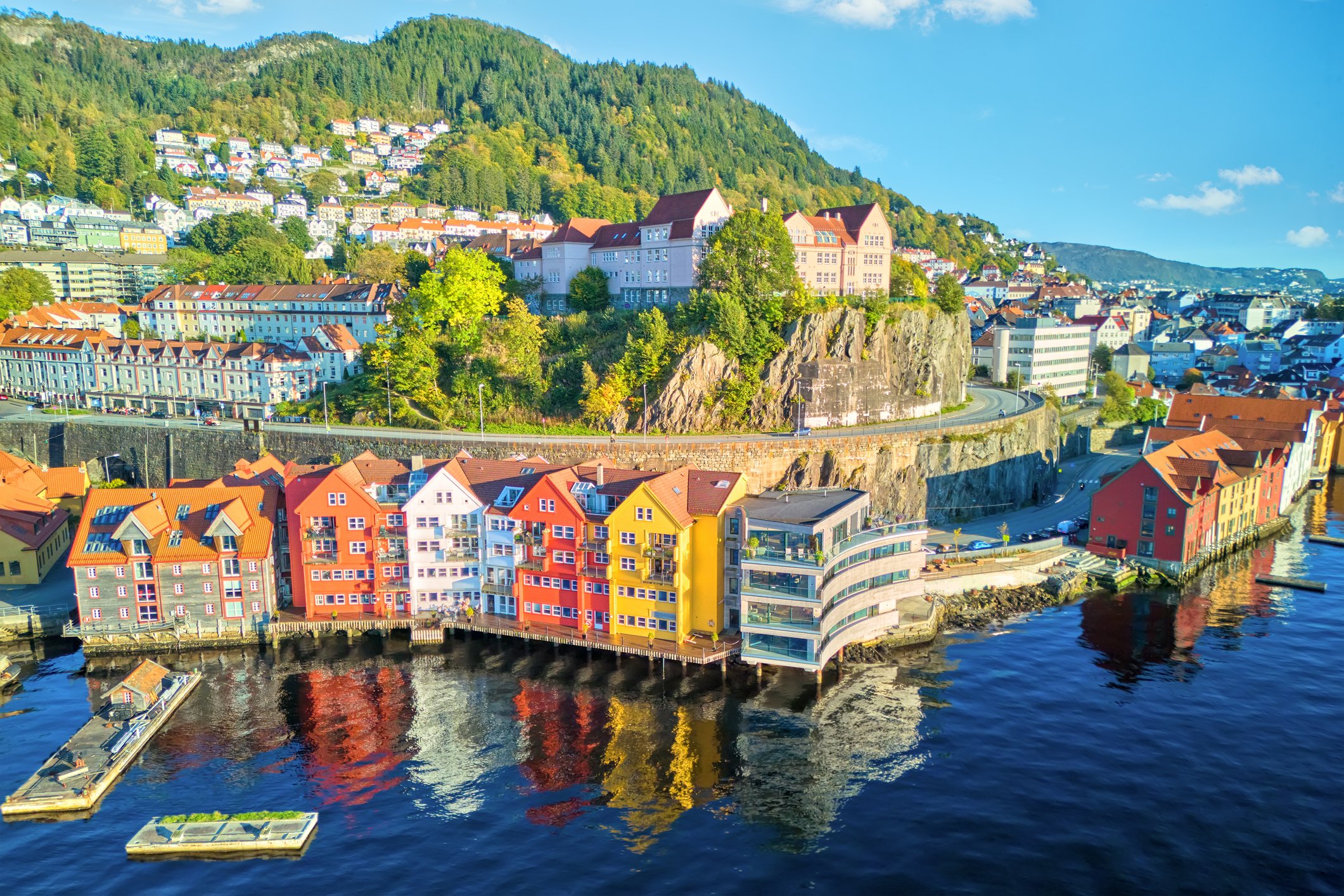
    For centuries, the fjords of western Norway served as natural routes into a landscape otherwise divided by steep mountains and narrow valleys. The Nærøyfjord, a slender arm of the Sognefjord, makes that geography especially clear, with cliffs rising sharply from the water and small settlements occupying the limited ground along its shores. Leaving Flåm behind, we board a two-hour cruise through this UNESCO World-Heritage landscape to Gudvangen. From here, we continue by coach to Stalheim, pausing for afternoon tea and views across the steep-sided Nærøydalen Valley before travelling on to Bergen. By late afternoon, we arrive in Norway’s great west-coast port and ascend Mount Fløyen by funicular, gaining a panoramic view across the city, harbour and surrounding islands. After checking into our hotel, we gather for dinner at Bryggen Tracteursted in the old Hanseatic quarter – beside the waterfront that will lead us into the next stage of our journey north. Overnight Bergen (B, D)

  • Day 11 | Monday 19 July
    Bergen and the Coastal Voyage | Embarkation

    For centuries, Bergen’s wealth was tied to the sea, particularly the trade in dried cod carried south from the fishing grounds of northern Norway. From the 14th century, Hanseatic merchants controlled much of this commerce from Bryggen, whose timber warehouses still line the harbour. Following a morning lecture, we explore this mercantile world through the historic quarter before broadening the story of the city through two of its major institutions. At Troldhaugen, the lakeside home of Edvard Grieg, a lunchtime concert introduces the composer’s music, while back in the city, KODE brings together important collections of Norwegian and European art. In the late afternoon, we transfer to the harbour and board MS Nordnorge for Hurtigruten’s Coastal Express North. Since 1893, this route has linked communities along Norway’s long and deeply indented shoreline. Dinner is served onboard as we begin our voyage north. Overnight MS Nordnorge (B, D)

  • Day 12 | Tuesday 20 July
    Ålesund and the Geirangerfjord

    Western Norway’s coast becomes increasingly dramatic as we sail north, with islands, narrow sounds and deep fjords cutting into a mountainous shoreline. After passing the West Cape,
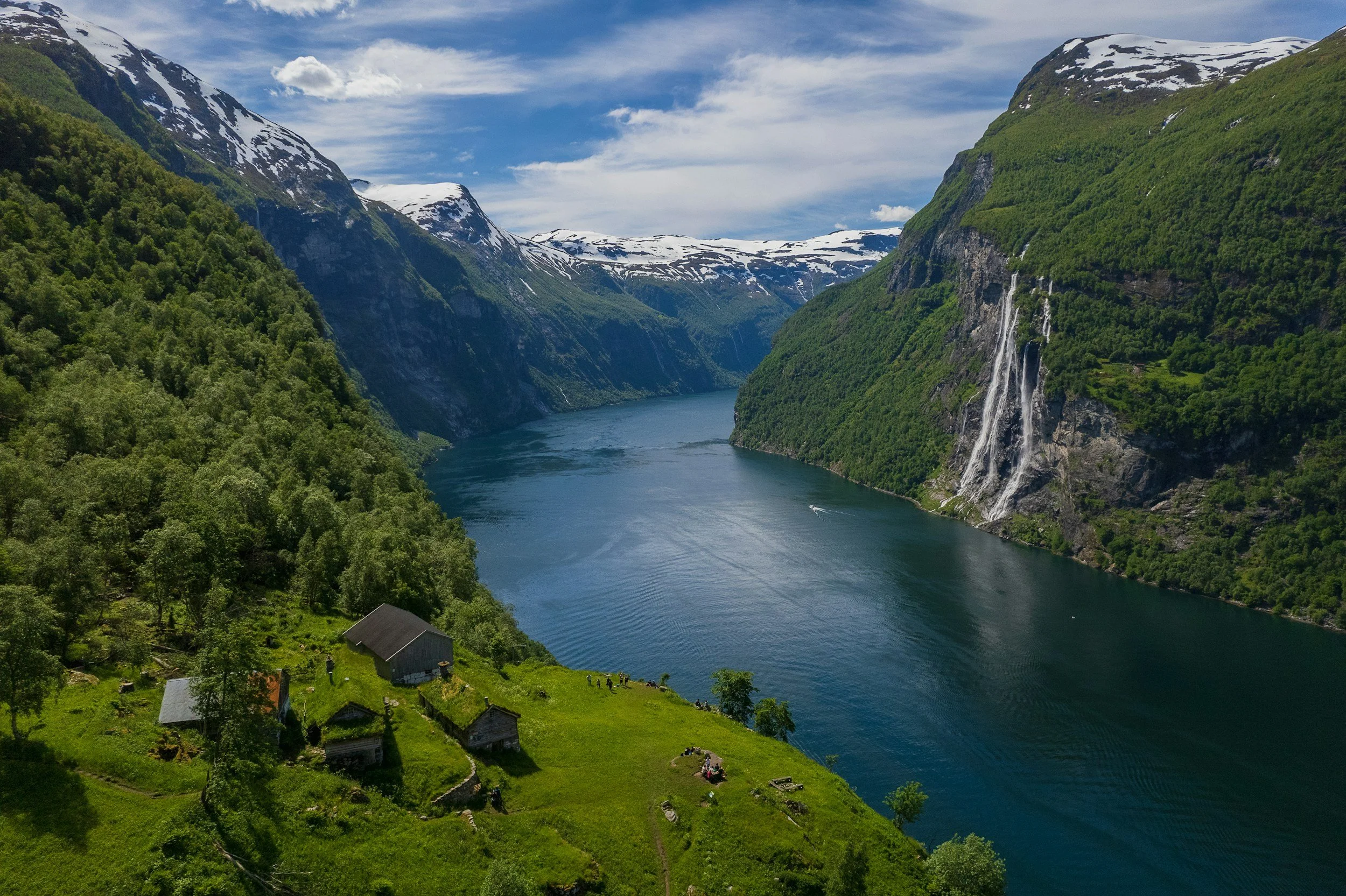
    we approach Ålesund, whose centre was almost entirely rebuilt after the fire of 1904 in the sinuous forms and decorative detail of Art Nouveau architecture. From Ålesund, MS Nordnorge turns inland towards the Geirangerfjord, part of the UNESCO World-Heritage listed West Norwegian Fjords. Mountains rise steeply from the narrow waterway as we pass isolated farms and waterfalls descending from the high plateau, including the Seven Sisters. The return towards the coast brings us back through Ålesund before continuing north towards Molde, where the surrounding fjord is framed by the mountain peaks of the celebrated Molde Panorama. During the day, a recorded lecture on St Olav and the Viking conversion to Christianity prepares us for Trondheim and Nidaros Cathedral tomorrow. All meals are enjoyed onboard as our Coastal Express voyage continues north. Overnight MS Nordnorge (B, L, D)

  • Day 13 | Wednesday 21 July
    Trondheim and St Olav

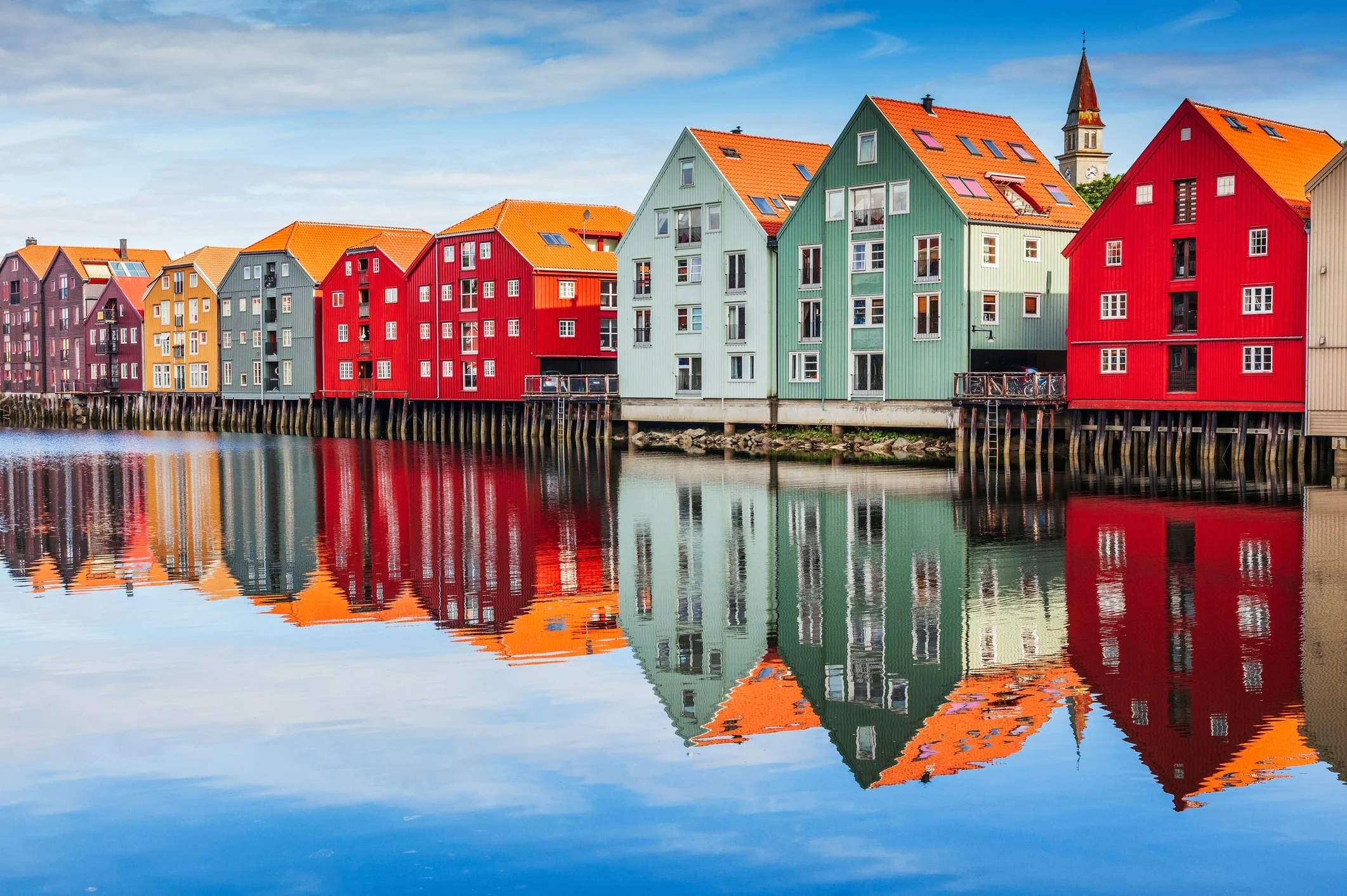
    Founded by Viking King Olav Tryggvason in 997, Trondheim – known in the Middle Ages as Nidaros – became one of the most important centres of royal power in Norway. Its significance grew after the death of King Olav Haraldsson in 1030, when reports of miracles at his grave led to his veneration as St Olav and transformed the city into a pilgrimage destination. Our morning call brings us into the city, where we visit Nidaros Cathedral, raised over St Olav’s burial place and developed over several centuries into the northernmost medieval Gothic cathedral in Europe. Back aboard MS Nordnorge, a private lecture turns our attention northwards, considering the Vikings and the Arctic as the Coastal Express leaves Trondheim behind. During the afternoon, we sail along the Trøndelag coast, passing low-lying islands, rocky reefs and the ochre-coloured Kjeungskjær Lighthouse before continuing towards Rørvik, our final call of the day. Overnight MS Nordnorge (B, L, D)

  • Day 14 | Thursday 22 July
    Into the Arctic

    North of the Trøndelag coast, the shoreline breaks into an intricate chain of islands and small ports as MS Nordnorge approaches the Arctic Circle. Following early calls at Brønnøysund, Sandnessjøen and Nesna, we cross 66°33’ north during the morning, marked onboard with Hurtigruten’s traditional Arctic Circle ceremony. A brief call at Ørnes follows, close to the great ice cap of Svartisen, Norway’s second-largest glacier. By early afternoon we reach Bodø, where there is time ashore. Those wishing to venture further can take an excursion to Saltstraumen, the powerful tidal maelstrom just beyond the city. Beyond Bodø, the mountains of Lofoten begin to rise directly from the sea. The near-continuous peaks of the Lofoten Wall, reaching around 1,000 metres, dominate the horizon as we then enter the archipelago. Evening calls at Stamsund and Svolvær bring us among its fishing communities before the Coastal Express continues north beneath the long light of the Arctic summer. Overnight MS Nordnorge (B, L, D)

  • Day 15 | Friday 23 July
    Tromsø – Capital of the Arctic | Disembark

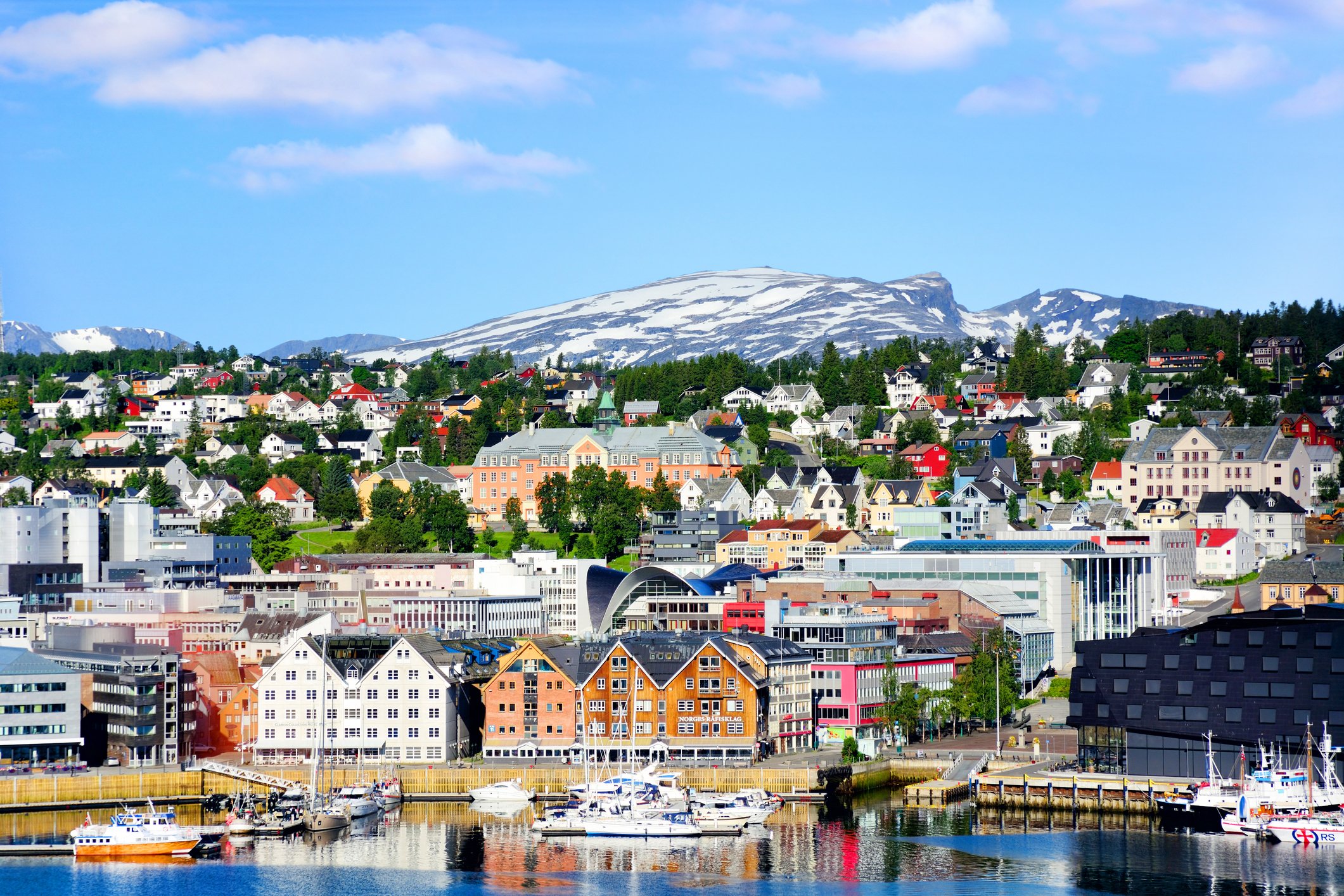
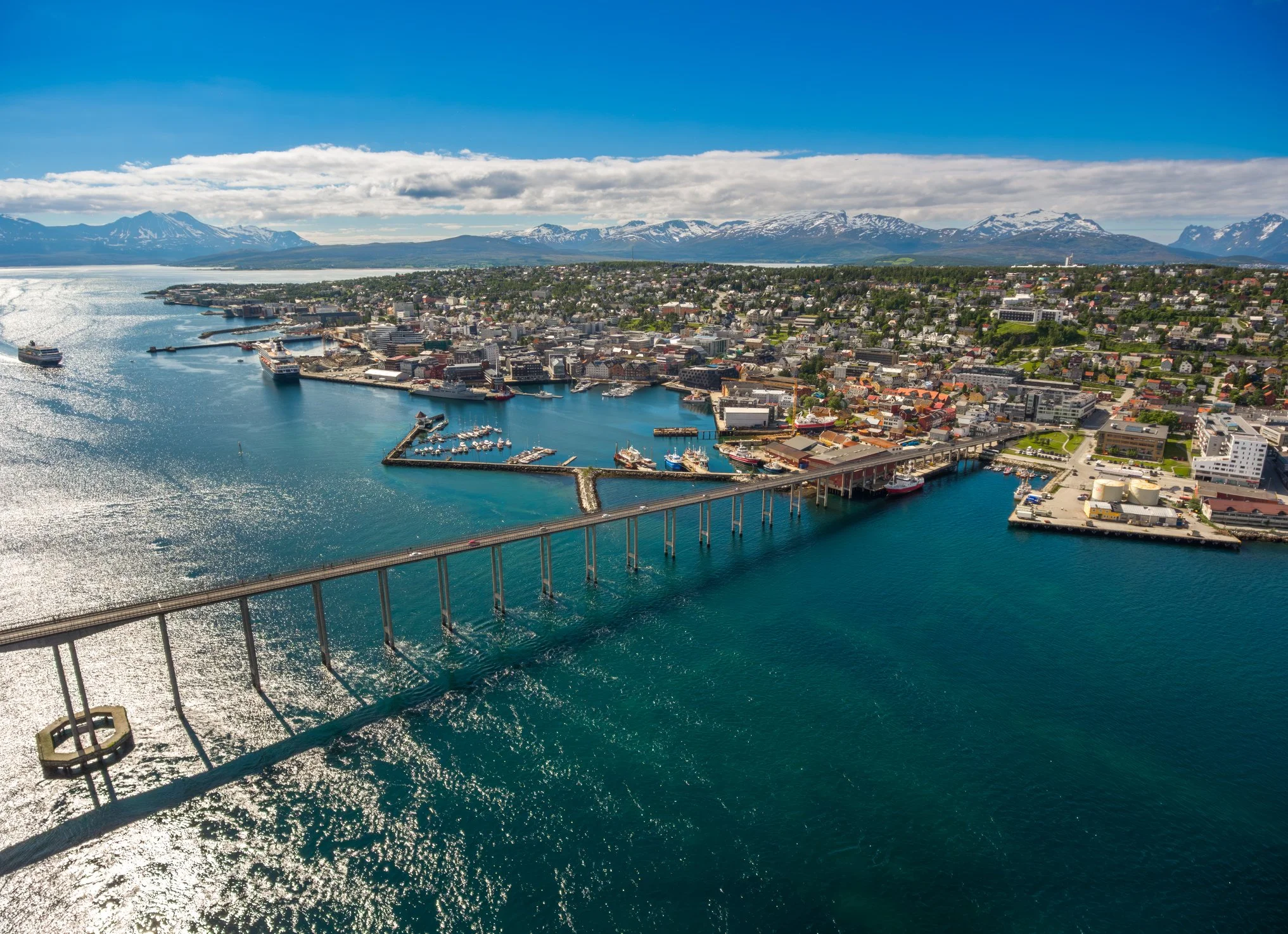
    Beyond Lofoten, northern Norway unfolds as a broken landscape of islands, narrow sounds and mountain-lined waterways, with settlements clustered wherever the coast allows. MS Nordnorge continues through these sheltered passages this morning, calling at Harstad before sailing past Finnsnes and the island of Senja as we make our way towards Tromsø. After lunch onboard, we arrive in the early afternoon and disembark, bringing our Coastal Express voyage from Bergen to a close. The city’s harbour became an important centre for Arctic hunting, trade and polar exploration during the 19th and early 20th centuries. A local guide introduces this history at the Polar Museum, housed in a former waterfront warehouse and filled with material relating to trappers, sealers and expeditions into the polar seas. We then cross Tromsø Sound to the Arctic Cathedral before concluding at Pust, the floating harbour sauna, where the adventurous can take a dip in Arctic waters. This evening, we gather for a farewell dinner overlooking the city and fjord. Overnight Tromsø (B, L, D)

  • Day 16 | Saturday 24 July
    Depart Tromsø

    The Norse had a word for the moment of departure – útferð, the ‘faring out’. After breakfast, our own faring out begins with transfers to Tromsø Airport for onward flights. For those continuing on the optional Lofoten extension, the journey continues into the archipelago for three further nights. (B)

Hotels have been selected for their central locations and high standard, complemented by one night aboard the Copenhagen–Oslo ferry in sea-view cabins and four nights aboard MS Nordnorge on Hurtigruten’s Coastal Express North in Arctic Superior outside cabins.

Tour Accommodation

  • Copenhagen, Admiral Hotel (4 nights)

  • Overnight Ferry Copenhagen–Oslo, Go Nordic Cruiseline (1 night)

  • Oslo, Clarion Hotel The Hub (2 nights)

  • Flåm, Fretheim Hotel (2 nights)

  • Bergen, The Hanseatic Hotel (1 night)

  • Norwegian Coast, MS Nordnorge – Hurtigruten Coastal Express North (4 nights)

  • Tromsø, The Dock 69°39 by Scandic (1 night)
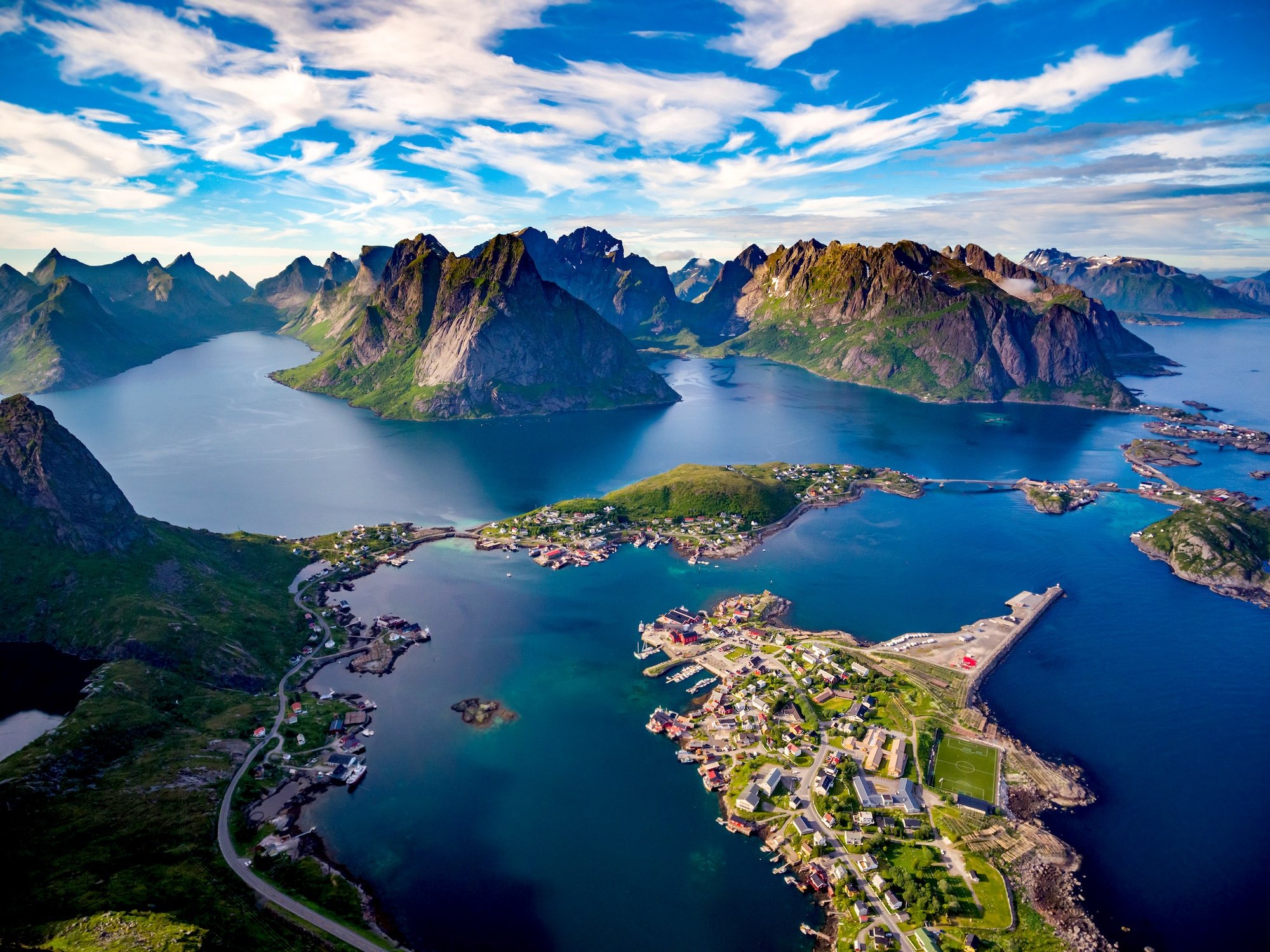
LOFOTEN ISLANDS

Optional Post-Tour Extension

For those continuing beyond Tromsø, the story of the
Viking north carries on into the Lofoten archipelago,
where steep mountains frame sheltered harbours and rich
cod fisheries that sustained prosperous communities and powerful chieftains at the northern edge of the Norse world.

July 24-27, 2027 | 4 Days

tour booking

$24,560 AUD per person, twin share (land content only)
$8,920 AUD supplement for sole use of a hotel room

Based on an Arctic Superior – Standard Cabin. Upgrade available

A $2,000 deposit is required per person to confirm your booking on tour. This deposit is non-refundable.
 An instalment of $5,000 will be required in February 2027.

Hold a Place

Still deciding? We are happy to hold a tentative place for 7 days while you make your final arrangements.

Book Online

To secure your place(s) on tour, book online below with “Athena”, our virtual tour consultant.

DOWNLOAD FORM

Download a printable booking form. You can also complete the form on screen and submit via email.

your tour consultant

The consultant for this tour is Jamal Fairbrother. For further information or to discuss the tour, please call 9235 0023 (Sydney) or 1800 639 699 (outside Sydney) or email jamal@academytravel.com.au

have you thought about?

Academy Travel is more than just a tour operator. We are also a full-service travel agency who can assist you with all aspects of your travel, including flights, transfers, pre-tour arrival, additional travel and comprehensive travel insurance.

can’t make this departure?

If these dates don't work for you, register to hear about the next tour.