France through the ages

From Lascaux to Napoleon

Travel the length of French history, from the painted caves of Lascaux to Loire’s royal châteaux and imperial streets of Paris.

TOUR STATUS

Places Available | Maximum 16

TOUR DATES

September 3-19, 2027 | 17 Days

TOUR LEADER

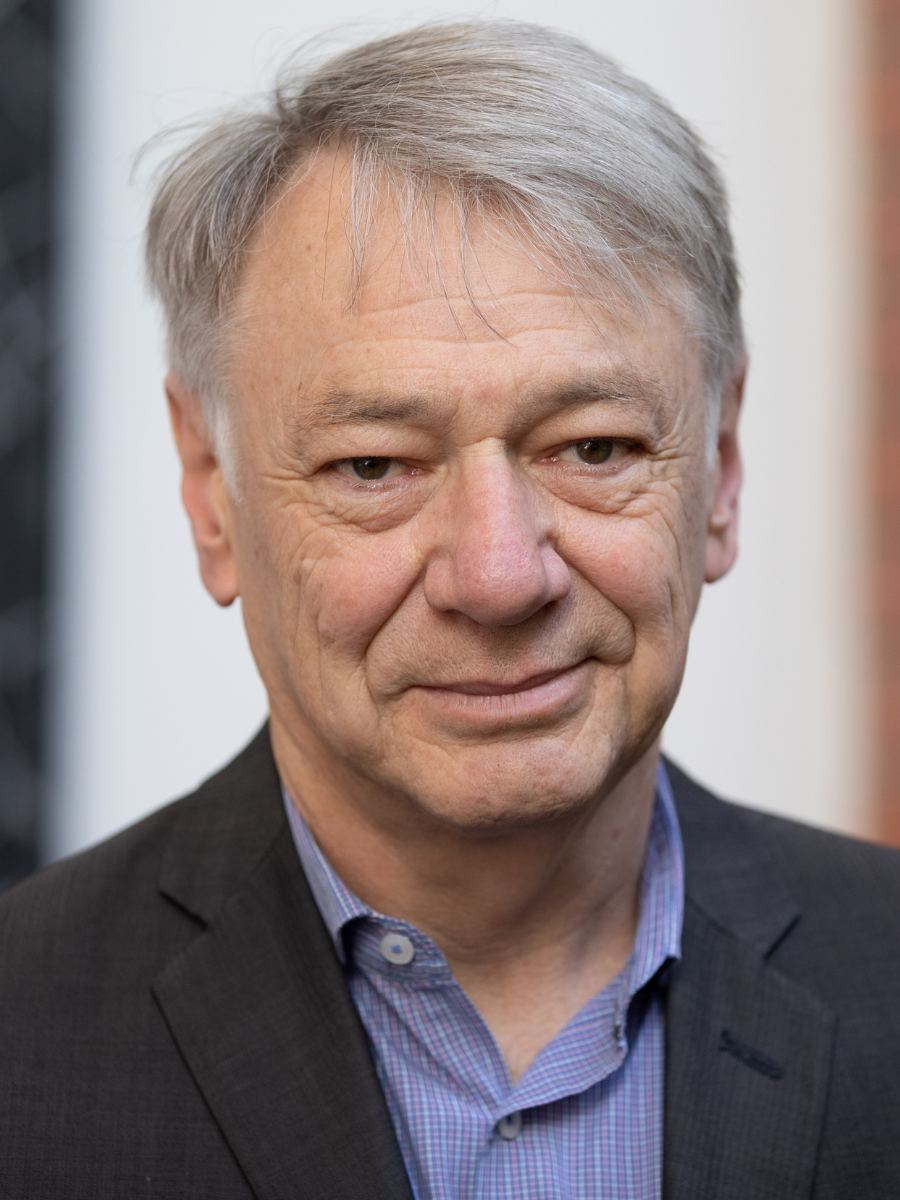
Prof. Emer. Philip Dwyer | View Bio

snapshot

OVERVIEW

From the prehistoric cave paintings of Lascaux to Napoleon’s tomb at Les Invalides, France preserves some 17,000 years of human history, shaped by Roman rule, medieval monasticism, royal ambition and revolution.

Led by acclaimed Napoleon biographer Philip Dwyer, this new 17-day tour begins in Lyon before travelling through Burgundy to examine the power of its medieval dukes, the great abbeys of Cluny and Cîteaux and the region’s historic vineyards. Continuing through the Belle Époque spa town of Vichy, we reach the Dordogne, where the prehistoric paintings of Lascaux and the medieval fortress of Beynac reveal contrasting chapters of French history. From here, the magnificent Renaissance châteaux of the Loire Valley lead us towards Paris, where five nights are devoted to the medieval city, the French Revolution and Napoleon’s legacy.

Throughout, regional culinary traditions add another dimension to the history, from the grand cru vineyards of the Côte d’Or and traditional mustard-making in Beaune to Périgord cuisine and the historic wine cellars of Vouvray.

tour highlights

Follow 17,000 years of French history, from Lascaux to the Napoleonic Empire

Professor Emeritus Philip Dwyer

your expert tour leader

Philip Dwyer is Professor Emeritus of History at the University of Newcastle, Australia, specialising in eighteenth- and nineteenth-century Europe and the Napoleonic era. He studied in Berlin and Paris under the eminent Napoleon scholar Jean Tulard and is the author of a three-volume biography of Napoleon, the first volume of which won the National Biography Award. Philip brings decades of scholarship and a gift for storytelling to his tours, revealing how Europe’s battlefields, cities and institutions illuminate the people and events that shaped the continent.

Read full bio >

Accompanied by an Experienced Tour Manager

Alongside your expert tour leader, an experienced tour manager will accompany for the entirety of the tour. They oversee logistics, ensure your comfort and safety, and provide friendly support – whether offering tips for free time, sharing a chat over dinner, or giving you space to relax.

tour ITINERARY

Lyon (2 nights), Beaune (2 nights), Vichy (1 night), Sarlat (3 nights), Blois (3 nights), Paris (5 nights)

Included meals are shown with the letters B, L and D
  • Day 1 | Friday 3 September
    Arrive Lyon
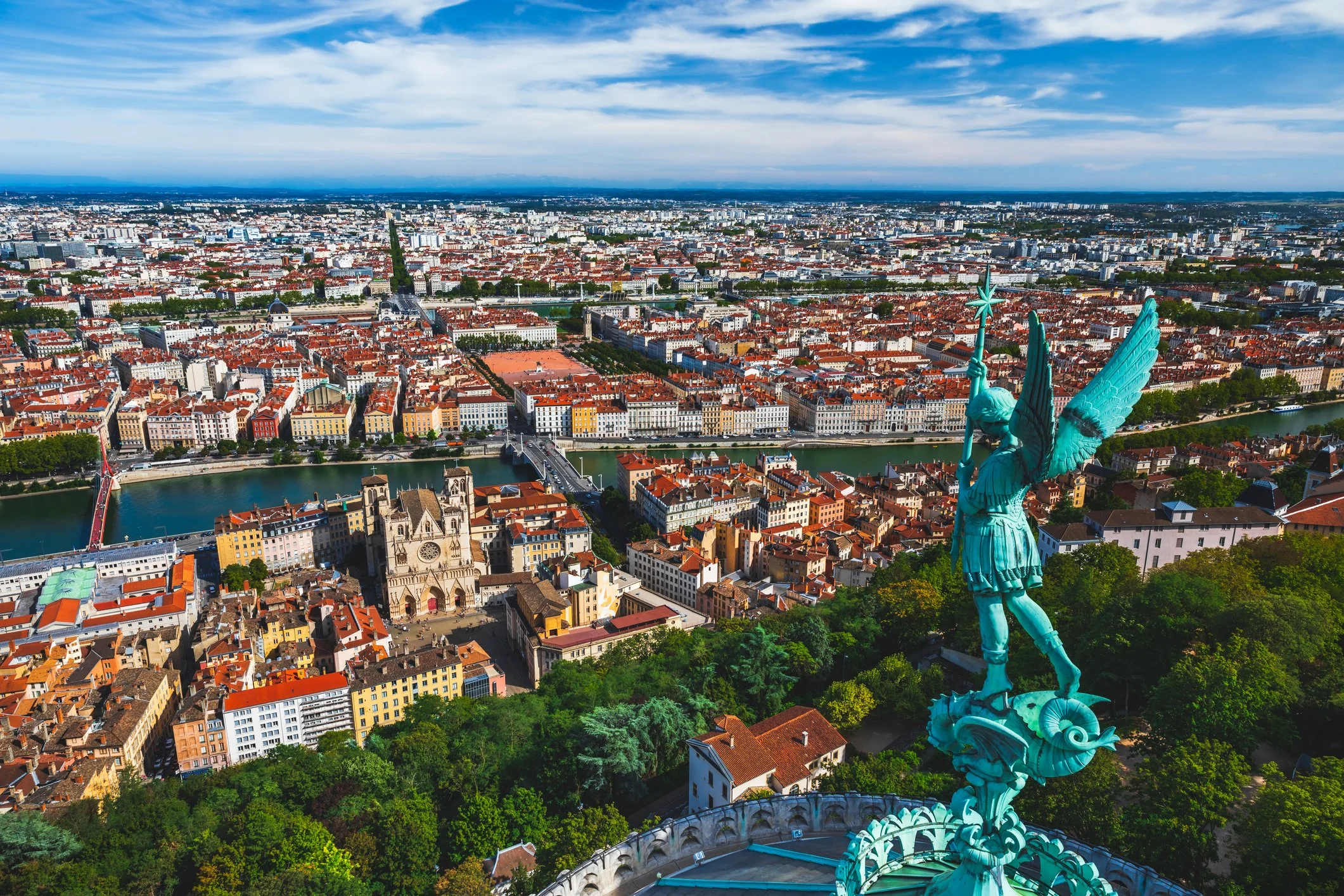
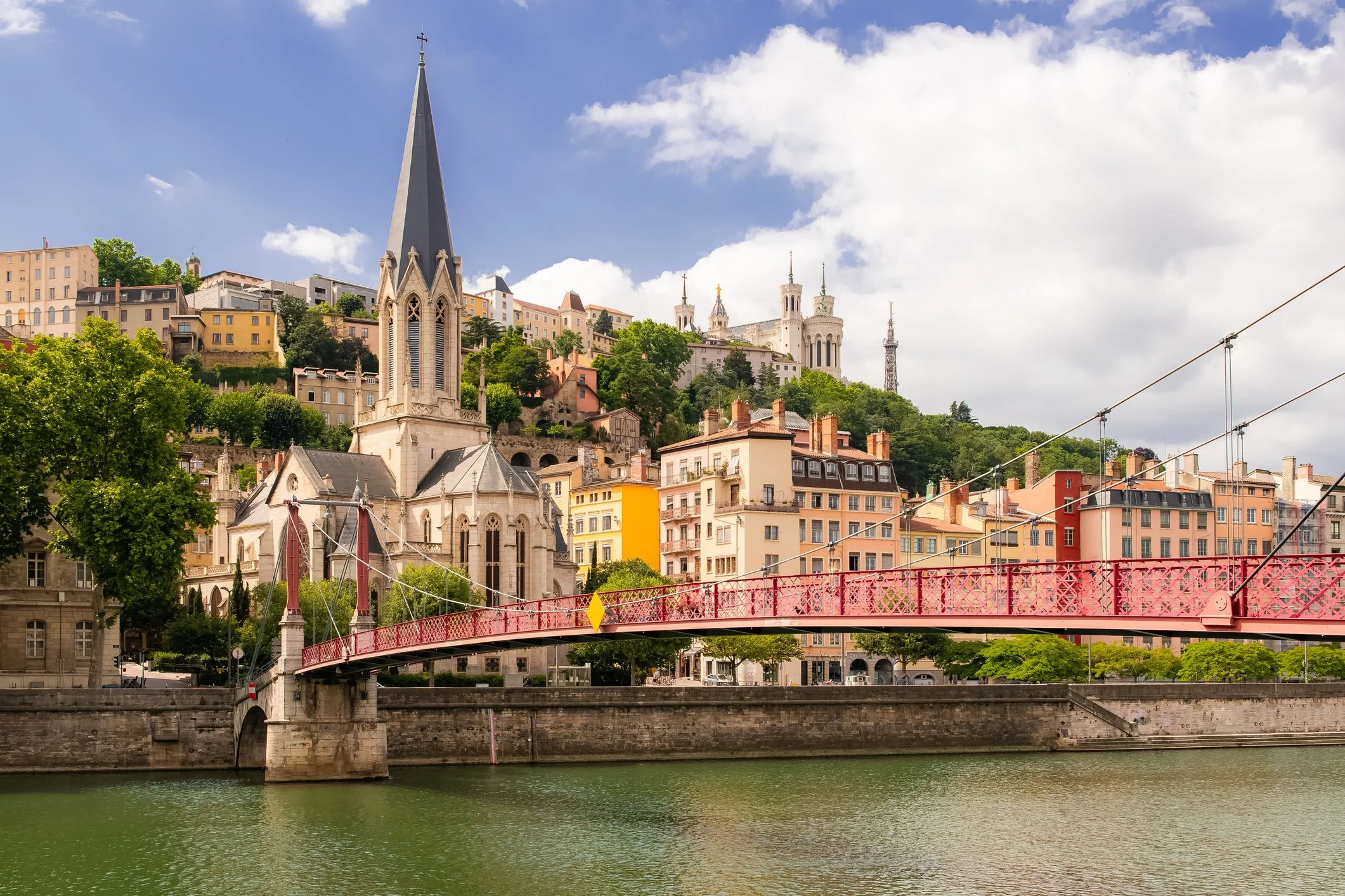
    Set at the confluence of the Rhône and Saône, Lyon was once the capital of Roman Gaul and found a second fortune in the Renaissance, when fairs, banking and the silk trade drew merchants from across Europe. More recently, it has earned a reputation as France’s gastronomic capital – a layering of eras that makes it a fitting place to begin our exploration of French history. We gather at our hotel in the late afternoon for a guided walk through Vieux Lyon, one of Europe’s largest surviving Renaissance quarters, exploring its cobbled streets, galleried courtyards and traboules – the covered passageways that once carried silk workers and their wares between streets. An introductory talk follows, setting out the themes that will carry us from the cave painters of the Ice Age to the fall of an empire. Our welcome dinner brings the evening to a close. Overnight Lyon (D)

  • Day 2 | Saturday 4 September
    Roman Lyon
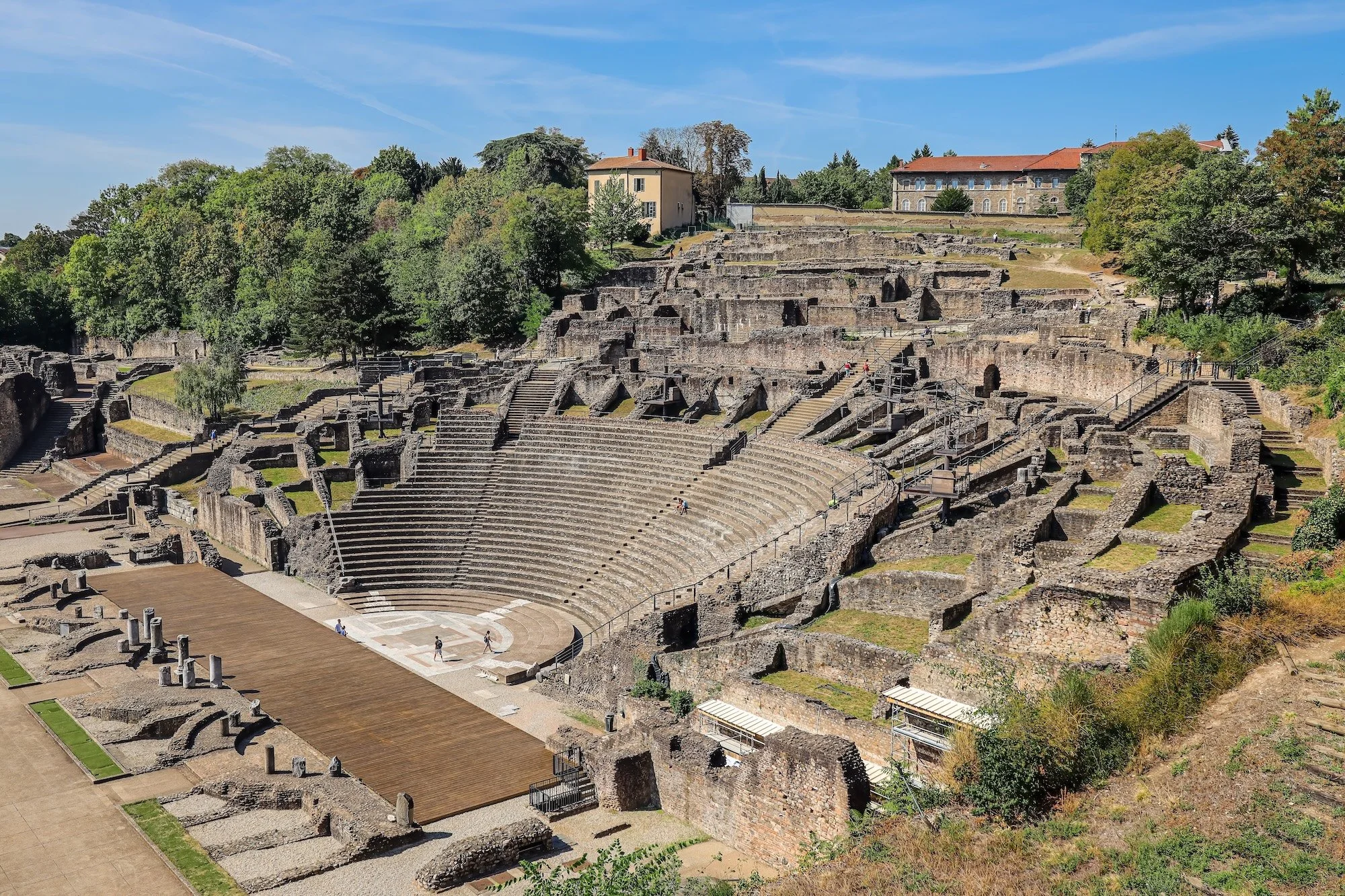
    Founded by the Romans in 43 BCE as Lugdunum, Lyon became one of the most important cities in Roman Gaul, its position at the meeting of two rivers and several major roads making it a major administrative and commercial centre. The Roman settlement developed on the hill of Fourvière, above the Saône, and it is here that our exploration begins. Ascending by funicular, we start at the Basilica of Notre-Dame de Fourvière, built in the late 19th century, where the terrace offers wide views across the city. A short walk leads to the archaeological site, where the Roman theatre and the smaller odeon, among the oldest of their kind in France, are still used for performances today. We then visit the adjacent Gallo-Roman museum for a guided tour of its collections, including mosaics, inscriptions and the bronze Claudian Table, which records a speech by the emperor Claudius, born in the city. Following our visit, we descend to Vieux Lyon, where the remainder of the day is at leisure. Overnight Lyon (B)

  • Day 3 | Sunday 5 September
    Beaune
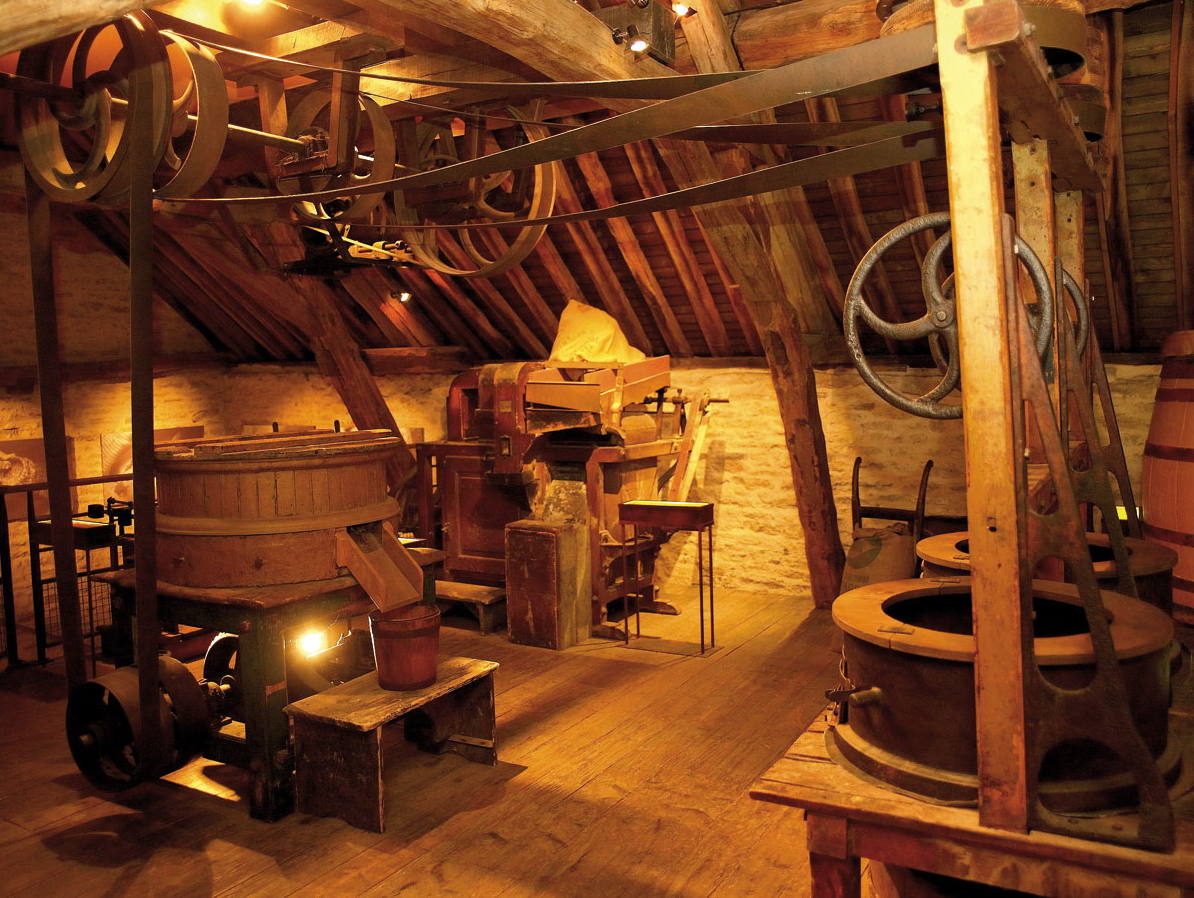
    For more than a century, the Valois Dukes of Burgundy ruled a state that rivalled the French crown, their court renowned for its splendour and their territories stretching from the Jura to the North Sea. This powerful Burgundian state left a lasting legacy in Beaune, the wine capital of the Côte d’Or. Travelling north from Lyon, we arrive for a guided walking tour of the old town, beginning at the Hôtel-Dieu, the charitable hospital founded in 1443 by the ducal chancellor Nicolas Rolin. Its courtyard, roofed in patterned glazed tiles, has become an emblem of Burgundy, while inside hangs Rogier van der Weyden’s Last Judgement altarpiece, among the finest achievements of Flemish painting. Lunch is enjoyed together in the old town before we continue to the collegiate church of Notre-Dame, whose tapestries depicting the Life of the Virgin recall the town’s medieval prosperity. After checking in to our hotel, we visit the Moutarderie Fallot, Burgundy’s last independent stone-ground mustard mill, where a guided tour follows the seed from field to jar. Overnight Beaune (B, L)

  • Day 4 | Monday 6 September
    The Côte d’Or
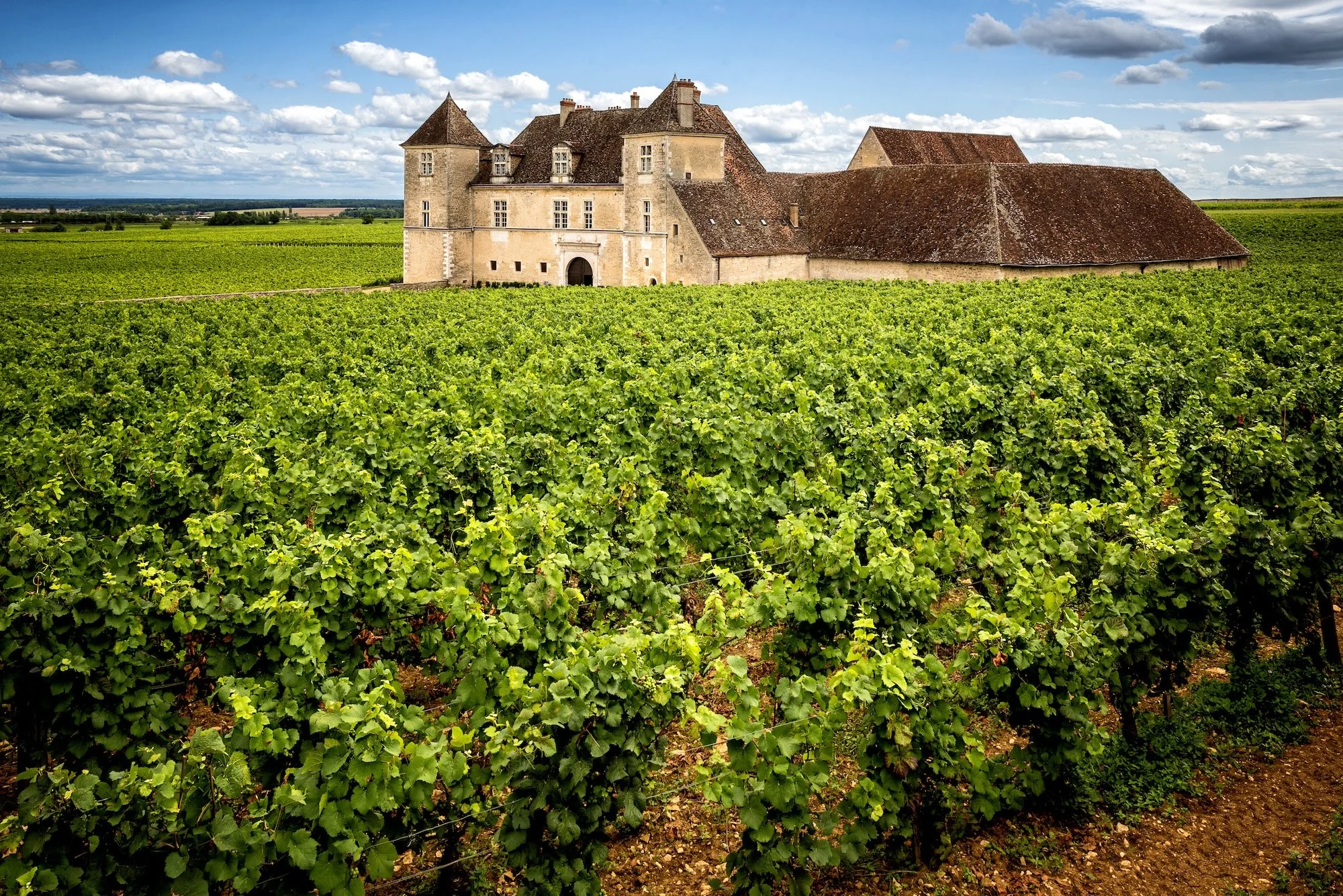
    The vineyards of Burgundy owe much of their character to the monastic orders of the Middle Ages. In 1098 a group of Benedictine monks seeking a stricter observance of their rule founded the abbey of Cîteaux, a short distance east, and the Cistercian order that grew from it placed manual labour at the centre of religious life. From the early 12th century, its monks cleared and planted the slopes at Vougeot, identifying the individual plots, or climats, that still define the region’s vineyards and are now recognised as a UNESCO World-Heritage site. After a relaxed start, we drive north to the Château du Clos de Vougeot, enclosed by the stone walls completed by the monks in the 14th century. A guided visit takes us through the medieval cellar and vat house, with their great oak presses, and the Renaissance château added in 1551. Lunch follows at a nearby restaurant, accompanied by paired Burgundy wines. In the afternoon, we make a leisurely return along the Route des Grands Crus, stopping in Nuits-Saint-Georges before returning to Beaune for an evening at leisure. Overnight Beaune (B, L)

  • Day 5 | Tuesday 7 September
    Cluny & Vichy
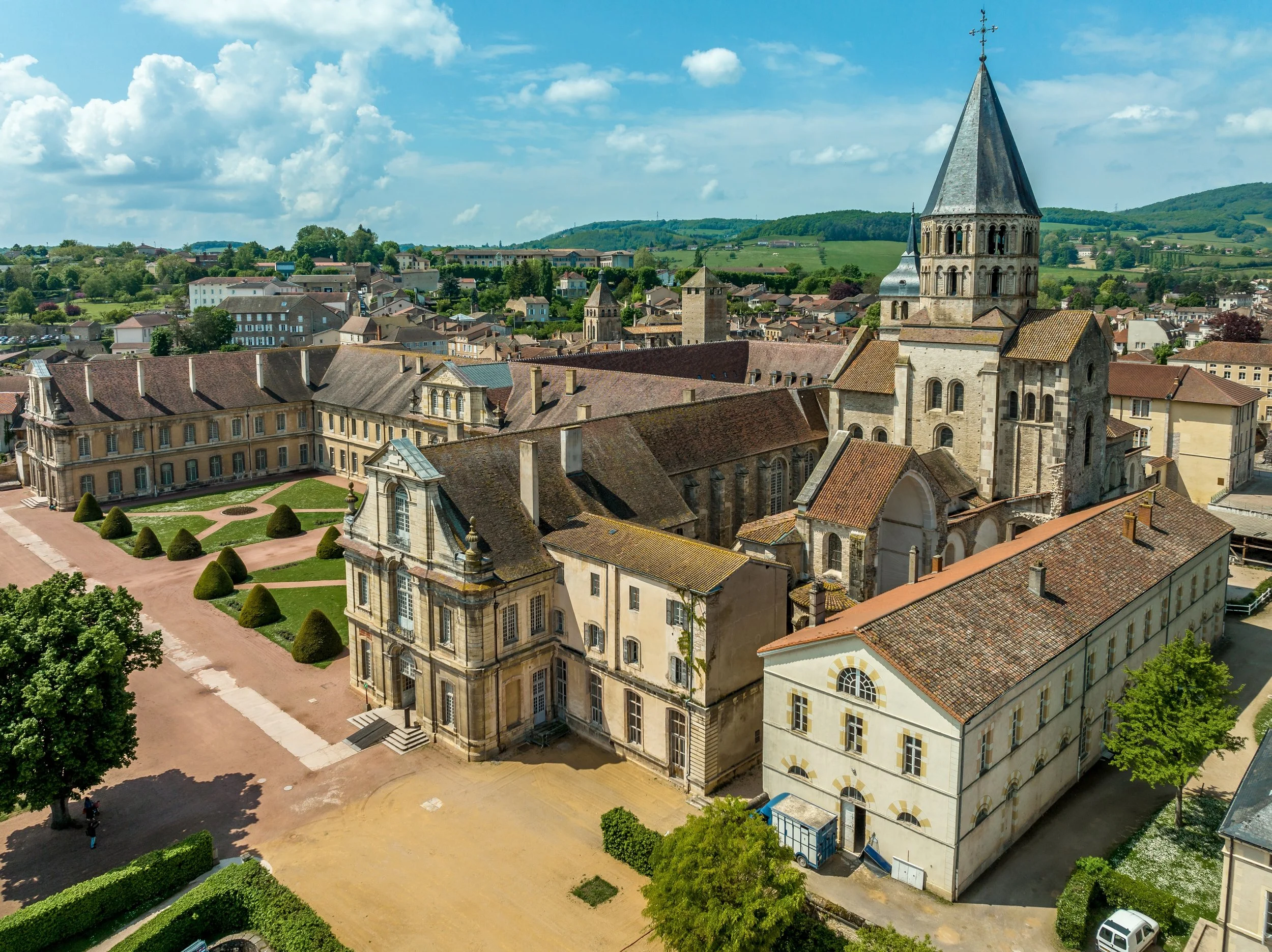
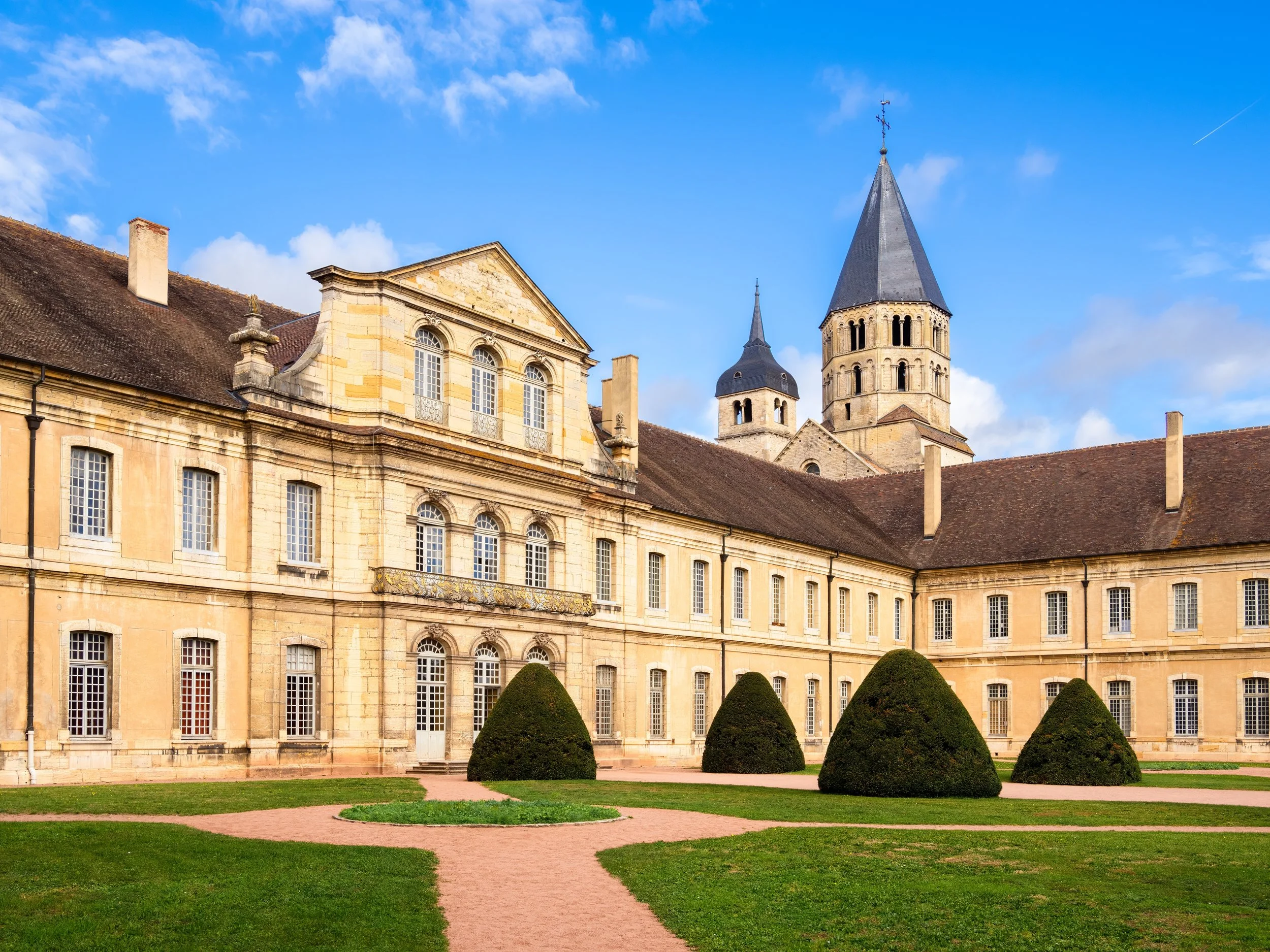
    Founded in 910 by William, Duke of Aquitaine, and placed under the direct protection of the pope, the Benedictine abbey of Cluny became the most influential monastery in medieval Europe. By the 12th century, its abbots governed more than 1,000 dependent houses, while its third church, begun in 1088, remained the largest in Christendom until the rebuilding of St Peter’s in Rome. Travelling south from Beaune, we arrive at Cluny for a guided visit to the abbey. Much of the complex was dismantled following the French Revolution, but the surviving transept and bell tower convey the scale of the original church. In the afternoon, we continue our journey west to Vichy, whose mineral springs made it one of Europe’s most fashionable spa resorts in the 19th century. Its extensive hotel infrastructure later made it the seat of the French government following the defeat of 1940. A guided walk through the Parc des Sources reveals these contrasting chapters, passing the Opéra, where parliament granted full powers to Marshal Pétain, and the Hôtel du Parc, from which he governed. After checking in, we enjoy dinner together. Overnight Vichy (B, D)

  • Day 6 | Wednesday 8 September
    Aubusson & Sarlat
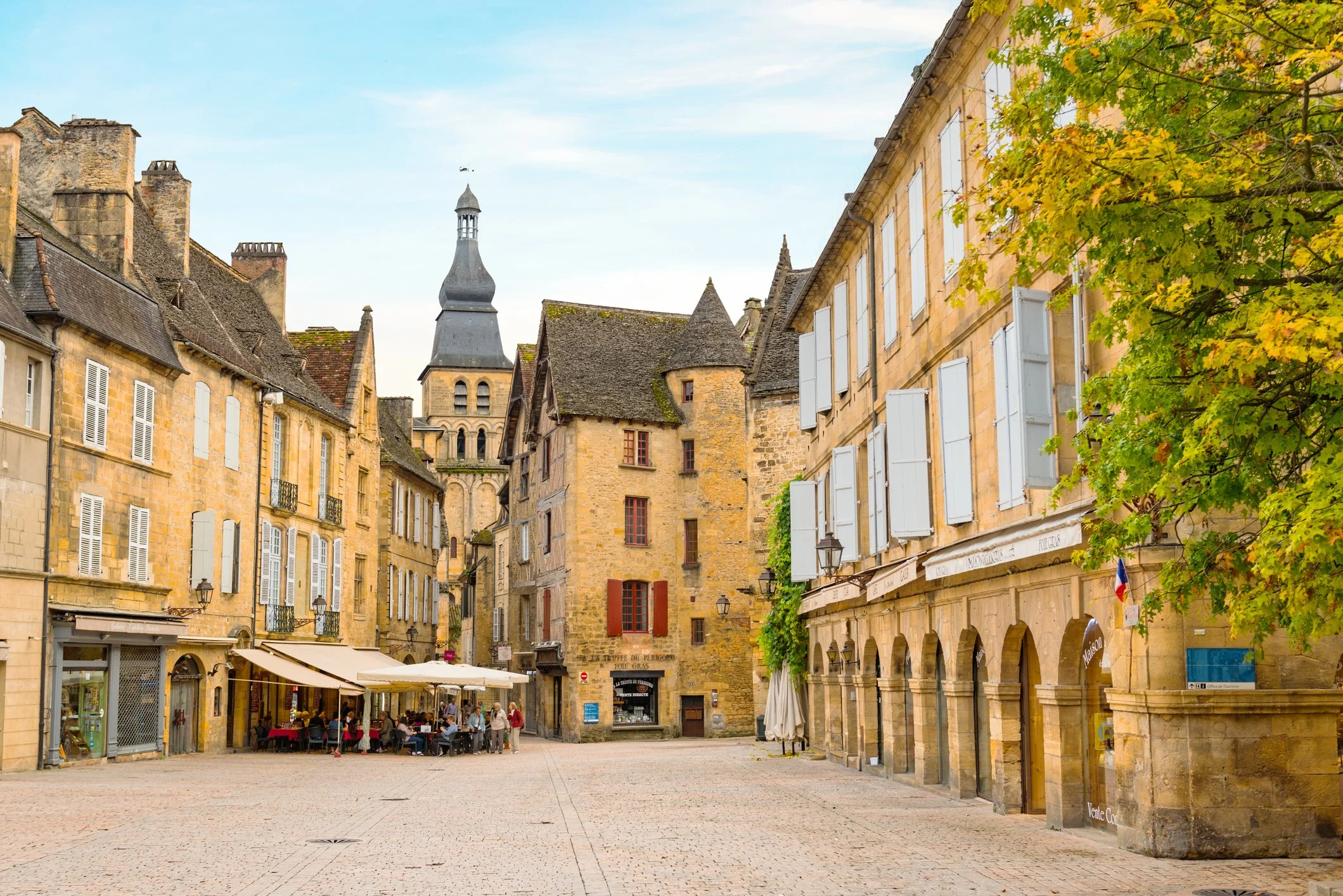
    Tapestry has been woven in the Creuse valley since at least the 15th century. In 1665, Louis XIV granted the Aubusson workshops the status of royal manufactory, and the craft, still practised by hand, is now inscribed on UNESCO’s list of intangible cultural heritage. After a relaxed departure from Vichy, we first travel west to Aubusson to visit the International Tapestry Centre, whose collection spans six centuries of production, from medieval verdures, with their dense foliage and animals, to the 20th-century revival led by the artist Jean Lurçat. There is time to explore the town before we continue south through the wooded hills of the Corrèze to Sarlat, in the Périgord Noir. The town grew around a Benedictine abbey and prospered as a market centre in the late Middle Ages, and its streets of limestone houses are among the best preserved in France. After settling into our hotel, we take a short walk through the old town, followed by a dinner of Périgord specialities. Overnight Sarlat (B, D)

  • Day 7 | Thursday 9 September
    Souillac & Rocamadour
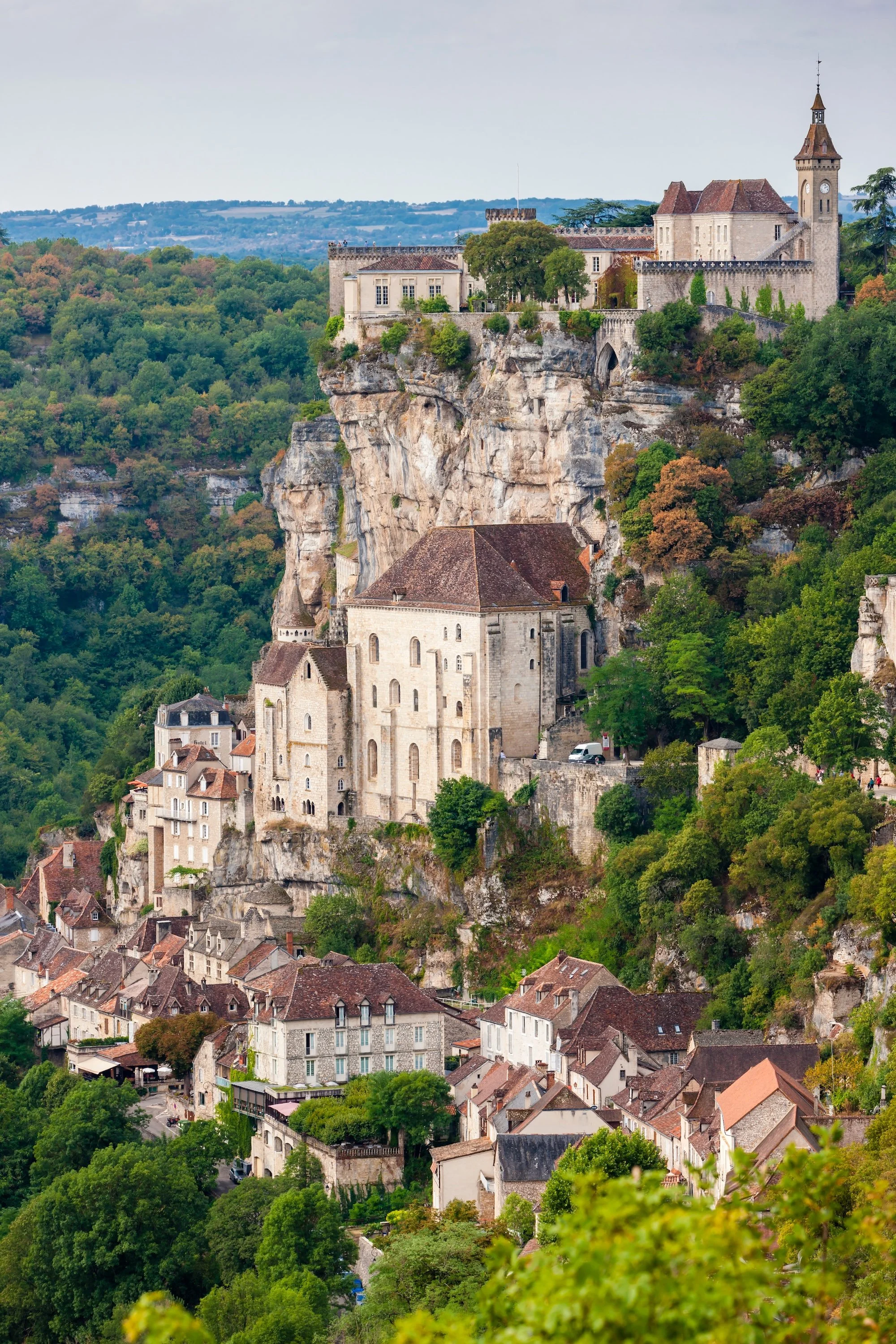
    From the 11th century, pilgrims travelling to the shrine of St James at Santiago de Compostela crossed south-western France, and the abbeys and sanctuaries along their routes grew wealthy through pilgrimage. Two important examples lie a short drive east of Sarlat. We begin at Souillac, where Benedictine monks built the abbey church of Sainte-Marie in the 12th century, roofing its nave with domes characteristic of Romanesque Aquitaine. A guided visit focuses on its remarkable sculpture, particularly the relief of the prophet Isaiah, carved around 1130 and considered among the finest examples of Romanesque sculpture in France. Continuing to Rocamadour, we encounter a series of chapels built against a limestone cliff above the Alzou gorge. The sanctuary rose to prominence after 1166, when the discovery of a body believed to be that of the hermit St Amadour attracted pilgrims from across Europe, including Henry II of England, who came to venerate its Black Madonna. After time to explore the sanctuary, we return to Sarlat, where an evening talk at our hotel sets the context for tomorrow’s visits. Overnight Sarlat (B)

  • Day 8 | Friday 10 September
    Lascaux & Beynac
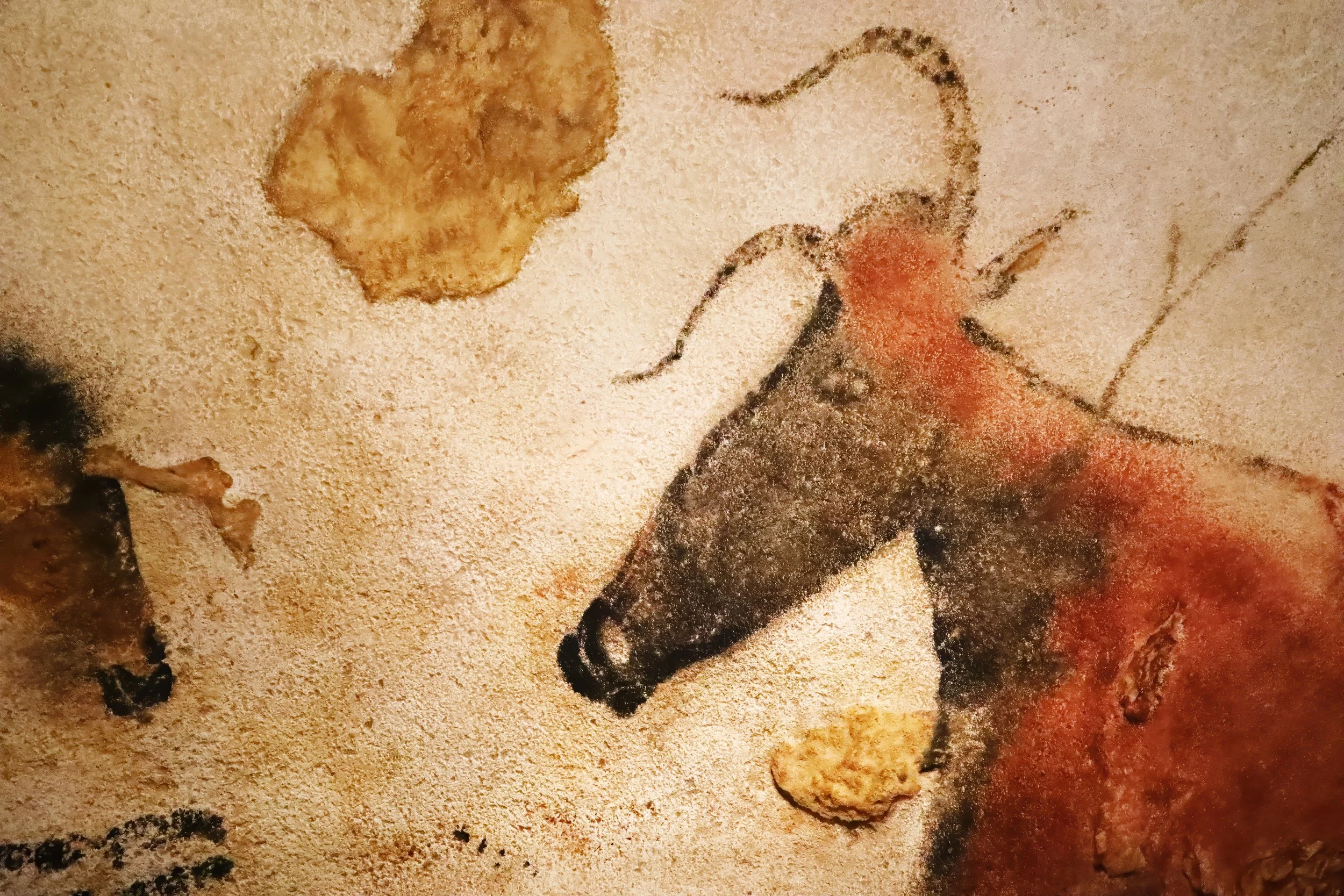
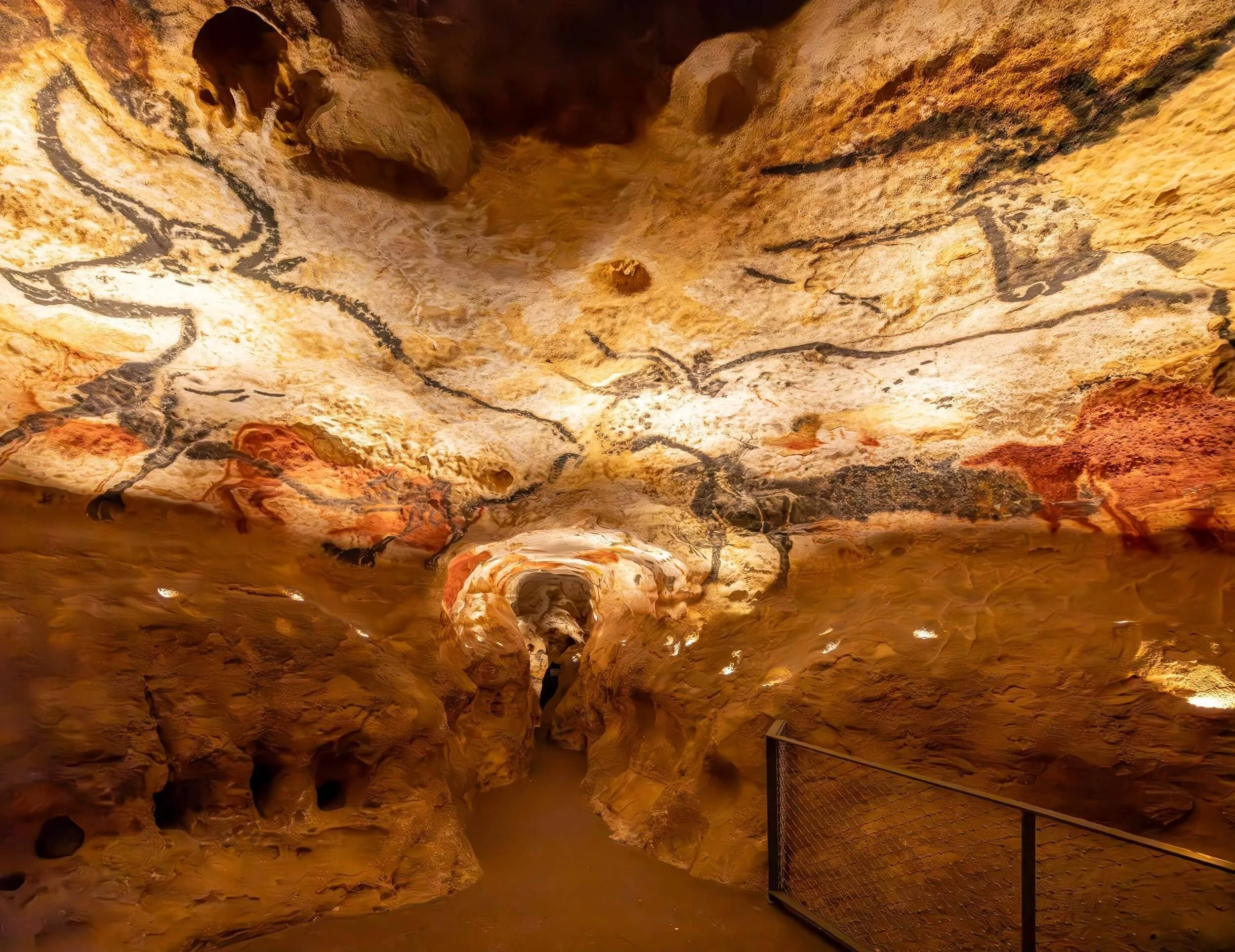
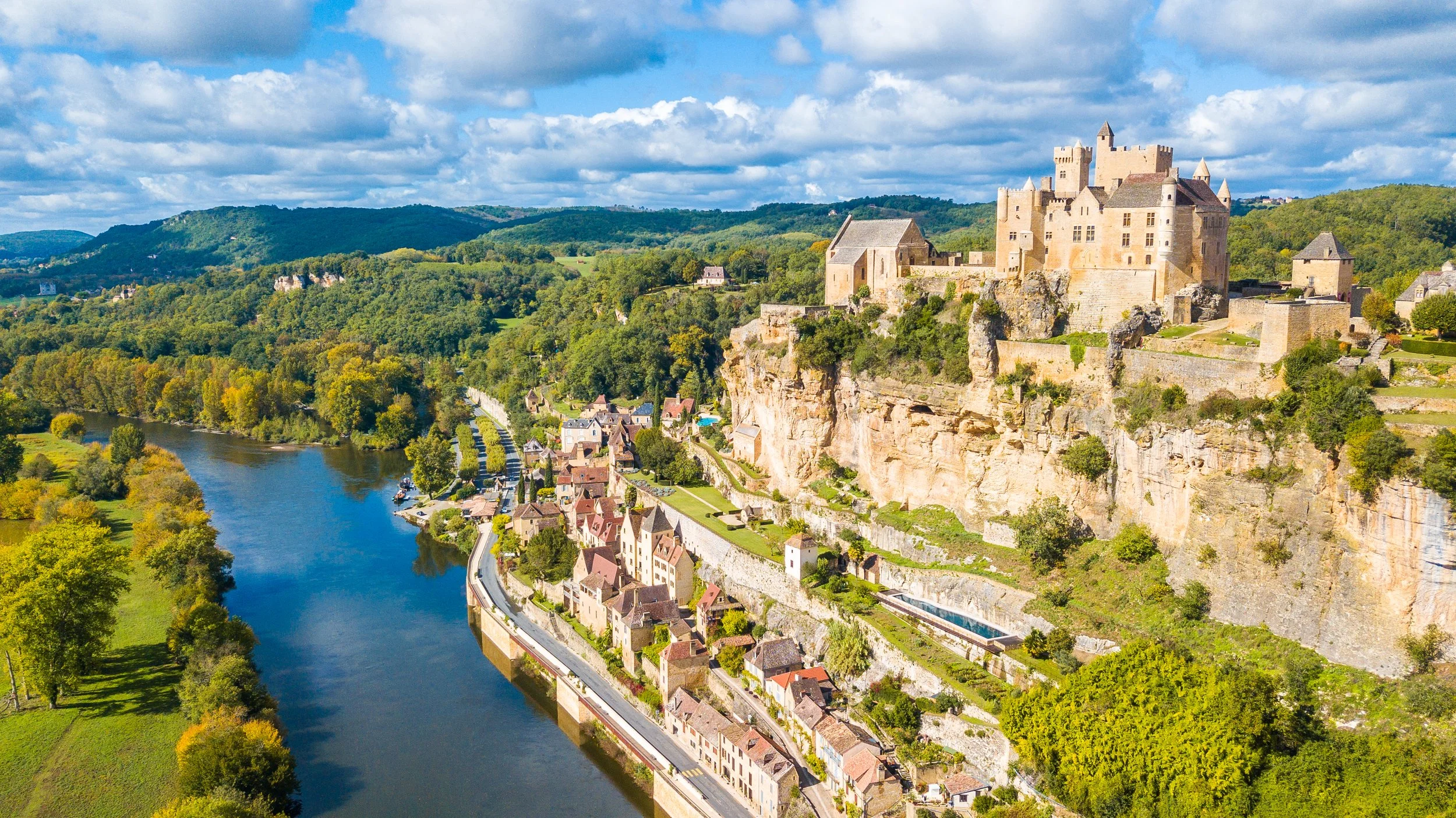
    Some 17,000 years ago, during the last Ice Age, hunters in the valley of the Vézère painted the walls of a cave near Montignac with bulls, horses and stags. Discovered by four local boys in 1940, Lascaux became one of Europe’s most important prehistoric art sites, but visitor damage led to its closure in 1963. We spend the morning at Lascaux IV, the International Centre for Cave Art, where the entire cave has been reproduced at full scale, and a guided tour introduces the paintings. A light lunch follows before continuing to the Dordogne and moving forward to the Middle Ages. From the 12th century, the kings of England held much of south-western France, and during the Hundred Years’ War the river marked the frontier between the two crowns. Here we visit the Château de Beynac, a French stronghold set on a cliff opposite the English-held castle of Castelnaud. After exploring the fortress, we walk down through the village to the river and return to Sarlat, where the evening is at leisure. Overnight Sarlat (B, L)

  • Day 9 | Saturday 11 September
    Limoges & The Loire
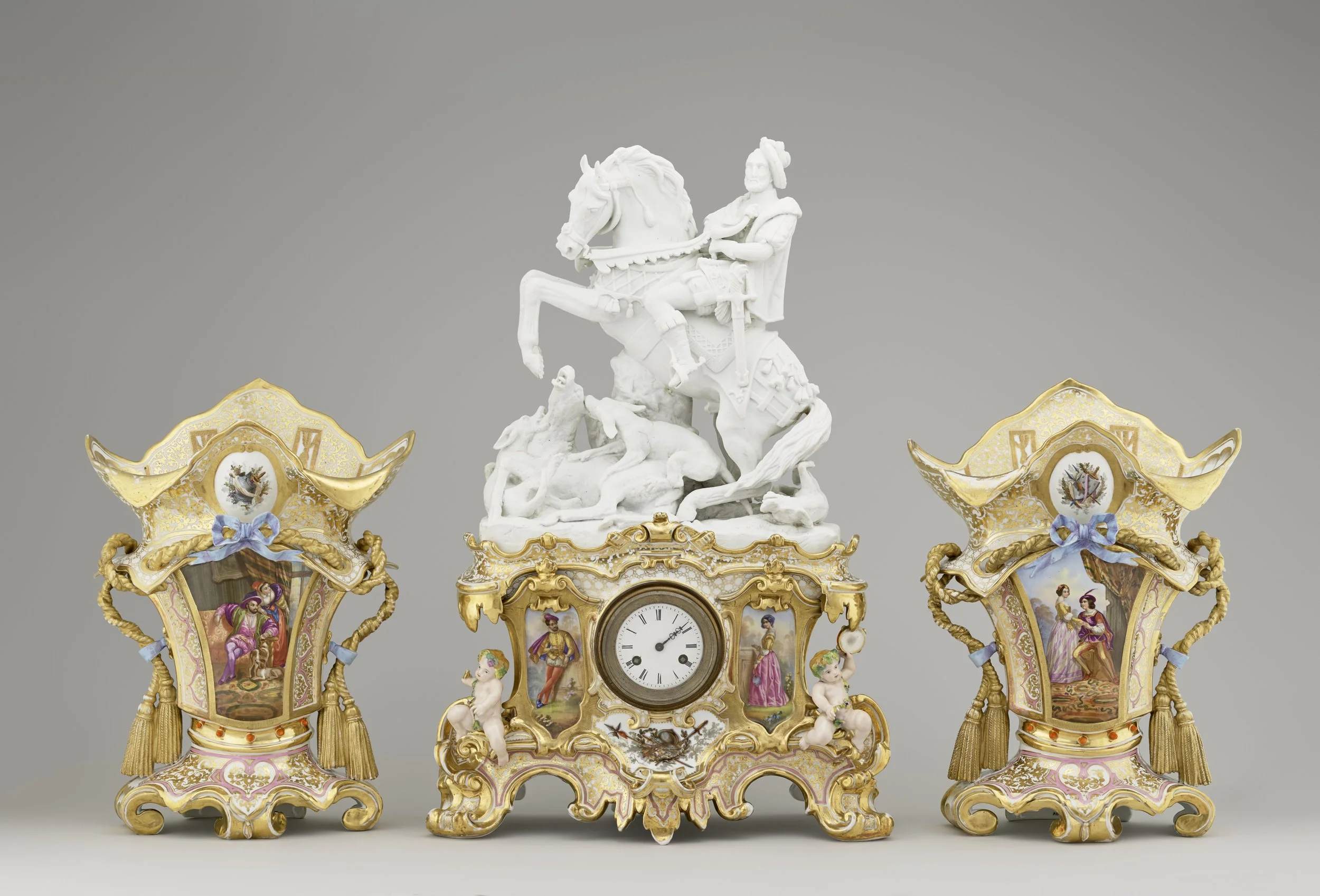
    The discovery of kaolin, the white clay essential to porcelain production, near Limoges in 1768 transformed the city into one of Europe’s leading centres of porcelain manufacture, its wares carried to courts and dinner tables worldwide. Departing Sarlat today, we travel north across the Limousin for a guided visit to the Musée National Adrien Dubouché, home to the world’s largest collection of Limoges porcelain. There is time to explore the city before we continue towards the Loire, pausing at Argentomagus, a Gallo-Roman town whose theatre and open-air ruins stand above the Creuse valley and recall the Roman Lyon of our first days. Arriving
    in Blois in the early evening, we check in for three nights at our hotel, a restored 17th-century former hospice overlooking the Loire. Dinner together at a local restaurant concludes the day. Overnight Blois (B, D)

  • Day 10 | Sunday 12 September
    Chambord & Blois
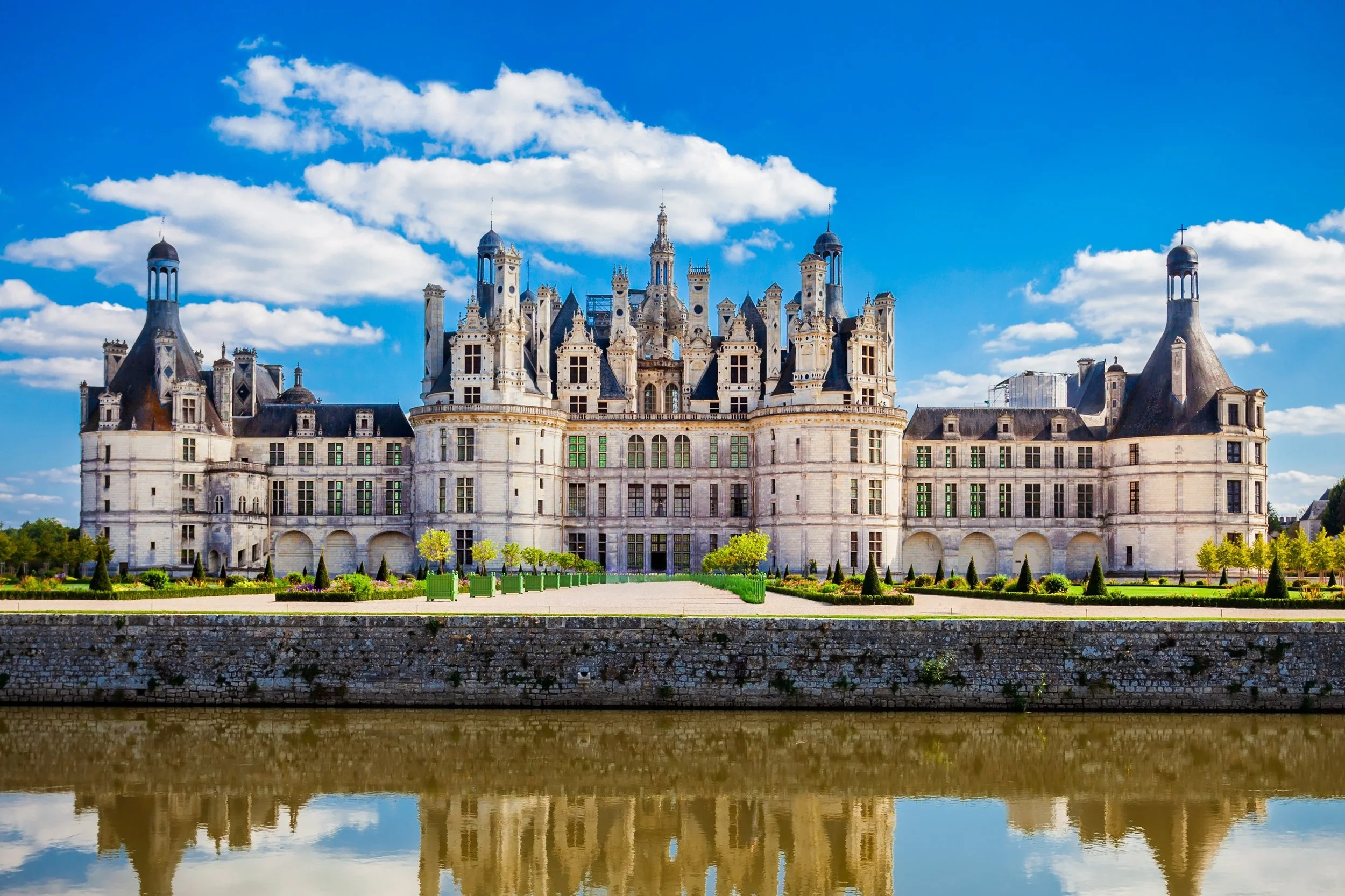
    From 1494 the kings of France invaded Italy to conquer it, and came home conquered by what they saw. With the court settled on the Loire, they brought Italian architects, painters and gardeners north, and within a generation the valley’s fortresses gave way to the white-stone châteaux of the French Renaissance. The largest is Chambord, begun in 1519 as a hunting residence for François I, where our day opens. At its centre is the double-helix staircase, long associated with Leonardo da Vinci, whose two flights wind around each other without meeting. We return to Blois, where there is time to explore the old town before an afternoon visit to the royal château, home to seven kings and 10 queens of France. Its four wings, built by successive monarchs around a single courtyard, set Gothic, Renaissance and classical facades side by side. The finest is that of François I, whose Italian-style loggias overlook the town and whose royal apartments housed the court at the height of its splendour. On return to our hotel across the Loire, the evening is at leisure. Overnight Blois (B)

  • Day 11 | Monday 13 September
    Chenonceau, Clos Lucé & Vouvray
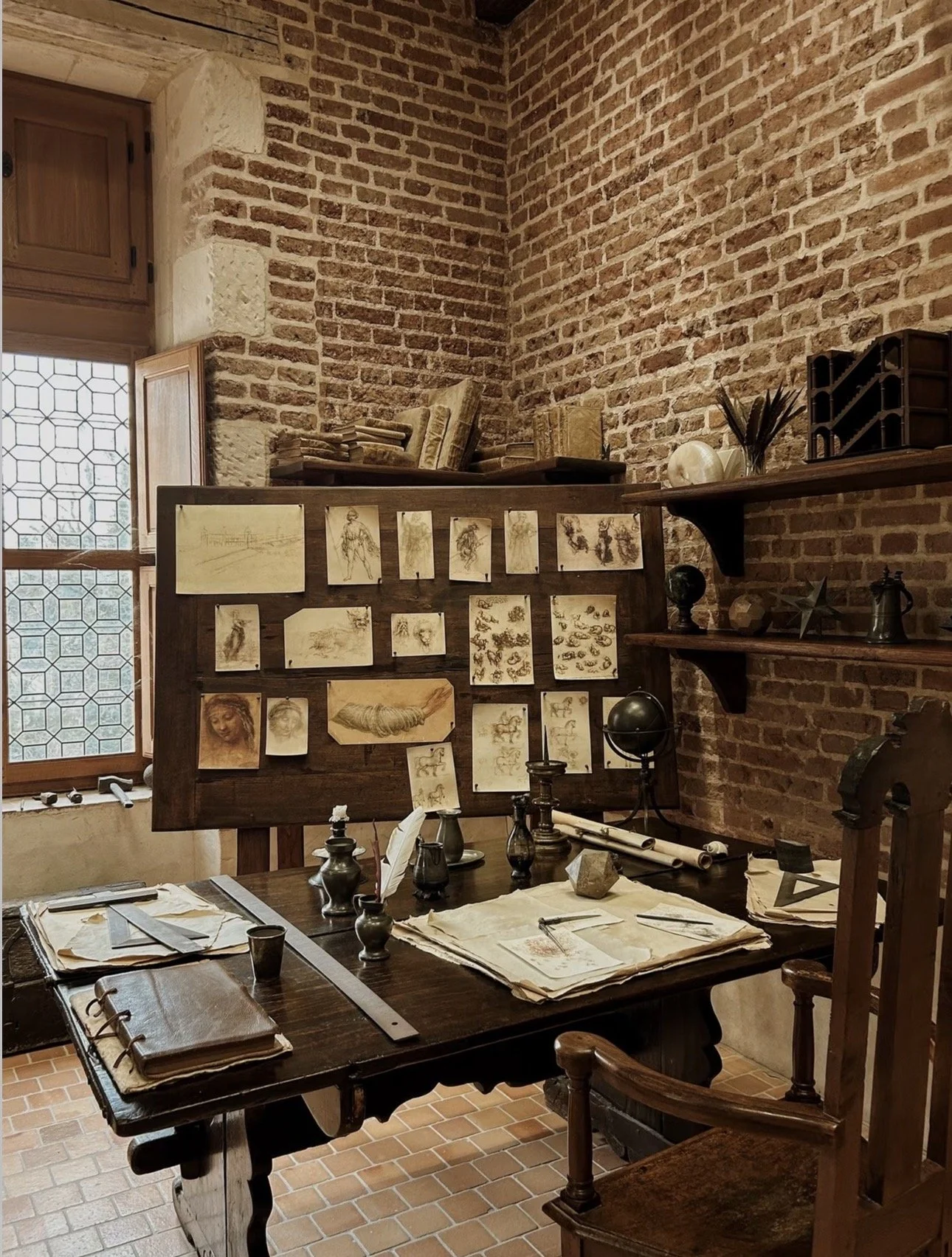
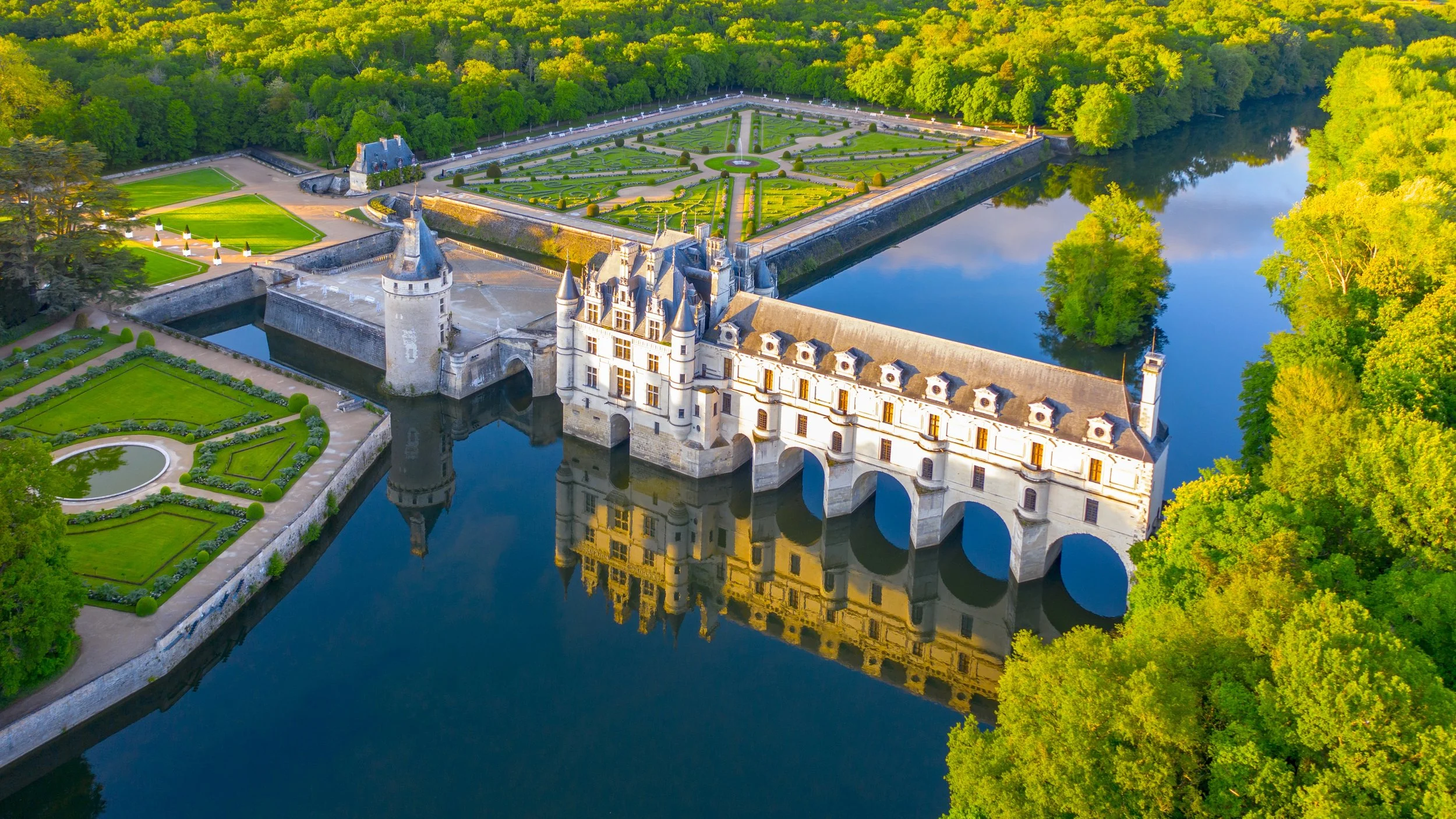
    Built on the River Cher from 1513, the château of Chenonceau was shaped over the following century by a succession of women, earning it the name château des dames. Henri II gave it to his mistress, Diane de Poitiers, who added the bridge over the river; after his death, his widow, Catherine de’ Medici, took possession and built the long gallery above it. Our morning begins here with a guided tour of the château before we continue to Amboise and the Clos Lucé, the manor house where Leonardo da Vinci spent his last three years at the invitation of François I, bringing the Mona Lisa with him from Italy. A guided tour takes in his rooms and the models of his inventions displayed in the house and park. The day concludes in Vouvray, where we tour its historic limestone caves now used as wine cellars, followed by a relaxed supper of local wines, charcuterie and cheese. Overnight Blois (B, D)

  • Day 12 | Tuesday 14 September
    Chartres & Paris
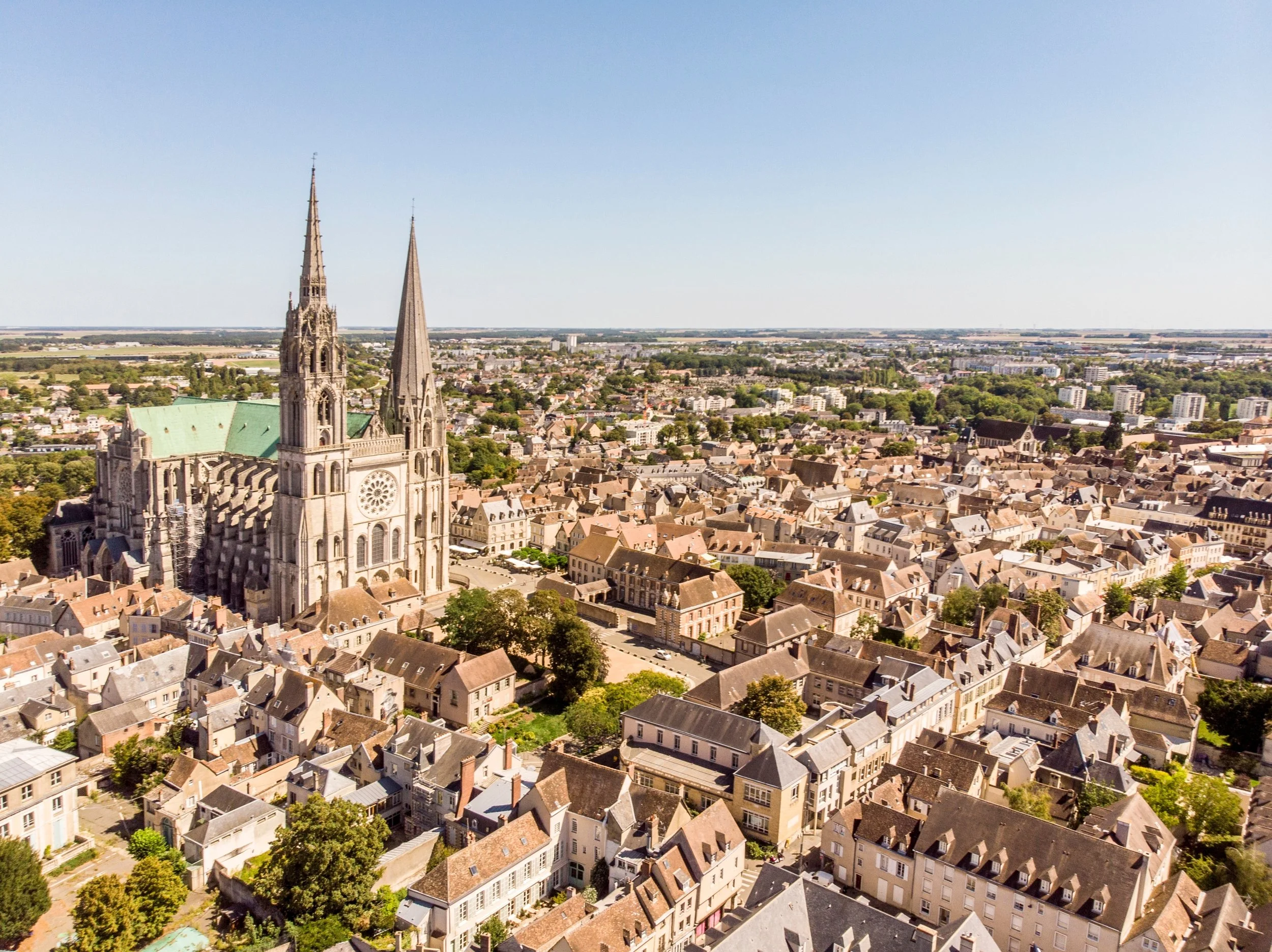
    A tunic believed to have been worn by the Virgin Mary made Chartres a principal pilgrimage centre of northern France from the 9th century. When fire destroyed the cathedral in 1194 the relic survived, and the building was rebuilt within some 30 years, giving it a rare unity of design. Its medieval stained glass survives almost intact, 176 windows flooding the nave with light in a blue so distinctive it carries the town’s name. Leaving the Loire, we drive north for a guided visit of the cathedral, today a UNESCO World-Heritage site. We also have time to explore the old town before continuing to Paris, arriving at our hotel in the mid-afternoon. An evening talk over a welcome drink introduces the capital before dinner together. Overnight Paris (B, D)

  • Day 13 | Wednesday 15 September
    Medieval Paris
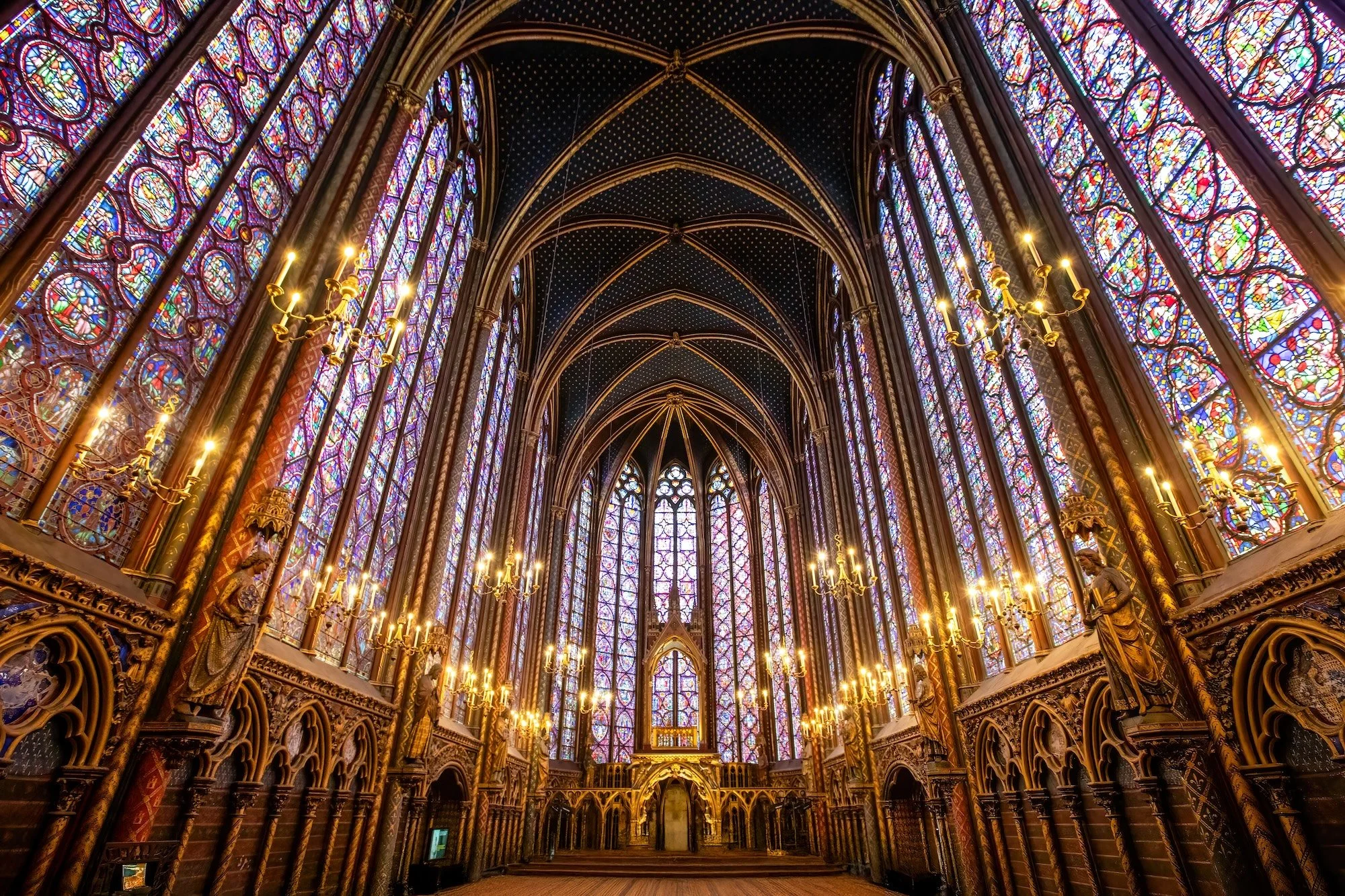
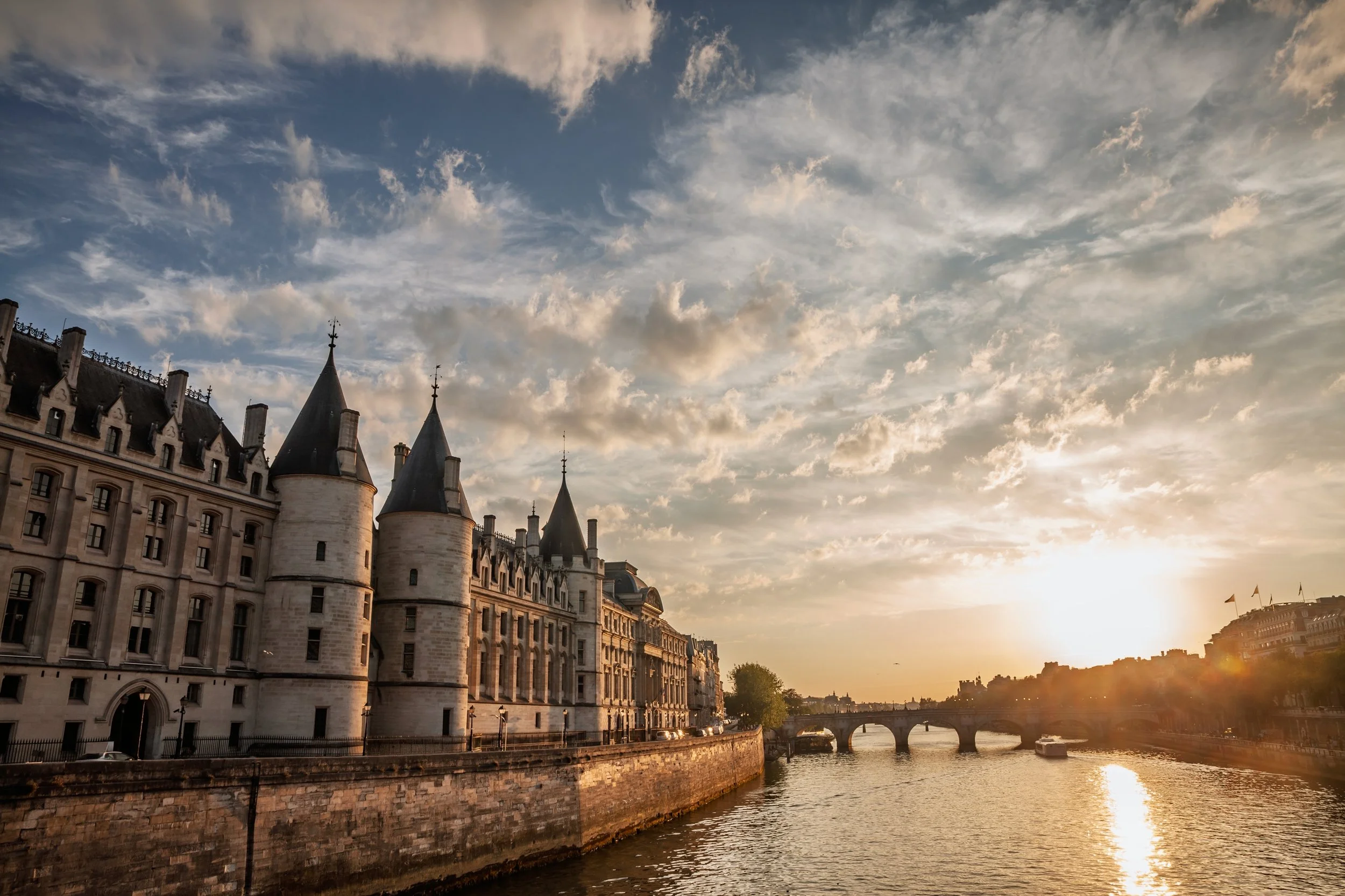
    The Île de la Cité was the seat of kings and bishops long before the city spread across both banks of the Seine, and we devote the morning to this medieval heart. We start on the square before Notre-Dame, magnificently restored following the fire of 2019, where we trace the cathedral’s eight centuries at the centre of French life – coronations, funerals and revolutions – before we each step inside. From the cathedral, a short walk across the island leads to the former royal palace, the other great power of the medieval city. Louis IX built the Sainte-Chapelle here in the 1240s to house the Crown of Thorns and other relics of the Passion, and its upper chapel, a cage of glass in which the walls all but dissolve, remains one of the marvels of Gothic art. We end next door at the Conciergerie, where the vaulted halls of the same palace later became the prison of the Terror, and Marie Antoinette’s cell evokes the Revolution’s darkest months. The afternoon and evening are at leisure to explore Paris independently. Overnight Paris (B)

  • Day 14 | Thursday 16 September
    Revolutionary Paris
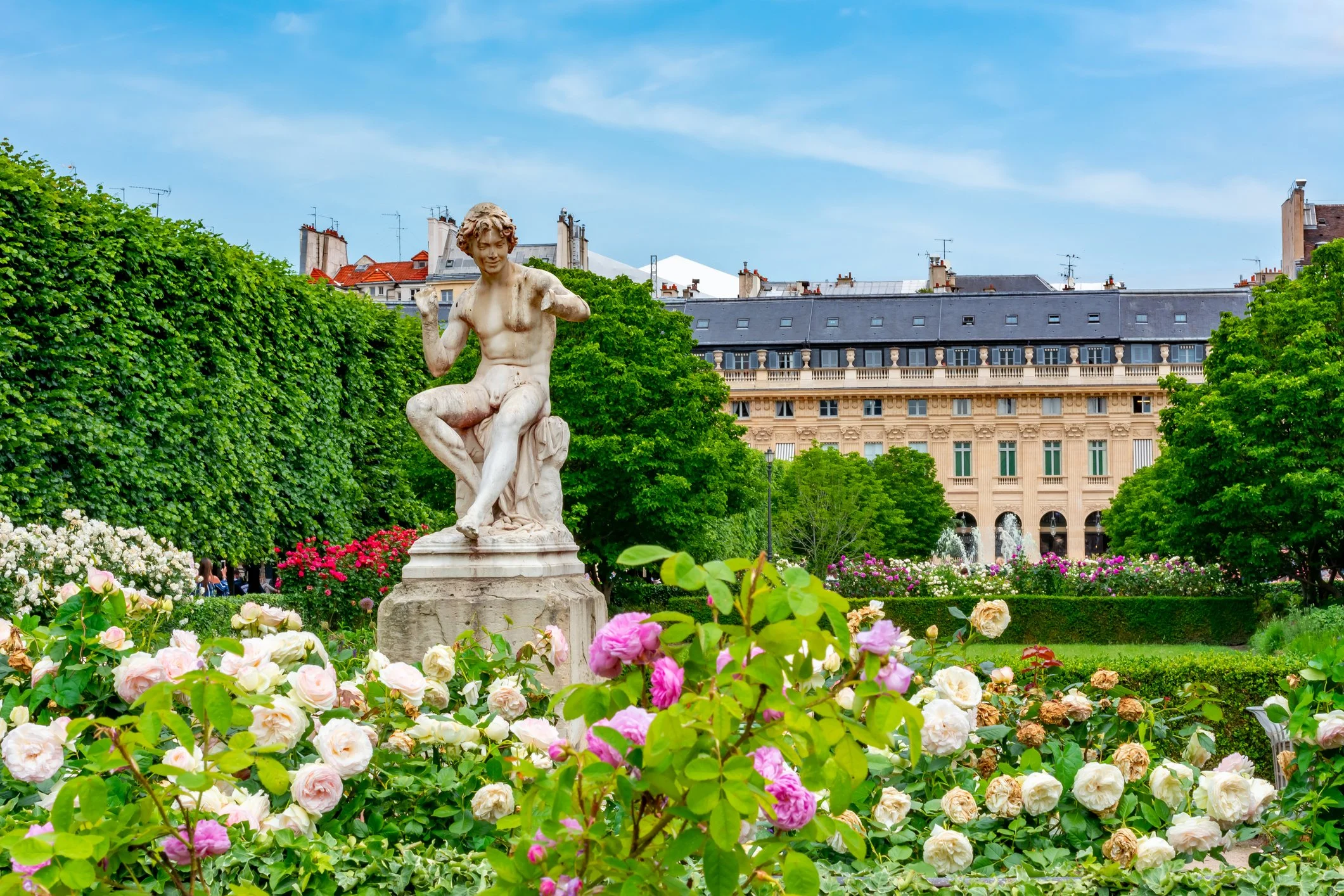
    In the summer of 1789 the people of Paris rose against one of the oldest monarchies in Europe, and the city still preserves the stage on which the drama played out. Setting out from our hotel past the Vendôme Column, cast from captured cannon, we begin at the Palais Royal, whose arcades and gardens were the Revolution’s first parliament of public opinion. It was here that Camille Desmoulins leapt onto a café table and called the crowd to arms, two days before the fall of the Bastille. We walk on to the Place de la Concorde, where the guillotine claimed Louis XVI and Marie Antoinette, and then through the Tuileries Garden along the city’s great axis, its arches aligned from the Carrousel towards the Grande Arche. We then gather for lunch together at a nearby restaurant before an afternoon walking tour of the Marais introduces the world the Revolution swept away, a quarter of aristocratic hôtels particuliers centred on the arcaded Place des Vosges, the city’s oldest planned square. The walk ends at the Musée Carnavalet, devoted to Paris’s history. Overnight Paris (B, L)

  • Day 15 | Friday 17 September
    Napoleon’s Paris
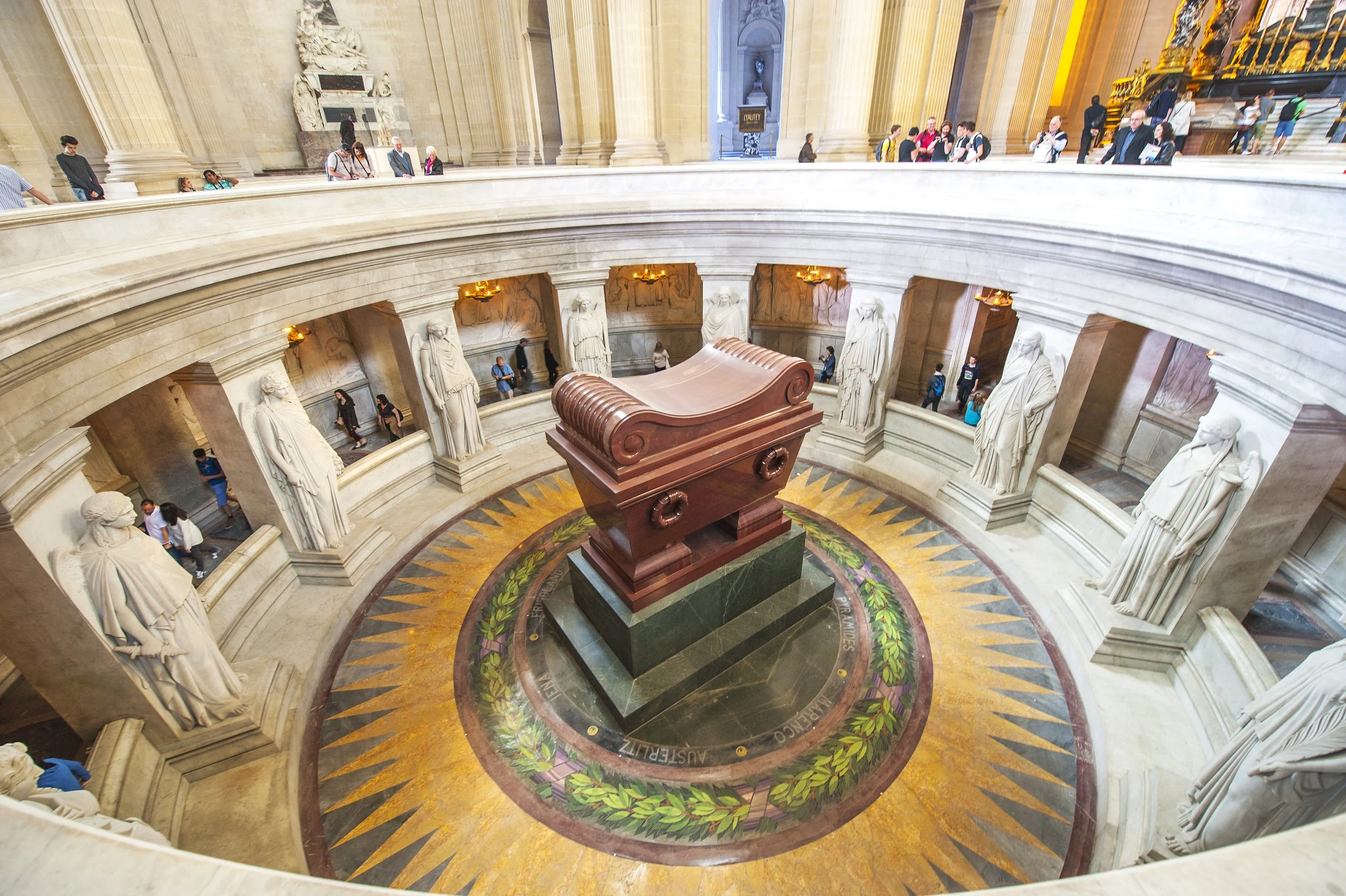
    Between 1799 and 1815 Napoleon Bonaparte set out to remake Paris as the capital of an empire, giving it new bridges, monuments and institutions, and his legend still shapes the city as powerfully as his works. A morning talk at the hotel sets out his rise from Corsican artillery officer to master of Europe before we make our way to Les Invalides – the veterans’ hospital founded by Louis XIV, where the emperor’s remains were laid to rest after their return from St Helena in 1840. Our visit also takes in the key galleries of the Musée de l’Armée, which follow his campaigns through uniforms, maps and the personal effects of the Grande Armée. The afternoon is then at leisure before we reconvene for an evening guided tour of the Louvre, taking advantage of its extended Friday opening hours and generally quieter galleries. Our visit focuses on Jacques-Louis David’s monumental Coronation of Napoleon, and the Egyptian collections, whose development was influenced by Napoleon’s expedition to Egypt. Overnight Paris (B)

  • Day 16 | Saturday 18 September
    Versailles
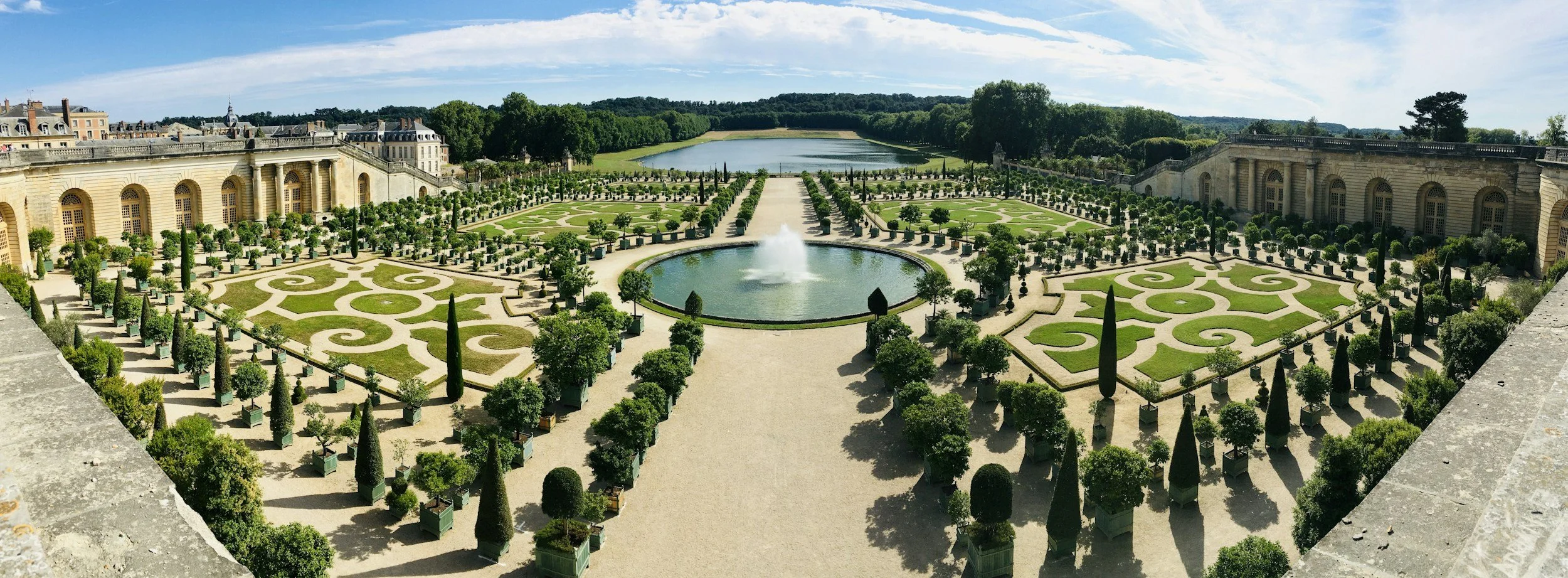
    In 1682, Louis XIV moved his court and government to Versailles, his father’s former hunting lodge, compelling France’s nobility to orbit the Sun King in a palace designed to overwhelm. For a century, it served as the model of absolute monarchy, until the 1789 Revolution forced the royal family back to Paris. Travelling out by train, we spend the day exploring the palace, beginning in the State Apartments, whose gilded salons lead to the Hall of Mirrors. Beyond the windows stretch the gardens laid out by Le Nôtre, their fountains, parterres and avenues imposing order on nature itself. Our visit concludes in the historic galleries created in the 19th century, when the empty palace became a museum, and their grand Napoleonic canvases bring together monarchy, revolution and empire in a single building. We return to Paris with time to rest before our farewell dinner this evening. Overnight Paris (B, D)

  • Day 17 | Sunday 19 September
    Depart Paris
    Our tour concludes after breakfast. (B)

Our accommodation has been carefully selected for its comfort, character and location, from historic hotels in the heart of France’s regional towns to a five-star retreat overlooking the Loire.

Tour Accommodation

tour booking

$17,480 AUD per person, twin share (land content only)
$3,980 AUD supplement for sole use of a hotel room

A $2,000 deposit is required per person to confirm your booking on tour. This deposit is non-refundable.

Hold a Place

Still deciding? We are happy to hold a tentative place for 7 days while you make your final arrangements.

Book Online

To secure your place(s) on tour, book online below with “Athena”, our virtual tour consultant.

DOWNLOAD FORM

Download a printable booking form. You can also complete the form on screen and submit via email.

your tour consultant

The consultant for this tour is Jamal Fairbrother. For further information or to discuss the tour, please call 9235 0023 (Sydney) or 1800 639 699 (outside Sydney) or email jamal@academytravel.com.au

have you thought about?

Academy Travel is more than just a tour operator. We are also a full-service travel agency who can assist you with all aspects of your travel, including flights, transfers, pre-tour arrival, additional travel and comprehensive travel insurance.

can’t make this departure?

If these dates don't work for you, register to hear about the next tour.