GREECE’S ARCHAEOLOGICAL ISLANDS

JEWELS OF THE CYCLADES

Explore Greece’s ancient cultures, extraordinary sites and stunning coastlines, including 7 nights sailing on the MS Galileo.

TOUR STATUS

Places Available | Maximum 16

TOUR DATES

October 3-22, 2027 | 20 Days

TOUR LEADER

Dr Amelia R. Brown | View Bio

snapshot

OVERVIEW

Greece’s archaeology is inseparable from its geography. Across Crete, the Peloponnese, central Greece and the Cyclades, palace centres, sanctuaries and island communities developed through networks of movement and exchange across land and sea. This tour follows those connections from the Bronze Age societies of the Aegean to the great religious and cultural centres of the ancient Greek world.

Across 20 days, Dr Amelia R. Brown leads us first across Crete and the Greek mainland, from the Minoan palaces of Phaistos and Knossos to Athens, Mycenae, Epidaurus, the Palace of Nestor, Olympia and Delphi. From there, we return to the Attic coast and board boutique ship MS Elysium for seven nights through the Cyclades, continuing the archaeological narrative across Delos, Naxos, Santorini, Milos, Sifnos and Serifos. 

Moving between sacred centres, volcanic landscapes and smaller island communities, the cruise allows us to experience the Cyclades from the sea that connected them for millennia, bringing the maritime networks of the ancient Aegean into the journey itself.

tour highlights

Journey from Minoan Crete and mainland Greece to the archaeological islands of the Aegean

the Cyclades by Sea

Featured Experience

Cruise the Aegean ABOARD The ELYSIUM

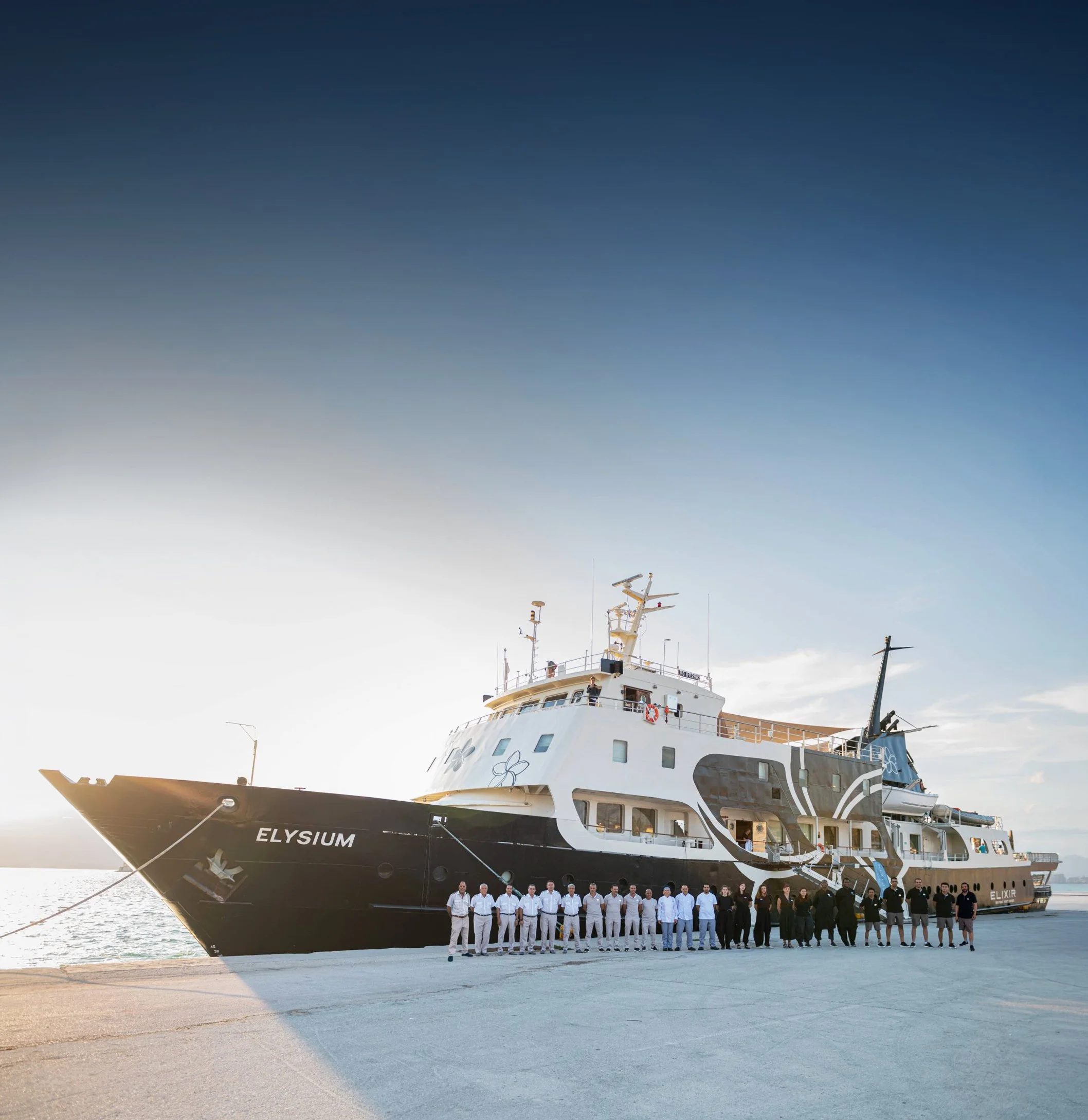
Length 209 ft (63.8 m) | Width 41 ft (12.5 m)
Decks 4 | Cruising speed 11 knots | Electricity 110/220V

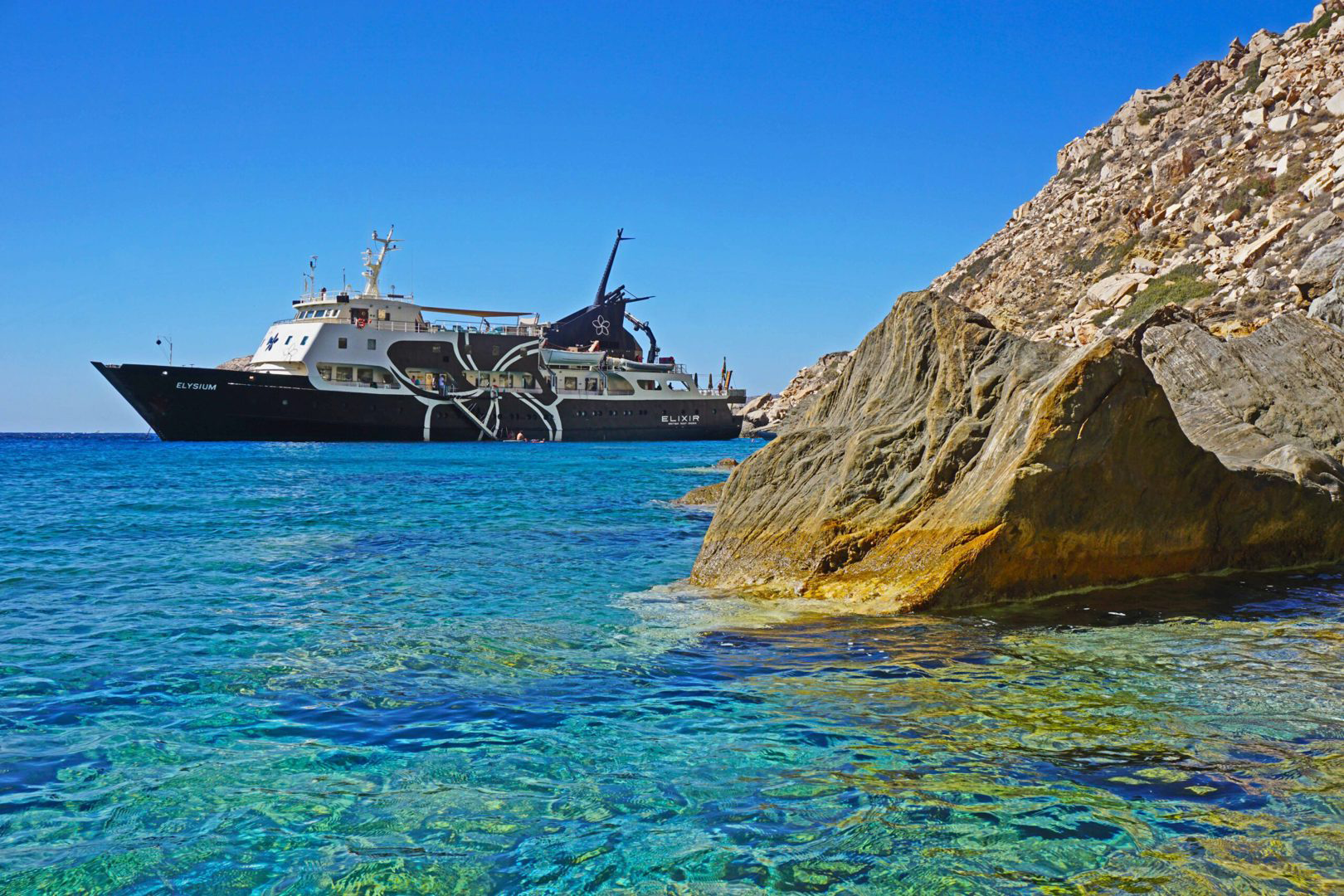
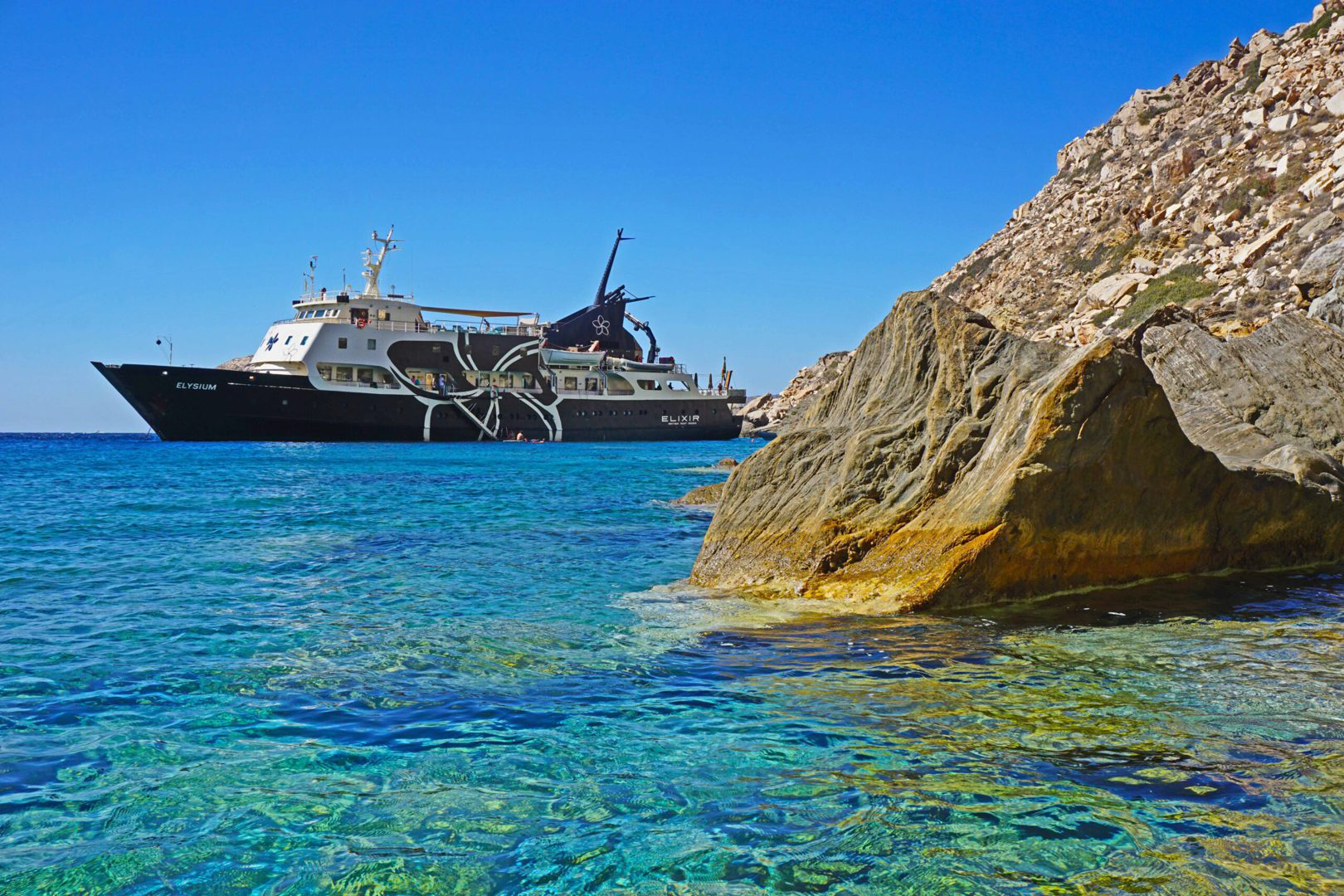
The maritime highlight of this tour is a seven-night Aegean cruise aboard MS Elysium, a 64-metre boutique vessel with just 25 cabins. Designed for small-ship cruising, Elysium combines comfortable accommodation with generous indoor and outdoor spaces, allowing us to experience the Cyclades at a relaxed pace and reach smaller ports and sheltered coves along the way.

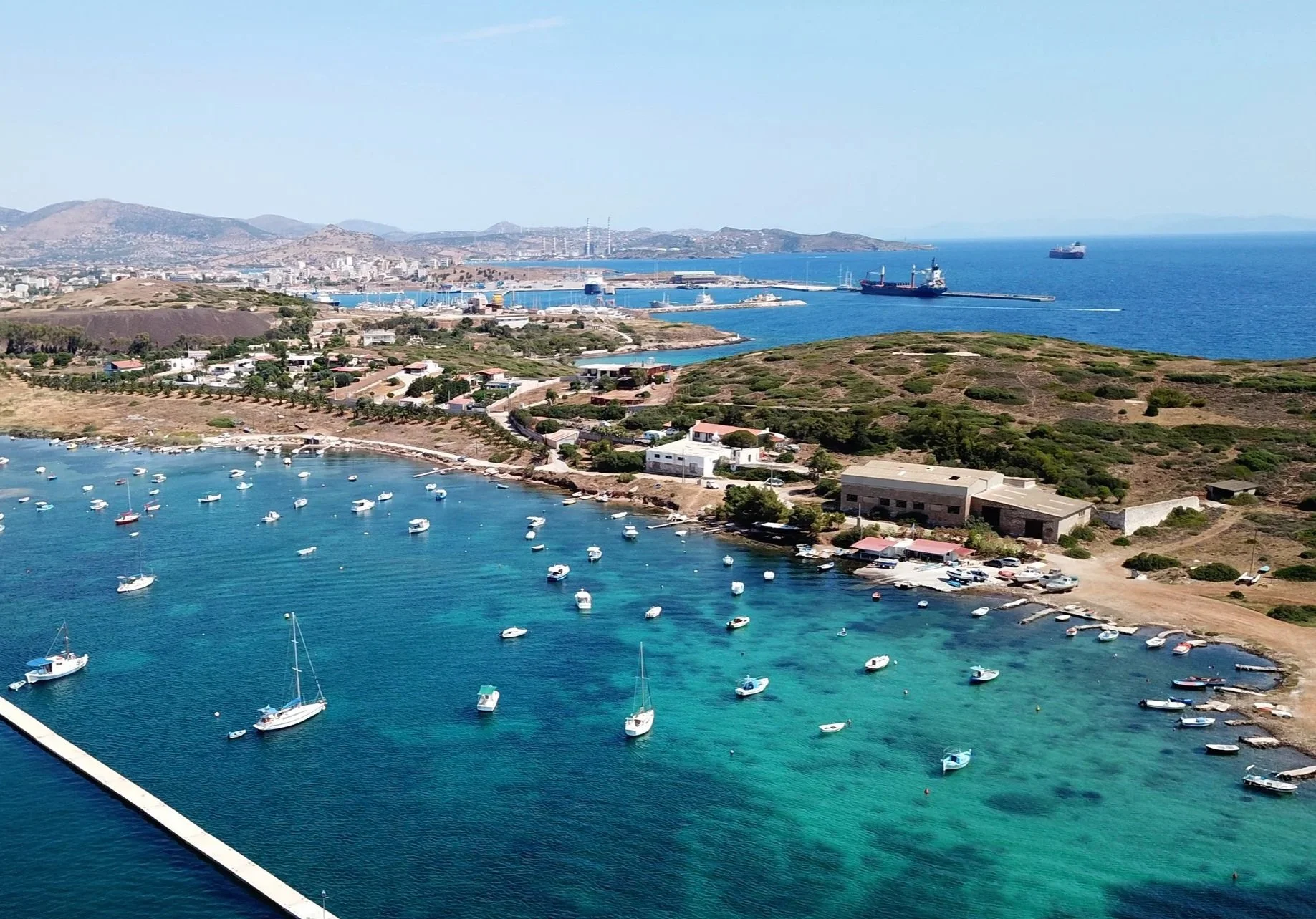
Our route sails from Lavrion on the Attic mainland through the heart of the Cyclades, calling at Delos, Mykonos, Naxos, Ios, Santorini, Milos, Kimolos, Sifnos and Serifos. Travelling between the islands by sea adds an important dimension to the tour’s archaeological narrative, while the vessel’s size allows for swim stops and convenient access ashore.

Life onboard centres on the Thalassa Deck, where shaded seating, a bar and al fresco dining overlook the Aegean.
The main lounge provides a comfortable space for relaxing and talks, while the Phos Wellness & Sun Deck has sun loungers and a hot tub. A mini gym, kayaks, paddleboards and snorkelling equipment are also available onboard.

Half-board dining is included throughout the cruise, with Mediterranean-inspired menus prepared from fresh ingredients and meals served principally al fresco on the Thalassa Deck, as well as in the indoor dining room.

Dr Amelia R. brown

your expert tour leader

Dr Amelia R. Brown is a Greek archaeologist and historian specialising in Late Antiquity and the port cities of the ancient Mediterranean, with particular expertise in Corinth, Thessaloniki and Malta. An Honorary Senior Research Fellow at Macquarie University, she previously spent 15 years teaching Greek history and archaeology at the University of Queensland. Her internationally recognised research combines archaeological and historical evidence, supported by fieldwork and major research projects across Greece, Cyprus and Malta.

Read full bio >

Accompanied by an Experienced Tour Manager

Alongside your expert tour leader, an experienced tour manager will accompany for the entirety of the tour. They oversee logistics, ensure your comfort and safety, and provide friendly support – whether offering tips for free time, sharing a chat over dinner, or giving you space to relax.

tour ITINERARY

Athens (1 night), Heraklion (2 nights), Athens (2 nights), Nafplio (2 nights), Pylos (2 nights), Olympia (1 night), Delphi (2 nights), Cyclades Cruise (7 nights)

Included meals are shown with the letters B, L and D

  • Day 1 | Sunday 3 October
    Arrive Athens

    The Greek capital provides the natural starting point for a journey that will move from the Bronze Age palaces of Crete and the Peloponnese to the sanctuaries, ports and islands of the Aegean. Over the coming days, Athens will also provide the bridge between these different archaeological worlds through its major collections and ancient monuments. Our hotel, set beneath the Acropolis and within easy walking distance of the ancient citadel and Acropolis Museum, places us at the heart of this historic landscape. We gather in the lobby in the early evening for introductions before enjoying a welcome dinner together in the hotel. Overnight Athens (D)

  • Day 2 | Monday 4 October
    Crete & The Minoan World

    Long before the rise of Classical Athens, Crete was home to the palace societies we now call Minoan, whose art, architecture and maritime connections shaped the Bronze Age Aegean. Today we fly to Heraklion, transferring to our hotel on arrival before setting out on foot through the historic centre. Our introduction to the island continues at the Heraklion Archaeological Museum, whose collections bring together finds from Knossos, Phaistos and other Minoan sites across Crete. Frescoes, ceramics, jewellery and ritual objects provide an essential foundation for the palace complexes we encounter tomorrow, while the enigmatic Phaistos Disc remains one of the most distinctive objects from the Bronze Age Mediterranean. Returning to our hotel, a late afternoon talk places these finds within the wider development of the Aegean world before we gather for dinner at a local restaurant. Overnight Heraklion (B, D)

  • Day 3 | Tuesday 5 October
    Phaistos and Knossos

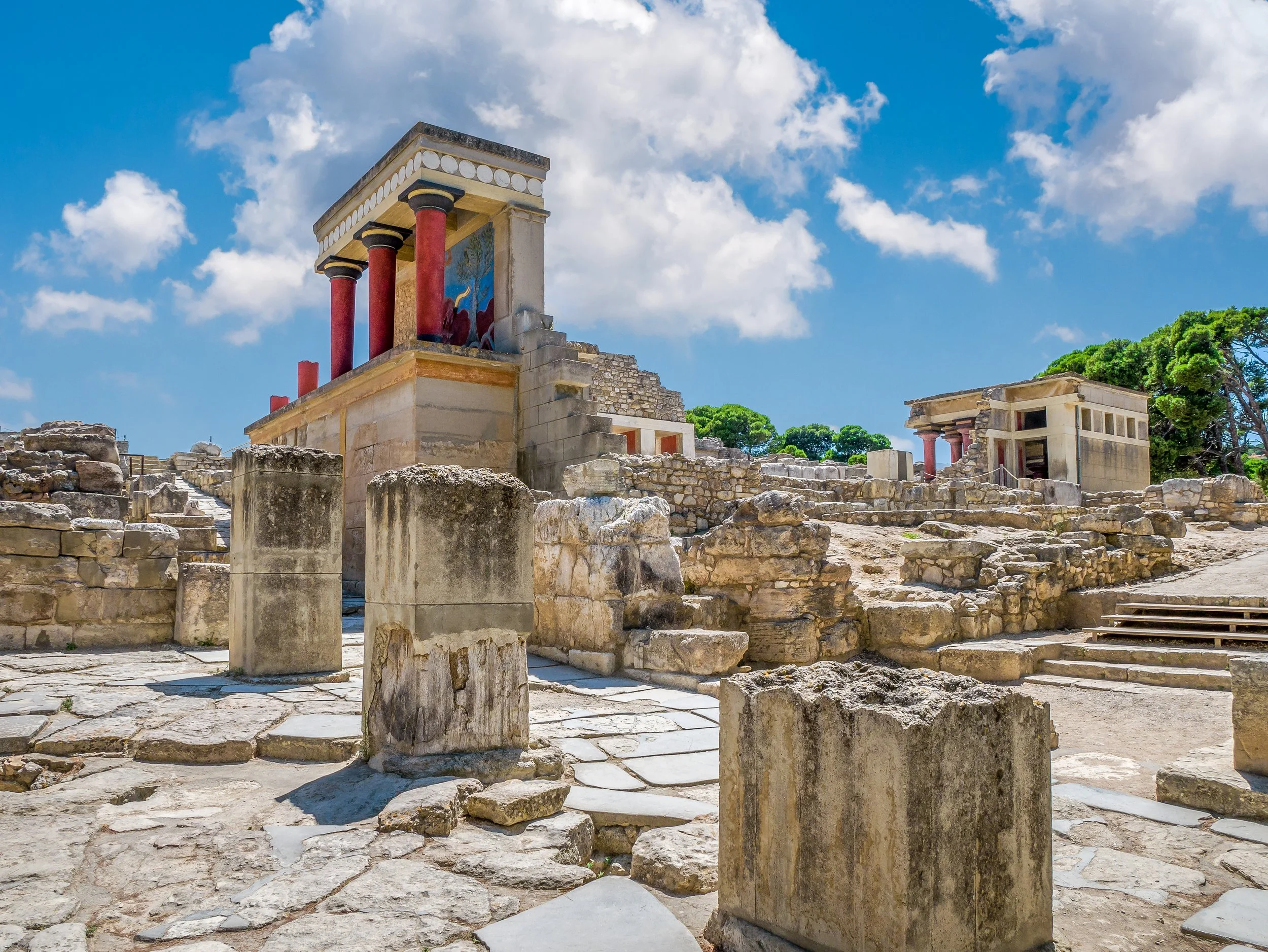
    The palace centres of Minoan Crete were at once seats of power, centres of administration and focal points for ritual, production and exchange. Phaistos and Knossos offer two very different ways of encountering this world – one preserved largely through its excavated remains, the other profoundly shaped by the reconstruction and interpretation of its early excavators. We begin at Phaistos, set above the fertile Messara Plain, where successive phases of construction preserve one of the clearest examples of Minoan palatial planning. Its broad central court, monumental stairways and extensive storerooms reveal the scale and organisation of the complex at its height. We then continue to the seaside village of Matala for lunch before travelling north to Knossos, the largest of Crete’s Minoan palace centres. Here we move through the vast Central Court, storerooms lined with great pithoi, the Throne Room and the multi-storeyed residential quarters, where staircases, light wells and fragments of wall painting suggest the complexity of palace life. Excavating from 1900, Sir Arthur Evans reconstructed parts of the palace in concrete, including columns, upper storeys and frescoes – controversial interventions that have shaped, and at times distorted, modern perceptions of Minoan Knossos. On return to Heraklion, the evening is a leisure. Overnight Heraklion (B, L)

  • Day 4 | Wednesday 6 October
    Return to Athens

    By the 5th century BCE, Athens had become one of the dominant city-states of the Greek world, its political power and cultural ambitions expressed most visibly in the monuments of the Acropolis. Our return to the mainland therefore marks a natural transition from the Bronze Age palace cultures of Crete to the Classical world that followed. Flying back to Athens this morning, we transfer to our hotel on arrival and later gather for lunch at a local restaurant. The afternoon is then at leisure, with time to walk through the neighbourhoods below the Acropolis or enjoy the historic centre independently. We reconvene this evening for dinner together at a local taverna. Overnight Athens (B, L, D)

  • Day 5 | Thursday 7 October
    Classical Athens

    The artistic and political ambitions of ancient Athens reached their fullest expression in the 5th century BCE, when the city used wealth, architecture and public sculpture to project both civic identity and imperial power. A talk at our hotel introduces this period before we begin the day at the National Archaeological Museum, whose collections range from Mycenaean goldwork and Archaic sculpture to masterpieces of the Classical and Hellenistic worlds. After a break for lunch, we continue to the Acropolis, where the Parthenon, Erechtheion and Temple of Athena Nike formed the ceremonial heart of Classical Athens. Their surviving architecture reveals both the refinement of 5th-century design and the religious importance of the hill. We conclude our day at the Acropolis Museum, where sculpture and architectural fragments from the sanctuary are displayed in direct visual dialogue with the monuments above. Overnight Athens (B)

  • Day 6 | Friday 8 October
    Mycenae & Tiryns

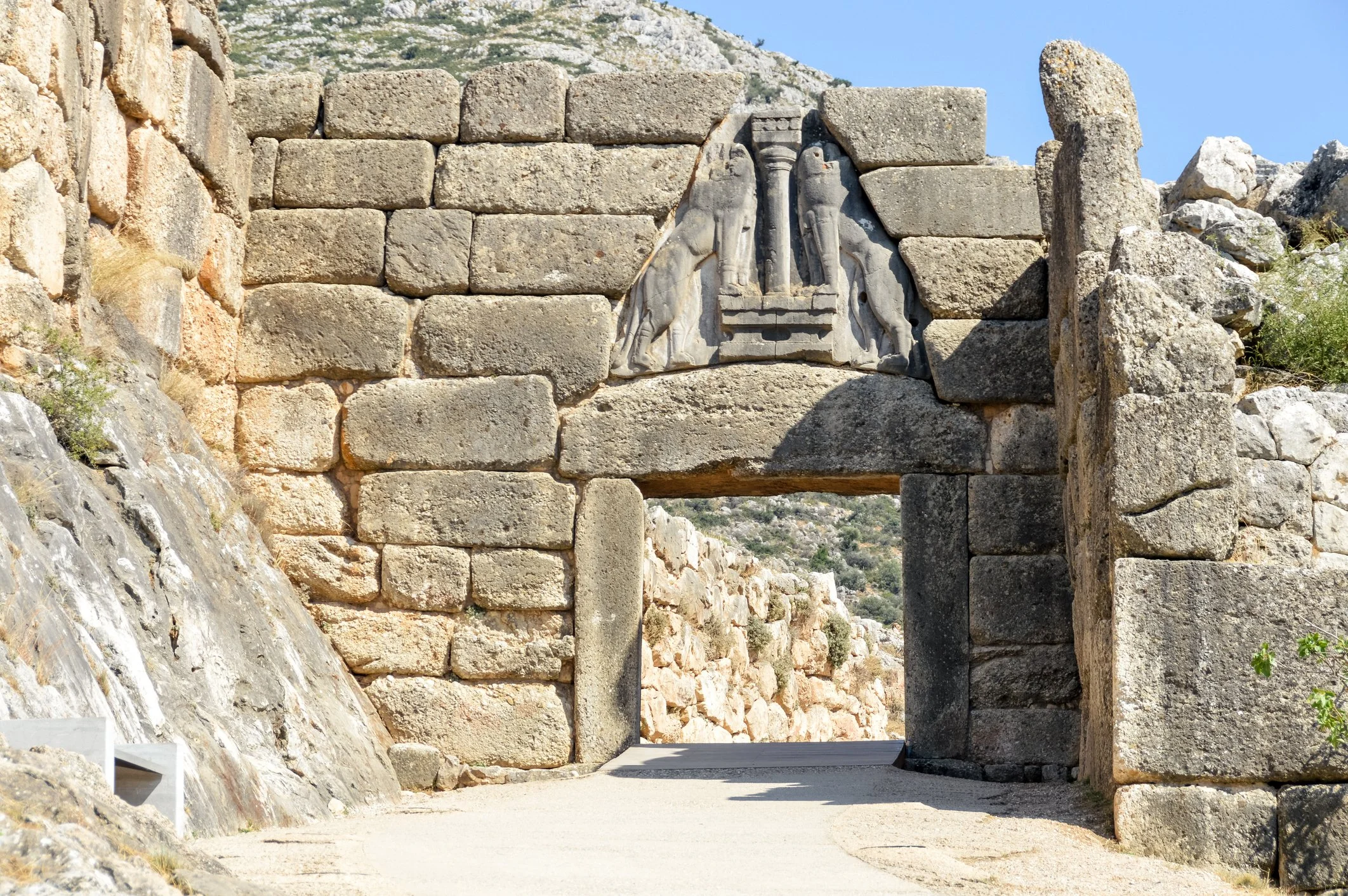
    Across the Argolid, the fortified citadels of Mycenae and Tiryns preserve some of the clearest evidence for the power and organisation of Late Bronze Age Greece. Their massive walls, imposing gateways and palace complexes belonged to the culture later remembered through the heroic traditions of Homer. Following a talk at our hotel, we depart Athens for Tiryns, where immense Cyclopean walls enclose the remains of a strongly fortified Mycenaean citadel. After a break for lunch, we continue to Mycenae, traditionally associated with Agamemnon and one of the most important centres of the period. Entering through the Lion Gate, we pass ‘Grave Circle A’, where a series of richly furnished shaft graves revealed some of the most celebrated finds of Mycenaean archaeology, before climbing through the citadel to the megaron, the ceremonial heart of the palace complex. We continue to our hotel in Nafplio later in the day and gather this evening for dinner at a local restaurant. Overnight Nafplio (B, D)

  • Day 7 | Saturday 9 October
    Nafplio & Epidaurus

    Centuries of occupation have left the Argolid with a particularly rich archaeological and architectural record, from Bronze Age settlements to Classical sanctuaries and later Venetian fortifications. Today we begin on foot through the historic centre of Nafplio, where neoclassical houses, narrow streets and Syntagma Square reflect the town’s later development beneath the walls of Palamidi. At the Archaeological Museum, finds from across the Argolid provide further context for the prehistoric and Mycenaean sites encountered the previous day. We then travel out to Epidaurus, one of the most important healing sanctuaries of the ancient Greek world. Dedicated to Asclepius, its celebrated 4th-century BCE theatre remains among the best-preserved structures of its kind. On our return to Nafplio, those wishing to continue may visit Palamidi Fortress for sweeping views across the town and Argolic Gulf. Overnight Nafplio (B)

  • Day 8 | Sunday 10 October
    Pylos

    Set around the broad natural harbour of Navarino Bay, Pylos occupies a strategically important position on the western coast of the Peloponnese. The bay has witnessed successive episodes of conflict, from the ancient world to the Battle of Navarino in 1827, a decisive engagement in the Greek War of Independence. Following a talk at our hotel, we leave Nafplio and travel west across the Peloponnese, pausing briefly in the coastal city of Kalamata before continuing through Messenia to the coast. On arrival in Pylos, we explore the harbour and town on foot, taking in the geography of the bay and the position that made it so important to maritime powers over many centuries. We later settle into our hotel before gathering for dinner together at a local restaurant. Overnight Pylos (B, D)

  • Day 9 | Monday 11 October
    The Palace of Nestor & Methoni

    The kingdom centred on Pylos was one of the major powers of Mycenaean Greece, remembered in Homeric tradition through Nestor, the wise king who sailed to Troy alongside Agamemnon. A talk at our hotel introduces this Bronze Age world before we travel inland to the Palace of Nestor, one of the best-preserved Mycenaean palace complexes in Greece. Here, the layout of the throne room, residential quarters, storerooms and administrative spaces offers an unusually clear picture of how a Late Bronze Age palace functioned. We then continue south along the Messenian coast to Methoni, where a vast medieval fortress occupies a strategic promontory commanding the sea routes around the western Peloponnese. After time at leisure for lunch, we return to Pylos for the remainder of the afternoon. Overnight Pylos (B)

  • Day 10 | Tuesday 12 October
    Olympia

    For centuries, Olympia drew competitors and visitors from across the Greek world to the Sanctuary of Zeus, where athletic contests formed part of a wider religious festival held in honour of the god. Its temples, monuments and stadium preserve the close relationship between worship, competition and public life in ancient Greece. Leaving Pylos today, we travel north to Olympia, with time at leisure for lunch on arrival. Our visit begins within the sanctuary, where we see the remains of the Temple of Zeus and the earlier Temple of Hera before continuing through the wider archaeological site. We then visit the Archaeological Museum, whose collections bring together sculpture and objects recovered from the sanctuary and help reconstruct its development over many centuries. Returning to our hotel, an evening talk brings the day’s archaeology into context before we gather for dinner together. Overnight Olympia (B, D)

  • Day 11 | Wednesday 13 October
    Hosios Loukas & Delphi

    Central Greece has long been shaped by sacred landscapes, from the ancient sanctuary at Delphi to the monasteries established here during the Byzantine period. Hosios Loukas, founded in the 10th century around the tomb of the hermit Luke of Steiris, became one of the most important monastic foundations of medieval Greece. We leave Olympia this morning and travel east towards the slopes of Mount Parnassus, arriving in Delphi with time at leisure for lunch. In the afternoon, we continue to Hosios Loukas, where the great 11th-century katholikon preserves an exceptional ensemble of Middle Byzantine architecture and decoration. Beneath its broad dome, gold-ground mosaics, marble revetments and frescoes create a richly ordered interior, while the crypt below contains the tomb of the monastery’s founder. We return to Delphi and gather for dinner together at our hotel this evening. Overnight Delphi (B, D)

  • Day 12 | Thursday 14 October
    The Sanctuary of Apollo

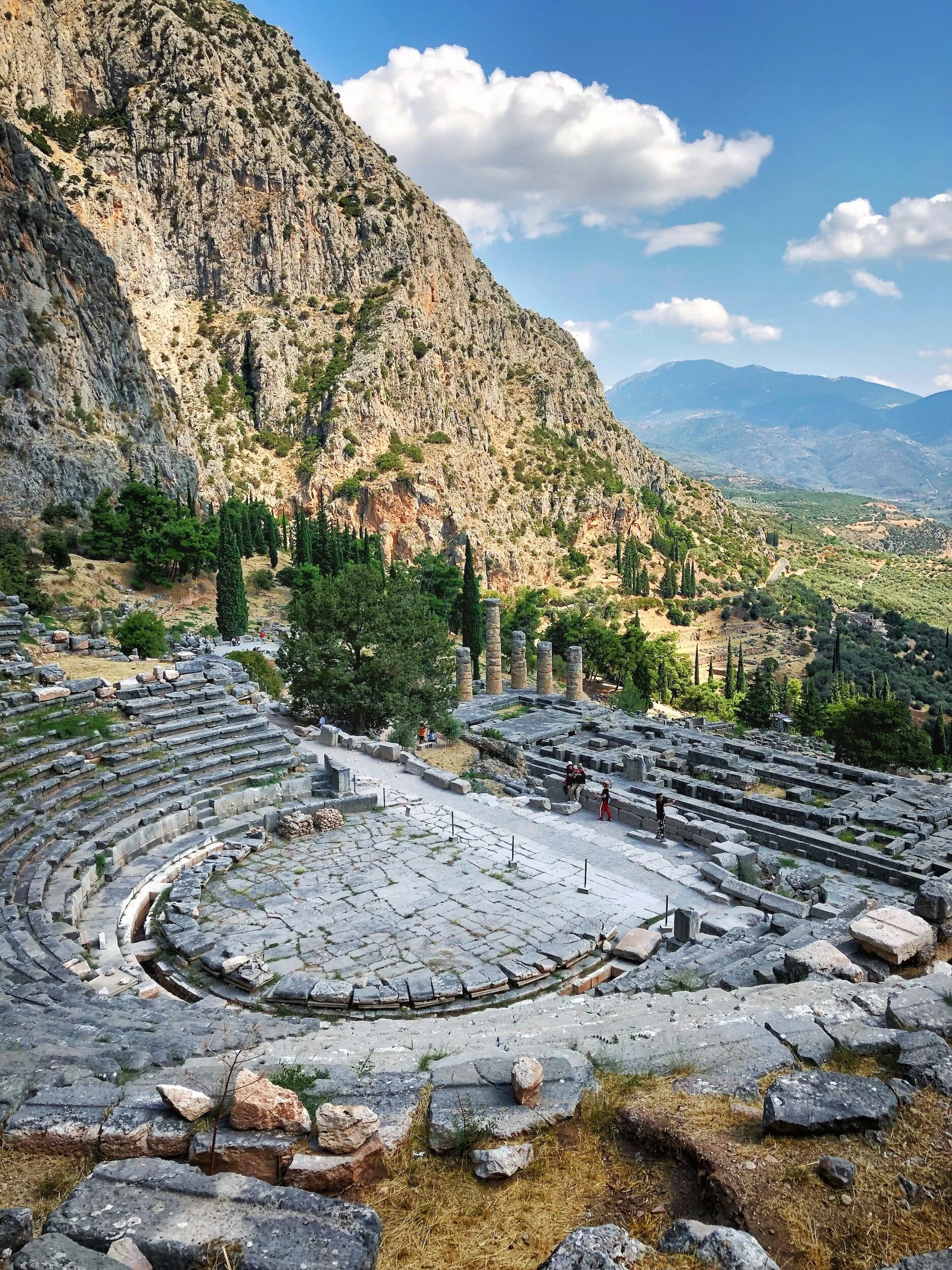
    For the ancient Greeks, the oracle of Apollo at Delphi was one of the most authoritative religious institutions in the Mediterranean. City-states, rulers and individuals came here seeking guidance, while treasuries and monuments proclaimed the wealth and rivalries of communities from across the Greek world. Beginning our day at the Delphi Archaeological Museum, we examine finds from the sanctuary, including the marble Sphinx of Naxos and the celebrated bronze Charioteer. After a break for lunch, we continue to the archaeological site itself, following the Sacred Way past the remains of treasuries and commemorative monuments towards the Temple of Apollo. Here, the Pythia delivered the responses that gave Delphi its extraordinary influence across the ancient world. From the sanctuary, we also take in its dramatic setting beneath Mount Parnassus and above the valley of Phocis before returning to our hotel. Overnight Delphi (B)

  • Day 13 | Friday 15 October
    From Land to Sea
    | Embarkation
    For the ancient Greeks, the Aegean was a route of connection rather than a barrier, carrying people, goods and religious traditions between the mainland and islands. After the great sanctuaries and palace centres of the land journey, we now turn to the maritime world that linked them. Leaving Delphi behind, we travel south through Attica to Lavrion, where we board MS Elysium for our seven-night exploration of the Cyclades. After settling into our cabins and meeting the crew over a welcome drink, we depart in the afternoon and begin sailing towards Delos, one of the most important sacred islands of the ancient Aegean. Dinner is served onboard this evening as we make our way into the Cyclades, with our first archaeological visit awaiting us the following morning. Overnight Cyclades Cruise (B, D)

  • Day 14 | Saturday 16 October
    Delos & Mykonos

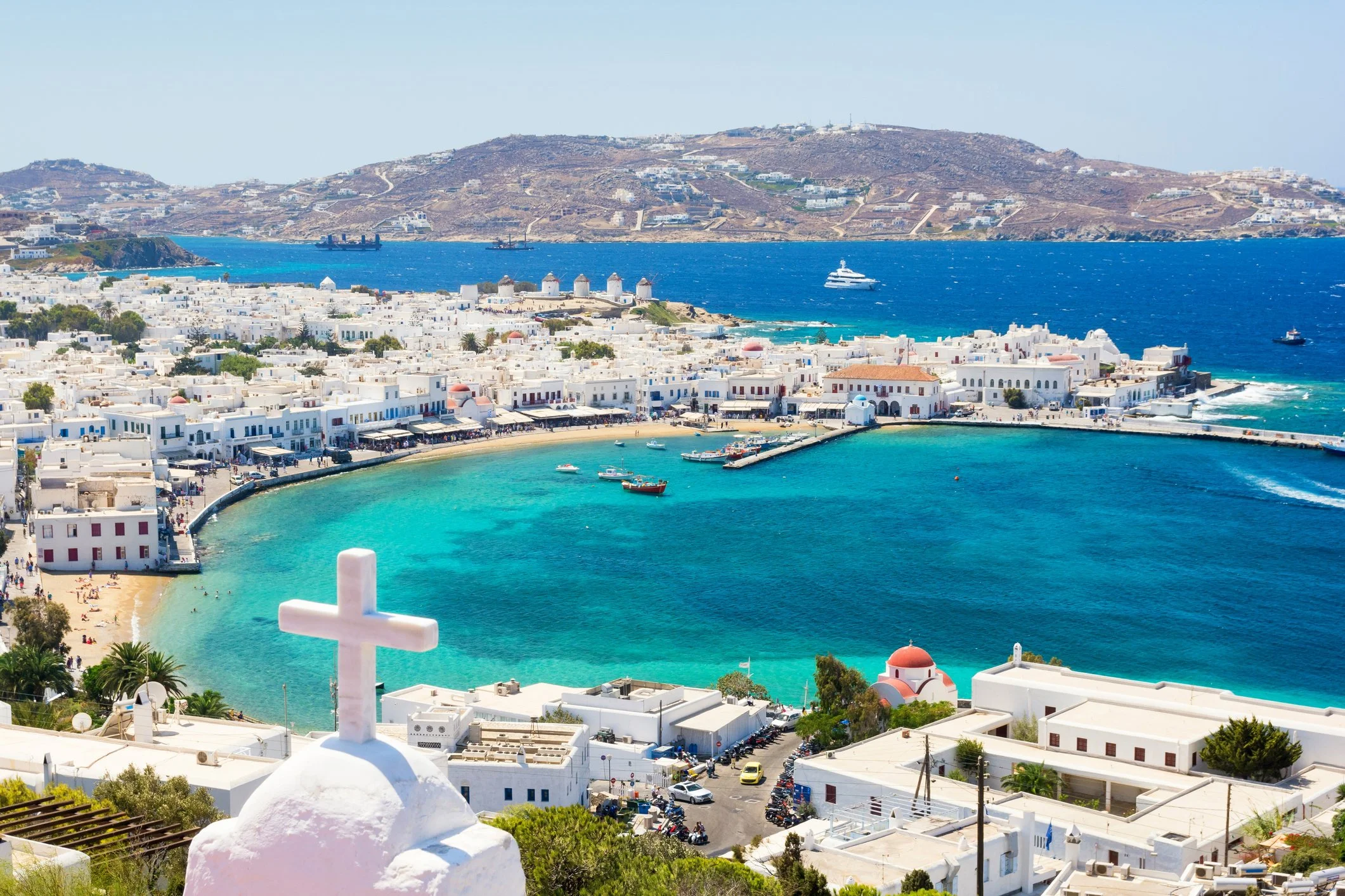
    At the heart of the Cyclades, Delos was one of the most sacred places in the ancient Greek world. Revered as the birthplace of Apollo and Artemis, the island developed around the Sanctuary of Apollo before flourishing as a major centre of commerce and exchange during the Hellenistic and Roman periods. We go ashore this morning to explore its extensive archaeological remains, following the Sacred Way through the sanctuary and past the Terrace of the Lions, before continuing into the residential quarters where mosaics and houses reveal the wealth of the later settlement. Around midday we return to MS Elysium and sail for neighbouring Mykonos, with lunch served onboard. On arrival, the afternoon and evening is at leisure to wander through the whitewashed lanes of Chora, see the windmills above the waterfront or settle into a café overlooking Little Venice. We sail for Naxos in the early morning hours. Overnight Cyclades Cruise (B, L)

  • Day 15 | Sunday 17 October
    Naxos

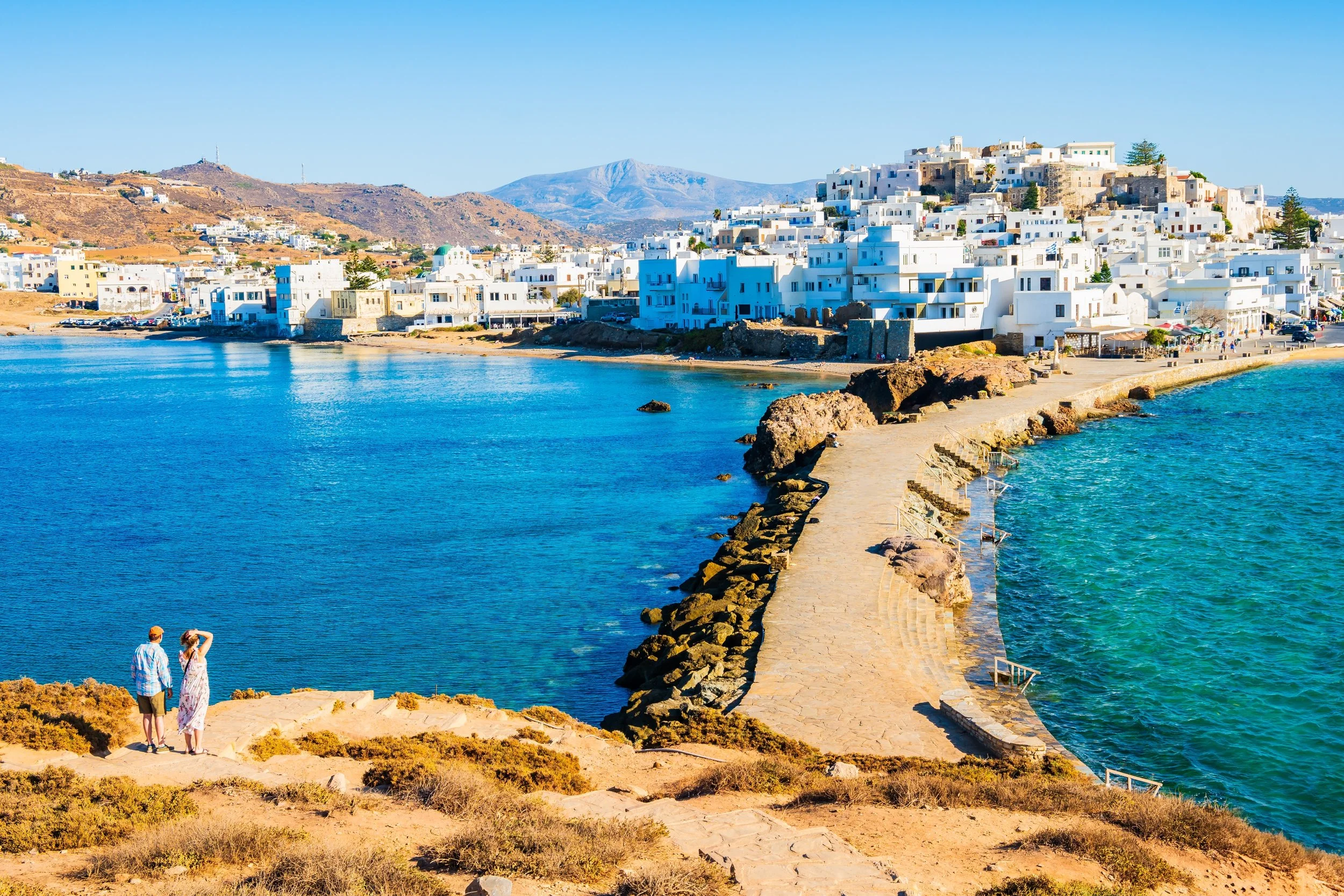
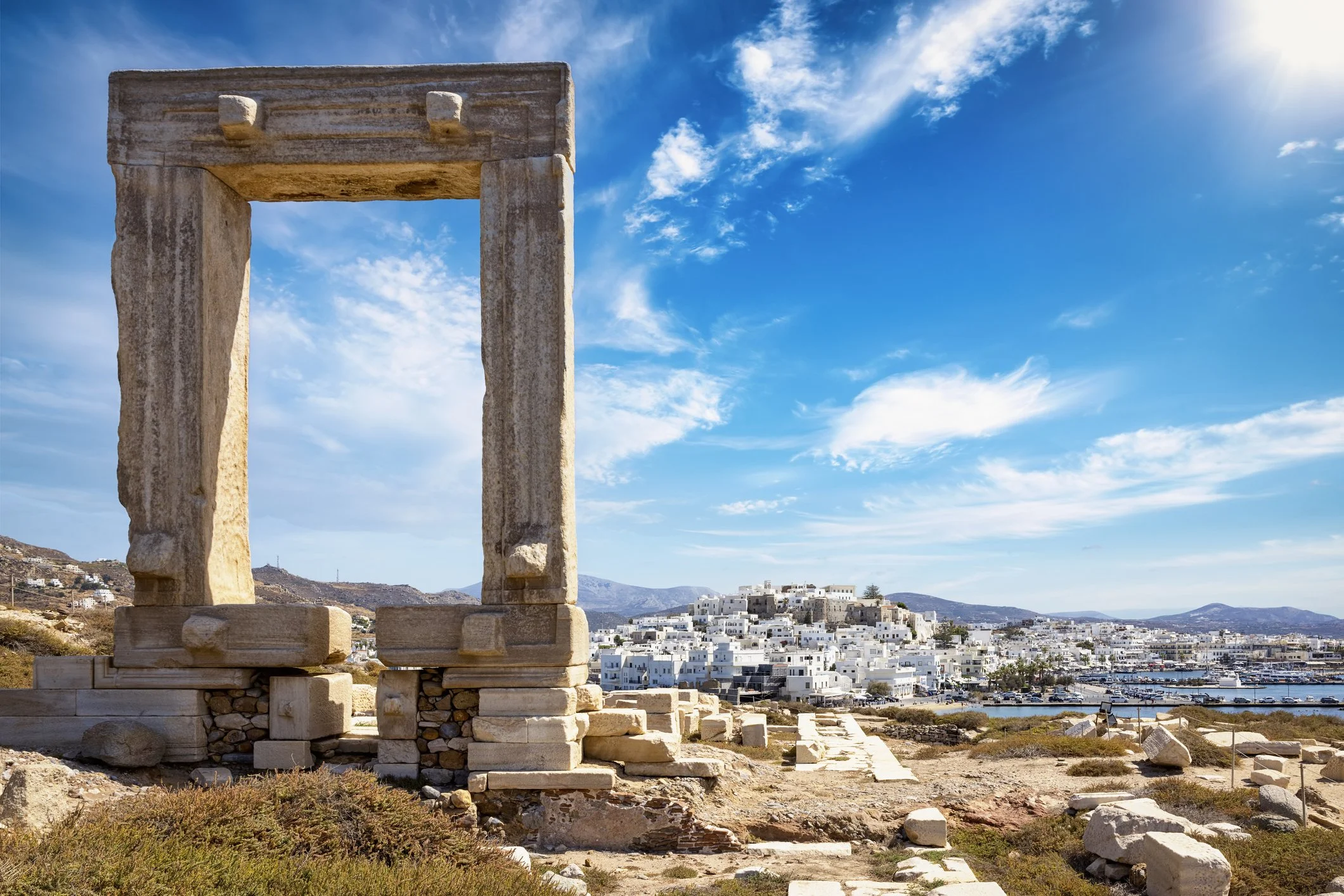
    The largest of the Cyclades, Naxos was an important centre of trade, agriculture and marble production in the ancient Aegean – its prosperity reflected in ambitious temples and sculpture found across the Greek world. With our day beginning at a sheltered cove, there is time for a morning swim before MS Elysium continues towards the island’s main port. Lunch is served onboard ahead of our afternoon arrival in Naxos Town. From the harbour, we make our way to the Portara, the monumental marble doorway of an unfinished Temple of Apollo begun in the 6th century BCE. The remainder of the afternoon is then at leisure, with the option to join an excursion into the island’s interior visiting an olive press museum, a local distillery and the traditional village of Apeiranthos. MS Elysium remains in port overnight. Overnight Cyclades Cruise (B, L)

  • Day 16 | Monday 18 October
    Ios & Santorini

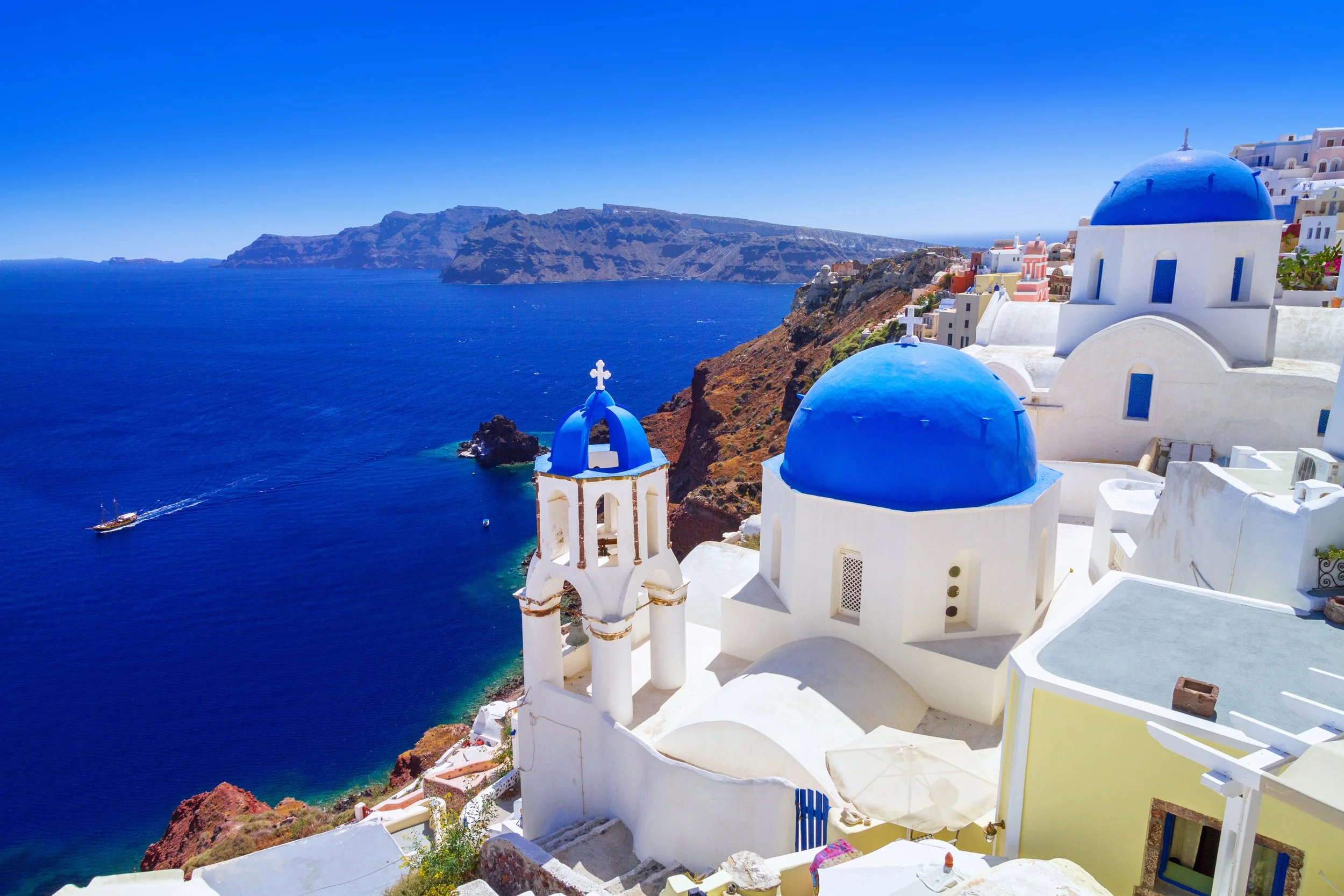
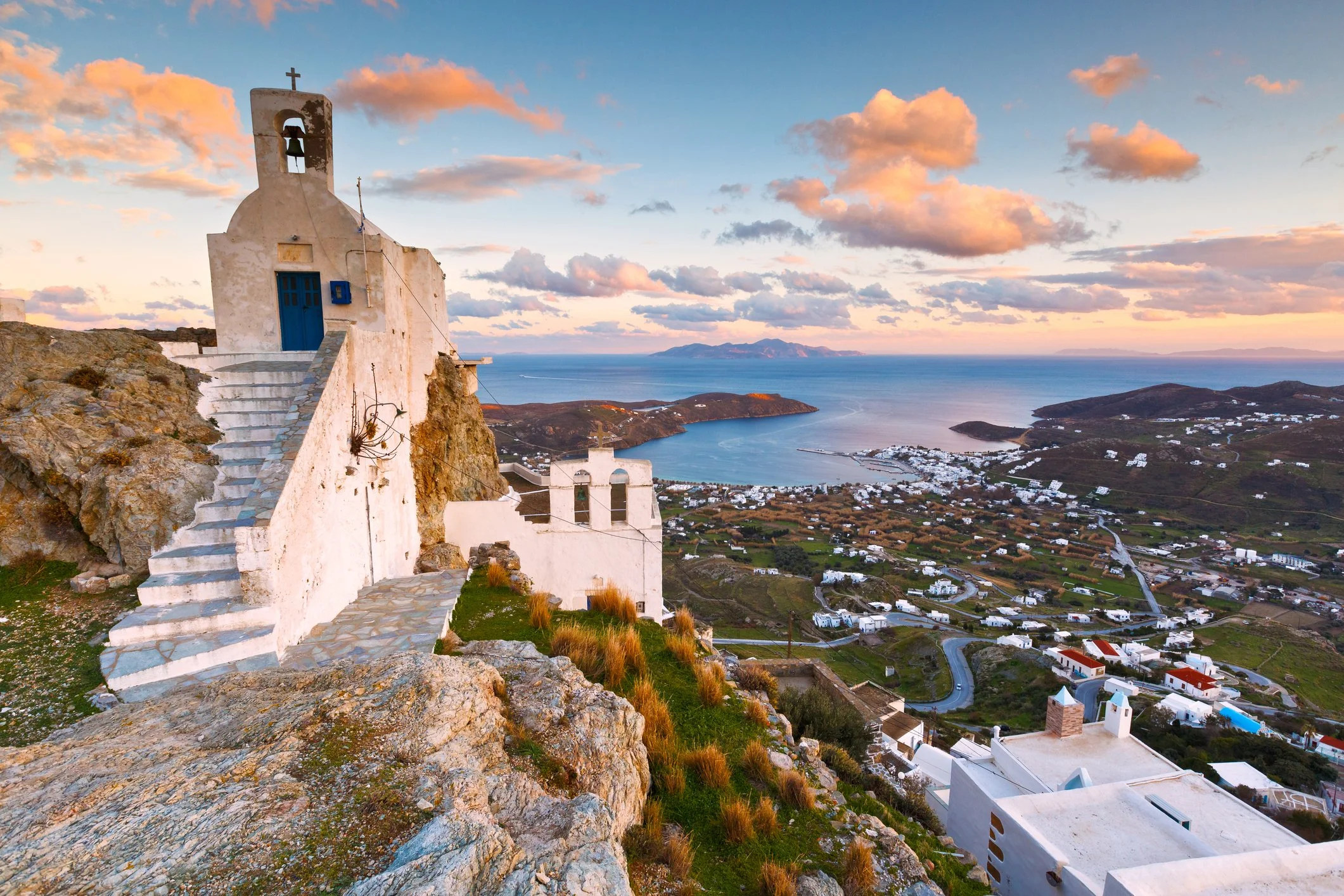
    Few approaches in the Aegean reveal geology as dramatically as Santorini, where the flooded caldera and sheer cliffs record the volcanic forces that have repeatedly reshaped the island. Before reaching it, however, we spend the morning off Ios, anchoring at Manganari Beach for time to swim in its sheltered waters. We then continue south with lunch served onboard as Santorini gradually comes into view. Entering the caldera by sea gives us a striking sense of the scale of the volcanic landscape, with the island’s settlements perched high above the water along the crater rim. We arrive in the early afternoon, leaving the remainder of the day at leisure to explore independently, walk through the island’s towns or enjoy the changing light across the caldera. The evening is at leisure for dinner ashore before we return to MS Elysium for the overnight sailing to Milos. Overnight Cyclades Cruise (B, L)

  • Day 17 | Tuesday 19 October
    Milos & Kimolos

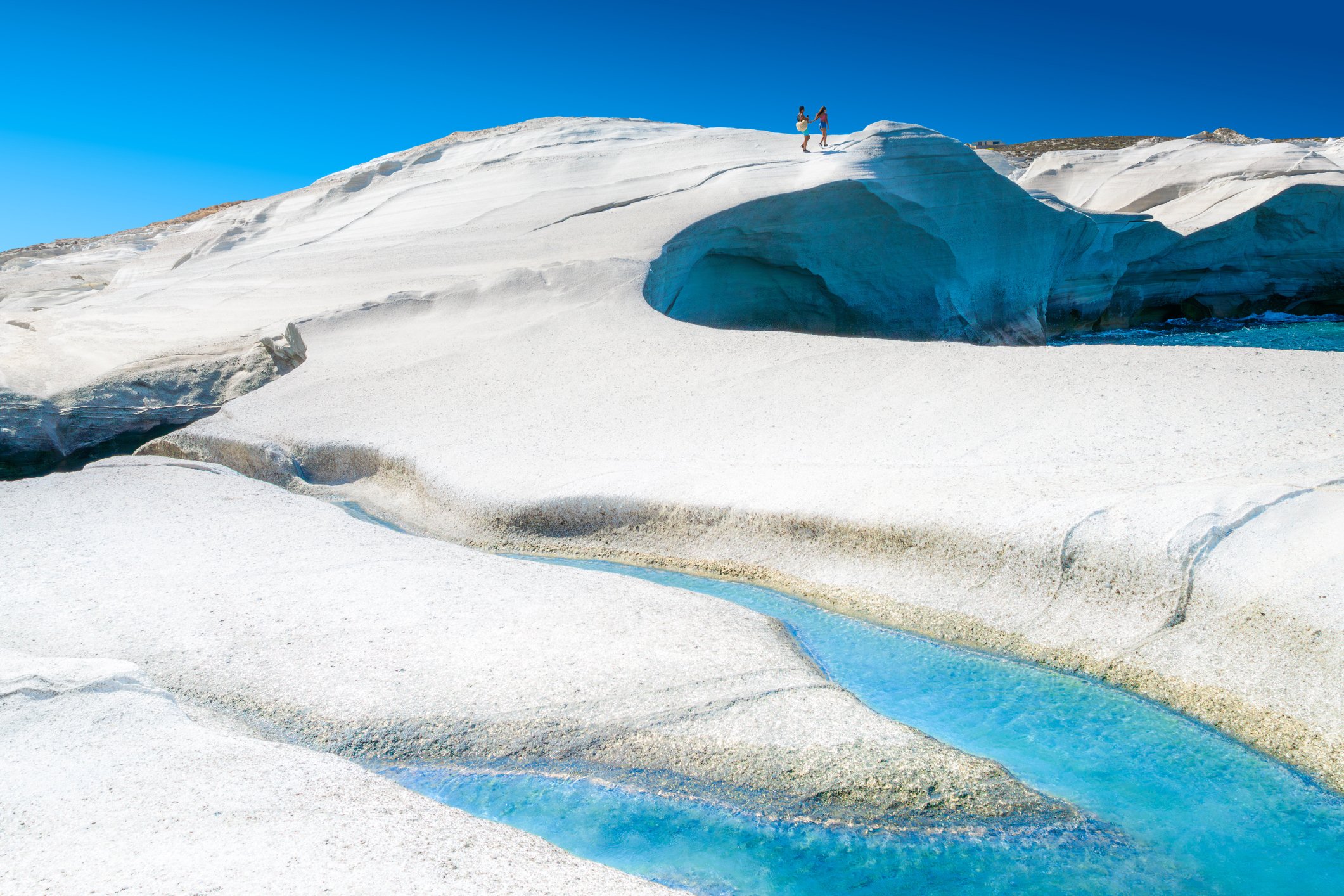
    The volcanic islands of the western Cyclades have long been valued for the resources beneath their surface. On Milos, obsidian was quarried and carried across the Aegean from prehistoric times, making the island an important node in some of the region’s earliest maritime exchange networks. Arriving this morning, we visit the Milos Mining Museum, where the island’s geology and long history of extraction are traced from ancient obsidian working to the modern mining industry. We then continue to Sarakiniko, where the same volcanic forces have left a very different imprint on the landscape, with pale rock formations carved by wind and sea along the northern coast. In the afternoon, MS Elysium sails to nearby Kimolos. After dinner onboard, the evening is at leisure to walk through the main town of Chorio, where whitewashed houses gather around the remains of the island’s old fortified settlement. Overnight Cyclades Cruise (B, D)

  • Day 18 | Wednesday 20 October
    Sifnos

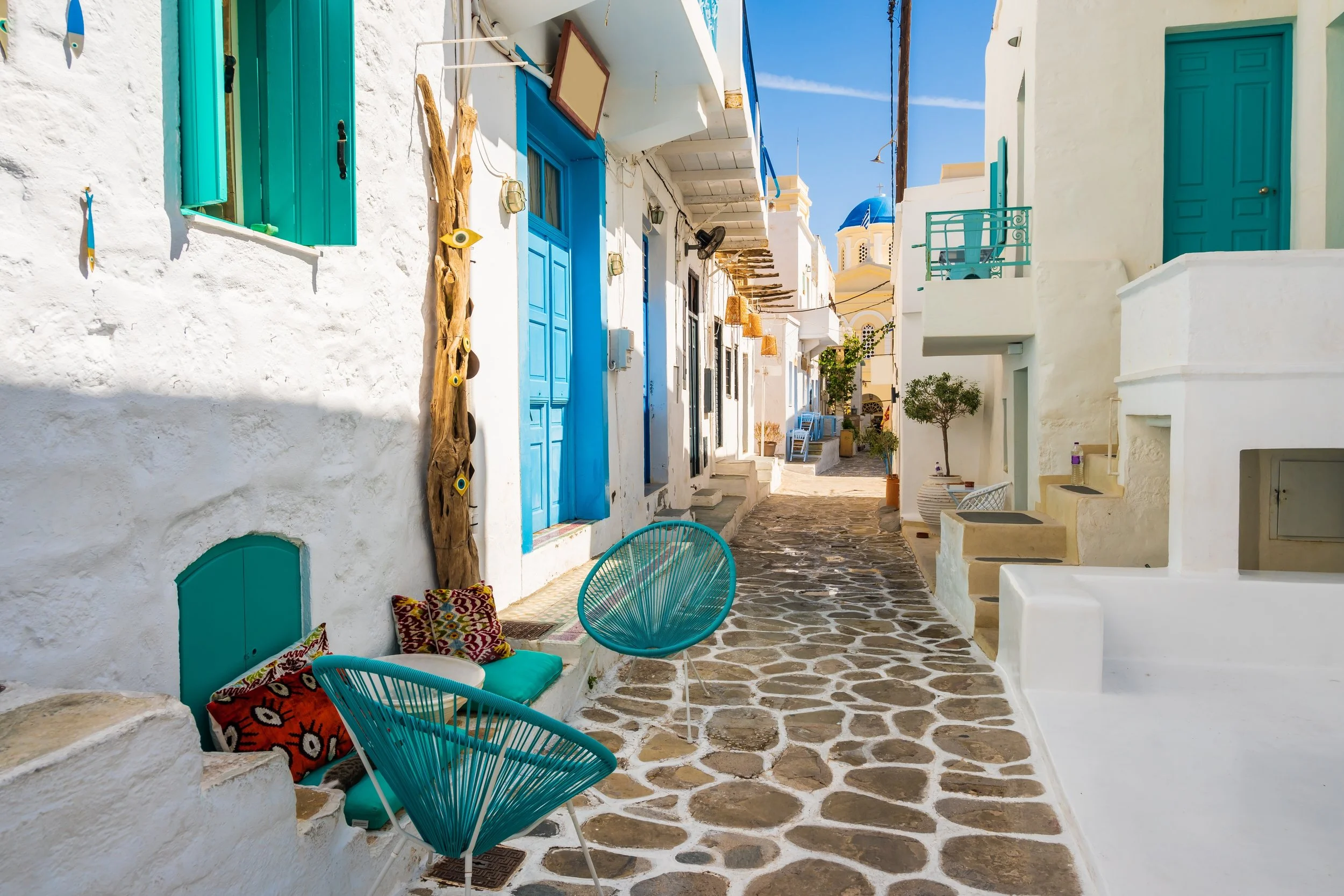
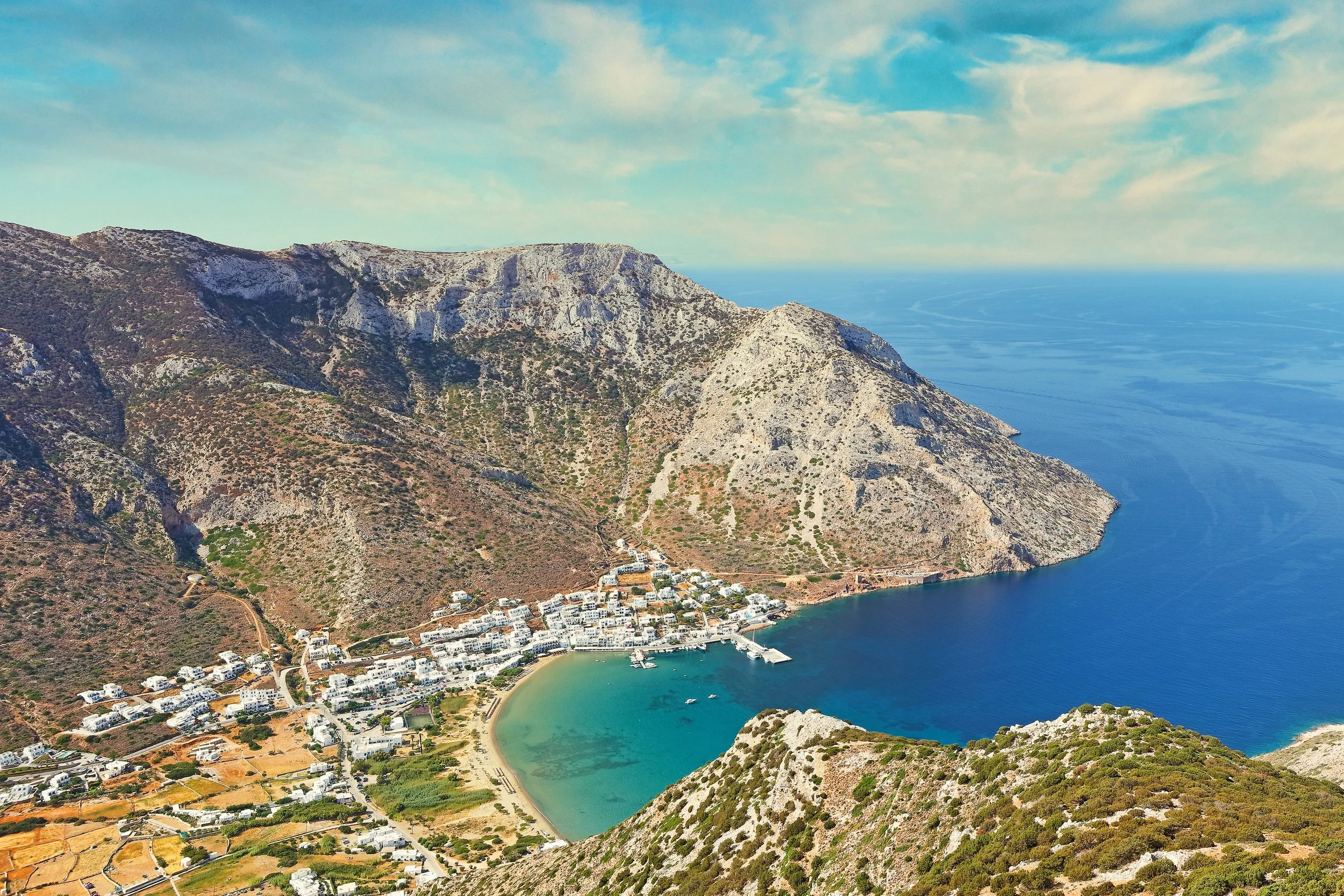
    In the 6th century BCE, the people of Sifnos drew such wealth from the island’s gold and silver mines that they dedicated one of the most lavish treasuries at Delphi – encountered only days ago along the Sacred Way. That prosperity placed this small Cycladic island firmly within the wider religious and commercial networks of the ancient Greek world. Following a morning swim stop off the uninhabited island of Polyaigos, we reach Sifnos in the early afternoon. The remainder of the day is at leisure, with several ways to discover the island. You may follow one of the marked Sifnos Trails between villages and countryside, visit the medieval settlement of Kastro and the nearby Church of the Seven Martyrs, or spend time in Apollonia, the island’s capital. Those interested in local food traditions may instead choose a hands-on cooking experience with island residents. Dinner is enjoyed ashore this evening before we return to MS Elysium. Overnight Cyclades Cruise (B, L)

  • Day 19 | Thursday 21 October
    Serifos

    After the great archaeological sites and larger island centres encountered across the Cyclades, Serifos offers a quieter final perspective on the archipelago. Yet this rugged island also carries one of Greek mythology’s enduring stories: according to tradition, Danaë and the infant Perseus were cast into the sea from Argos and came ashore here, a story set in motion by the Delphic prophecy that her son would one day kill his grandfather. Beyond the mythology, Serifos has a long material history of its own – the present-day Chora occupies the site of the ancient city, while the island’s mineral-rich landscape supported mining and settlement from antiquity into the modern era. We arrive by mid-morning, with the day at leisure to discover the island independently. You might make your way up to Chora, dramatically set above the harbour, wander among its whitewashed houses and windmills or spend time along a coastline shaped by these centuries of mining and maritime life. Returning to MS Elysium in the late afternoon, we gather for a farewell cocktail and the Captain’s dinner as we begin our final overnight sailing towards Athens. Overnight Cyclades Cruise (B, D)

  • Day 20 | Friday 22 October
    Disembark | Depart Athens
    Our journey through Greece concludes this morning as MS Elysium returns to Lavrion, bringing us back to the Attic coast where the maritime stage of the tour began. After breakfast onboard, we disembark and transfer by coach to Athens Airport, where the tour ends. (B)

Throughout the land journey, accommodation has been selected for comfort, location and ease of access to the archaeological sites.

The final seven nights are spent aboard Elysium, where private en-suite cabins, half-board dining, wellness facilities and generous onboard spaces provide a relaxed base for exploring the Cyclades by sea.

Tour Accommodation

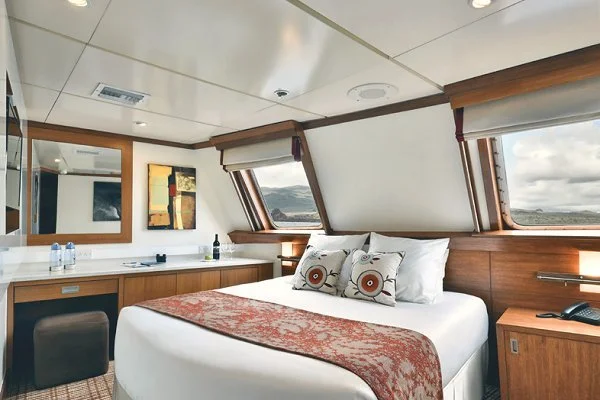
Category A+ Cabin:
Measuring approximately 17–20 sqm and included in the twin share price, Category A+ cabins are located on the Upper Deck and feature windows overlooking the sea. Each cabin has a private ensuite and can be configured with twin or double beds.

Category A Cabin:
These cabins form the basis of the single supplement price. Also located on the Upper Deck, Category A cabins measure approximately 15–17 sqm and feature windows overlooking the sea, private ensuite facilities and twin or double beddings.
tour booking

$23,980 AUD per person, twin share
> Based on a A+ Cabin Type

$5,995 AUD single supplement
> Based on a A Cabin Type

A $2,000 non-refundable deposit is required per person to confirm your booking on tour.
An instalment of $5,000 will be required in May 2027.

Hold a Place

Still deciding? We are happy to hold a tentative place for 7 days while you make your final arrangements.

Book Online

To secure your place(s) on tour, book online below with “Athena”, our virtual tour consultant.

DOWNLOAD FORM

Download a printable booking form. You can also complete the form on screen and submit via email.

your tour consultant

The consultant for this tour is Sharon Williams. For further information or to discuss the tour, please call 9235 0023 (Sydney) or 1800 639 699 (outside Sydney) or email sharon@academytravel.com.au

have you thought about?

Academy Travel is more than just a tour operator. We are also a full-service travel agency who can assist you with all aspects of your travel, including flights, transfers, pre-tour arrival, additional travel and comprehensive travel insurance.

can’t make this departure?

If these dates don't work for you, register to hear about the next tour.