Hidden Gems of Italy

Exploring the central north

Tour the lesser-known cultural centres of northern Italy, home to some of Europe’s most extraordinary art and architecture.

TOUR STATUS

Places Available | Maximum 16

TOUR DATES

September 3-21, 2027 | 19 Days

TOUR LEADER

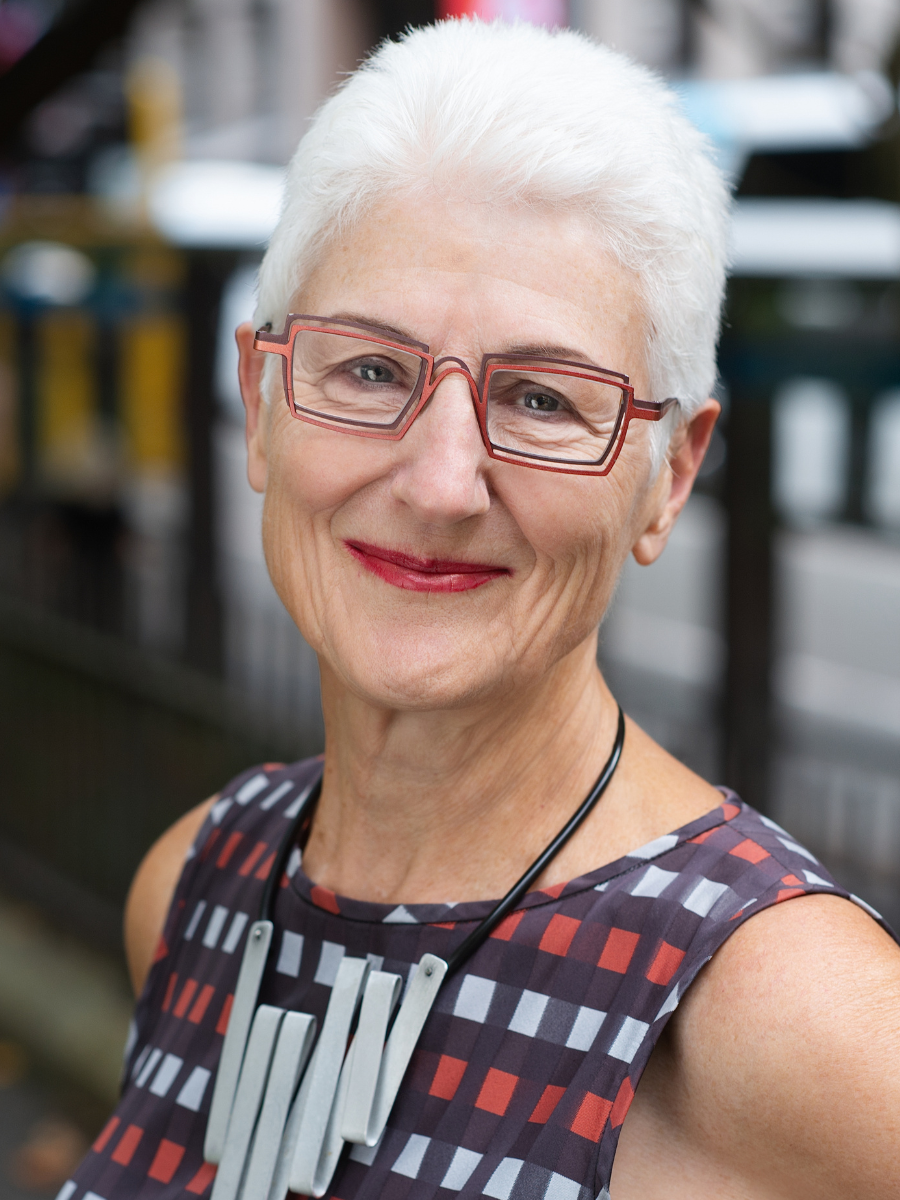
Dr Jeni Ryde | View Bio

snapshot

OVERVIEW

Across north-central Italy, ancient roads and river valleys connect a succession of cities and towns shaped by Etruscan settlement, Roman expansion, medieval communes and Renaissance courts. Away from the better-known centres, these regions preserve an extraordinary concentration of architecture, painting, archaeology and local traditions.

Over 19 days, Dr Jeni Ryde leads us from Bologna and Modena across the Apennines to Florence’s surrounding Tuscan hills, then through Città di Castello and the Upper Tiber Valley, following Etruscan routes, Romanesque churches and the work of artists such as Piero della Francesca. We continue through Gubbio and Urbino to the Adriatic, where Ravenna’s early Christian mosaics are followed by the ceramics of Faenza, the medieval Abbey of Pomposa and the ancient port of Adria, before concluding on the Venetian Lagoon at Chioggia.

Along the way, visits to Medici villas, historic wine estates and family-run producers complement the art and architecture, while carefully selected four-star hotels and a measured pace allow time to appreciate the distinct character of each region.

tour highlights

Discover medieval cities, Renaissance courts and Adriatic landscapes beyond the familiar centres

Dr Jeni Ryde

your expert tour leader

Jeni is a linguist and art history specialist with over fifteen years experience leading tours to Spain, Italy, France and Portugal. She is passionate about art, design and architecture both ancient and modern and particularly enjoys how both complement each other. Jeni holds two undergraduate degrees with majors in Anthropology and French and Interpreting and Translation with NAATI qualifications, two Masters degrees in Italian Linguistics and TESOL and a cross disciplinary PhD in Renaissance Art History, Tourism and Museum Management.

Read full bio >

Accompanied by an Experienced Tour Manager

Alongside your expert tour leader, an experienced tour manager will accompany for the entirety of the tour. They oversee logistics, ensure your comfort and safety, and provide friendly support – whether offering tips for free time, sharing a chat over dinner, or giving you space to relax.

tour ITINERARY

Bologna (4 nights), Florence Surrounds (3 nights), Città di Castello (3 nights), Urbino (2 nights), Ravenna (4 nights), Chioggia (2 nights)

Included meals are shown with the letters B, L and D
  • Day 1 | Friday 3 September
    Arrive Bologna
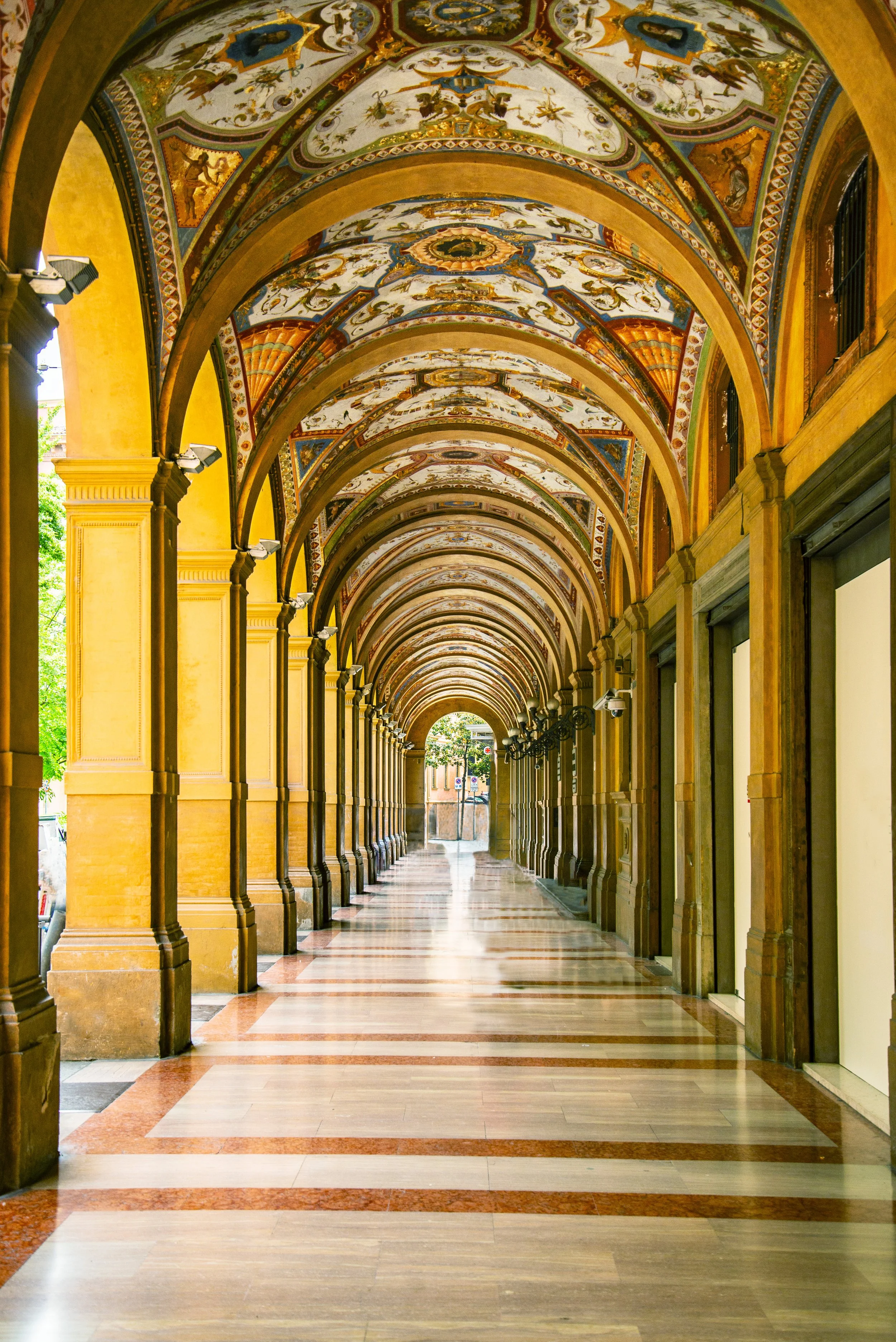
    Our journey through the lesser-known artistic and historic centres of north-central Italy begins in Bologna, a city whose arcaded streets, medieval towers and long traditions of learning provide an ideal introduction to the regions ahead. Individual transfers from Bologna Airport to our hotel will be arranged by Academy Travel. In the early evening, we gather in the lobby for introductions before enjoying a welcome dinner together at a nearby trattoria specialising in the classic cooking of Bologna and Emilia. Overnight Bologna (D)

  • Day 2 | Saturday 4 September
    Bologna’s Medieval City
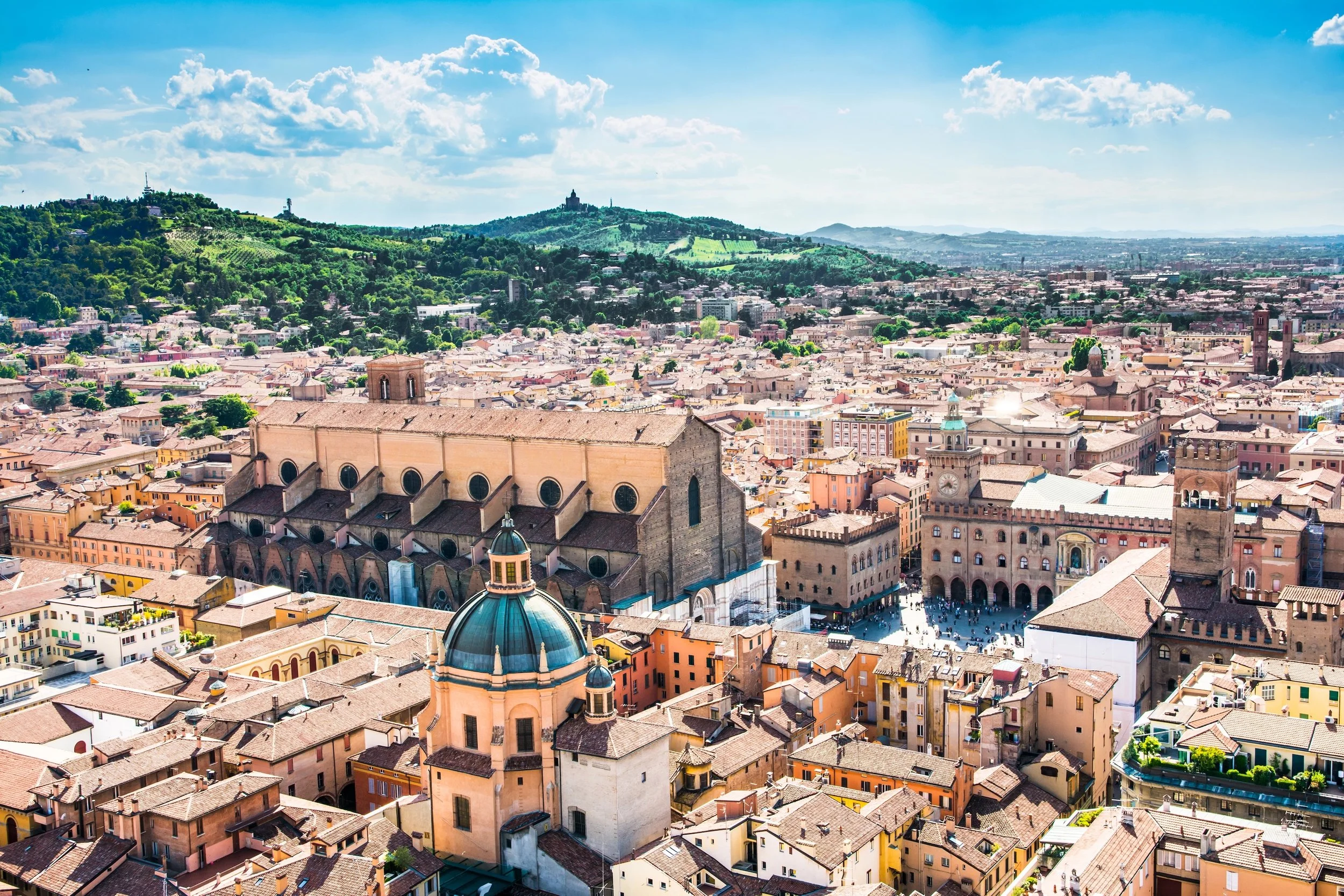
    From its Etruscan and Roman origins, Bologna grew at the crossroads of the Via Emilia and routes across the Apennines. From the 11th century, its self-governing commune and university drew merchants and scholars from across Europe, while powerful families transformed the skyline with towers and palazzi. As the population expanded, upper storeys were extended over the streets on supporting columns, creating the porticoes that became so characteristic of the city that their construction was formally required by the late 13th century. This morning we set out through the historic centre, much of it still sheltered beneath these arcaded walkways. Beginning in Piazza Maggiore, we encounter the political heart of the medieval city before continuing into the Quadrilatero – Bologna’s historic market district and home to Santa Maria della Vita. Inside we find Niccolò dell’Arca’s extraordinary Lamentation over the Dead Christ, a group of 15th-century terracotta figures charged with dramatic movement and grief. After a break for lunch in the local market, we end our day at Santo Stefano, an interconnected complex of churches, chapels and cloisters traditionally known as the ‘Seven Churches’ and conceived as a symbolic recreation of Jerusalem. Overnight Bologna (B)

  • Day 3 | Sunday 5 September
    Modena
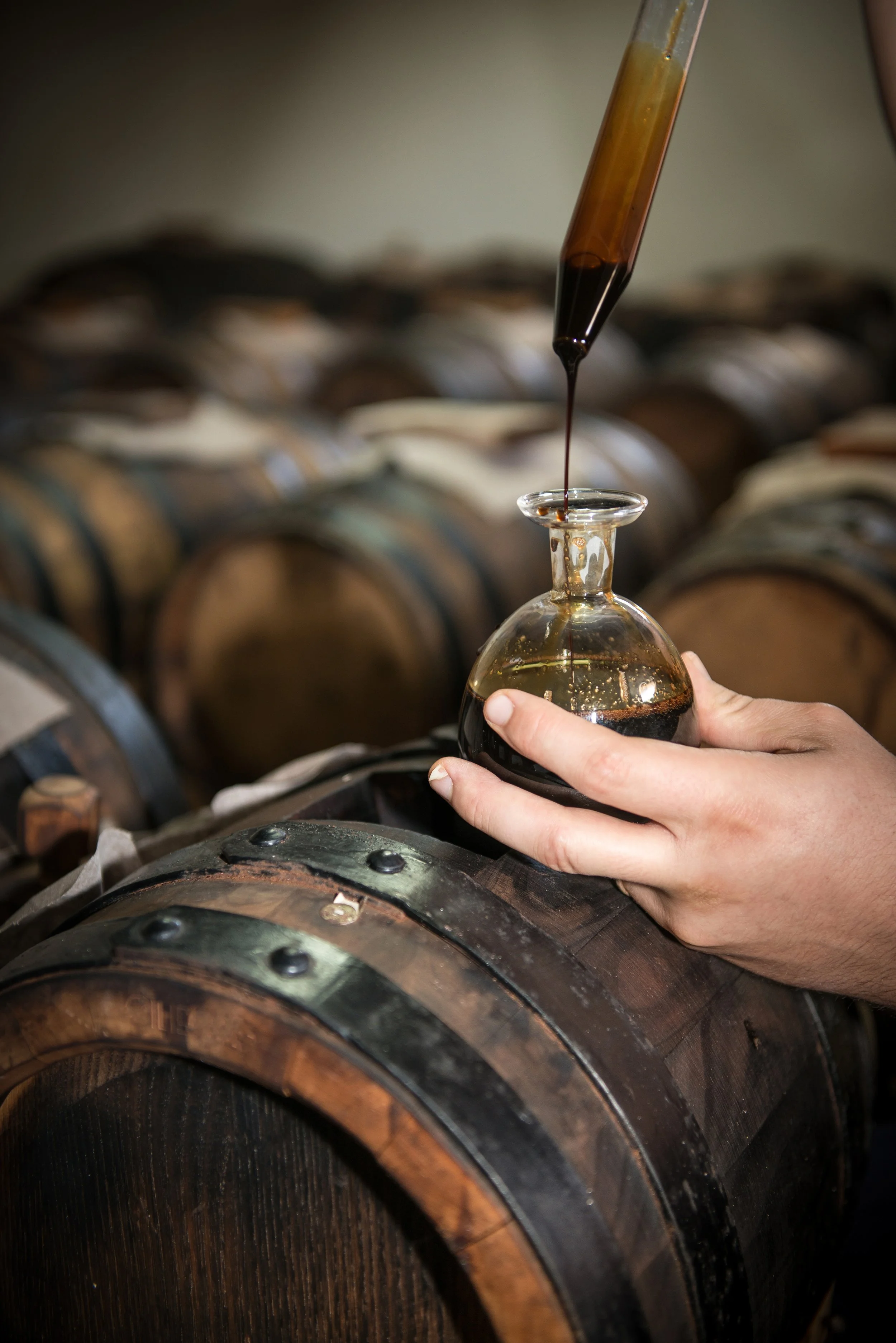
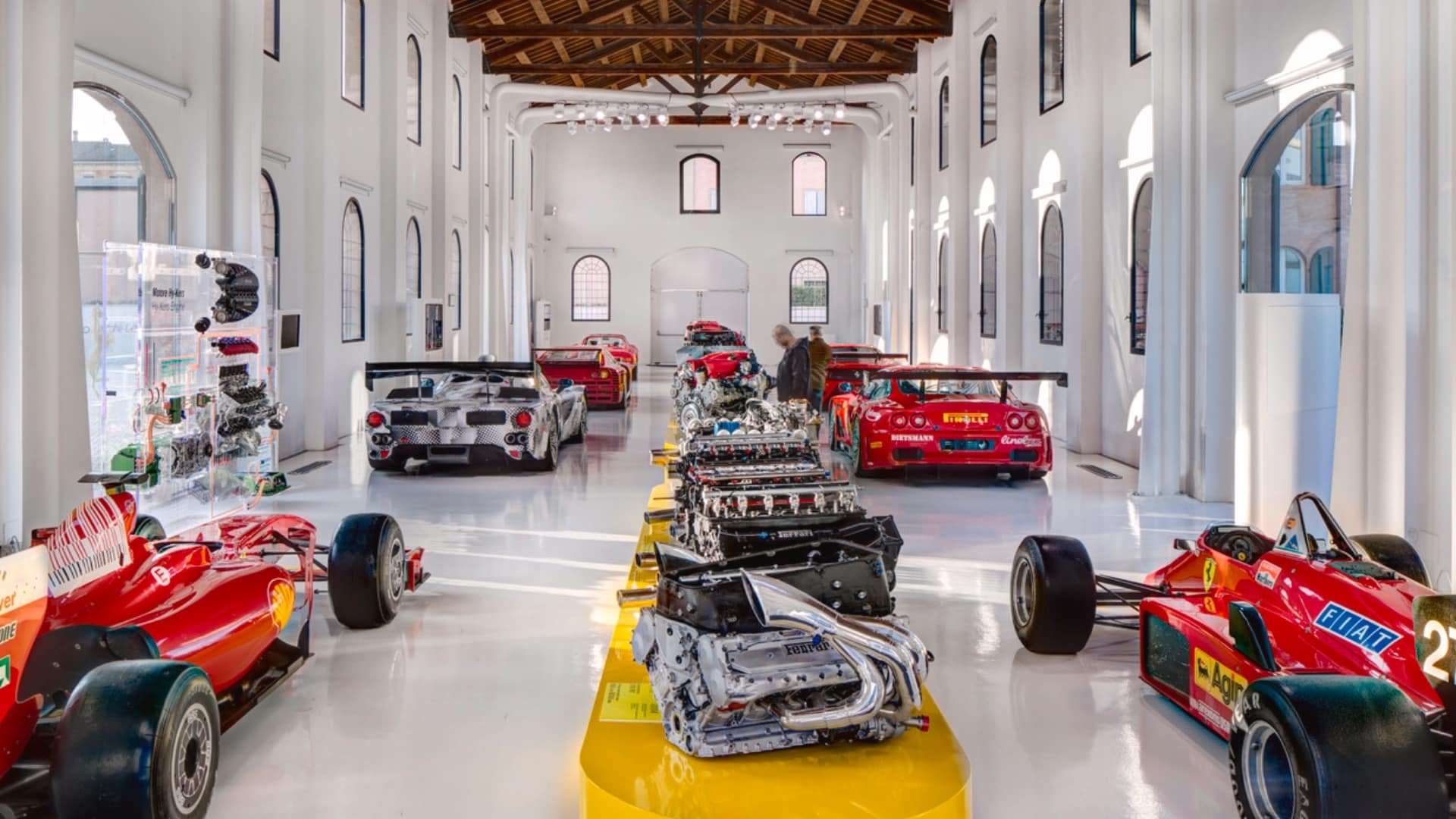
    Like Bologna, Modena developed along the Via Emilia, but its history followed a different course. The Roman colony of Mutina became a prosperous medieval commune before passing under the Este, who made Modena their ducal capital in 1598. That medieval prosperity is expressed in the great Romanesque cathedral, begun in 1099, where architect Lanfranco and sculptor Wiligelmo created one of the defining monuments of medieval northern Italy. This morning we travel west from Bologna for a guided walk through Modena’s historic centre, visiting the cathedral and soaring Ghirlandina tower, together recognised as a UNESCO World-Heritage site. After a break for lunch, we then turn to the city’s modern identity at the Enzo Ferrari Museum, combining Ferrari’s birthplace and workshop with a contemporary gallery devoted to the marque. En route back to Bologna, we stop at Acetaia Cavedoni, where six generations of the same family have produced traditional balsamic vinegar for more than a century. Beginning with a walk through the vineyards, we learn how cooked grape must is gradually matured in a succession of wooden barrels before concluding with a tasting. Overnight Bologna (B)

  • Day 4 | Monday 6 September
    Bologna’s Intellectual Life
    Begun in 1390 at the direction of Bologna’s governing commune, the Basilica of San Petronio dominates one side of Piazza Maggiore and was conceived as a monumental expression of the city’s wealth and independence. In the early 16th century, plans were drawn up to expand it into an immense Latin-cross church with transepts and a dome, but the scheme was never realised. Its unfinished state remains visible today, most strikingly on the facade, where the marble facing of the lower section gives way abruptly to exposed brick above. Our morning begins here with the Bolognini Chapel, where Giovanni da Modena’s early 15th-century frescoes include a vivid Last Judgement. From San Petronio we turn to another institution that shaped Bologna’s identity: its university, traditionally founded in 1088. Our visit centres on the Palazzo dell’Archiginnasio, the university’s main seat from the 16th century. Its arcades and staircases are covered with thousands of painted coats of arms recording generations of students, while upstairs we enter the carved wooden Anatomical Theatre, where medical students once observed dissections beneath statues of celebrated physicians. Our walk continues through the former Jewish quarter, whose narrow streets preserve another layer of Bologna’s history, before the afternoon is at leisure. Overnight Bologna (B)

  • Day 5 | Tuesday 7 September
    Marzabotto & The Apennine Crossing
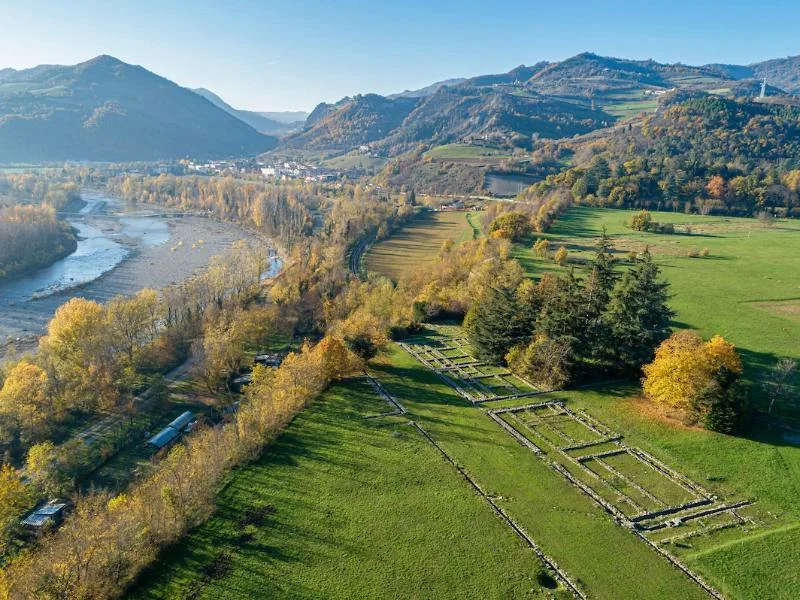
    Long before Bologna emerged as a medieval centre of commerce and learning, the valleys south of the city formed part of an Etruscan route across the Apennines, linking settlements in central Italy with the Po Valley and the Adriatic port of Spina. Departing Bologna today, we follow this ancient corridor to Marzabotto, where the remains of Kainua preserve one of the clearest examples of an Etruscan town plan. Established in the 6th century BCE on a broad terrace above the Reno River, Kainua was laid out on a remarkably regular grid of streets, with houses, workshops, sanctuaries and necropoleis revealing the organisation of a substantial trading community. Our guided visit combines the archaeological area with the National Etruscan Museum, whose finds illuminate the town’s place within the wider commercial networks of northern and central Italy. We then enjoy lunch at Osteria di Sperticano before continuing across the Apennines into Tuscany, following the same mountain corridor that connected these Etruscan worlds more than two millennia ago. On arrival at our hotel outside Florence, we settle in before gathering for an aperitivo to bring the day to a relaxed close. Overnight Florence Surrounds (B, L)

  • Day 6 | Wednesday 8 September
    Fiesole & Castello di Poppiano
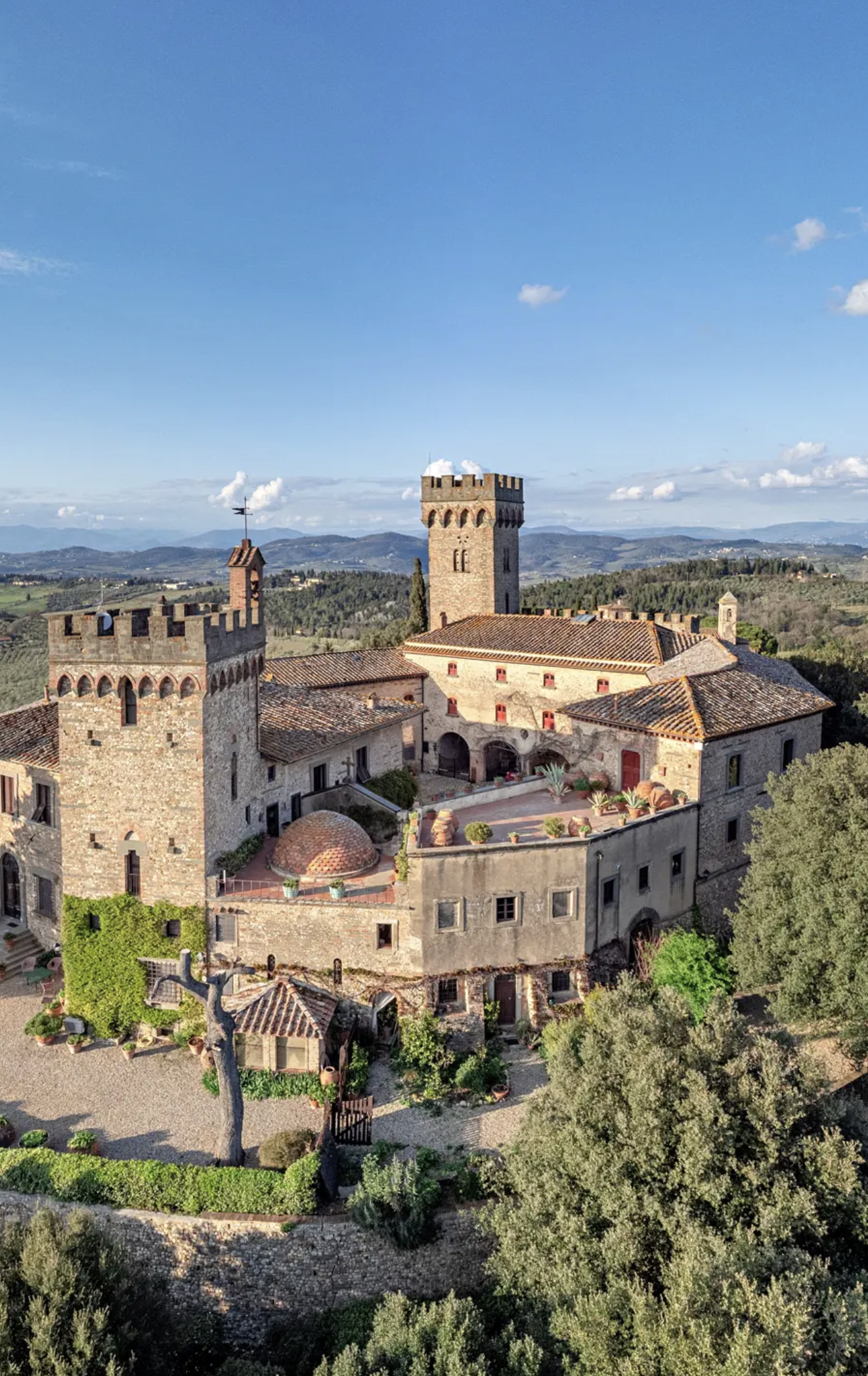
    The Etruscan story continues south of the Apennines at Fiesole, where a settlement developed on the hills above the Arno Valley long before the rise of Florence below. Its strategic position was later absorbed into the Roman world, leaving an archaeological landscape in which both cultures remain visible. Today we travel up to Fiesole for a guided walk through the town, including the archaeological area and museum, where the Roman theatre, temple remains and earlier Etruscan foundations reveal the successive phases of settlement. We then climb to the Church and Convent of San Francesco, set high above the town with views across Florence and the surrounding countryside, before time at leisure for lunch. In the afternoon we continue into the Chianti Colli Fiorentini to Castello di Poppiano, the historic estate of the Guicciardini family. Our visit takes us through the cellars, olive oil mill and the vinsantaia in the castle tower, where grapes destined for Vin Santo are traditionally dried before the wine is matured in small barrels. We conclude with a tasting of estate wines, olive oil and local produce before returning to our hotel for dinner. Overnight Florence Surrounds (B, WT, D)

  • Day 7 | Thursday 9 September
    The Medici Landscape
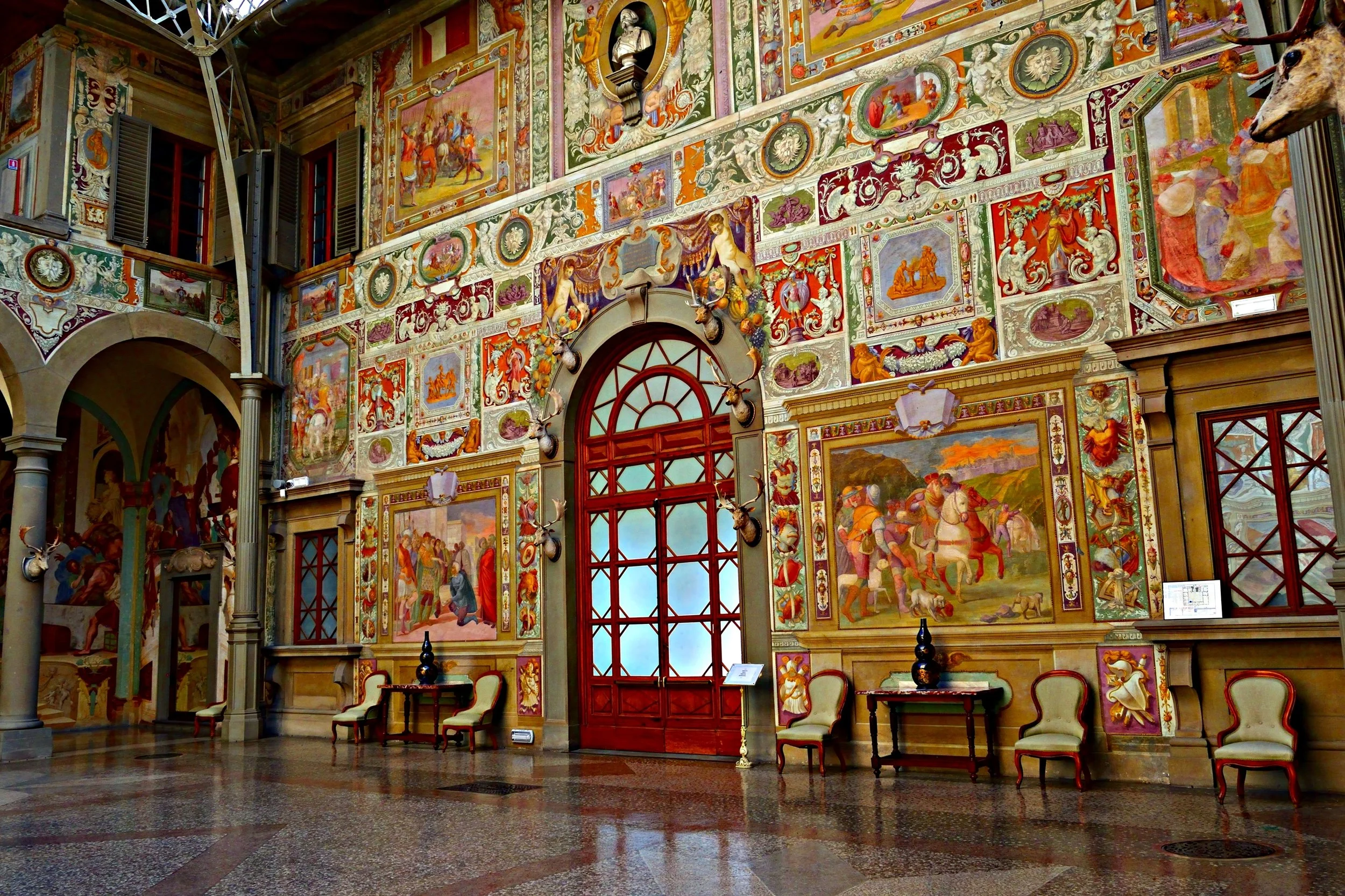
    Having followed the Etruscan and Roman layers of Fiesole and the rural traditions of the Florentine hills, we now turn to the dynasty that reshaped this landscape during the Renaissance. The Medici villas surrounding Florence were not simply country retreats, but working estates and expressions of political power, linking court life with agriculture, gardens and the controlled landscape beyond the city. One of the clearest expressions of this ideal is Villa La Petraia, originally a fortified medieval property before its transformation into a Medici residence from the 16th century. Set on rising ground north of Florence, the villa is arranged above a series of formal terraces, with views extending across the Arno Valley. Inside, the central courtyard is surrounded by frescoes celebrating episodes from Medici history, while the gardens reflect the ordered relationship between architecture and landscape that became central to the Tuscan villa tradition. We return towards our hotel around midday, with the option to be dropped in central Florence for an afternoon of independent exploration and make your own way back to the hotel later in the day. Overnight Florence Surrounds (B)

  • Day 8 | Friday 10 September
    Via dei Sette Ponti
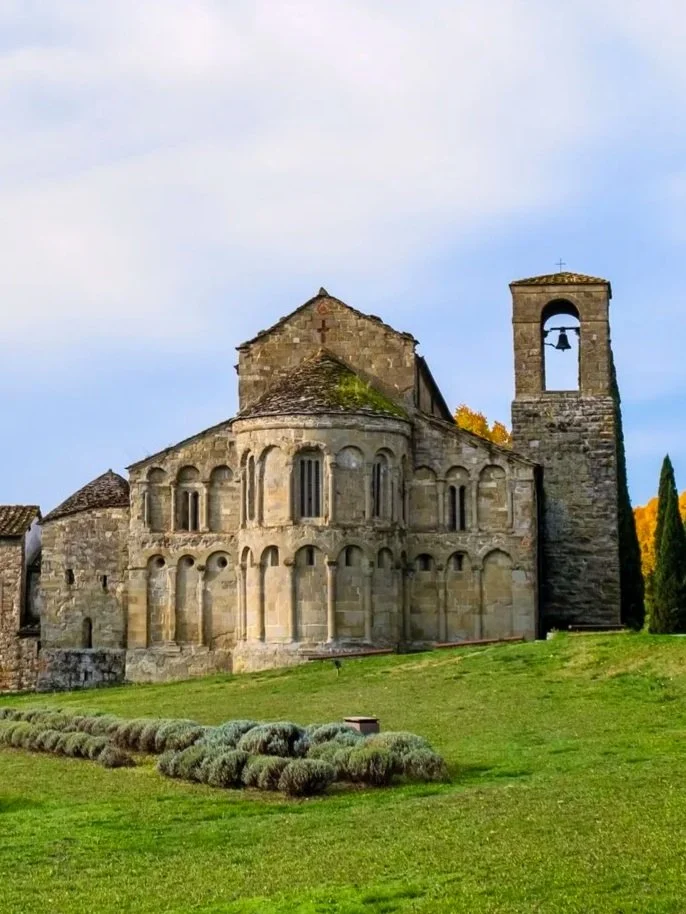
    Between Florence and Arezzo, an ancient road skirts the eastern side of the Arno Valley beneath the slopes of Pratomagno, following the line of the Roman Cassia Vetus. During the Middle Ages, rural parish churches known as pievi developed along this corridor, serving scattered communities and becoming important centres of worship, administration and artistic patronage. Their remarkable concentration still defines the Via dei Sette Ponti today. After departing our hotel, we begin near Reggello at San Pietro in Cascia, where the adjoining museum preserves Masaccio’s San Giovenale Triptych, painted in 1422 when the artist was still in his early twenties. Continuing through Pian di Scò, we visit the Romanesque Pieve di Santa Maria and the former Abbey of San Salvatore in Soffena before pausing for lunch in the historic village of Loro Ciuffenna. Nearby, San Pietro in Gropina represents the culmination of the route, with its carved capitals and medieval pulpit. Before crossing into Umbria, we pause at Ponte Buriano, one of the Tuscan bridges long associated with the landscape behind Leonardo’s Mona Lisa. Our final leg brings us to our hotel in Città di Castello, where we gather for dinner. Overnight Città di Castello (B, D)

  • Day 9 | Saturday 11 September
    Arezzo & Città di Castello
    At the eastern edge of Tuscany, Arezzo was already an important Etruscan centre before becoming the Roman Arretium and later a prosperous medieval commune, leaving a historic centre where Romanesque churches and Renaissance painting sit within a largely intact urban fabric. Our morning visit here begins in Piazza Grande, a striking irregular square lined with medieval towers, Renaissance loggias and historic palazzi. We then continue to the Church of San Domenico to see Cimabue’s hauntingly expressive Crucifix, one of the earliest masterpieces of Italian painting, before entering the Basilica of San Francesco, home to Piero della Francesca’s celebrated fresco cycle, The Legend of the True Cross, painted between 1452 and 1466. After a break for lunch, we return to Città di Castello, where the artistic story leaps forward to the 20th century at Palazzo Albizzini. This late 15th-century Renaissance palace was chosen by local-born artist Alberto Burri as the home of his foundation and today provides a striking setting for some 150 works spanning four decades of his career. Against its restrained white walls and Renaissance stonework, we encounter Burri’s radical experiments with burlap, timber, iron, plastics and other unconventional materials, which helped transform the possibilities of post-war painting and sculpture. The evening is then at leisure. Overnight Città di Castello (B)

  • Day 10 | Sunday 12 September
    The Piero della Francesca Trail
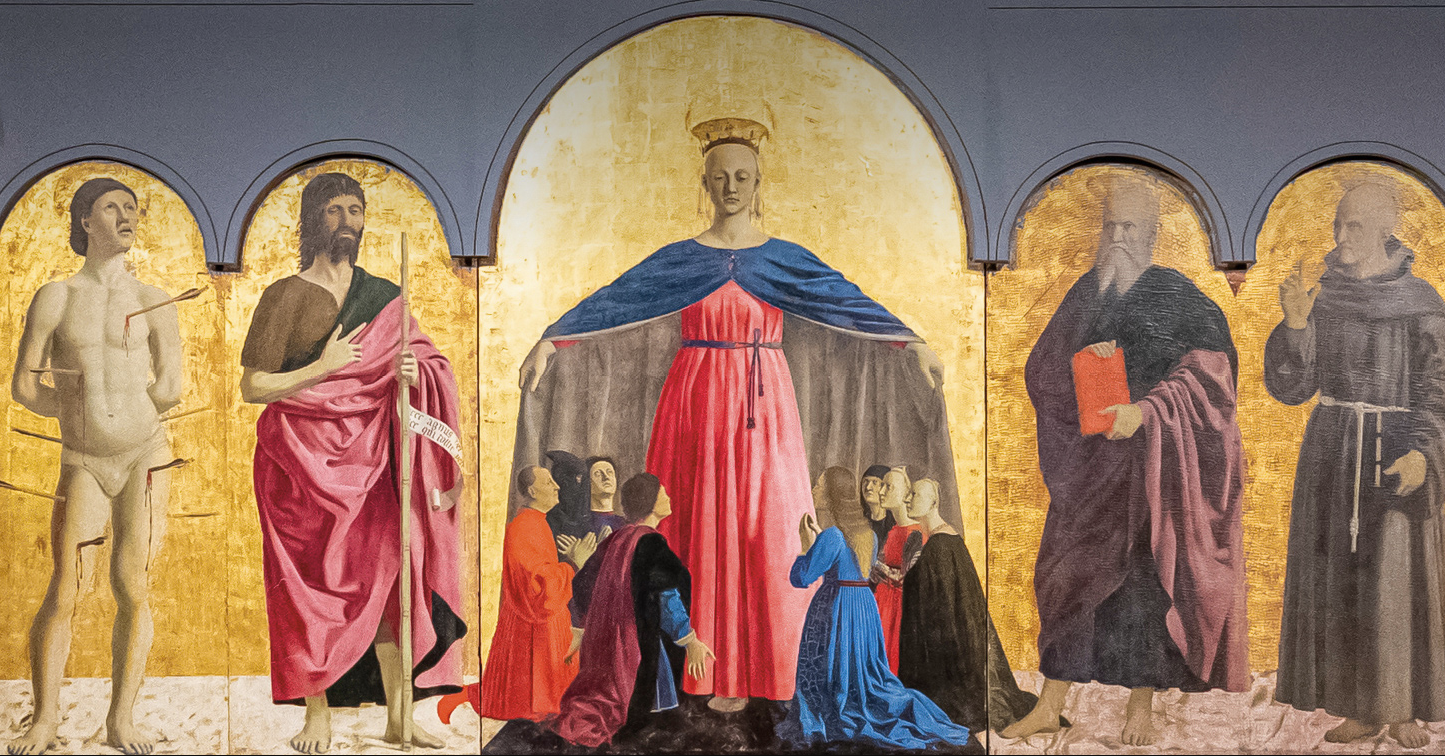
    Born in Sansepolcro around 1415, Piero della Francesca remained closely connected to the Upper Tiber Valley even as his career took him to courts across central Italy. Following yesterday’s Legend of the True Cross in Arezzo, we now encounter two very different works in the landscape that shaped him. We begin in Monterchi with the Madonna del Parto, an unusually intimate image of the pregnant Virgin, before continuing to Sansepolcro, Piero’s birthplace.
    Here the Museo Civico preserves his celebrated Resurrection, painted for the town’s communal palace and dominated by Christ rising above four sleeping soldiers and a landscape symbolic of renewal. After lunch together, we continue to Anghiari, whose steep medieval streets overlook the plain where Florentine forces defeated Milan in 1440. The battle was later chosen as the subject of Leonardo da Vinci’s famously unfinished mural for Florence’s Palazzo Vecchio. With our guide we explore this exceptional mediaeval hilltown of winding alleyways, picturesque palaces and breathtaking views over the plain. On return to Città di Castello, the evening is at leisure. Overnight Città di Castello (B, L)

  • Day 11 | Monday 13 September
    Gubbio
    Set against the slopes of Monte Ingino, Gubbio developed into one of Umbria’s most powerful medieval communes, its wealth and independence evident in the steep streets, fortified palazzi and public buildings that still dominate the town. At the centre of this civic landscape stands the 14th-century Palazzo dei Consoli, built as the seat of communal government and dramatically positioned above the Piazza Grande. We stop here en route to Urbino for a guided walk through the medieval centre, including the Palazzo dei Consoli and its collections. Among the most important objects are the Iguvine Tablets, seven bronze plaques inscribed in the ancient Umbrian language and one of the principal surviving records of pre-Roman Italy. The museum also reflects Gubbio’s later artistic traditions, including the production of richly decorated majolica from the Renaissance onwards. After a break for lunch, we continue east into the Marche and the countryside surrounding Urbino. On arrival at our rural estate, we settle in before gathering for dinner this evening. Overnight Urbino (B, D)

  • Day 12 | Tuesday 14 September
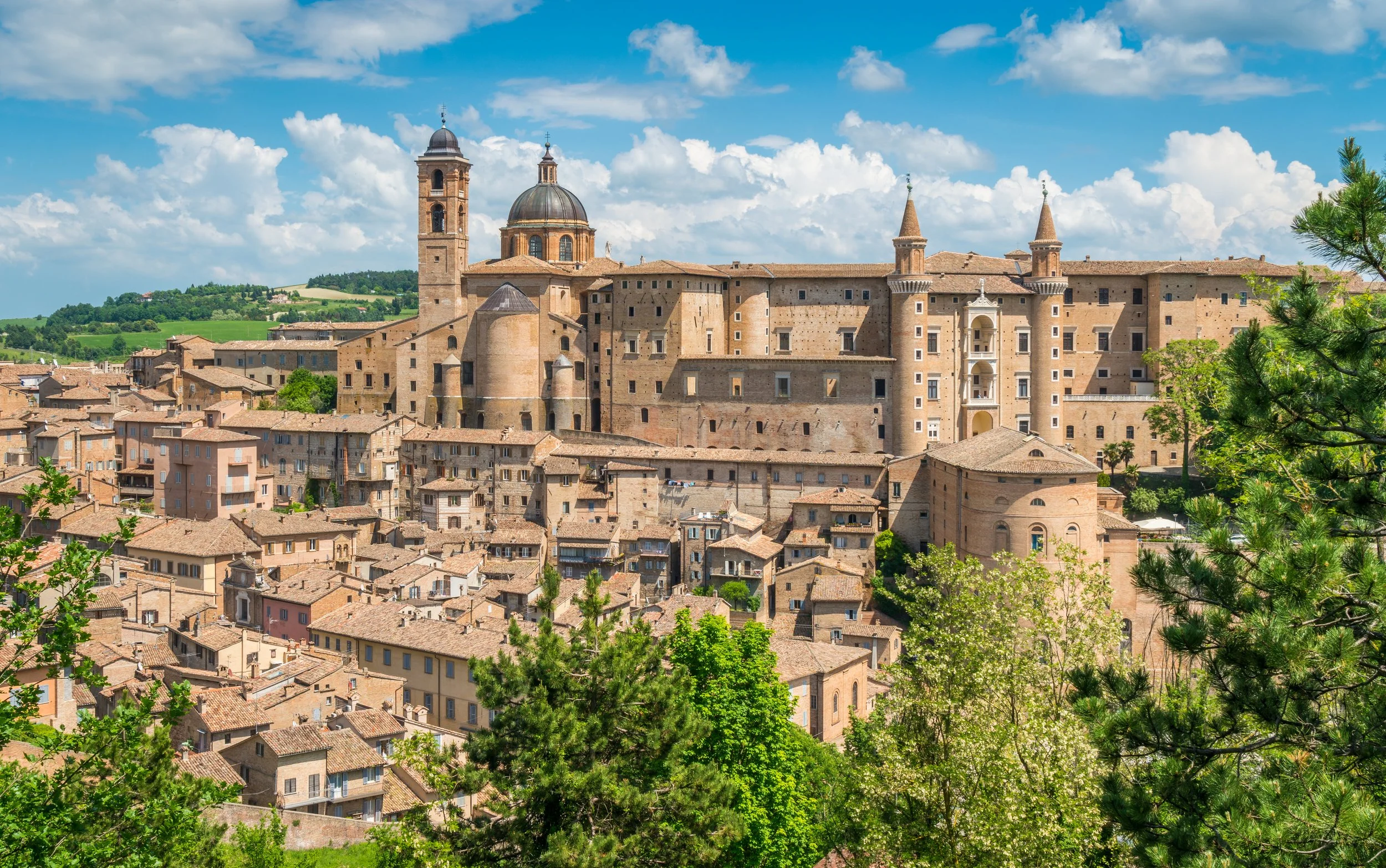
    Urbino
    Under Federico da Montefeltro, who ruled from 1444 until 1482, Urbino was transformed from a small hill town into one of the most sophisticated courts of Renaissance Italy. A soldier, humanist and major patron of the arts, Federico gathered architects, painters and scholars around him, with the Palazzo Ducale becoming the grandest statement
    of his ambitions. Our guided visit begins here, high above the city, where the palace now houses the Galleria Nazionale delle Marche. Among its masterpieces is Piero della Francesca’s enigmatic Flagellation of Christ, whose precise architecture and controlled perspective continue the artistic thread we have followed through Arezzo, Monterchi and Sansepolcro. After a break for lunch, we continue through Urbino’s historic centre before visiting the Oratory of St John the Baptist. Its relatively modest exterior conceals a vivid cycle of early 15th-century frescoes by Lorenzo and Jacopo Salimbeni, depicting scenes from the life of St John with an exuberance that contrasts sharply with Piero’s measured classicism. Overnight Urbino (B)

  • Day 13 | Wednesday 15 September
    San Leo & Rimini
    Beyond Urbino, the rugged landscape of the Montefeltro is punctuated by fortified towns that once controlled the routes between Tuscany, the Marche and the Adriatic. Few occupy a more dramatic position than San Leo, whose medieval centre and fortress rise almost sheer from a rocky outcrop above the surrounding valleys. Today we continue our journey north to explore the town and its imposing fortress, followed by a break for lunch. Continuing to the Adriatic coast, we then reach Rimini and the Tempio Malatestiano. Designed by Leon Battista Alberti around an earlier medieval church, its classical exterior was created for Sigismondo Pandolfo Malatesta, while inside Agostino di Duccio’s delicate sculptural reliefs reflect the cultivated court that flourished here in the 15th century. From Rimini, we continue on the final leg to Ravenna, passing the historic salt pans of Cervia before arriving at our hotel. After time to settle in and freshen up, we gather again this evening for dinner at a local restaurant. Overnight Ravenna (B, D)

  • Day 14 | Thursday 16 September
    Ravenna
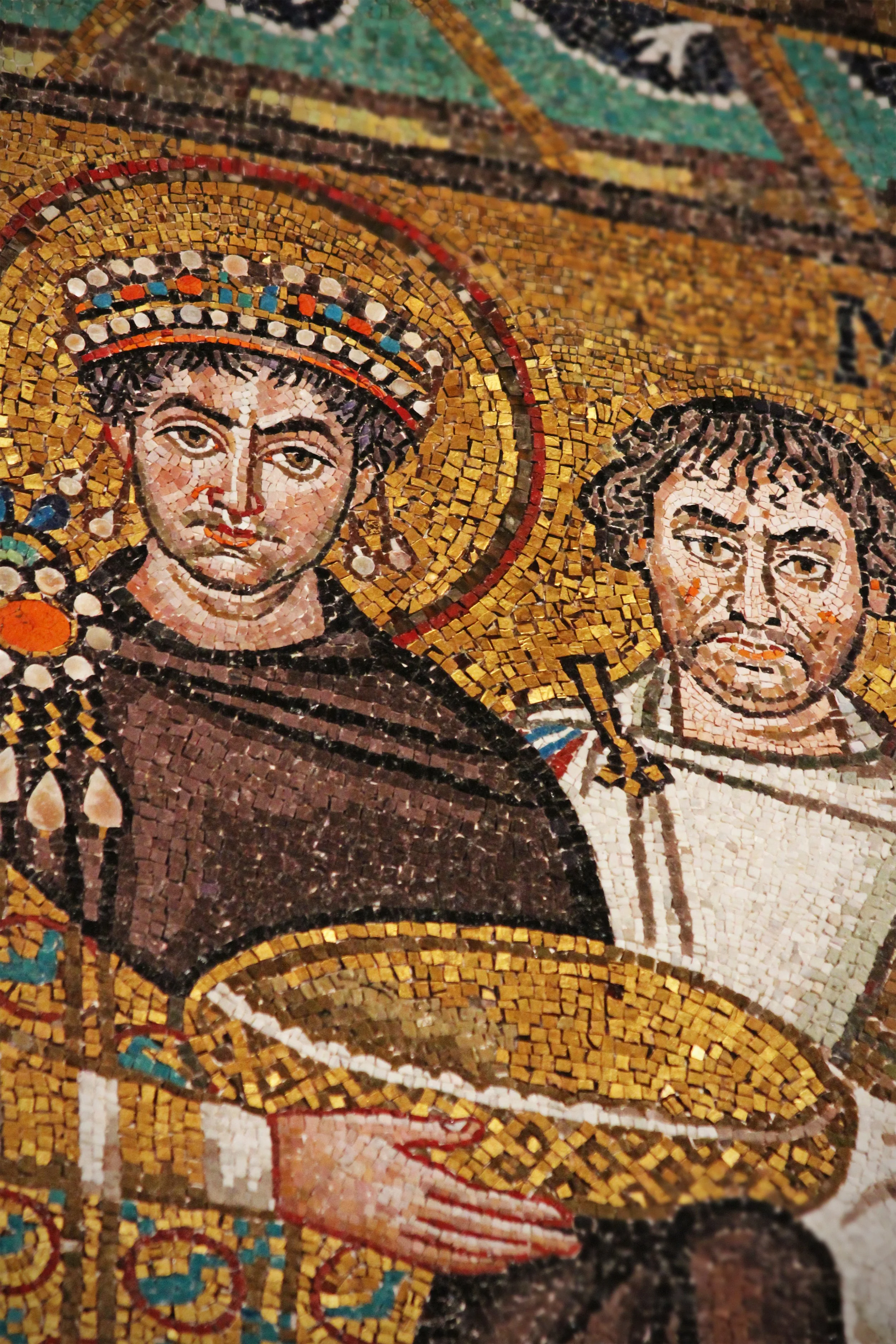
    By the early 5th century, the political centre of the Western Roman Empire had shifted from Milan to the safer marshland setting of Ravenna. The city later passed to the Ostrogothic king Theodoric and, in the 6th century, to Byzantine rule, leaving an extraordinary concentration of monuments in which Roman architecture and eastern Christian art converge. Our guided walk this morning begins with Sant’Apollinare Nuovo, where long mosaic processions of saints line the nave, before continuing to the Mausoleum of Galla Placidia and the Basilica of San Vitale. Here, the celebrated panels of Emperor Justinian and Empress Theodora embody Ravenna’s place within the Byzantine world. After a break for lunch, we continue to the Neonian Baptistery and the Archbishop’s Museum, including the intimate Chapel of Sant’Andrea. We finish at the Domus of the Stone Carpets, where richly patterned late-antique mosaic floors survive beneath the modern city. Overnight Ravenna (B)

  • Day 15 | Friday 17 September
    Faenza
    Set along the Via Emilia between Bologna and the Adriatic, Faenza became one of Europe’s most important centres for tin-glazed pottery. Following our study of Ravenna’s mosaics, we now turn from glass tesserae and monumental decoration to another tradition built around colour and craftsmanship. By the 15th and 16th centuries, Faenza’s decorated maiolica was traded widely beyond Italy, and the town’s reputation became so closely associated with the craft that the French name faïence came to describe this type of ceramic across Europe. Our day spent here begins at the International Museum of Ceramics, whose remarkable collections place Faenza’s own production within a much broader history of ceramics, from Renaissance Italy to Europe, the Islamic world and Asia. We then continue into the historic centre with lunch together at a local restaurant. In the afternoon we explore the heart of the city with its monumental squares framed by elegant porticoes. We return to Ravenna in the late afternoon, with the evening at leisure. Overnight Ravenna (B, L)Ravenna in the late afternoon, with the evening at leisure. Overnight Ravenna (B, L)

  • Day 16 | Saturday 18 September
    Classe & Ravenna’s Ancient Port
    The monuments of Ravenna cannot be understood without Classe – the port that connected the city to the Adriatic and the wider Mediterranean world. Established as a major Roman naval base under Augustus, Classe later became the commercial harbour of imperial and Byzantine Ravenna, supporting the wealth and international connections reflected in the mosaics we have seen over recent days. Today we travel south of the city to the 6th-century Basilica of Sant’Apollinare in Classe, built near the burial place of Ravenna’s first bishop. Its vast, restrained interior culminates in a shimmering apse mosaic, where St Apollinaris stands within a symbolic green landscape beneath a jewelled cross. We then continue to the nearby Classis Museum, whose archaeological finds and reconstructions reveal the development of the port and its relationship with Ravenna. Returning to the city around midday, the remainder of the afternoon and evening is at leisure. Overnight Ravenna (B)

  • Day 17 | Sunday 19 September
    Pomposa, Adria & the Po Delta
    Across the low-lying plains north of Ravenna, the shifting channels of the Po created a landscape of waterways, wetlands and routes to the Adriatic. During the Middle Ages, monasteries flourished along these corridors, none more important than the Benedictine Abbey of Pomposa, which became a major centre of learning, manuscript production and monastic culture. Our journey north brings us first to the abbey, whose Romanesque church preserves an intricate mosaic pavement and extensive fresco cycles beneath its timber roof. Its tall 11th-century campanile rises dramatically above the surrounding plain, while Pomposa is also associated with the music theorist Guido of Arezzo, whose innovations helped shape modern musical notation. After lunch nearby, we continue to Adria, once an important Etruscan trading port linked to Mediterranean commerce and the city that gave its name to the Adriatic Sea. A guided visit to the National Archaeological Museum here reveals this history through Greek and Etruscan ceramics, funerary objects and finds from the ancient settlement. We then continue into the Venetian lagoon landscape, arriving in Chioggia in the late afternoon before gathering for dinner. Overnight Chioggia (B, L, D)

  • Monday 20 September
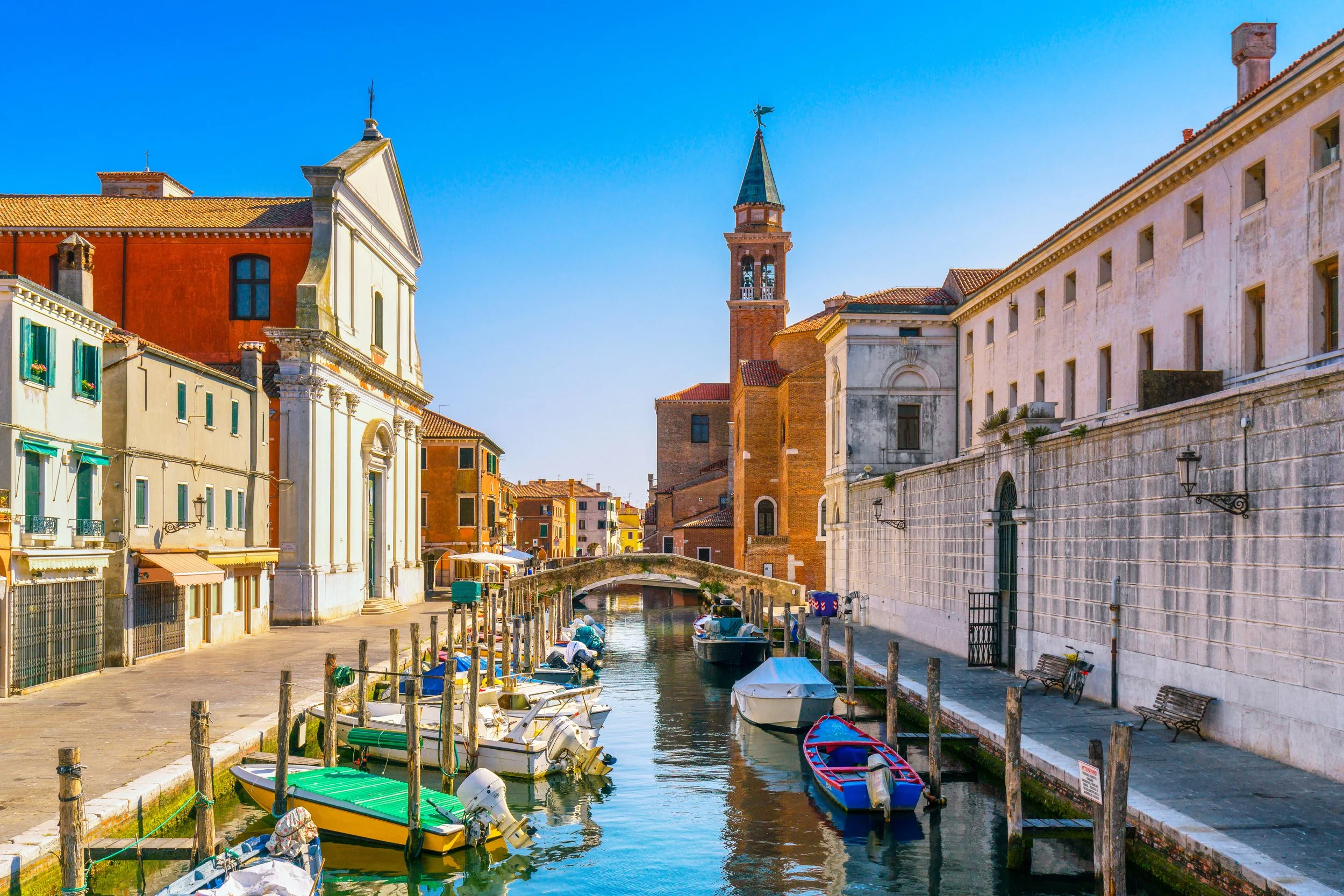
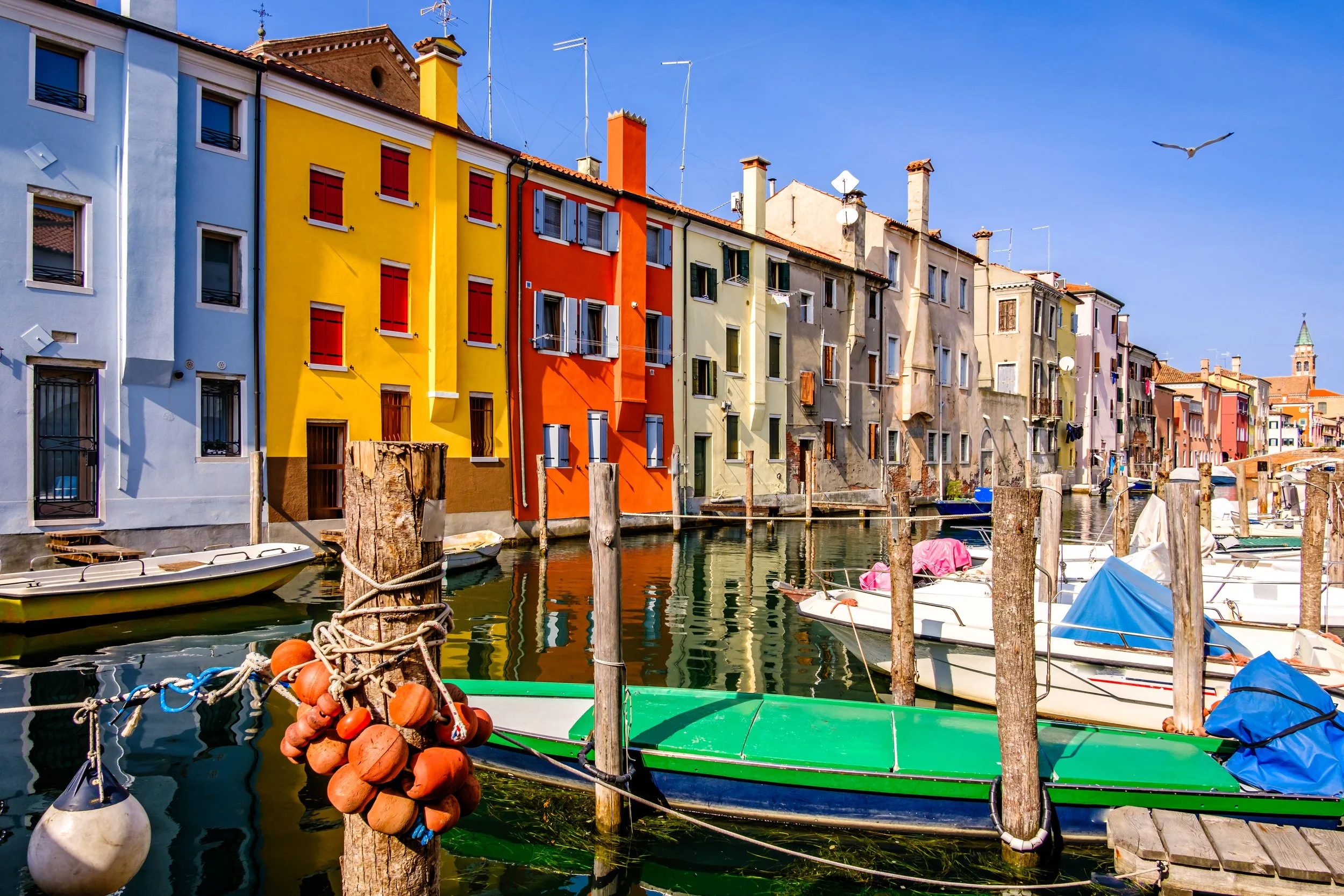
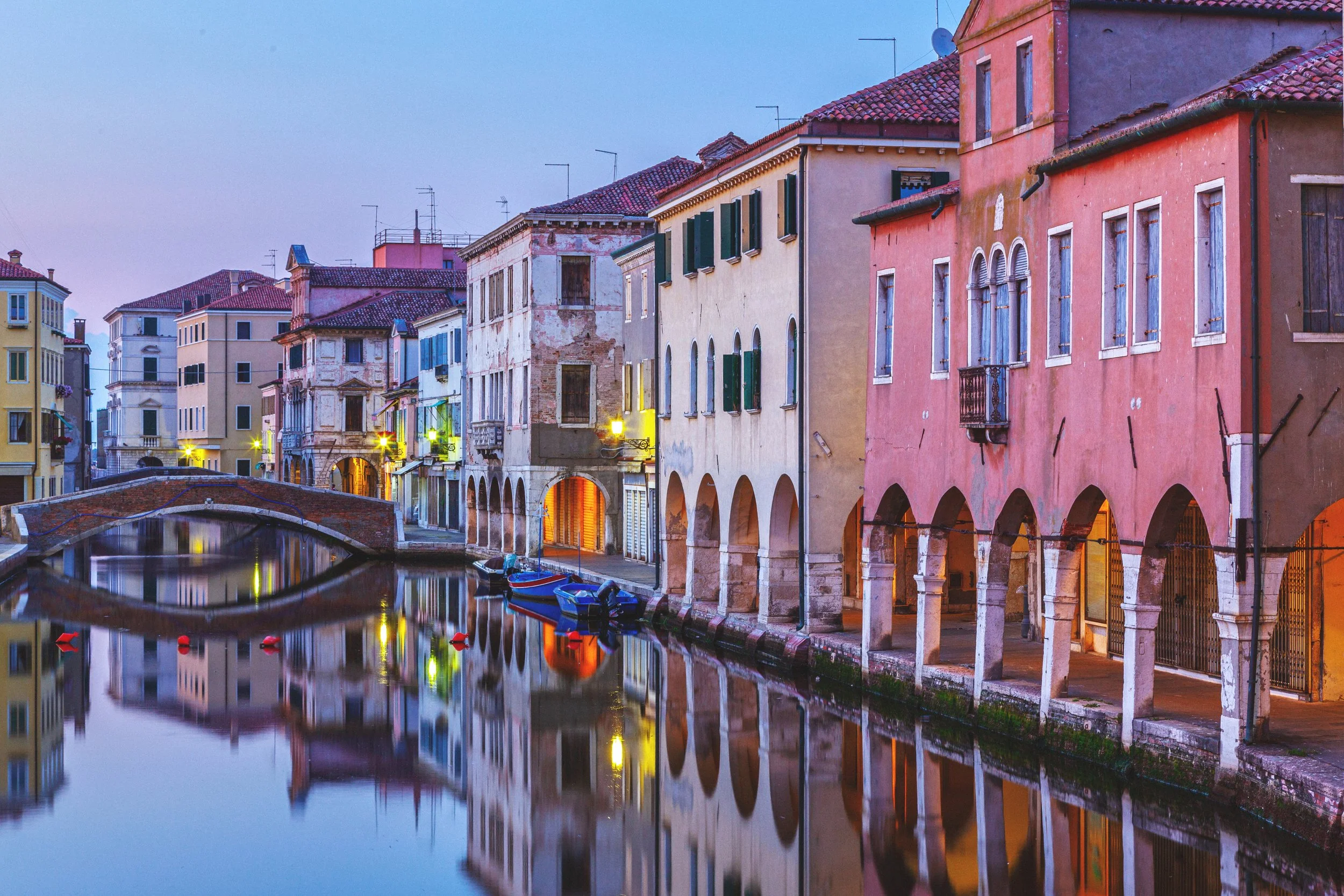
    Chioggia & The Southern Lagoon
    At the southern end of the Venetian Lagoon, Chioggia developed around fishing, salt production and maritime trade, its long canals and narrow streets shaped by the same watery environment that sustained Venice to the north. Unlike its larger neighbour, however, it has remained closely tied to the working life of the lagoon, particularly its fishing fleet and markets. Our morning walk introduces the historic centre and its traditions before continuing to the Church of San Domenico, set on a small island beside the town. Inside are works by major Venetian artists including Tintoretto, Jacopo Bassano and Vittore Carpaccio, whose St Paul is one of the church’s principal treasures. After a break for lunch, we take to the water on a private boat excursion through the canals and southern lagoon. Our route passes Sottomarina, Forte San Felice and the harbour entrance before continuing towards the Ca’ Roman nature reserve and the mussel farms that remain part of the local economy. We return to our hotel in the late afternoon before gathering for a farewell dinner at its lagoon-side restaurant, featuring local seafood. Overnight Chioggia (B, D)

  • Day 19 | Tuesday 21 September
    Depart to Venice
    The tour concludes after breakfast this morning. A group coach transfer is available to Venice’s Marco Polo airport for those on late afternoon flights. (B)

Accommodation throughout is in carefully selected 4-star hotels, combining historic city-centre properties with a restored country estate near Urbino and a lagoon-side stay in Chioggia.

Tour Accommodation

tour booking

$16,440 AUD per person, twin share (land content only)
$3,880 AUD supplement for sole use of a hotel room

A $2,000 deposit is required per person to confirm your booking on tour. This deposit is non-refundable.

Hold a Place

Still deciding? We are happy to hold a tentative place for 7 days while you make your final arrangements.

Book Online

To secure your place(s) on tour, book online below with “Athena”, our virtual tour consultant.

DOWNLOAD FORM

Download a printable booking form. You can also complete the form on screen and submit via email.

your tour consultant

The consultant for this tour is Sharon Williams. For further information or to discuss the tour, please call 9235 0023 (Sydney) or 1800 639 699 (outside Sydney) or email sharon@academytravel.com.au

have you thought about?

Academy Travel is more than just a tour operator. We are also a full-service travel agency who can assist you with all aspects of your travel, including flights, transfers, pre-tour arrival, additional travel and comprehensive travel insurance.

can’t make this departure?

If these dates don't work for you, register to hear about the next tour.