INDIA’s MUGHAL EMPIRE

Hilltop forts, Lakeside Palaces & Desert Kingdoms

An immersive journey through northern India, exploring the legacy and grandeur of the Mughal emperors.

TOUR STATUS

Places Available | Maximum 16

TOUR DATES

Nov 23 - Dec 8, 2027 | 16 Days

TOUR LEADER

snapshot

OVERVIEW

The Mughal Empire shaped the history, architecture and culture of northern India for more than three centuries. Founded by Babur in 1526, the dynasty established one of the wealthiest and most powerful empires of the early modern world, leaving a legacy of magnificent forts, palaces, garden tombs and artistic traditions. As imperial authority declined, regional courts emerged as important centres of cultural patronage, preserving and developing many of these traditions.

Led by Judy Tenzing, this 16-day tour follows the rise and legacy of Mughal power from Delhi through Lucknow and Agra to the princely kingdoms of Rajasthan. From Shah Jahan’s imperial capital and the Taj Mahal to the Nawabi palaces of Lucknow and Rajput strongholds of Jaipur and Udaipur, we examine the alliances, rivalries and artistic achievements that defined the region’s history.

Along the way, we meet traditional artisans specialising in perfume distillation, embroidery, marble inlay and miniature painting, and stay in distinctive heritage accommodation, including the former royal palace of Deogarh.

Judy Tenzing | View Bio

tour highlights

Follow the legacy of the Mughal emperors through northern India

Judy Tenzing

your expert tour leader

Judy is a historian with a passion for all things South Asian – India, the Himalaya, Taiwan, Myanmar and Sri Lanka. Her deep knowledge and love for the history, music, textiles and literature of these regions adds a rich dimension to the tours she leads. Judy has a degree in South Asian History as well as post graduate qualifications in secondary teaching. She has taught at the University of Sydney’s Centre for Continuing Education, U3A, COFA, the Jane Austen Society and more – offering courses in the histories, cultures, textiles and faiths.

Read full bio >

Accompanied by an Experienced Tour Manager

Alongside your expert tour leader, an experienced tour manager will accompany for the entirety of the tour. They oversee logistics, ensure your comfort and safety, and provide friendly support – whether offering tips for free time, sharing a chat over dinner, or giving you space to relax.

tour ITINERARY

New Delhi (3 nights), Lucknow (3 nights), Agra (2 nights), Jaipur (3 nights), Deogarh (2 nights), Udaipur (2 nights)

Included meals are shown with the letters B, L and D

  • Day 1 | Tuesday 23 November
    Arrive New Delhi
    For centuries, successive dynasties ruled northern India from the plains between the Yamuna River and the Aravalli Hills. Under the Mughals, Delhi became one of the great imperial capitals of the early modern world, renowned for its monumental architecture, gardens and flourishing court culture. The city we see today reflects more than eight centuries of successive development, from the fortifications and tombs of the Delhi Sultanate to the grand avenues established under British rule in the 20th century. Over the coming days, we examine these historical layers, with particular attention to the Mughal legacy. Group members arrive independently in New Delhi and transfer to our hotel, where the evening is at leisure. Overnight New Delhi

  • Purana Qila is the oldest fort among all forts in Delhi

    Day 2 | Wednesday 24 November
    Shah Jahan’s Imperial Capital
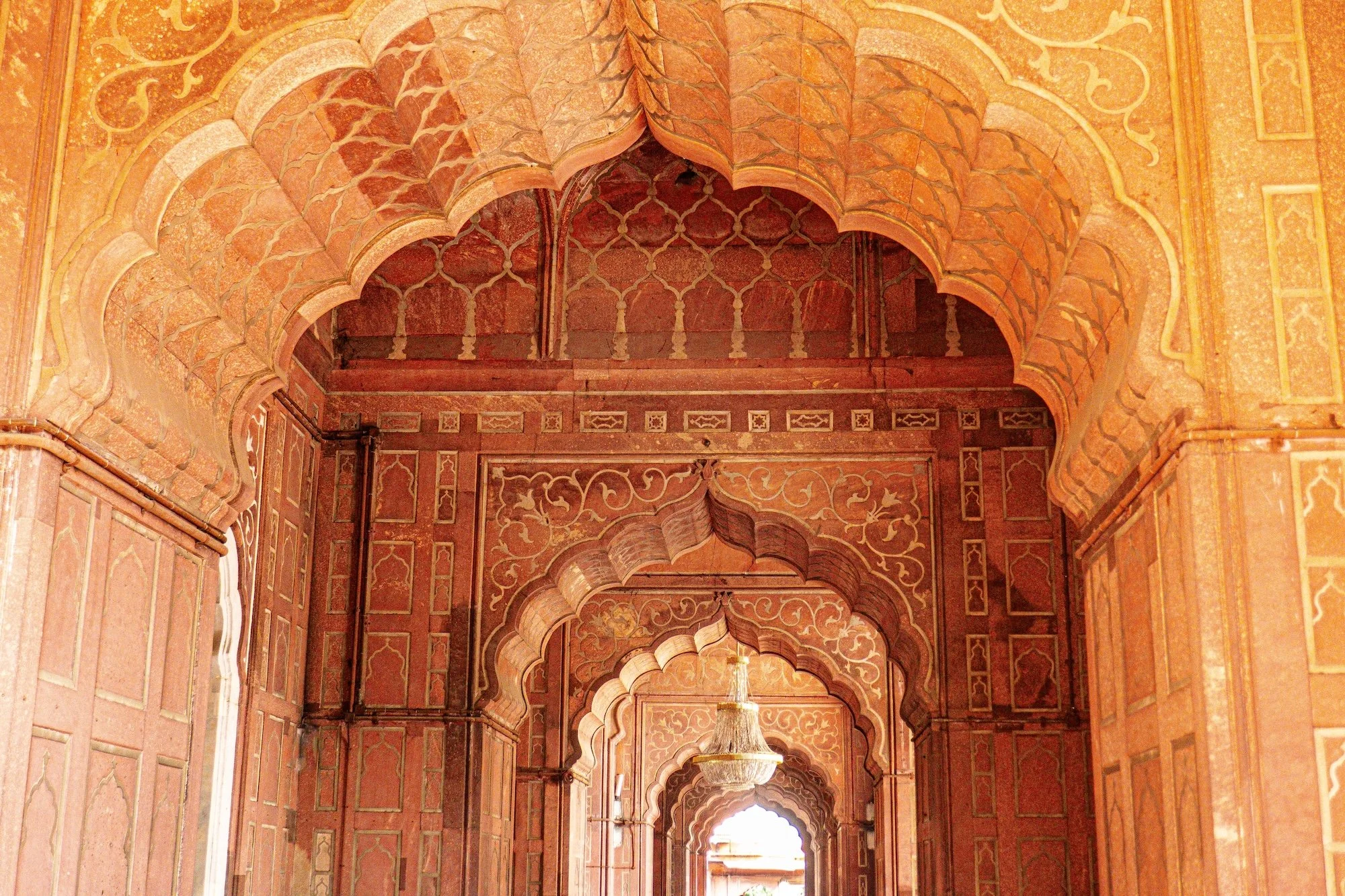
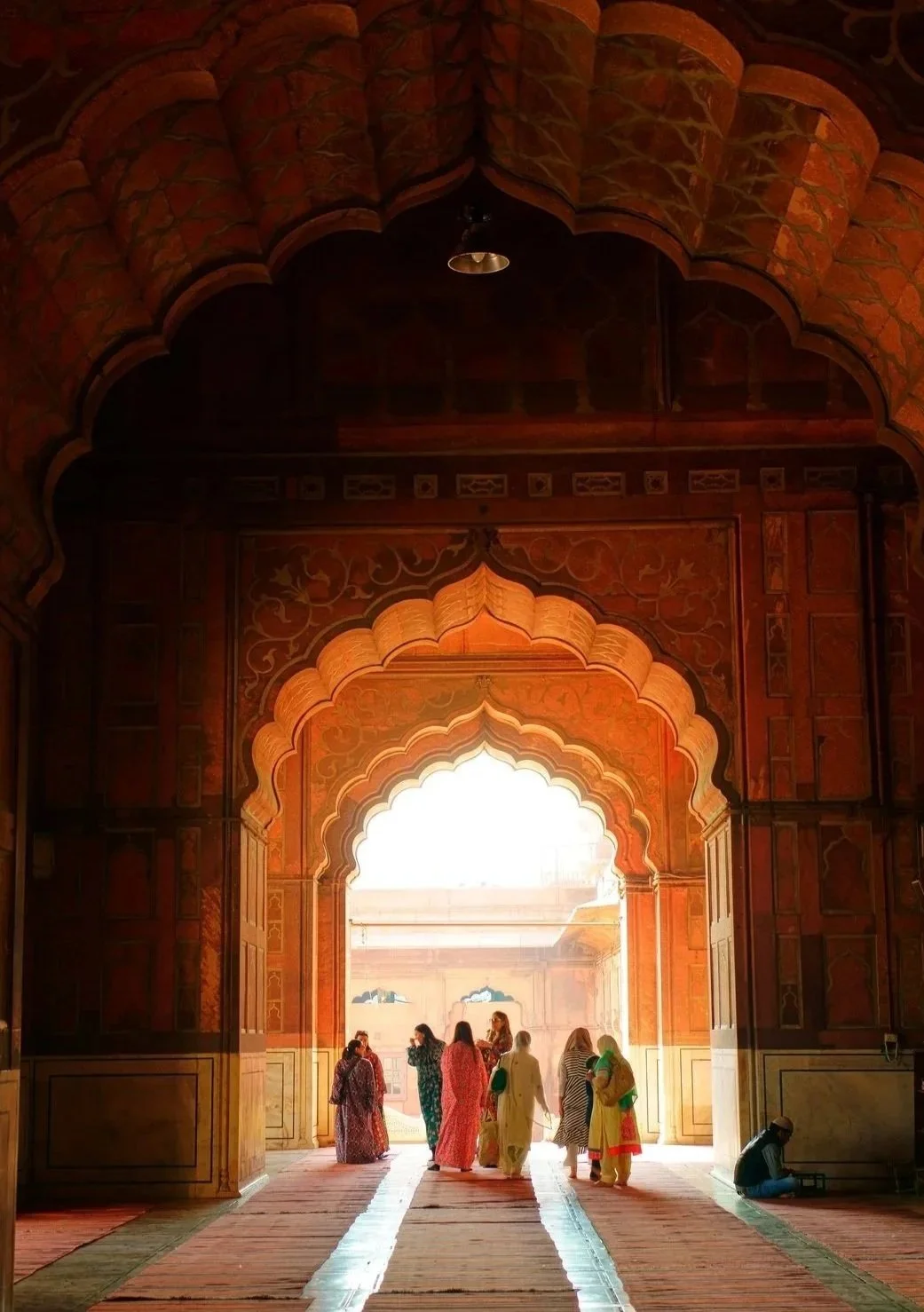
    In 1638, Emperor Shah Jahan began construction of Shahjahanabad, a new imperial capital on the banks of the Yamuna River. Enclosed by imposing walls, the city was designed around grand avenues, bustling bazaars and magnificent monuments, reflecting the wealth and authority of the Mughal Empire at its height. Our guided walking tour takes us into the historic heart of Old Delhi, where narrow lanes, traditional markets and centuries-old mansions preserve the character of the former capital. We also visit the Jama Masjid, one of Shah Jahan’s greatest architectural achievements. Completed in 1656, the mosque combines red sandstone and white marble, with soaring minarets and an immense courtyard capable of accommodating 25,000 worshippers. Lunch is enjoyed in a traditional haveli, a historic merchant’s mansion built around an internal courtyard, offering a glimpse into the domestic life of Mughal Delhi. We return to our hotel for an evening at leisure. Overnight New Delhi (B, L)

  • Day 3 | Thursday 25 November
    The Foundations of Mughal Delhi
    The early Mughal Empire was marked by struggles for power, as rival dynasties contested control of northern India. Today we begin at Purana Qila, the imposing fortress where Emperor Humayun established his capital before being driven into exile by the Afghan ruler Sher Shah Suri in 1540. Humayun reclaimed Delhi 15 years later, only to die following a fall on the steps of his library within the fort. We continue to Humayun’s Tomb, commissioned by his widow in the 1560s. Surrounded by formal Persian-style gardens, its monumental dome, red sandstone and white marble established an architectural model that would culminate in the Taj Mahal. The recently opened museum offers further insight into the development of Mughal architecture and the history of Delhi. Following lunch at a local restaurant, we visit the shrine of Nizamuddin Auliya, the revered 14th-century Sufi saint whose teachings influenced generations of Mughal rulers. The shrine remains an important centre of religious devotion, bringing a spiritual dimension to our understanding of the empire. Overnight New Delhi (B, L)

  • Lucknow India

    Day 4 | Friday 26 November
    The Nawabs of Lucknow
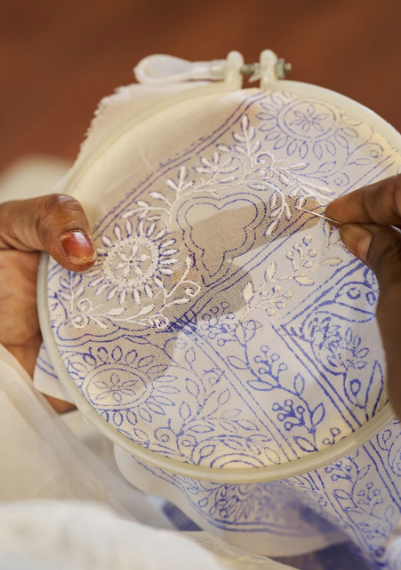
    As Mughal authority weakened during the 18th century, the Nawabs of Awadh emerged as powerful regional rulers, transforming Lucknow into a flourishing centre of art, literature and music. Following the sack of Delhi in 1739, poets, musicians and craftsmen found new patronage at the Nawabi court, establishing cultural traditions that continue to define the city. Flying to Lucknow this morning, we meet Dr Roli Mishra, a specialist in chikankari, the delicate hand embroidery associated with the city’s textile heritage. Lunch at a local restaurant introduces us to Awadhi cuisine, celebrated for its aromatic spices and slow-cooking techniques developed in the royal kitchens. In the afternoon, we visit La Martinière College, housed in the extraordinary Constantia, an 18th-century palace built by French adventurer Claude Martin, who served at the court of Awadh. Combining European and Indian architectural influences, the building reflects the cosmopolitan character of Lucknow under the Nawabs. An evening lecture at our hotel provides further insight into the region’s history and culture. Overnight Lucknow (B, L)

  • chikankari embroidery

    Day 5 | Saturday 27 November
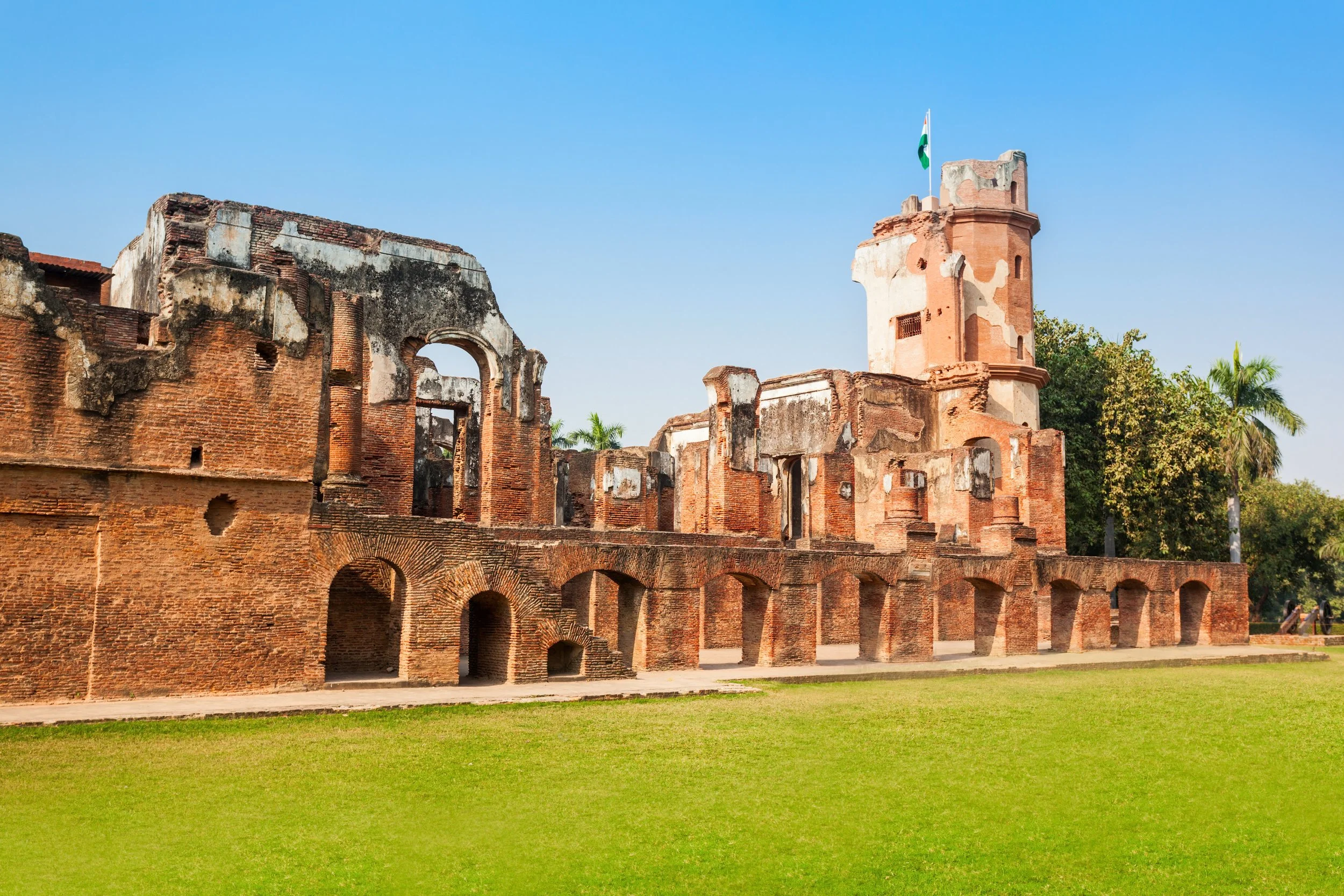
    The Siege of Lucknow
    The Indian Rebellion of 1857 brought an end to the East India Company’s rule and marked a turning point in British colonial history. Lucknow became one of the principal centres of resistance, where rebel forces besieged the British Residency for nearly six months, subjecting its defenders to sustained bombardment and repeated assaults. We begin our day at the Residency, once the centre of British political authority in Awadh. Its ruined buildings, preserved largely as they stood after the siege, bear the scars of the conflict. Walking through the grounds, we examine the events of 1857, including the death of British commissioner Sir Henry Lawrence, who is buried within the complex. From the Residency, we continue on foot through the narrow lanes and crowded bazaars of Old Lucknow, where merchants sell embroidered textiles, traditional perfumes, jewellery and the richly spiced street food for which the city is renowned. The afternoon and evening are at leisure. Overnight Lucknow (B)

  • Day 6 | Sunday 29 November
    Sacred Spaces & Reflections

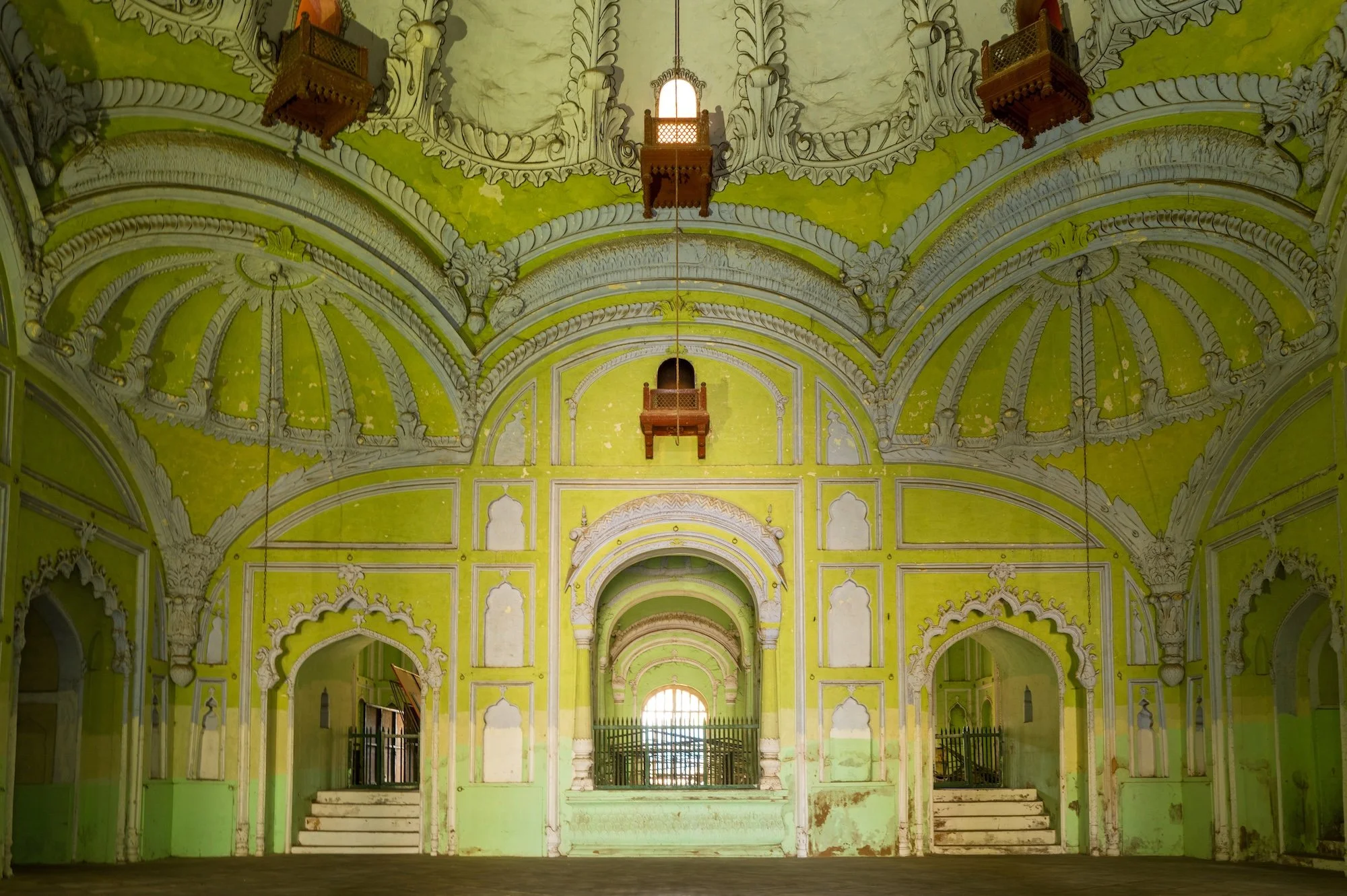
    This morning we visit one of Lucknow’s most iconic landmarks – the Bara Imambara, or House of the Imam. Commissioned in 1784 by Nawab Asaf-ud-Daula as a public works project during a devastating famine, the Imambara is both a place of Shia worship and a symbol of the Nawab’s commitment to his people. The complex includes an enormous arched assembly hall – one of the largest vaulted spaces in the world unsupported by beams – as well as a mosque, courtyards, a stepwell and the famous bhulbhulaiya, or labyrinth. The tomb of the architect, Kifayat-ullah, lies beside that of the Nawab, a rare honour that speaks to the respect in which his work was held. The afternoon is at leisure to relax before we gather again for dinner in our hotel. Overnight Lucknow (B, D)

  • Day 7 | Monday 29 November
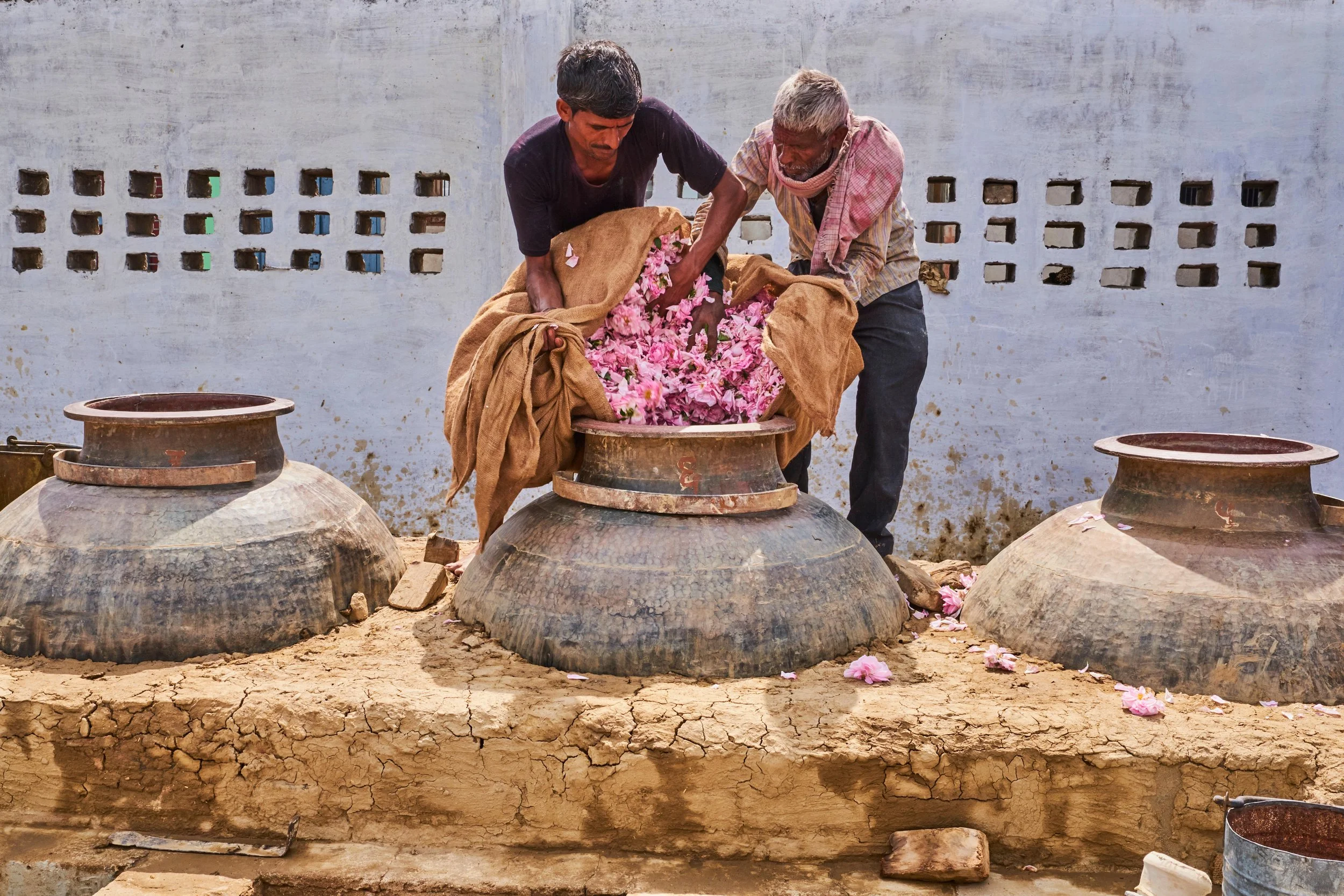
    The Perfumes of Kannauj
    The art of perfume-making has flourished on the plains of the Ganges for centuries, reaching new heights of refinement under the Mughal emperors. Fragrant oils, rosewater and incense became essential elements of courtly life, used in elaborate ceremonies, royal gardens and personal adornment. Leaving Lucknow, we travel west to Kannauj, India’s historic centre of attar production, where traditional perfumers continue to use copper stills and centuries-old distillation techniques. At a local distillery, we learn how flowers, herbs and other natural ingredients are transformed into concentrated fragrances, often matured in sandalwood oil. Among the most distinctive is mitti attar, made using baked clay to recreate the earthy scent of the first monsoon rain. Following lunch at a local restaurant, we continue to Agra, which flourished as a major Mughal capital under Akbar, Jahangir and Shah Jahan. We arrive at our hotel in the late afternoon, with the evening at leisure. Overnight Agra (B, L)

  • Day 8 | Tuesday 30 November
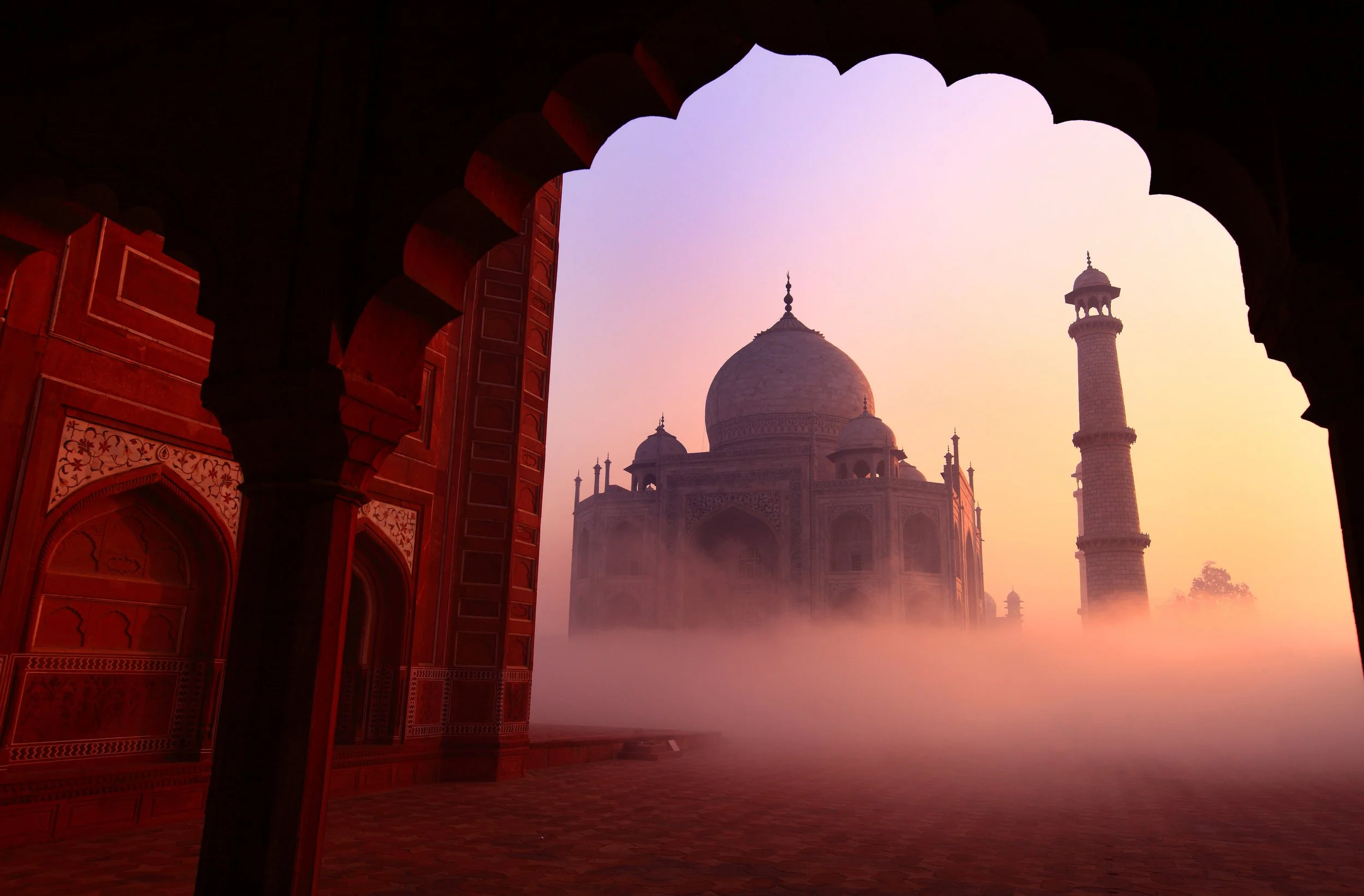
    The Taj Mahal
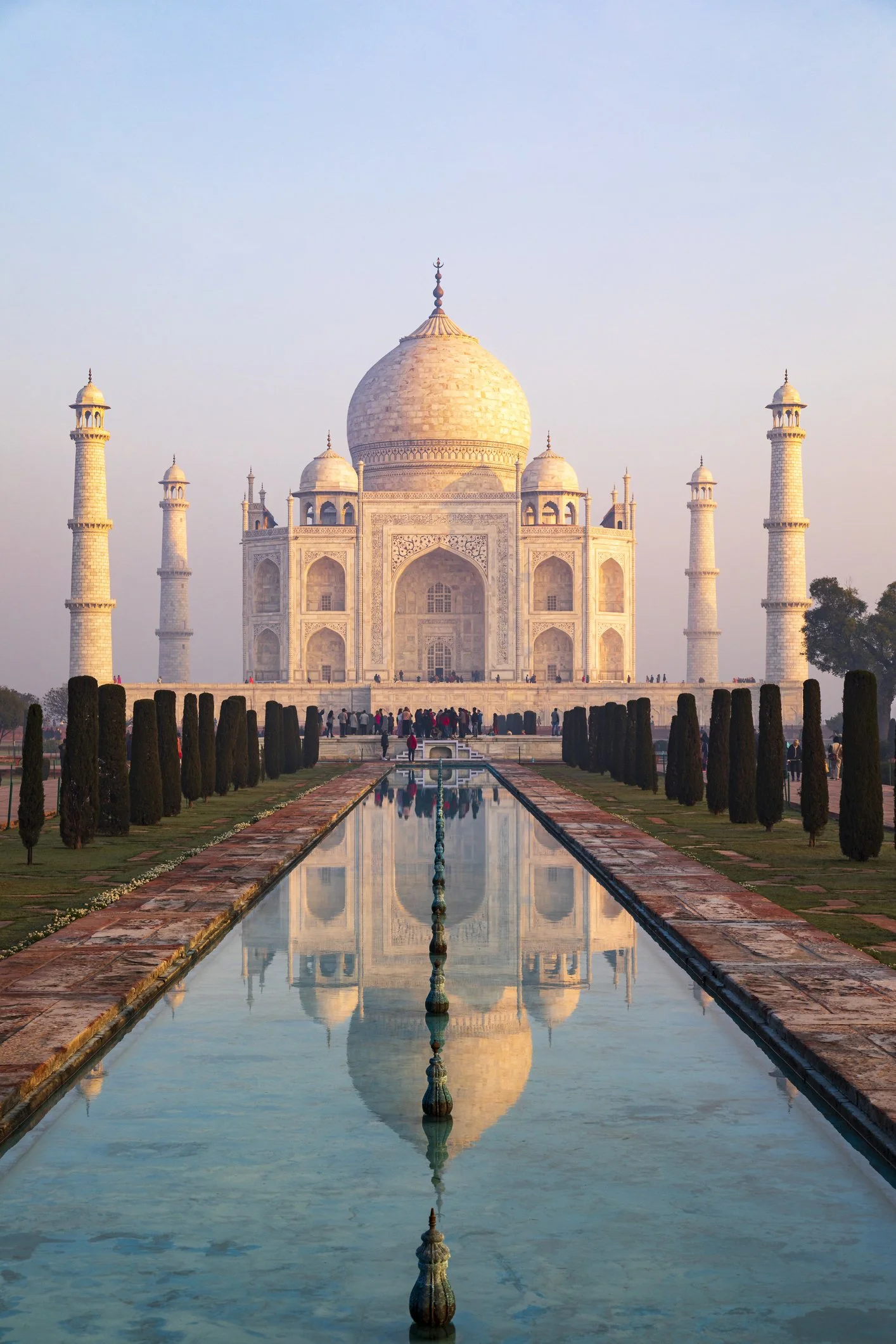
    Commissioned by Emperor Shah Jahan following the death of his beloved wife Mumtaz Mahal in 1631, the Taj Mahal represents the culmination of Mughal architectural achievement. Its harmonious proportions, white marble surfaces and elaborate decoration reflect the artistic and technical mastery of the imperial court. We visit the Taj Mahal in the early morning, when the changing light reveals the delicate colours of its marble facade, before returning to our hotel. Later, we visit the exquisite Tomb of Itmad-ud-Daulah, commissioned by Empress Nur Jahan for her father. Completed in 1628, this smaller mausoleum pioneered the extensive use of white marble and intricate pietra dura stone inlay that would reach its greatest expression at the Taj Mahal. Following lunch at a local restaurant, we visit a marble inlay workshop to observe artisans practising these traditional techniques. We conclude the day at Agra Fort, the imposing red sandstone stronghold developed under Akbar and later transformed by Shah Jahan, who spent his final years confined within its walls. Overnight Agra (B, L)

  • Day 9 | Wednesday 1 December
    Fatehpur Sikri and Jaipur
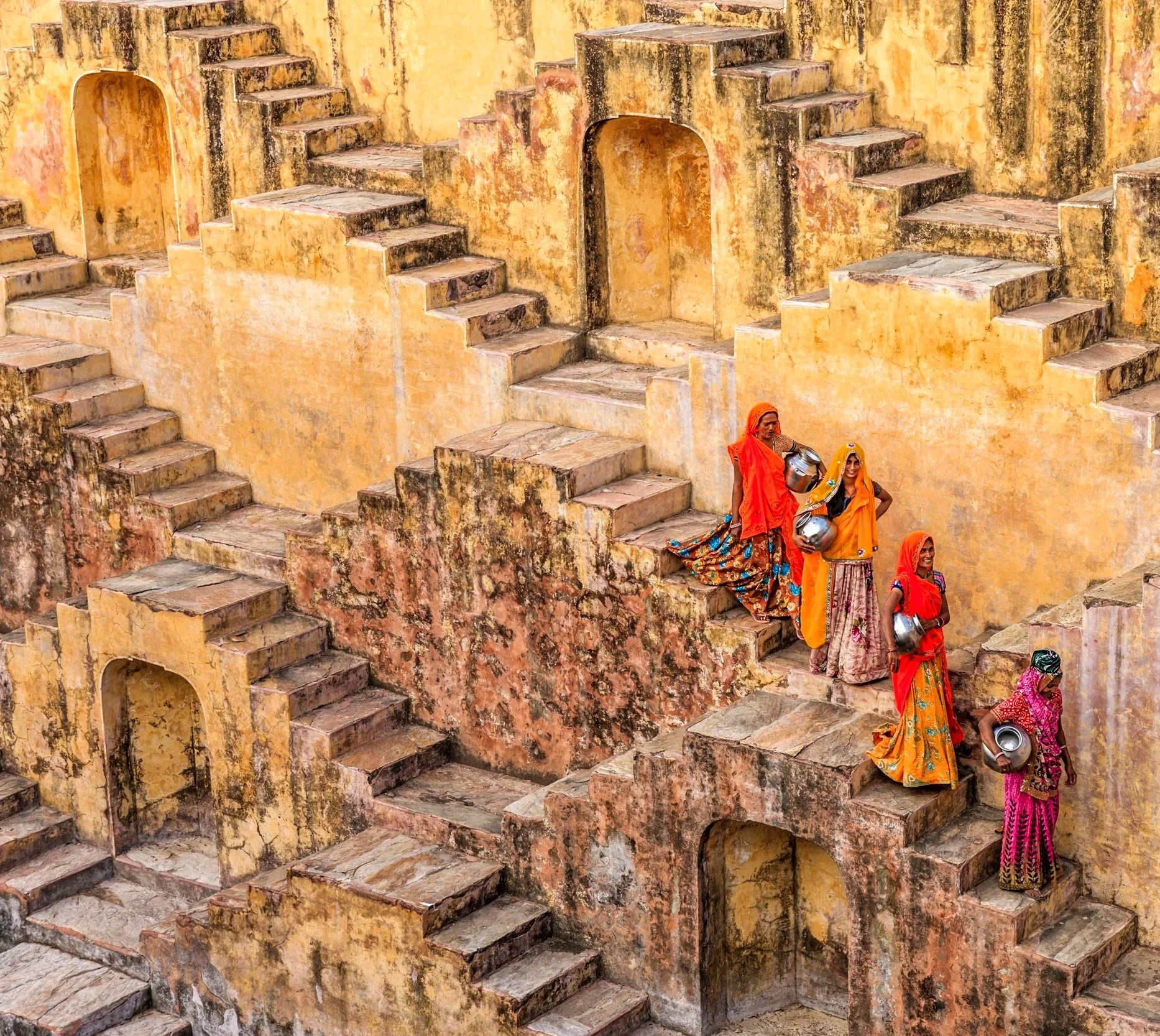
    In 1571, Emperor Akbar established a new imperial capital at Fatehpur Sikri, inspired by the Sufi saint Salim Chishti, who had foretold the birth of his heir. Built almost entirely from red sandstone, the city brought together Hindu, Jain and Islamic architectural traditions, reflecting Akbar’s vision of a diverse and unified empire. Despite its grandeur, the capital was abandoned as a royal residence after only 14 years. Travelling west from Agra today, we visit the remarkably preserved palace complex, with its elaborate courtyards, audience halls and royal residences. Following lunch at a local restaurant, we continue to Abhaneri to see Chand Baori, an extraordinary 9th-century stepwell descending 13 levels into the ground. Its thousands of precisely arranged steps form a striking geometric pattern, demonstrating the ingenuity of early Indian water management. We reach Jaipur in the late afternoon and settle into our heritage haveli hotel. Overnight Jaipur (B, L)

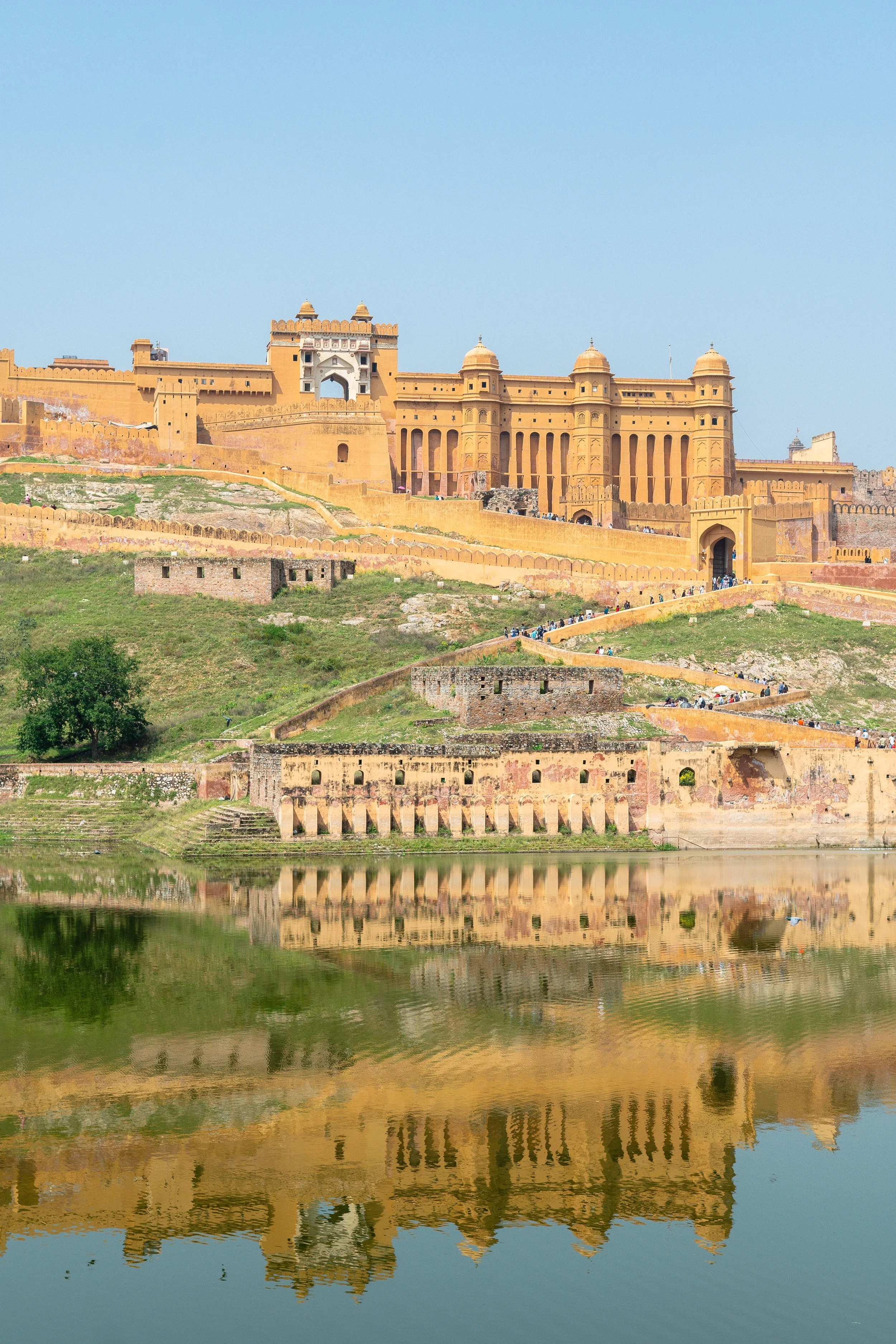
  • Amer Fort Jairpur

    Day 10 | Thursday 2 December
    Amer Fort and the City Palace
    The Rajput rulers of Amer forged a powerful alliance with the Mughal emperors during the 16th century, securing their position through marriage, military service and political cooperation. The wealth and influence gained through this relationship helped transform Amer into one of Rajasthan’s most magnificent royal centres. Our morning begins at
    Amer Fort, rising above Maota Lake on the outskirts of Jaipur. Within its imposing walls, a succession of courtyards and private apartments reveals the splendour of Rajput court life. Highlights include the richly decorated Ganesh Pol gateway and the Sheesh Mahal, or Mirror Palace, whose intricate glasswork reflects the artistic refinement of the period. Returning to Jaipur for lunch, we spend the afternoon at the City Palace Museum, part of a vast complex that remains home to the former royal family. Its collections of ceremonial costumes, weapons, manuscripts and miniature paintings illuminate the history of the Kachhwaha dynasty and its close relationship with the Mughal court. Dinner this evening is enjoyed at a local restaurant. Overnight Jaipur (B, L, D)

  • Day 11 | Friday 3 December
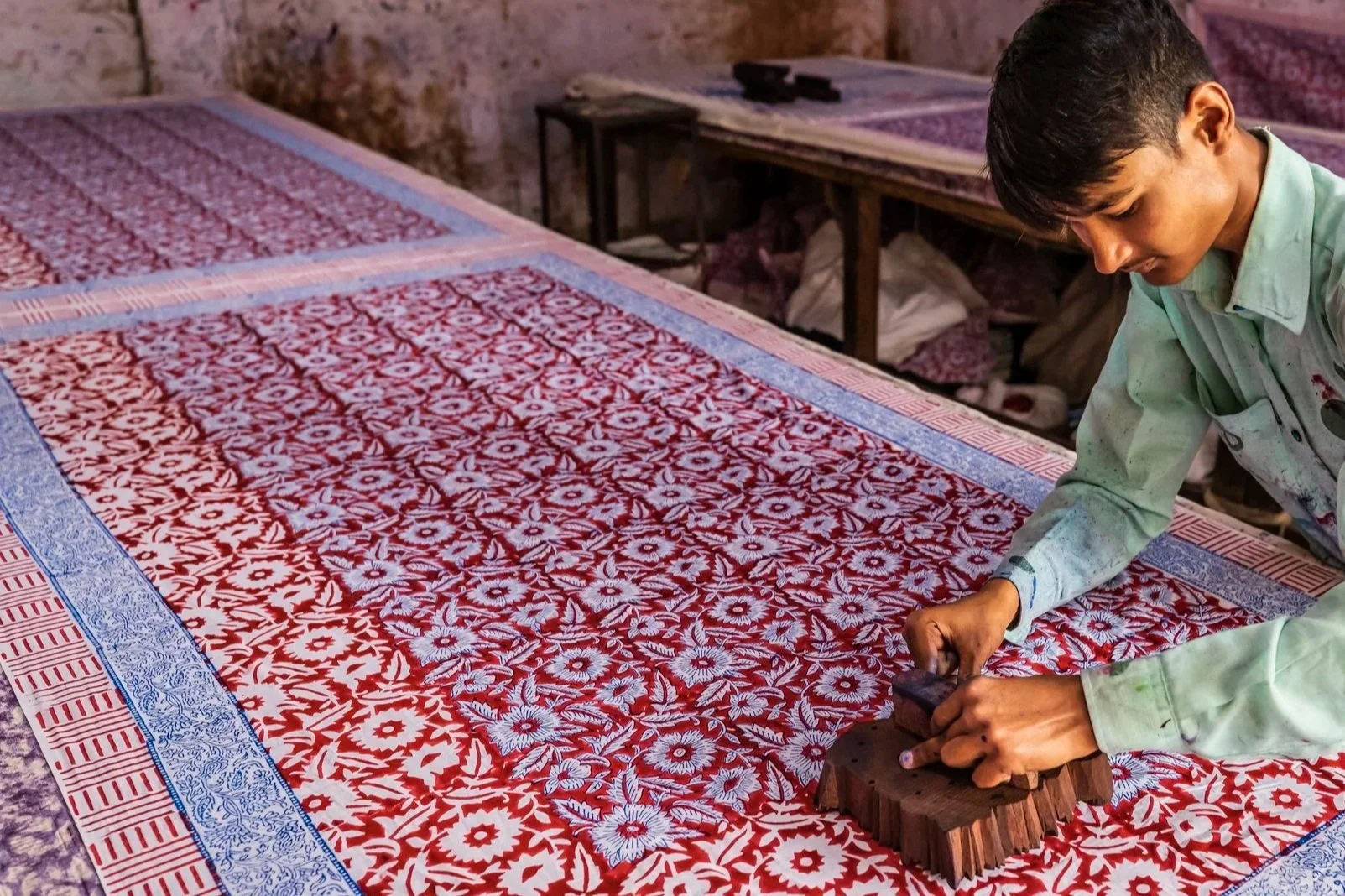
    Jaipur’s Artisan Traditions
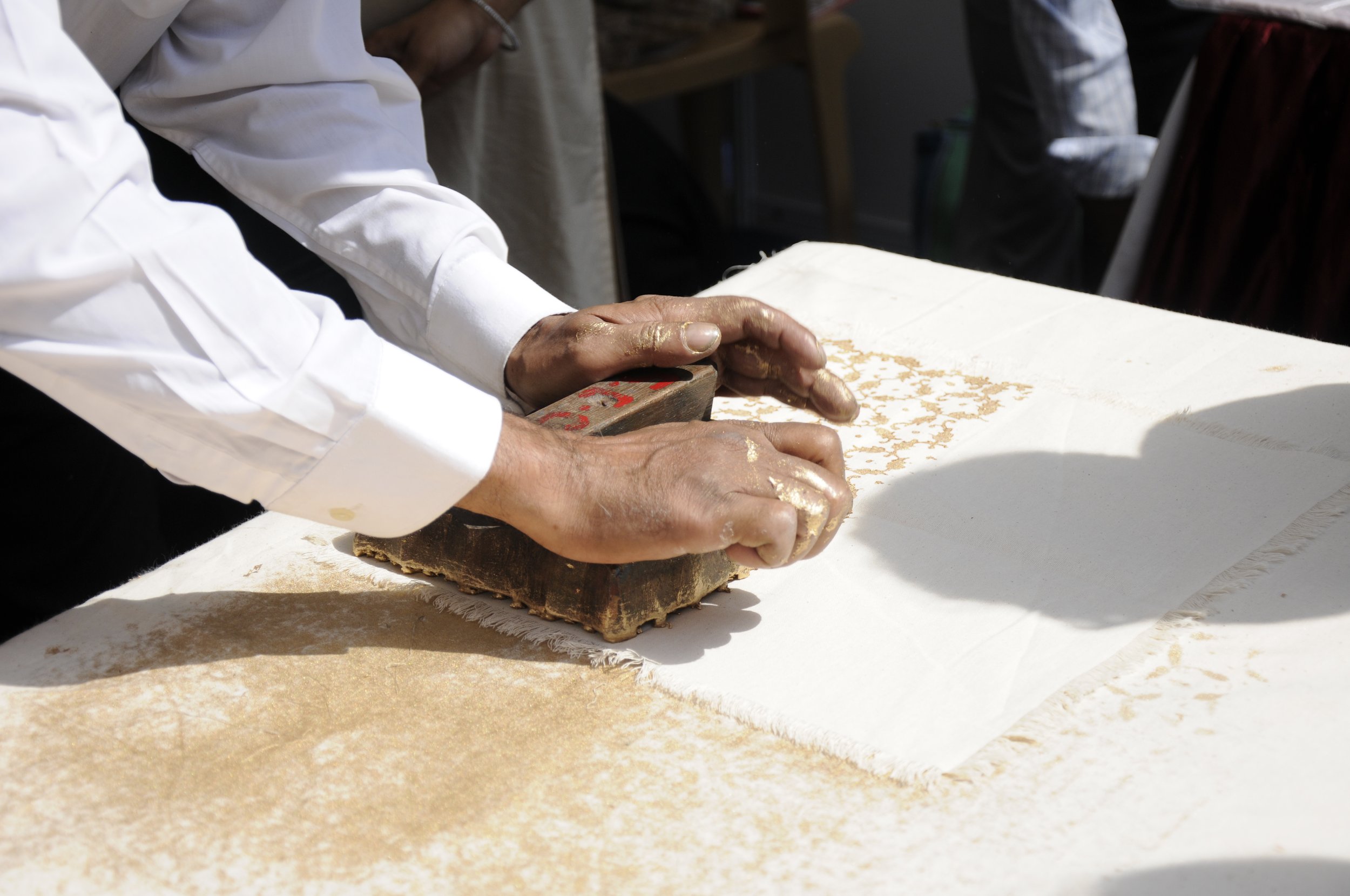
    Founded in 1727 by Maharaja Sawai Jai Singh II, Jaipur was one of India’s earliest planned cities, laid out according to traditional Hindu principles of architecture and urban design. Its broad avenues, orderly streets and specialised trading quarters fostered a flourishing community of merchants and artisans, whose skills were supported by generations of royal patronage. Our guided walking tour this morning takes us through the historic walled city, famously painted pink in 1876 to welcome the Prince of Wales. Among its lively bazaars, we discover Jaipur’s celebrated jewellery traditions, visiting a specialist showroom and museum to examine kundan gemstone setting and meenakari enamelling, techniques long associated with the royal courts of Rajasthan. In the afternoon, we visit a textile workshop to observe the traditional art of block printing. Using intricately carved wooden blocks, skilled artisans create elaborate patterns on cotton fabrics, continuing a craft for which the region has been renowned for centuries. We return to our hotel before gathering for dinner at a local restaurant. Overnight Jaipur (B, D)

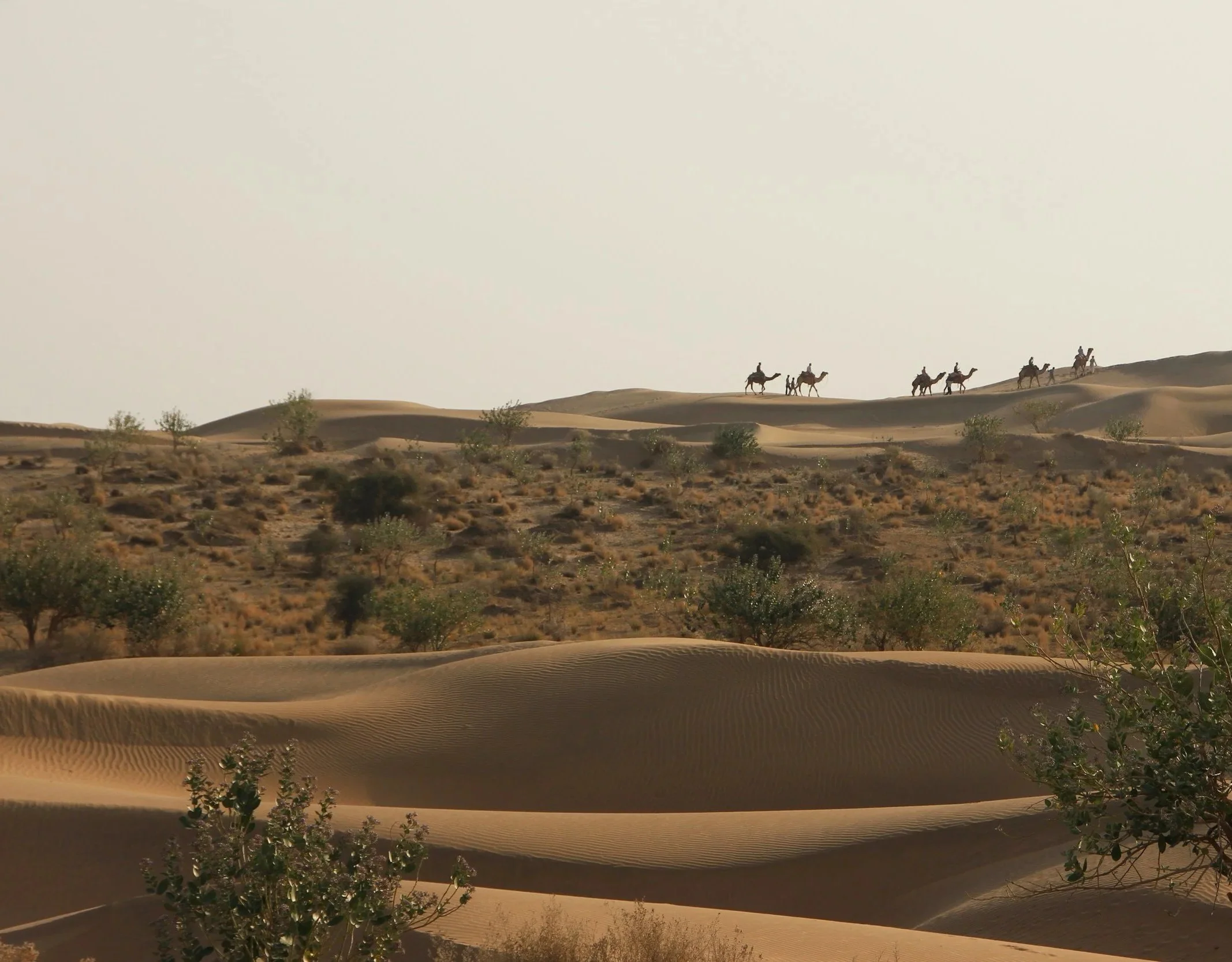
  • Thar Desert

    Day 12 | Saturday 4 December
    Across the Aravalli Hills to Deogarh
    South-west of Jaipur, the landscape rises into the ancient Aravalli Hills, a natural frontier between the desert plains of Rajasthan and the historic kingdom of Mewar. Unlike many neighbouring Rajput states, Mewar fiercely resisted Mughal expansion, preserving a strong tradition of political independence and regional identity. Leaving Jaipur, we travel through a changing landscape of rugged hills, rural villages and agricultural plains, stopping for lunch en route. Our destination is the town of Deogarh, where our accommodation is the magnificent Deogarh Mahal, a 17th-century fortified palace overlooking the surrounding countryside. Once home to a powerful noble family closely associated with the rulers of Mewar, the palace is now a heritage hotel, its richly decorated interiors, courtyards and frescoes reflecting centuries of Rajput aristocratic life. After settling into our rooms, there is time to explore the palace and wander through the streets of the town below before gathering for dinner at the hotel. Overnight Deogarh (B, L, D)

  •  Aravali Hills railway

    Day 13 | Sunday 5 December
    Into the Aravalli Hills
    The rugged Aravalli Hills have long shaped the history and daily life of rural Rajasthan, providing natural defences for its princely states while connecting remote communities through a network of trade routes. During the colonial period, narrow-gauge railways opened up this mountainous country, linking villages and market towns to the wider railway network. We begin our day with a journey aboard a local narrow-gauge train, winding through rocky cuttings, wooded hills and rural villages. The train travels at a leisurely pace, offering a glimpse into everyday life in this less-visited region of Rajasthan. Following lunch, we venture into the surrounding countryside by jeep, passing through traditional villages and stopping to visit a cave temple set into the hillside. As the afternoon draws to a close, we continue to a scenic vantage point for drinks while watching the sunset over the Aravalli Hills. Dinner this evening is back at our hotel. Overnight Deogarh (B, L, D)

  • Day 14 | Monday 6 December
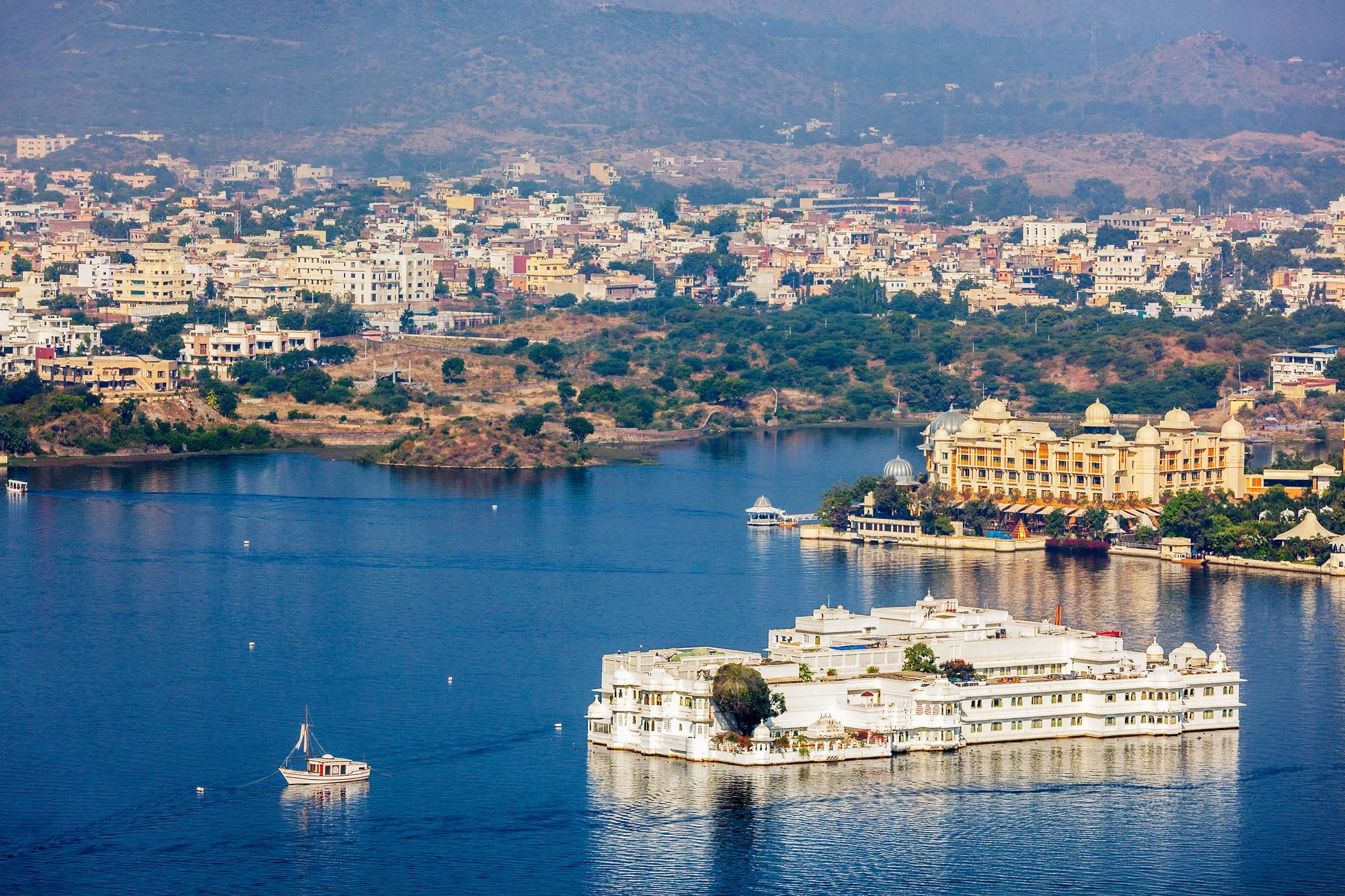
    Udaipur and Lake Pichola
    The kingdom of Mewar resisted Mughal expansion longer than most other Rajput states, preserving its independence through decades of conflict. Following the loss of Chittorgarh to Emperor Akbar in 1568, Udaipur emerged as the kingdom’s principal capital, sheltered by the Aravalli Hills and surrounded by a network of lakes. Its palaces, temples and waterfront terraces reflect the wealth and artistic traditions of the Mewar rulers. Leaving Deogarh, we travel south through the hills towards Udaipur, arriving around midday at our hotel overlooking Lake Pichola. Set along the waterfront, it offers magnificent views towards the lake’s island palaces and surrounding hills. The afternoon is at leisure to enjoy the hotel’s lakeside setting, perhaps relaxing on the terrace as the light settles over the water. Overnight Udaipur (B)

  • City Palace udaipur

    Day 15 | Tuesday 7 December
    The Mewar Court
    The Sisodia dynasty of Mewar maintained a proud tradition of independence, even as successive Mughal emperors sought to extend their authority across Rajasthan. Overlooking Lake Pichola, Udaipur’s City Palace reflects the wealth and artistic patronage of its rulers, who expanded the complex over four centuries from its beginnings under Maharana Udai Singh II in 1559. We begin with a guided visit to the City Palace Museum, exploring richly decorated chambers adorned with mirrors, mosaics and intricate stonework. Its collections of royal arms, ceremonial objects, palanquins and historic photographs offer an insight into the political and cultural life of the Mewar court. In the afternoon, we meet local artists practising the delicate tradition of miniature painting, whose intricate compositions and vivid mineral pigments reflect both Rajput and Mughal artistic influences. We also visit a local jeweller, with time to browse the nearby markets. In the evening, we gather for our farewell dinner, marking the conclusion of our exploration of India’s imperial heritage. Overnight Udaipur (B, D)

  • Day 16 | Wednesday 8 December
    Depart Udaipur to Delhi
    Following breakfast, we transfer to Udaipur airport for our flight to Delhi, where the tour concludes on arrival in the afternoon. Those with late-evening international departures may wish to book a day room at a Delhi airport hotel. (B)

Accommodation has been selected for its comfort, location and character, combining excellent four and five-star hotels with distinctive heritage properties and former royal palaces.

Tour Accommodation

tour booking

$16,890 AUD per person, twin share (land content only)
$4,980 AUD supplement for sole use of a hotel room

A $2,000 deposit is required per person to confirm your booking on tour. This deposit is non-refundable.

Hold a Place

Still deciding? We are happy to hold a tentative place for 7 days while you make your final arrangements.

Book Online

To secure your place(s) on tour, book online below with “Athena”, our virtual tour consultant.

DOWNLOAD FORM

Download a printable booking form. You can also complete the form on screen and submit via email.

your tour consultant

The consultant for this tour is Lucy Yeates. For further information or to discuss the tour, please call 9235 0023 (Sydney) or 1800 639 699 (outside Sydney) or email lucy@academytravel.com.au

have you thought about?

Academy Travel is more than just a tour operator. We are also a full-service travel agency who can assist you with all aspects of your travel, including flights, transfers, pre-tour arrival, additional travel and comprehensive travel insurance.

can’t make this departure?

If these dates don't work for you, register to hear about the next tour.