OMAN

EXPLORING THE FRANKINCENSE ROUTE

Explore a land of diverse landscapes, vibrant hill forts, traditional souqs and remarkable bronze-age archaeological sites.

TOUR STATUS

Places Available | Maximum 16

TOUR DATES

Nov 18 - Dec 2, 2027 | 15 Days

TOUR LEADER

Dr Eireann Marshall | View Bio

snapshot

OVERVIEW

On the eastern part of the Arabian Peninsula lies Oman, whose ports and frankincense groves connected Arabia with Africa, India and the Mediterranean for millennia. A peaceful sultanate, it is known for its unspoilt natural scenery, with rugged mountains, deep wadis and vast sand deserts.

Led by Dr Eireann Marshall, this 15-day journey opens with an overnight stay in Dubai before crossing to the northern tip of the Musandam Peninsula, known as the Fjords of Arabia. As part of our exploration, we’ll cruise these fjords in a traditional dhow, admiring the striated towering cliffs that plunge into the clear, dolphin-filled waters of the Gulf. Our next destination of central Oman offers spectacular mountain ranges and desert vistas dotted with palm groves and hidden oases. Its traditional mudbrick villages with their imposing tribal forts and cool souqs retain much of the flavour of Old Arabia.

Finally, we head south into Salalah, whose seasonal monsoon has sustained the frankincense trees that made southern Oman one of the ancient world’s most important trading regions.

tour highlights

Journey across Oman’s diverse landscapes and ancient trade routes

Dr Eireann Marshall

your expert tour leader

Eireann is an Honorary Research Associate and Associate Lecturer with the Open University. Raised in the Veneto, she was educated in Barnard College, Columbia University, in New York, as well as the Universities of Birmingham and Exeter in England, where she has lectured. With her vast lecturing and guiding experience, Eireann has in-depth knowledge of Italy and its history and archaeology. Eireann has led many tours, including several to Rome, Ravenna, Venice, Pompeii and Sicily, and is bilingual in English and Italian.

Read full bio >

Accompanied by an Experienced Tour Manager

Alongside your expert tour leader, an experienced tour manager will accompany for the entirety of the tour. They oversee logistics, ensure your comfort and safety, and provide friendly support – whether offering tips for free time, sharing a chat over dinner, or giving you space to relax.

tour ITINERARY

Dubai (1 night), Khasab (3 nights), Muscat (2 nights), Nizwa (2 nights), Jebel Akhdar (1 night), Wahiba Sands
(1 night), Sur (1 night), Salalah (3 nights)

Included meals are shown with the letters B, L and D

  • Day 1 | Thursday 18 November
    Arrive Dubai

    Depending on your arrival time in Dubai, the afternoon is at leisure to begin exploring this dynamic city. Airport transfers to our hotel are arranged by Academy Travel. In the evening we gather for introductions and a welcome dinner. Overnight Dubai (D)

  • Day 2 | Friday 19 November
    To Khasab

    The Musandam Peninsula occupies a distinctive geographical and cultural position at the northern edge of Oman, where the Hajar Mountains plunge sharply into the Strait of Hormuz, creating a landscape of fjord-like inlets and isolated coastal settlements. Long separated from the main centres of Omani power, the region has developed a character shaped as much by maritime networks as by its rugged terrain. Leaving Dubai this morning, we travel by road towards the peninsula, pausing en route for a short break before crossing the border into Oman. The route offers a gradual transition from the urban scale of the Emirates to the more austere and mountainous landscapes of Musandam. Just after midday we arrive in Khasab, set on a narrow coastal plain between sea and mountain, and transfer to our hotel for lunch together. The afternoon is then at leisure to settle in and take in the setting before an early evening lecture in the hotel introduces the history and geography of the region. Dinner follows in the hotel. Overnight Khasab (B, L, D)

  • Day 3 | Saturday 20 November
    Khasab and Jebel Harim

    The landscapes surrounding Khasab preserve evidence of long human occupation, from prehistoric rock art to the small settlements that continue to adapt to Musandam’s demanding terrain. These traces, set against a stark mountain environment, offer insight into patterns of movement, subsistence and exchange that have shaped life on the peninsula for millennia. Today we are joined by a local guide for a short walk through Khasab, providing an introduction to the town’s layout and daily rhythms. A pause for coffee follows before we continue to the nearby village of Tawi, where a series of petroglyphs carved into rock faces depict human figures, animals and boats – a visual record of the region’s early inhabitants and their connections to the sea. Lunch is then enjoyed at a nearby restaurant before an afternoon excursion by 4WD into the mountains. Ascending Jebel Harim, the highest peak in Musandam, we travel through remote highland scenery, with broad views across the peninsula and towards the Strait of Hormuz. Returning to Khasab in the early evening, dinner is again served in our hotel. Overnight Khasab (B, L, D)

  • Day 4 | Sunday 21 November
    Musandam Peninsula Cruise

    The northern coastline of Musandam reveals some of the most striking geological formations in the Arabian Peninsula, where uplifted limestone mountains have been cut by the sea into a series of deep, sheltered inlets. These formations not only define the region’s appearance but also determine how it is experienced – accessible primarily by water and punctuated by small, isolated communities. This morning we board a traditional wooden dhow for a full-day cruise along this coastline, with exclusive use of the vessel for our group. Accompanied by a specialist geologist, the day focuses on reading the landscape itself – from the layered rock formations visible in the cliff faces to the broader tectonic forces that shaped the peninsula. As we move through the fjords, we pass Telegraph Island and a number of remote fishing settlements, observing how life continues along these otherwise inaccessible shores. Lunch is served on board as we anchor in one of the sheltered bays, allowing time to relax on deck or take in the surrounding scenery from the water. We return to Khasab in the late afternoon, with dinner together at the hotel. Overnight Khasab (B, L, D)

  • Day 5 | Monday 22 November
    To Muscat

    Muscat’s development reflects its position as a long-standing port at the intersection of Indian Ocean trade routes, where maritime exchange shaped both the city’s economy and its cultural outlook. Framed by low mountains and the Gulf of Oman, it presents a more restrained urban character than many regional capitals, with a continuity between its historic quarters and modern expansion. An early departure this morning takes us to Khasab airport for our short flight to Muscat. On arrival, we transfer to our hotel, located along the city’s waterfront, before walking to a nearby restaurant for lunch together. The afternoon is then at leisure to rest or make use of the hotel’s facilities following the morning’s travel. Later in the day, a lecture provides an introduction to Muscat and the historical themes that will shape our time here, followed by dinner in the hotel. Overnight Muscat (B, L, D)

  • Day 6 | Tuesday 23 November
    Muscat

    Muscat’s built environment reflects the consolidation of modern Oman under Sultan Qaboos, whose program of development sought to balance continuity with carefully articulated change. The city’s principal institutions – religious, artistic and historical – offer a framework through which this transformation can be understood. Our day begins at the Sultan Qaboos Grand Mosque, a major architectural project completed in 2001, where scale, symmetry and craftsmanship combine in a complex designed to accommodate both worship and study. We then continue to the Royal Opera House Muscat, whose design draws on traditional Omani forms while serving as the country’s leading venue for international performance. Returning to the hotel, lunch is enjoyed together before turning our attention to the National Museum, whose galleries trace Oman’s history from early settlement through to the present day and provide essential context for the sites encountered throughout the tour.
    A short walk then brings us to the ceremonial Al Alam Palace, followed by the Port of Mutrah and its souq, where trade and daily life remain closely intertwined. We conclude the day with a special dinner served on the rooftop of Al Mirani Fort, where its elevated position above Old Muscat harbour provides a striking vantage over the surrounding coastline and city. Overnight Muscat (B, L, D)

  • Day 7 | Wednesday 24 November
    To Nizwa

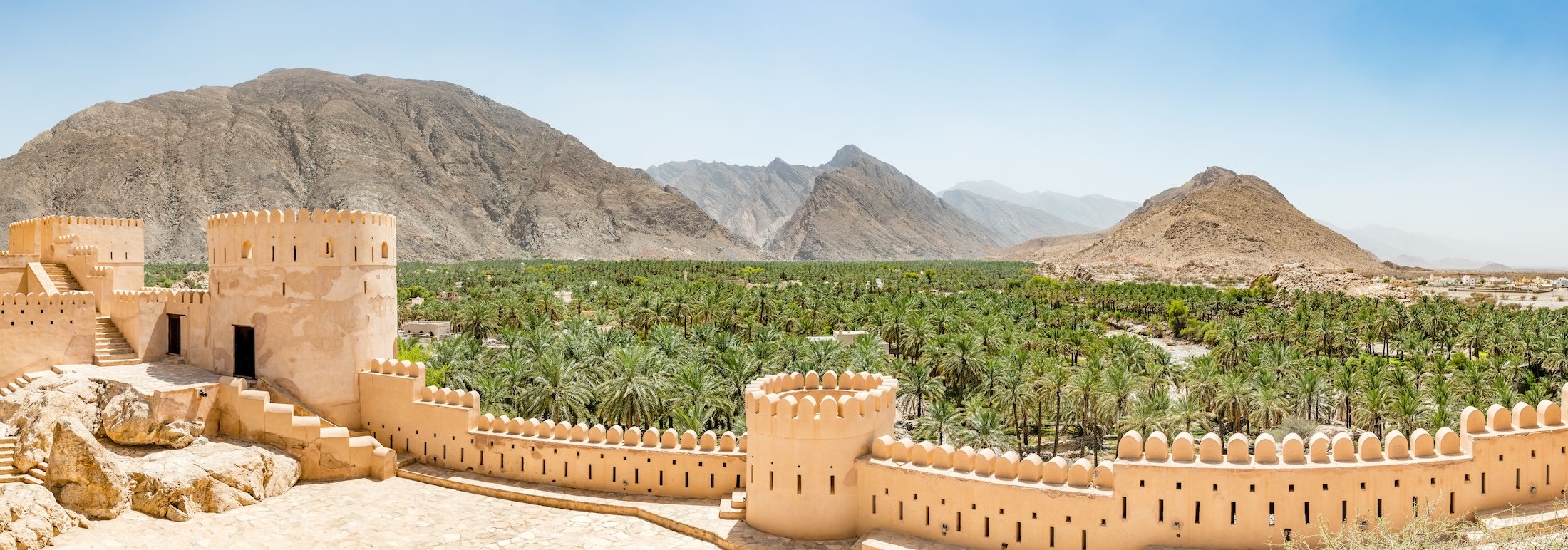
    Nizwa occupies a central place in Oman’s historical development, serving as a political and intellectual centre during the early centuries of Islam and maintaining its importance through its position at the crossroads of inland trade routes. Set at the foot of the Western Hajar Mountains and surrounded by date plantations sustained by ancient aflaj irrigation systems, it remains closely tied to the rhythms of its landscape. Departing Muscat today, we travel inland by 4WD, gradually ascending into the mountain ranges that define the interior. En route, we visit the Al Hoota Cave system, formed over millions of years beneath Jabal Shams. A guided walk through its chambers reveals its limestone formations and subterranean lakes, offering insight into the geological history of the region. We then continue to the Oman Across the Ages Museum, an architectural masterpiece inspired by the forms of the Hajar Mountains and their canyons. Following our visit, we transfer to our hotel in Nizwa, where an evening lecture provides further context for the city’s significance within Omani history. Dinner this evening is enjoyed at a local restaurant. Overnight Nizwa (B, D)

  • Day 8 | Thursday 25 November
    Nizwa Surrounds

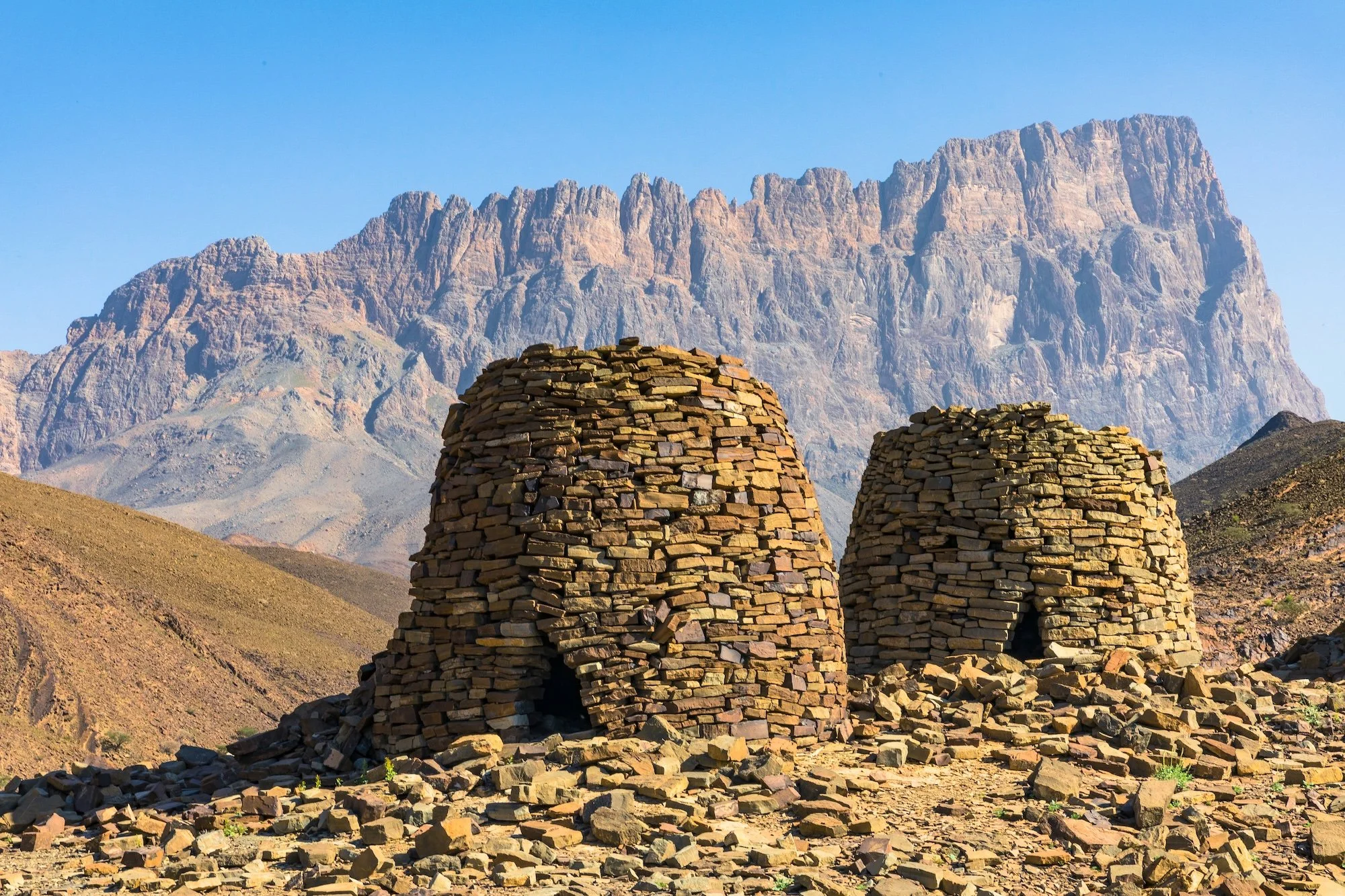
    The region surrounding Nizwa preserves a layered record of Oman’s settlement history, where agricultural systems and defensive structures reflect both environmental adaptation and periods of conflict. After spending the morning in the Nizwa Central Souq, with time to explore the food hall at a quieter time of day, we venture to the nearby village of Tanuf. Set against the dramatic backdrop of the Hajar Mountains, these mud-brick ruins stand as a reminder of the Jabal Akhdar conflicts of the 20th century. Lunch is then enjoyed together in a nearby restaurant before continuing to Jabrin Castle. Built in the 17th century as both a residence and a centre of learning, it is notable for its painted ceilings and carefully planned interior spaces. We conclude with a visit to the village of Al-Ayn, where a group of early Bronze Age tombs provides evidence of settlement in this region more than 4,000 years ago. On returning to Nizwa, the evening is at leisure. Overnight Nizwa (B, L)

  • Day 9 | Friday 26 November
    To Jebel Akhdar

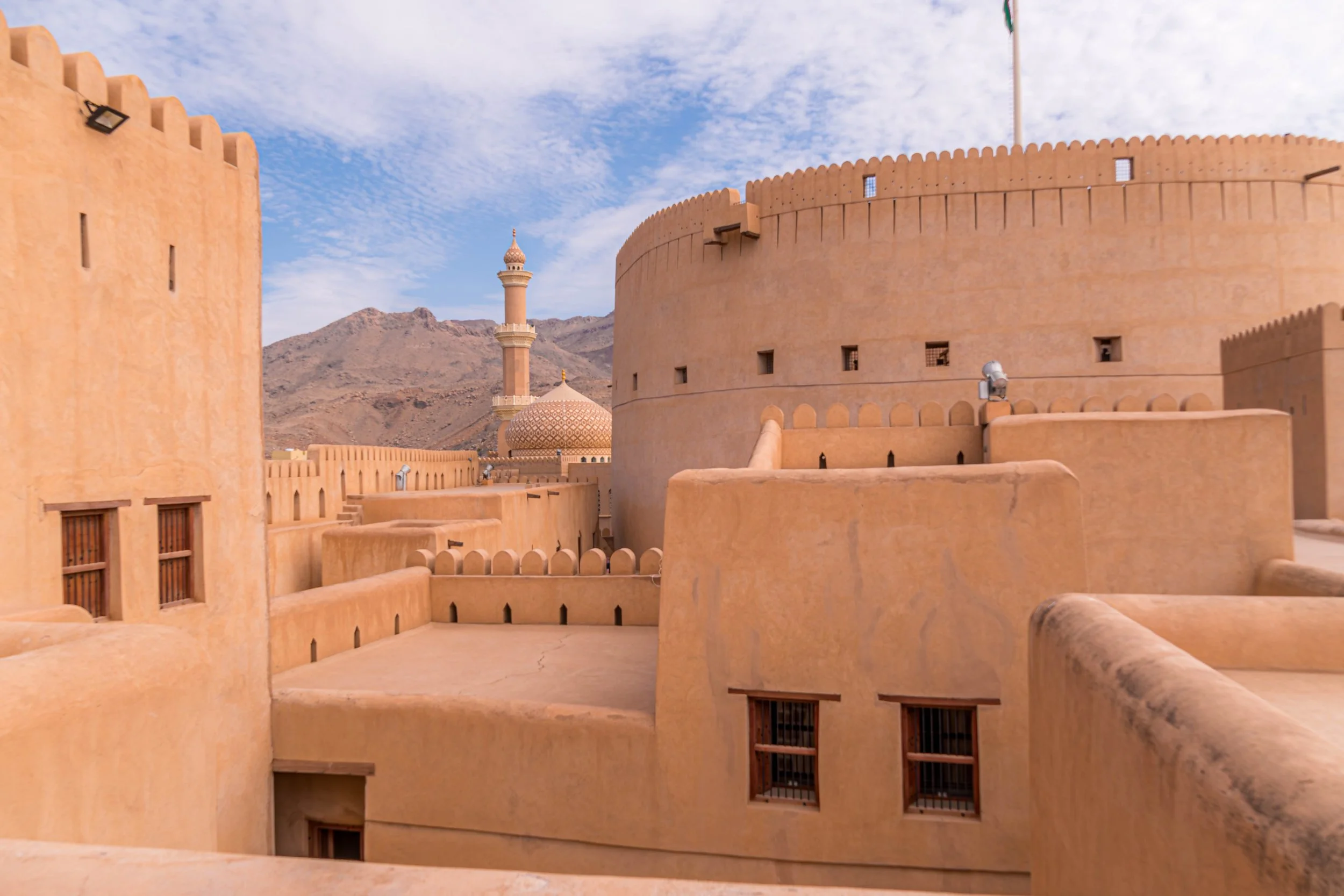
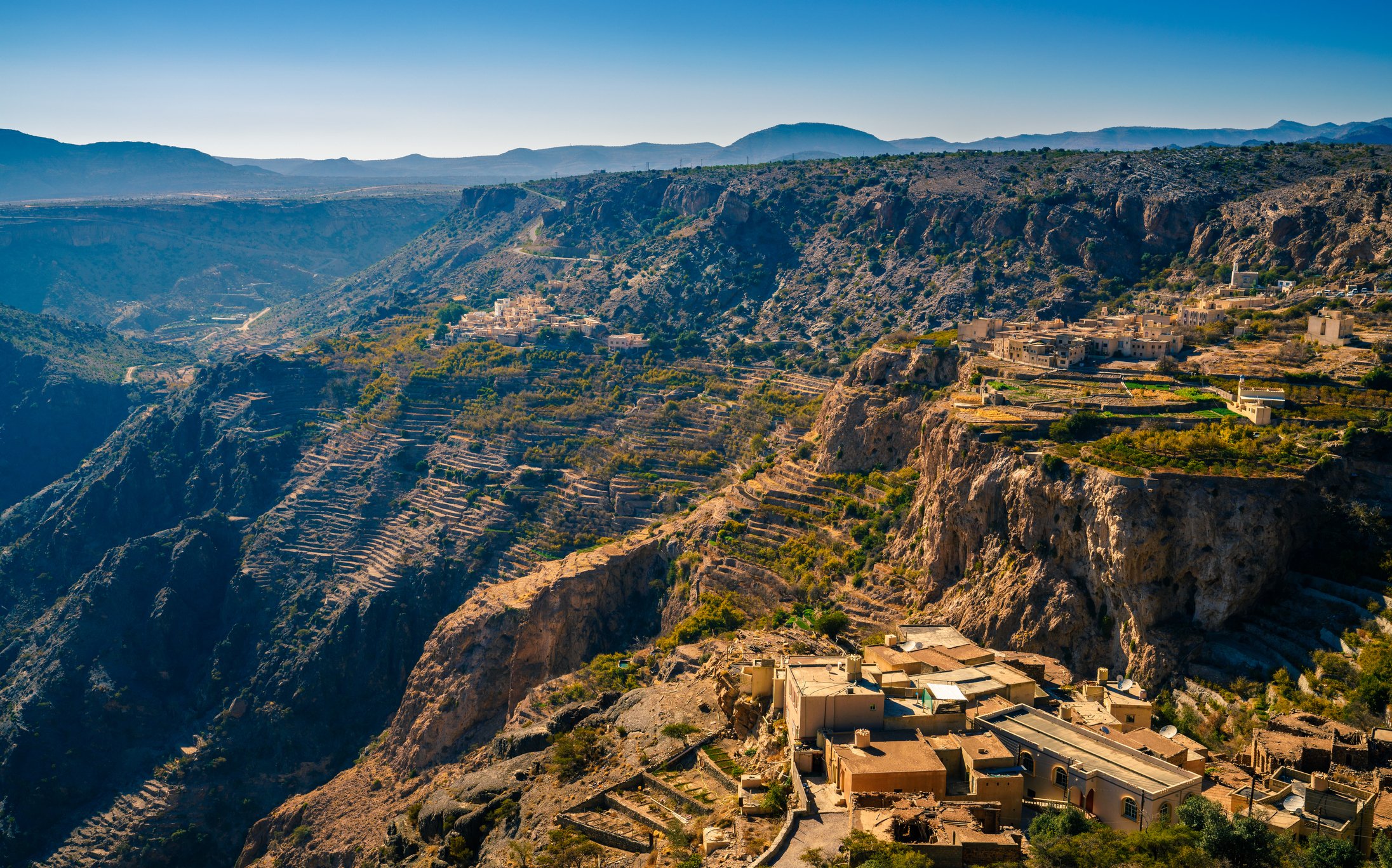
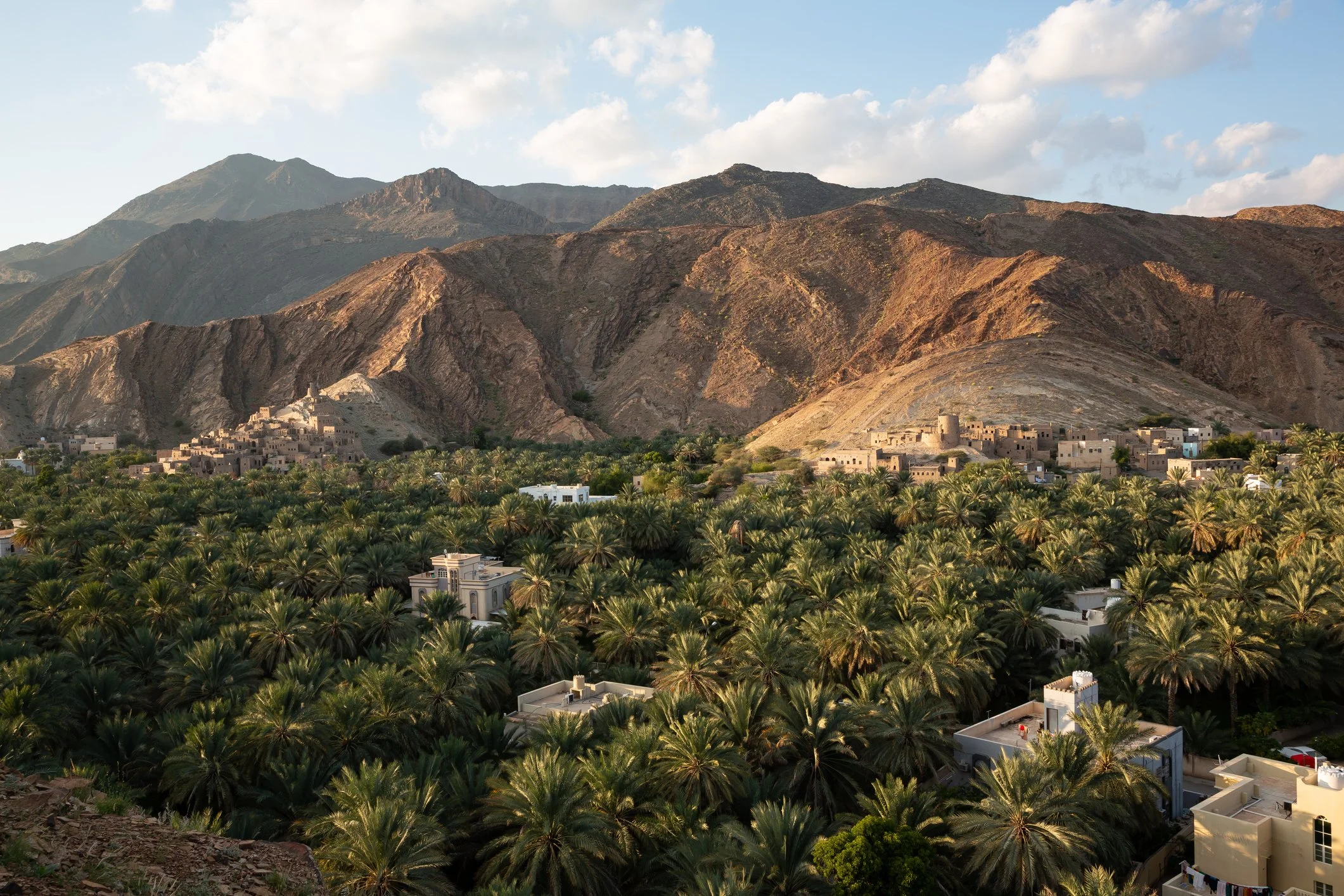
    Nizwa’s weekly market traditions provide a vivid expression of continuity in Omani life, where systems of exchange and social interaction remain closely tied to longstanding patterns of agriculture and pastoralism. An early start today allows us to visit the local livestock market, where goats, sheep and cattle are traded in a distinctive circular format that has changed little over time. We then explore the adjoining souq before continuing to Nizwa Fort. Completed in the 17th century, the fort’s massive circular tower reflects both defensive concerns and the authority of the imams who ruled from here. Following our visit, there is time to return to the souq for further exploration. Later in the morning we then depart Nizwa for Birkat Al Mouz, where mud-brick houses sit among date and banana plantations sustained by the falaj irrigation system. After exploring the village, we begin our ascent into the Western Hajar Mountains to Jebel Akhdar. After lunch at a local restaurant on arrival, we enjoy a leisurely walk between the villages of Al Ayn and Al Aqur, set along the escarpment with expansive views across the surrounding landscape. We then continue to our hotel, with time to relax before dinner is served. Overnight Jebel Akhdar (B, L, D)

  • Day 10 | Saturday 27 November
    Wahiba Sands

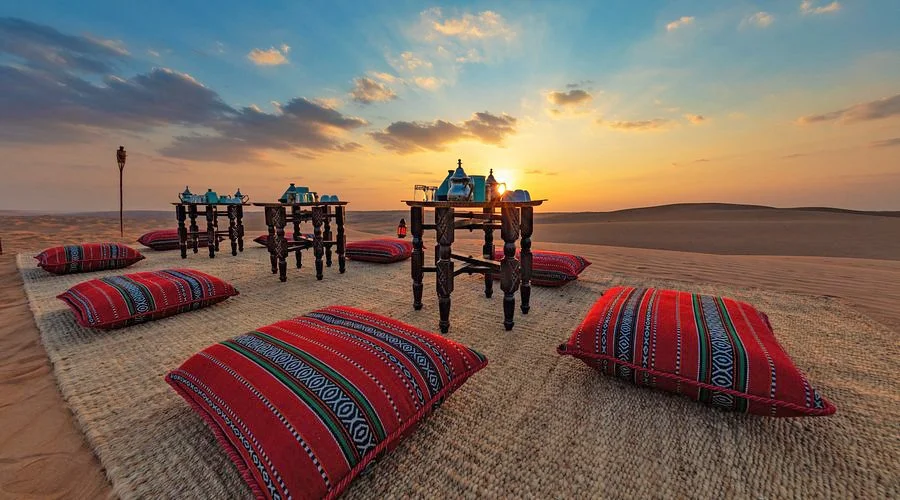
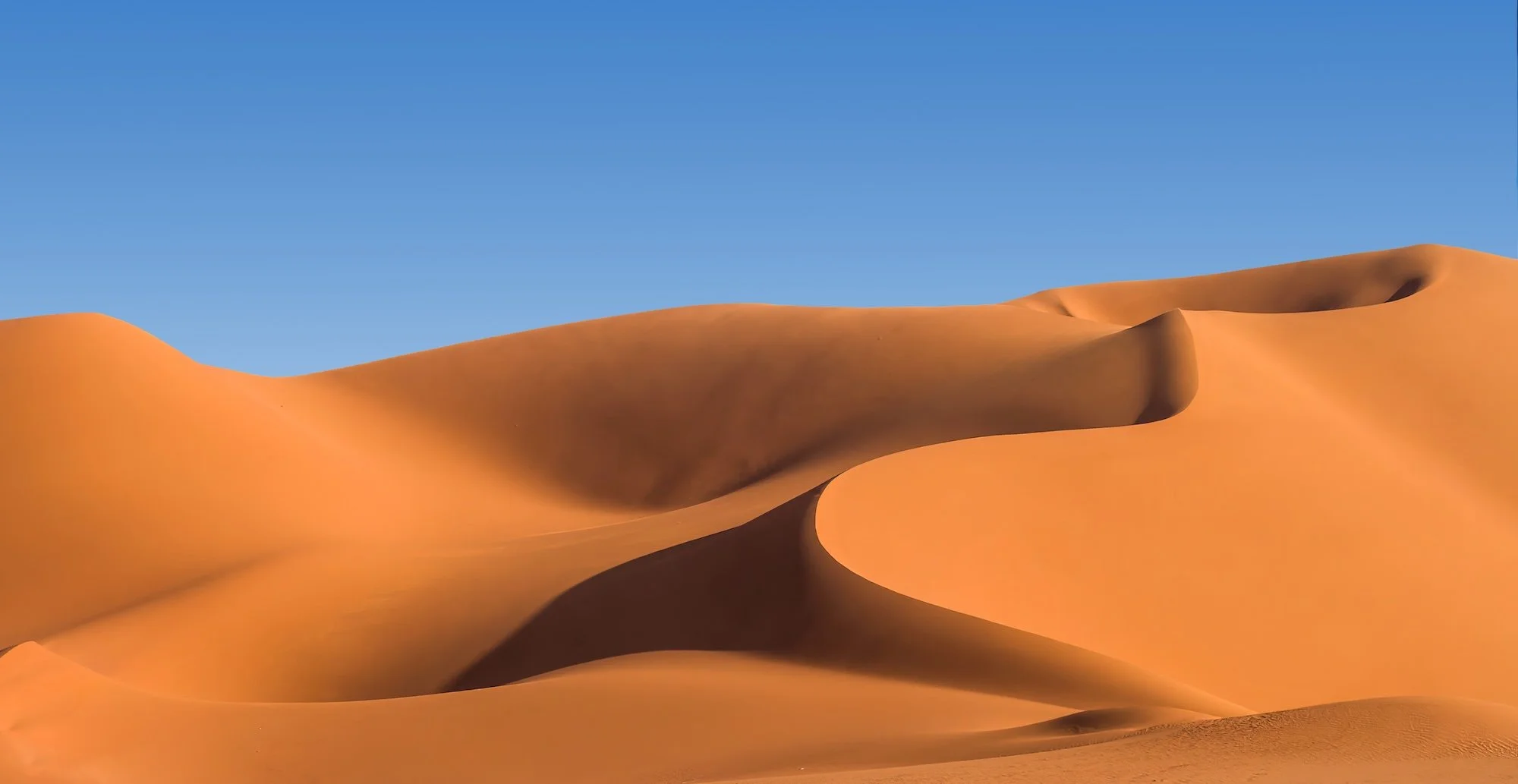
    The transition from the Hajar Mountains to the desert interior marks a shift in both landscape and way of life, as settled agricultural communities give way to the open expanses traditionally associated with Bedouin culture. Wahiba Sands, extending across some 12,000 square kilometres, is defined by its rolling dunes and long history of seasonal movement and adaptation. Departing Jebel Akhdar this morning, we descend from the mountains and travel by road towards the town of Bidiyah, located on the edge of the desert. A stop is made here for lunch before continuing into the sands by 4WD, where the terrain quickly transforms into a vast expanse of undulating dunes. Arriving at our desert camp in the afternoon, there is time to settle into our deluxe tents and experience the setting at a quieter hour of the day. Optional camel rides are available, offering a traditional means of traversing the dunes. As evening approaches, the changing light brings a marked shift in colour across the landscape, with dinner served at the camp. Overnight Wahiba Sands (B, D)

  • Day 11 | Sunday 28 November
    To Sur

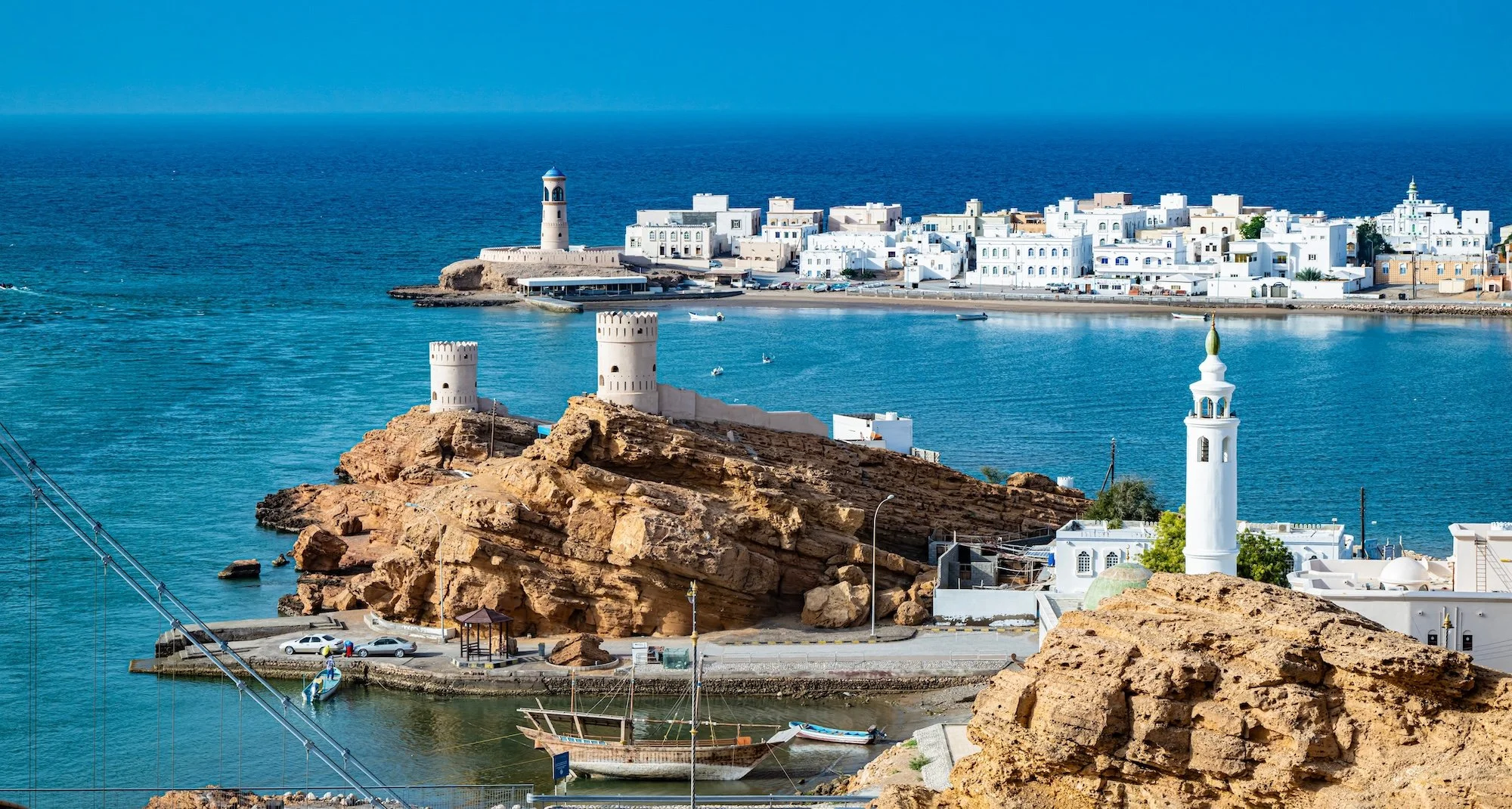
    Oman’s eastern coastline has long been shaped by its role in Indian Ocean trade, with the port of Sur emerging as a key centre for maritime construction and exchange. Known for its dhow-building tradition, the town maintains a connection to seafaring networks that once linked Arabia with East Africa, India and beyond. The day begins with a walk in Wahiba Sands, offering a final opportunity to experience the scale and stillness of the desert landscape in the softer morning light. We then depart the sands and travel by road towards the coast, arriving in Sur by early afternoon. Lunch is taken en route and the afternoon is set aside to rest or take in the quieter rhythms of this coastal town. Overnight Sur (B, L)

  • Day 12 | Monday 29 November
    Sur to Salalah

    The port of Qalhat, now in ruins, was once one of the most important trading centres on Oman’s eastern coast, flourishing between the 11th and 15th centuries as part of the wider Indian Ocean network. Its prominence is recorded in the accounts of travellers such as Marco Polo, who described a prosperous city engaged in maritime exchange with India and beyond. On our departure from Sur this morning, we are able to view the site of Qalhat from a distance, as current restoration works limit access. We then continue to Muscat, where there is time at the airport for a lunch break before boarding our flight south to Salalah. Looking out the window, a change in geography can be seen as we move from the arid north to the more temperate and historically distinct Dhofar region. On arrival in Salalah in the late afternoon, we transfer to our hotel overlooking the Arabian Sea. Dinner is served at the hotel. Overnight Salalah (B, D)

  • Day 13 | Tuesday 30 November
    Salalah and the Dhofar Coast

    The Dhofar region has long been associated with the production and export of frankincense, a commodity that connected southern Oman to trade networks extending across the Mediterranean, India and East Africa. The coastal settlements east of Salalah preserve key sites linked to this trade, where archaeology and built heritage reflect the region’s former prosperity. We begin today at the ruins of Khor Rori, identified with the ancient port of Sumhuram, strategically positioned at the mouth of a natural inlet. Archaeological remains here point to its role in controlling the export of frankincense from the hinterland. We then continue along the coast to visit Taqa, where its compact fort provides insight into local governance and domestic life in the 19th century. Continuing to Mirbat, once a significant trading port, we encounter a seafront lined with traditional houses and a small fort, reflecting the town’s maritime past. Nearby, we also visit the tomb of Ali bin Alawi, an important religious figure in the region. By mid-afternoon we return to Salalah, with the remainder of the day at leisure to enjoy the hotel and its coastal setting. Overnight Salalah (B, L)

  • Day 14 | Wednesday 1 December
    The Land of Frankincense

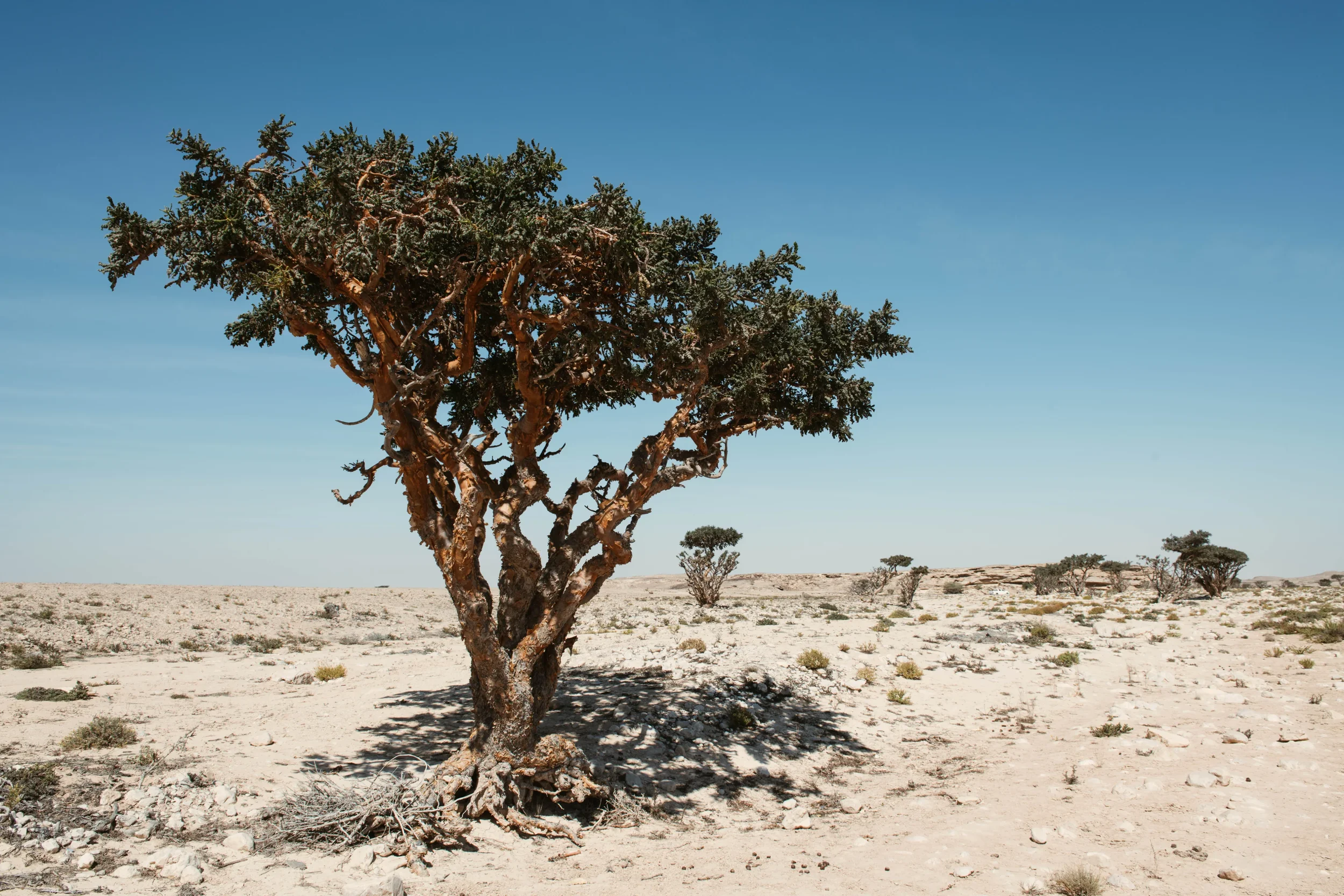
    The frankincense trade underpinned the prosperity of southern Arabia for millennia, linking the Dhofar region to commercial networks that extended across the ancient world. Valued for its use in ritual, medicine and perfume, this resin – harvested from the Boswellia sacra tree – was once among the most sought-after commodities moving between Arabia, the Mediterranean and Asia. Today we enjoy an excursion to Wadi Dawkah, a protected reserve where frankincense trees continue to grow in their natural environment. Here we gain insight into the cultivation and harvesting of the resin, and the conditions required for its production. Returning to Salalah, we visit the Museum of the Frankincense Land, whose displays trace the development of this trade and its wider historical context. A short transfer then brings us to the nearby ruins of Al Baleed, an important port from which frankincense was exported, where there is time to walk through the archaeological site. Lunch is enjoyed back in town together before the afternoon is spent at the Al Husn Souq, where frankincense and related products remain central to local trade. An end-of-tour lecture in the hotel brings the journey to a close, followed by a farewell dinner this evening. Overnight Salalah (B, L, D)

  • Day 15 | Thursday 2 December
    Depart Salalah

    The tour ends after breakfast this morning. Airport transfers will be arranged by Academy Travel to meet onward flights home. (B)

Tour Accommodation

Hotels have been selected principally for their location. Accommodation ranges from simple three-star to excellent five-star, depending on availability. In the Wahiba Sands desert, our overnight stay will be in deluxe Bedouin wool tents.

tour booking

$16,780 AUD per person, twin share (land content only)
$3,460 AUD supplement for sole use of a hotel room

A $2,000 deposit is required per person to confirm your booking on tour. This deposit is non-refundable.

Hold a Place

Still deciding? We are happy to hold a tentative place for 7 days while you make your final arrangements.

Book Online

To secure your place(s) on tour, book online below with “Athena”, our virtual tour consultant.

DOWNLOAD FORM

Download a printable booking form. You can also complete the form on screen and submit via email.

your tour consultant

The consultant for this tour is Lucy Yeates. For further information or to discuss the tour, please call 9235 0023 (Sydney) or 1800 639 699 (outside Sydney) or email lucy@academytravel.com.au

have you thought about?

Academy Travel is more than just a tour operator. We are also a full-service travel agency who can assist you with all aspects of your travel, including flights, transfers, pre-tour arrival, additional travel and comprehensive travel insurance.

can’t make this departure?

If these dates don't work for you, register to hear about the next tour.