TÜRKIYE

Classical, Byzantine & Ottoman

Take a comprehensive tour through Türkiye’s rich past and breathtaking natural beauty, where East meets West.

TOUR STATUS

Places Available | Maximum 16

TOUR DATES

October 8-25, 2027 | 18 Days

TOUR LEADER

Dr Lauren Mackay | View bio

snapshot

OVERVIEW

For centuries, Türkiye stood at a crossroads between East and West, its identity forged by successive civilisations – Hellenistic monarchies, a millennium of Byzantine rule, the Seljuks and the Ottomans.

This 18-day journey, led by Dr Lauren Mackay, explores that legacy in depth: ancient ruins, Byzantine churches, Seljuk madrasas, Ottoman mosques and key battlefields. Beginning in Istanbul, we experience the heartbeat of this vibrant and historic city, before travelling to Cappadocia, its rugged terrain characterised by Byzantine caves carved into volcanic rock, and historic caravanserais, a legacy of its position
along the ancient Silk Road.

We then travel through the Seljuk spiritual centre of Konya and onward to Afyonkarahisar, before arriving at the Aegean coastal cities of Kuşadası, İzmir and Çanakkale, ideal bases for exploring ancient archaeological sites and our ANZAC legacy at Gallipoli. Complemented by authentic cultural experiences, including cooking classes and carpet weaving, this tour showcases the stunning heritage of this remarkable country.

tour highlights

Travel from Istanbul to Cappadocia, the Aegean coast and Gallipoli

Dr lauren mackay

your expert tour leader

Lauren is an historian specialising in the Early Modern World. She holds B.Mus from the Sydney Conservatorium of Music/University of Sydney, Australia, a Masters of History from the University of New England, and PhD from the University of Newcastle, Australia. Lauren's research frequently takes her to different countries around the world, including Turkey, Austria, Italy, Slovenia, France, and Belgium.

Read full bio >

Accompanied by an Experienced Tour Manager

Alongside your expert tour leader, an experienced tour manager will accompany for the entirety of the tour. They oversee logistics, ensure your comfort and safety, and provide friendly support – whether offering tips for free time, sharing a chat over dinner, or giving you space to relax.

tour ITINERARY

Istanbul (4 nights), Cappadocia (3 nights), Konya (1 night), Afyonkarahisar (1 night),
Kuşadası (3 nights), İzmir (1 night), Çanakkale (3 nights), Istanbul (1 night)

Included meals are shown with the letters B, L and D
  • Day 1 | Friday 8 October
    Arrive Istanbul
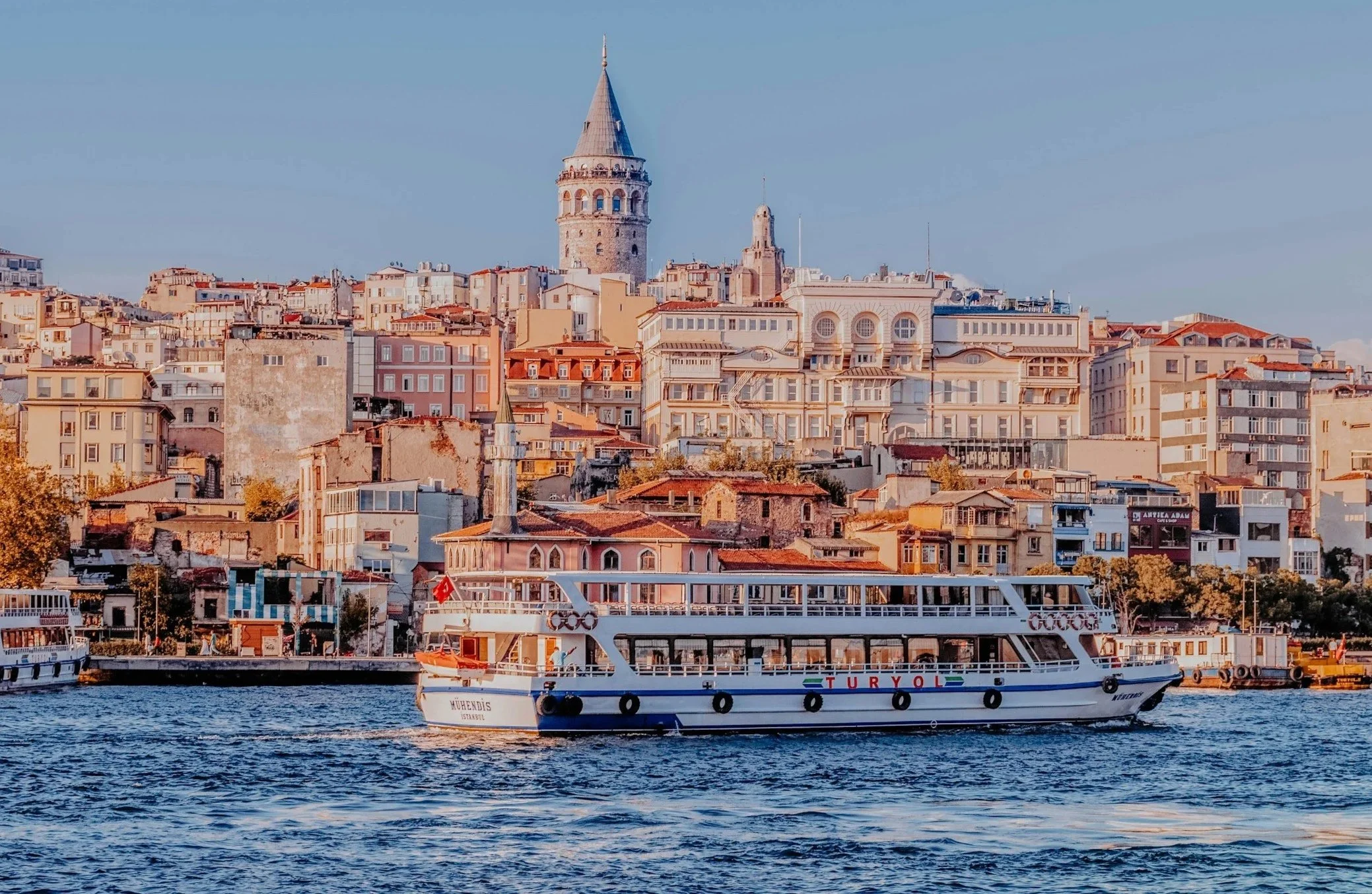
    The tour commences in the early evening at our hotel in Sultanahmet, the historic heart of Istanbul. After gathering for introductions, we embark on an orientation walk taking in the ancient Hippodrome, once the ceremonial centre of Byzantine Constantinople, before returning to the hotel for a talk on Constantinople. A welcome dinner follows at one of the city’s rooftop restaurants. Overnight Istanbul (D)

  • Day 2 | Saturday 9 October
    The Byzantine World
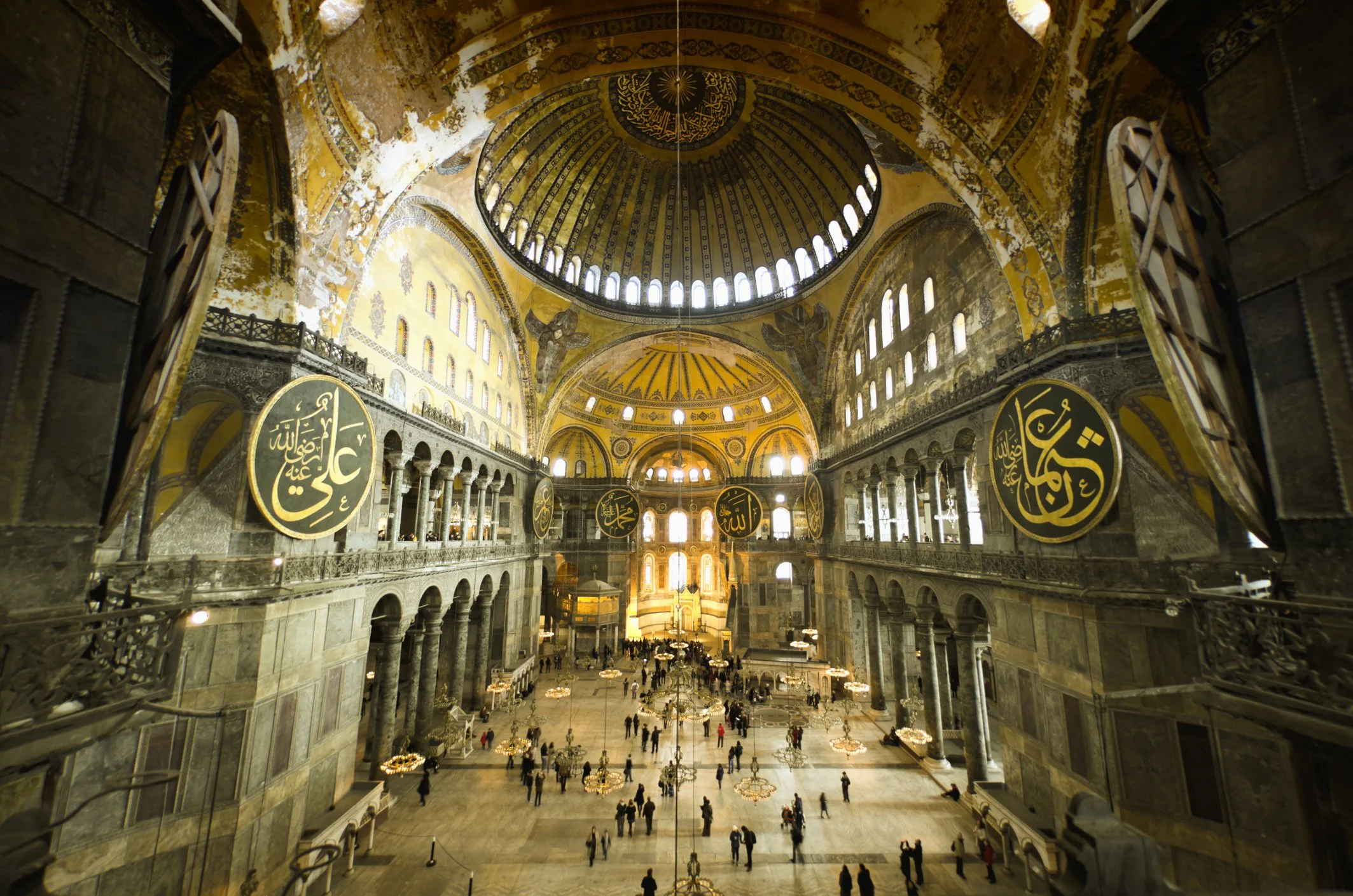
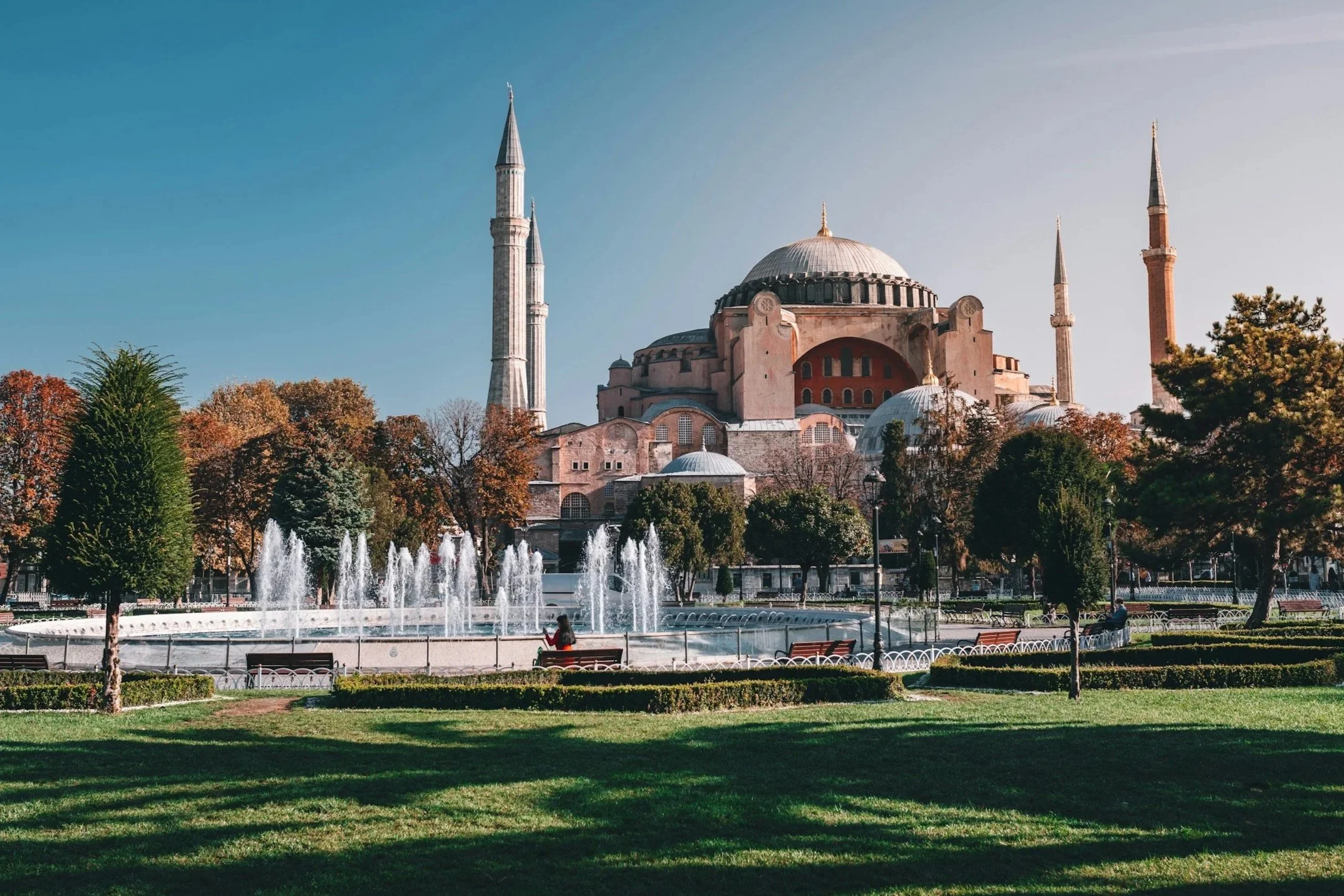
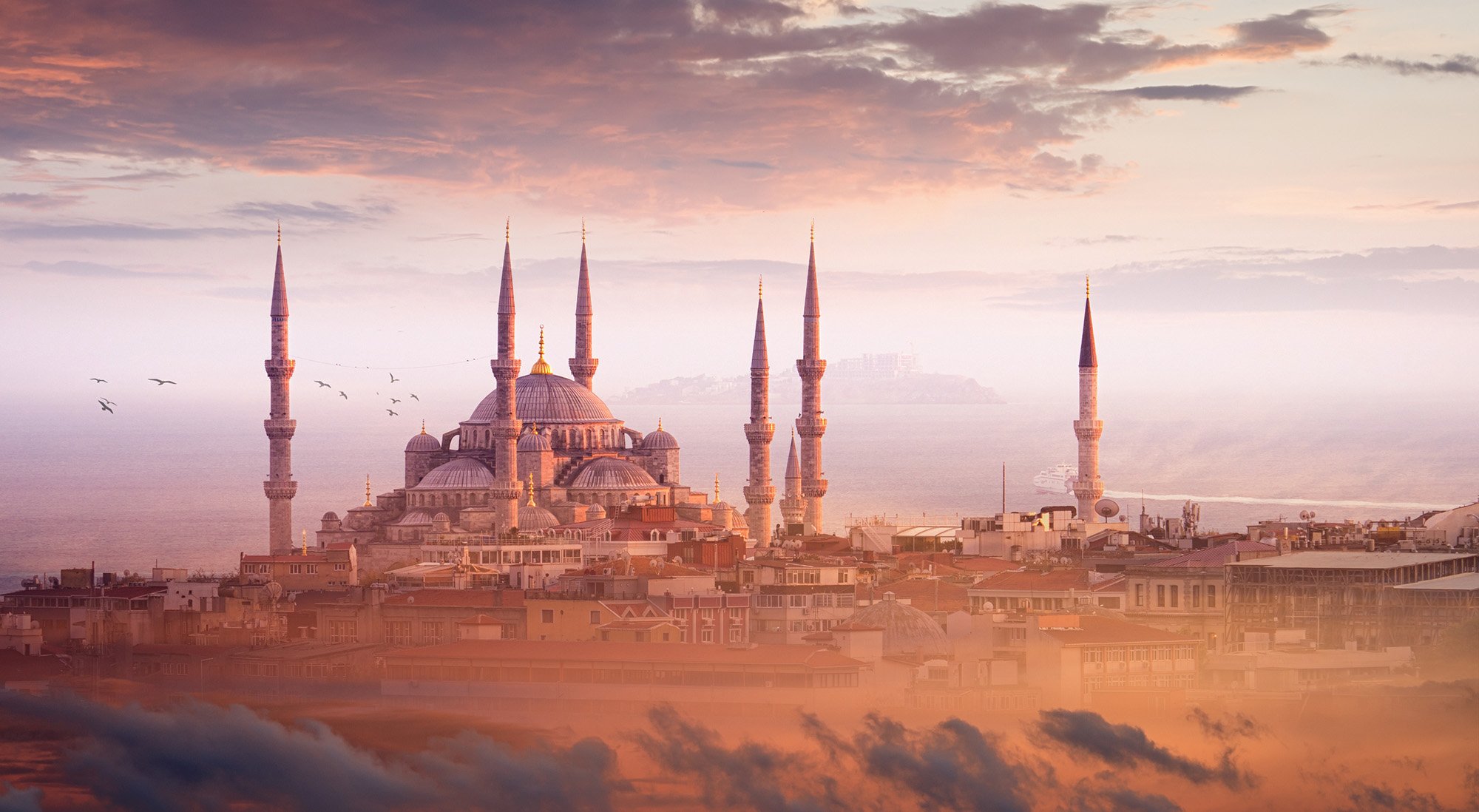
    Byzantium, Constantinople, Istanbul – the city’s successive names trace the layers of empire that have shaped its identity for more than two and a half millennia. A morning talk on the conquest of Constantinople in 1453 sets the scene before we visit the Hagia Sophia. Spanning 1,500 years, the now Grand Mosque was once the world’s largest cathedral and remains one of the city’s most sacred sites. We then descend beneath the streets to the Basilica Cistern, built in the 6th century under Emperor Justinian I, where symmetrical columns, illuminated and reflected in the water, create an otherworldly atmosphere. Lunch follows near the Hippodrome, before the afternoon brings us to the Blue Mosque, among the most recognisable silhouettes on the Istanbul skyline. Within, its great dome soars 43 metres above a sea of more than 20,000 handmade Iznik tiles, their blues and reds washed in the light of 260 windows – a fitting introduction to the imperial Ottoman architecture that awaits us in the days ahead. The remainder of the afternoon is at leisure. Overnight Istanbul (B, L)

  • Day 3 | Sunday 10 October
    The Age of Suleiman ‘The Magnificent’
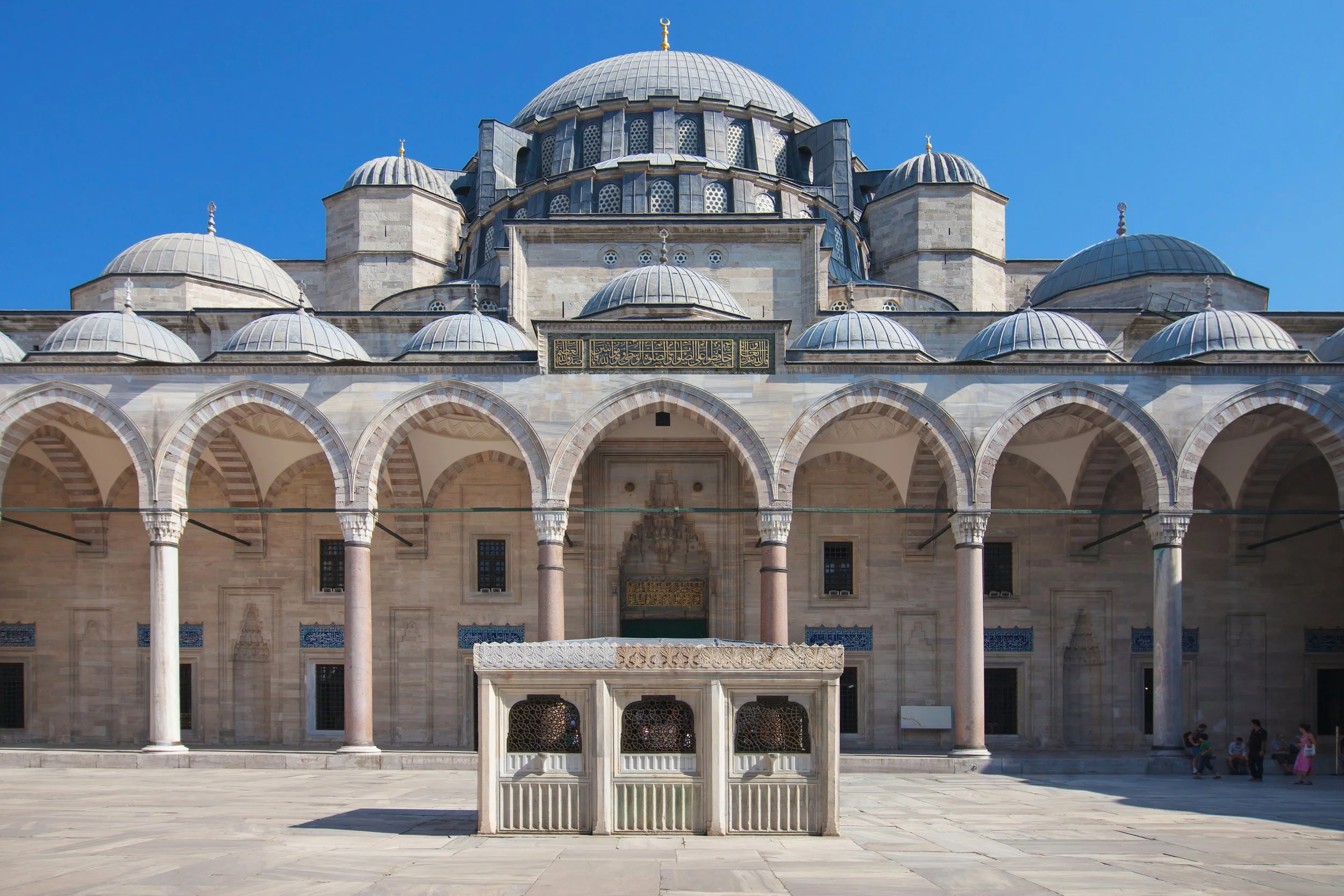
    The 16th century was the peak of Ottoman imperial power, dominated by Suleiman the Magnificent, whose reign combined territorial expansion, legal reform and architectural patronage on a remarkable scale. Yet Suleiman’s golden age rested on the achievement of his great-grandfather, Mehmed the Conqueror, who took Constantinople in 1453 and made it the seat of an empire. Following a talk at the hotel, we trace this dynastic arc, beginning at the Süleymaniye Mosque, whose grand domes and refined interiors include the tiled mausoleums of Suleiman and his beloved queen, Hurrem Sultan (Roxelana). We then travel to the Fatih Mosque, built by Mehmed on the site of the Byzantine Church of the Holy Apostles, and visit the tomb of the Conqueror himself. Our afternoon continues with a visit to the 14th-century Kariye Mosque, the former Chora Church, one of Istanbul’s most important surviving Byzantine structures. To conclude the day, we board a private cruise down the Golden Horn from Balat to Eminönü, with time to visit the Rüstem Pasha Mosque and the adjacent Spice Bazaar. Overnight Istanbul (B)

  • Day 4 | Monday 11 October
    The Ottoman World
    Topkapi Palace, meaning ‘cannon gate’ in Turkish, was the seat of Ottoman power for almost four centuries and remains one of the largest surviving palaces in the world. Begun by Mehmed soon after the conquest, it grew into a symphony of Islamic, European and Ottoman architectural styles arranged across four courtyards and over 400 rooms. We dedicate our morning to an in-depth visit, including the lavishly tiled chambers of the Harem and the Treasury with its dazzling collection of jewels and relics – together offering a fascinating insight into the lives of the Sultans behind the palace walls. After enjoying lunch together, we then visit the Turkish and Islamic Arts Museum, housed in the 15th-century residence of Ibrahim Pasha, Grand Vizier under Suleiman the Magnificent. Overlooking the Hippodrome, the museum holds one of the world’s most important carpet collections, alongside treasures from long-lost Seljuk and Ottoman buildings. The remainder of the afternoon is at leisure. Overnight Istanbul (B)

  • Day 5 | Tuesday 12 October
    Istanbul-Cappadocia – The Seljuk Age
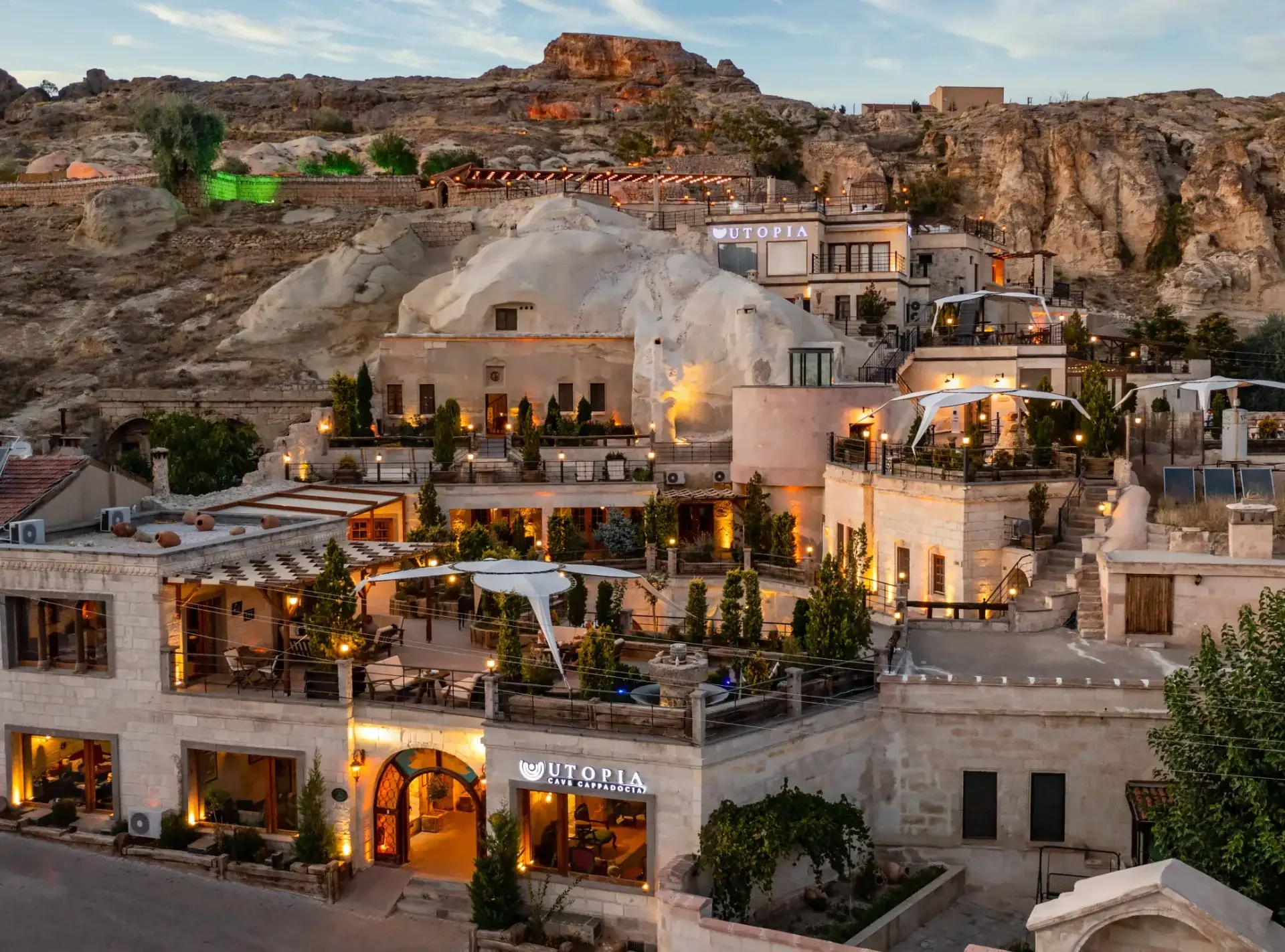
    The Seljuks, a medieval Turko-Persian dynasty, brought Anatolia into the Islamic world centuries before the Ottomans rose, leaving a legacy of mosques, madrasas and caravanserais across the plateau. An early morning flight takes us to Kayseri, once a Seljuk capital, where we visit the Seljuk Civilisation Museum, housed in a 13th-century double madrasa, with exhibits on the Anatolian Middle Ages and the Seljuk Dynasty. After free time for lunch, we continue to the Mahperi Hunat Hatun Mosque Complex. Built in the 13th century by Mahperi Hatun, wife of Sultan Alaeddin Keykubad I, the complex comprises a mosque, madrasa, tomb and bathhouse, and is among the most important examples of Seljuk architecture in Anatolia. We then drive to the town of Ürgüp and our cave hotel, carved into the hillside, with time to freshen up before dinner. Overnight Cappadocia (B, D)

  • Day 6 | Wednesday 13 October
    Sacred Cappadocia
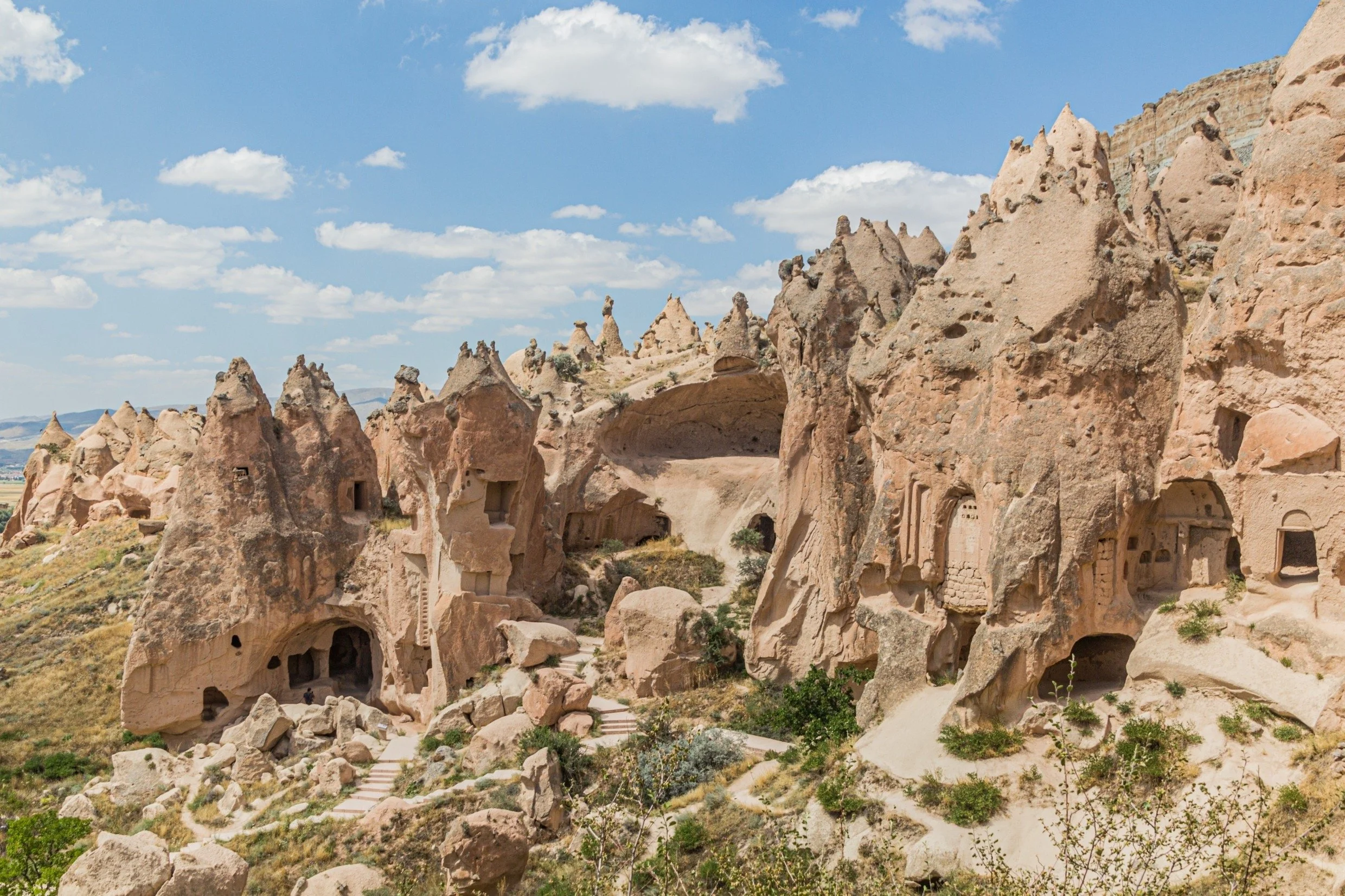
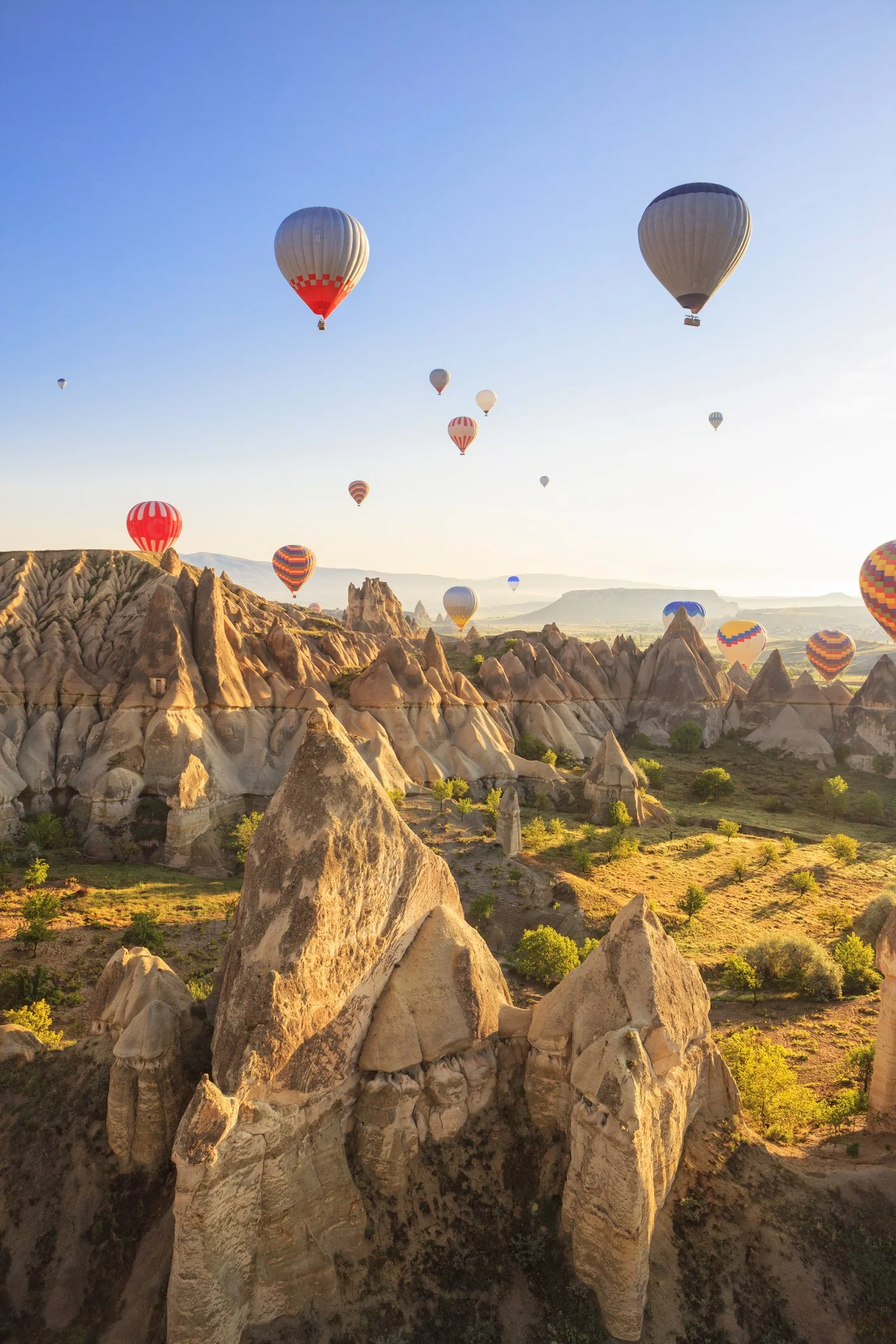
    Cappadocia, meaning “land of fine horses” in ancient Persian, is where nature and history blend harmoniously. Its rugged volcanic terrain features rock formations called fairy chimneys, in which Christians escaping from the dominance of the Roman Empire carved their houses and churches. Today begins with a visit to the Göreme Open Air Museum, which showcases rock-cut churches, cave refectories, and hillside dwellings that reflect the Byzantine golden age. We then visit an authentic tile factory in the nearby town of Avanos, famed for its distinctive pottery and beautifully painted ceramics made from the red clay taken from the local riverbank and produced in the area since the time of the Hittites, around 2000 BC. In the nearby historic village of Mustafa Pasa, we pause for a relaxed lunch, before returning to our cave hotel. The remainder of the afternoon and evening are at leisure. Overnight Cappadocia (B, L)

  • Day 7 | Thursday 14 October
    Cappadocian Culture
    Zelve, one of Cappadocia’s earliest monastic settlements, thrived during the Byzantine era; its cave churches date from the 500s, and during the Ottoman period the valley became a remarkable example of religious harmony, with churches and a rare rock-cut mosque within the same community.
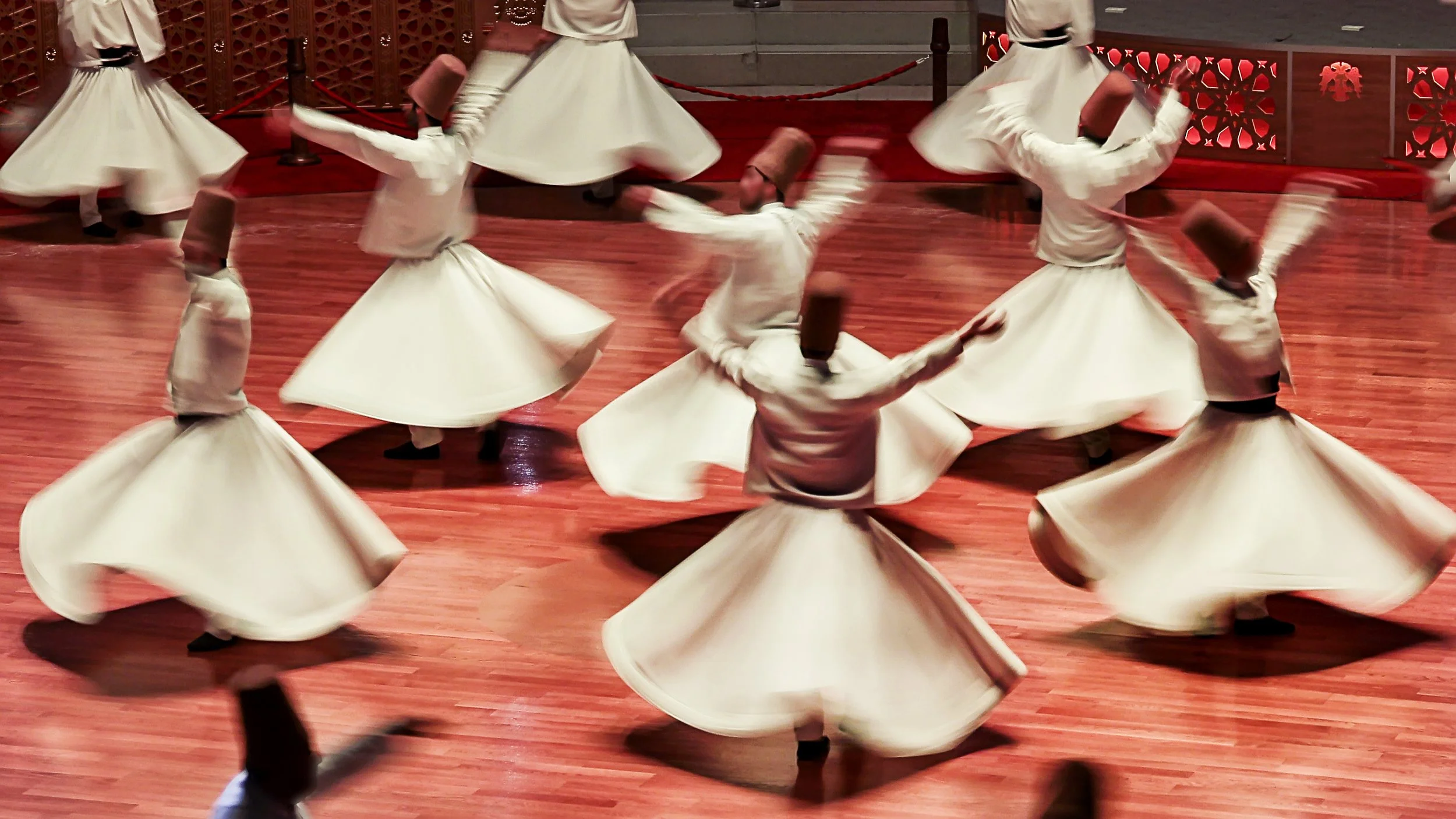
    We begin the day by exploring the Zelve Open Air Museum before proceeding to the small village of Ayvalı and the traditional stone-arch house of the Cappadocia Home Cooking School. Here we enjoy a leisurely cooking class and a glimpse of village life – taking ingredients from the garden, we prepare regional dishes before sitting down together to enjoy the fruits of our labour. In the evening we attend Saruhan Kervansaray, where, in its peaceful 13th-century setting, we observe the sacred ceremony of the Whirling Dervishes, performed by members of the Sufi Islamic tradition. Dinner will follow back at our hotel. Overnight Cappadocia (B, L, D)

  • Day 8 | Friday 15 October
    Tracing the Silk Road
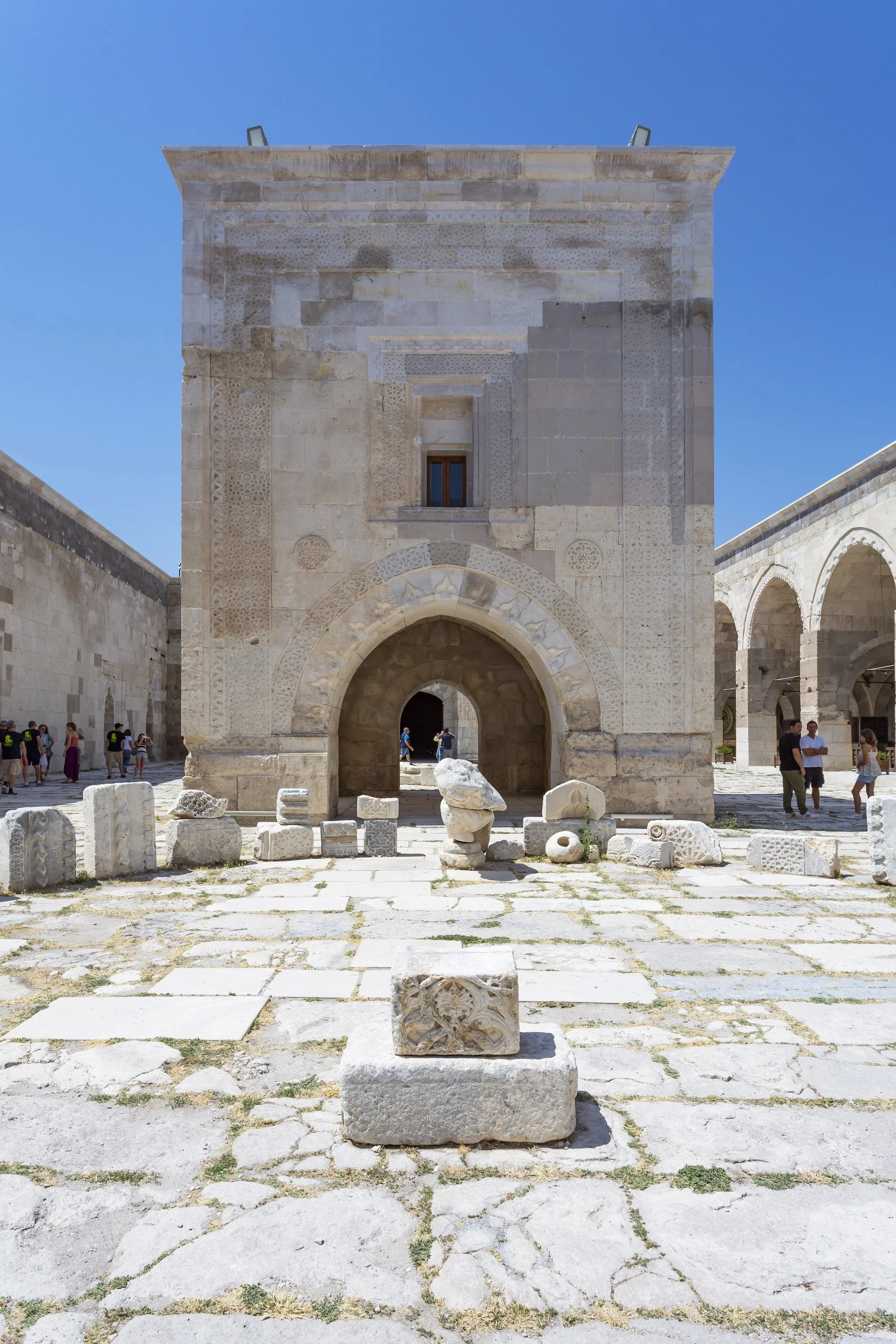
    Stretching from China to the Mediterranean, the Silk Road was for centuries the great artery of exchange between East and West – carrying not only silks and spices but religion, philosophy and ideas. We trace its passage across Anatolia today as we travel from Cappadocia to Konya, stopping first at the Sultanhani Kervansaray, the largest medieval caravanserai in Türkiye. Built in 1229 by Seljuk Sultan Alaeddin Keykubad I, this fortress-like complex offered rest and safety to merchants on the road. Entering through its monumental marble portal, carved with intricate geometric patterns, we explore the open courtyard, covered hall, stables, kitchens and mosque. After a relaxed lunch at a nearby restaurant, we continue to Konya. It was here that Mevlana Celaleddin-i Rumi – the renowned Persian Sufi mystic and poet – taught, died and was laid to rest, and we end our day at his tomb, still a place of pilgrimage for the Mevlevi Order he founded. Dinner this evening is in our hotel. Overnight Konya (B, L, D)

  • Day 9 | Saturday 16 October
    The Anatolian Interior
    Afyonkarahisar – the ‘opium black fortress’ – is distinguished by its dramatic rock citadel, rising sheer above the plain, which has drawn settlement to its base since Hittite times. Travelling across the Anatolian plateau this morning, we arrive in Afyonkarahisar for lunch at a local restaurant before visiting the Grand Mosque. Built in the 13th century during the Seljuk era, the mosque is renowned for its forest of carved timber columns and understated interior, a stark contrast to the later Ottoman style. We then check into our thermal hotel on the outskirts of Afyonkarahisar and gather for a lecture on Türkiye’s early history, exploring Anatolia’s role as a crossroads of civilisations and setting the broader context for the days ahead. Overnight Afyonkarahisar (B, L)

  • Day 10 | Sunday 17 October
    Coastal Türkiye
    Türkiye’s coastline has been a cradle of civilisations for millennia, and numerous cultures, from the Bronze Age to the Romans and beyond, have left their mark on the region. En route to the coastal resort town of Kuşadası – our base for the next three nights – we stop at Aphrodisias, a Roman city named for the Greek goddess of love. In the company of a local archaeologist, we explore the ancient site, with time to marvel at the civil architecture for which the Romans are renowned – baths, an agora, an odeon, a fine marble theatre, and a stadium seating close to 30,000 spectators, the best preserved of the ancient world. There is also time to visit the onsite museum, filled with exquisite statuary unearthed across the site – Aphrodisias was home to one of antiquity’s most celebrated schools of sculpture. In the afternoon, we will continue to Kuşadası, where we will enjoy dinner at the hotel. Overnight Kuşadası (B, L, D)

  • Day 11 | Monday 18 October
    Selçuk and Ephesus
    Selçuk’s history is shaped by the Greeks, Byzantines and the Seljuk Turks, from whom it takes its name. We begin our day here at the Basilica of St John, built in the 6th century by Emperor Justinian over the presumed burial place of St John the Apostle, before visiting the town’s archaeological museum, home to the famous statue of Artemis found at Ephesus. A short drive then brings us to the workshop of a master dyer and carpet weaver, where we enjoy a traditional lunch prepared by our hosts before watching skilled artisans at work. In the softer light of late afternoon, we conclude the day at Ephesus itself, one of the world’s largest and best-preserved ancient Roman cities, with time to stroll the marble streets and admire the magnificent two-storey facade of the Library of Celsus and the great open-air theatre, where St Paul once preached to the Ephesians. Overnight Kuşadası (B, L)

  • Day 12 | Tuesday 19 October
    Miletus and Didyma
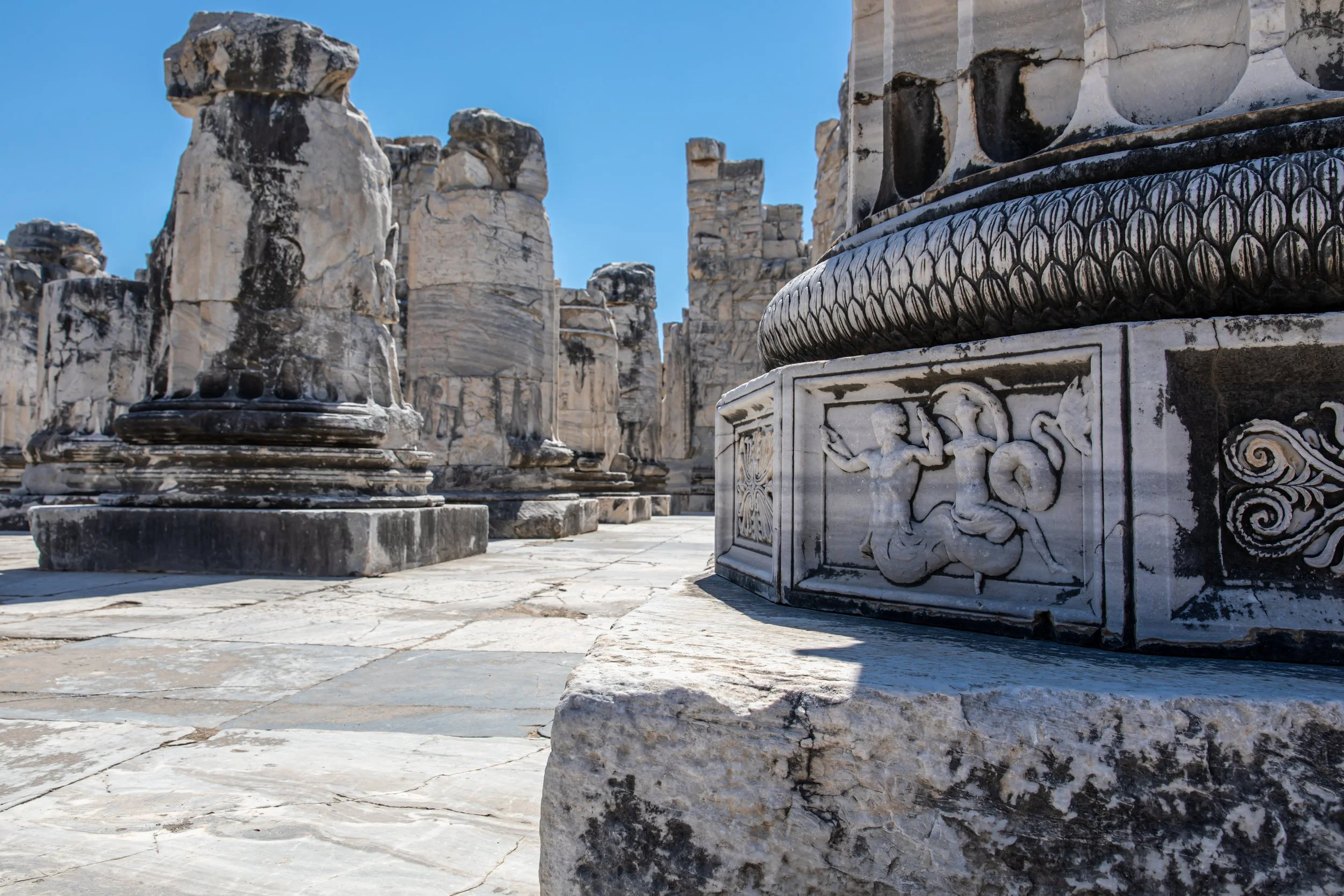
    Miletus was one of the most important cities of the ancient Greek world – a centre of trade, colonisation and intellectual life. On arrival here, we tour the extensive archaeological site, where broad streets, public buildings and the monumental theatre convey the scale and ambition of the city in its Hellenistic and Roman periods. Following lunch overlooking the marina at Didim, we then visit Didyma, home to the Sanctuary of Apollo and one of the most influential oracle centres of the ancient world, second only to Delphi. Unlike most Greek temples, Didyma was built around an inner courtyard open to the sky, concealing a sacred spring from which the priestess drew Apollo’s prophecies, delivered to pilgrims waiting at the temple’s towering threshold. The temple, never finished despite five centuries of labour, was intended to bring glory to Miletus, to which it was joined by a sacred processional way. We return to the hotel in the late afternoon. Overnight Kuşadası (B, L)

  • Day 13 | Wednesday 20 October
    İzmir
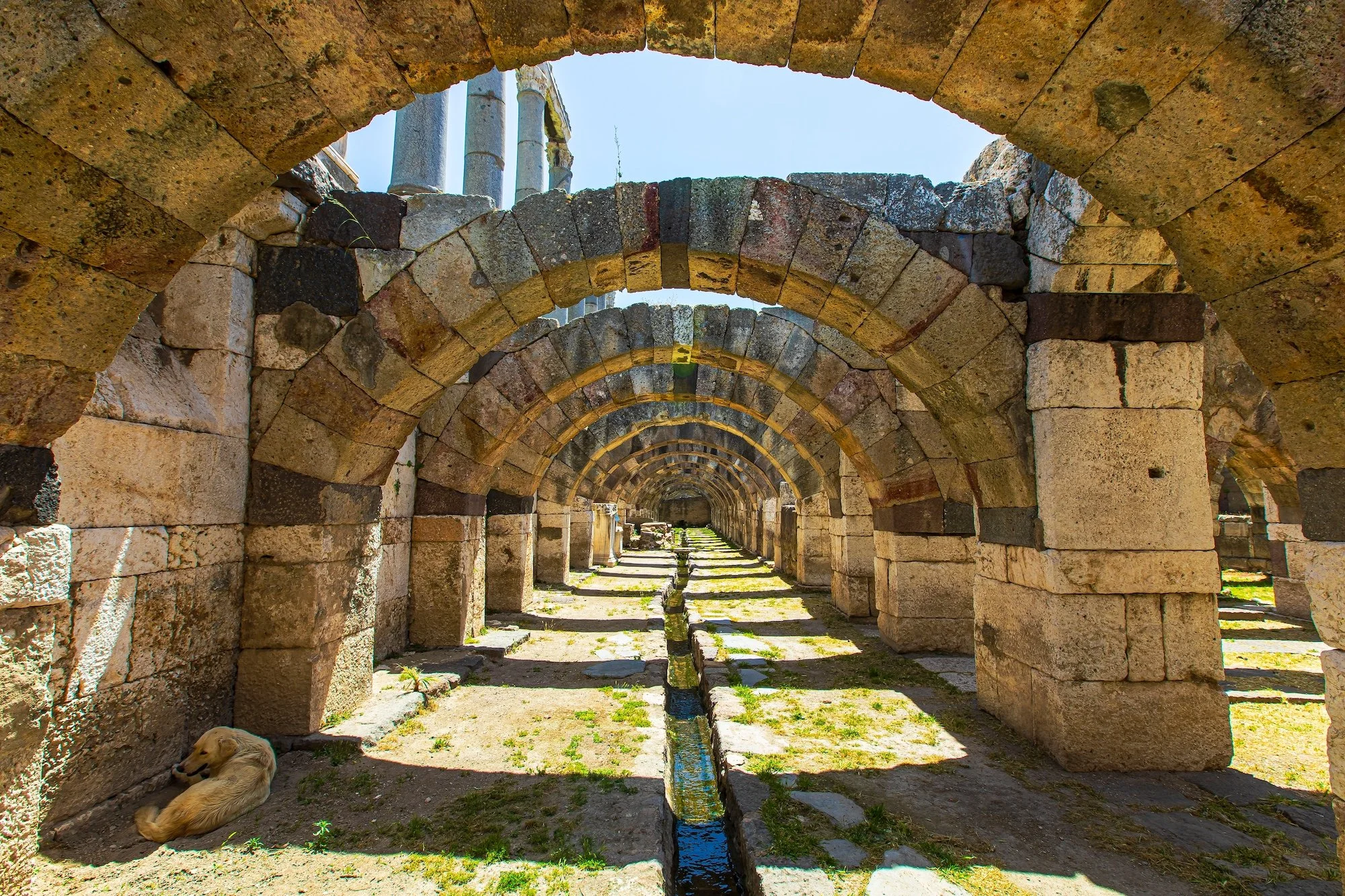
    Few cities of the Aegean have lived as many lives as İzmir. As ancient Smyrna it claimed Homer as a son; under the Ottomans it became the empire’s window on the West, a polyglot port where Turkish, Greek, Armenian and European merchants traded side by side – the city the Ottomans called ‘Infidel İzmir’ for its cosmopolitan character. We continue our journey up the coastline today, first stopping at the Arkas collection in Bornova, where rare Anatolian carpets of the Classical period hang alongside Ottoman palace carpets and Northern European tapestries – a fitting coda to the weaving traditions we encountered in Selçuk. We then continue to İzmir, where, after free time in the centre, we step back into the city’s deepest past at the Agora of ancient Smyrna. Rebuilt after the age of Alexander the Great, its porticoed courtyard once thronged with merchants, magistrates and orators, and its vaulted galleries below survive astonishingly intact. A short stroll then brings us to our hotel via the magnificent 16th-century Hisar Mosque. Overnight İzmir (B)

  • Day 14 | Thursday 21 October
    Pergamon
    Few sights on the Aegean coast rival the first glimpse of Pergamon, its acropolis crowning a mountain nearly 300 metres above the plain. Capital of the Attalid kingdom, this was one of the great cities of the Hellenistic world, a centre of art and learning that rivalled Alexandria and Antioch. Departing İzmir today, we travel to Bergama and ascend to the summit, where the foundations of the famed Altar of Zeus remain, before its controversial removal to Museum Island in Berlin, alongside temples, palaces and a theatre cut so steeply into the hillside that it is the most vertiginous of the ancient world. Beneath the citadel lay the Asclepion, a celebrated sanctuary of healing where the great physician Galen once practised. After lunch together in Bergama, we continue north to Çanakkale, where, after checking in to our hotel, the evening is free to stroll the waterfront boulevard overlooking the Dardanelles Strait. Overnight Çanakkale (B, L)

  • Day 15 | Friday 22 October
    Troy
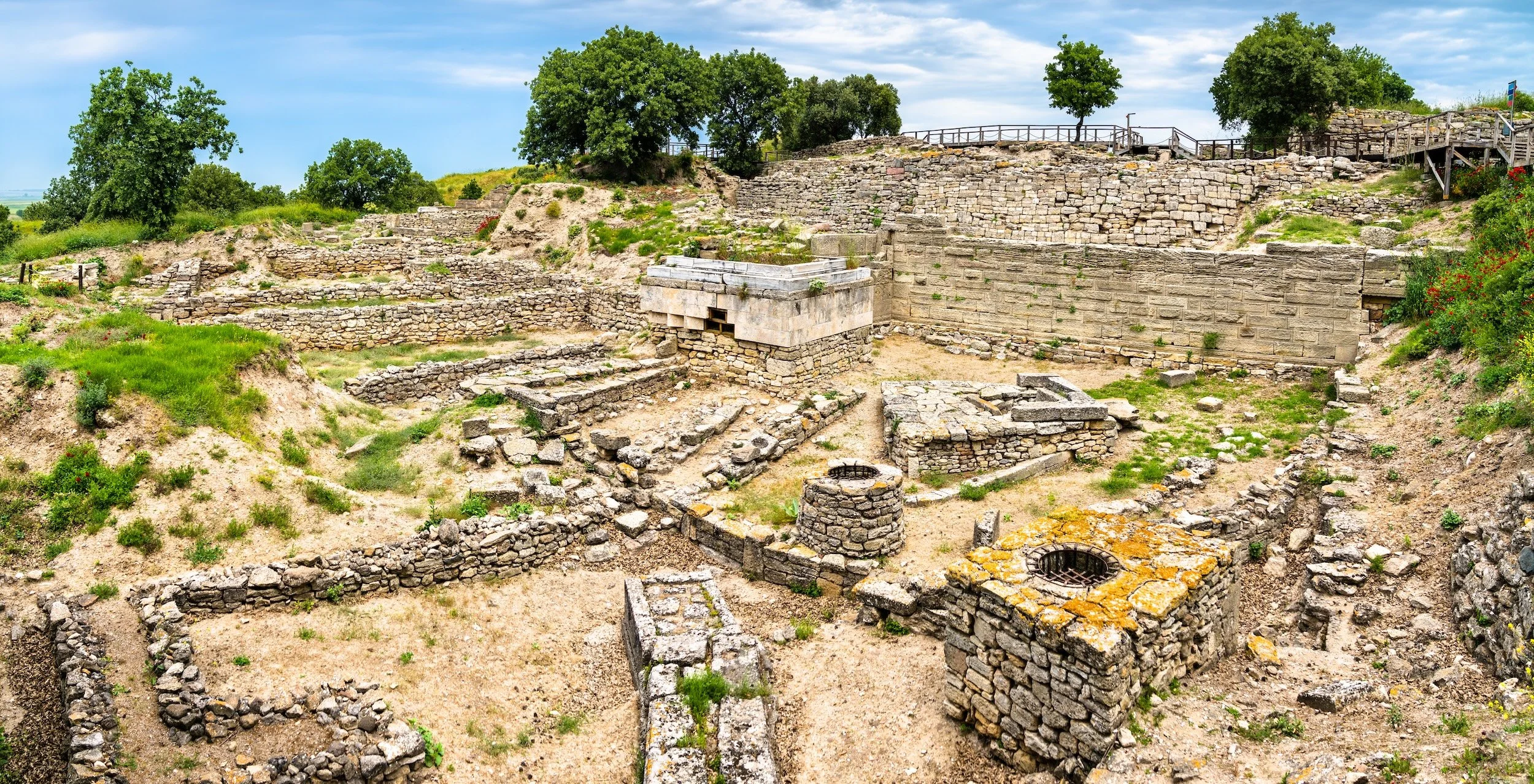
    Spanning 4,000 years of history and immortalised by Homer in the Iliad, with its story of love, betrayal and a 10-year war, Troy is one of the most famous archaeological sites in the world. First excavated by Heinrich Schliemann in the late 19th century, its extensive remains are the most significant demonstration of the first contact between the civilisations of Anatolia and the Mediterranean world. Following a talk in our hotel, we dedicate the rest of the morning to the site itself and its nine distinct archaeological layers, each representing a successive period of settlement and destruction – among them the city identified as the setting of the legendary Trojan War. After a break for lunch, our afternoon is spent exploring the impressive Troy Museum, clad in rust-coloured weathering steel and sunk to a depth equal to that of the excavations, creating the impression that the building itself was unearthed from the site. On return to the hotel, there is time to freshen up before dinner at a local restaurant. Overnight Çanakkale (B, D)

  • Day 16 | Saturday 23 October
    Gallipoli
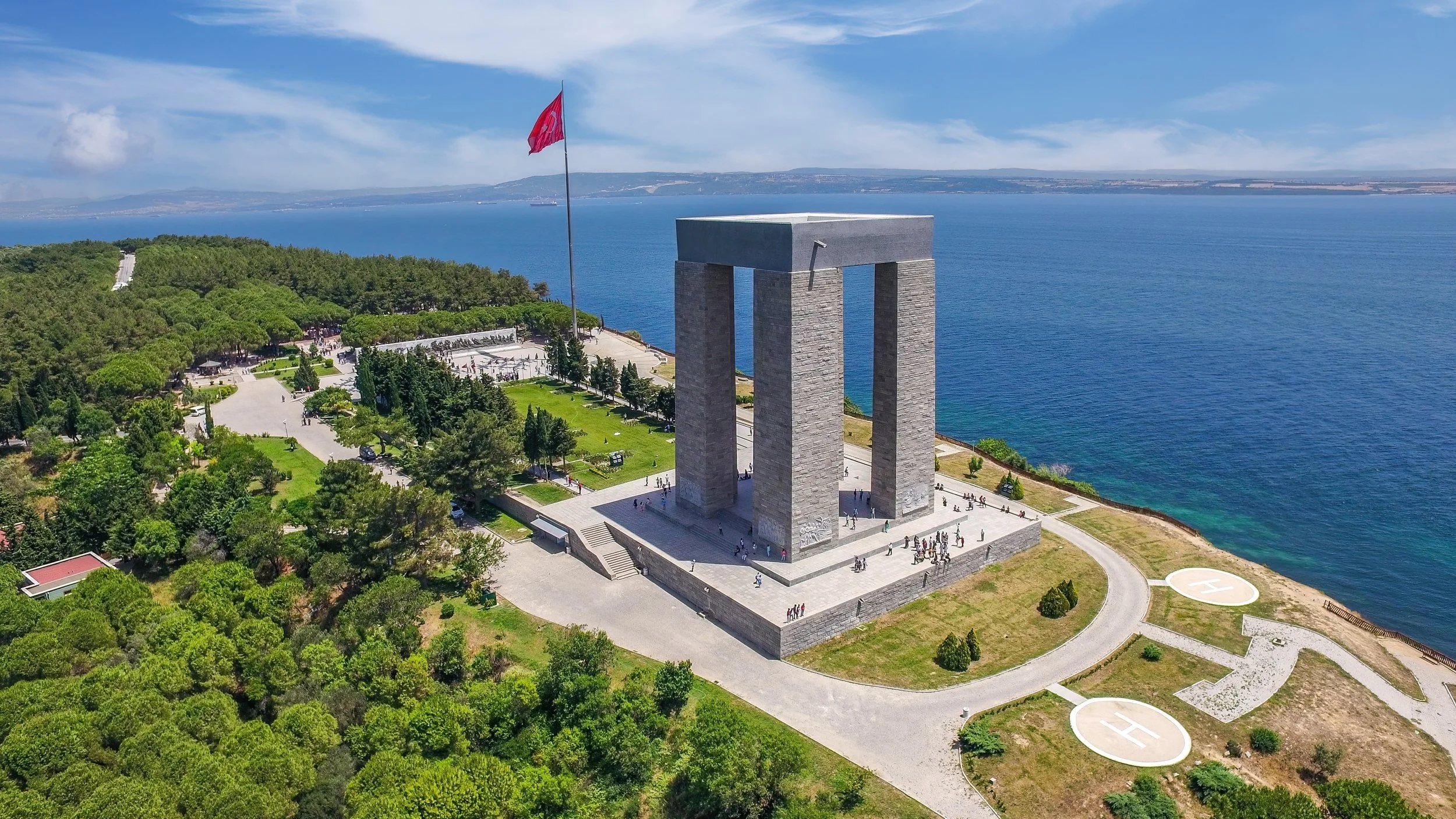
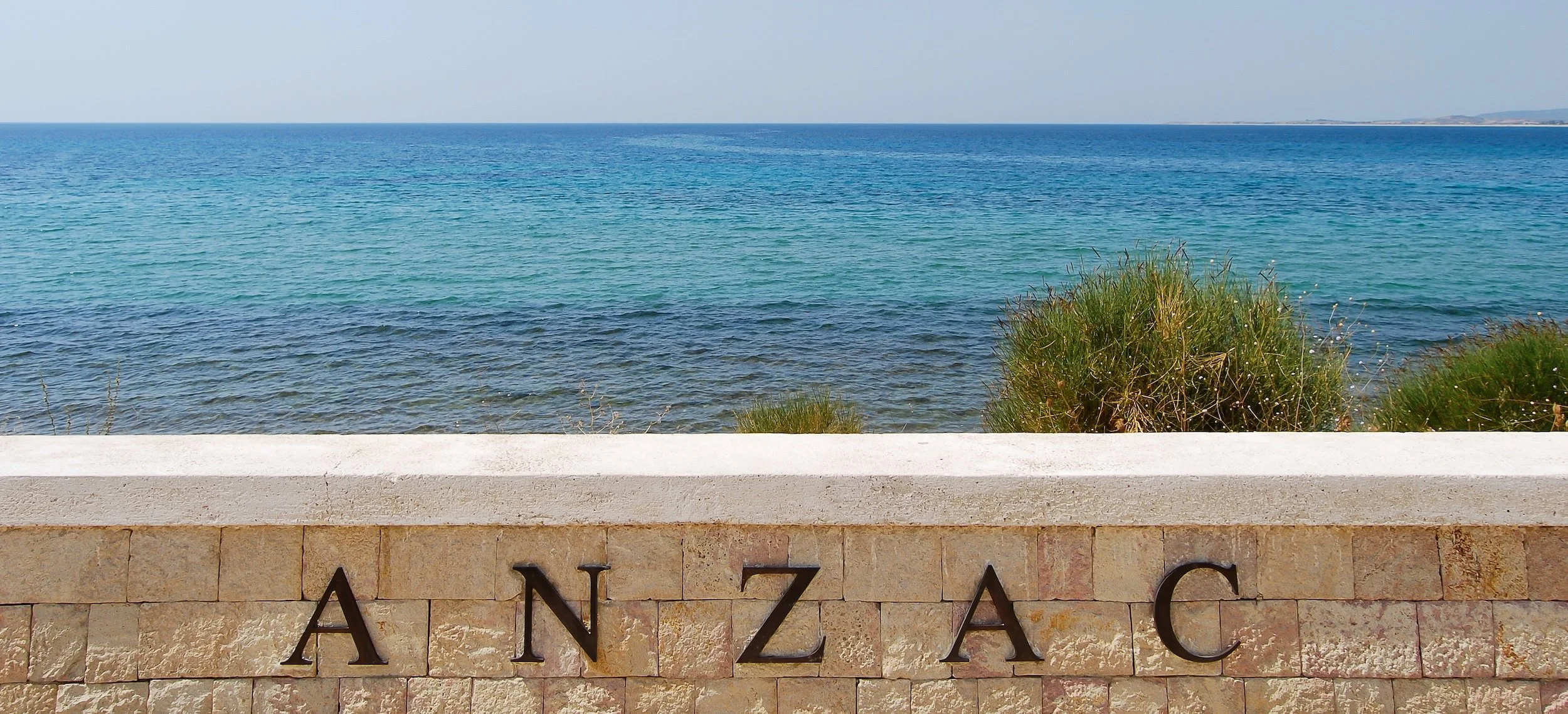
    The Gallipoli Peninsula holds a singular place in Australian memory, and the day is devoted to exploring it in the company of an expert on the campaign and World War I. Driving up along the Dardanelles, the strategically vital strait connecting the Mediterranean with the Sea of Marmara and the Black Sea, we visit the sites where the ANZAC story unfolded: Anzac Cove, where Australian soldiers landed on April 25, 1915, and the Lone Pine Memorial and Cemetery, which commemorates more than 4,900 Australian and New Zealand servicemen. At the Kabatepe Visitors Centre, exhibits and artefacts further trace the course of the campaign. After a moving morning, we pause for a picnic lunch at Eceabat on the shore of the Dardanelles, returning to Çanakkale in the late afternoon. Overnight Çanakkale (B, Picnic Lunch)

  • Day 17 | Sunday 24 October
    Istanbul
    Departing Çanakkale this morning, we journey back to Istanbul, checking in to our hotel on arrival. The afternoon is at leisure in Sultanahmet, where our tour began – time, perhaps, for a final stroll past the Hippodrome or a last browse through the stalls of the Arasta Bazaar – before we reconvene for our farewell dinner at a local restaurant. Overnight Istanbul (B, D)

  • Day 18 | Monday 25 October
    Depart Istanbul
    The tour concludes after breakfast this morning. A group transfer will be arranged to Istanbul airport. (B)

Hotels have been selected principally for their central location. All hotels are excellent four-star standard.

Tour Accommodation

tour booking

$16,980 AUD per person, twin share (land content only)
$2,890 AUD supplement for sole use of a hotel room

A $2,000 deposit is required per person to confirm your booking on tour. This deposit is non-refundable.

Hold a Place

Still deciding? We are happy to hold a tentative place for 7 days while you make your final arrangements.

Book Online

To secure your place(s) on tour, book online below with “Athena”, our virtual tour consultant.

DOWNLOAD FORM

Download a printable booking form. You can also complete the form on screen and submit via email.

your tour consultant

The consultant for this tour is Jamal Fairbrother. For further information or to discuss the tour, please call 9235 0023 (Sydney) or 1800 639 699 (outside Sydney) or email jamal@academytravel.com.au

have you thought about?

Academy Travel is more than just a tour operator. We are also a full-service travel agency who can assist you with all aspects of your travel, including flights, transfers, pre-tour arrival, additional travel and comprehensive travel insurance.

can’t make this departure?

If these dates don't work for you, register to hear about the next tour.