UMBRIA & SOUTHERN TUSCANY

GEMS OF CENTRAL ITALY

Take the road less travelled through some of Italy’s most historic towns, and enjoy a wealth of sites and traditions.

TOUR STATUS

Places Available | Maximum 16

TOUR DATES

Sep 18 - Oct 1, 2027 | 14 Days

TOUR LEADER

Neil Moore | View Bio

snapshot

OVERVIEW

Umbria and southern Tuscany preserve some of central Italy’s richest layers of history, art and architecture. Across hill towns, churches and archaeological sites, the region reveals a long continuum from Etruscan and Roman settlement through medieval religious and political power to the artistic achievements of the Renaissance.

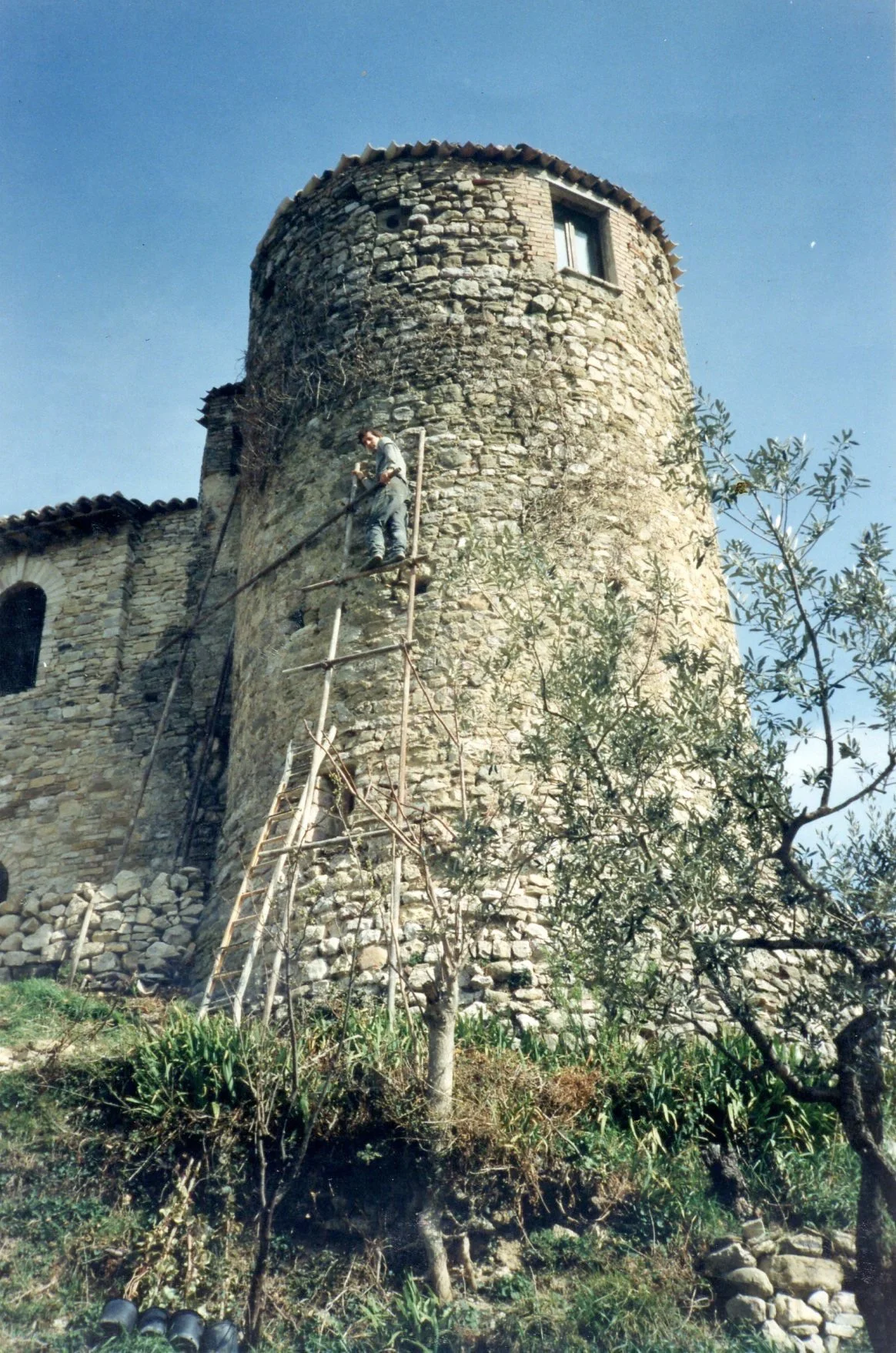
Led by artist Neil Moore, who has lived in the region for more than 30 years in his restored 13th-century Umbrian castle tower, this 14-day tour traces that development through Spoleto, Perugia, Cortona and Pienza, with excursions to Assisi, Orvieto, Arezzo, Montalcino and the upper Tiber Valley. Along the way, we encounter Roman roads and towns, Franciscan churches, Gothic cathedrals and major works by Piero della Francesca, Benozzo Gozzoli, Perugino, Pinturicchio, Signorelli and others who shaped the art of central Italy.

Extended stays in each base allow time to understand the character of the towns and their surrounding landscapes, complemented by local food, wine and visits that connect artistic traditions with the region’s continuing rural life.

tour highlights

From Etruscan and Roman sites to Renaissance masterpieces and the landscapes of the Val d’Orcia

Neil Moore

your expert tour leader

Neil was born in Oxford, grew up in Melbourne and Canberra and has an Honours degree in Fine Arts from the University of Sydney, where he also taught art history in the Power Department of Fine Arts. Since 1988, Neil has lived in an Umbrian hill town, restoring a medieval ruin into a family home and focusing on his work as a painter. For over 20 years, he has designed and led small group cultural tours to Italy, and he brings this extraordinary wealth of experience as a tour leader to his work. Pictured as Neil’s profile photo is his latest self portrait.

Read full bio >

Accompanied by an Experienced Tour Manager

Alongside your expert tour leader, an experienced tour manager will accompany for the entirety of the tour. They oversee logistics, ensure your comfort and safety, and provide friendly support – whether offering tips for free time, sharing a chat over dinner, or giving you space to relax.

tour ITINERARY

Spoleto (3 nights), Perugia (4 nights), Cortona (3 nights), Pienza (3 nights)

Included meals are shown with the letters B, L and D

  • Day 1 | Saturday 18 September
    Arrival in Spoleto

    Our exploration of central Italy begins in Umbria, a region where Etruscan, Roman, medieval and Renaissance histories remain unusually visible within a compact landscape. After meeting at Rome Fiumicino Airport in the early afternoon, we travel north through Lazio and into Umbria, arriving in Spoleto in the late afternoon. Long positioned on important routes crossing the central Italian peninsula, Spoleto provides an ideal starting point for the tour, with our hotel located just at the base of the historic centre. After time to settle in, we gather for a welcome drink before dinner together at a local restaurant. Overnight Spoleto (D)

  • Day 2 | Sunday 19 September
    Spoleto

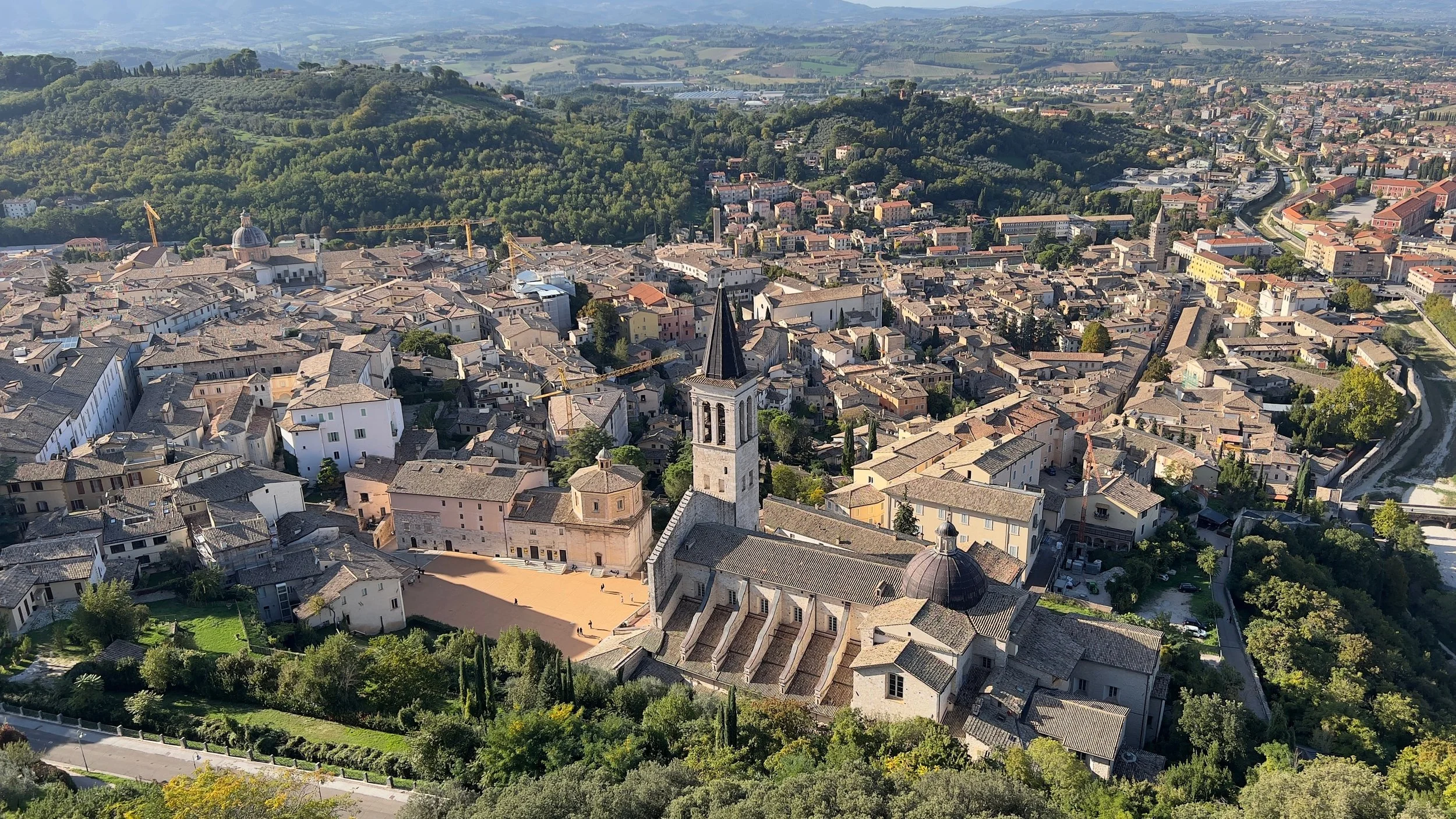
    Set against the slopes of the Apennines at the southern entrance to the Vale of Umbria, this strategically positioned town developed from an ancient settlement into a Roman municipium and later the capital of an important Lombard duchy. Successive periods remain visible throughout its historic centre, where Roman remains, medieval churches and later palaces reveal the town’s long history. Following a morning talk in the hotel, we set out on a walking tour to trace these layers, including the remains of a Roman house and the magnificent Duomo. Inside, Filippo Lippi’s Life and Death of the Virgin fresco cycle, completed in 1469, was the artist’s final major work and remains one of the Cathedral’s great treasures. In the afternoon, we then make our way to the nearby hamlet of Colle del Marchese, once a fortified settlement in the orbit of medieval Spoleto. Here we are welcomed into our Tour Leader’s home – a restored 13th-century castle tower where he has lived for more than 30 years. Neil takes us through the village, the restoration of the tower and his working studio before we conclude with aperitivi on the terrace overlooking the surrounding valley. On return to Spoleto, the evening is at leisure. Overnight Spoleto (B)

  • Day 3 | Monday 20 September
    Montefalco & Spello
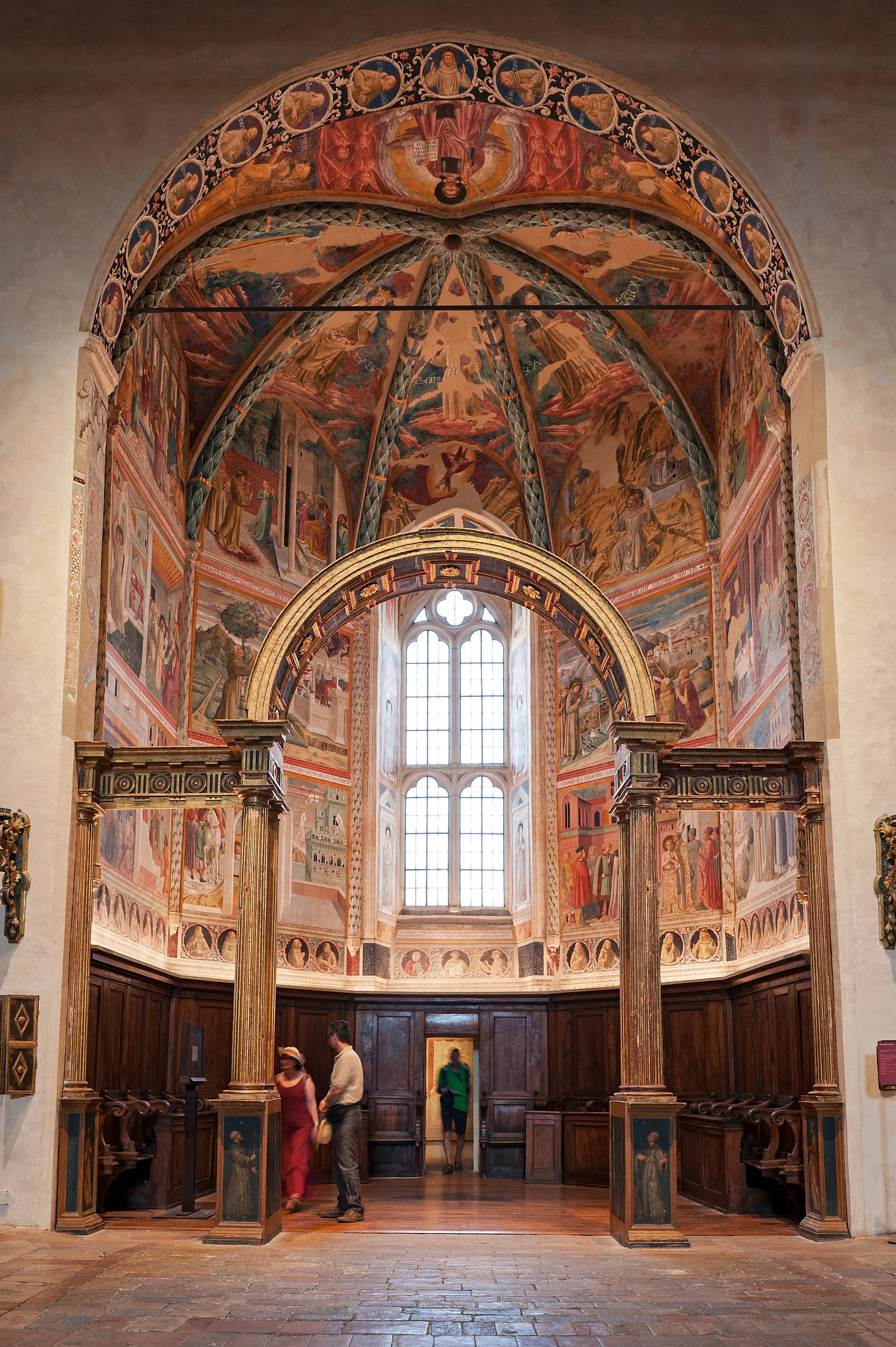
    The prosperous hill towns of the Vale of Umbria became important centres of religious patronage during the later Middle Ages and Renaissance, commissioning artists whose work connected local Franciscan communities with the wider developments transforming Italian painting. Our first example today is Montefalco, a compact walled town set above the surrounding vineyards and olive groves, where this close relationship between faith, identity and art is especially clear. At the former Church of San Francesco, now part of the Museo Civico, we view Benozzo Gozzoli’s 1452 fresco cycle depicting the life of Saint Francis. Across 12 scenes, episodes from the Saint’s life unfold against detailed townscapes, churches, cultivated hills and Umbrian landscapes, offering a vivid record of the everyday world of 15th-century central Italy. Lunch follows in the Piazza del Comune, the heart of Montefalco’s historic centre, before we cross to nearby Spello. Here, the theme of religious patronage continues at Santa Maria Maggiore, where the Baglioni Chapel was frescoed by Pinturicchio in 1500 for a member of the powerful Baglioni family of Perugia. Across its walls, scenes from the lives of the Virgin and Christ unfold across expansive Umbrian landscapes in the refined style for which Pinturicchio became known. We then return to Spoleto for an evening at leisure. Overnight Spoleto (B, L)

  • Day 4 | Tuesday 21 September
    Ancient Umbria & The Via Flaminia

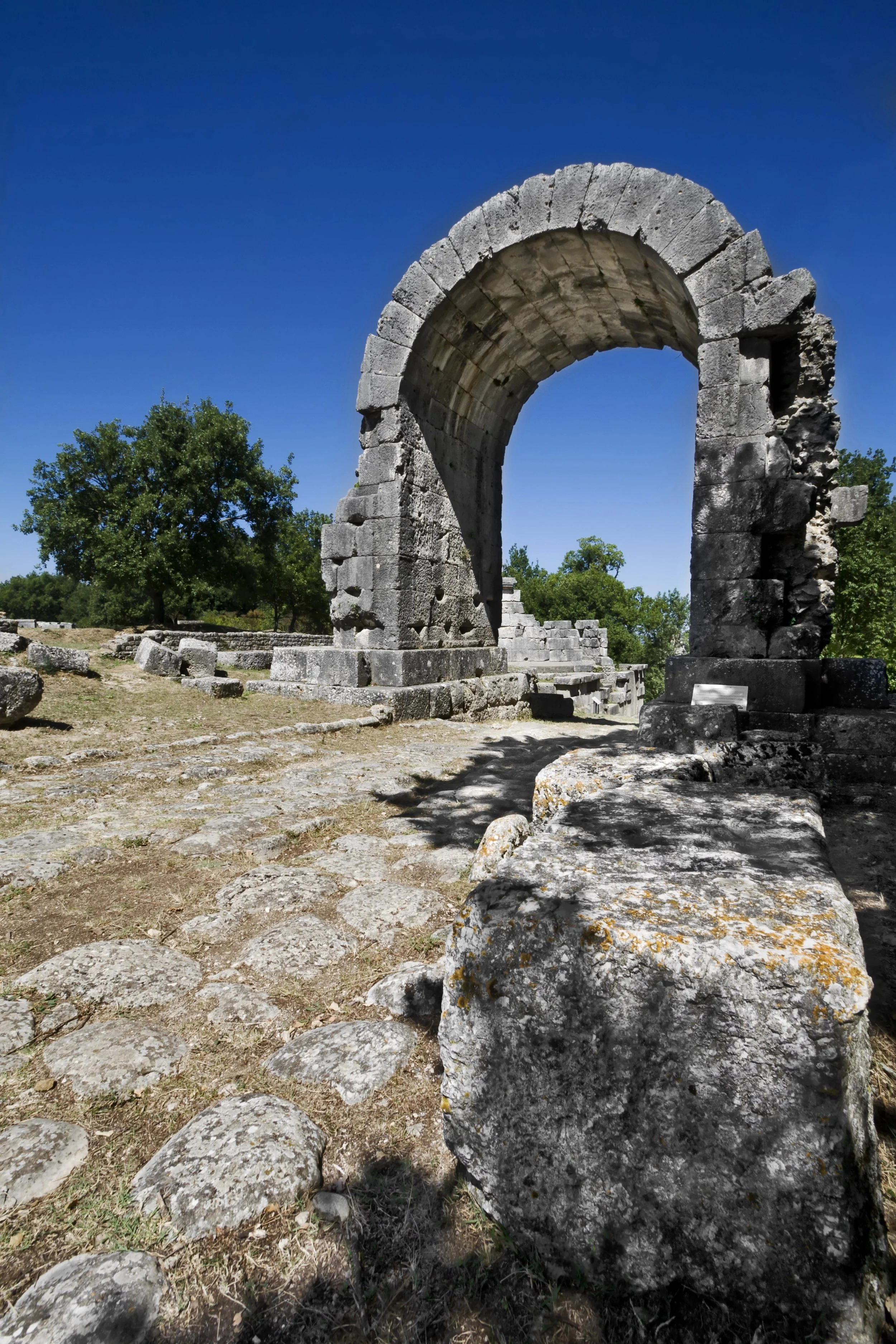
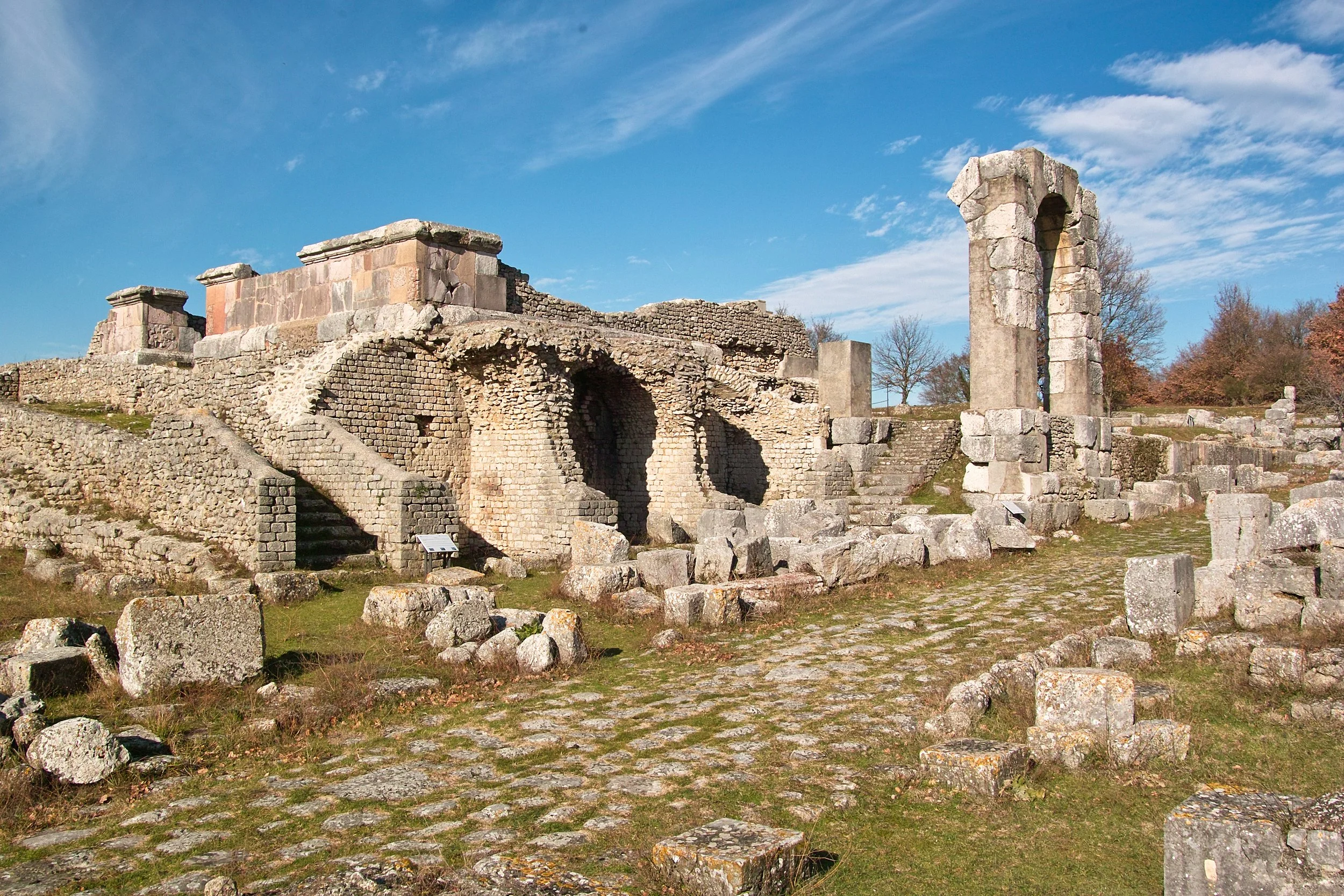
    Roman expansion into central Italy was shaped not only by conquest but also by the roads and towns that followed. Built in the 3rd century BCE, the Via Flaminia linked Rome with the Adriatic and became one of the principal routes through Umbria, encouraging the growth of settlements along its course. Leaving Spoleto behind, our first stop today is San Pietro extra Moenia, just outside the old city walls, before continuing west to Carsulae. Established beside the Via Flaminia, the town prospered under Roman rule and was later abandoned, leaving an unusually legible archaeological landscape. On arrival, we examine the forum, basilica, theatre and amphitheatre, together with the monumental Arch of San Damiano through which the ancient road itself once passed. From here, we continue to the nearby comune of San Gemini for lunch together before travelling north to Perugia, where we settle into our hotel for the next four nights. Overnight Perugia (B, L)

  • Day 5 | Wednesday 22 September
    Perugia

    Rising above the Tiber valley, the Umbrian capital preserves an unusually rich sequence of historical layers. Etruscan foundations survive beneath a city shaped by the power of its medieval commune, later papal rule and the wealth of guilds and patrons who supported one of central Italy’s most important schools of Renaissance painting. Our morning walking tour traces these different periods, beginning with the subterranean streets preserved beneath the Rocca Paolina. Built for Pope Paul III in the 16th century, the fortress was imposed upon part of the medieval city and became a powerful symbol of papal control. We then continue to the Collegio del Cambio, headquarters of Perugia’s influential moneychangers’ guild, where Perugino decorated the audience hall with an ambitious fresco cycle combining Christian subjects with figures drawn from classical history and philosophy. Our final stop is the Galleria Nazionale dell’Umbria, where further works by Perugino are seen alongside paintings by Pinturicchio, Benozzo Gozzoli, Beato Angelico and Piero della Francesca. We then break for lunch before turning back to the city’s earliest foundations with a visit to the Etruscan Well – a remarkable feat of ancient engineering cut deep into the hill beneath the historic centre. Returning to our hotel, we gather for aperitivi before enjoying the evening at leisure. Overnight Perugia (B)

  • Day 6 | Thursday 23 September
    Piero della Francesca

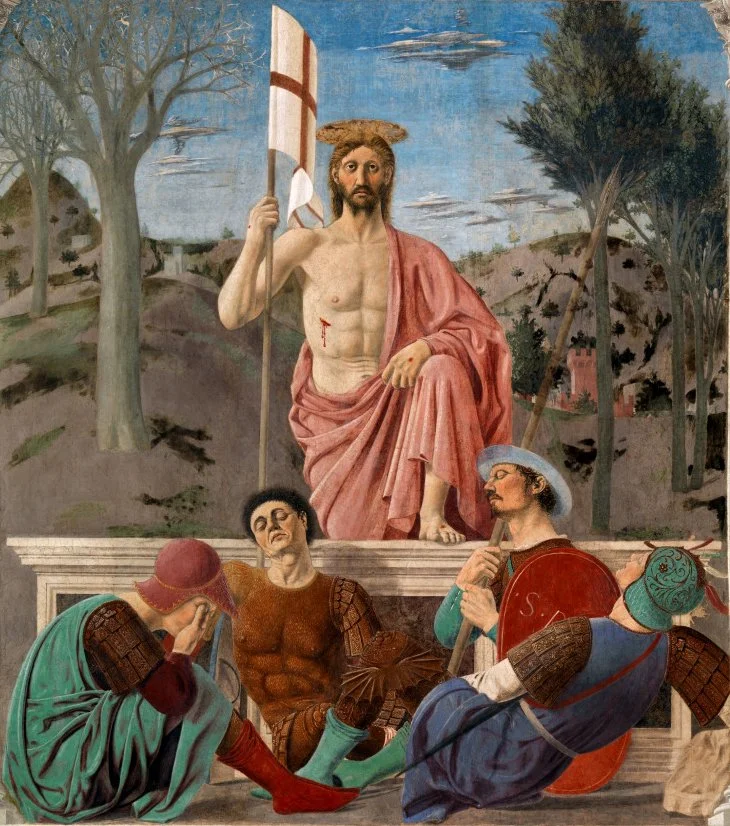
    The upper Tiber Valley was both home and working territory for Piero della Francesca, whose paintings remain closely associated with the towns of this part of central Italy. Born in Sansepolcro, he developed a distinctive style based on perspective, proportion, monumental figures and a remarkable sense of light and space. Beginning in nearby Monterchi, we first view Piero’s Madonna del Parto – an unusual Renaissance depiction of the Virgin visibly pregnant beneath a richly patterned canopy, flanked by two angels who draw back its curtains. From here, we continue to Sansepolcro, where native son Piero left his celebrated fresco of the Resurrection, commissioned in the 1460s for a prominent wall of the town hall. Christ rises from the tomb above four sleeping soldiers, set against a landscape moving from winter barrenness to spring growth in a powerful visual expression of death and renewal. We then return towards Perugia with a visit to the Museo Atelier Giuditta Brozzetti, one of Italy’s few surviving traditional hand-weaving workshops, where historic looms remain in use and centuries-old Umbrian textile techniques continue to be practised. Overnight Perugia (B)

  • Day 7 | Friday 24 September
    Assisi

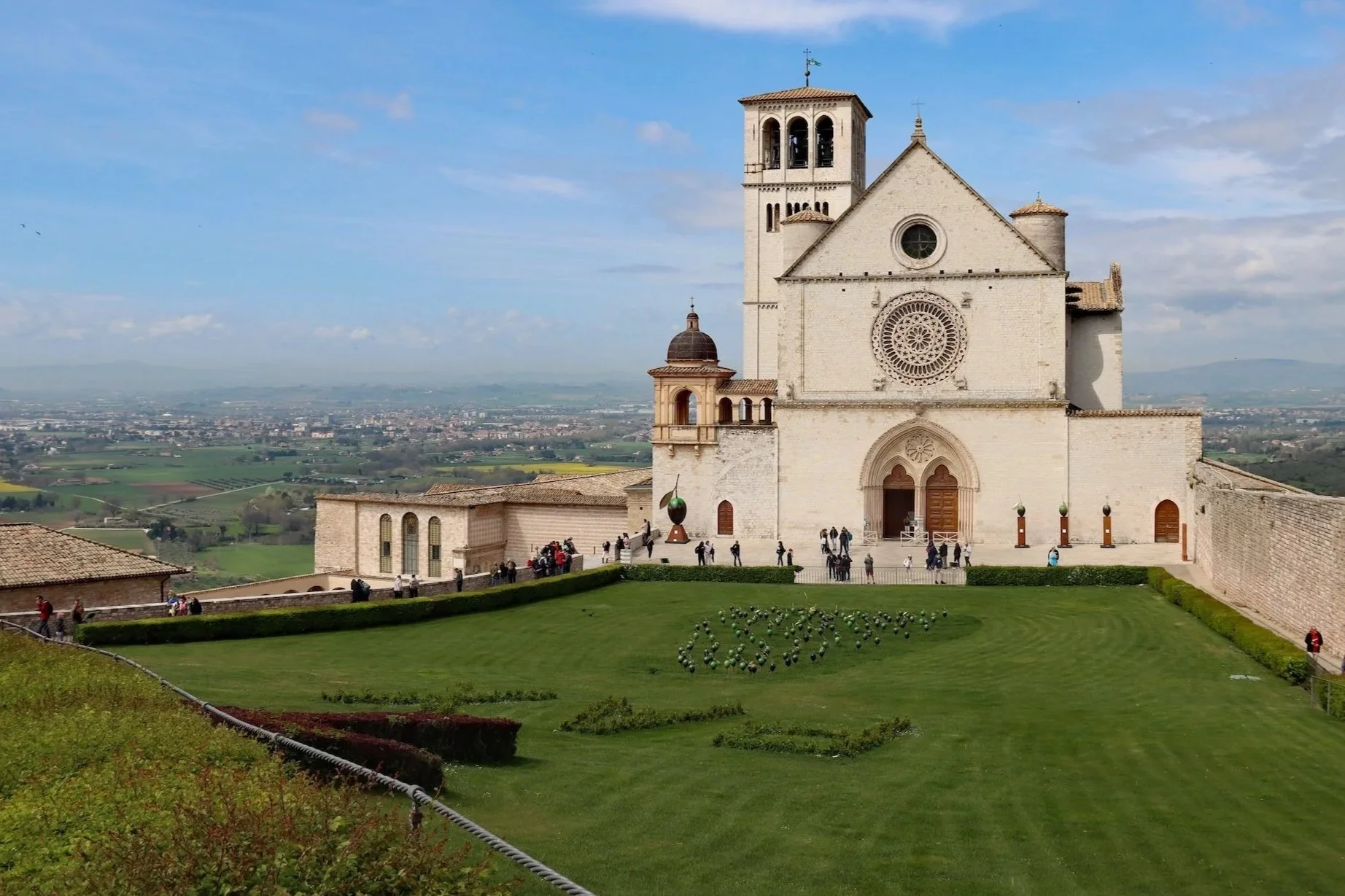
    Long before Saint Francis came to define its identity,
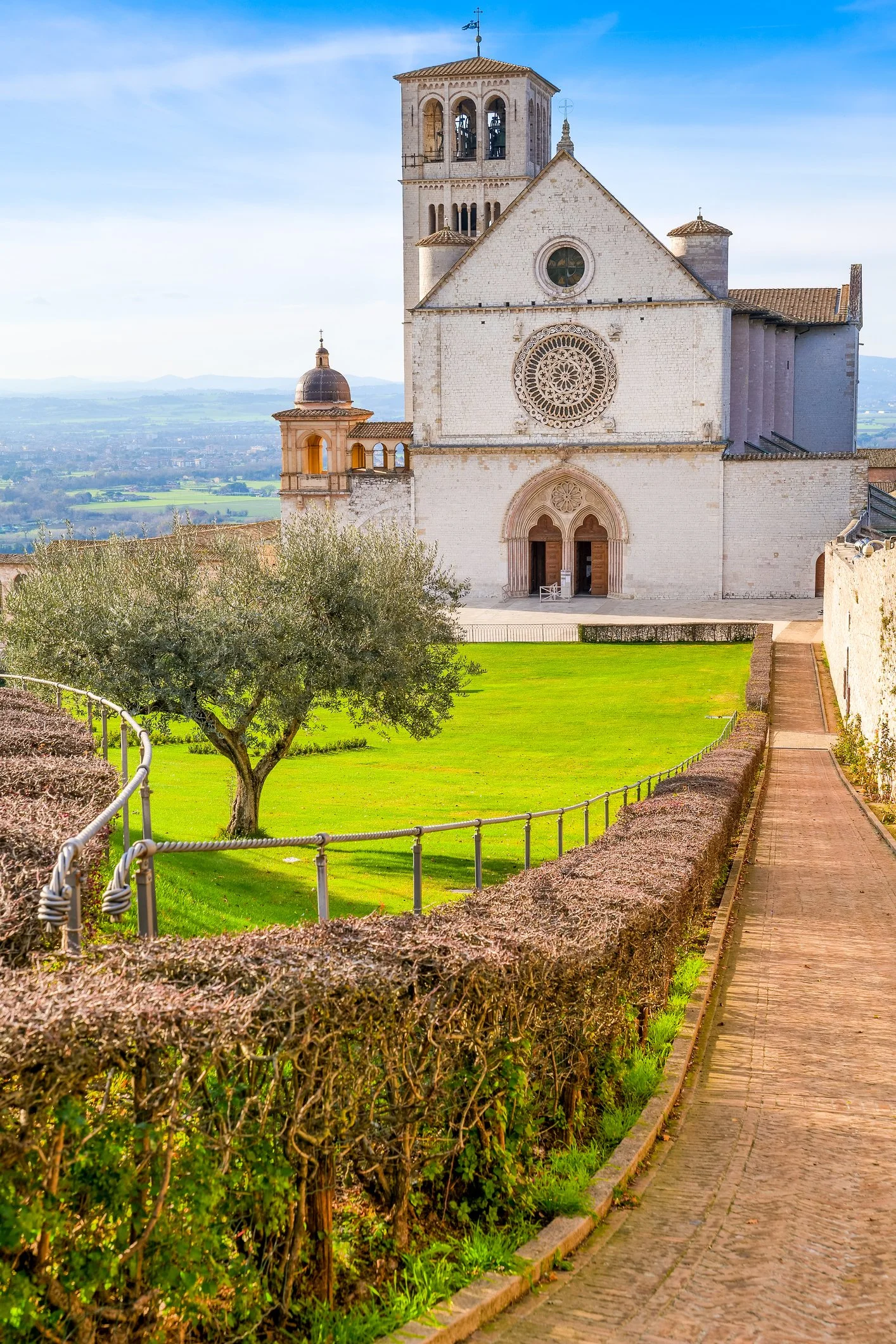
    Assisi was the Roman town of Assisium, centred on a forum and temple whose remains still lie beneath the medieval streets and piazzas. From the 13th century, the rise of the Franciscan movement transformed the town, most visibly in the great basilica built in the Saint’s honour soon after his canonisation. Its Upper and Lower Churches form one of the defining monuments of medieval Italy, commanding the western edge of Assisi and the valley below. Our visit today begins here, where frescoes by Cimabue, Simone Martini and Pietro Lorenzetti sit alongside the celebrated cycle traditionally associated with Giotto. From the basilica, we continue through the historic centre to Piazza del Comune, where the Roman Temple of Minerva survives behind a later church facade, before descending beneath the square to the remains of the ancient forum. Time is then available for lunch and independent exploration before we return to Perugia in the afternoon. Overnight Perugia (B)

  • Day 8 | Saturday 25 September
    Orvieto

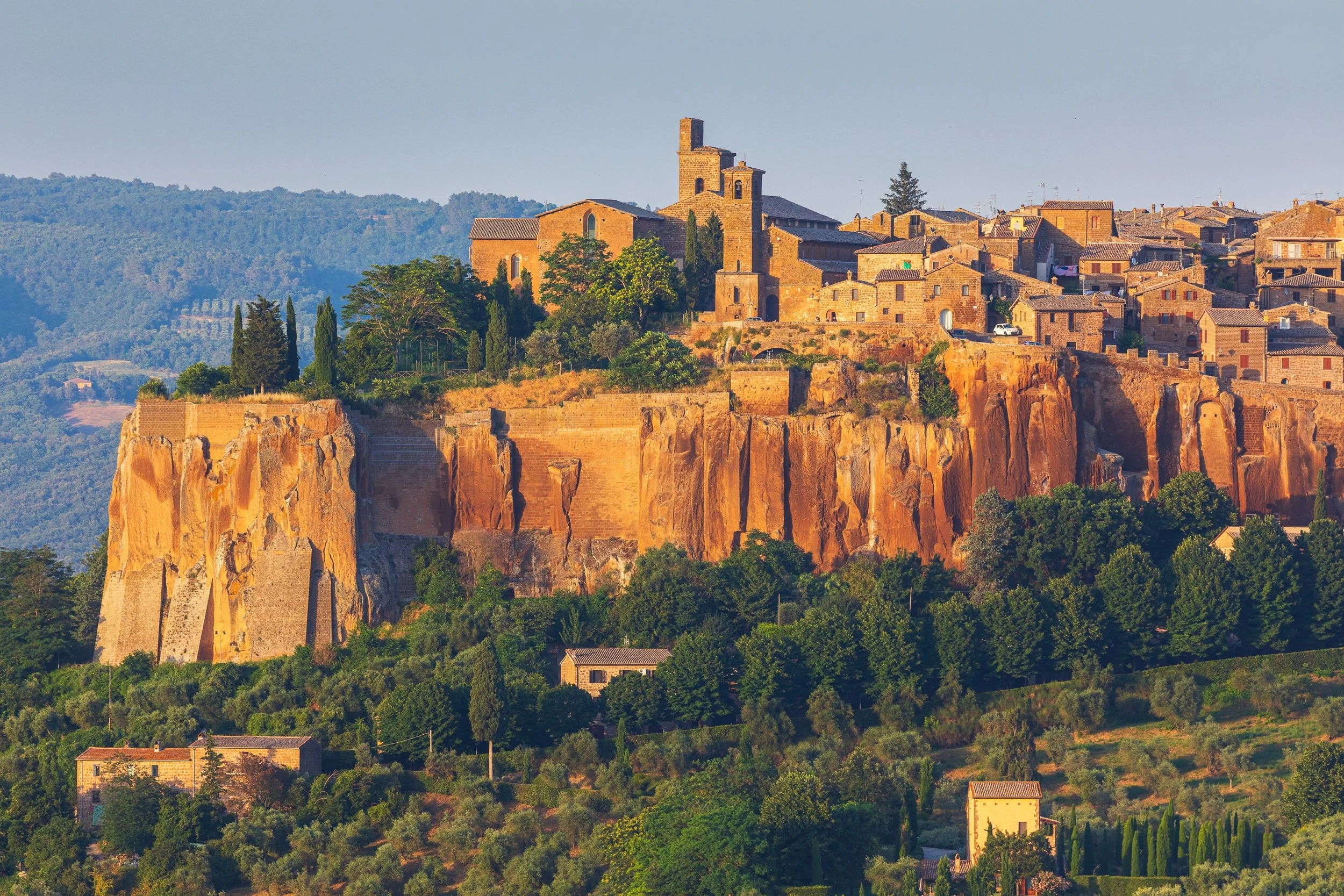
    Positioned on a plateau of volcanic tufa, the site of modern Orvieto was an important Etruscan centre, traditionally identified with ancient Velzna, before emerging centuries later as a powerful medieval town closely associated with the Papacy. Its architecture and extensive underground spaces preserve these successive layers of occupation with unusual clarity. Leaving Perugia this morning, we travel south to Orvieto en route to our next base in Cortona. Our visit begins at the Duomo – one of the great monuments of Italian Gothic architecture – where our principal focus is the San Brizio Chapel. Begun by Fra Angelico and completed by Luca Signorelli, its powerful Last Judgement frescoes, particularly their muscular and animated figures, anticipated aspects of Michelangelo’s later work in the Sistine Chapel. Following a break for lunch in the city centre, we turn to the city below, descending into the network of caves, wells and chambers carved into the tufa over centuries of occupation. Emerging again in late afternoon, we leave Umbria behind and continue into Tuscany, reaching Cortona before dinner together this evening. Overnight Cortona (B, D)

  • Day 9 | Sunday 26 September
    Cortona

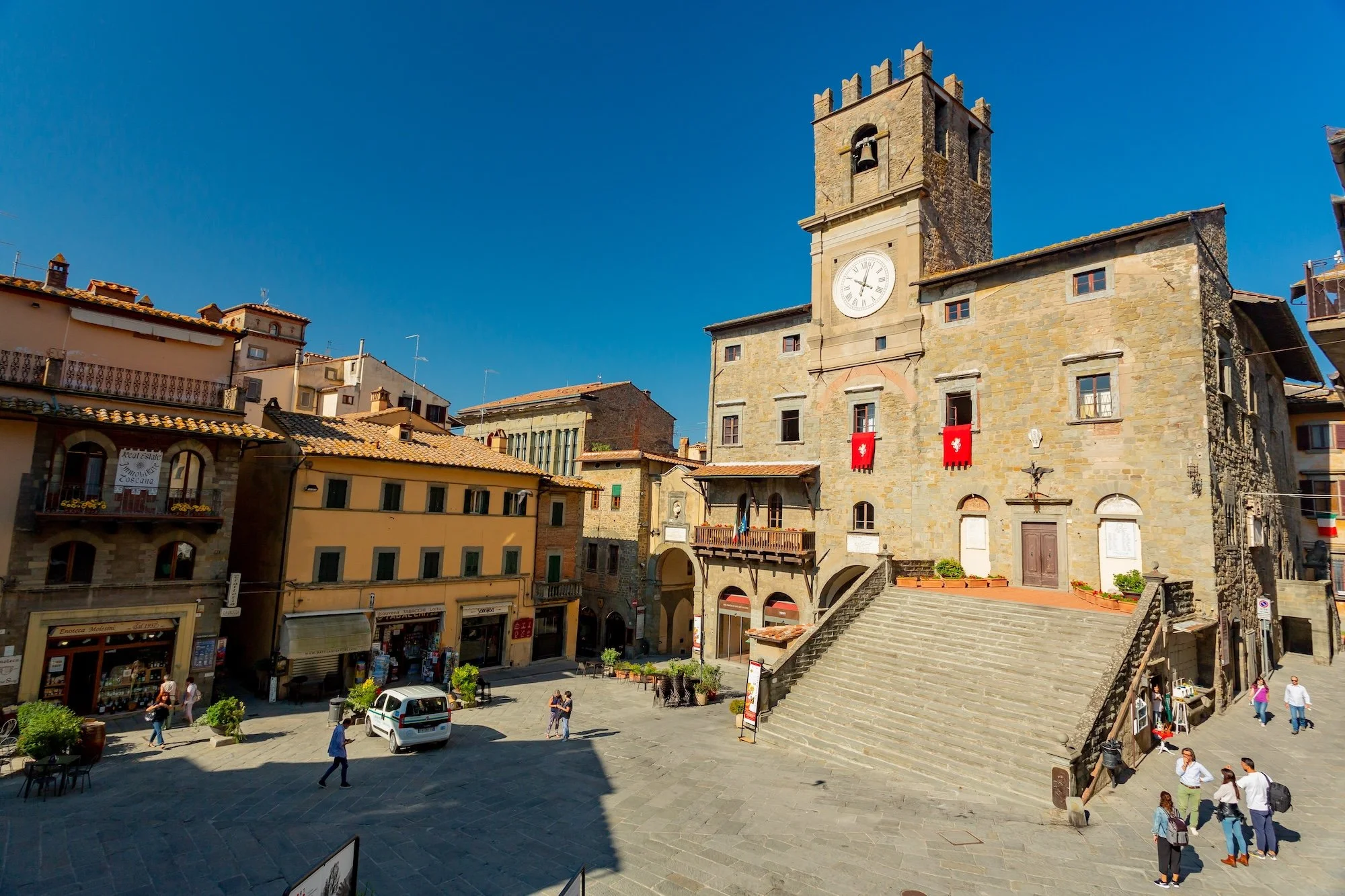
    High above the Val di Chiana, Cortona occupies the site of the Etruscan city of Curtun, one of the principal centres of ancient Etruria. Its strategic position ensured its importance through the Roman, medieval and Renaissance periods, leaving a town where successive layers of history remain visible within and around its ancient walls. Following a morning talk introducing the Etruscans, we continue to the Museo dell’Accademia Etrusca, whose archaeological collections provide a closer look at the material culture of ancient Curtun and the wider Etruscan world. After a short break, we then turn to the Museo Diocesano, where the focus shifts forward to Renaissance painting through works by Fra Angelico and Cortona-born Luca Signorelli – a fitting continuation from Signorelli’s frescoes seen in Orvieto. The afternoon is then at leisure for independent exploration of Cortona’s historic centre, before we reconvene for aperitivi at our hotel to bring the day to a close. Overnight Cortona (B)

  • Day 10 | Monday 27 September
    Arezzo

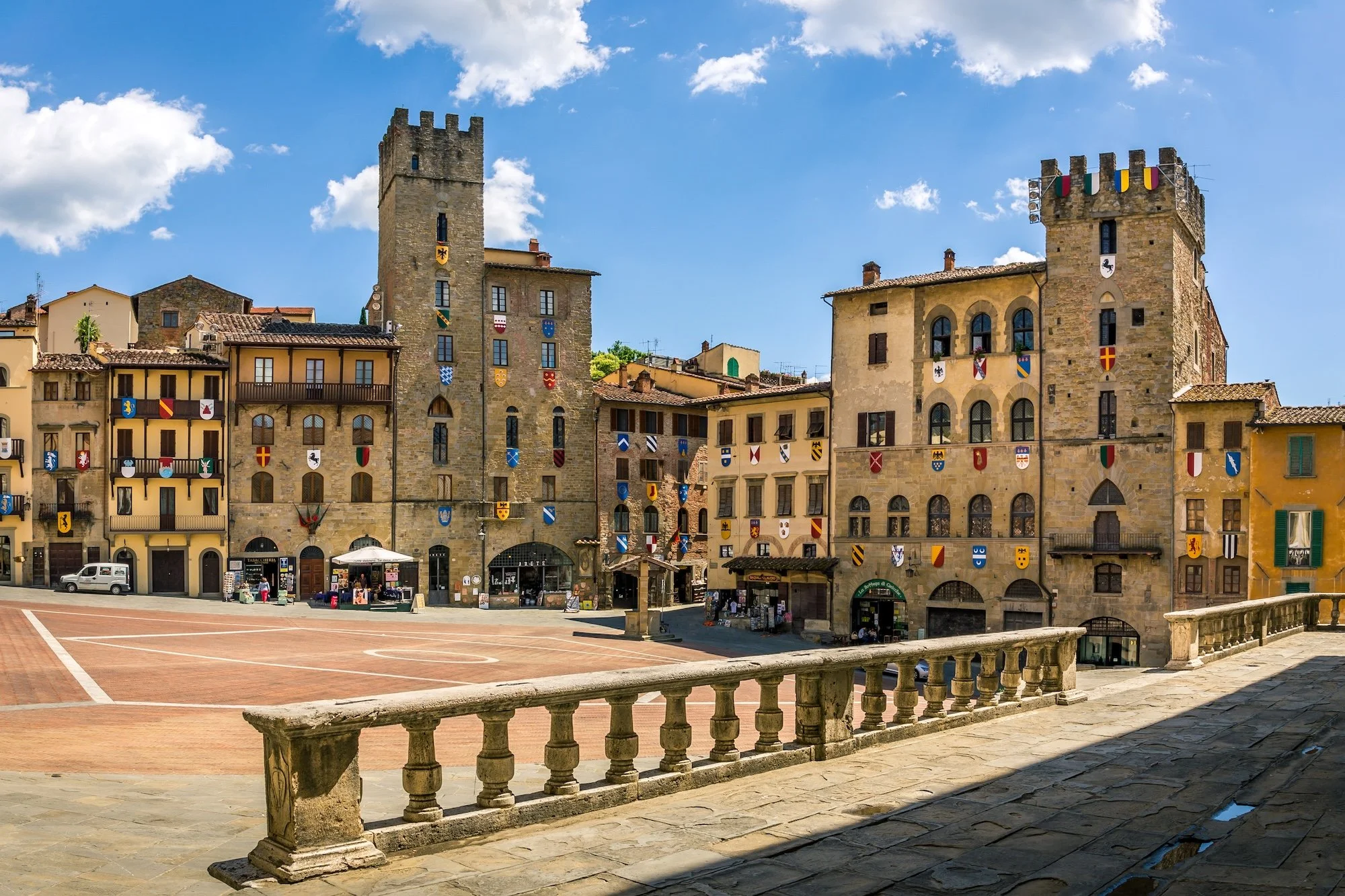
    Set between the upper Arno and Tiber valleys, Arezzo grew wealthy through trade and manufacture, becoming an important artistic centre of eastern Tuscany during the later Middle Ages and Renaissance. Its churches and public buildings reflect this prosperity, most notably in the work of Piero della Francesca, whose greatest surviving fresco cycle is the focus of our visit today. Travelling north from Cortona this morning, we first explore the historic centre on foot, taking in the sloping streets, medieval buildings and broad Piazza Grande before continuing to the Church of San Francesco. Here, Piero’s Legend of the True Cross unfolds across the Bacci Chapel in a monumental sequence of scenes drawn from medieval legend. Following our earlier visits to Monterchi and Sansepolcro, the cycle brings together the principal qualities of his work on its grandest surviving scale. After a break for lunch, we leave Arezzo for the surrounding countryside, where the afternoon concludes with a wine tasting at a local estate before returning to Cortona. Overnight Cortona (B, WT)

  • Day 11 | Tuesday 28 September
    Montalcino & Sant’Antimo

    South of Siena, Montalcino rises above the Val d’Orcia in a landscape shaped by fortified towns, monastic estates and centuries of cultivation. Closely tied to the Republic of Siena, the town became its final stronghold against Medici expansion in the 16th century, while the surrounding hills would later become synonymous with Brunello di Montalcino. Leaving Cortona this morning for Pienza, we first travel west to Montalcino for a guided exploration of the historic centre, where medieval streets lead towards the imposing 14th-century fortress. From here, we descend into the surrounding countryside to the Abbey of Sant’Antimo, an important Benedictine foundation whose present Romanesque church dates largely from the early 12th century. Built in pale stone and set among vineyards and olive groves, its restrained architecture reflects the wealth and influence once held by the monastery across southern Tuscany. Nearby, we continue to Tenuta Fanti for a light lunch, cellar visit and tasting before travelling through the Val d’Orcia to Pienza, our base for the next three nights. After time to check in and freshen up, we come together for aperitivi to conclude our day. Overnight Pienza (B, L)

  • Day 12 | Wednesday 29 September
    Pienza & La Foce

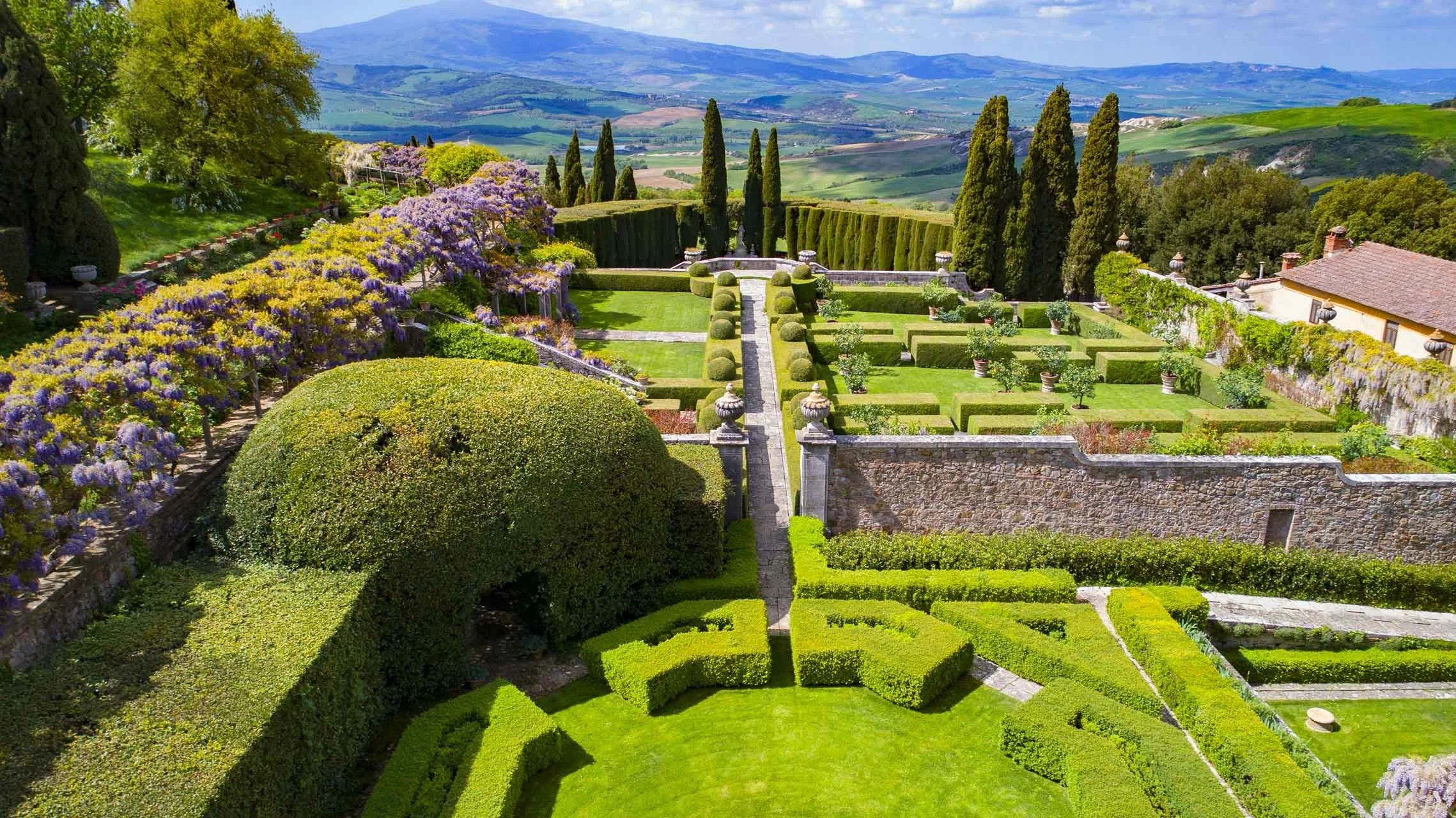
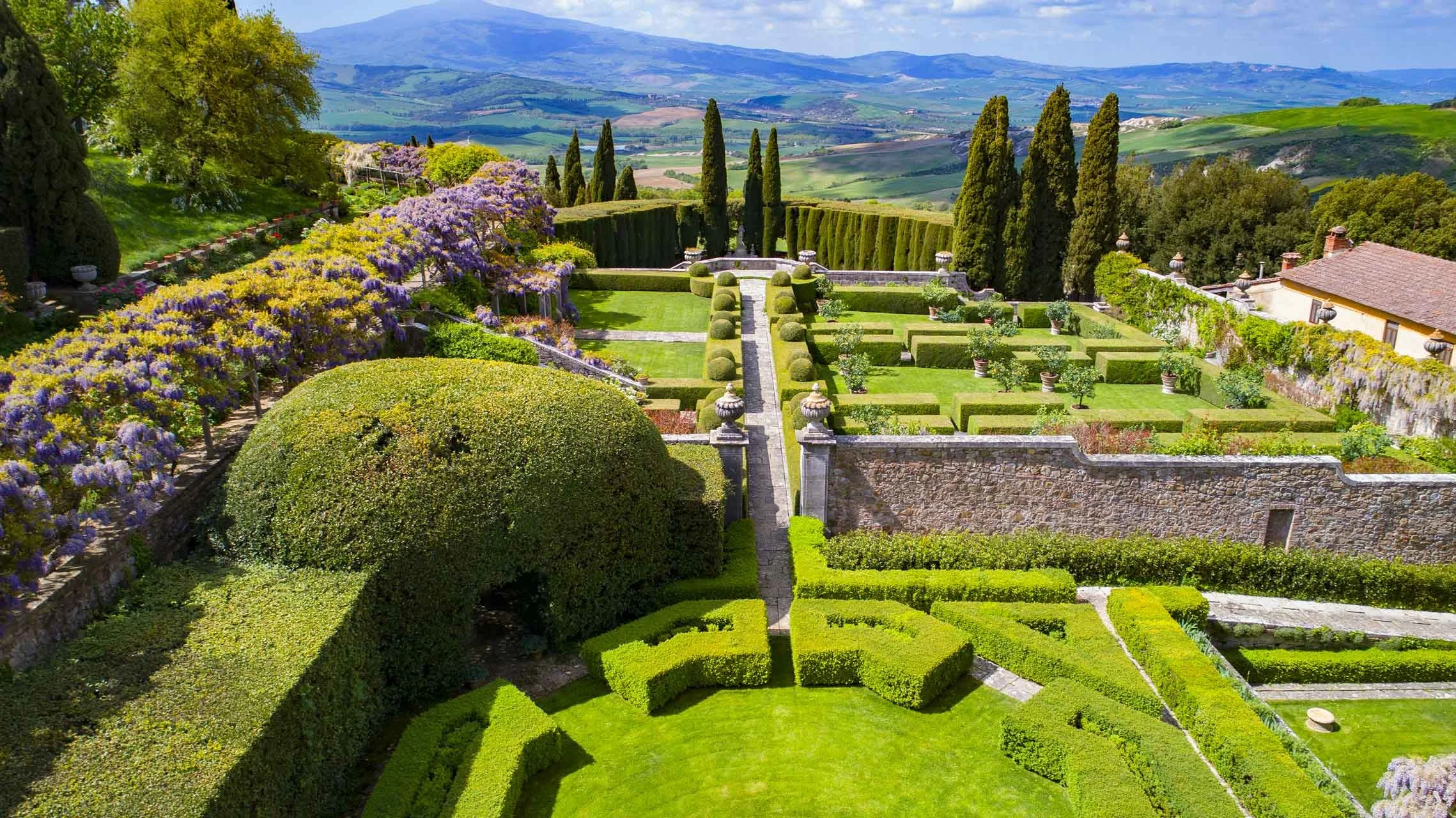
    Originally the medieval village of Corsignano, Pienza was transformed in the 15th century when its native son Enea Silvio Piccolomini became Pope Pius II. Working with architect Bernardo Rossellino, he recast his birthplace according to Renaissance ideas of proportion and ordered urban space, creating one of the earliest and most influential examples of the planned ‘ideal town’. Our morning walking tour centres on Piazza Pio II, where the cathedral, Palazzo Piccolomini and surrounding buildings form a carefully unified architectural ensemble overlooking the Val d’Orcia. Lunch follows in Pienza before we travel to nearby La Foce, where another chapter in the shaping of this landscape unfolds. Purchased by Iris and Antonio Origo in 1924, the estate became the centre of an ambitious program of agricultural improvement, while its gardens were developed with English architect Cecil Pinsent between 1925 and 1939. Formal Italianate garden rooms defined by box hedges and terracotta lemon pots give way to travertine steps, a rose garden and a wisteria-covered pergola, before the design opens into terraces, cypress avenues and long views towards Monte Amiata. Following our visit, we return to our hotel for an evening at leisure. Overnight Pienza (B, L)

  • Day 13 | Thursday 30 September
    Lake Bolsena & Bagno Vignoni

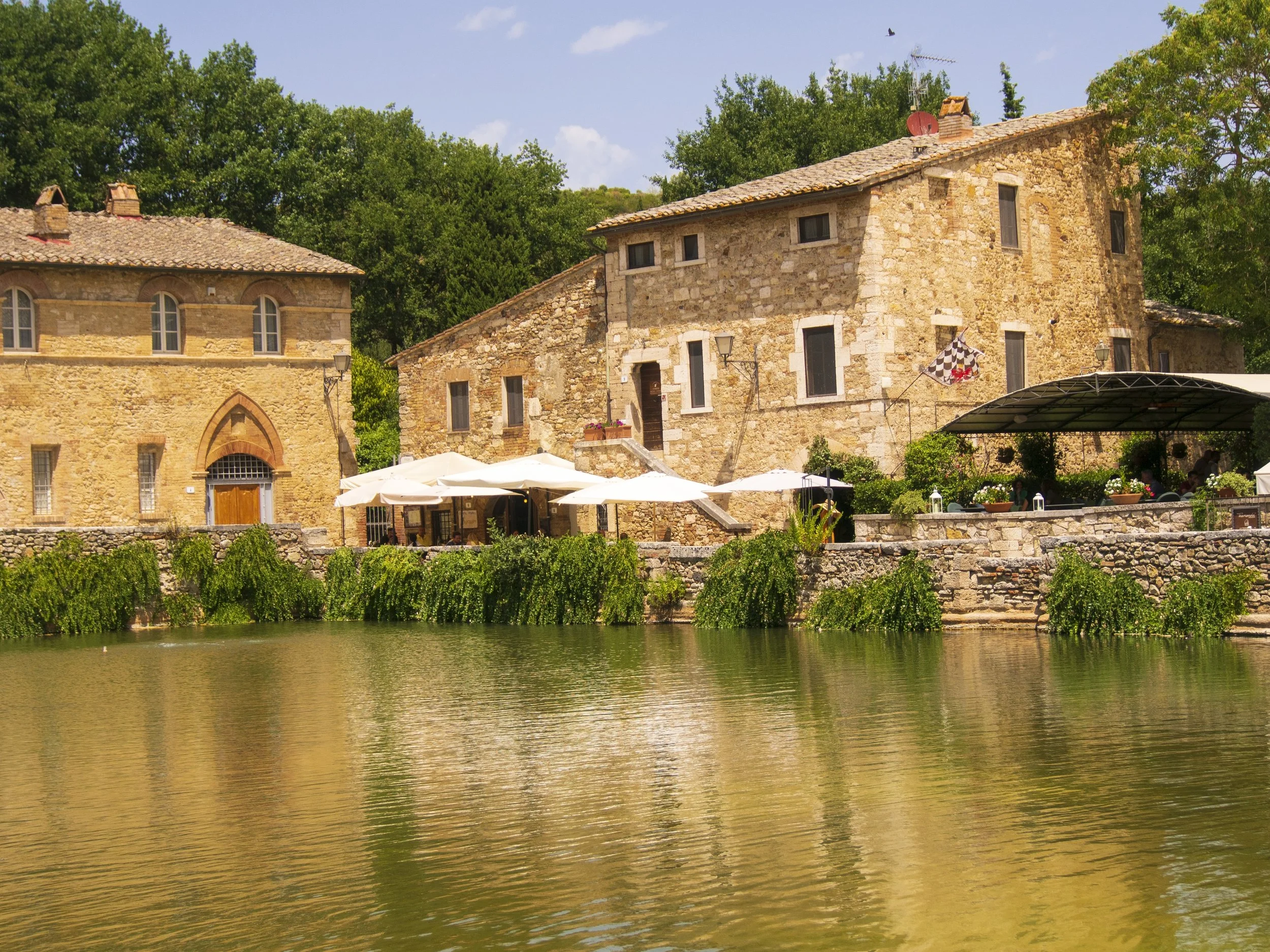
    The volcanic landscape south of the Val d’Orcia opens onto Lake Bolsena, long crossed by pilgrims travelling the Via Francigena towards Rome. On its eastern shore, the Basilica of Santa Cristina became an important place of pilgrimage, associated both with the early Christian martyr Saint Christina and with the Eucharistic miracle of 1263 that later became closely connected with Orvieto and the feast of Corpus Christi. Travelling south from Pienza this morning, we visit the basilica before continuing to the lake itself. Weather permitting, we take to the water for a cruise across this great volcanic basin, enjoying a different perspective on the surrounding landscape before time at leisure for lunch. In the afternoon, we return north to Bagno Vignoni, a small settlement developed around the thermal springs that rise directly into its central piazza. Known since antiquity and later frequented by travellers along the Via Francigena, the waters still fill the great rectangular basin at the heart of the village. We pause beside the thermal basin for farewell drinks, bringing our final day of touring to a close before returning to Pienza for a final dinner together overlooking the Val d’Orcia. Overnight Pienza (B, D)

  • Day 14 | Friday 1 October
    Depart to Rome

    After breakfast, we leave Pienza and travel south through Tuscany and Lazio to Rome Fiumicino Airport, where the tour concludes. (B)

Throughout the tour, we stay in a carefully selected collection of four- and five-star hotels, each chosen for its position within or immediately beside the historic centre.

Tour Accommodation

At Home with Neil...

Since 1988, Neil has made his home in the historic Umbrian Borgo of Colle del Marchese, devoted to restoring the remnants of a 13th-century castle.

In this video, Neil takes us on a tour of his home.

tour booking

$13,480 AUD per person, twin share (land content only)
$2,940 AUD supplement for sole use of a hotel room

A $2,000 deposit is required per person to confirm your booking on tour. This deposit is non-refundable.

Hold a Place

Still deciding? We are happy to hold a tentative place for 7 days while you make your final arrangements.

Book Online

To secure your place(s) on tour, book online below with “Athena”, our virtual tour consultant.

DOWNLOAD FORM

Download a printable booking form. You can also complete the form on screen and submit via email.

your tour consultant

The consultant for this tour is Sharon Williams. For further information or to discuss the tour, please call 9235 0023 (Sydney) or 1800 639 699 (outside Sydney) or email sharon@academytravel.com.au

have you thought about?

Academy Travel is more than just a tour operator. We are also a full-service travel agency who can assist you with all aspects of your travel, including flights, transfers, pre-tour arrival, additional travel and comprehensive travel insurance.

can’t make this departure?

If these dates don't work for you, register to hear about the next tour.