The Venetian Industrial Heart which is still Beating Today
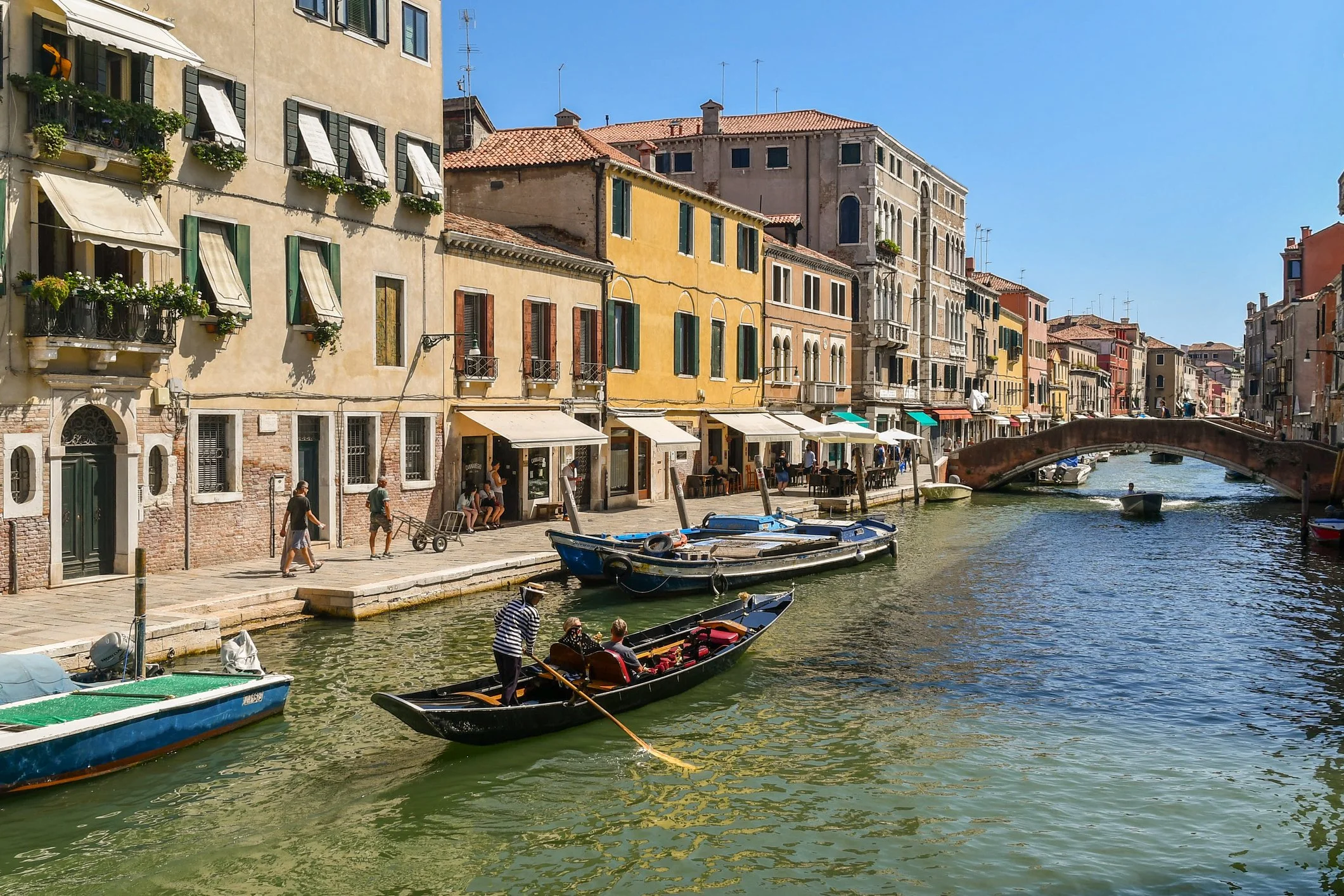
As much as Italy is home to a plethora of breathtaking cities stacked with art and historic architecture, there is nothing quite like Venice.
There is a reason it has been given a number of nicknames, from La Serenissima to the Queen of the Adriatic and The Floating City. The sheer improbability of constructing exquisite palazzi and churches on a collection of 118 islands has resulted in a mesmerizing spectacle of buildings seemingly precariously perched on a series of canals. It is not surprising, then, that visitors have flocked to the city from the times of the Grand Tour, enchanted by its unique setting.
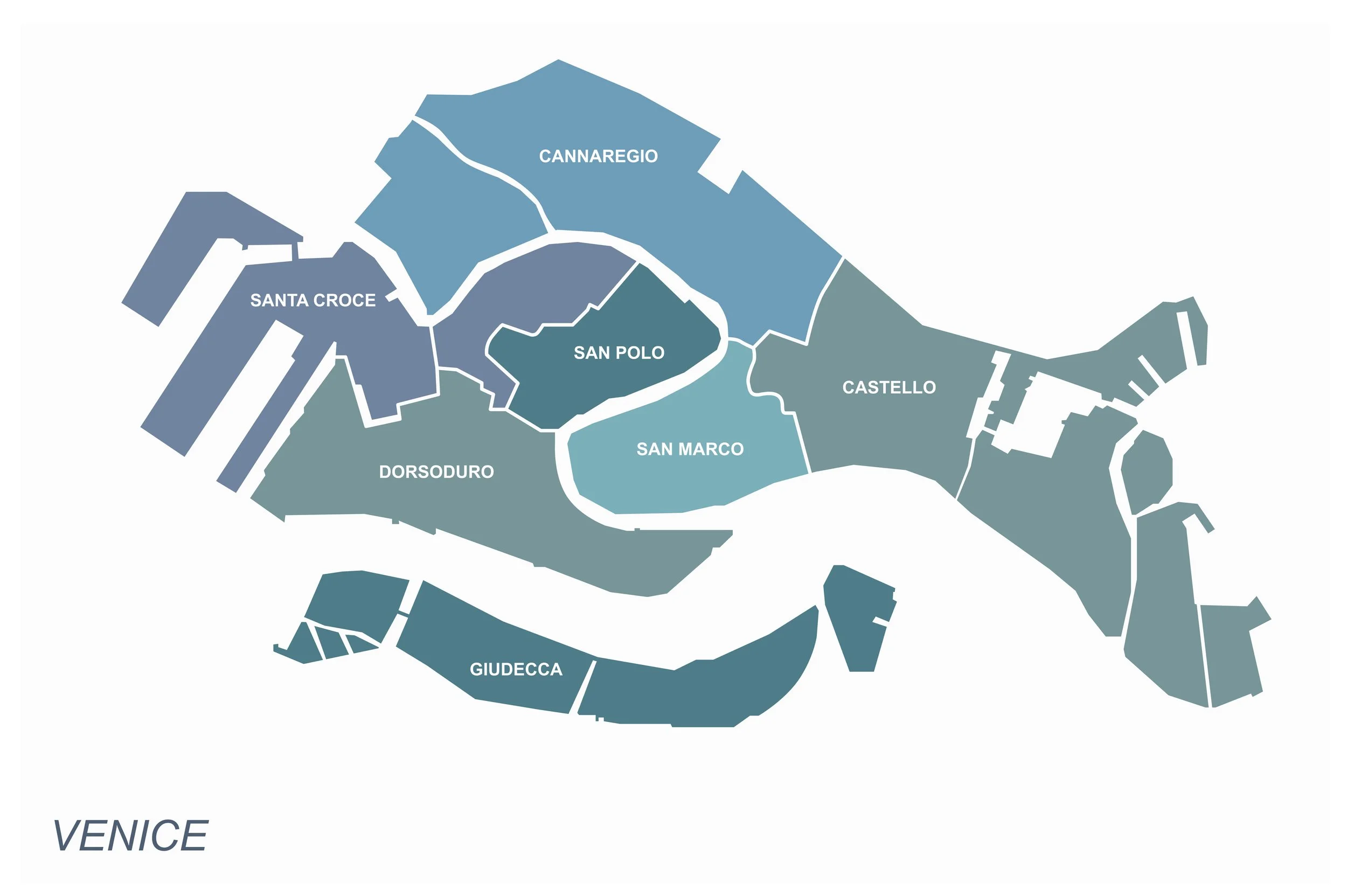
While visitors to the city tend to focus on the Doge’s Palace, the Basilica of Saint Mark and the Rialto, there is another part of Venice, which is just as interesting, because it demonstrates how it was able to reinvent itself over the centuries. This is the Venice with which casual visitors aren’t familiar and which is fundamental to understanding the city. For this reason, Cannaregio should be at the top of anyone’s list of places to visit in Venice.
Neighbourhood Map of Venice
At its height, during the 13-16th centuries, Venice was the epicentre of a vast trading network which stretched from the Crimea to Constantinople and Alexandria to Bruges. Its vast mude, or convoys, brought luxury products such as spices, perfumes and pigments, as well as foods such as sugar and grain. In addition to Venice’s 36,000 sailors, a large portion of the city’s sizeable and cosmopolitan population was involved in commerce, from the 16,000 arsenalotti (ship workers) to the bankers and brokers, scrivani (scribes) and canvas makers. With the discovery of the new world, however, Venice had to find another way to maintain its commercial superiority. This is when it metamorphosed into an industrial powerhouse, producing luxury goods for the whole of Europe.
By the end of the 15th century, traditional trade routes established for millennia were abandoned. When Vasco da Gama sailed to India via the Cape of Good Hope, he found a way to get spices from the east in a vastly more efficient manner. By 1503, a single Portuguese fleet was able to return with 1,700 tonnes of spices, almost the equivalent of annual Venetian imports before then. In a matter of decades, the Mediterranean, once the commercial and cultural hub of Europe, became secondary to the Atlantic trade and Venice lost its raison d’etre. This called for change and for Venetians to discover a new way to maintain their commercial superiority. It did help that the same men who ruled Venice were also its merchants.
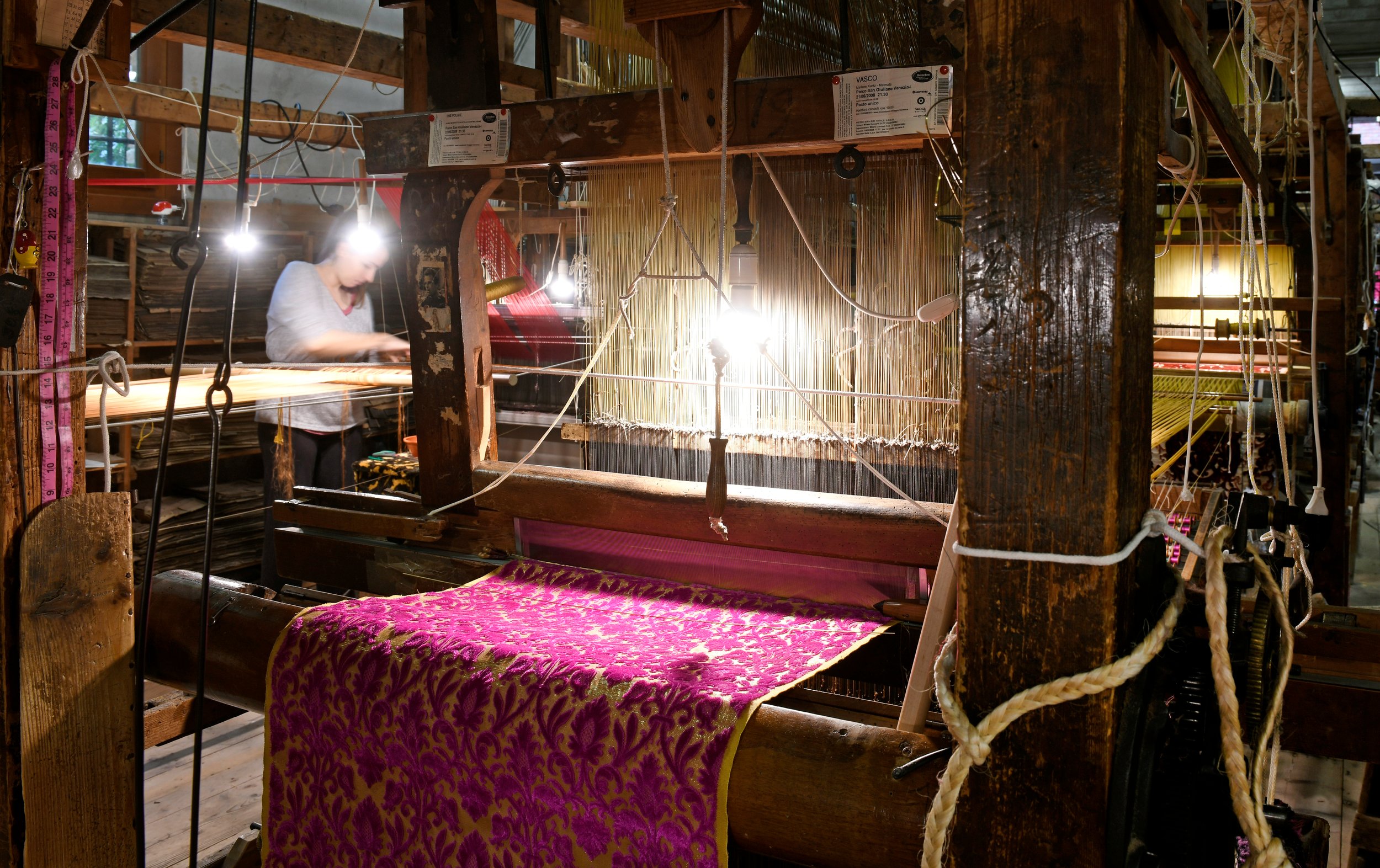
Traditional Weavers Workshop in Venice
From the end of the 15th century, Venice developed an industrial basis, encouraging specialist craftsmen to migrate to the city and expanding its output. The Venetian textile industry became one of the most important in the world. It was most famous for its exquisite silk fabrics, including velvet, damasks and brocades made from raw silk produced in the Veneto (Vicenza alone produced more than 40 tonnes of silk per annum). Even more important was its woolen textile industry in the 16th and 17th centuries, when it generated more than 30,000 bolts of heavy wool cloth a year. Central to the textile industry was the city’s immensely important dyeing industry, which produced the vibrant colours, such as Venetian scarlet (made from crushed cochineal and kermes insects) and indigo which sealed Venetian luxury cloths as among the most exclusive.
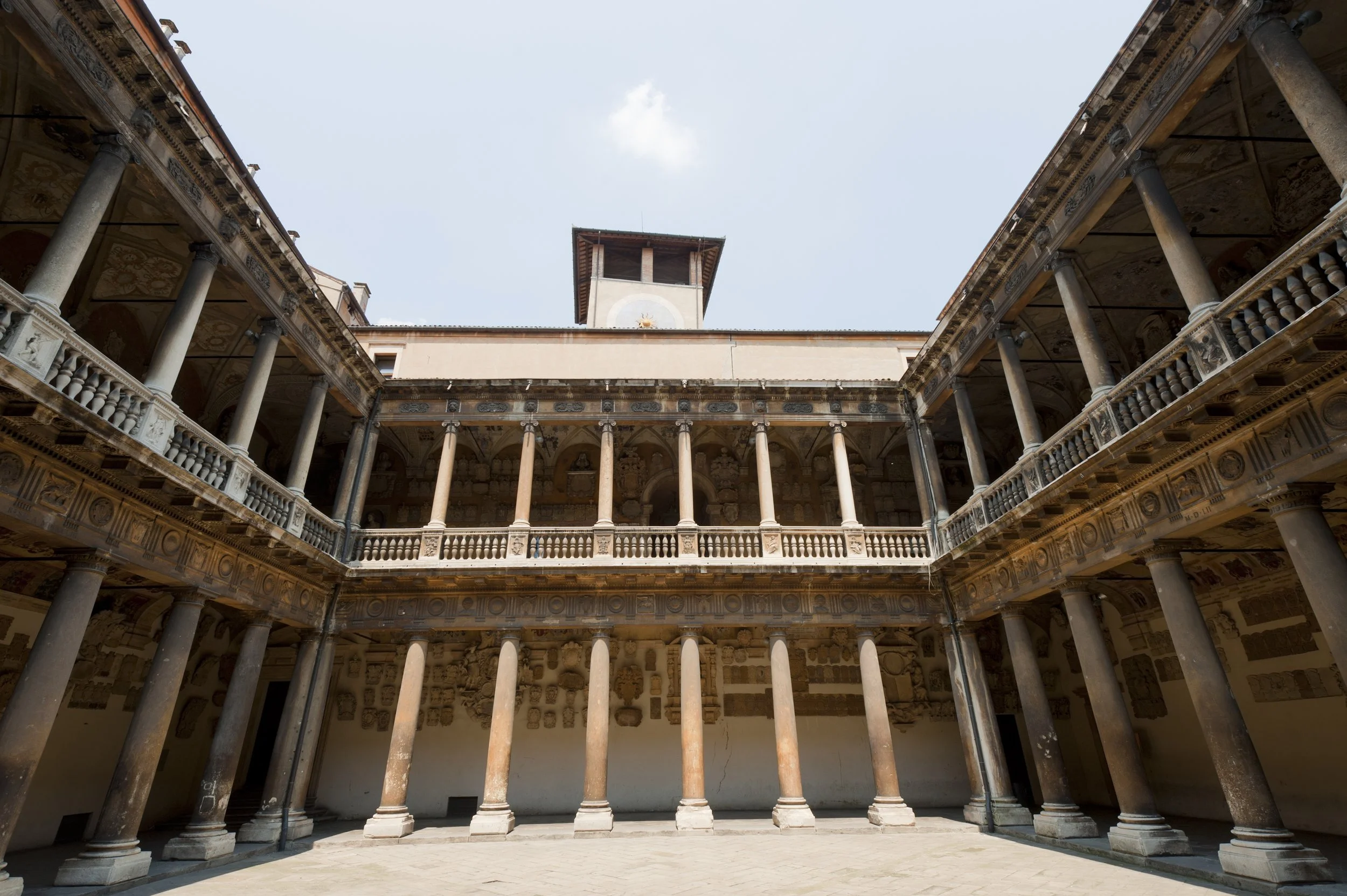
University of Padova
In addition to these, Venice was the printing capital of Europe. Only 30 years after Guttenberg’s invention of the printing press in 1439, Venice became the continent’s printing capital par excellence, producing more than half of Italy’s books and almost a quarter of Europe’s. Looking for new ways to invest their capital, Venetian merchants capitalised on the region’s established paper mills, on the numerous scholars produced by the University of Padova (which was in the Venetian empire) and their extensive trading networks. Through their creativity and industriousness, Venice shaped the way we read, producing the first handheld books (the octavo) written in an easily readable and spatially efficient italic font, with consistent pagination and broad margins.
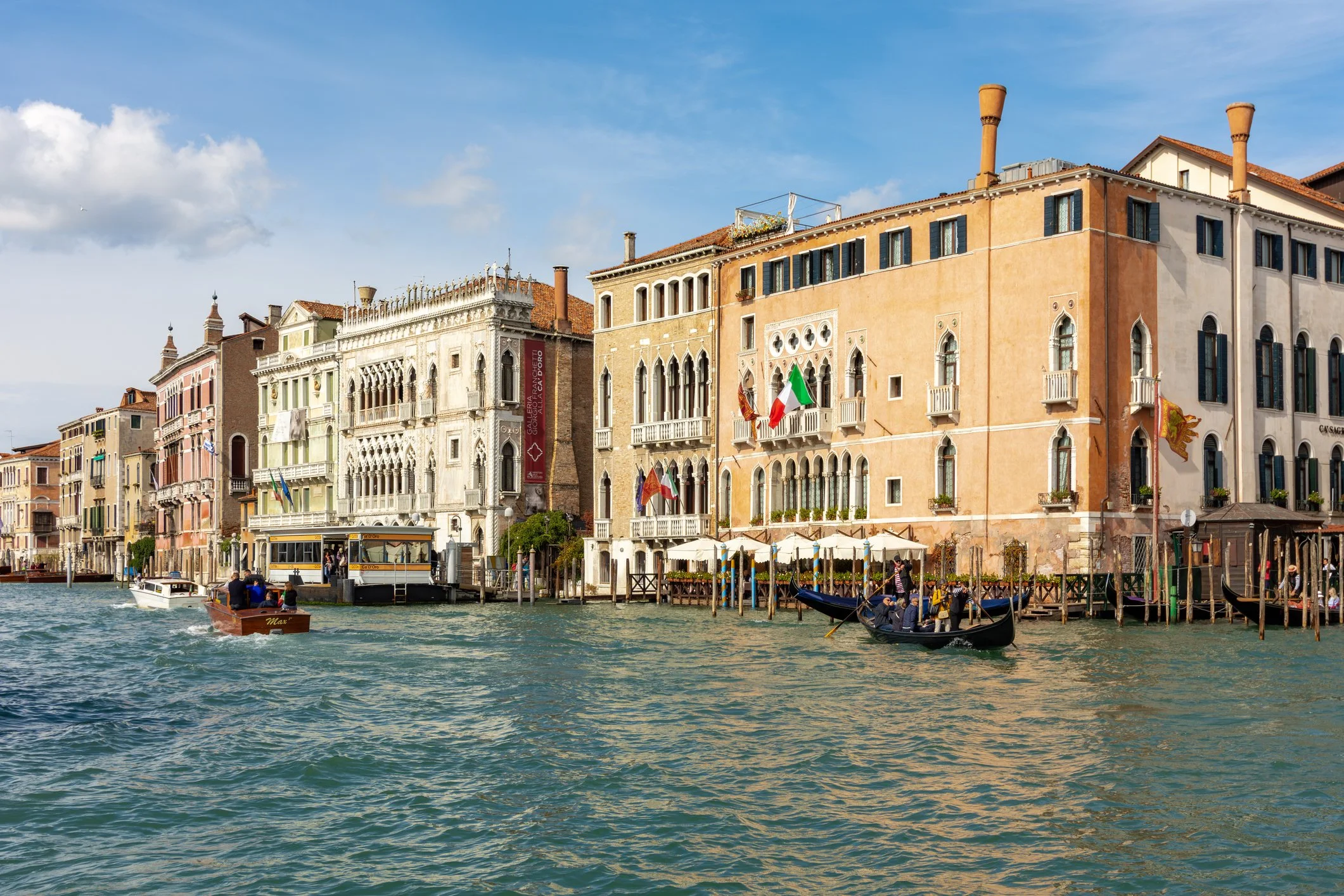
Cannaregio
What is interesting about Venetian industry is that it was all centralised and urbanised in order to ensure that it complied with quality standards and was taxed efficiently. For this reason, Venice turned to Cannaregio, which had all the essential attributes: the sestiere had readily available land and it had very good access to the lagoon. It was also the region of Venice which was closest to the mainland and it was a working-class neighbourhood which would tolerate the smells that went with proto-industrial manufacturing. It was a bustling neighborhood of 30,000-35,000 workers, the vast majority of whom belonged to the popolo minuto (working class), hailing from all over the Venetian empire.
Cannaregio was home to the Arte dei Vellutai (silk weavers’ guild) which rented out flats to accommodate their workers. Working closely with these were the dye masters, or tintori, whose noxious workhouses centred around furnaces which boiled dyes day in and day out, emitting a constant flow of smoke and chemical fumes. Alongside these was an army of print workers, including compositors, inkers, pressmen and woodcut artists. Cannaregio was also an ideal place for artists to establish their ateliers, because of the reasonable rents and the proximity of the pigments. Titian, one of the busiest and most highly regarded artists in Europe, moved here, while Tintoretto, the son of a dye master, was born and lived out his entire life here.
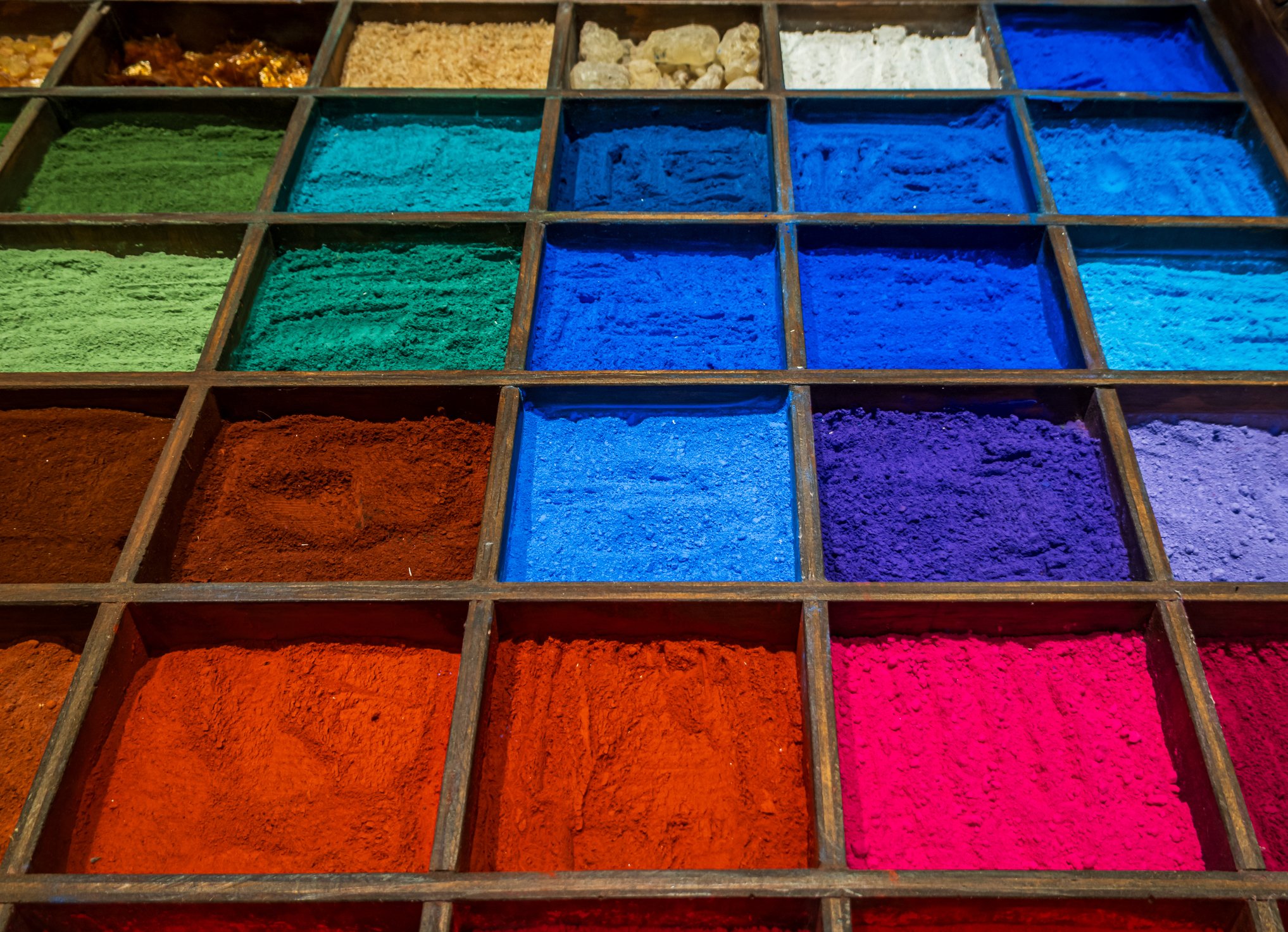
Pigments sold at Venice Market
Today, one can still see remnants of this industrial past on a walk in Cannaregio, where one is likely to hear Venetian spoken, with its un-rolled ‘rs’. Along the broad fondamenta (pavement) della Madonna dell’Orte, which once was cluttered with dyed textiles being rinsed in the canal, the Palazzo dei Mastelli, is decorated with a turbaned merchant leading a camel, paying homage to the Greek merchants who once made their home here. It is just a stone’s throw away from the Chiesa della Madonna dell’Orto where Tintoretto is buried, along with his beloved painter daughter, known affectionately as Tintoretta.
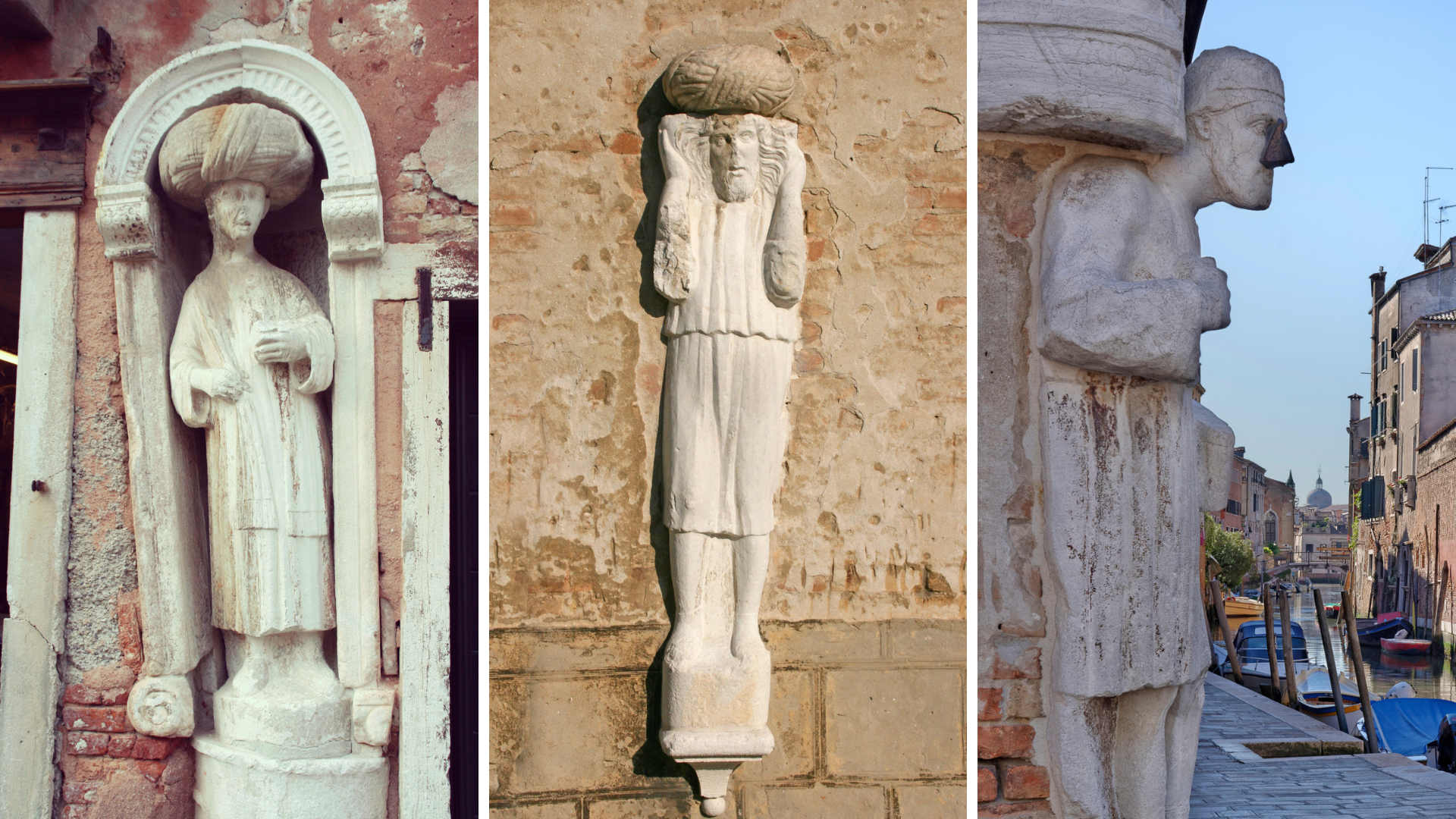
Mediaeval Statues Sandi, Afani & Rioba
Just over the bridge, the Campo dei Mori is one of the most recognisable parts of Cannaregio, decorated as it is with the iconic mediaeval statues Sandi, Afani and Rioba whom Venetians have traditionally identified as the Mastelli brothers. The most iconic of these statues is affectionately known as Sior Antonio Rioba and it is recognisable for its iron nose which replaced the original in the 19th century. He still stands proud right next to the house and atelier of Tintoretto, where one now finds a hub of Venetian printers and artists keeping Venetian traditions alive.
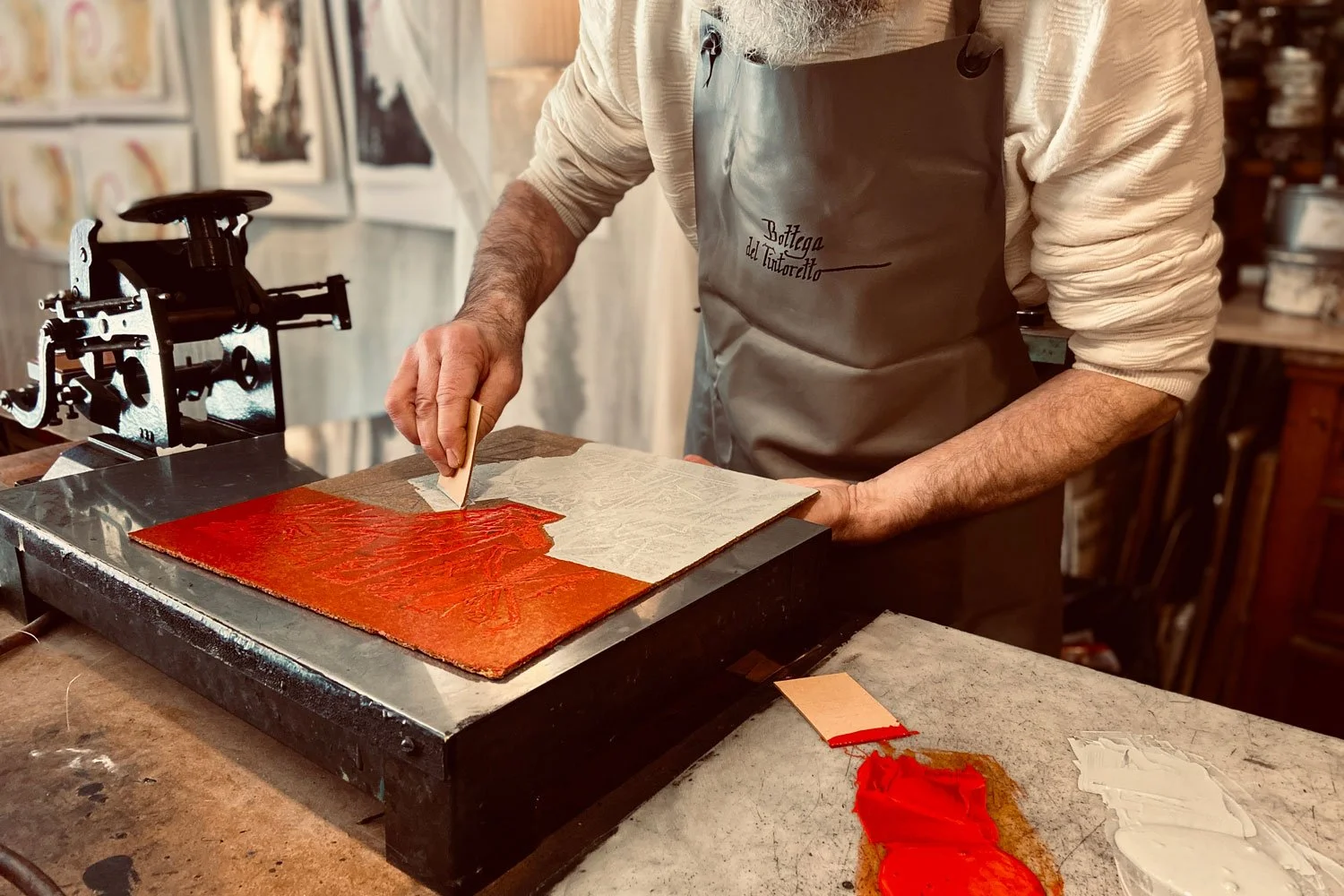
Bottega del Tintoretto
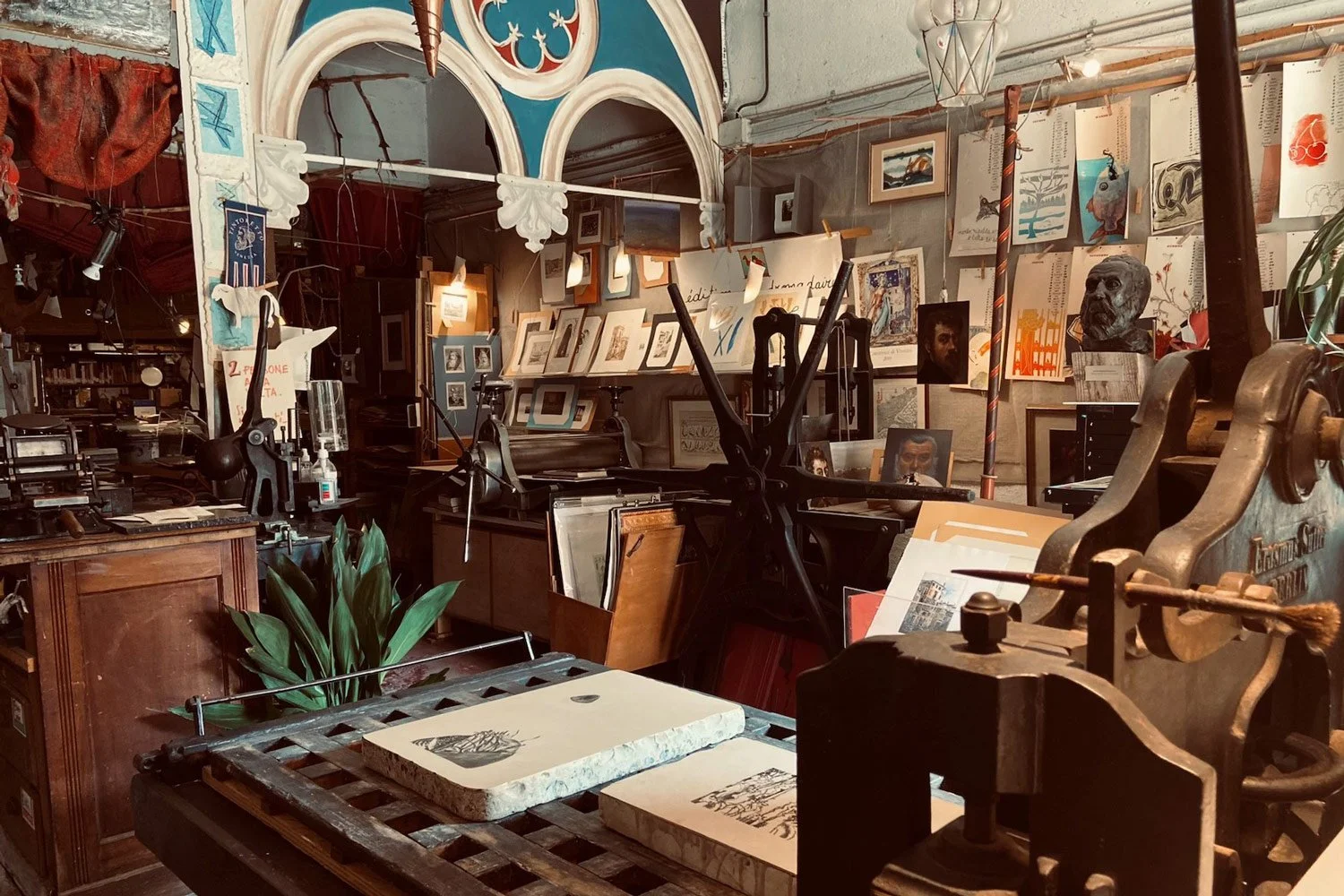
Roberto Mazzetto, who runs the Bottega del Tintoretto, fills the Mannerist painter’s workhouse with traditional printing presses and etchings made by local burgeoning artists. Not far away, there are several printers who produce etchings and copperplates in a modern way, blending Venetian printing with newer styles. Among these is Nelson Takahiro Kishi whose shop, Codex Venezia, creates traditional Venetian prints, which incorporate Brazilian and Japanese techniques. Although Kishi isn’t Venetian born, he is continuing the city’s age old practice of centering arts and crafts around the family: Codex Venezia is filled with the works of art of his talented offspring, Theo and Olivia, whom he shares with his English artist wife, Robin Frood. The Kishis are not alone: along the same fondamenta, one can find the Plum Plum workshop/shop owned by venice med, who produces acquaforte and intaglio prints, as well as woodcuts, using Japanese woodblocks.
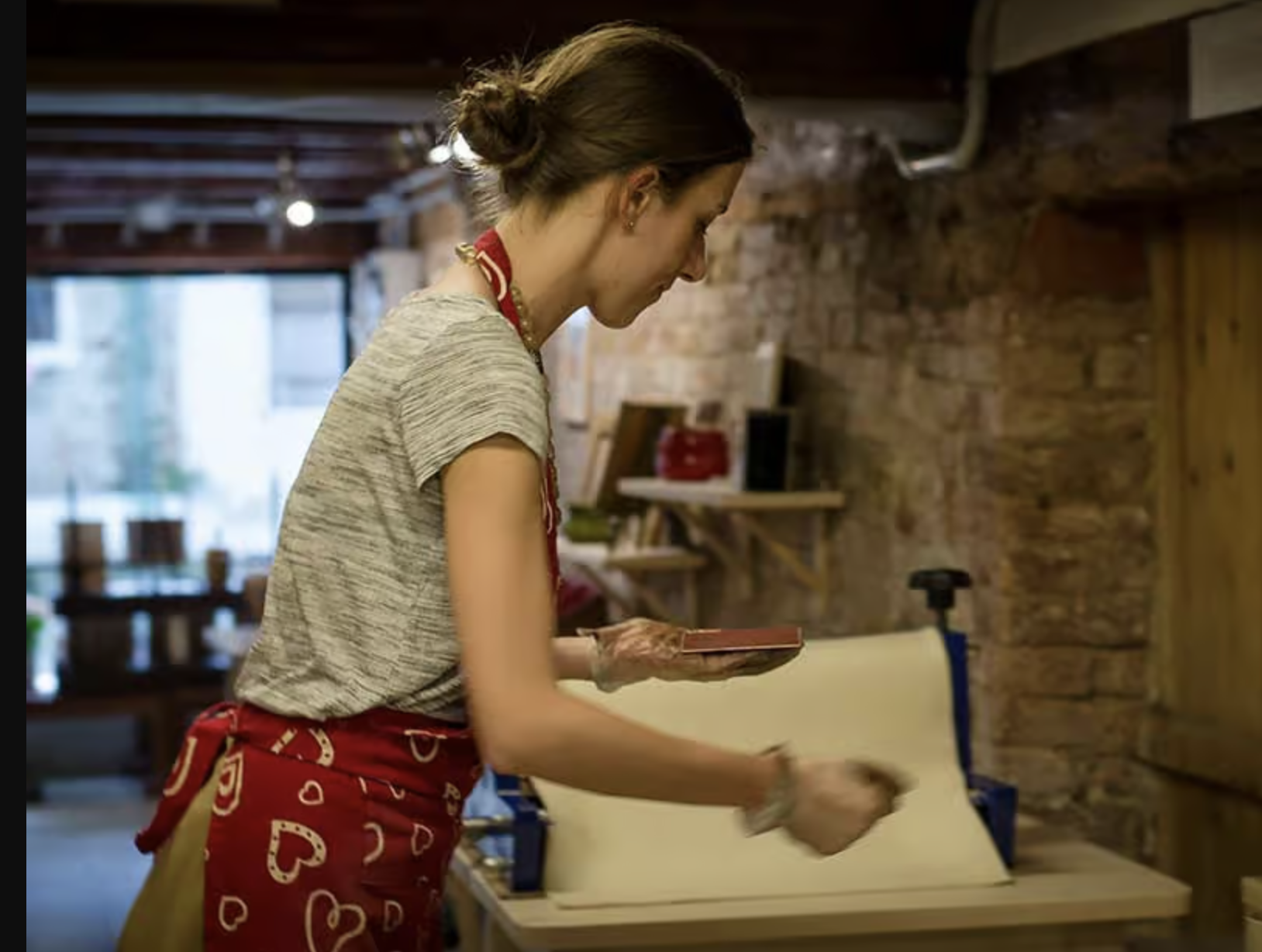
Plum Plum workshop
It is perhaps here, in Cannaregio, where Venetian crafts and everyday life are best brought to life. The joy of it is the way in which modern printers, along with innovative green artisans, boat makers and digital transformations and innovation hubs, are showing how the city is not just a relic of the past which is the denizen of tourists. Under the radar, Cannaregio is continuing the work of those workers who once comprised one of Europe’s industrial epicentres.
Venice THIS OCTOBER
Spend 15 days exploring La Serenissima
Explore Cannaregio further on our upcoming Venice Residential tour, offering an in-depth exploration of the city’s history, art and architecture with Dr Eireann Marshall, including a visit to the Bottega del Tintoretto – a contemporary printmaking workshop. From booking to departure, our dedicated in-house Travel Consultant can assist with flights and any additional travel arrangements.