THE FIVE STANS

Kazakhstan, Kyrgyzstan, Uzbekistan, Tajikistan & Turkmenistan

Uncover the wonders of Central Asia on a journey linking the great Silk Road cities and remote towns of the five Stans.

TOUR STATUS

Places Available | Maximum 16

TOUR DATES

Aug 24 - Sep 20 , 2027 | 28 Days

TOUR LEADER

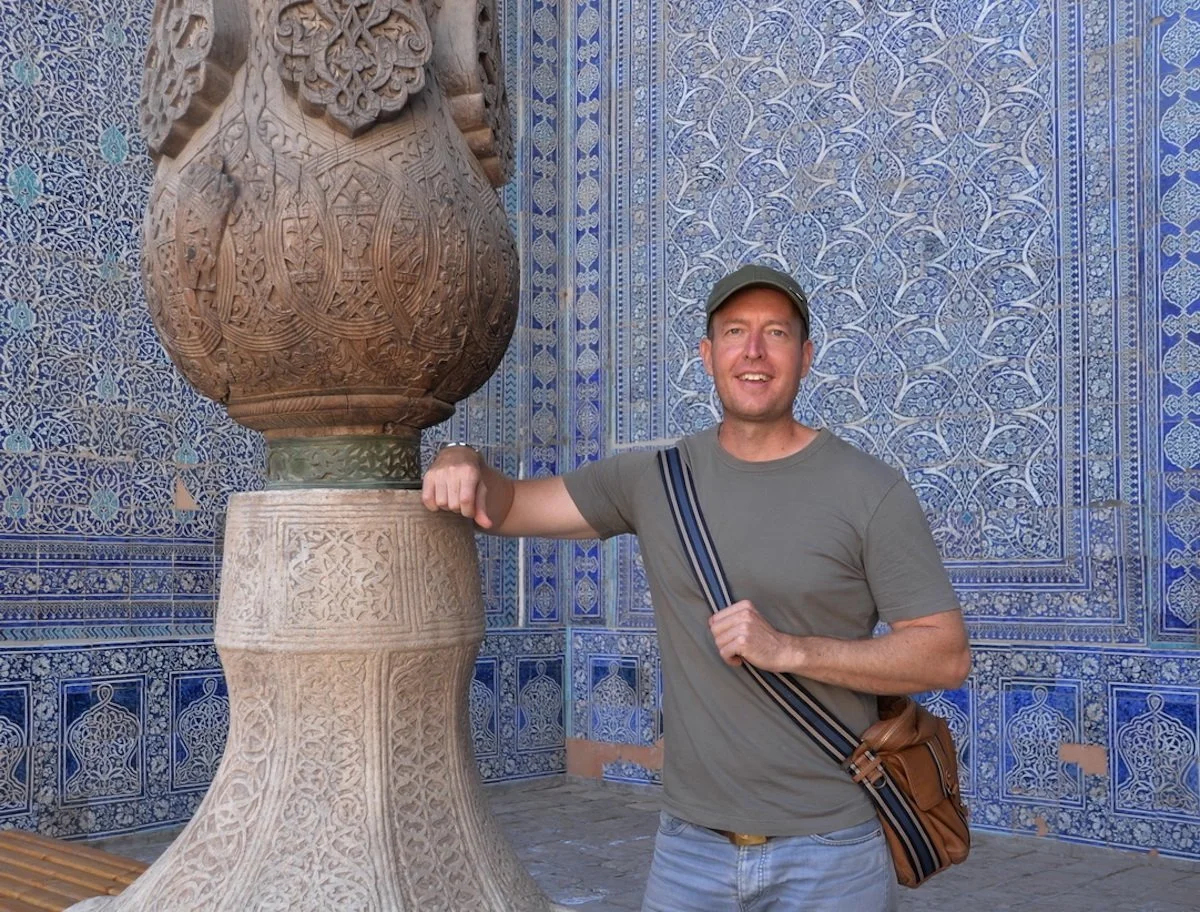
Chris Aslan | View Bio

snapshot

OVERVIEW

Central Asia spans a vast landscape through which the
Silk Road connected East and West for over two millennia. Along these routes, goods, ideas and belief systems moved between cultures, shaping a region defined by exchange, adaptation and continuity, the legacy of which remains
visible today in its cities, landscapes and material traditions.

Over 28 days and in the company of Central Asia specialist Chris Aslan, this spectacular journey traces these historical routes across Kazakhstan, Kyrgyzstan, Uzbekistan, Tajikistan and Turkmenistan. Beginning in Almaty, the journey follows long-established corridors of movement through the mountain landscapes of the Tien Shan and around Lake Issyk-Kul, before descending into the fertile Fergana Valley and continuing west to the great Silk Road centres of Samarkand and Bukhara.

Crossing into Turkmenistan, we then explore the ancient cities of Merv and Nisa before returning to Uzbekistan via Konye Urgench and the former Aral Sea basin to Khiva, concluding
in the capital of Tashkent. Throughout, lectures and workshops connect the people, places and histories encountered.

tour highlights

Explore the landscapes, cities and cultural traditions that shaped Central Asia along the Silk Road.

chris aslan

your expert tour leader

Stuart is a social historian with strong interests in modern history, and in particular Europe and the USA in the 20th century, and lately modern architecture, especially the residential architecture of Frank Lloyd Wright. The development of his latest interests arose from the intersection of the Bauhaus Movement and the Prarie style of architecture developed by Wright.

Read full bio >

Accompanied by an Experienced Tour Manager

Alongside your expert tour leader, an experienced tour manager will accompany for the entirety of the tour. They oversee logistics, ensure your comfort and safety, and provide friendly support – whether offering tips for free time, sharing a chat over dinner, or giving you space to relax.

tour ITINERARY

Almaty (2 nights), Karakol (2 nights), Bishkek (2 nights), Arslanbob (2 nights), Fergana (1 night), Khujand (1 night), Penjikent (1 night), Samarkand (2 nights), Bukhara (3 nights), Mary (1 night), Ashgabat (3 nights), Nukus (3 nights), Khiva (2 nights), Tashkent (2 nights)

Included meals are shown with the letters B, L and D
  • Day 1 | Tuesday 24 August
    Arrive Kazakhstan

    Kazakhstan’s largest metropolis, Almaty stands at the threshold between the open steppe and the mountain corridors that carried trade, ideas and materials along the Silk Road. Individual transfers to our hotel in Almaty will be arranged by Academy Travel. Following introductions in the hotel at midday, we enjoy a welcome lunch together at a local restaurant before an afternoon orientation walk through parks, Orthodox churches and Soviet-era monuments. We conclude the day with dinner in the hotel. Overnight Almaty (L, D)

  • Day 2 | Wednesday 25 August
    Almaty

    Rising immediately south of Almaty, the Tien Shan forms the high mountain backdrop that has long shaped movement and settlement across this region of the Silk Road. Its valleys and passes provided access between steppe and highland, while its slopes remain central to the city’s identity today. We begin our day by ascending into these mountains by cable car to Shymbulak, set high in the Ile-Alatau range, where we pause for coffee overlooking a sweeping alpine landscape. Returning to the city, we have lunch at a local restaurant before there is time to revisit Almaty’s urban character or relax. For those who wish, there is an optional visit to the Arasan Baths, a Soviet-era bathhouse complex offering a traditional banya experience, with heated marble halls, steam rooms and plunge pools. The evening is at leisure.
    Overnight Almaty (B, L)

  • Day 3 | Thursday 26 August
    Charyn Canyon & Kyrgyzstan
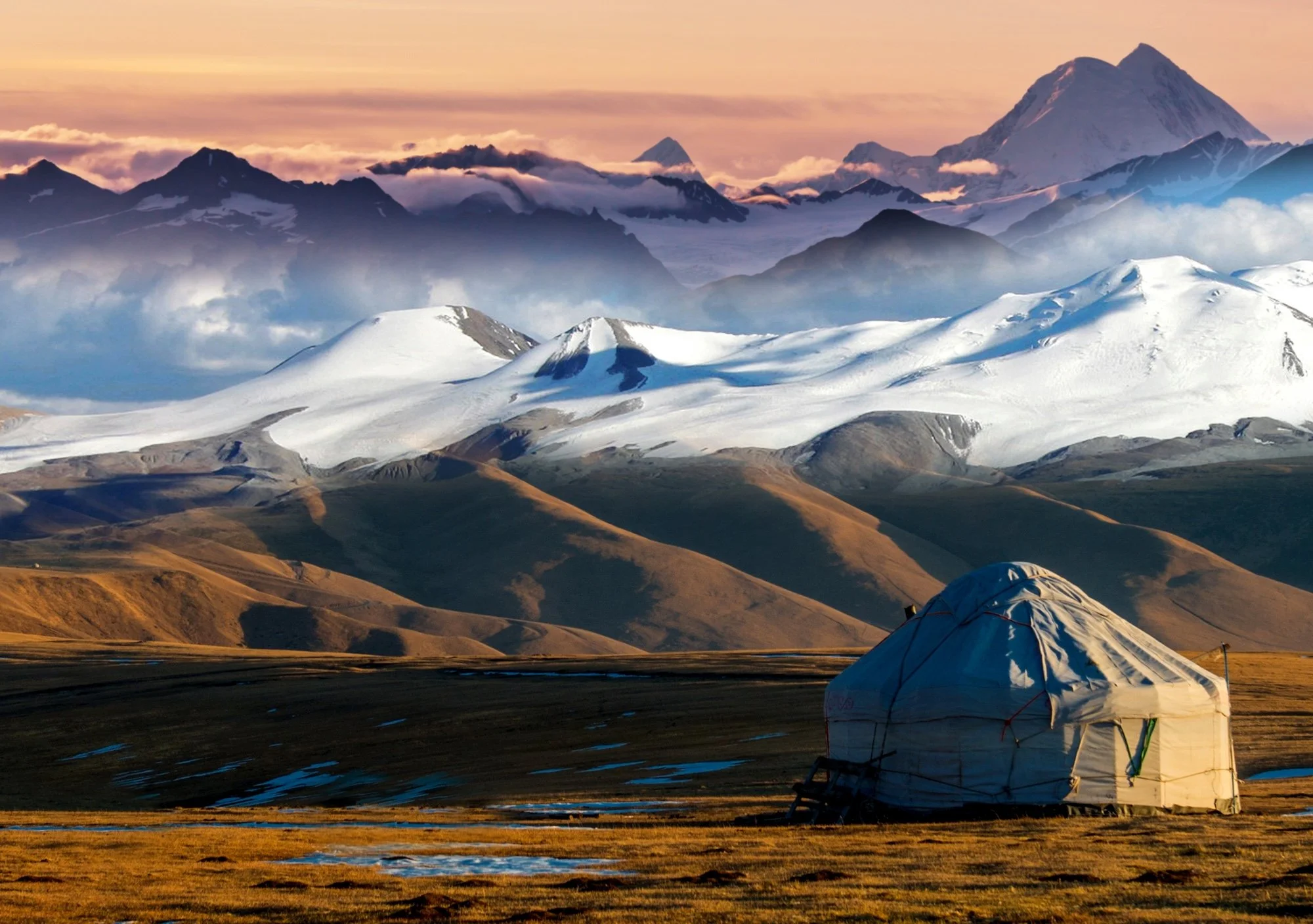
    Carved into the red sandstone of eastern Kazakhstan, Charyn Canyon presents one of Central Asia’s most striking natural landscapes. Such terrain defined how movement was possible across this region, with routes following river valleys and navigating the edges of deeply cut gorges. Departing Almaty today, we first travel east to explore the canyon. A picnic lunch is enjoyed beside the Charyn River before continuing our journey south to the Karkara Pass to Kyrgyzstan. Long used by nomadic herders moving between seasonal pastures, this route traces patterns of mobility that underpin life in the region. On crossing into Kyrgyzstan, we continue to Karakol, arriving in the early evening for dinner at the hotel.
    Overnight Karakol (B, PL, D)

  • Day 4 | Friday 27 August
    Altyn-Arashan
    Set high within the forested valleys of the Tien Shan, Altyn-Arashan is one of Kyrgyzstan’s most striking alpine landscapes. Departing the town in the morning, we travel by 4WD deep into the valley, following the dramatic route alongside the Arashan River. For the final stretch, we divide between those who wish to continue on foot along forested mountain trails and those who prefer to remain in the vehicles as the track climbs higher into the alpine scenery. At the top, we enjoy a picnic lunch surrounded by towering peaks and open meadows before descending back through the valley. We conclude the day back in Karakol with a visit to the wooden Holy Trinity Cathedral and the Dungan Mosque, built in 1907 in the form of a Chinese pagoda. Overnight Karakol (B, PL)

  • Day 5 | Saturday 28 August
    Lake Issyk-Kul
    Stretching across northeastern Kyrgyzstan, Lake Issyk-Kul is one of the world’s largest alpine lakes. Sheltered by the surrounding Tien Shan, it has long shaped patterns of settlement, seasonal migration and trade, providing a natural corridor through the mountains of Central Asia. Departing Karakol this morning, we begin our journey west along the southern shore of Lake Issyk-Kul, with a stop en route at a felt-making workshop. Here, local artisans demonstrate the traditional techniques used to produce patterned shyrdak and ala-kiyiz carpets, long central to nomadic Kyrgyz life. Continuing west, we enjoy lunch at a local café in Balykchy before attending a demonstration of traditional eagle hunting, a practice long associated with the nomadic cultures of Central Asia. We then pause at the Burana Tower, an 11th-century minaret marking the site of the medieval city of Balasagun, where carved stone balbals commemorate the dead, before arriving in Bishkek in the early evening. Dinner is served at the hotel. Overnight Bishkek (B, L, D)

  • Day 6 | Sunday 29 August
    Bishkek
    Bishkek reflects the legacy of Soviet urban planning in Central Asia, its wide boulevards, monumental squares and public statuary expressing the political and cultural frameworks that shaped the region through the 20th century. Simultaneously, its markets continue older patterns of trade that predate these overlays. Our tour this morning takes in Bishkek’s key landmarks including Ala-Too Square, Victory Square and monuments to figures such as Manas and Kurmanzhan Datka, alongside statues of Lenin, Marx and Engels that remain part of the urban landscape. We also visit the National History Museum, whose collections trace Kyrgyzstan’s past from early nomadic cultures through to the modern state. Lunch is enjoyed at a local restaurant before we return to our hotel for an afternoon at leisure. Overnight Bishkek (B, L)

  • Day 7 | Monday 30 August
    To Arslanbob
    Set on the southern edge of Kyrgyzstan near the Uzbek border, Arslanbob overlooks the fertile Fergana Valley – one of Central Asia’s most important agricultural and trading regions. The village is known for its vast walnut forests, among the largest in the world, where seasonal harvests have shaped local life for generations. Today we fly from Bishkek to Jalal-Abad and continue by road into the mountains to reach Arslanbob, arriving in time for lunch. In the afternoon, we explore the surrounding walnut forests and walk to one of the nearby waterfalls. Dinner is enjoyed at our accommodation, where the group is split across several guesthouses, offering a simple and more rustic experience.
    Overnight Arslanbob (B, L, D)

  • Day 8 | Tuesday 31 August
    Arslanbob
    In Arslanbob, food preparation remains a visible part of daily life, with techniques passed down through generations and closely tied to seasonal rhythms and local ingredients. Sweet making in particular draws on methods of heating, pulling and shaping sugar, producing confections that are shared within the community and sold in local markets across the Fergana region. The morning is set aside to relax and take in the movements of local life or enjoy a short walk through the surrounding walnut forests. We then gather for a lecture before taking part in a sweets-making demonstration, watching these traditional techniques in practice. The remainder of the afternoon is at leisure, reconvening in the early evening for dinner at our accommodation.
    Overnight Arslanbob (B, L, D)

  • Day 9 | Wednesday 1 September
    To Fergana
    Movement between mountain and plain defined this section of the Silk Road, where routes crossed political and geographic boundaries while linking distinct cultures and economies. Today traces one of these transitions as we travel from Kyrgyzstan into Uzbekistan. Departing Arslanbob this morning, we descend towards the Uzbek border, where formalities may take some time. Once across, we continue by road to Fergana, a working regional city at Uzbekistan’s very eastern point and a centre for industry. We arrive in Fergana in the late afternoon, with dinner enjoyed together in a local restaurant. Overnight Fergana (B, L, D)

  • Day 10 | Thursday 2 September
    Silk Workshop & Tajikistan
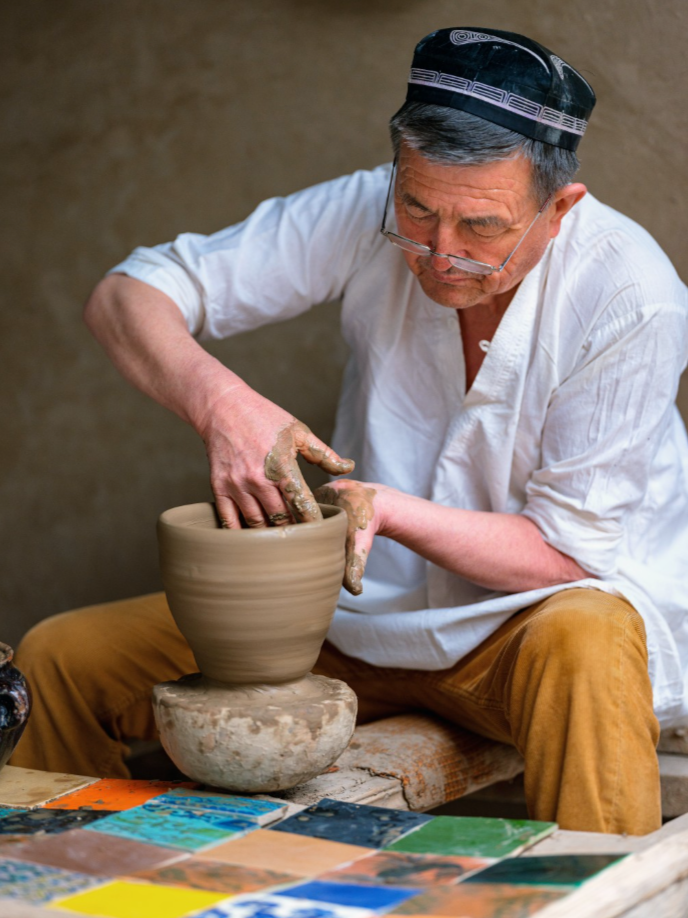
    In eastern Uzbekistan, the legacy of Silk Road production remains embedded in local industry, particularly in the textile traditions of the Fergana region, where silk weaving and dyeing continue to be practised using both inherited and adapted techniques. An early start to the day brings us to the Kumtepa Bazaar, one of the region’s largest markets, before we visit a family-run workshop to observe the process of ikat silk production. Lunch follows at a local restaurant before we continue our journey west to Rishton, long associated with ceramic production. Here, we visit a local workshop to observe the full process, from shaping the clay and applying natural glazes to the intricate hand-painted decoration for which Rishton is known. The final leg of today’s journey takes us to the Tajik border, where the boundary traces an irregular line through the Fergana region, before continuing to Khujand. After time to freshen up, a late dinner is enjoyed at the hotel. Overnight Khujand (B, L, D)

  • Day 11 | Friday 3 September
    Khujand & Penjikent
    One of Central Asia’s oldest cities, Khujand occupies a strategic position on the Syr Darya, where successive layers of Persian, Soviet and modern Tajik identity remain visible in its public spaces. Our day begins with a visit to the city’s Soviet-era park, where monuments to Lenin and the Afghanistan campaign reflect its more recent past. Continuing to the Somoni statue, we take a cable car across the river for views over the city before visiting the local bazaar, where everyday goods are traded. Lunch is then enjoyed at a local restaurant before we depart for Penjikent, travelling west along the northern edge of Tajikistan and arriving close to the Uzbek border. On arrival, dinner is served at a traditional teahouse, where we enjoy qurutob, a staple Tajik dish presented in large wooden platters. Overnight Penjikent (B, L, D)

  • Day 12 | Saturday 4 September
    Penjikent & Uzbekistan
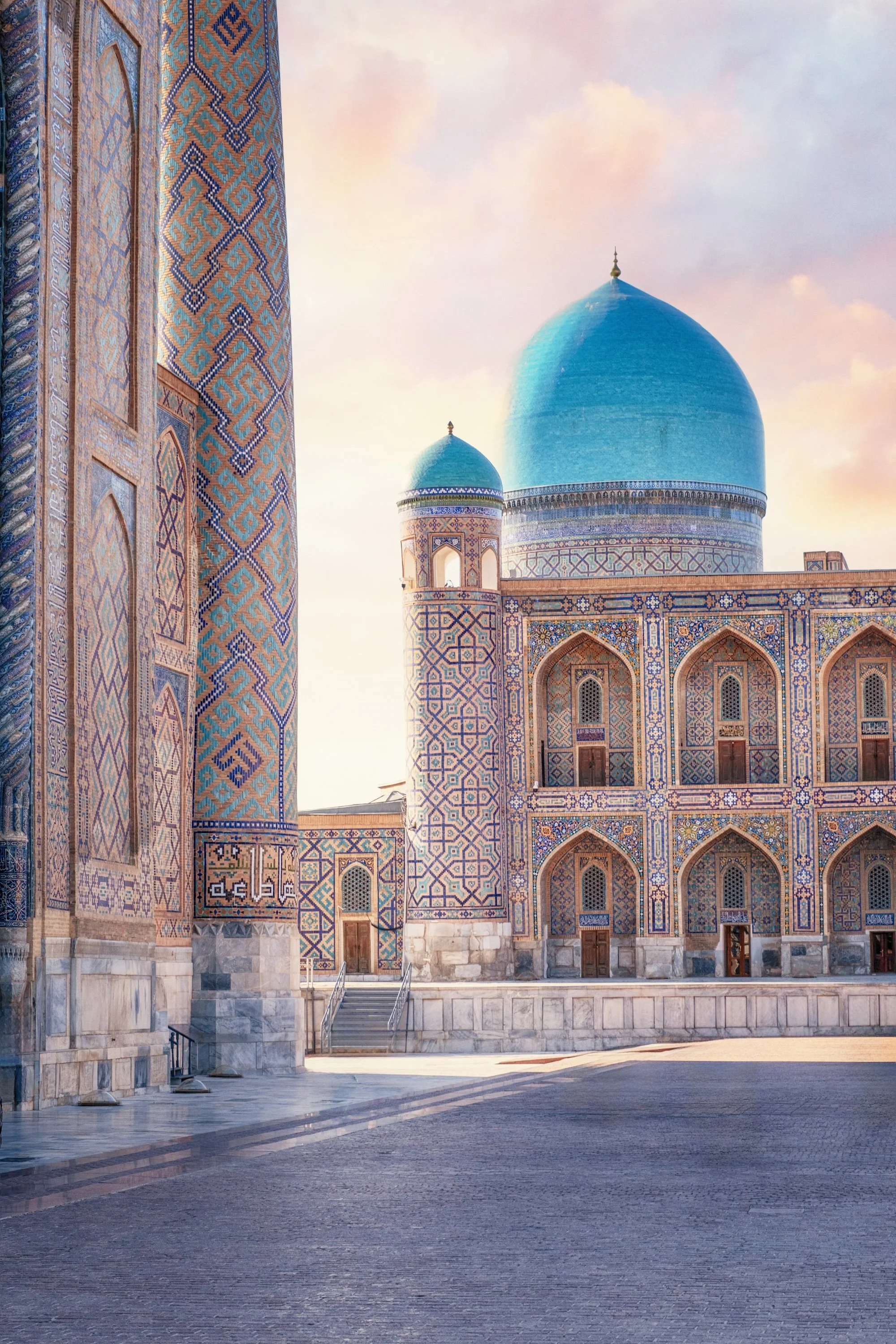
    Once a major Sogdian city, Penjikent’s position on the Zeravshan River places it within a network of settlements that supported trade and cultural exchange across Central Asia before the rise of the great Silk Road cities further west. Our morning begins with a visit to the Penjikent Museum, whose collections illuminate this early urban culture, before continuing to the archaeological site of Sarazm, a UNESCO World-Heritage site dating to the 4th millennium BCE and among the oldest known settlements in the region. We then cross back into Uzbekistan and continue to the historic city of Samarkand, where lunch is enjoyed on arrival. The afternoon is devoted to Samarkand’s Timurid legacy, beginning at the Gur-e Amir mausoleum, the richly decorated resting place of Timur, whose conquests reshaped much of Central Asia. We then continue to the Registan, the monumental centre of the city, where three grand madrassas frame one of the most recognisable architectural ensembles of the Islamic world. The day concludes with dinner at a local restaurant overlooking the Registan square. Overnight Samarkand (B, L, D)

  • Day 13 | Sunday 5 September
    Samarkand
    Few cities better illustrate the changing fortunes of Central Asia than Samarkand. From its origins as the Sogdian city of Afrasiyab to its transformation under Timur into the capital of a vast empire, the city’s surviving monuments stand as enduring expressions of Timurid power, scholarship and the craftsmanship of artisans drawn from across Central Asia and Persia. We begin by exploring these earliest chapters of the city’s history at the Afrosiyob Museum, set above the remains of ancient Samarkand, where remarkable wall paintings and archaeological finds illuminate its Sogdian origins. We then continue to the Ulugh Beg Observatory, constructed in the 15th century by the Timurid ruler and astronomer Ulugh Beg. The immense sextant at its heart enabled some of the most accurate astronomical observations of the medieval world, placing Samarkand at the forefront of scientific learning. After lunch together, our next visit is to the Shah-i-Zinda necropolis – an avenue of mausoleums renowned for some of the finest surviving tilework in the Islamic world, where intricate geometric patterns, calligraphy and glazed ceramics form a remarkable expression of Timurid craftsmanship. We conclude the day with a visit to a traditional paper-making workshop before returning to our hotel. Overnight Samarkand (B, L)

  • Day 14 | Monday 6 September
    To Bukhara
    One of Central Asia’s great historic cities, Bukhara has long been recognised as a centre of Islamic learning, trade and urban life, with its remarkably intact core preserving the fabric of a pre-modern Silk Road settlement. Departing Samarkand by train this morning, we travel across the plains to Bukhara, arriving around midday. Lunch is enjoyed at a local restaurant before we visit the Sitorai Mokhi-Khosa – the former summer palace of the last Emir of Bukhara, where Russian-influenced interiors combine with traditional Bukharan craftsmanship in a striking expression of late emirate culture. We also visit the Naqshbandi Mausoleum, one of Central Asia’s most important Islamic pilgrimage sites and associated with Baha-ud-Din Naqshband, founder of the influential Naqshbandi Sufi order, before returning to the city. Overnight Bukhara (B, L)

  • Day 15 | Tuesday 7 September
    Bukhara
    Bukhara’s old city remains a dense maze of madrassas, mosque courtyards, domed markets and narrow lanes, where layers of architectural patronage from different dynasties still define the urban landscape. This morning we explore the historic centre, visiting the Kalon Mosque and the surrounding madrassas, whose monumental facades and glazed tilework form one of the city’s most recognisable ensembles. We also explore the historic trading domes and nearby streets that once lay at the commercial heart of Silk Road Bukhara. The afternoon is then at leisure for independent exploration, shopping in the bazaars or an optional visit to a traditional hammam. Overnight Bukhara (B)

  • Day 16 | Wednesday 8 September
    Biennial
    The Bukhara Biennial brings contemporary artistic practice into dialogue with one of Central Asia’s most historically intact urban environments, using the city’s madrassas, courtyards and public spaces as settings for exhibitions and installations. This creates a layered experience, where modern work is encountered within the architectural fabric of the Silk Road. Today is set aside to explore the Biennial at leisure, allowing time to engage with its exhibitions across the city. The day offers a slower pace and the chance to experience Bukhara beyond a structured program. Overnight Bukhara (B)

  • Day 17 | Thursday 9 September
    Turkmenistan & Merv

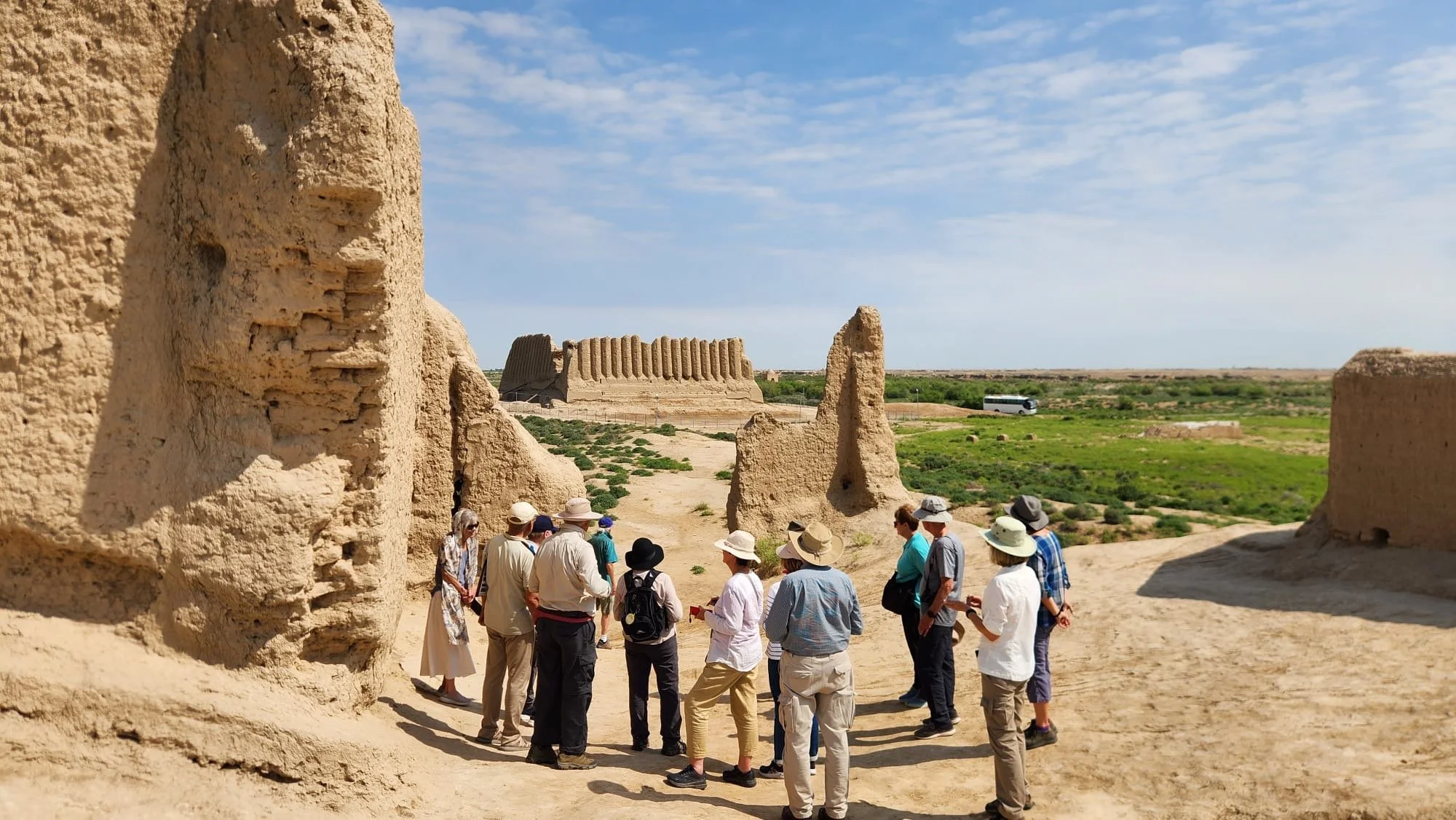
    Merv stands among the great cities of the ancient and medieval world, its successive layers of settlement reflecting the rise and fall of empires that shaped Central Asia across more than two millennia. At its height, it was one of the largest cities on the Silk Road until its destruction by the Mongols in the 13th century. Departing Bukhara today, we travel to the Farap border crossing, where, after completing border formalities, we enter the fifth Stan of our journey – Turkmenistan. Lunch is enjoyed in Turkmenabat before continuing to the archaeological site of Merv. Here we explore Gyaur Kala, once a fortified city of the Sasanian period, before continuing to Sultan Kala, where the Mausoleum of Sultan Sanjar recalls the city’s medieval zenith. We then continue to nearby Mary to check into our hotel, with dinner tonight in a local restaurant. Overnight Mary (B, L, D)

  • Day 18 | Friday 10 September
    Ashgabat

    Modern Turkmenistan finds its clearest architectural expression in Ashgabat, where expansive boulevards, monumental spaces and white marble buildings reflect a national identity shaped in the post-Soviet period. Departing Mary this morning, we travel by road to Ashgabat, with lunch enjoyed at a local restaurant on arrival. After checking into our hotel, an afternoon sightseeing tour introduces the city’s grand civic spaces, including the Neutrality Arch, Independence Park and the Rukhnama Monument, each reflecting different aspects of Turkmenistan’s modern identity. The remainder of the evening is at leisure. Overnight Ashgabat (B, L, D)

  • Day 19 | Saturday 11 September
    Nisa

    Located just outside Ashgabat, Nisa was one of the early centres of the Parthian Empire, whose influence extended across the Iranian plateau and much of Central Asia from the 3rd century BCE. Its fortified walls, ceremonial spaces and royal structures reveal a society positioned between the nomadic traditions of Central Asia and the imperial cultures of the ancient Near East. A short drive this morning brings us to the site of Nisa, where we explore the remains of this Parthian royal complex. We then continue to Gypjak to visit the Turkmenbashi Ruhy Mosque and Mausoleum, a vast complex completed in 2004 that combines one of Central Asia’s largest mosques with the mausoleum of Saparmurat Niyazov, Turkmenistan’s first president. Returning to Ashgabat for lunch, the afternoon includes a visit to the Turkmen Carpet Museum, home to an extensive collection of hand-woven rugs, followed by the Ertogrul Ghazi Mosque. Later, we gather for a lecture before dinner at the hotel. Overnight Ashgabat (B, L, D)

  • Day 20 | Sunday 12 September
    Ashgabat

    The National Museum of Turkmenistan brings together the archaeological discoveries and ethnographic heritage that define the country’s long history. Among its collections are artefacts from the ancient cities of Nisa and Merv, Bronze Age material from Margiana, Turkmen carpets, jewellery, costume and finely worked metalwork, providing a comprehensive overview of the country’s cultural development. Our morning is devoted to exploring the museum’s galleries before we continue to a private Akhal-Teke horse stable, where we learn about this distinctive breed, long associated with Turkmen culture and valued for its endurance and striking appearance. Lunch follows at a nearby restaurant, after which the afternoon is at leisure. We reconvene in the early evening for dinner together. Overnight Ashgabat (B, L, D)

  • Day 21 | Monday 13 September
    Konye Urgench & Uzbekistan

    Once the capital of the Khorezm Empire, Konye Urgench was one of Central Asia’s great medieval powers. Situated on the lower reaches of the Amu Darya, it flourished as a major Silk Road centre before its destruction by the Mongols in the early 13th century, leaving behind an extraordinary concentration of monuments that today reflect the city’s former importance. This morning we depart Ashgabat and fly to Dashoguz before travelling by road to Konye Urgench. Following lunch, we explore the archaeological site, including its surviving mausoleums and minarets. Later in the afternoon, we then cross back into Uzbekistan and continue to Nukus, where dinner is enjoyed at the hotel. Overnight Nukus (B, L, D)

  • Day 22 | Tuesday 14 September
    Nukus

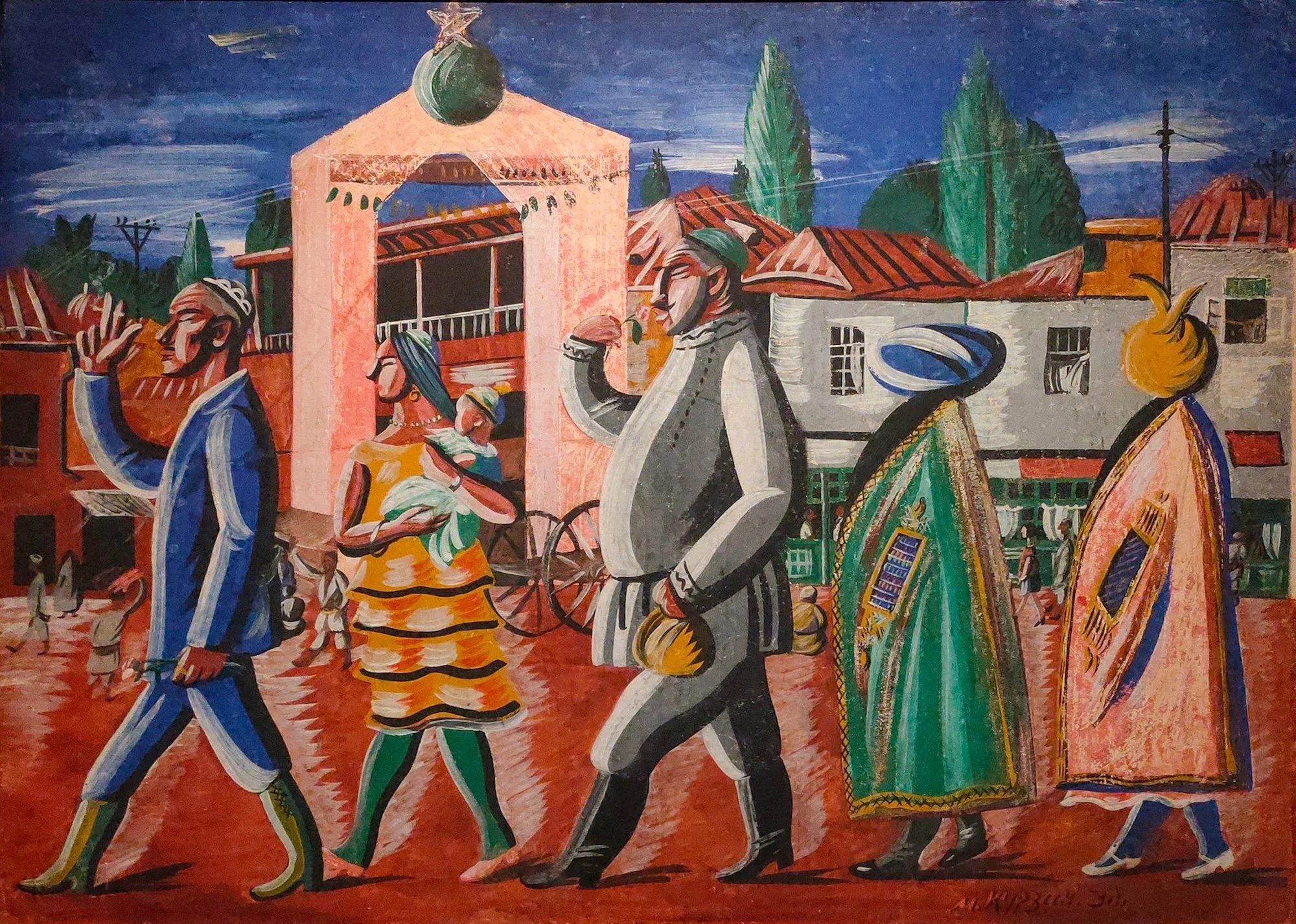
    Situated in western Uzbekistan, Nukus lies at the edge of the former Aral Sea basin, a region profoundly shaped by Soviet-era irrigation and the expansion of cotton production. Today, it is known both for its remote setting and for the unexpected presence of one of Central Asia’s most significant museum collections. Our morning begins with a visit to the Savitsky Museum, whose collection of Russian avant-garde works was assembled in relative isolation during the Soviet period and is displayed alongside Karakalpak textiles, jewellery and other applied arts. Lunch is then enjoyed at a local restaurant before we continue to the Mizdakhan Necropolis, a complex of tombs, mausoleums and sacred sites set across a low ridge, long associated with local pilgrimage traditions. Returning to our hotel, we gather for a lecture before concluding the day with dinner together. Overnight Nukus (B, L, D)

  • Day 23 | Wednesday 15 September
    Muynak

    Once a major fishing port on the shores of the Aral Sea, Muynak’s economy and daily life were closely tied to waters that have since receded far beyond the town. What remains today is a stark and dislocated landscape, where rusting fishing vessels lie stranded on the dry seabed, their hulls gradually decaying in what has become known as the ‘ship graveyard’. These remnants stand as a visible record of one of the most dramatic environmental transformations of the 20th century. Today we travel by coach to Muynak, arriving in time for lunch at a local guesthouse. We then visit the former shoreline to view these rusting ships and their striking presence on the dry seabed before continuing to the local museum, which documents the history of the Aral Sea and its impact on the region. A brief stop is also made at the World War II memorial before our return to Nukus in the afternoon. Dinner this evening is enjoyed at the hotel. Overnight Nukus (B, L, D)

  • Day 24 | Thursday 16 September
    Shylpyk Dakhma & Carpet Workshop

    Rising above the surrounding plains, Shylpyk Dakhma is one of the most enigmatic monuments of ancient Khorezm. This circular hilltop structure is widely associated with Zoroastrian funerary practices, reflecting religious traditions that flourished across Central Asia long before the arrival of Islam. Departing Nukus this morning, we travel towards the Khorezm oasis, pausing to explore Shylpyk Dakhma, whose commanding hilltop position offers sweeping views across the surrounding desert landscape. Continuing across the Amu Darya, we arrive then in Khiva for a late lunch. The focus of our afternoon is our special visit to the UNESCO-supported silk carpet workshop established with the involvement of our tour leader, where we learn how traditional weaving techniques, natural dyes and historic Central Asian patterns have been revived by local artisans. A lecture follows before dinner at a local restaurant concludes our day. Overnight Khiva (B, L, D)

  • Day 25 | Friday 17 September
    Khiva

    Encircled by towering mud-brick walls, the Ichan Kala preserves an extraordinary concentration of mosques, madrassas, palaces and minarets, many dating from the 18th and 19th centuries when Khiva flourished as the capital of the Khanate of Khiva. Its remarkably intact streetscape offers one of the clearest impressions of a Silk Road city anywhere in Central Asia. We begin our day with a walk from the turquoise-domed Kalta Minor Minaret through the heart of the old city. Our exploration continues to the mausoleum of Pahlavan Mahmud, the spiritual patron of Khiva, before visiting the elegant Islom Khoja Madrasa and Minaret and the richly decorated Tosh-Hovli Palace, once the residence of the Khivan Khans. Lunch is at leisure, allowing time to explore at your own pace, before the day concludes with a special dinner at the home of a local family, accompanied by traditional music and hospitality.
    Overnight Khiva (B, D)

  • Day 26 | Saturday 18 September
    Nurullaboy Palace & Tashkent

    Built during the final decades of the Khanate of Khiva, the Nurullaboy Palace reflects a period of transition, combining traditional Central Asian craftsmanship with European tastes. Together with the surrounding buildings, it offers a valuable perspective on Khiva beyond the walls of the Ichan Kala. After a morning silk organza workshop, where local artisans demonstrate the intricate techniques used to weave the region’s delicate silk fabrics, we continue to the Nurullaboy Palace complex. Following lunch, we then visit the nearby Mennonite Museum, which explores the history of the
    German Mennonite communities invited to the region and their contribution to local architecture. Returning to the old city, we conclude at the Kunya Ark citadel, the fortified seat of Khiva’s rulers, before transferring to the airport for our evening flight to Tashkent. Dinner is served after checking into our hotel in Tashkent. Overnight Tashkent (B, L, D)

  • Day 27 | Sunday 19 September
    Tashkent

    Modern Tashkent is a city shaped by reconstruction and reinvention, where Soviet-era boulevards and newer cultural institutions sit alongside older quarters that preserve traces of the city’s longer Silk Road history. Much of the present urban landscape emerged following the devastating 1966 earthquake, which transformed both the scale and appearance of the Uzbek capital. Our morning begins with
    a journey on the Tashkent Metro to the domed Chorsu Bazaar, one of the city’s busiest traditional markets, before continuing to the Centre of Islamic Civilisation, a major institution dedicated to the history of Islam in Uzbekistan and Central Asia. Following lunch at a local restaurant, the afternoon takes in the Earthquake Memorial, the World War II memorial, Independence Square, the Romanov Residence and Amir Temur Square. In the evening, we gather for a farewell dinner to mark the conclusion of our journey across the Five Stans
    of Central Asia. Overnight Tashkent (B, L, D)

  • Day 28 | Monday 20 September
    Depart Tashkent
    Following breakfast this morning, an included transfer is provided to Tashkent airport for onward departures. (B)

Accommodation on this journey reflects the realities of travelling across Central Asia. While major cities such as Tashkent and Ashgabat feature modern five-star hotels, elsewhere we stay in smaller locally run properties. Standards and amenities will therefore vary throughout the tour, particularly in more isolated areas.

Tour Accommodation

  • Almaty, Rixos Almaty Hotel
    (2 nights)

    Karakol, Karagat Hotel
    (2 nights)

    Bishkek, Orion Hotel
    (2 nights)

    Arslanbob, Local Guest Houses
    (2 nights)

    Fergana, Club 777 Hotel
    (1 night)

    Khujand, Parliament Hotel
    (1 night)

    Penjikent, Penjikent Plaza
    (1 night)

    Samarkand, Kosh Havuz Hotel
    (2 nights)

    Bukhara, Shakhristan Hotel
    (3 nights)

    Mary, Hotel Mary
    (1 night)

    Ashgabat, Ýyldyz Hotel
    (3 nights)

    Nukus, Jipek Joli Hotel
    (3 nights)

    Khiva, Kamil Palace Hotel
    (2 nights)

    Tashkent, Swissotel
    (2 nights)

tour booking

$22,680 AUD per person, twin share (land content only)
$3,480 AUD supplement for sole use of a hotel room

A $2,000 deposit is required per person to confirm your booking on tour. This deposit is non-refundable.

Hold a Place

Still deciding? We are happy to hold a tentative place for 7 days while you make your final arrangements.

Book Online

To secure your place(s) on tour, book online below with “Athena”, our virtual tour consultant.

DOWNLOAD FORM

Download a printable booking form. You can also complete the form on screen and submit via email.

your tour consultant

The consultant for this tour is Jamal Fairbrother. For further information or to discuss the tour, please call 9235 0023 (Sydney) or 1800 639 699 (outside Sydney) or email jamal@academytravel.com.au

have you thought about?

Academy Travel is more than just a tour operator. We are also a full-service travel agency who can assist you with all aspects of your travel, including flights, transfers, pre-tour arrival, additional travel and comprehensive travel insurance.

can’t make this departure?

If these dates don't work for you, register to hear about the next tour.