Berlin & Beyond

Berlin, Dresden, Leipzig & Potsdam

Take an in-depth look at one of Europe's most cultured and dynamic capitals, and explore nearby Dresden and Leipzig.

TOUR STATUS

Places Available | Maximum 16

TOUR DATES

May 3-16, 2027 | 14 Days

TOUR LEADER

Thomas Abbott | View Bio

snapshot

  • The tour starts at 6.30pm on
    Monday 3 May, at the Adina Apartment Hotel Hackescher Markt, Berlin.

    The tour ends after breakfast on Sunday 16 May, at The Westin Grand Hotel, Berlin.

  • Grade Two. This tour is designed for people who lead active lives.

    View all requirements >

  • 13 nights’ accommodation in
    centrally located 4 & 5-star hotels. Airport-Hotel transfers as indicated.
    All breakfasts, 3 lunches and 6 dinners. Premium tickets to 3 performances. Services of an expert tour leader and an experienced tour manager throughout. All ground transport, entrance fees and tipping.

    View standard tour inclusions >

  • $13,880 AUD per person, twin share (land content only)
    $3,080 AUD supplement for sole use of a hotel room

    A $1,000 AUD non-refundable deposit is required per person to confirm your booking on tour

OVERVIEW

Berlin stands as one of Europe’s most layered capitals, its streets and monuments reflecting centuries of political change and artistic ambition.

Its architecture and museums have long reflected the priorities of those in power, shaping how history and culture were presented to the public. Today, the city’s historic centre and rebuilt skyline reveal how Germany engages with its past while redefining itself as a modern democratic capital. On this 14-day tour, led by Berlin-based historian Thomas Abbott, we explore the city from both former East and West Berlin, tracing its evolution from Prussian court city to reunified capital.

We begin with Berlin’s royal foundations and the palaces of Potsdam, before turning to Museum Island and the city’s major galleries. A journey to Leipzig and Dresden introduces Saxon court culture and Baroque collections, before returning to Berlin to examine the legacy of division and the contemporary architecture shaping the capital in the 21st century.

Through expert-led visits, fine dining and performances, the tour allows time to truly appreciate the complexity of Berlin.

tour highlights

Take in-depth study of Berlin and Saxony through architecture, art and political transformation

Thomas abbott

your expert tour leader

Thomas has led many cultural tours throughout Germany, Europe and the USA, both with Academy Travel and other leading tour companies. Thomas is a specialist in architectural history from the Baroque to the present day, with a wide knowledge of the fine and performing arts. He has an intimate knowledge of Germany, residing in Berlin since 1987, making him the ideal interpreter of the language, history & culture.

Read full bio >

Accompanied by an Experienced Tour Manager

Alongside your expert tour leader, an experienced tour manager will accompany for the entirety of the tour. They oversee logistics, ensure your comfort and safety, and provide friendly support – whether offering tips for free time, sharing a chat over dinner, or giving you space to relax.

tour ITINERARY

Berlin (5 nights), Leipzig (2 nights), Dresden (2 nights), Berlin (4 nights)

Included meals are shown with the letters B, L and D

  • Day 1 | Monday 3 May
    Arrive Berlin
    Berlin’s identity has been forged by successive political regimes – from Prussian capital and imperial seat to the German Democratic Republic (GDR) and the reunified metropolis today. Each transition has left visible traces in the streetscape, nowhere more legible than in Mitte, where the administrative core of East Berlin sits atop earlier foundations. Streets around Hackescher Markt and Museum Island reveal these histories in their architecture and urban fabric. After individual arrivals, we settle into our hotel in Mitte, steps from the Spree and the restored courtyards of the Hackesche Höfe. This evening, we gather for introductions before walking to dinner at Oxymoron, set in an early 20th-century courtyard – a setting that embodies Berlin’s complex past and contemporary reinvention. Overnight Berlin (D)

  • Day 2 | Tuesday 4 May
    Prussian Ambition – Charlottenburg Palace

    As Prussia expanded its influence in the late 17th century, Berlin developed from a modest residence town into a European capital, deliberately fashioned by the rulers of Brandenburg-Prussia as a setting for dynastic authority and cultural patronage. After an introductory talk in our hotel this morning, we travel westward, crossing what was once the Cold War divide to Charlottenburg Palace. Built by Elector Friederich III in 1699 as a summer palace for his wife Sophie Charlotte, this regal estate, the largest palace in Berlin, is framed by a baroque-style garden and contains over 600 gems and treasures from the century-long supremacy of the Hohenzollern dynasty. After our tour here, we continue to the nearby Käthe Kollwitz Museum, which holds one of the largest collections of the artist’s work. Kollwitz’s prints and sculpture, shaped by war, grief and social upheaval, offer a stark counterpoint to the royal grandeur we have just encountered. A welcome lunch is then enjoyed together along Kurfürstendamm before we return to our hotel, where the evening is at leisure. Overnight Berlin (B, L)

  • Day 3 | Wednesday 5 May
    Berlin’s Imperial Core | Performance I
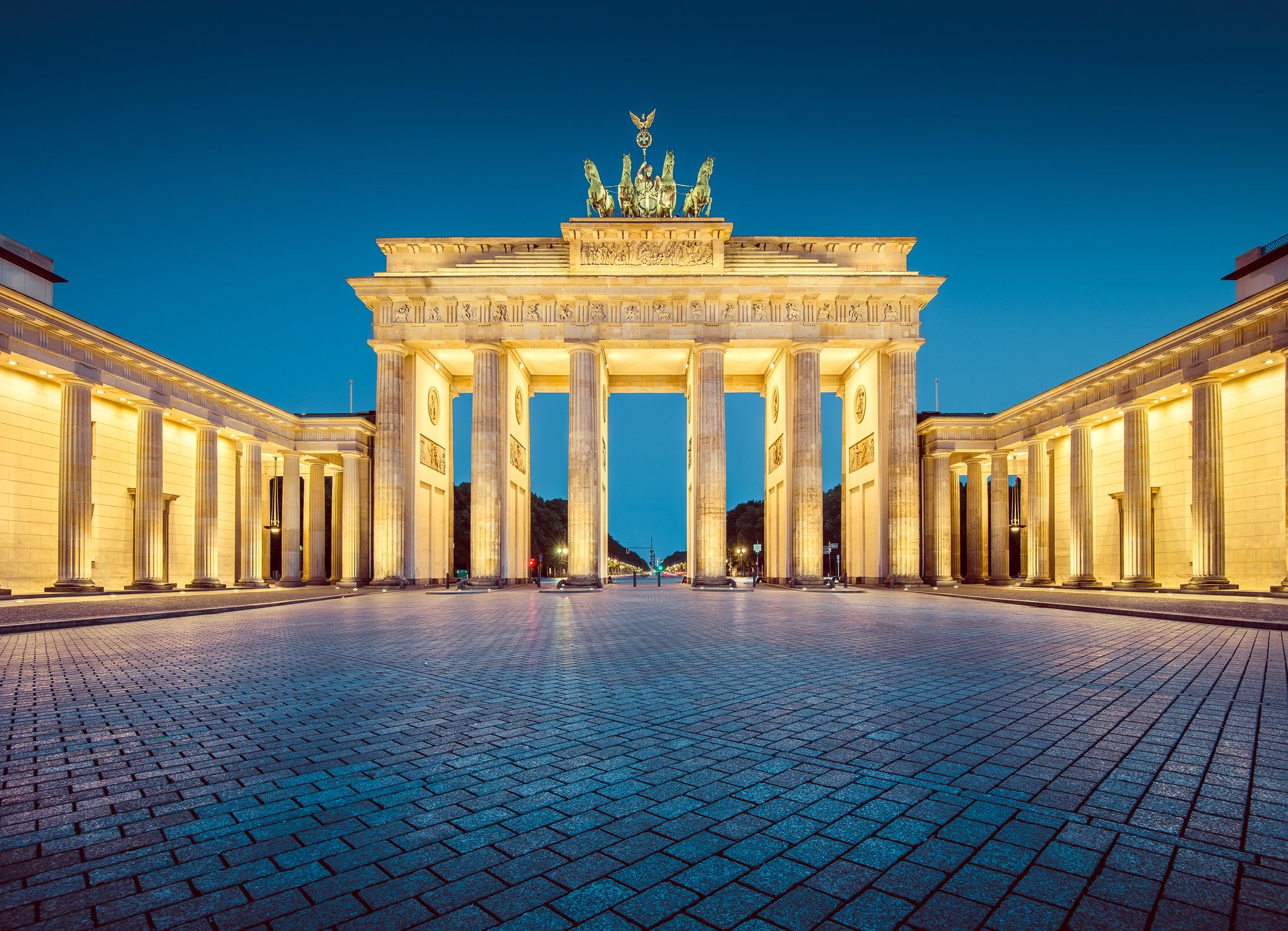
    Berlin’s historic centre has been repeatedly reshaped by changing political regimes. From royal residence to imperial capital, from the monumental core of the GDR to the heart of a reunified Germany, this compact district reveals how architecture can both assert and revise authority. Today’s visits begins within former East Berlin at the Humboldt Forum. Housed within the reconstructed Berlin Palace, its baroque facades re-establish the outline of the Hohenzollern residence, while its contemporary interior brings together the Ethnological Museum and the Museum of Asian Art. Continuing along Unter den Linden, we arrive at the Brandenburg Gate, once a symbol of Prussian triumph, later stranded in the Cold War border zone and now emblematic of unity. After a break for lunch, our afternoon is spent exploring the Gemäldegalerie. Its systematic presentation of European painting reflects 19th-century Berlin’s determination to stand among Europe’s great cultural capitals, with works by Botticelli, Raphael, Caravaggio, Bruegel, Vermeer and Rembrandt anchoring the collection. In the evening we plan to attend a performance at one of Berlin’s leading opera houses. Overnight Berlin (B)

  • Day 4 | Thursday 6 May
    Potsdam – The Theatre of Monarchy

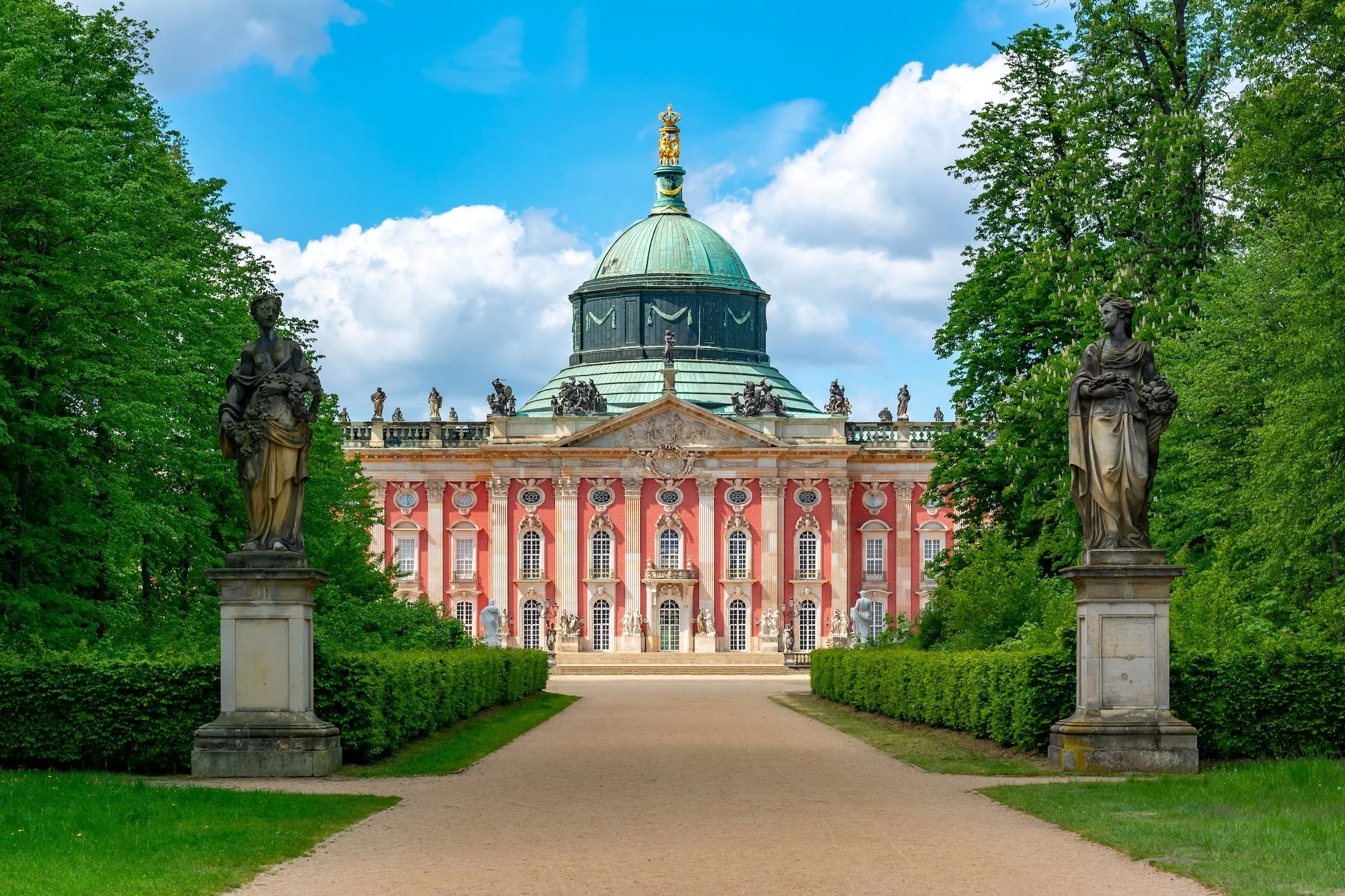
    Potsdam was the preferred residence of the Prussian kings and the setting for some of their most ambitious projects. While Berlin developed as the political centre of the state, Potsdam became the place where royal taste and power were most visibly expressed. This morning we travel to Potsdam for a full day within Sanssouci Park. Built by Prussian King Frederick the Great as his summer palace, it sits above terraced vineyards in deliberate contrast to the grand ceremonial courts of Europe. Its intimate scale and refined Rococo decoration reflect a ruler who styled himself as much philosopher as monarch. Walking through the gardens to the Chinese House, we see how architectural fantasy and taste reinforced royal status. We then visit the Neues Palais, constructed after the Seven Years’ War as a confident assertion of Prussia’s strength. Its monumental scale and richly decorated ceremonial halls present a markedly different expression of kingship, shifting from the intimacy of Sanssouci to grandeur on display. An early dinner in Potsdam concludes our day before returning to Berlin. Overnight Berlin (B, D)

  • Day 5 | Friday 7 May
    Museum Island – Art, Archaeology & Authority

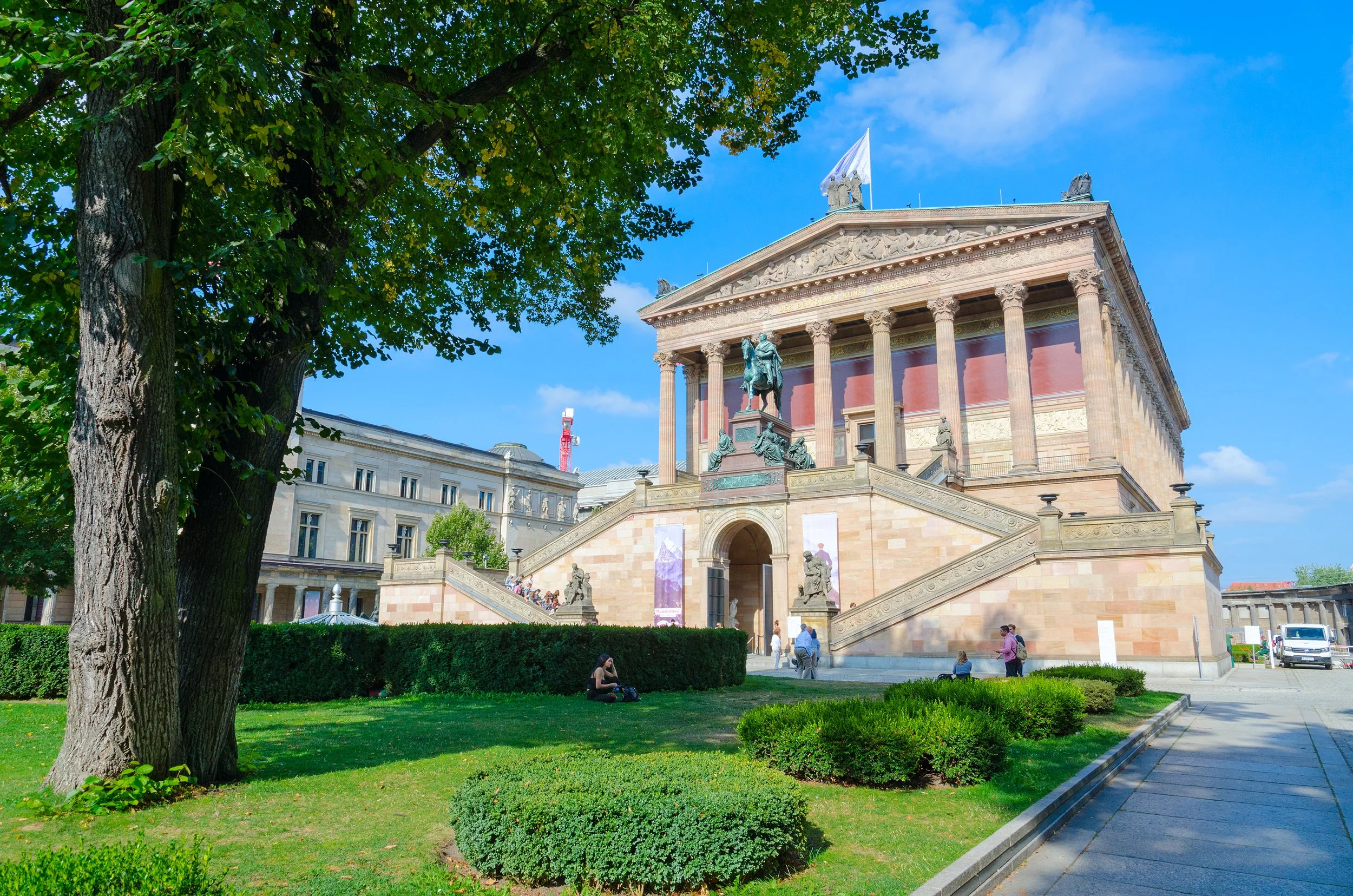
    Museum Island represents 19th-century Berlin at its most confident. As Prussia emerged as a European power, its rulers invested heavily in public museums, believing that art and antiquity could educate citizens and legitimise the modern state. Built between 1824 and 1930, the five museums form a coherent architectural ensemble and are now recognised as a UNESCO World-Heritage site. Our morning begins at the Neues Museum on the northern edge of Museum Island. Severely damaged during the Second World War, it stood in ruins for decades on the eastern side of the divided city. Its careful restoration after reunification preserves visible traces of that destruction, so that the building itself speaks to Berlin’s passage from war and division to renewal. Within, the Egyptian Museum and Papyrus Collection offer insight into the 19th-century passion for archaeology, most famously through the bust of Nefertiti. There is then time at leisure to explore further before we regroup for our cruise along the River Spree. Those who wish might cross to the Alte Nationalgalerie, whose galleries of 19th-century painting include works by Caspar David Friedrich, Adolph Menzel and the French Impressionists. From the water, our afternoon cruise takes in Berlin’s cathedral, palace and museums, revealing how culture and power were deliberately aligned along the city’s central axis. Dinner this evening is enjoyed in a local restaurant. Overnight Berlin (B, D)

  • Day 6 | Saturday 8 May
    From Berlin’s Museums to Saxon Memory | Performance II

    Berlin’s museum culture was shaped not only by acquisition, but by curatorial philosophy. In the late 19th century, scholars sought to organise art historically, placing sculpture, painting and decorative arts into structured dialogue. Following a morning talk in our hotel, we walk to the Bode Museum, opened in 1904 and closely associated with Wilhelm von Bode’s vision of comparative display. Its Sculpture Collection and Museum of Byzantine Art reflect this systematic approach, presenting works across centuries within carefully staged interiors. The building itself, positioned at the northern tip of the island, marks the culmination of Berlin’s 19th-century museum project. Late morning we return to the hotel before departing by coach for Leipzig. En route, we pause at the Monument to the Battle of the Nations, inaugurated in 1913 to commemorate Napoleon’s defeat in 1813. Its vast scale reflects the growth of German nationalism in the decades before the First World War. After checking into our hotel in Leipzig, dinner precedes a planned evening performance. Overnight Leipzig (B, D)

  • Day 7 | Sunday 9 May
    Leipzig – Music, Trade & Civic Protest

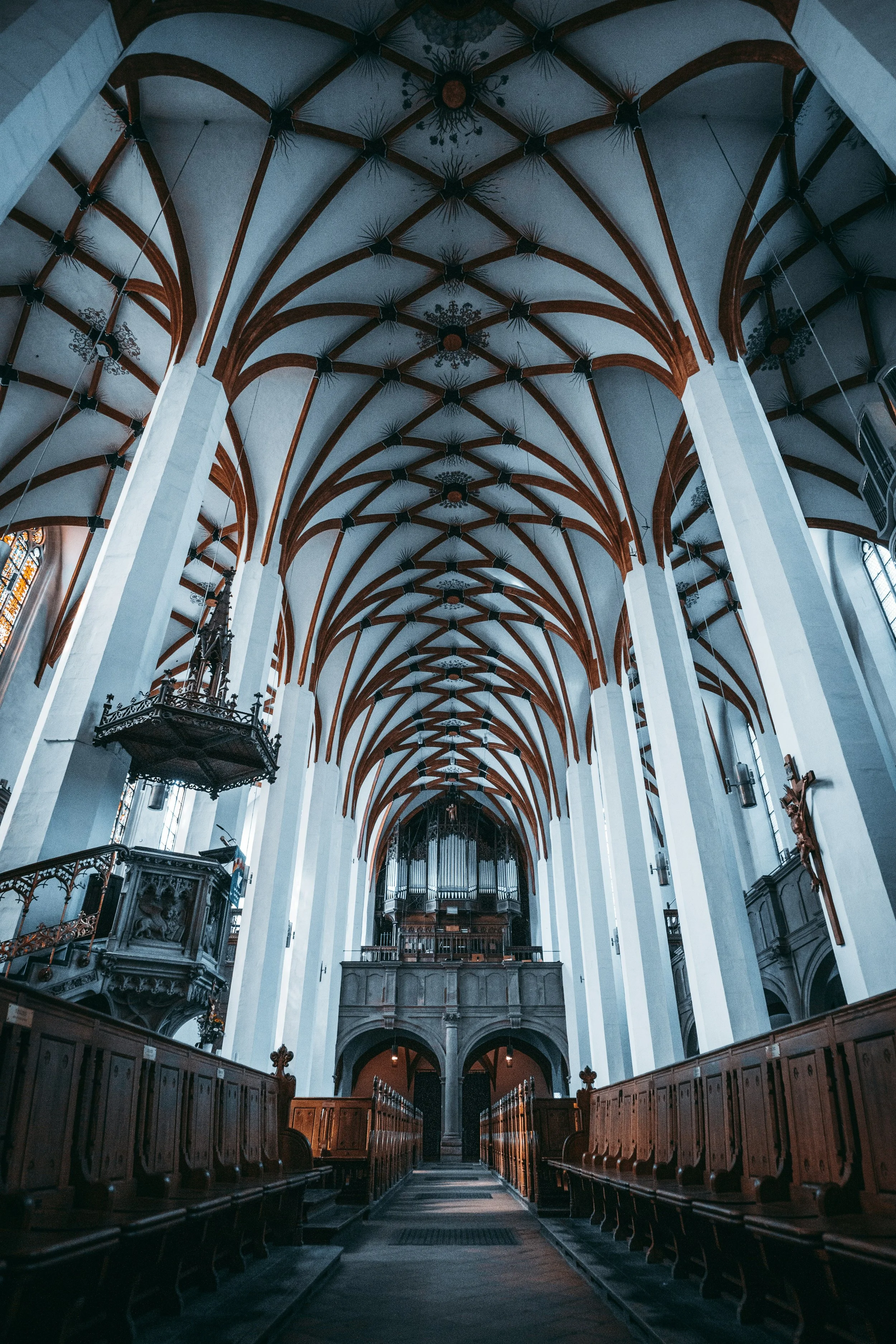
    Leipzig has long occupied a distinctive place in German cultural life. A major trading centre since the Middle Ages, it developed into a city where commerce, publishing and music flourished side by side. Its churches and concert halls shaped musical tradition, while in 1989 its streets became the setting for peaceful demonstrations that helped bring about the collapse of the GDR. We begin today with a guided walk through Leipzig’s historic centre, tracing the arcades and market squares that reflect its mercantile prosperity. At St Thomas Church, we consider Johann Sebastian Bach’s tenure as Thomaskantor from 1723 until 1750, before visiting St Nicholas Church, where the Monday prayers for peace became a catalyst for political change in the autumn of 1989. After a break for lunch, there is the option to visit the Grassi Museum complex, which houses three major collections: the Museum of Applied Arts, the Museum of Ethnography and the Museum of Musical Instruments. Alternatively, the afternoon may be spent at leisure, exploring the city’s arcades, bookshops and cafe culture. Overnight Leipzig (B)

  • Day 8 | Monday 10 May
    Meissen and Dresden – Craft, Court & The Elbe

    Saxon prestige in the early 18th century rested not only on court ceremony, but on technical innovation. Under Augustus the Strong, the discovery of European hard-paste porcelain transformed Meissen into a centre of artistic production and princely revenue, strengthening Saxony’s cultural influence. Departing Leipzig this morning, we first travel along the Elbe to Meissen. From the cathedral precinct above the river, we look across a landscape shaped by medieval settlement and Renaissance rebuilding. At the Meissen Porcelain Manufactory, founded in 1710, we explore the workshop rooms where artisans still shape, paint and fire porcelain using the techniques developed under court patronage. Lunch is enjoyed at the manufactory’s restaurant before time to view the exhibition displays. Continuing to Dresden, capital of the Electorate of Saxony, we take a coach tour through the southern suburbs before visiting the riverside gardens of Pillnitz Palace in the afternoon. Built as a pleasure residence, its architecture and setting reflect the theatrical taste of Augustus’s court. After exploring the palace grounds, we continue to our hotel for an evening is at leisure. Overnight Dresden (B, L)

  • Day 9 | Tuesday 11 May
    Moritzburg and the Zwinger – Courtly Spectacle

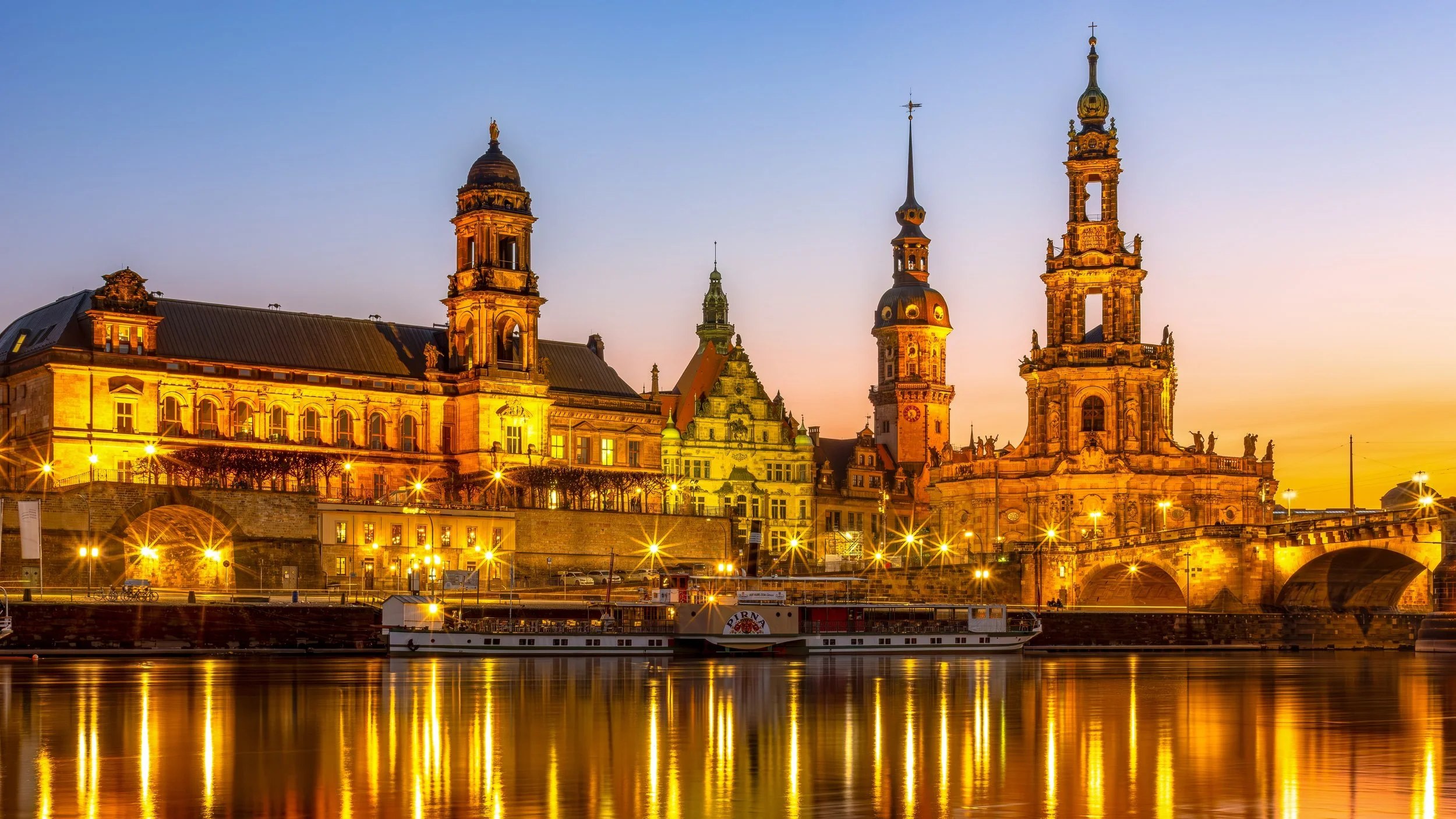
    Dresden’s reputation as a Baroque jewel was shaped by the Wettin dynasty’s determination to rival the great courts of Europe. Ceremony, hunting culture and art collecting were not peripheral activities, but central to the display of authority and refinement. Following a morning talk in the hotel, we travel to Moritzburg, originally a 16th-century hunting lodge transformed in the 18th century into a moated Baroque palace. Surrounded by water and forest, its setting reflects the aristocratic culture of the hunt, while its interiors – including elaborate trophies and decorative schemes – demonstrate how leisure itself became theatre. After a break for lunch on our return to Dresden, we spend the afternoon at the Zwinger Palace. Built between 1710 and 1728 as a festival complex, its pavilions and courtyards were designed for court celebrations. Within the Old Masters Picture Gallery, works by Raphael, Rubens and Rembrandt reveal the collecting ambitions of Augustus the Strong and position Dresden within the wider European artistic tradition. The evening is at leisure on return to our hotel. Overnight Dresden (B)

  • Day 10 | Wednesday 12 May
    Treasure & Transformation – Dresden to Berlin
    | Performance III

    If the Zwinger expressed Saxon ambition in architectural form, the Green Vault distilled it into objects of extraordinary refinement. Established in 1723 by Augustus the Strong, it was among the first public treasure chambers in Europe, designed to display wealth not simply as possession, but as spectacle. This morning we visit both the Historic Green Vault, where baroque rooms recreate the original sequence of display, and the New Green Vault, whose modern presentation allows closer examination of goldsmith work, precious stones and intricate craftsmanship. We then return to our hotel to collect luggage before travelling by coach back to Berlin. On arrival, we check into our hotel on Friedrichstrasse in what was once West Berlin, marking a subtle geographical shift within the city’s divided past. From here, the remaining days turn our attention to the political and architectural legacies of the 20th century. This evening, we plan to attend our final performance in Berlin. Overnight Berlin (B)

  • Day 11 | Thursday 13 May
    Wilhelmstrasse – Dictatorship & Resistance

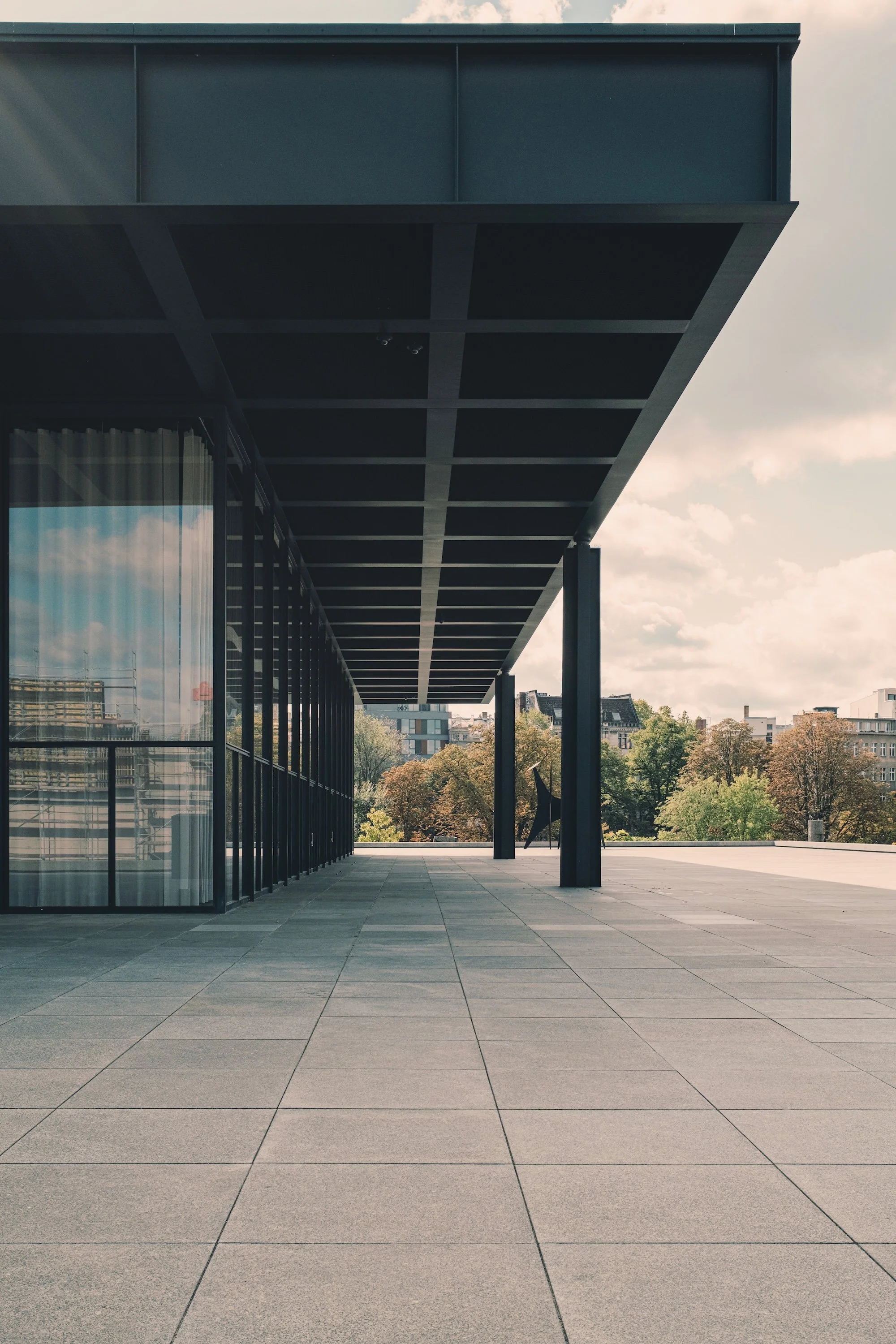
    Berlin’s government quarter became the administrative centre of National Socialist power after 1933, with ministries and party offices along Wilhelmstrasse coordinating policies that shaped Germany’s trajectory through dictatorship and war. Much of this district was destroyed in 1945, leaving absence and fragment woven into its historical record. From our hotel in what was once West Berlin, we walk toward this former government quarter. At the ‘Memorial to the Murdered Jews of Europe’, the abstract field of stelae invites quiet reflection. We then trace the locations of the Reich Chancellery, Hitler’s bunker and the Luftwaffe Ministry, considering how bureaucratic structures enabled ideological extremism. At the Topography of Terror documentation centre, built on the site of the former Gestapo and SS headquarters, the machinery of repression is examined through contemporary exhibitions and archival material. After lunch together in a nearby restaurant, we visit the Neue Nationalgalerie. Mies van der Rohe’s modernist structure, reopened after restoration, reflects a different architectural language – one of openness and clarity. Our final visit is the German Resistance Memorial Centre, which honours those who opposed the regime. Dinner together at Lutter & Wegner in Gendarmenmarkt concludes our day. Overnight Berlin (B, L, D)

  • Day 12 | Friday 14 May
    Jewish Berlin and the Divided City

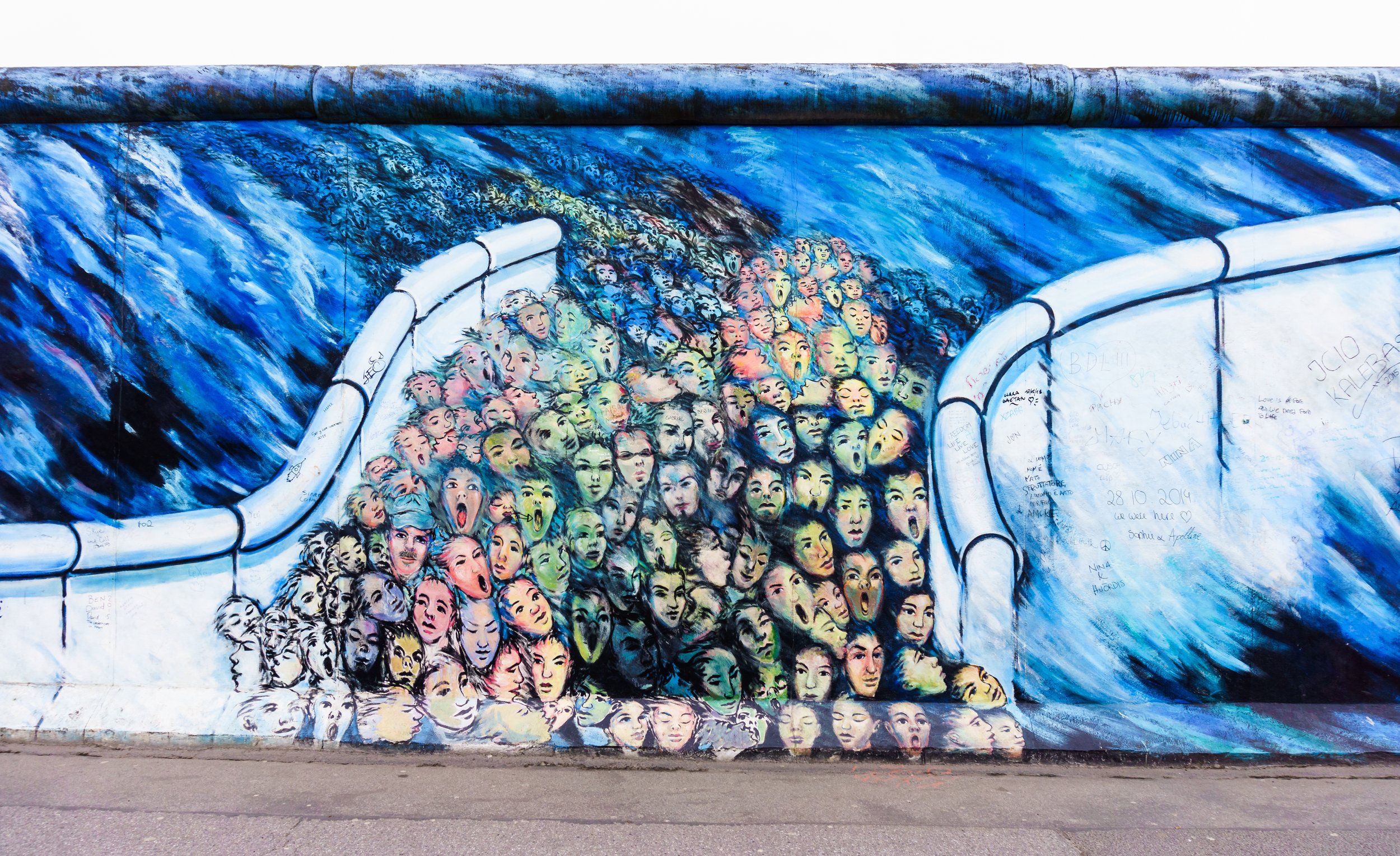
    Berlin’s Jewish community played a central role in the city’s intellectual, commercial and cultural life during the 19th and early 20th centuries. The rupture of the Nazi era left lasting absences, yet Jewish presence and memory still remain embedded into the city’s urban fabric.Our day begins in the historic Jewish Quarter, where we view the gilded dome of the New Synagogue. Completed in 1866, it was severely damaged during Kristallnacht in 1938 and the war that followed. Carefully restored in recent decades, the building now stands as both a memorial and a symbol of renewal. A short drive then brings us to the Jewish Museum. Opened in 2001, Daniel Libeskind’s angular design gives architectural expression to rupture and continuity. Slanting corridors, voids and intersecting lines shape a spatial experience that speaks to loss and resilience, while tracing the long history of Jewish life in Germany. After a break for lunch, our focus shifts to Berlin’s Cold War geography this afternoon. Travelling along Karl-Marx-Allee, we see the monumental Socialist Realist boulevard constructed in the 1950s as a showcase of East German ideology, and at the former Stasi headquarters, we consider how surveillance shaped daily life in the GDR. On return to our hotel, the remainder of the day is at leisure. Overnight Berlin (B)

  • Day 13 | Saturday 15 May
    Contemporary Berlin – Art, Architecture & Democracy

    Since reunification, Berlin has reshaped itself through bold new architecture and a thriving contemporary art scene. New museums, buildings and cultural spaces have altered the skyline while consciously engaging with the city’s complex past. Rather than erasing history, much of Berlin’s recent development acknowledges it, creating a dialogue between memory and renewal. This morning we take a coach tour through such areas transformed after reunification, observing how glass, steel and open public space have become recurring architectural motifs. Our tour brings us to Hamburger Bahnhof, a former 19th-century railway station converted into a permanent exhibition space for contemporary art. It houses the renowned Erich Marx Collection, featuring works by artists such as Andy Warhol, Anselm Kiefer and Joseph Beuys, alongside major international installations. After time to explore the galleries and a break for lunch, we continue to the Berlinische Galerie. Focusing on art produced in Berlin since 1870, it offers a concentrated view of the city’s creative evolution across empire, division and reunification. Our final visit of the day is to the Reichstag, where we gather for our farewell dinner beneath Norman Foster’s glass dome, a striking symbol of transparency and democratic renewal. Overnight Berlin (B, D)

  • Day 14 | Sunday 16 May
    Depart Berlin

    The tour ends after breakfast this morning. Transfers are available to Berlin’s Brandenburg Airport for those departing today. (B)

Hotels have been selected principally for their central location. All hotels are a comfortable four-star standard.

Tour Accommodation

tour booking

$13,880 AUD per person, twin share (land content only)
$3,080 AUD supplement for sole use of a hotel room

A $1,000 deposit is required per person to confirm your booking on tour. This deposit is non-refundable.

Hold a Place

Still deciding? We are happy to hold a tentative place for 7 days while you make your final arrangements.

Book Online

To secure your place(s) on tour, book online below with “Athena”, our virtual tour consultant.

DOWNLOAD FORM

Download a printable booking form. You can also complete the form on screen and submit via email.

your tour consultant

The consultant for this tour is Lucy Yeates. For further information or to discuss the tour, please call 9235 0023 (Sydney) or 1800 639 699 (outside Sydney) or email lucy@academytravel.com.au

have you thought about?

Academy Travel is more than just a tour operator. We are also a full-service travel agency who can assist you with all aspects of your travel, including flights, transfers, pre-tour arrival, additional travel and comprehensive travel insurance.

can’t make this departure?

If these dates don't work for you, register to hear about the next tour.