Guardians of the Medieval Past

San Gimignano, Italy
Across northern and central Italy, a chain of fortified hilltop towns rises above plains, valleys and river crossings – small urban worlds shaped by rivalries, pilgrim routes and the need for protection.
Their walls, towers and compact residential quarters offer some of the clearest surviving evidence of Italy’s medieval past. For travellers following the historic routes from Aosta and Ivrea through Emilia-Romagna, Tuscany and Lazio, these settlements present a remarkable continuity: communities that have preserved their medieval urban form while adapting to modern life with care and restraint.
Landscapes of Defence and Identity
In a region shaped by shifting political borders, hilltop towns developed as natural strongholds. Their elevated positions provided strategic oversight of valleys and transport routes, particularly along corridors such as the Via Francigena – a medieval highway of pilgrims, merchants and clerics travelling towards Rome.
A place like Vigoleno, perched on a ridge above the Ongina Valley, retains the clarity of its original planning: an elliptical fortification encircling a compact village. Its undamaged walls, gate tower and keep remain intact, framing Romanesque buildings such as the 12th-century Church of San Giorgio. Standing on the ramparts, it becomes clear why such locations were favoured; they offered defence, visibility and control over agricultural lands far below.
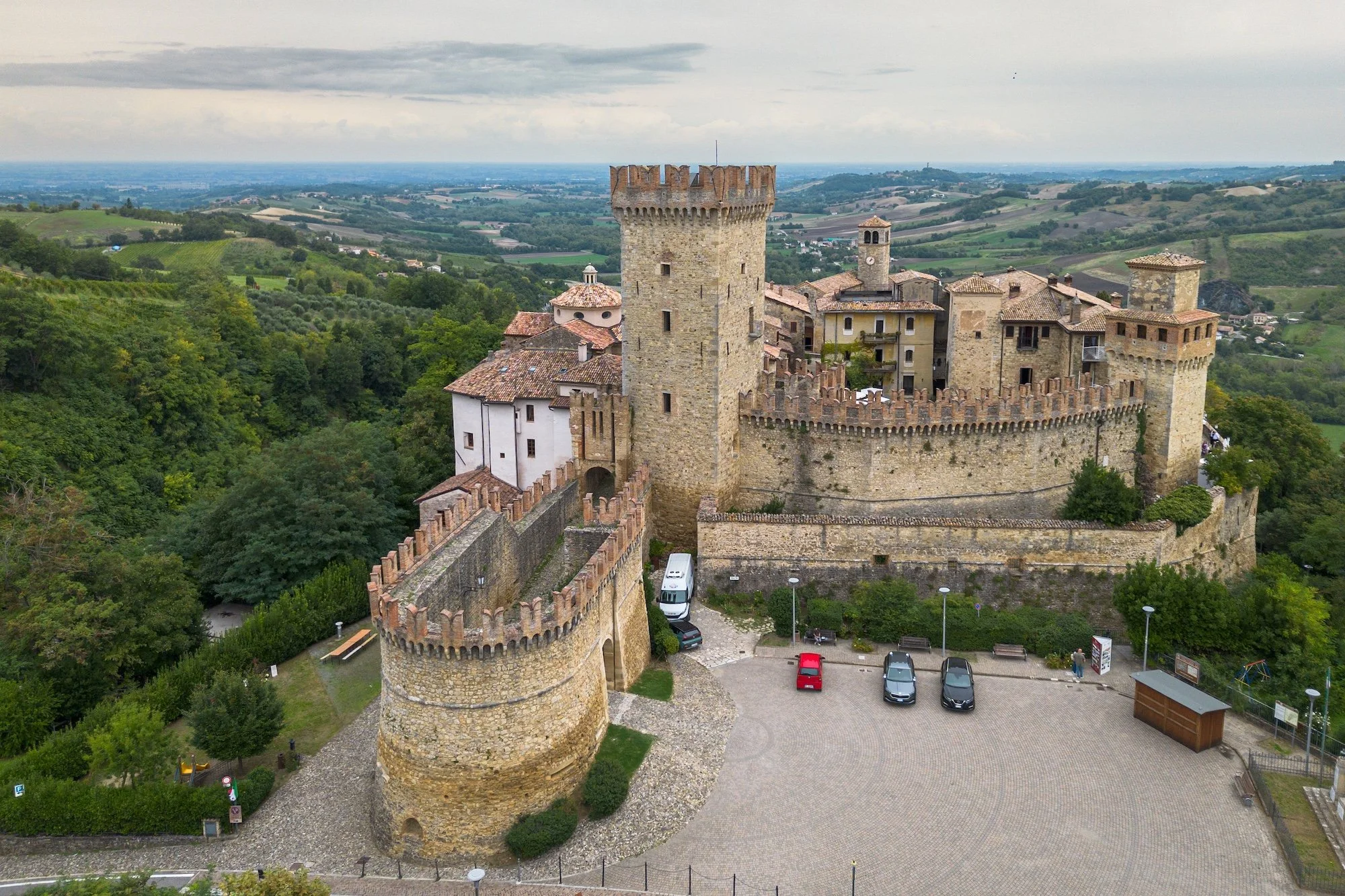
The historic village of Vigoleno, one of the most beautiful villages in Italy
Further south, Castell’Arquato rises above the Arda Valley in equally commanding fashion. The town developed around its Rocca Viscontea and collegiate church, a combination of secular and ecclesiastical power characteristic of the medieval landscape. Its narrow lanes, stone façades and central piazza illustrate how defensive needs shaped everyday urban life.
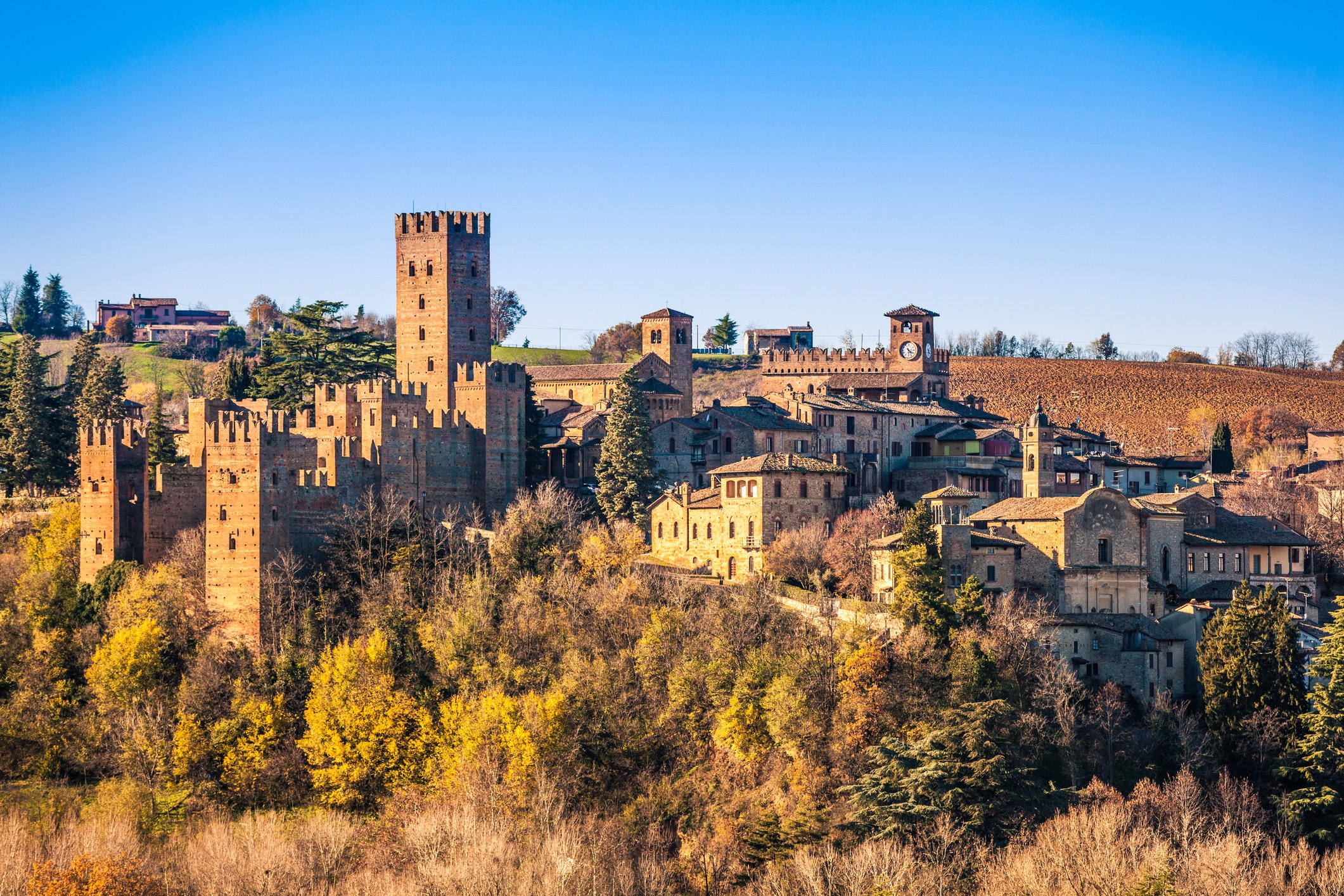
Castell'Arquato located on the first hills of Val DaaArda
Compact Towns, Cohesive Communities
One of the most striking features of these hill towns is their scale. Small populations and tight topography produced dense, walkable centres that have changed little across the centuries. Streets were designed for pedestrians and pack animals, not vehicles, and many remain closed to traffic today. This lends them a quiet rhythm, far removed from the intensity of major cities. The effect is especially evident in towns such as Fontanellato, whose 15th-century Rocca Sanvitale sits at the heart of the settlement, surrounded by a water-filled moat still fed by the town’s medieval spring.
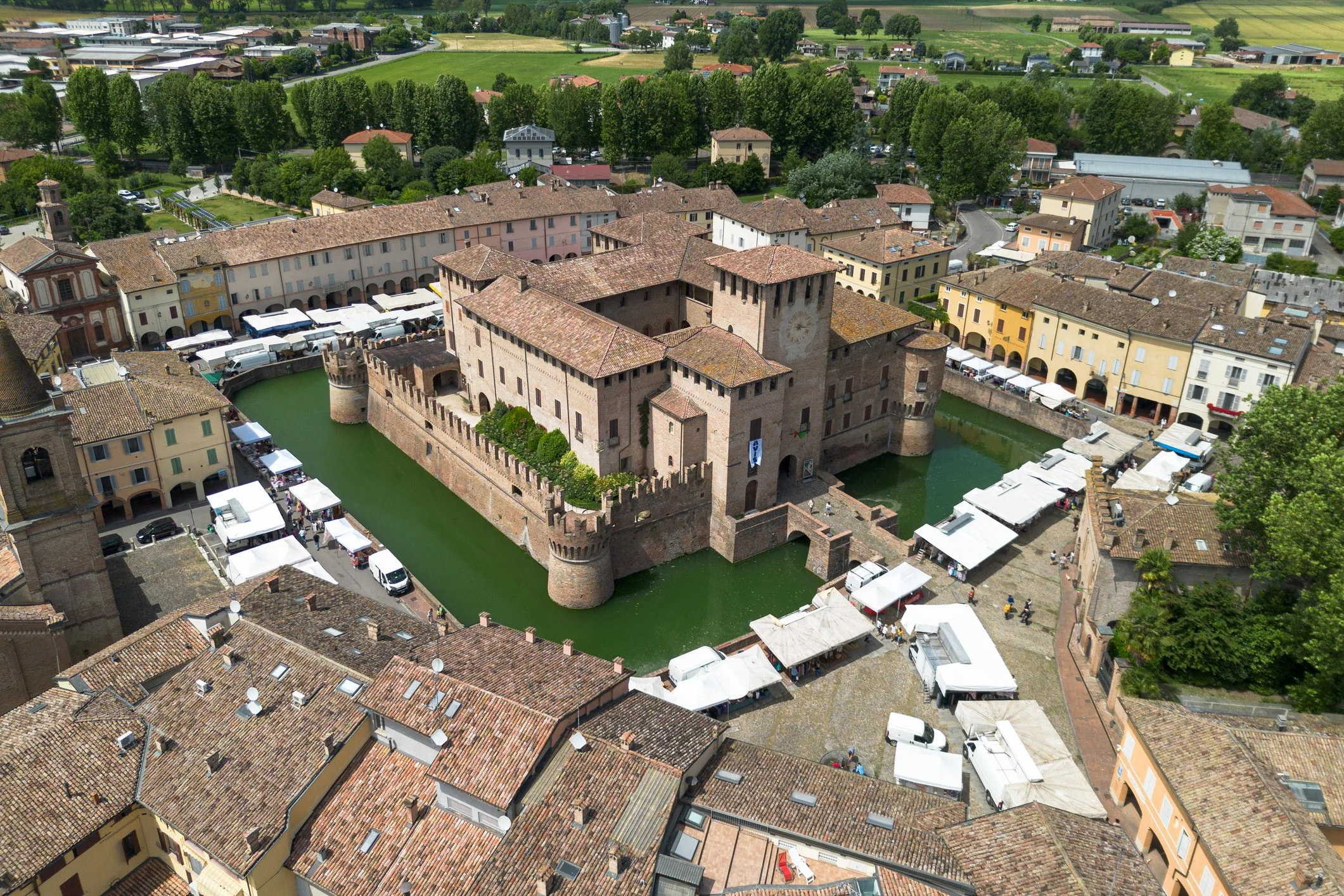
Fontanellato, near Parma, famous for the Rocca Sanvitale fortress
Inside are exceptional frescoes by Parmigianino — including his early masterpiece depicting Diana and Actaeon – alongside the camera oscura, an ingenious observation chamber installed by the ruling Sanvitale family.
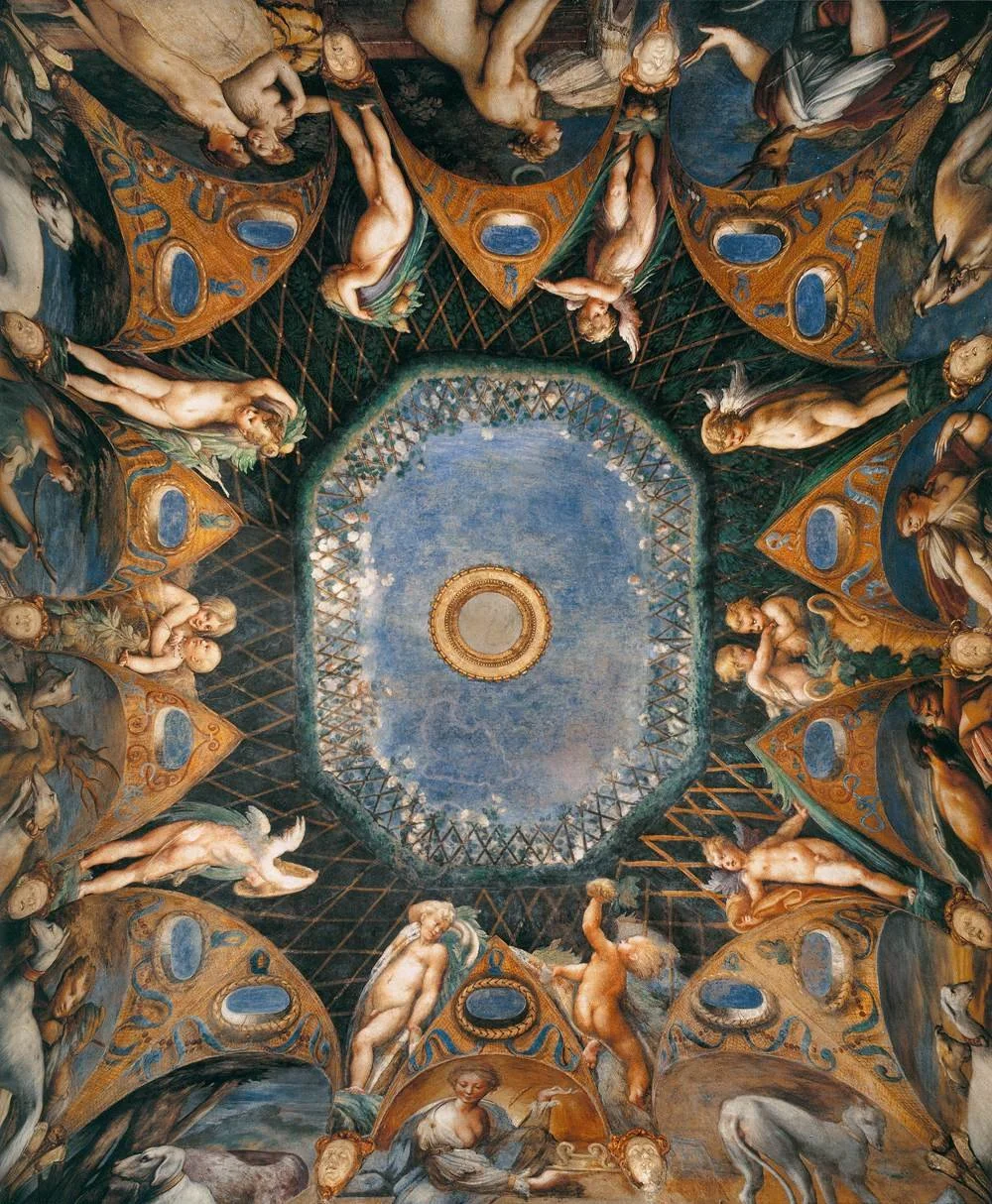
Parmigianino’s Diana and Actaeon (1523-24), Rocca Sanvitale, Fontanellato - Web Gallery of Art
Such towns may sit outside the typical tourist circuits, but this is precisely what preserves their character. Visitors encounter not reconstructed environments but authentic urban centres that retain their original layouts, materials and spatial relationships.
Urban Form and Architectural Continuity
Medieval Italian towns grew around two primary nodes: the church, representing spiritual authority, and the civic or military centre, representing secular power. These nuclei created radial street patterns still visible today.
Siena is the most distinguished example – chosen as a UNESCO World-Heritage site not only for its cathedral, Palazzo Pubblico and wealth of medieval art, but also for the integrity of its urban planning. The shell-shaped Piazza del Campo and the surrounding contrade (districts) demonstrate a civic system that encouraged communal identity, ritual and competition. The city’s influence on urban planning during the Middle Ages was felt across Europe.

Piazza del Campo, Siena
Smaller towns followed similar patterns on a reduced scale. San Gimignano, once a prosperous stop for pilgrims and traders, displays the concentration of towers built by its competing families. Its churches, including the Collegiata, preserve cycles of frescoes that document both religious practice and the ambitions of civic patrons.
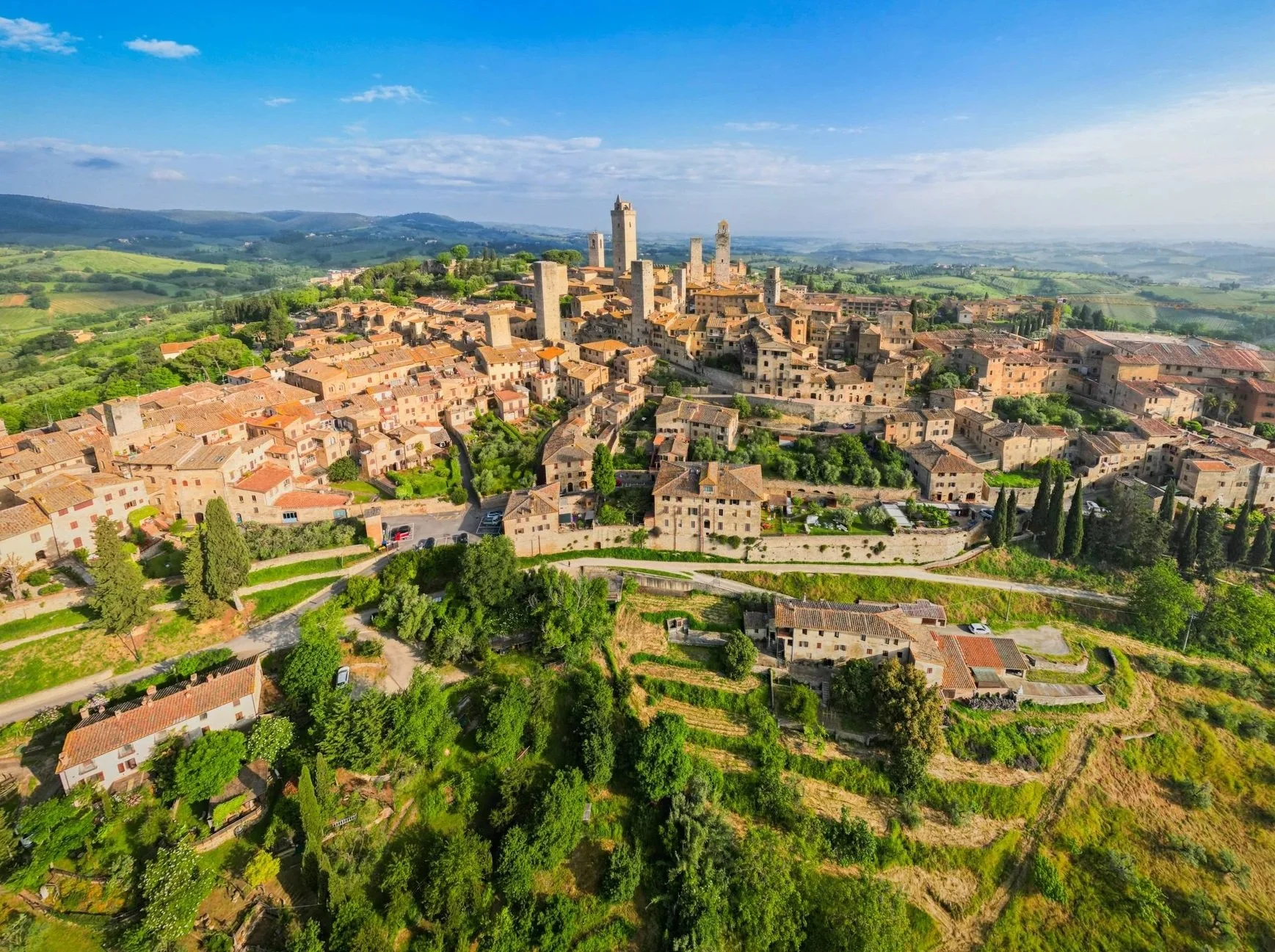
San Gimignano, a small walled medieval hill town in the province of Siena
The architectural survival of these towns owes much to traditional construction techniques. Medieval builders developed methods that allowed structures to withstand earthquakes and other natural stresses. Ongoing research continues to examine why so many Romanesque and Gothic buildings remain stable after centuries on exposed hilltops.
Castles, Strongholds and the Realities of Power
A dense network of castles once guarded the approaches to Parma, Piacenza and the Po Valley. Many of these structures – collectively known as the Castelli del Ducato – survive in a remarkable state. Torrechiara, for example, rises above vineyards south of Parma, its golden stone walls enclosing Renaissance frescoes that reflect the shifting tastes of its owners.
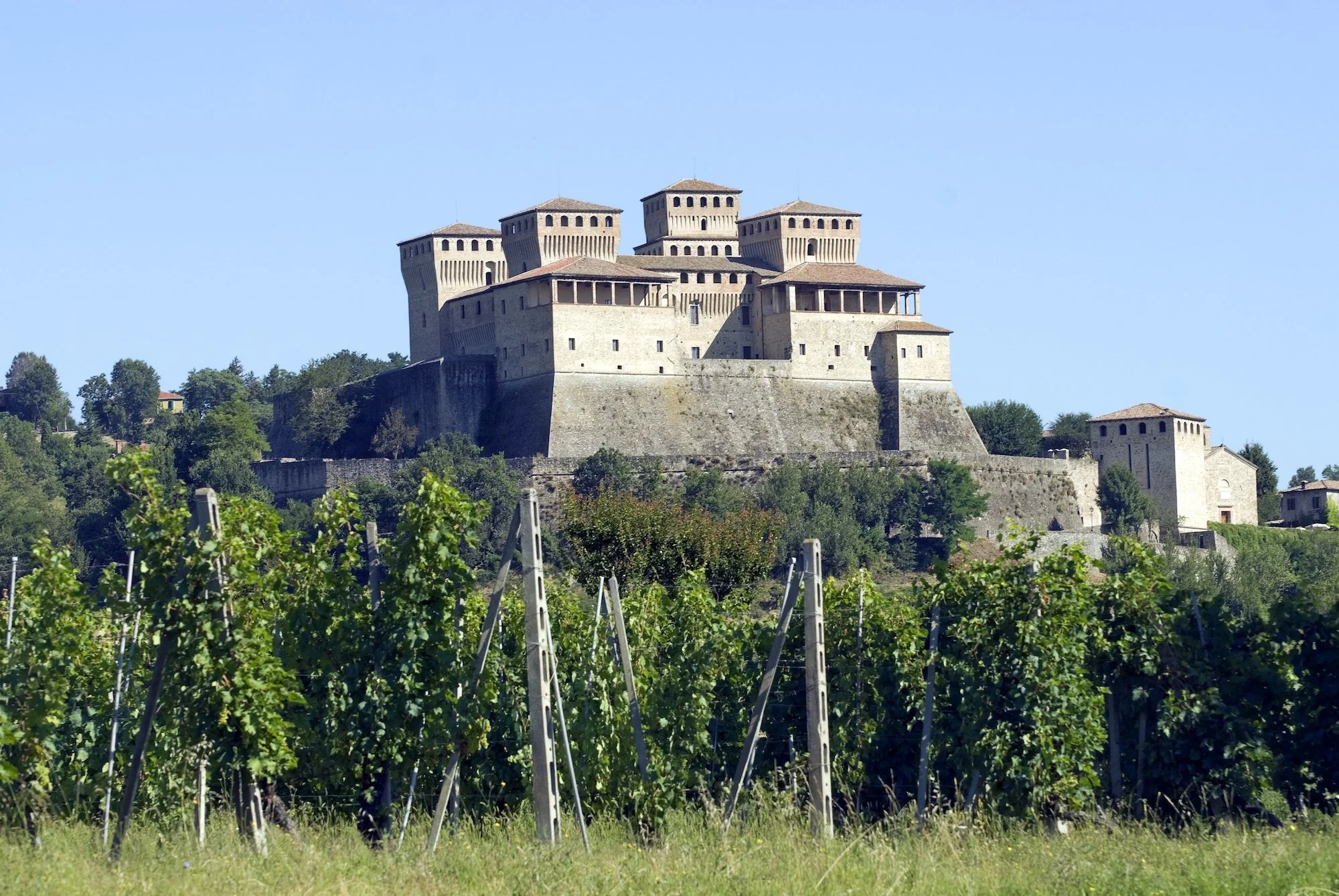
Torrechiara, a 15th-century castle near Langhirano in the province of Parma
The Castle of Roccabianca, also called Rocca dei Rossi and built in the town of Roccabianca, illustrates variations in fortification style as families expanded their territories or adapted to new military technologies.
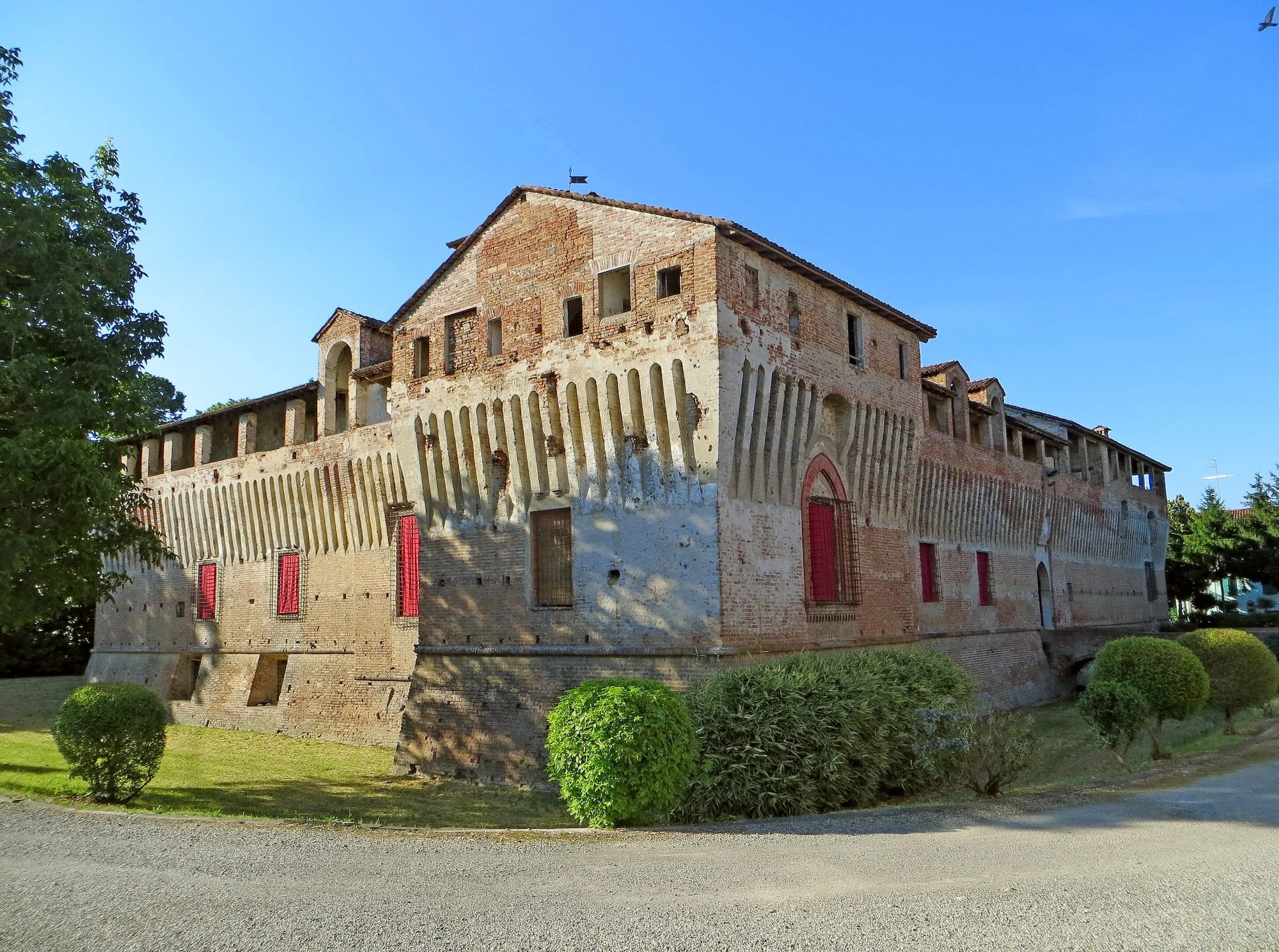
South facade of Rocca dei Rossi - Photo by Parma1983
Further south, Orvieto occupies a dramatic plateau of volcanic tuff. Its medieval fortress protected residents during sieges, while an extensive network of caves, wells and escape tunnels offered additional security. The town’s strategic importance explains its unusually rich artistic and architectural patronage during the Middle Ages.
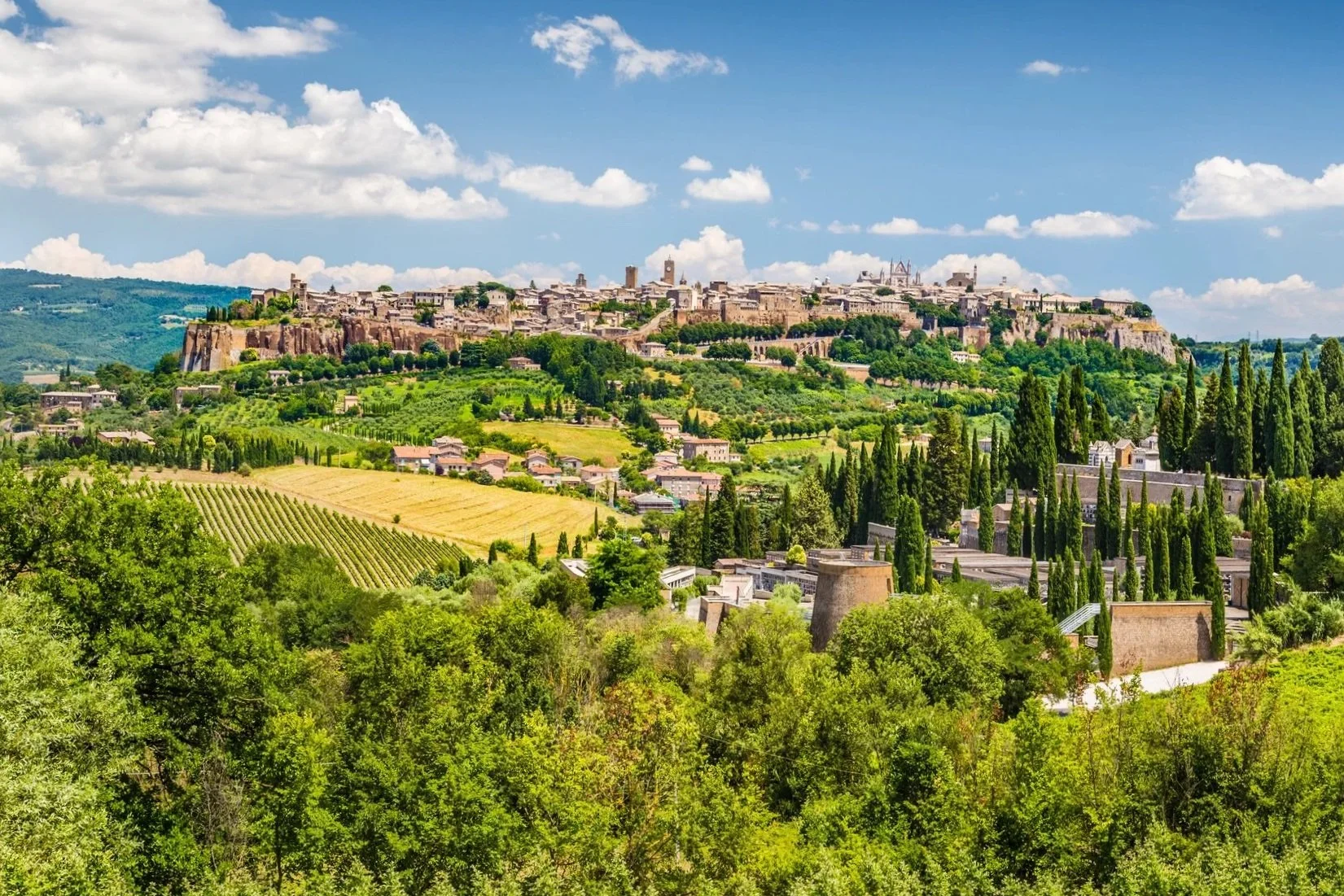
View of the old town of Orvieto, Umbria
These defensive structures are a reminder that the medieval landscape was shaped as much by conflict and political uncertainty as by commerce or religion.
Routes, Pilgrims and the Movement of Ideas
Many hilltop towns developed in close relationship with the Via Francigena, the route documented by Sigeric, Archbishop of Canterbury, during his journey to Rome in the late 10th century. The presence of pilgrims led to the construction of hospices, monasteries and early Romanesque churches—structures that remain among the most atmospheric sites in northern and central Italy.
The region boasts numerous pievi (rural parish churches), whose stone façades, carved capitals and fresco cycles reflect local devotional practices. Towns such as Lucca, San Miniato and San Gimignano became prosperous trading centres partly due to their location on this route, attracting craftsmen, bankers and artists.
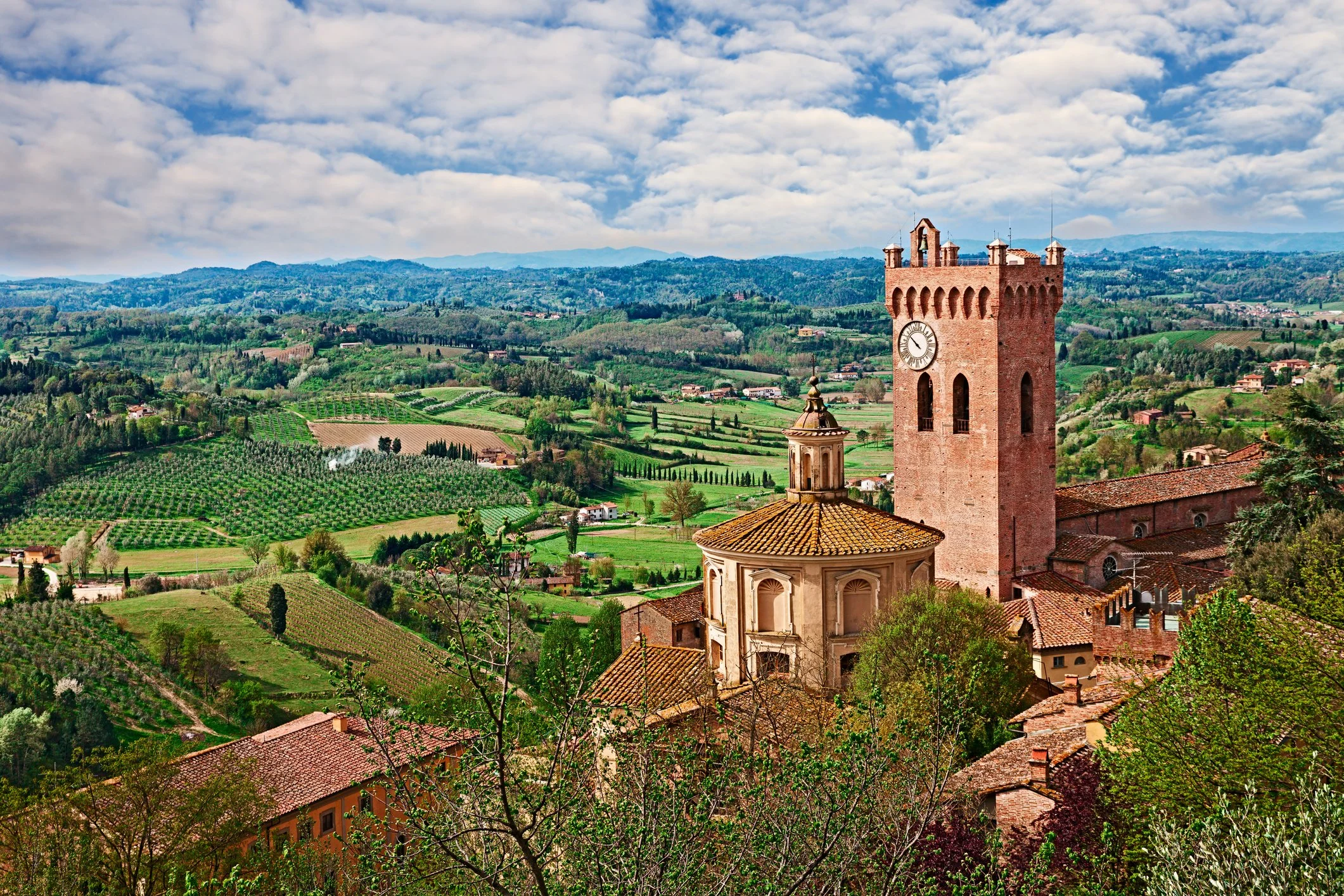
San Miniato, Pisa, Tuscany
By the 13th and 14th centuries, many of these communities had evolved into semi-independent communes with distinct civic cultures. Their wealth financed the construction of town halls, loggias, markets and monumental churches, laying the groundwork for the innovations of the early Renaissance.
Distinct Identities and Enduring Traditions
Despite their shared characteristics, each hill town maintains a distinct identity shaped by local history, dialect and tradition. Annual festivals, food customs and community rituals reinforce these differences and contribute to a strong sense of place. In Aosta, Roman remains sit side by side with medieval fortifications, reflecting the town’s role as a northern gateway to the peninsula.
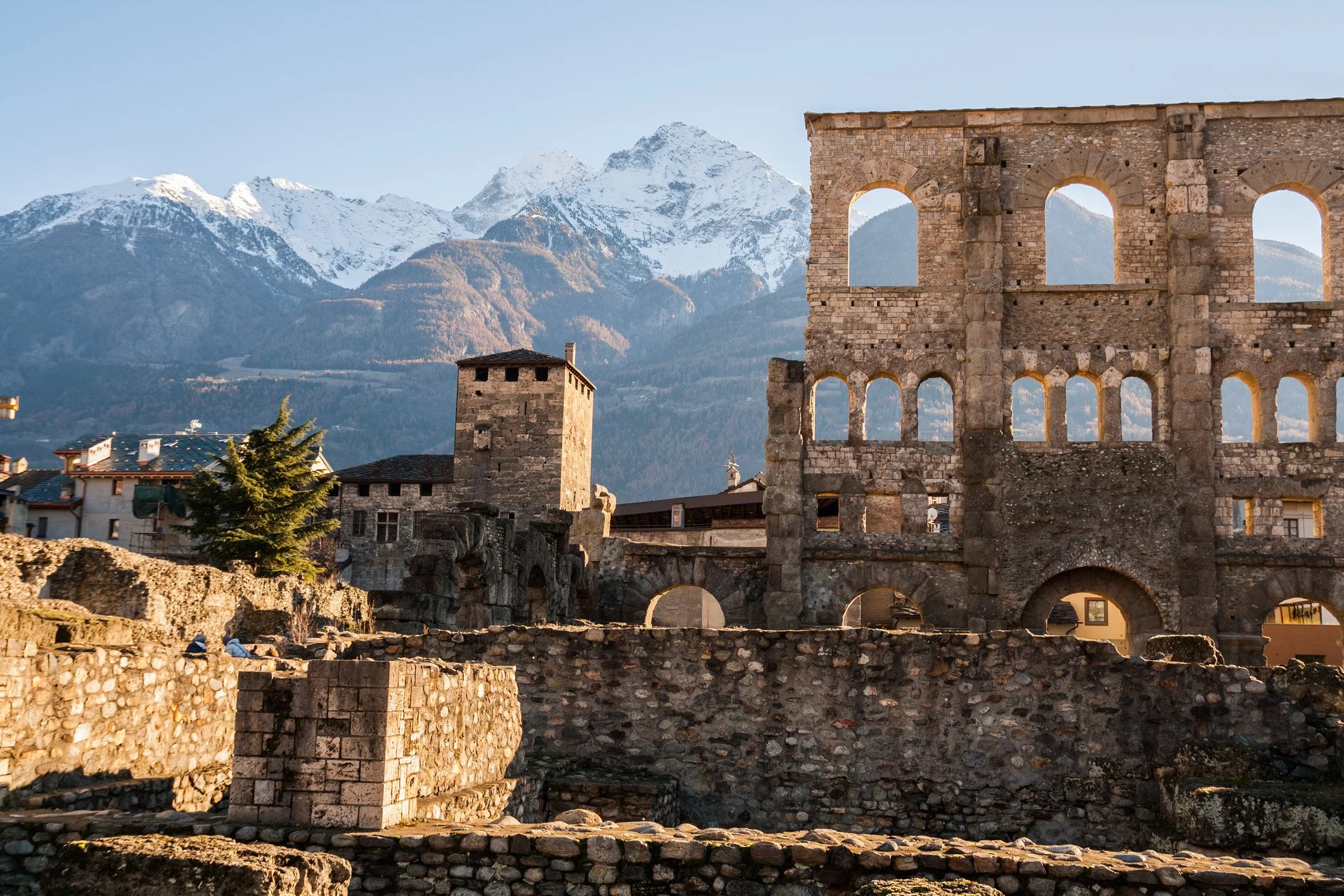
Teatro Romano, Aosta, Aosta Valley
Ivrea preserves its historic core at the intersection of Alpine and Piedmontese cultural influences, its medieval street pattern still evident around the cathedral and castle. The town is also renowned for its annual Battaglia delle Arance – the Battle of the Oranges – a centuries-old carnival tradition in which costumed teams reenact a communal uprising through a symbolic, highly choreographed citrus “battle.” This event, rooted in local legend and civic identity, highlights how ritual continues to shape Ivrea’s distinct cultural character.
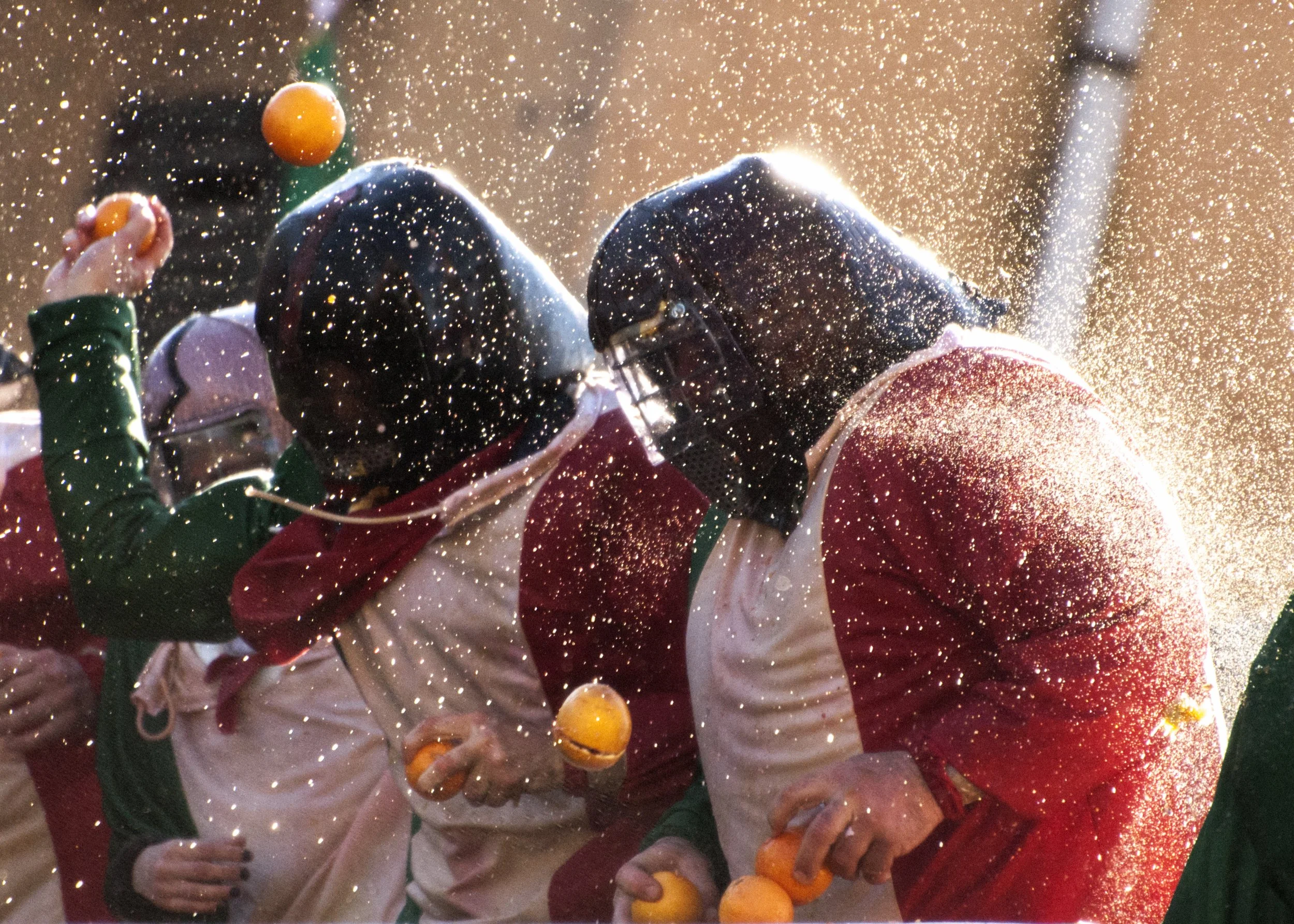
The orange battles of Ivrea’s historical Carnival that takes place every year
Moving south, Tuscan towns such as Monteriggioni – with its complete 13th-century walls – illustrate frontier life during the long conflict between Siena and Florence. Built as a Sienese defensive outpost, Monteriggioni controlled a strategic corridor on the Via Francigena and served as an early warning point against Florentine advances. Its circular enceinte, watchtowers and tightly contained residential core reflect the military pragmatism of a border settlement, where daily life unfolded within fortifications designed for rapid mobilisation and sustained defence.
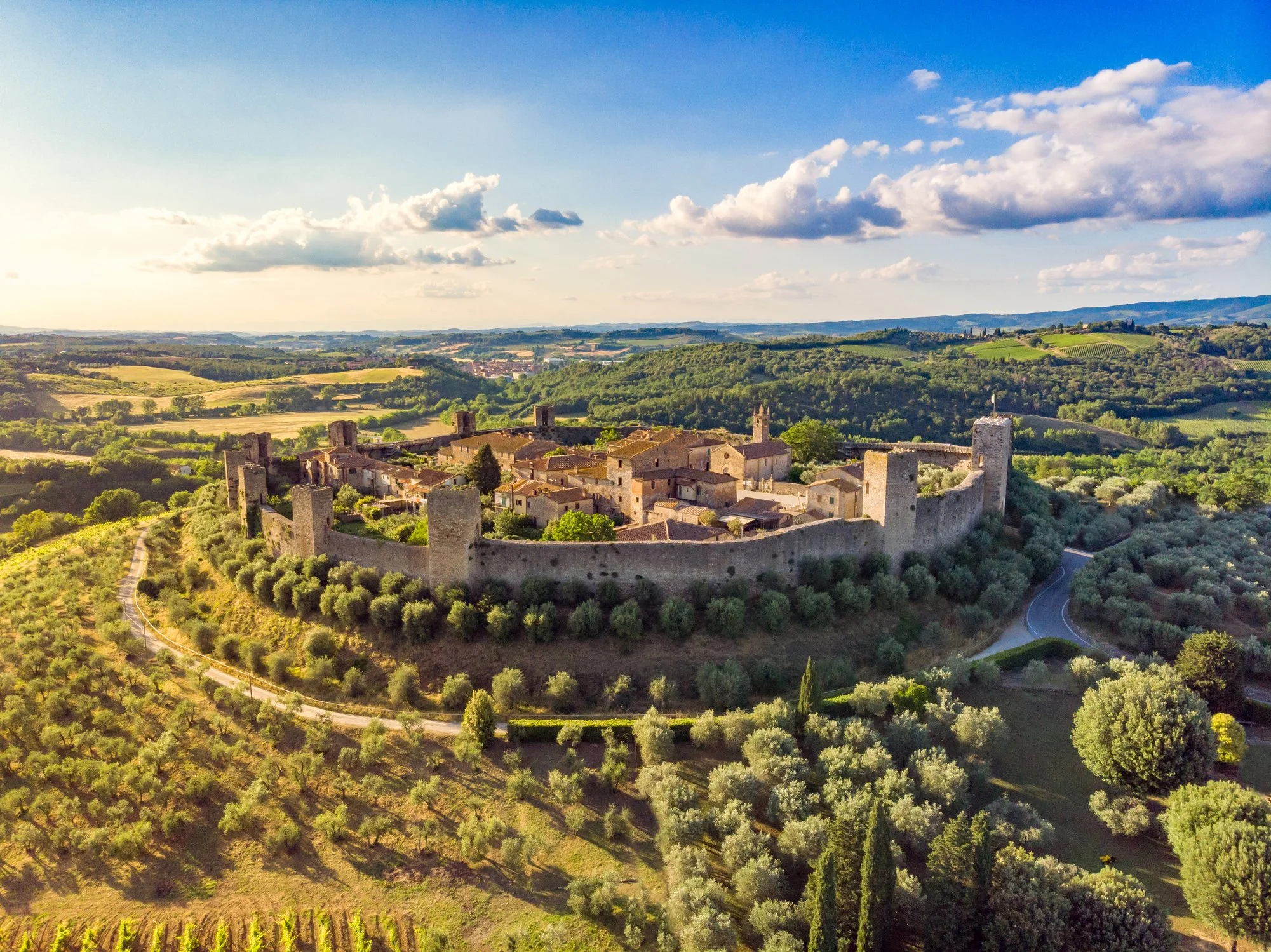
Aerial view of Monteriggioni
Culinary traditions also speak to medieval continuities. Local wines, cheeses, cured meats and regional pasta shapes often trace their origins to monastic production or agricultural practices maintained for centuries.
Travelling Through an Enduring Medieval Landscape
What unites these towns is the sense of continuity they preserve. Their scale, architectural integrity and layered histories offer insight into how people lived, worked and worshipped in the Middle Ages. For travellers tracing routes from the Alpine valleys to the countryside north of Rome, they provide a sequence of living historical environments – neither museum pieces nor heavily restored tourist centres, but places where the medieval past remains visible in the everyday fabric of life.
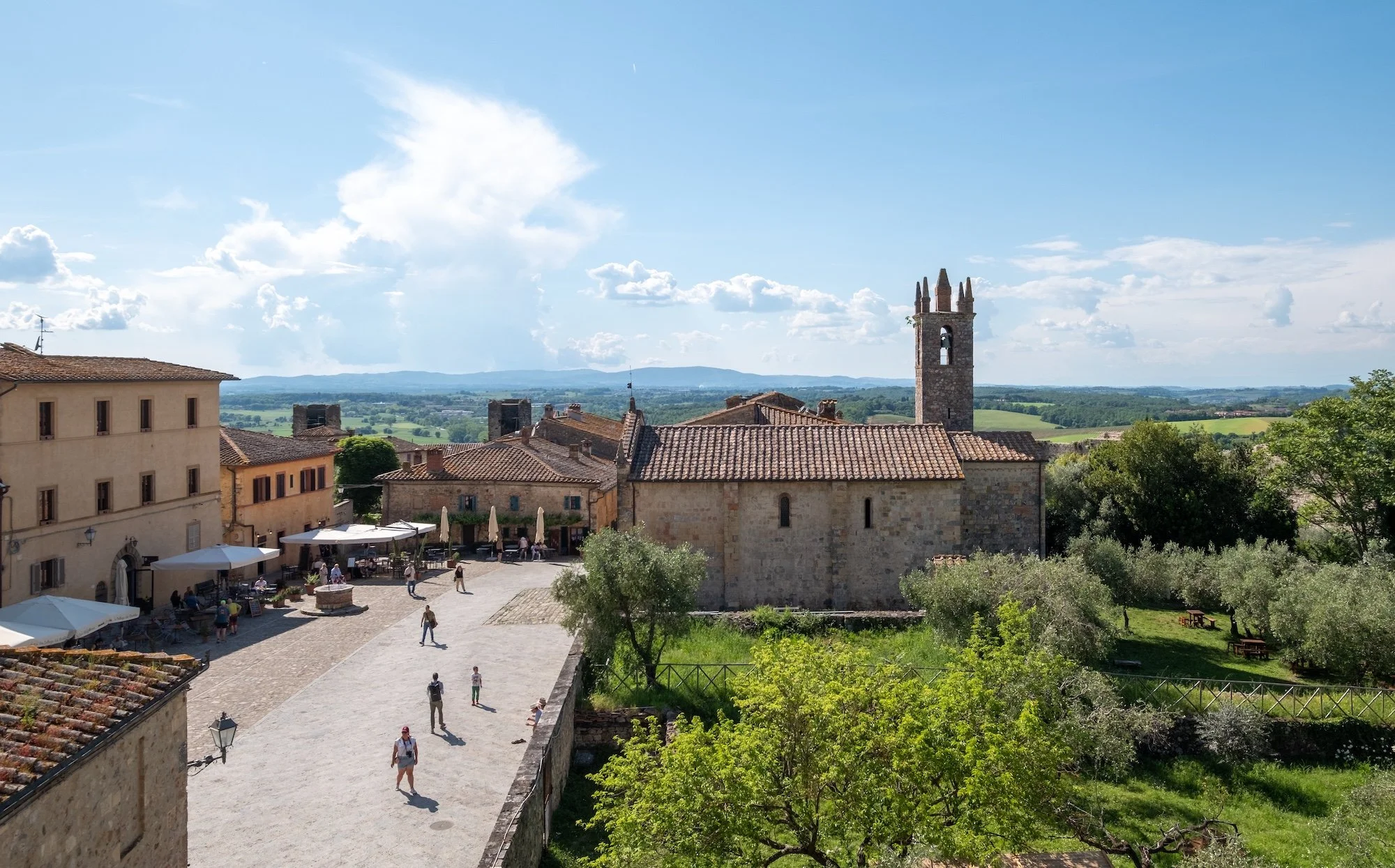
Wandering the streets of Monteriggioni
Exploring these communities reveals not only their defensive functions and artistic achievements, but also their resilience. They have adapted to changing economic patterns and modern expectations while retaining the essential qualities that once made them vital to regional networks of pilgrimage, trade and governance.
These are the guardians of the medieval past – towns that continue to shape Italy’s cultural landscape, offering visitors rare access to environments where the Middle Ages remain tangibly present.
Explore Italy’s Hill Towns
ON our ‘Switzerland to Rome’ Tour
From the shores of Lake Geneva to the gates of Rome, spend 18-days following in the footsteps of medieval pilgrims, merchants, kings and emperors along part of the legendary Via Francigena.
Led by Dr Jeni Ryde, we’ll discover Roman ruins, ancient monasteries and imposing castles, all paired with the local cuisine that has defined these unique regions for centuries.