Carthage must be Destroyed
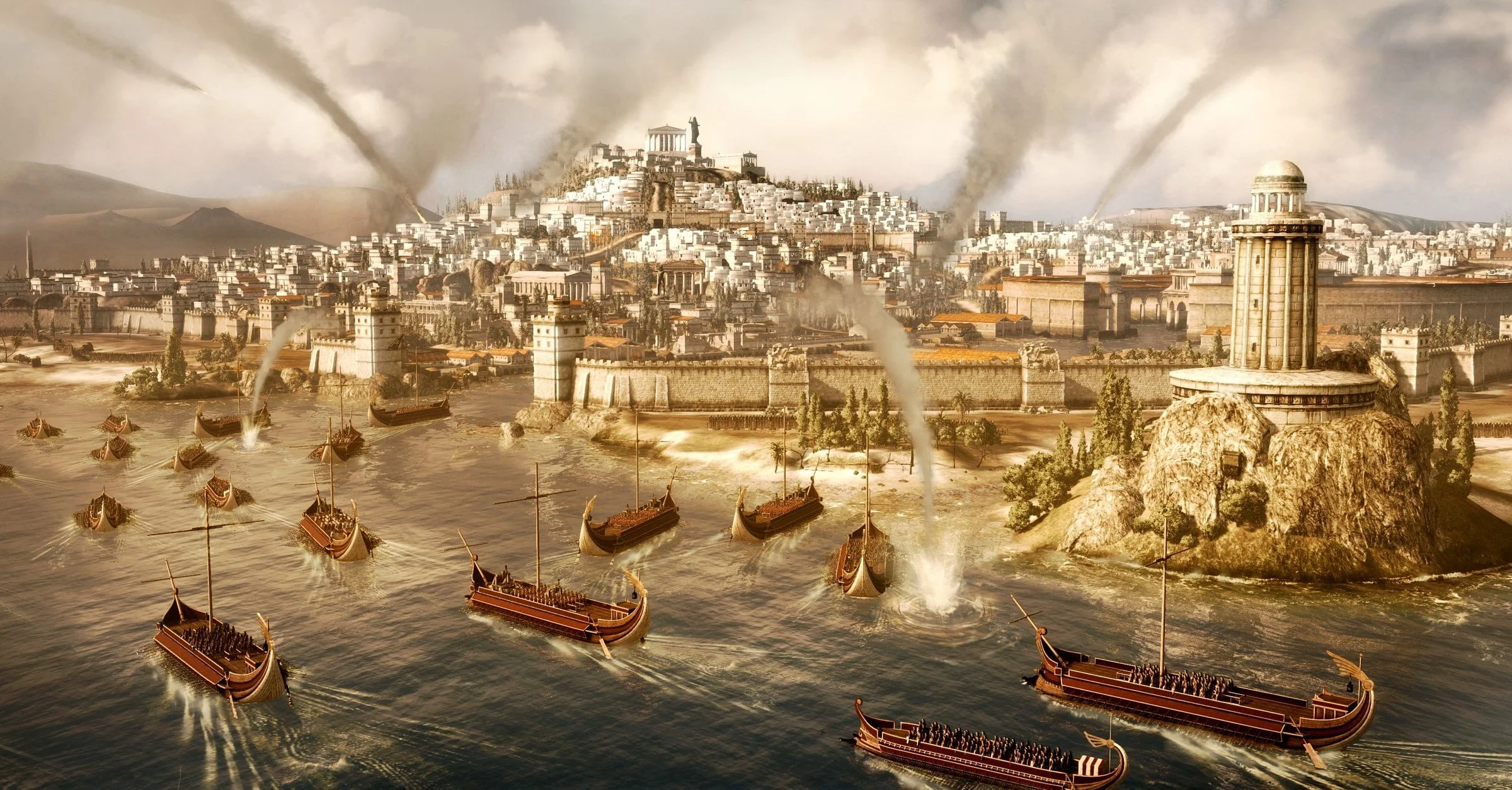
Of the many peoples who emerge from our accounts of ancient history, including the Babylonians, Hittites, and Etruscans, few have captured our imagination as much as the Carthaginians.
Central to the narratives we recount about these enigmatic Phoenicians who arrived in modern Tunisia in the 9th century BCE is the story of the elephants crossing the Alps. In turn, at the heart of this account, is the charismatic figure of Hannibal who led these massive creatures not only across the Alps but also over the Pyrenees, and who somehow found a way to get those beasts and his men across the mighty Rhone in the process.
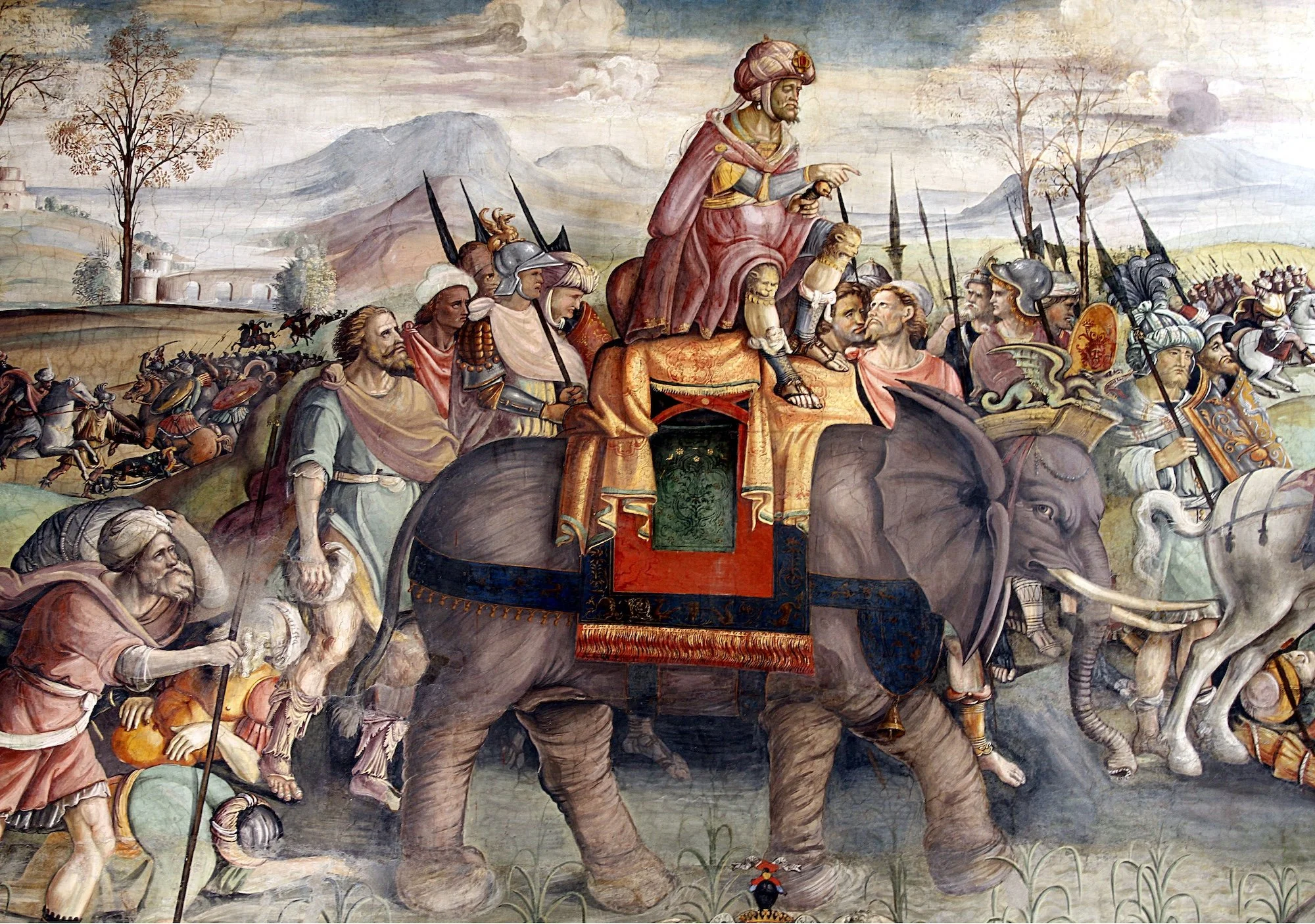
Hannibal's celebrated feat in crossing the Alps with war elephants passed into European legend: detail of a fresco by Jacopo Ripanda, Capitoline Museums, Rome. Photo: José Luiz Bernardes Ribeiro
The year was 218 BCE and the audacious overcoming of these natural obstacles was matched by Hannibal’s staggering defeat of Roman forces in a series of battles which no one has since forgotten. Carthaginian victories in the Battles of Ticinus, Trebia and Lake Trasimene culminated in the Battle of Cannae in 216 BCE where more than 45,000 Roman men lost their lives in what was one of the bloodiest days in history.

The Death of Paulus Aemilius at the Battle of Cannae. Photo: Yale University Art Gallery
So traumatic was this defeat, that the fear that Hannibal would go on to capture Rome was etched in the Roman imagination. When describing a terrible situation, generations thereafter used the phrase Hannibal ad portas (Hannibal at the gates) precisely because of the panic instilled by the loss at Cannae.
The chances of Hannibal being able to go beyond winning a series of battles and to actually win the war were, in reality, slim. Romans were great imperialists and had much greater access to manpower than Carthage, whose treatment of its allies limited its ability to raise armies. Rome was always going to beat Hannibal in the end and, by extension, win the Second Punic War of 218–201 BCE.
That said, the fear which he evoked, coupled with the importance of the Punic Wars in the establishment of the Roman Empire, meant that the destruction of Carthage loomed large in Roman histories. The words uttered by the arch conservative politician Cato the Elder, Carthago Delenda Est (Carthage must be destroyed), is one of the best remembered phrases in Latin. The sack of Carthage in 146 BCE, shortly after Cato’s exhortation, was a watershed year in Roman history, as it ushered in an extraordinarily long period of time in which Rome effectively had no powerful enemies.
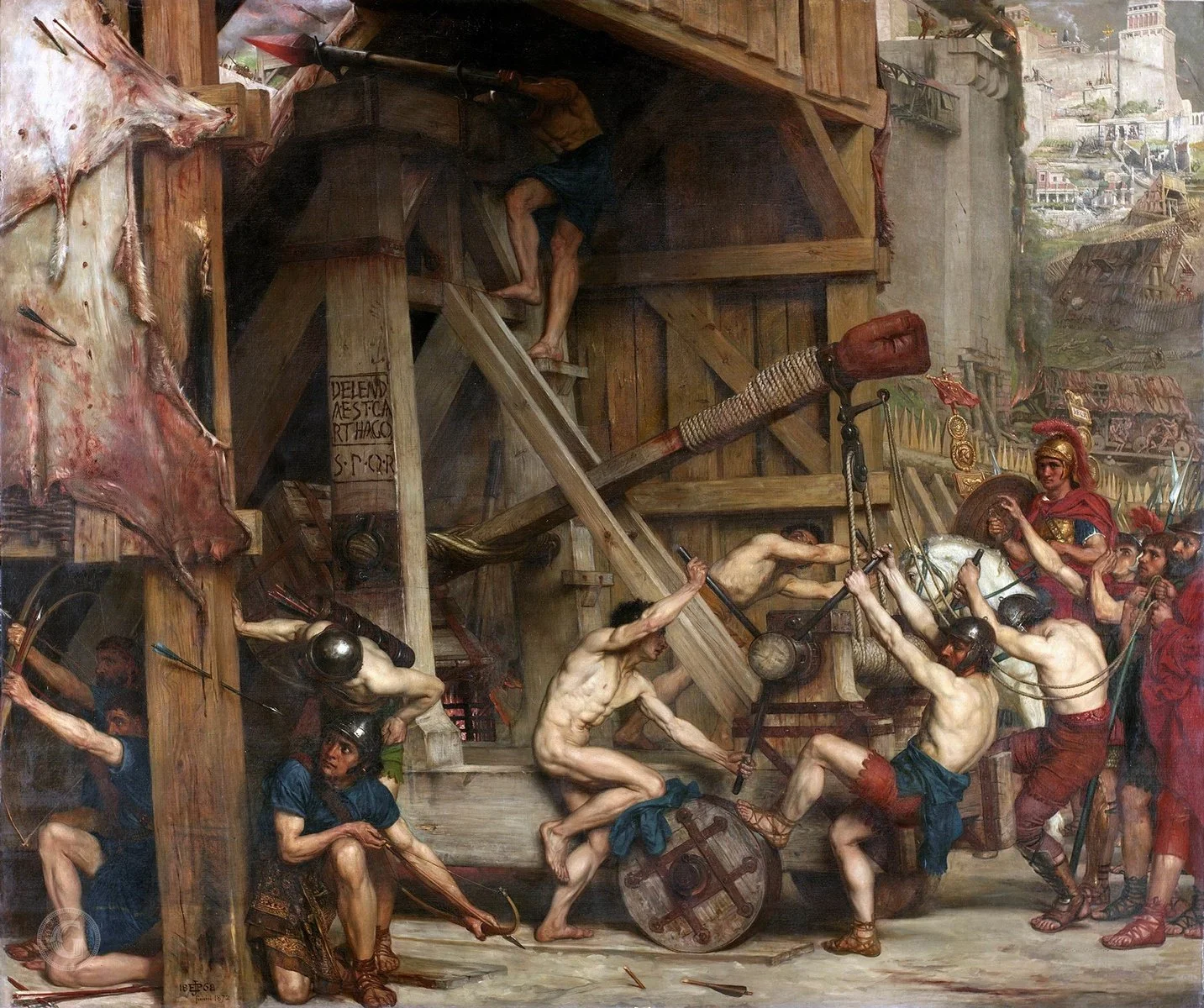
Roman soldiers manning a siege engine for an attack on the walls of Carthage, which ended in the destruction of Carthage in 146 BCE. The famous command of Cato the Elder, "Carthago Delenda Est" (quoted in Plutarch's "Life of Cato") is carved in the wood of the huge catapult
Late Republican Roman writers, such as Sallust who wrote in the 1st century BCE, accused Rome of being corrupt because it lacked existential threats and dated the decline of Roman standards to the fall of Carthage.
The importance of the rivalry between Carthage and Rome inspired Virgil in his epic imagining of the foundation of the Roman race. In the Aeneid, Aeneas, the embodiment of Rome and of his descendant, Augustus, is waylaid on his way to fulfilling his destiny of founding a city in Italy by the spiteful Juno who doesn’t want him to succeed. A toy in the hands of the goddess, Aeneas is sent off course to North Africa, where he meets and falls in love with Dido, who is in the throes of establishing a city of her own, Carthage. With this innovative pairing of two contrasting founders, Virgil allowed Romans to imagine what their history would have been like had Aeneas stayed with Dido and not reached Italy – had he been overcome by a barbarian queen, just as Cleopatra had overcome Mark Antony. In other words, Virgil was asking his audience to imagine what it would have been like if Carthage had destroyed Rome even before it existed.
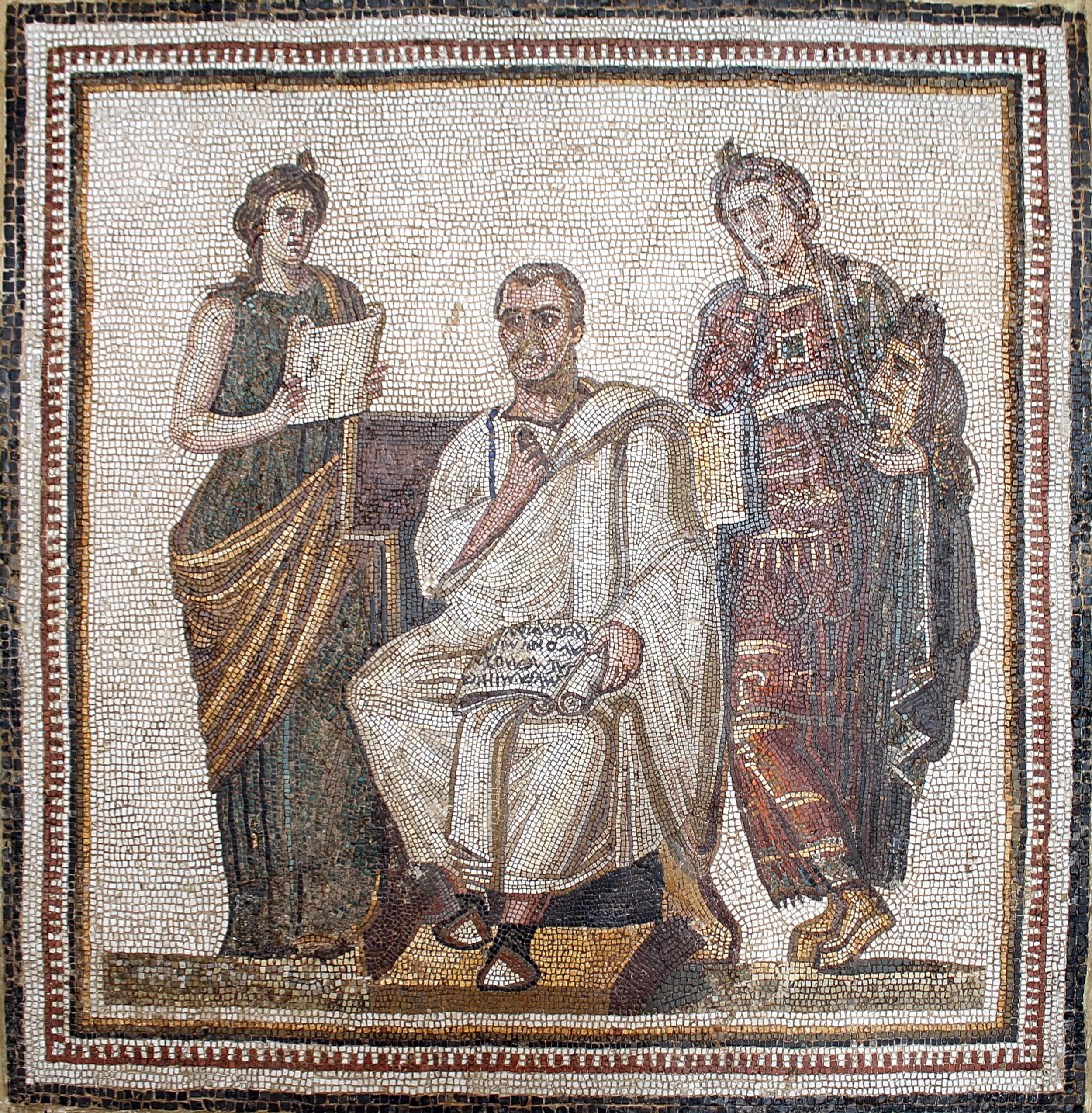
A 3rd-century CE Roman mosaic of Virgil seated between Clio and Melpomene (from Hadrumetum [Sousse], Tunisia)
Traces of the Carthage that was vanquished by Rome can still be seen today in the fascinating country of Tunisia. Chief among these is the eerie Tophet, or child cemetery, which contains the remains of more than 20,000 infants who were probably sacrificed in order to placate the goddess Tanit and her consort, Ba’al.
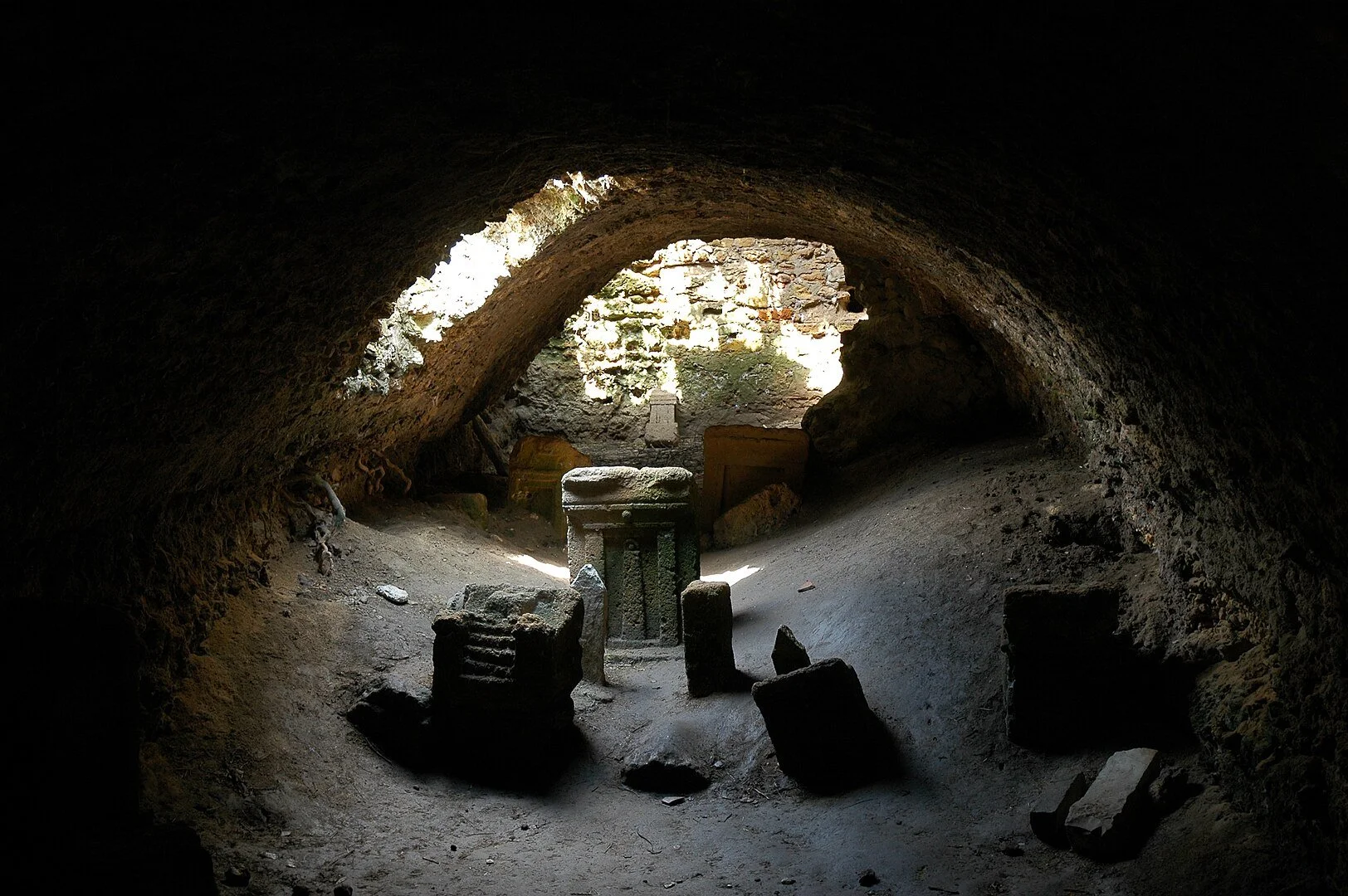
An ancient Tophet at Carthage. Photo: GIRAUD Patrick
Even more absorbing are the ruins of Punic houses found on the Byrsa Hill which were destroyed by Scipio in 146 BCE. Overlooking the city from its great height, the Byrsa is the area that was first settled. Legend had it that it is here that Dido built her city after the smitten Numidian King Iarbas gave her as much land as she could cover with a cowhide (the famous byrsa trick, from which the hill may derive its name). The Punic houses which can be visited today have survived because they were buried in the massive building program undertaken in the Roman period, after Caesar had colonised the city in 46 BCE.
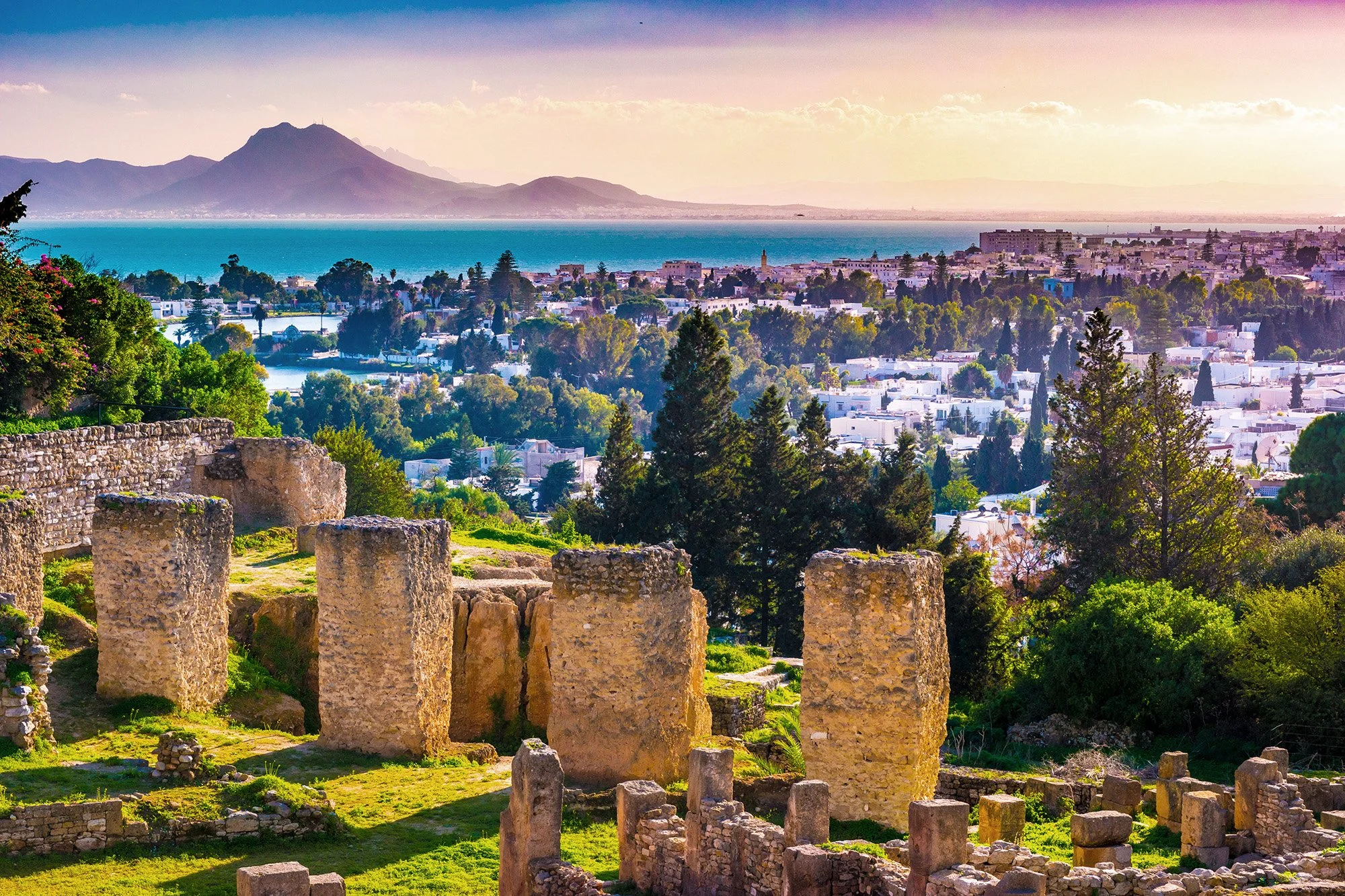
The ruins on Byrsa Hill, part of the remains of ancient Carthage, near Tunis, Tunisia
How evocative it is, then, that the very heart of Punic Carthage is buried underneath the city’s Roman forum. From this point of view, one can see this Punic quarter as the embodiment of the Roman conquest of Carthage. It is the physical manifestation of the once proud city being overcome by its archrival, Rome.
However, I would argue that the Byrsa encapsulates the most important thing about Carthage, namely, its ability to reinvent itself. After all, the magistrates who commissioned the buildings on the Byrsa which entombed the Punic city weren’t Roman; rather they were Carthaginian elites who gained Roman citizenship and who had become rich through the city’s inclusion in the Roman Empire. This blending of Punic ancestry and Roman civic status created a distinctly North African elite whose cultural identity was neither simply Roman nor wholly Carthaginian, but something new.
Strewn throughout Tunis are the gargantuan remains of buildings erected in the Roman period. For example, the Antonine Baths erected in the 2nd century CE were the largest baths constructed outside of Rome. Walking through the ruins today is awe inspiring enough before taking into account that what we see are merely the remains of the complex’s foundations.
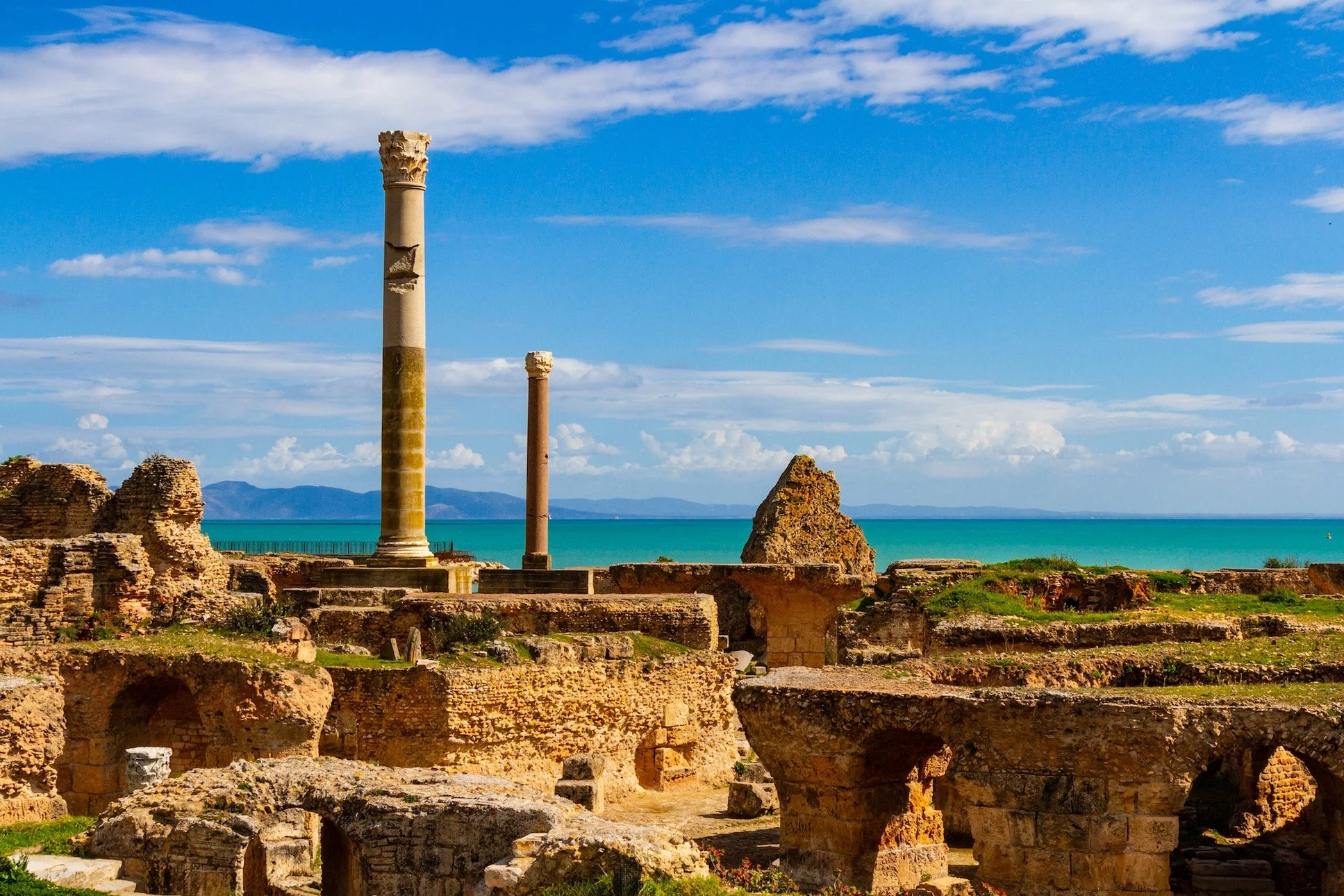
Roman Ruins of Antonines thermal Baths at Carthage
Feeding the baths, and feeding the city as a whole, were the La Malga cisterns which stored 60,000 cubic metres of water. Equally impressive is the 132 kilometre-long aqueduct which bore the water from the Zaghouan spring to Carthage at a rate of about 30 million litres of water a day. The scale of this hydraulic system – still partially traceable across the countryside – speaks to both the engineering prowess of Roman Africa and the sheer size of Carthage’s urban population.
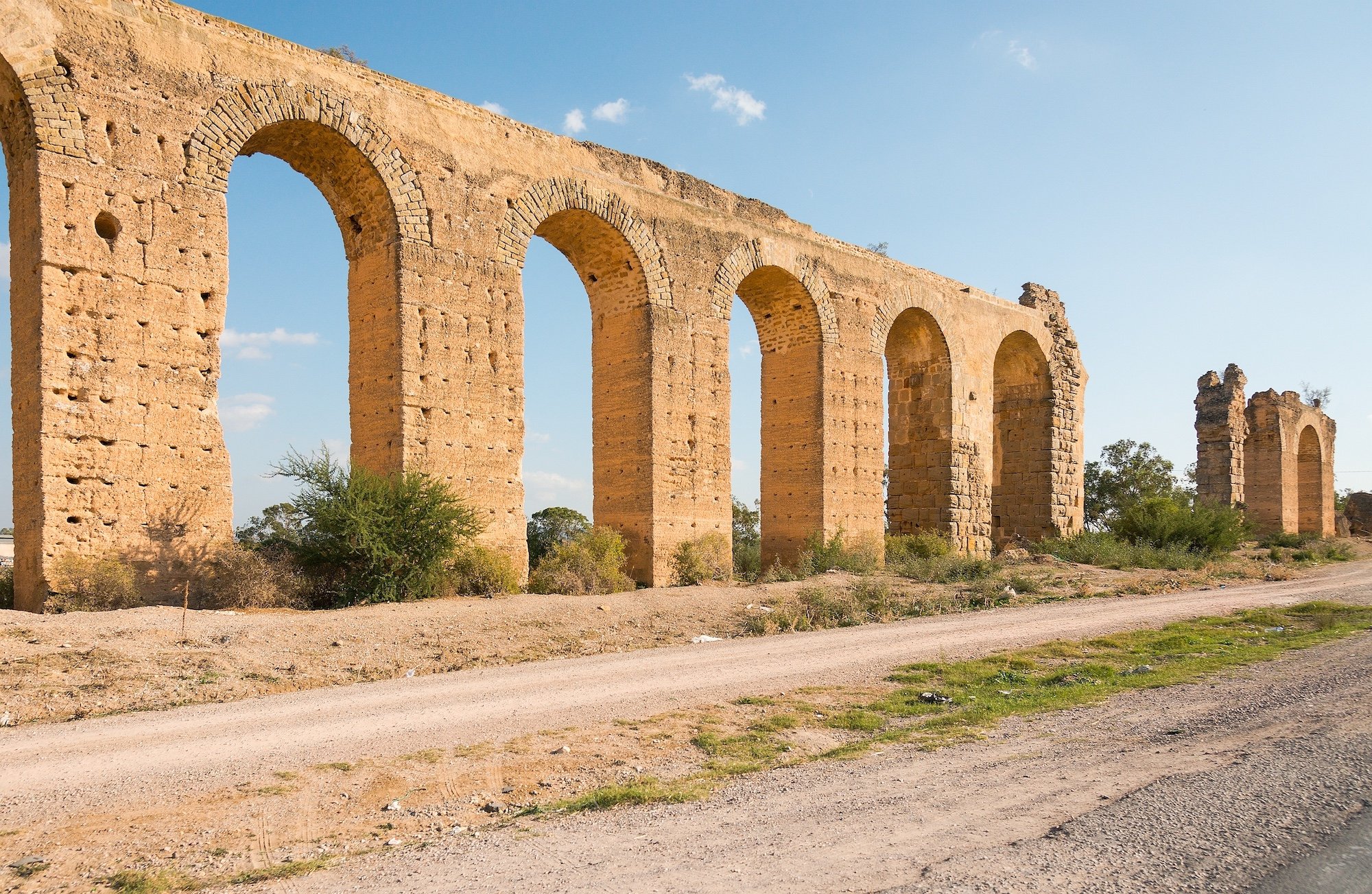
View of the ancient Roman Zaghouan Aqueduct or Aqueduct of Carthage
The wealth required to commission these monuments was generated by the city’s enormous population of 570,000 people, individuals who required massive amounts of water and multiple other amenities in order to survive. A visit to the city’s kothon or harbour offers but a glimpse of the scale of the city’s trade. Carthage was the capital of Africa Proconsularis, the province which grew prosperous by providing a vast proportion of the grain needed for Rome’s very survival.

A 3D rendition of what Carthage might have looked like at the height of its power
Passing through Carthage’s harbour was a plethora of other goods, such as marble from Simitthus, African Slip Ware and, of course, the purple dye from which the Phoenicians gained their name. The Carthage of this period far exceeded the city of the Punic period both in terms of size and in wealth. Carthage continued to remain important in the Early Christian period, when it became the primate of Africa and one of the centres of Christianity. The fame of Saints Felicity and Perpetua who were martyred in the Carthage amphitheatre is matched by the fame of the many bishops and theologians who studied in the city and called it their home. These include Saint Cyprian, as well as Saint Augustine, one of the original doctors of the church. Augustine’s years in Carthage – as student, teacher and later critic of its intellectual culture – underscore the city’s continuing vitality well into late antiquity.
It was only in 698 CE when the Ummayads sacked Carthage that it was destroyed. It was then that Arabs founded the new city of Tunis and furnished it with cart loads of building materials from the city which refused to be extinguished. One wonders whether the new conquerors wanted to obliterate the old city of Carthage in order to ensure it wouldn’t rise up again.
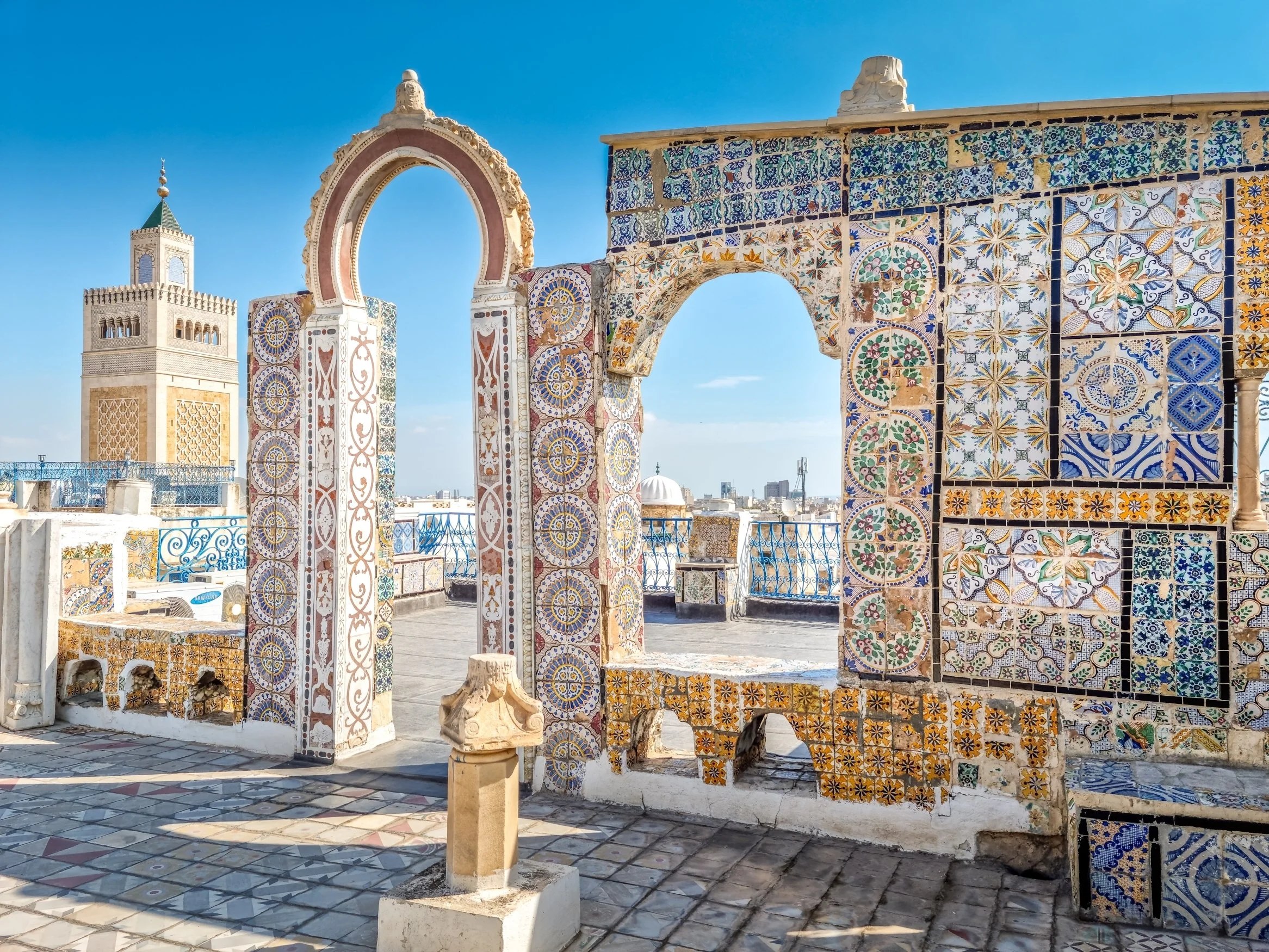
Rooftop in Tunis, Tunisia
It is this indomitable spirit which saw the evolution of Carthage from the most important Phoenician city in the 5th century BCE to the largest city in the Roman Empire after only Rome itself (Alexandria and Antioch were similar in size).
Visiting the vestiges of Carthage, one realises that Cato’s famous phrase Carthago delenda est rings hollow and that our focus should not be on its defeat but on its ability to survive. In its layered remains – Punic, Roman, late antique and Islamic – we see not a destroyed city, but a place repeatedly transformed by the very forces that sought to erase it.
Tour Algeria & Tunisia
Across Phoenician and Roman North Africa
In 2027, journey to the heart of North Africa, where the legacies of Phoenician traders, Roman conquerors and French colonists converge amid ancient cities and Mediterranean light, and where spectacular Roman sites and Berber oasis villages anchor a comprehensive 20-day exploration of Algeria and Tunisia led by Dr Eireann Marshall.