Italian Hill Towns

From Alpine Valleys to the Tuscan Landscapes of the Via Francigena

Explore Italy's fortified hilltop towns, each preserving some of the most intact medieval urban landscapes in Europe.

TOUR STATUS

Places Available | Maximum 16

TOUR DATES

April 23 -May 8, 2027 | 16 Days

TOUR LEADER

Dr Jeni Ryde | View Bio

snapshot

  • Download printable itinerary >

    Go to itinerary section >

  • The tour starts at 3.00pm on Friday 23 April, at Milan Airport, followed by a group transfer to our hotel in Aosta.

    The tour ends after breakfast on Saturday 8 May, at Hotel Room Mate Collection Mia, Rome.

  • Grade Three
    This tour is among our most physically demanding. You should be able to comfortably participate in up to five to seven hours of physical activity per day, including walking at an easy to regular pace, sometimes on uneven terrain. 

    View all requirements >

  • 15 nights’ accommodation in centrally located 4-star hotels. Airport-Hotel transfer as indicated. All breakfasts, 2 lunches, 1 wine tasting and 5 dinners. Services of an expert tour leader and an experienced tour manager throughout. All ground transport, entrance fees and tipping.

    View standard tour inclusions >

  • $15,980 AUD per person, twin share (land content only)
    $4,380 AUD supplement for sole use of a hotel room

    A $1,000 AUD non-refundable deposit is required per person to confirm your booking on tour

OVERVIEW

From the alpine passes of northern Italy to the basilicas of Rome, a chain of settlements developed along the Via Francigena – the medieval route that channelled pilgrims, merchants and political influence toward the Eternal City. Along its course, towns took shape in response to geography, defence and devotion, their walls, churches and civic spaces reflecting centuries of movement across the peninsula.

Led by Dr Jeni Ryde, this 16-day journey begins in the Aosta Valley, where Roman remains, fortified castles and vineyard landscapes reveal this rich historical tapestry. Views of the Mont Blanc massif and visits to strongholds such as Fénis and Issogne reveal how alpine communities balanced defence and display. Continuing south through Lombardy and Emilia, we then arrive at the Tuscan towns of Lucca, Pisa, San Gimignano, Siena and Pienza, where prosperity found expression in Romanesque cathedrals and Renaissance spaces.

Our journey finds its fitting conclusion in Rome, as catacombs and basilicas illuminate the city’s transformation from imperial capital to centre of Christian Europe.

tour highlights

Follow the Via Francigena from alpine passes to Rome’s basilicas

Dr Jeni Ryde

your expert tour leader

Jeni is a linguist and art history specialist with over fifteen years experience leading tours to Spain, Italy, France and Portugal. She is passionate about art, design and architecture both ancient and modern and particularly enjoys how both complement each other. Jeni holds two undergraduate degrees with majors in Anthropology and French and Interpreting and Translation with NAATI qualifications, two Masters degrees in Italian Linguistics and TESOL and a cross disciplinary PhD in Renaissance Art History, Tourism and Museum Management.

Read full bio >

Accompanied by an Experienced Tour Manager

Alongside your expert tour leader, an experienced tour manager will accompany for the entirety of the tour. They oversee logistics, ensure your comfort and safety, and provide friendly support – whether offering tips for free time, sharing a chat over dinner, or giving you space to relax.

tour ITINERARY

Aosta (4 nights), Salsomaggiore Terme (2 nights), Lucca (3 nights), Castiglione del Lago (3 nights), Rome (3 nights)

Included meals are indicated with B, L, D and WT for Wine Tasting.
  • Day 1 | Friday 23 April
    Arrive Milan – To Aosta

    The western Alps have long formed one of Europe’s great corridors of movement. From Roman legions securing strategic mountain passes to medieval pilgrims travelling the Via Francigena toward Rome, these valleys shaped patterns of settlement that balanced defence, trade and devotion, with Aosta standing at the heart of this network. After meeting at Milan Airport in the afternoon, we travel by coach to our hotel in Aosta’s historic centre. We reconvene in the evening for welcome drinks before enjoying dinner together in a local restaurant. Overnight Aosta (D)

  • Day 2 | Saturday 24 April
    Roman Aosta

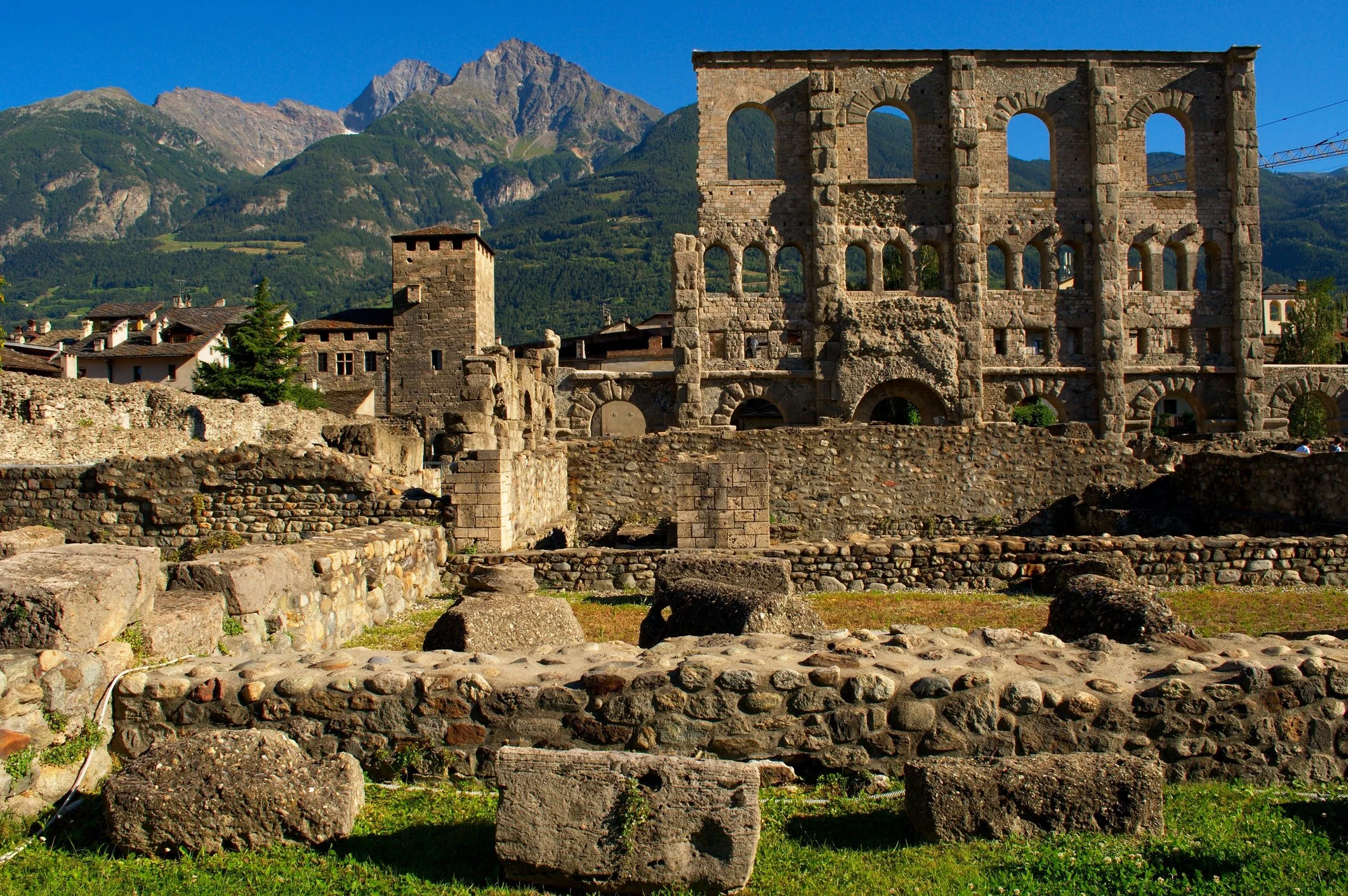
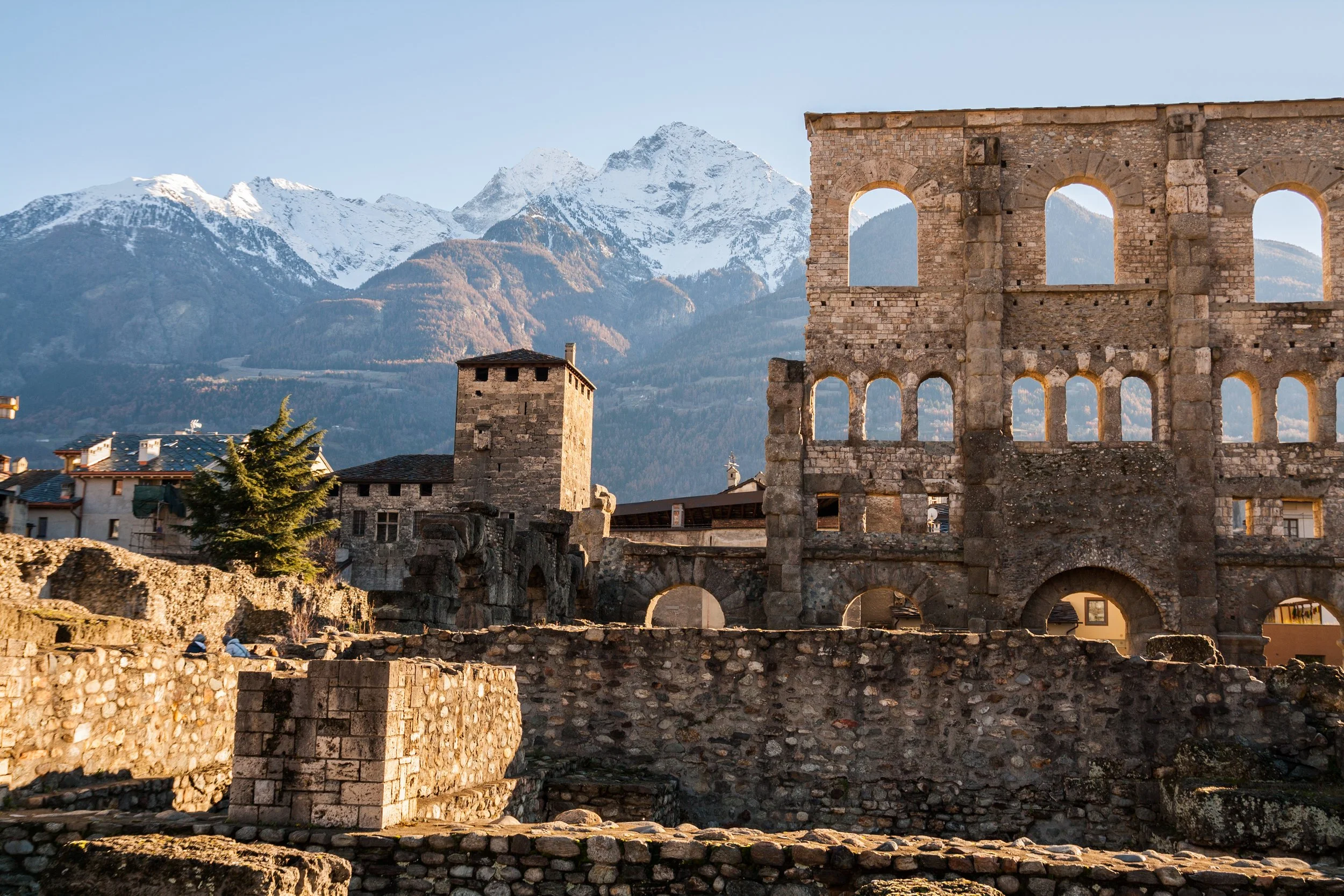
    Founded in 25 BCE as Augusta Praetoria Salassorum,
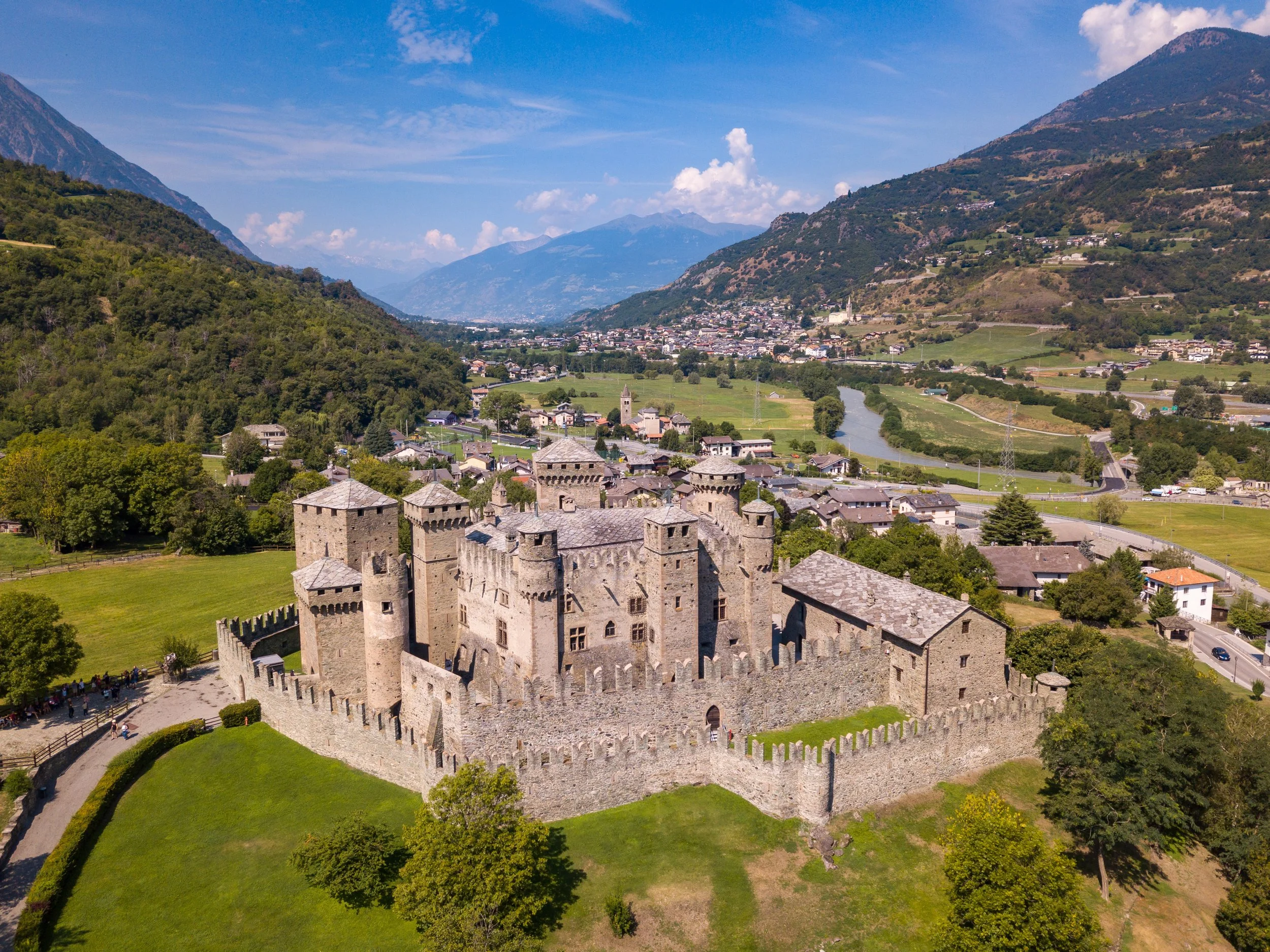
    Aosta was conceived not as an incidental settlement but as a strategic instrument of Empire. Established to control the Great and Little St Bernard passes, it became one of the most important Roman towns north of the Po, its orthogonal grid, monumental gateways and surviving walls earning it the epithet ‘Rome of the Alps’. We begin our day at the Arch of Augustus for a guided walking tour of the Roman forum, cryptoporticus and theatre, whose arcades speak to civic life in a frontier colony. We then continue to the Cathedral, where medieval and later additions overlay earlier Christian foundations. After a break for lunch in the town centre, we travel by coach to the imposing Castello di Fénis, whose
    14th-century towers and frescoed courtyard illustrate the assertion of noble authority in the later Middle Ages. A further stop at the Pont d’Aël – a Roman aqueduct-bridge spanning a dramatic gorge – demonstrates the engineering ambition that underpinned alpine urbanism. On return to our hotel, the evening is at leisure. Overnight Aosta (B)

  • Day 3 | Sunday 25 April
    Castles, Vineyards and Mountain Horizons

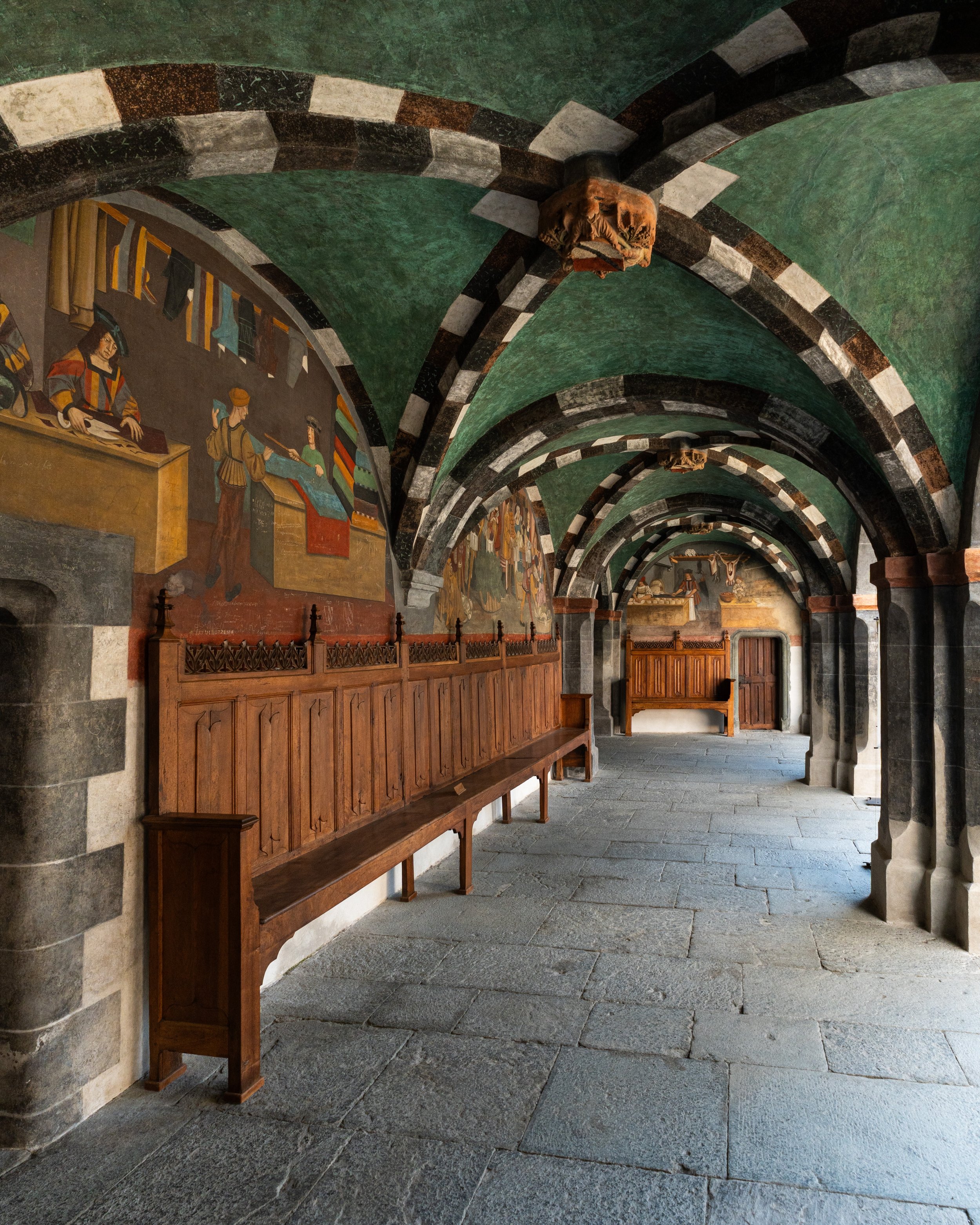
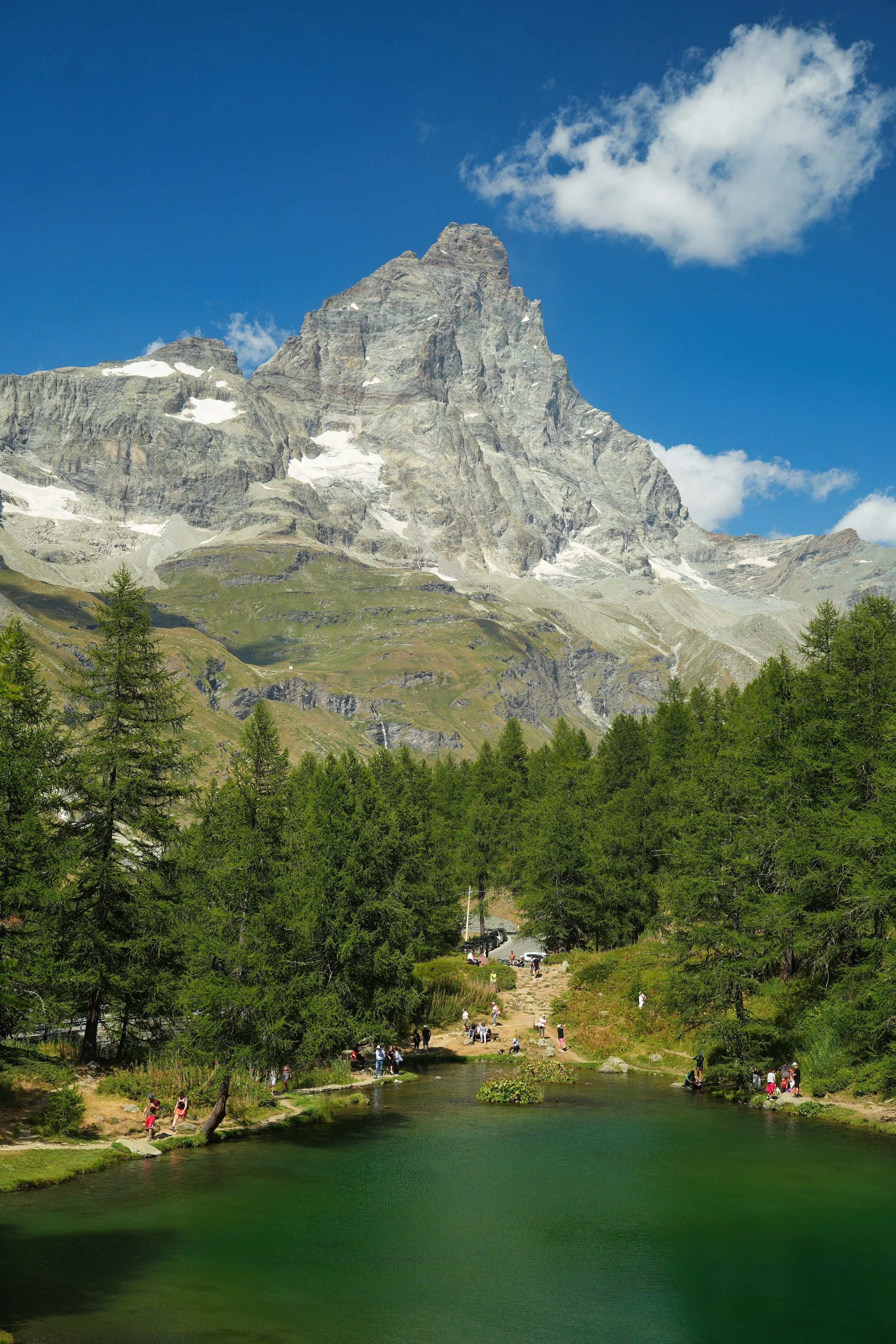
    With the fragmentation of Roman authority, the Aosta Valley became a landscape of fortified residences. Castles rose to command valleys, protect agricultural land and control routes that later formed part of the pilgrim road south. This morning we visit one of the finest surviving examples of these strongholds – Issogne Castle. This austere riverside manor was first associated with the Bishops of Aosta and later transformed by the powerful Challant family in the 15th century. Within its fortified walls, the interiors reveal a residence designed as much for display as for defence. Painted loggias line the courtyard, their frescoed panels illustrating scenes of market life, workshops and courtly pursuits that offer a rare glimpse into 15th-century society. Continuing to Donnas, we then visit the Pianta Grossa winery for a tour of the vineyards and cellar, followed by a tasting of local wines. After free time for lunch in nearby Verrès, we return to Aosta via Breuil-Cervinia for views of the Matterhorn, weather permitting. In unsettled conditions, we instead explore the Valle del Gran San Bernardo. Overnight Aosta (B, WT)

  • Day 4 | Monday 26 April
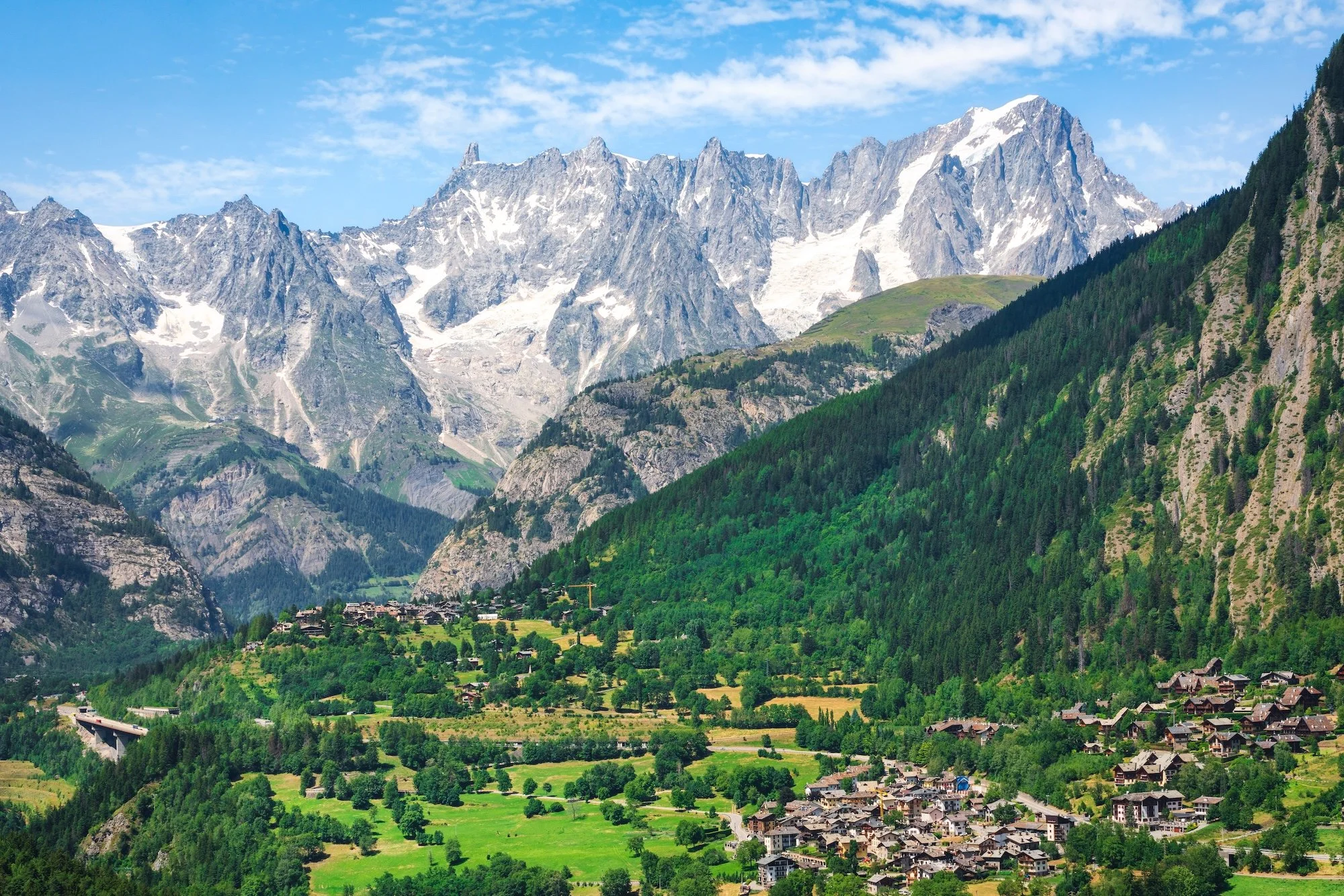
    Alpine Landscapes and Mont Blanc
    The landscape of the Alps shaped more than trade routes and military campaigns – it shaped everyday life. Villages emerged in response to climate, altitude and access to pasture and water, forming communities connected by mountain passes yet grounded in distinct local traditions. A panoramic excursion through the valley today reveals the scale of Mont Blanc and the surrounding peaks, underscoring how settlement here has always been negotiated against formidable terrain. If conditions allow, we also ascend on the Skyway Monte Bianco cable car. From the viewing terraces, the glaciers and granite peaks of the range unfold at close range – Mont Blanc itself, the Dent du Géant and the sweeping Mer de Glace stretching toward France. Returning to Aosta, the remainder of the afternoon is at leisure until we gather again for an evening talk in the hotel. Overnight Aosta (B)

  • Day 5 | Tuesday 27 April
    Pavia and the Lombard Legacy

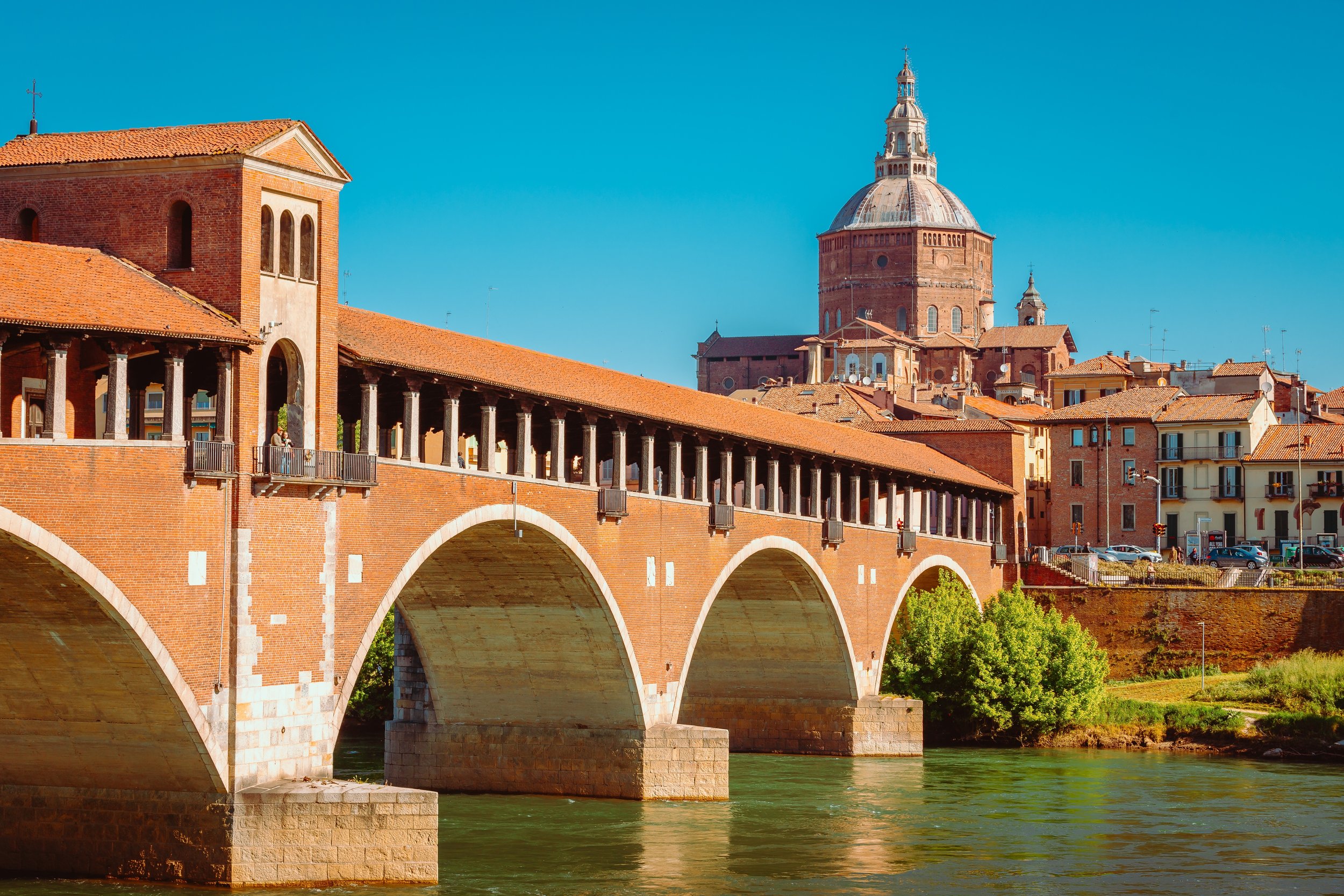
    In the early Middle Ages, Pavia stood at the centre of political power in northern Italy. As capital of the Lombard Kingdom between the 6th and 8th centuries, it became both a royal seat and an important stopping point for pilgrims travelling south toward Rome. Leaving the Alps today, we travel into Lombardy and pause first in this historic city. Our walking tour showcases its historic and cultural highlights, including the 12th-century Basilica of San Michele Maggiore, the 8th-century Romanesque Church of San Teodoro with its outstanding birdseye view frescoes of the city, the University area founded in 1361 and the medieval towers in the historic centre built between the 11th and 13th-centuries. In the late afternoon we continue to Salsomaggiore Terme, located at the foot of the Apennines, where dinner is enjoyed in our hotel. Overnight Salsomaggiore Terme (B, D)

  • Day 6 | Wednesday 28 April
    Apennine Hill Towns 

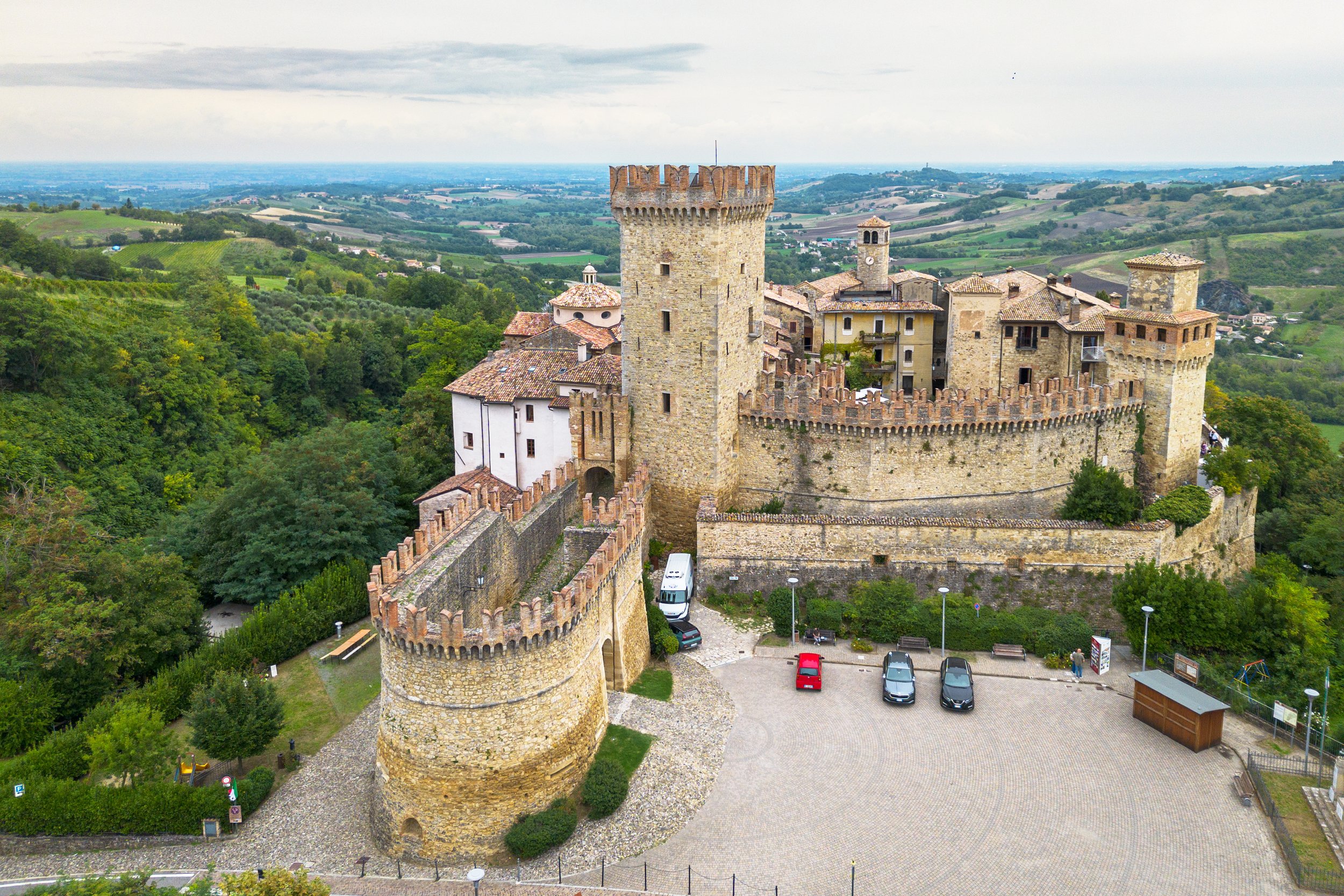
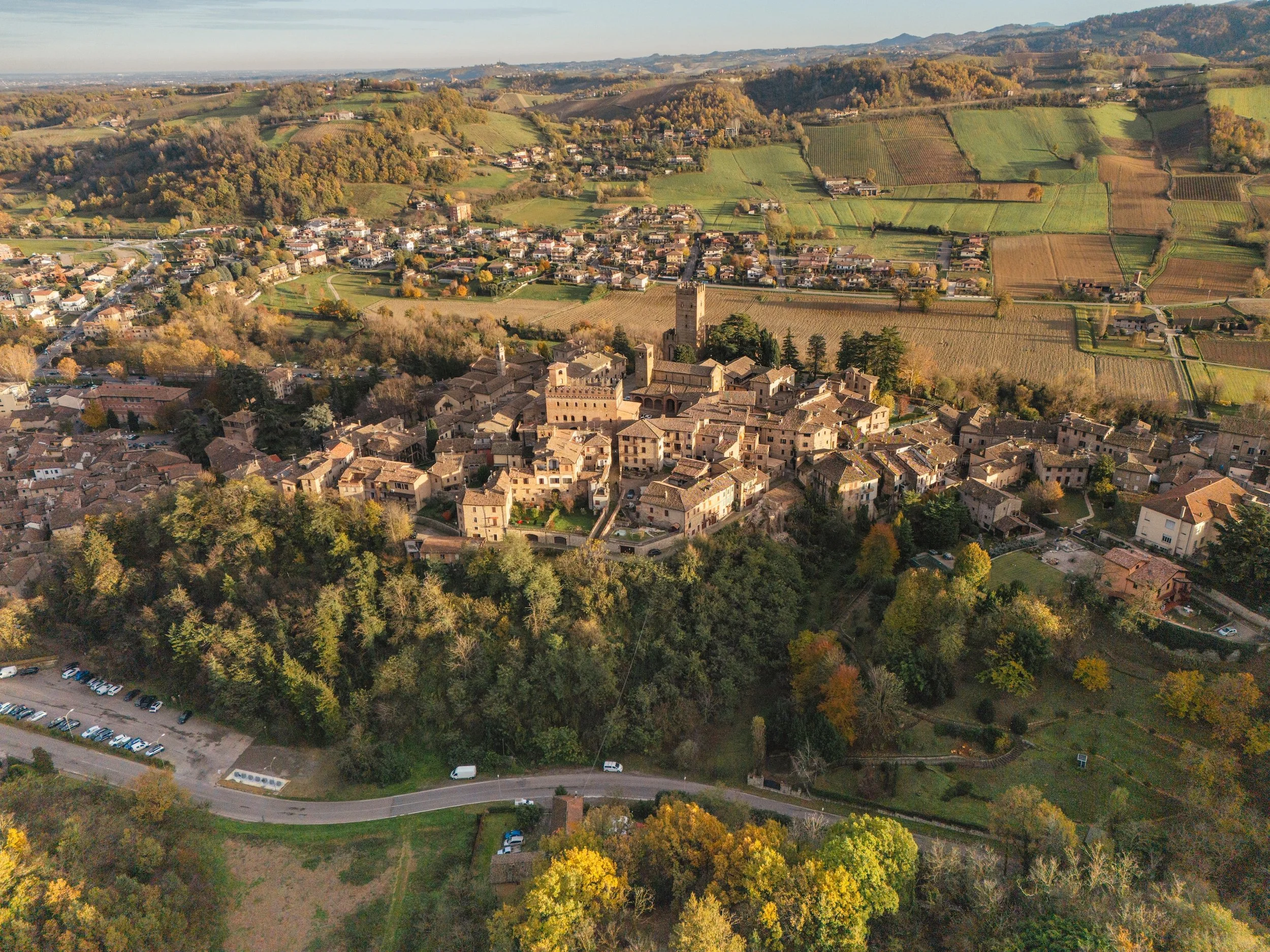
    The Apennines, running almost the entire length of Italy from Liguria to Calabria, have long shaped patterns of settlement, defence and regional identity across the peninsula. Control of their narrow passes was central to securing access to Rome and the authority it represented. Today we explore the region’s history, art and gastronomy, beginning with a visit to the village of Fontanellato, whose history dates back to the 13th century. We first tour the Rocca di Sanvitale, a fortress surrounded by a water-filled moat that dominates the settlement. The village’s name derives from the springs that once surfaced in the surrounding marshland, shaping both its economy and identity. After lunch in a traditional trattoria, we continue to the medieval village of Castell’Arquato, set against the foothills of the Apennines, where we explore its collegiate church and imposing fortress. Our final destination is the nearby village of Vigoleno, enclosed by crenellated walls and home to the 12th-century Romanesque church of San Giorgio. On return to our hotel, the evening is at leisure. Overnight Salsomaggiore Terme (B, L)

  • Day 7 | Thursday 29 April
    The Labyrinth and Lucca

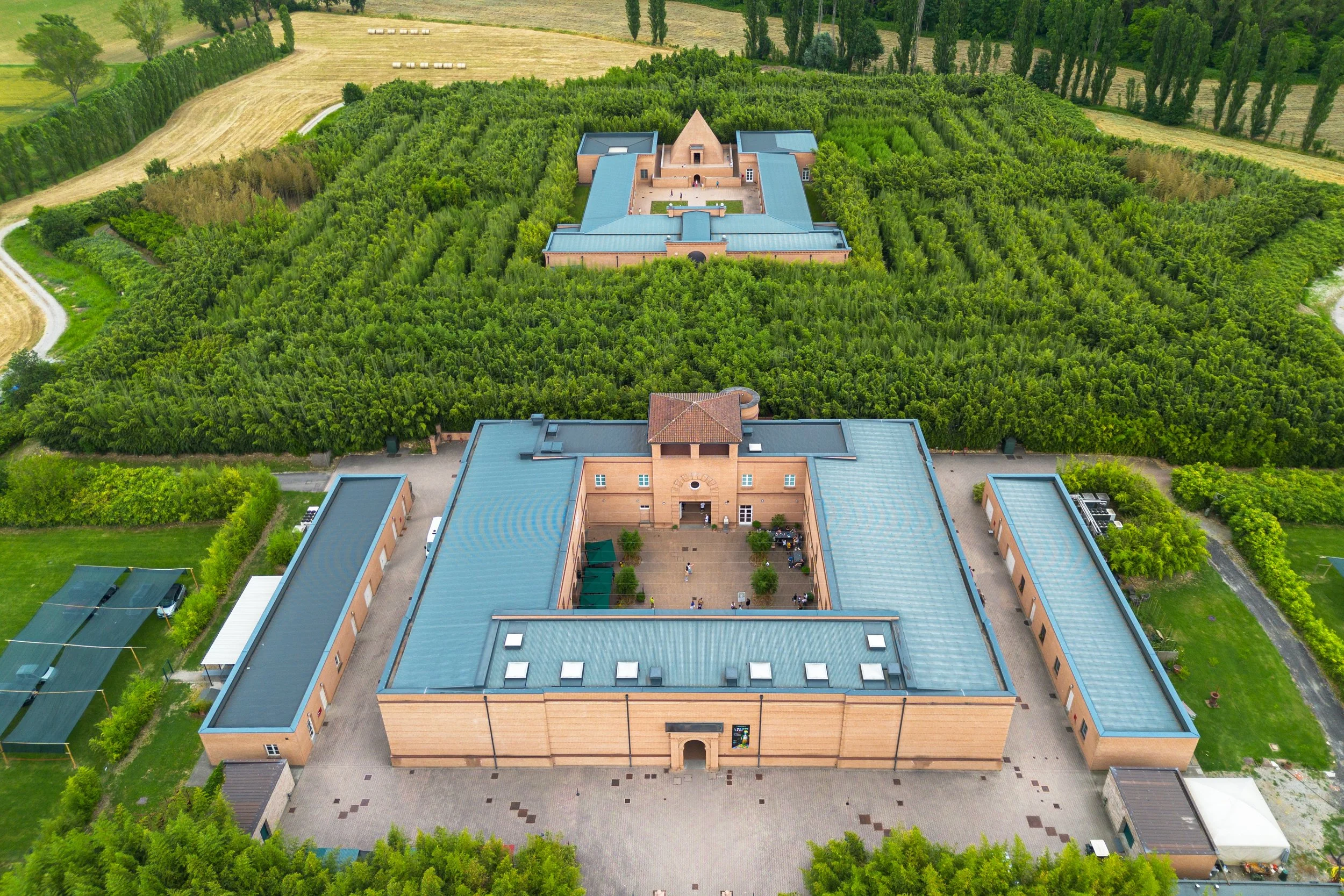
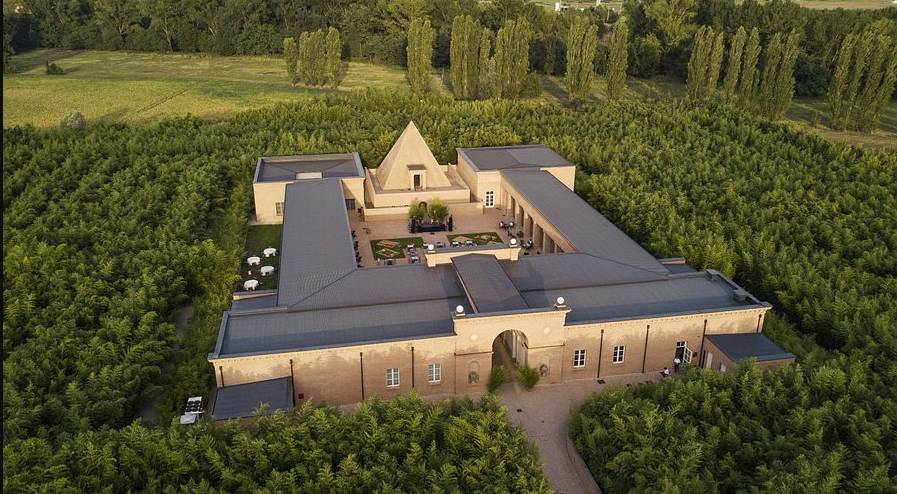
    Cultural patronage in Italy has never been confined to courts and major capitals. Collectors, publishers and regional elites have long shaped landscapes as deliberately as cities, and the Labirinto della Masone offers a contemporary expression of this tradition. Conceived by publisher and designer Franco Maria Ricci in the 21st century, it draws on Renaissance principles of geometry and perspective while reinterpreting them in bamboo and stone. Departing Salsomaggiore, we travel first to the labyrinth for a guided visit through its ordered pathways, exhibition spaces and Ricci’s art collection, exploring the dialogue between publishing, collecting and architectural form. Time is allowed to wander independently within the garden before we continue to Varano de’ Melegari, where lunch is enjoyed in a local restaurant. In the afternoon we drive south to Lucca, arriving in the early evening and checking into our hotel within the historic centre. An evening talk in the hotel concludes our day. Overnight Lucca (B, L)

  • Day 8 | Friday 30 April
    The Walled Republic of Lucca

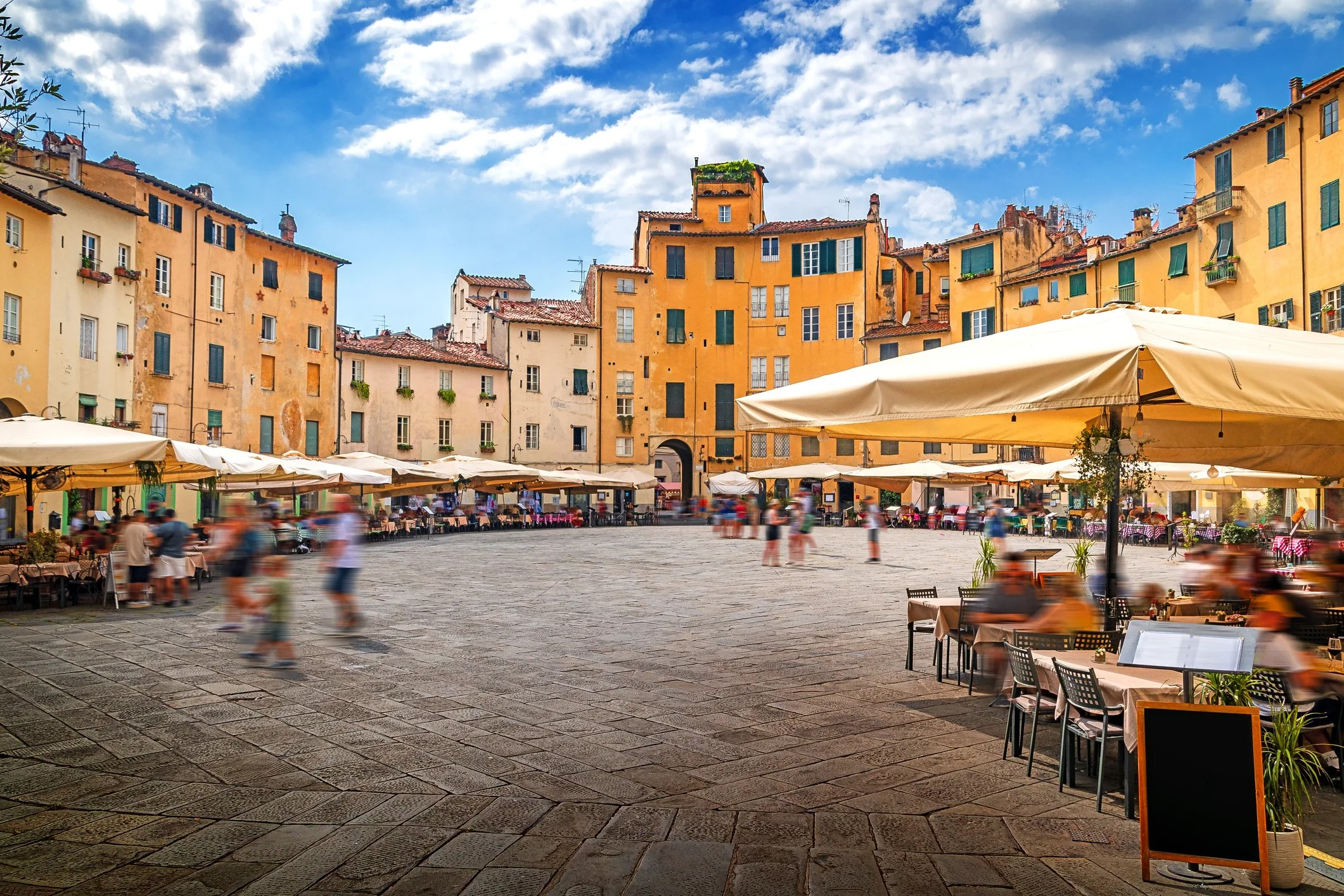
    Encircled by Renaissance walls rising 12 metres above the surrounding plain and long sustained by silk production and pilgrimage traffic along the Via Francigena, Lucca preserves one of Tuscany’s most coherent medieval townscapes. We begin our morning with a walking tour of the historic centre, where the street plan still follows its Roman foundations. Our exploration starts at the Duomo di San Martino, consecrated in 1070, whose striped marble facade introduces a layered interior of Romanesque and Gothic elements. Here we encounter the revered Volto Santo, a wooden crucifix long venerated by pilgrims travelling south. We then continue to San Michele in Foro, built over the former Roman forum, before walking to Piazza Anfiteatro, an elliptical public square that preserves the footprint of a 2nd-century Roman amphitheatre within its encircling houses. We conclude at the Basilica di San Frediano, whose facade mosaic and early medieval interior reflect Lucca’s enduring devotional life. The afternoon is then at leisure to walk the walls, visit the Puccini Museum or explore artisan workshops along Via Fillungo. Overnight Lucca (B)

  • Day 9 | Saturday 1 May
    Faith and Power in Medieval Pisa

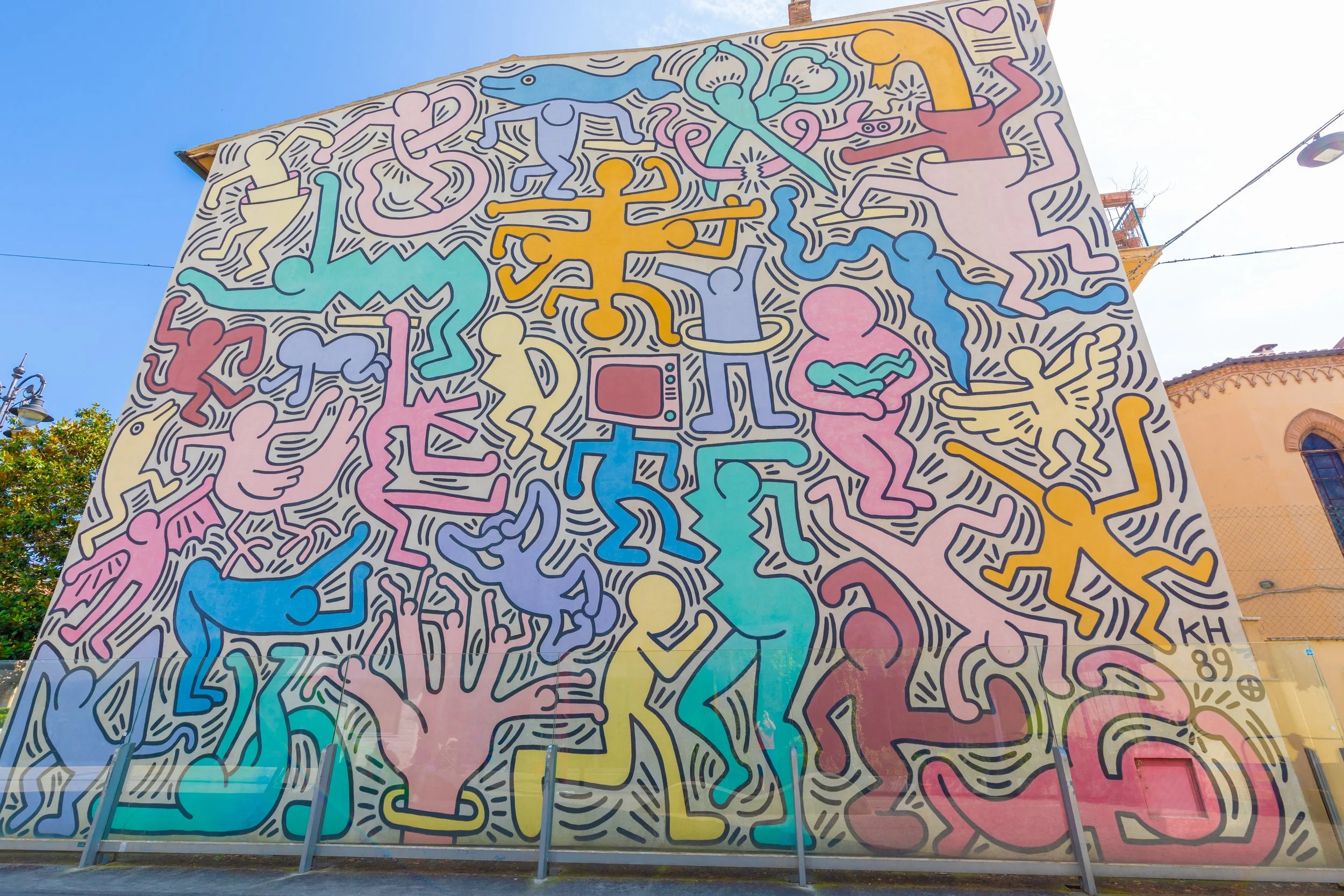
    In the 11th to 13th centuries, Pisa emerged as one of the great maritime republics of the Mediterranean. Its wealth, derived from trade and naval power, found monumental expression in the cathedral complex that still dominates the city’s northern edge. Travelling by train from Lucca to Pisa San Rossore, we meet our guide this morning and walk to Piazza dei Miracoli for a comprehensive exploration of the Cathedral, Baptistery and Camposanto. The sculptural work of Nicola Pisano, particularly within the baptistery, signals a renewed engagement with classical form that would influence later artistic developments. We then ascend the Leaning Tower – the cathedral’s 12th-century campanile – whose unintended tilt has become one of the most recognisable silhouettes in Europe. After a break for lunch, we stroll through the historic centre toward Pisa Centrale, passing the vibrant Keith Haring mural Tuttomondo, before returning to Lucca. Overnight Lucca (B)

  • Day 10 | Sunday 2 May
    San Gimignano

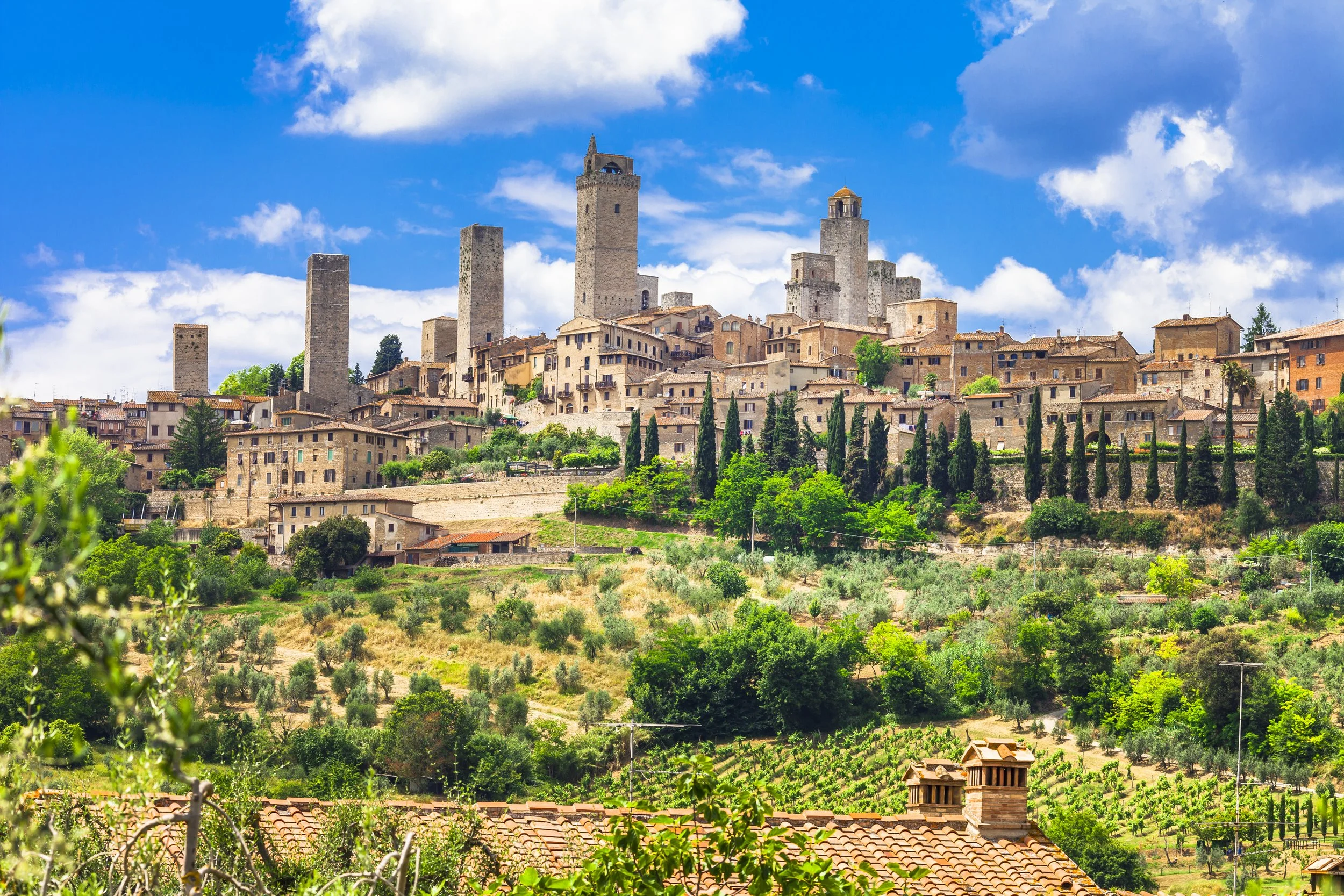
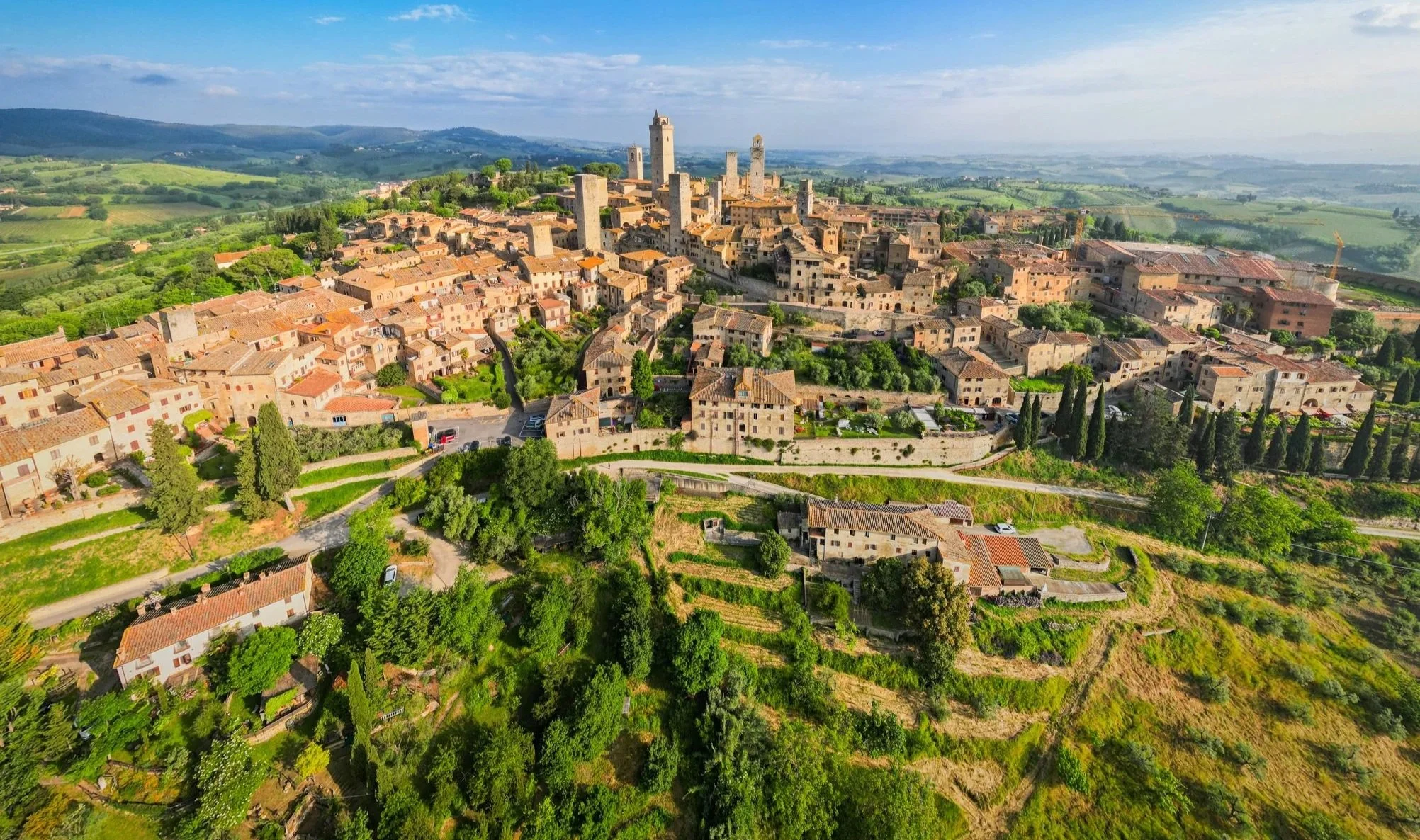
    In medieval Tuscany, prosperity generated by trade and pilgrimage was often expressed vertically. San Gimignano’s surviving towers remain the most dramatic testament to the rivalry of elite families competing for visibility and influence along the Via Francigena. Departing Lucca today, we travel south into the province of Siena and meet our guide in San Gimignano. Within 13th-century walls, we visit the Collegiata, whose fresco cycles narrate biblical stories – their colour and detail remarkably preserved. The Torre Grossa and surrounding tower houses reinforce the impression of a skyline shaped by rivalry and civic pride. After a break for lunch, we continue to Monteriggioni, encircled by perfectly preserved medieval walls praised by Dante, and walk along its ramparts to appreciate
    its defensive logic within the Tuscan landscape. Crossing over into Umbria, we arrive at our accomodation in Castiglione del Lago. This evening, dinner is enjoyed together at the hotel. Overnight Castiglione del Lago (B, D)

  • Day 11 | Monday 3 May
    Pienza and the Renaissance Ideal

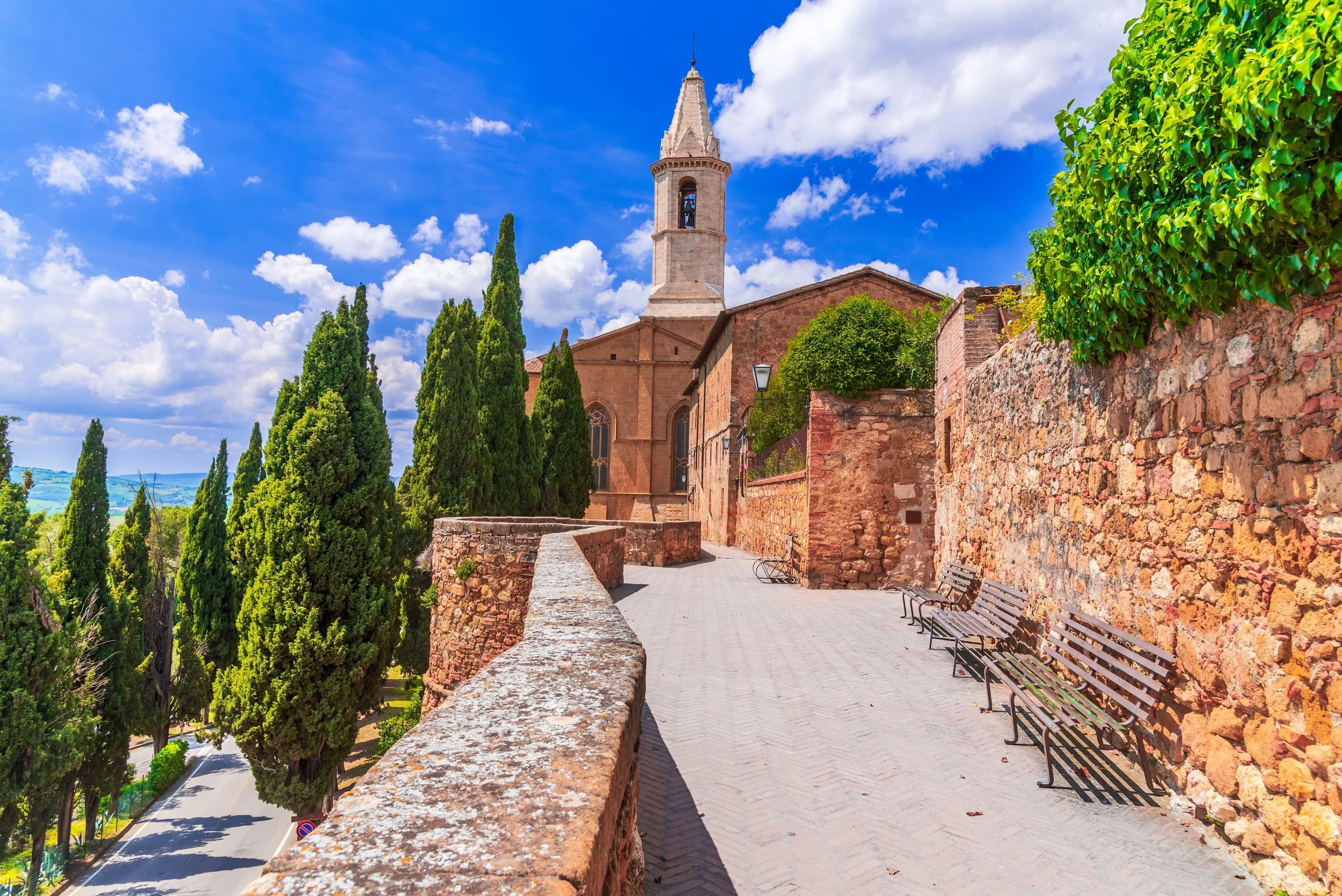
    If San Gimignano expressed medieval ambition vertically, Pienza represents a radically different vision of urban life. Originally known as Corsignano, this modest medieval hill settlement was transformed in the 15th century by Aeneas Silvius Piccolomini – later Pope Pius II – into a carefully ordered Renaissance town shaped by humanist principles. Today it stands as a UNESCO World-Heritage site and one of the most coherent expressions of early Renaissance urban planning. An introductory talk in the hotel sets this historical context before we travel to Pienza for a walking tour of the historic town. The Duomo stands at the heart, its travertine facade facing the Palazzo Piccolomini, whose loggia opens onto expansive views across the Val d’Orcia. We walk beyond the principal square to the Romanesque Pieve di Corsignano, where its sculpted portals predate the Renaissance transformation and remind us of the site’s earlier life. The remainder of the afternoon is set aside for independant exploration before we return to the hotel. The evening is at leisure. Overnight Castiglione del Lago (B)

  • Day 12 | Tuesday 4 May
    Siena and Gothic Civic Power

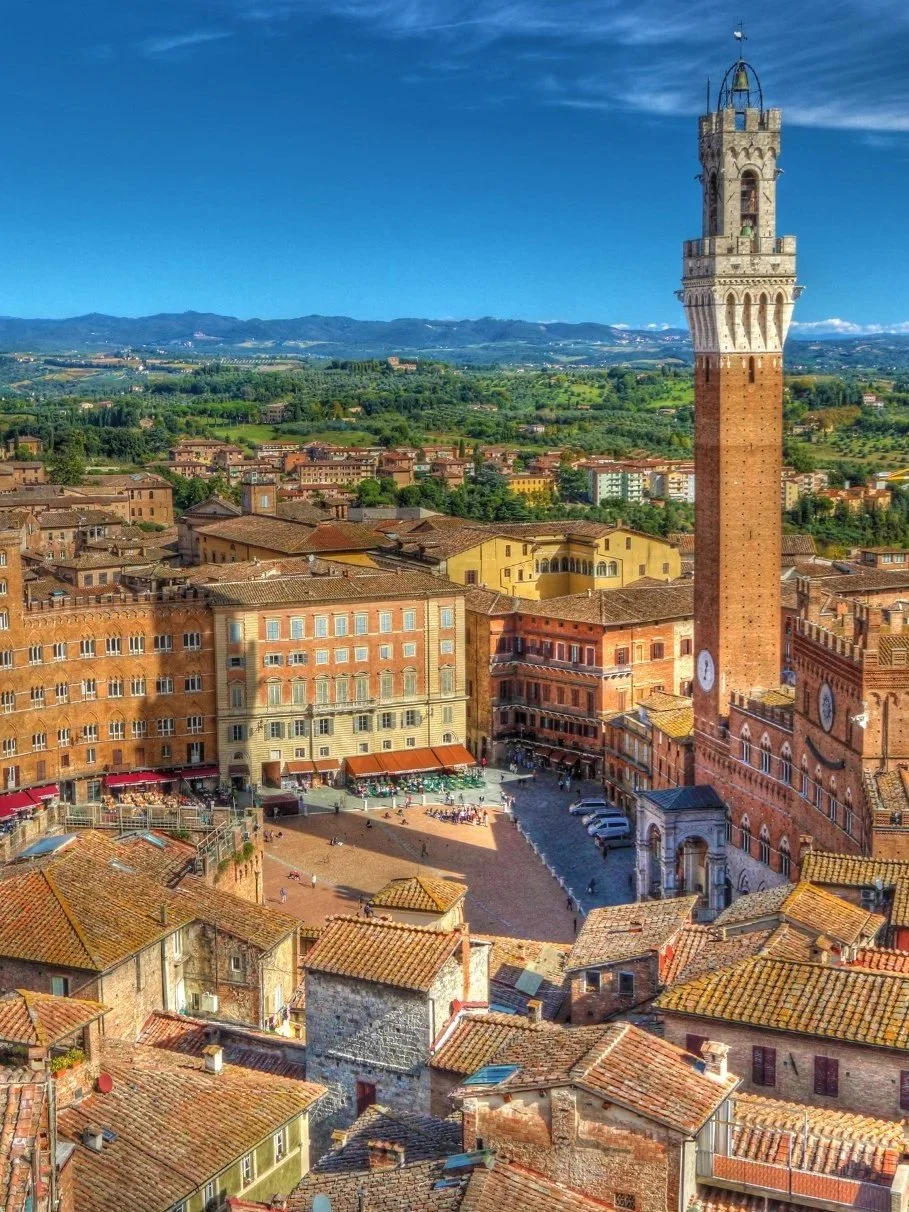
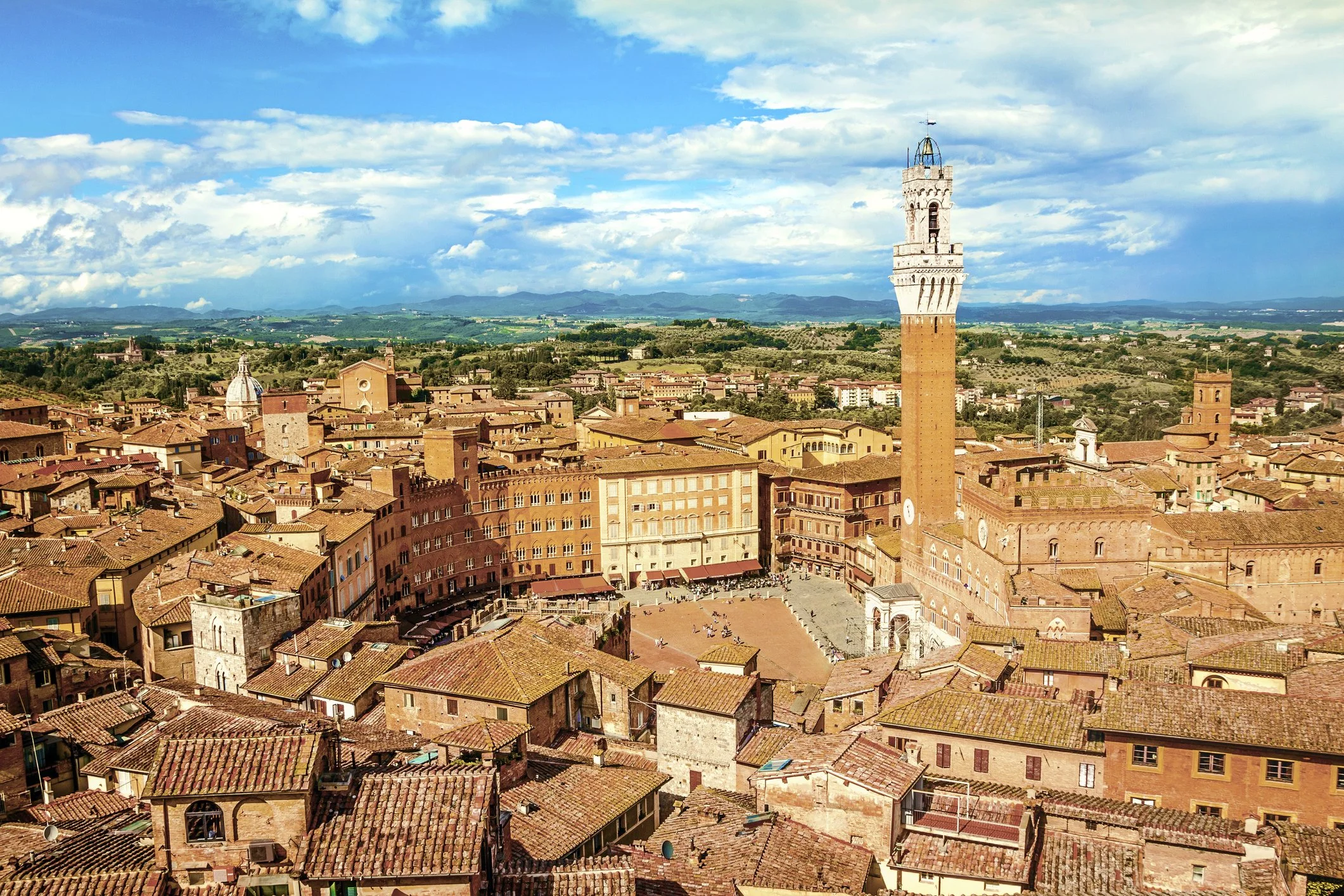
    Among Tuscan cities, Siena most vividly evokes the world encountered by medieval pilgrims. Enriched by its banking families and positioned along the Via Francigena, the city channelled prosperity into monumental architecture. Its distinctive Gothic style – visible in pointed arches and striped marble facades – reflects its rivalry with Florence and Pisa during the 13th and 14th centuries. Departing by coach this morning, we arrive in Siena and walk to meet our guide for a comprehensive exploration of the historic centre. Our tour takes in the Duomo complex, including the cathedral, Piccolomini Library and Museo dell’Opera, where Duccio’s Maestà embodies the refinement of Sienese painting. Opposite the cathedral, Santa Maria della Scala reveals the scale of Siena’s former pilgrim hospital, its frescoed halls attesting to centuries of charitable patronage. After a break for lunch, we then visit the Palazzo Pubblico, which looms imposingly over Piazza del Campo. Inside, we explore rooms once used by the Council of Nine, whose fresco cycles – most notably Ambrogio Lorenzetti’s Allegory of Good and Bad Government – articulate the political ideals and responsibilities that shaped Sienese public life. Returning to our hotel in the late afternoon, the evening is at leisure. Overnight Castiglione del Lago (B)

  • Day 13 | Wednesday 5 May
    Orvieto and Rome

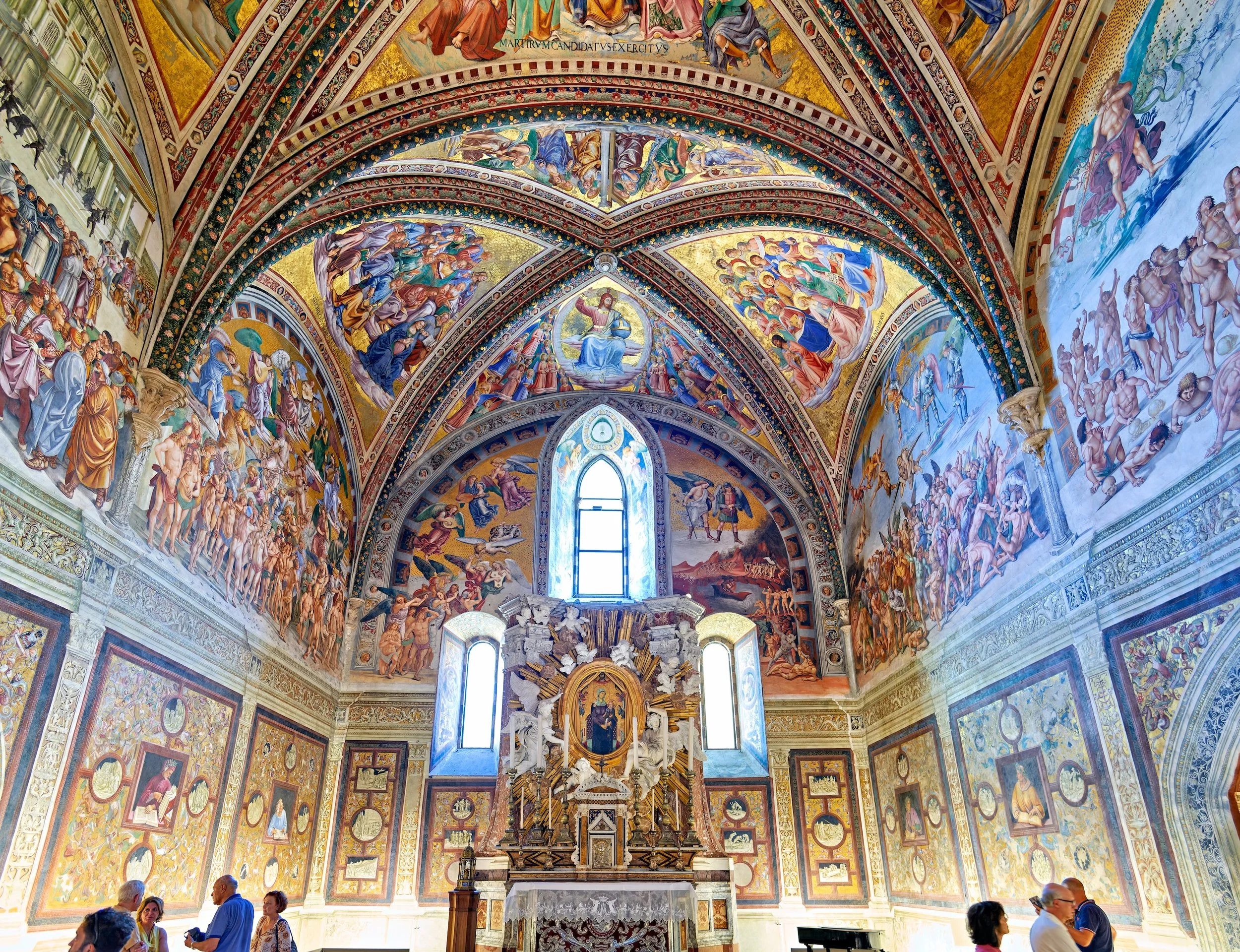
    Few hill towns demonstrate the logic of site selection more dramatically than Orvieto. Rising from a vast plateau of volcanic tuff, its position reflects Etruscan priorities of defence and control of surrounding territory. Long before Rome asserted dominance, this was a major cultural and religious centre, and in the Middle Ages it became a refuge for popes during periods of political instability. Today, we continue south to Orvieto, dramatically positioned atop a volcanic plateau. Walking through the medieval streets, we arrive at the Duomo, renowned for its mosaic-covered facade. Inside, Luca Signorelli’s late 15th-century fresco cycle in the Chapel of San Brizio confronts themes of judgement and resurrection with striking intensity. After a break for lunch, we then descend into Orvieto’s underground network, where tunnels and chambers carved into the soft tuff reveal layers of Etruscan and medieval occupation. In the late afternoon we continue to Rome, arriving at our hotel in time for dinner together overlooking the Colosseum. Overnight Rome (B, D)

  • Day 14 | Thursday 6 May
    Early Christian Rome

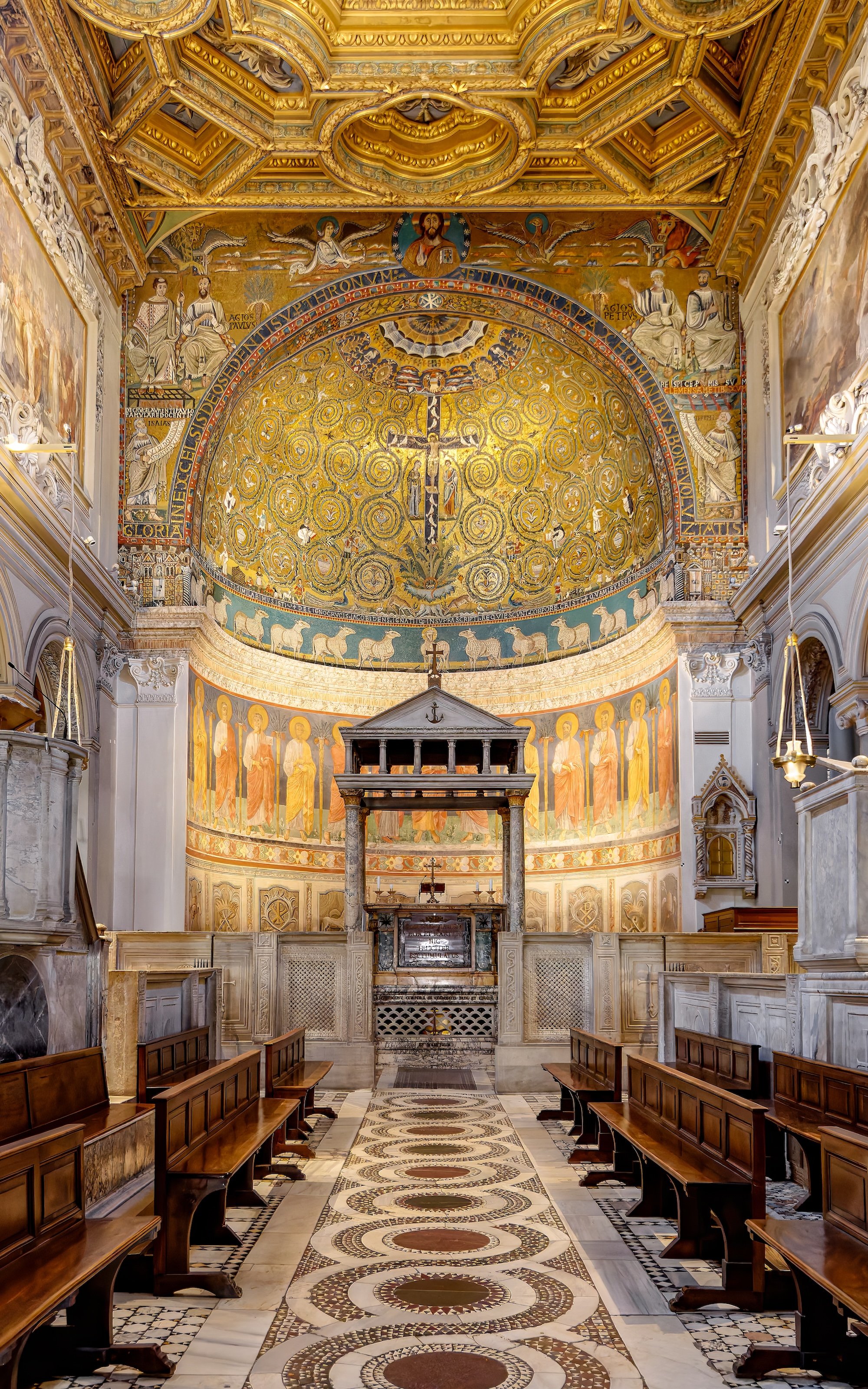
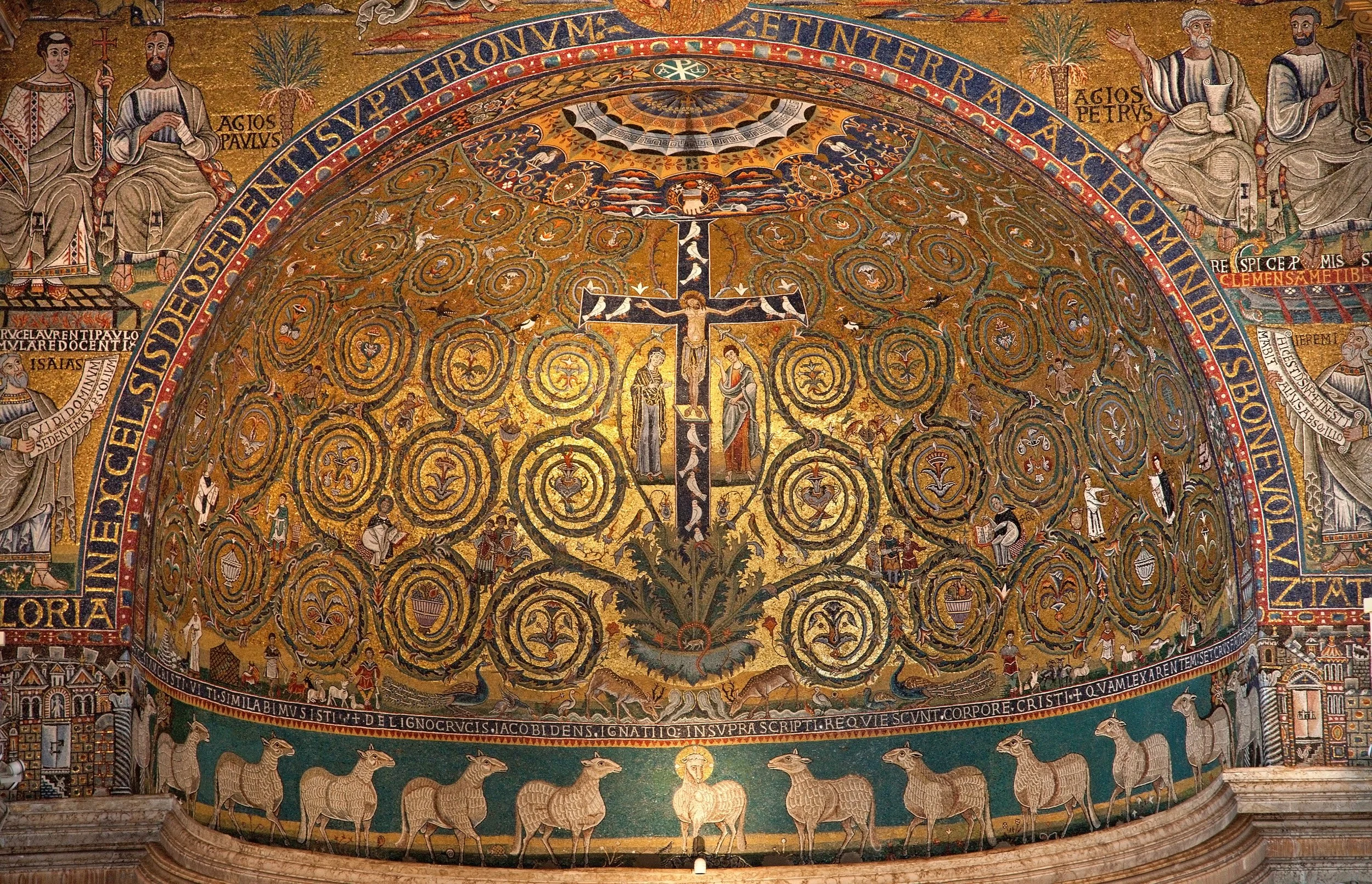
    For pilgrims completing the Via Francigena, Rome was both destination and revelation. Beneath its streets are layers of pagan ritual, imperial power and early Christianity, each built upon the remains of the last. Nowhere is this stratification more visible than in the churches and burial sites that preserve the city’s late antique transformation. This morning we travel along the Via Appia Antica, one of the earliest and most strategically important Roman roads, to the Catacombs of San Sebastiano on the outskirts of the city. These subterranean galleries reflect the development of early Christian burial practices and devotional culture. We then continue to the 12th-century Basilica of San Clemente for a tour of its remarkable archaeological layers. Descending below the present church reveals a 4th-century basilica built above a 1st-century Mithraic temple, offering a vivid illustration of religious transition within a single structure. Our afternoon concludes at Santo Stefano Rotondo, a 5th-century church whose circular plan reflects imperial architectural forms adapted for early Christian worship. Overnight Rome (B)

  • Day 15 | Friday 7 May
    Mosaics and Memory in Late Antique Rome

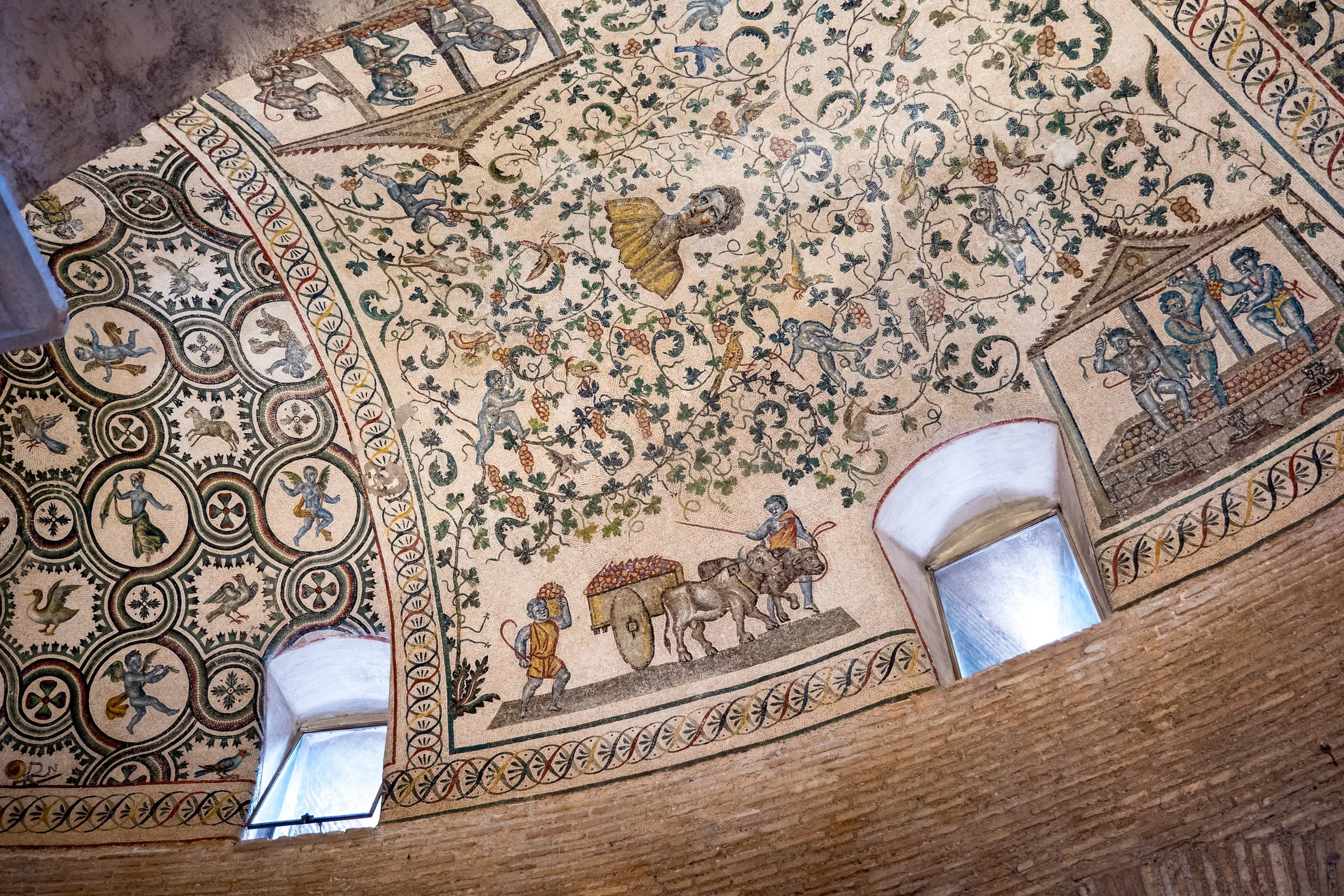
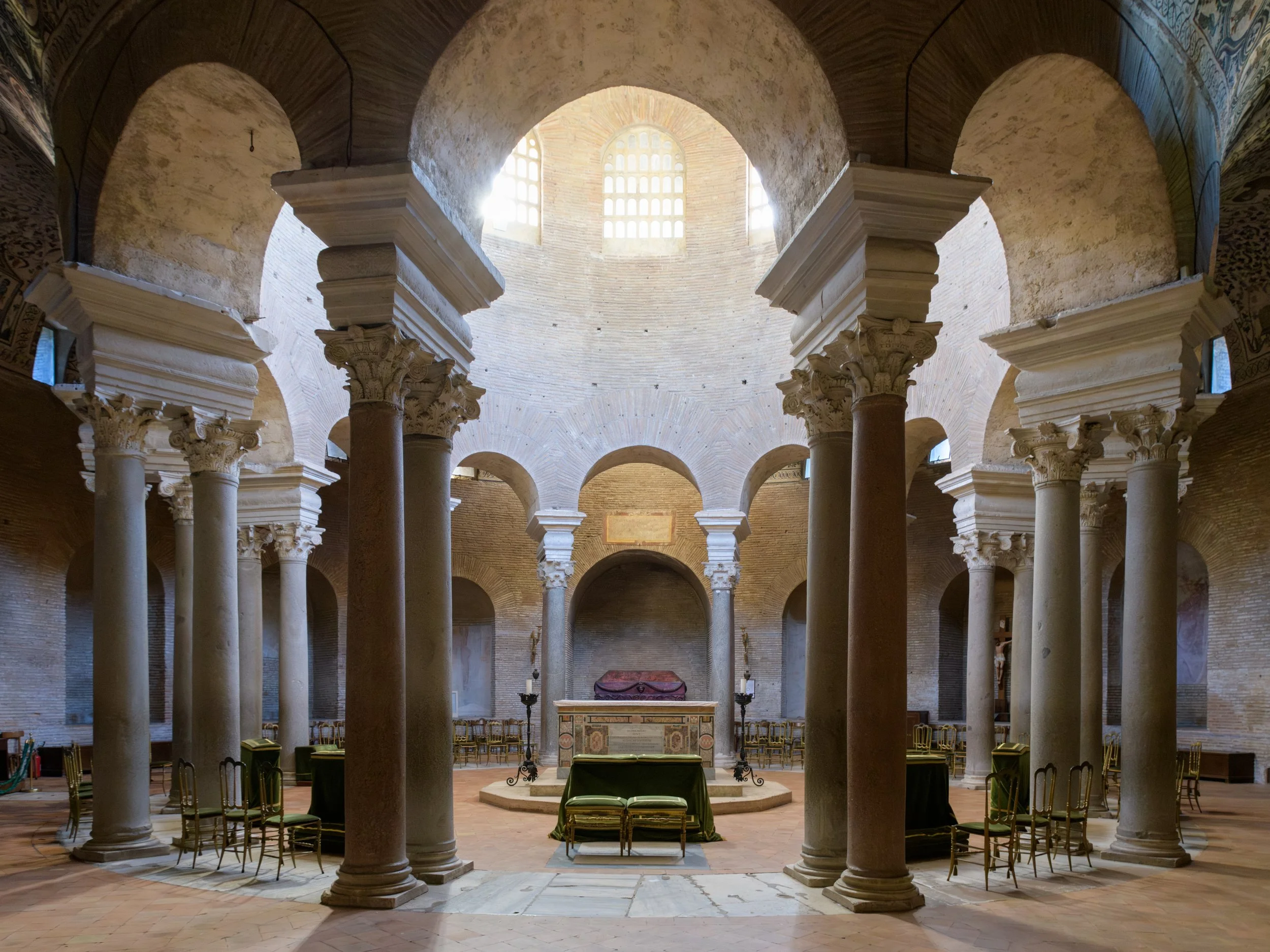
    As Christianity took root in Rome, the city’s architectural language began to shift. Between the 4th and 6th centuries, buildings once associated with imperial power were adapted to express a new faith. Churches and mausolea retained classical forms, yet their decoration and symbolism were reshaped to convey Christian meaning, preserving some of the city’s earliest surviving mosaics and devotional spaces. Today begins with an excursion to Sant’Agnese fuori le mura and the adjoining catacombs, where early Christian burial practices developed beyond the city walls. Nearby, the Mausoleum of Santa Costanza – traditionally associated with Constantine’s daughter – retains vine scroll mosaics that reframe imperial symbolism within a Christian context. Returning toward the centre, we visit Santa Maria Maggiore, one of Rome’s four major papal basilicas. The outstanding coffered ceiling here dates back to the time of Pope Alexander VI and, according to tradition, it was gilded with the first shipment of gold from the Americas, a gift from Isabella of Spain. We then continue to Santa Prassede, whose glittering apse mosaics reflect strong Byzantine influence and the transmission of eastern artistic traditions to Rome. We return to our hotel with time to freshen up before our farewell dinner this evening, marking the culmination of our exploration. Overnight Rome (B, D)

  • Day 16 | Saturday 8 May
    Depart Rome

    The tour ends this morning after breakfast. (B)

Hotels have been selected principally for their central location. All hotels are excellent four-star standard.

Tour Accommodation

tour booking

$16,360 AUD per person, twin share (land content only)
$4,380 AUD supplement for sole use of a hotel room

A $1,000 deposit is required per person to confirm your booking on tour. This deposit is non-refundable.

Hold a Place

Still deciding? We are happy to hold a tentative place for 7 days while you make your final arrangements.

Book Online

To secure your place(s) on tour, book online below with “Athena”, our virtual tour consultant.

DOWNLOAD FORM

Download a printable booking form. You can also complete the form on screen and submit via email.

your tour consultant

The consultant for this tour is Lucy Yeates. For further information or to discuss the tour, please call 9235 0023 (Sydney) or 1800 639 699 (outside Sydney) or email lucy@academytravel.com.au

have you thought about?

Academy Travel is more than just a tour operator. We are also a full-service travel agency who can assist you with all aspects of your travel, including flights, transfers, pre-tour arrival, additional travel and comprehensive travel insurance.

can’t make this departure?

If these dates don't work for you, register to hear about the next tour.