the CAUCASUS

AZERBAIJAN, GEORGIA & ARMENIA

Discover the fascinating history of this region, which lies at one of the great crossroads of trade, faith and culture.

TOUR STATUS

Places Available | Maximum 16

TOUR DATES

June 10-27, 2027 | 18 Days

TOUR LEADER

Dr Matthew Dal Santo | View Bio

snapshot

  • The tour starts at 6.30pm on
    Thursday 10 June, at the Radisson Hotel Baku - Azerbaijan.

    The tour ends after breakfast on Sunday 27 June, at the Grand Hotel Yerevan - Armenia. Hotel–airport transfers are provided for both arrivals and departures.

  • Grade Three
    This tour is among our most physically demanding. Activities may include travelling long distances, walking on difficult terrain, exposure to high altitudes and long days of touring.

    View all requirements >

  • 17 nights’ accommodation in centrally located 4 & 5-star hotels. Airport-Hotel transfers as indicated. All breakfasts, 10 lunches, 1 afternoon tea and 9 dinners. Services of an expert tour leader and an experienced tour manager throughout. All ground transport, entrance fees and tipping.

    View standard tour inclusions >

  • $17,990 AUD per person, twin share (land content only)
    $3,420 AUD supplement for sole use of a hotel room

    A $1,000 AUD non-refundable deposit is required per person to confirm your booking on tour

OVERVIEW

Stretching from the Caspian to the Black Sea and rising to the high plateau of Armenia, the Caucasus lies at the crossroads of Europe and Asia, where Islamic and Christian traditions meet.

Across Azerbaijan, Georgia and Armenia, layers of empire – Persian, Ottoman, Russian and Soviet – have shaped distinct yet interconnected identities. On this 18-day tour, join Dr Matthew Dal Santo as we explore this diverse heritage, from medieval walled cities to monastic complexes. We begin in Baku, capital of Azerbaijan, before travelling west to Sheki and crossing into Georgia’s Kakheti wine region. In Tsinandali, Kazbegi and Tbilisi, we trace Georgia’s Christian foundations and modern political history. Entering Armenia, we then visit the monasteries of Haghpat, Sanahin, Khor Virap and Echmiadzin before concluding in Yerevan, beneath the distant silhouette of Mount Ararat.

Throughout, shared meals, vineyard visits, caviar tastings, cooking demonstrations and musical performances allow us to engage with local hosts and traditions across the Caucasus.

tour highlights

Trace how empire, faith and landscape shaped the Caucasus at the crossroads of Europe and Asia

Dr Matthew Dal Santo

your expert tour leader

Matthew is a historian of politics, religion and culture in Western Eurasia, with a deep knowledge of the Balkans. A Professor at St. Patrick's Seminary University in California and a graduate of the Universities of Sydney and Cambridge, Matthew has traveled widely throughout the region and is an experienced cultural tour leader, bringing history to life with his insight and storytelling. His forthcoming book (Teokratia: A political theology) with Princeton University Press explores contemporary Orthodoxy from the perspective of the wider dynamics of secularisation in the 20th and 21st centuries.

Read full bio >

Paula Booth

Your dedicated Tour Manager

Paula is a regular tour manager for Academy Travel, managing numerous tours to Russia with Dr Matthew Dal Santo, along with other tours to Europe and within Australia. With formal qualifications and a background in tourism marketing, Paula currently runs her own lifestyle management company. From offering suggestions for your free time, to a lively chat at dinner or even providing space for a quiet moment of reflection, rest assured you are in good hands when travelling with Paula.

Read full bio >

tour ITINERARY

Baku (3 nights), Sheki (1 night), Tsinandali (2 nights), Kazbegi (2 nights), Tbilisi (4 nights), Dilijan (1 night), Yerevan (4 nights)

Included meals are indicated with B, L, D, along with T for Tasting and AT for Afternoon Tea.
  • Day 1 | Thursday 10 June
    Arrive Azerbaijan – Baku

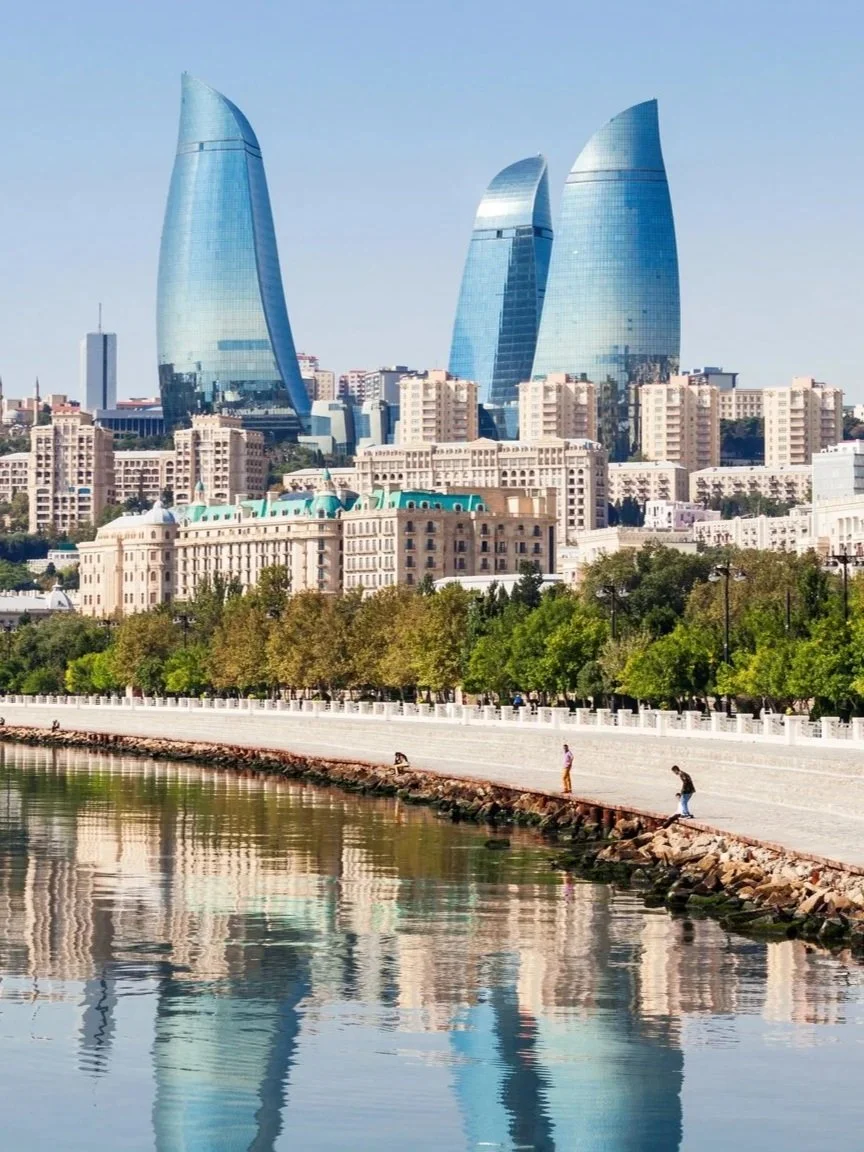
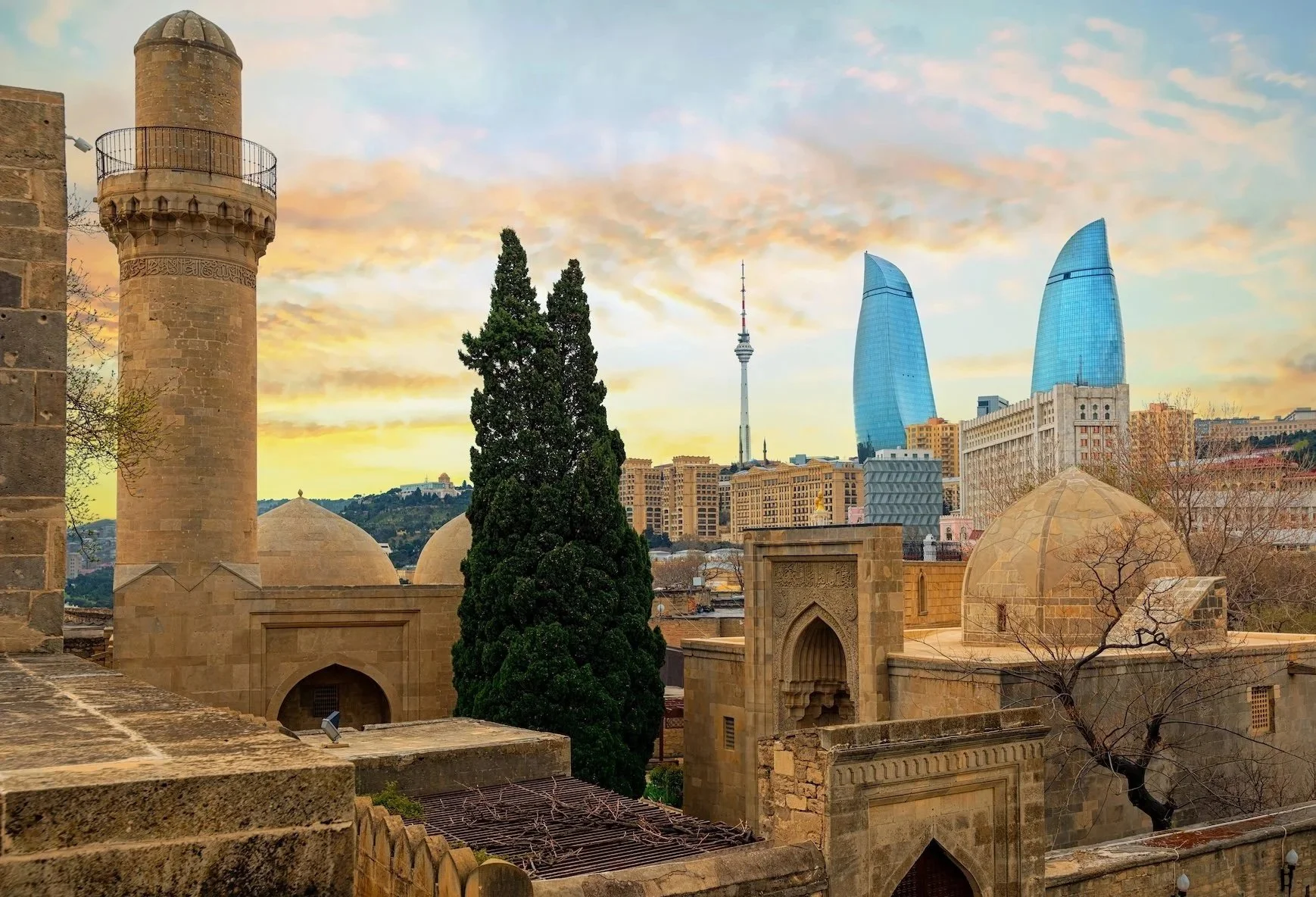
    The Caspian coast has long marked a frontier between worlds. Positioned between the Iranian plateau, the Russian steppe and Anatolia, Azerbaijan occupies a pivotal place in the history of Western Eurasia. Baku itself reflects this layered past – shaped by medieval Islamic dynasties, absorbed into the Russian Empire in the 19th century and transformed by the oil wealth that drew global attention to the region. It is here, at the meeting point of Islam, empire and modern statehood, that our exploration of the Caucasus begins. Airport transfers are arranged to our hotel overlooking the Caspian Sea, where, in the early evening, we gather for introductions followed by a welcome dinner. Overnight Baku (D)

  • Day 2 | Friday 11 June
    Traditional Baku

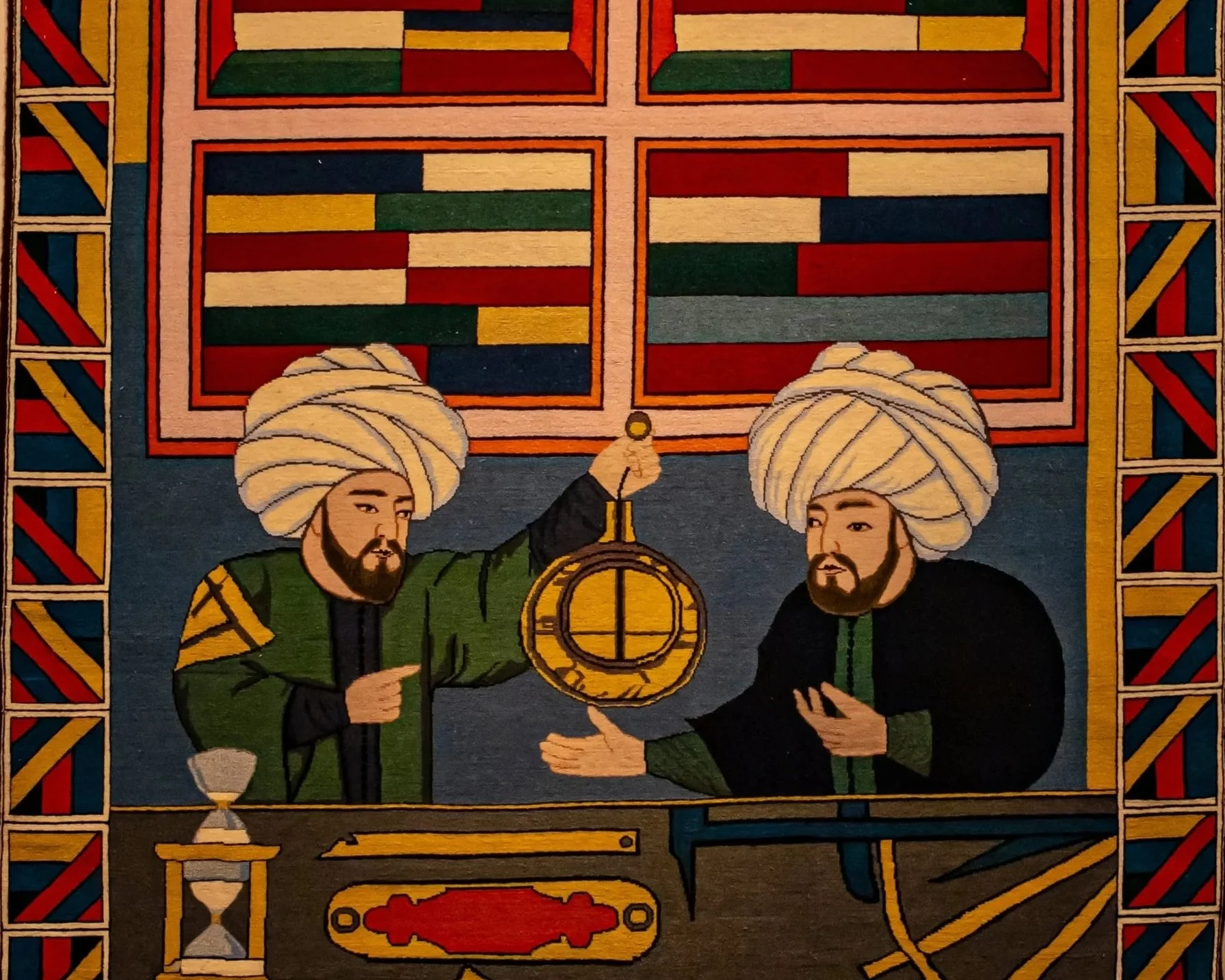
    Standing along historic trade routes that linked Central Asia with the Mediterranean, Baku developed into a fortified stronghold and commercial hub, and today serves as the political and cultural capital of Azerbaijan. An opening lecture in the hotel introduces us to the Caucasus before we set out to explore the medieval heart of Baku, full of winding streets, alleyways, mosques, madrassahs and carpet merchants. Within the UNESCO World-Heritage site of Icherisheher, we visit the 15th-century Palace of the Shirvanshahs and the enigmatic Maiden Tower, whose origins predate Islam. After lunch together at a local restaurant, we continue to the National Carpet Museum, home to the world’s largest collection of Azerbaijani carpets and an important expression of regional identity and craftsmanship. A stroll along nearby Baku Boulevard offers perspective on the city’s 19th-century oil boom and its transformation into a modern capital, before we conclude the day with dinner at the renowned Mugham Club, featuring traditional Azerbaijani cuisine. Overnight Baku (B, L, D)

  • Day 3 | Saturday 12 June
    Gobustan & Contemporary Baku

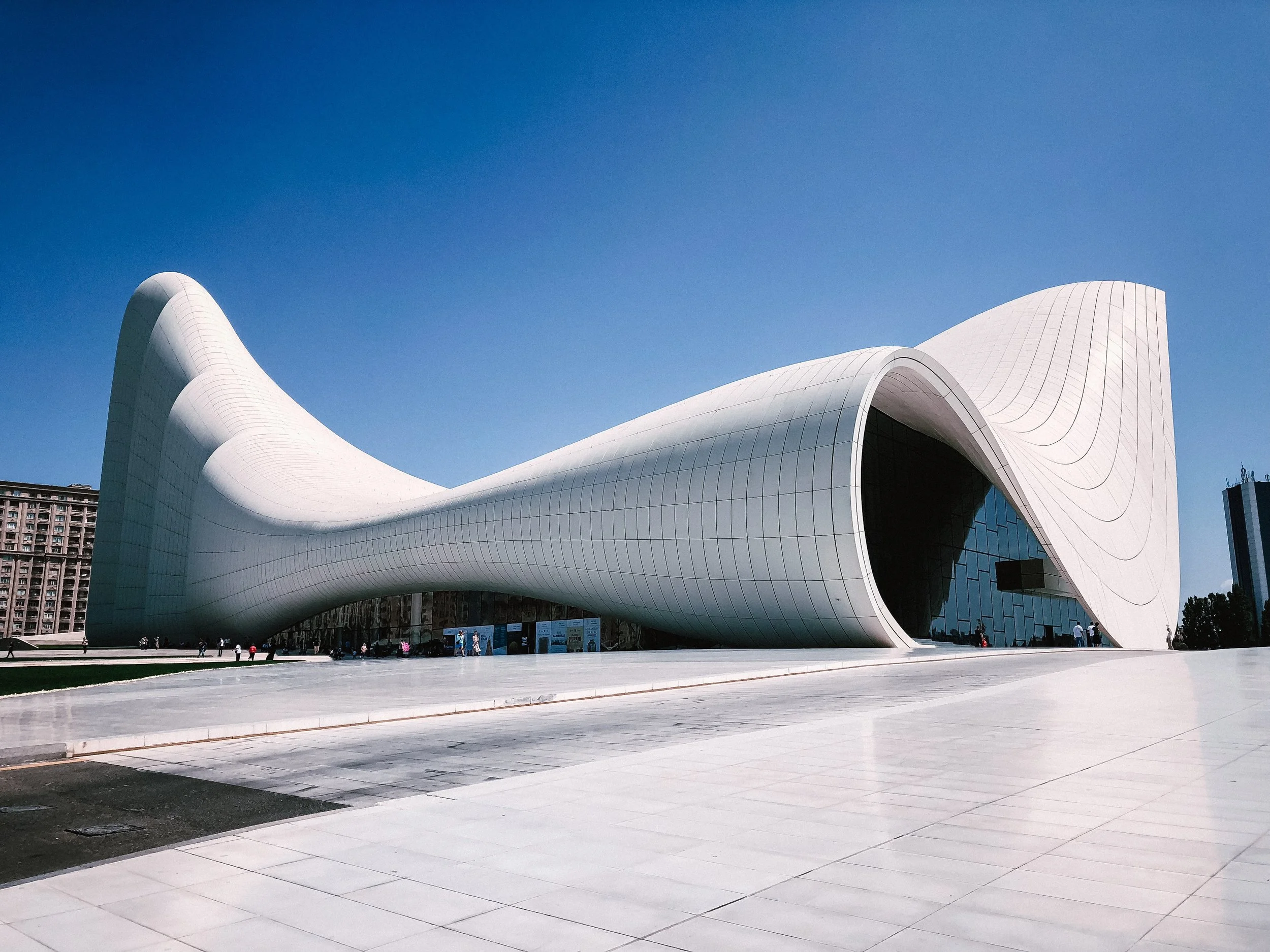
    Beyond Baku’s medieval walls, the plains of Gobustan preserve one of the Caucasus’ most significant prehistoric sites, where petroglyphs of hunters, animals and ritual scenes – some dating to the 10th millennium BCE – highlight early life along the Caspian corridor. Departing by coach, a lecture en route considers Azerbaijan from the Soviet period to independence, framing the country’s modern political development. At Gobustan, we examine the carvings and their stark geological setting before returning to Baku to encounter a strikingly different expression of national identity at the Heydar Aliyev Cultural Centre, designed by Zaha Hadid. Its sweeping white forms signal the ambitions of a post-Soviet state defining its global image. A break for lunch is available at the Centre, and in the early evening, we gather on a terrace overlooking the Old City for a guided tasting of Caspian Caviar, led by an expert. Overnight Baku (B, T)

  • Day 4 | Sunday 13 June
    Shamakhi & Sheki

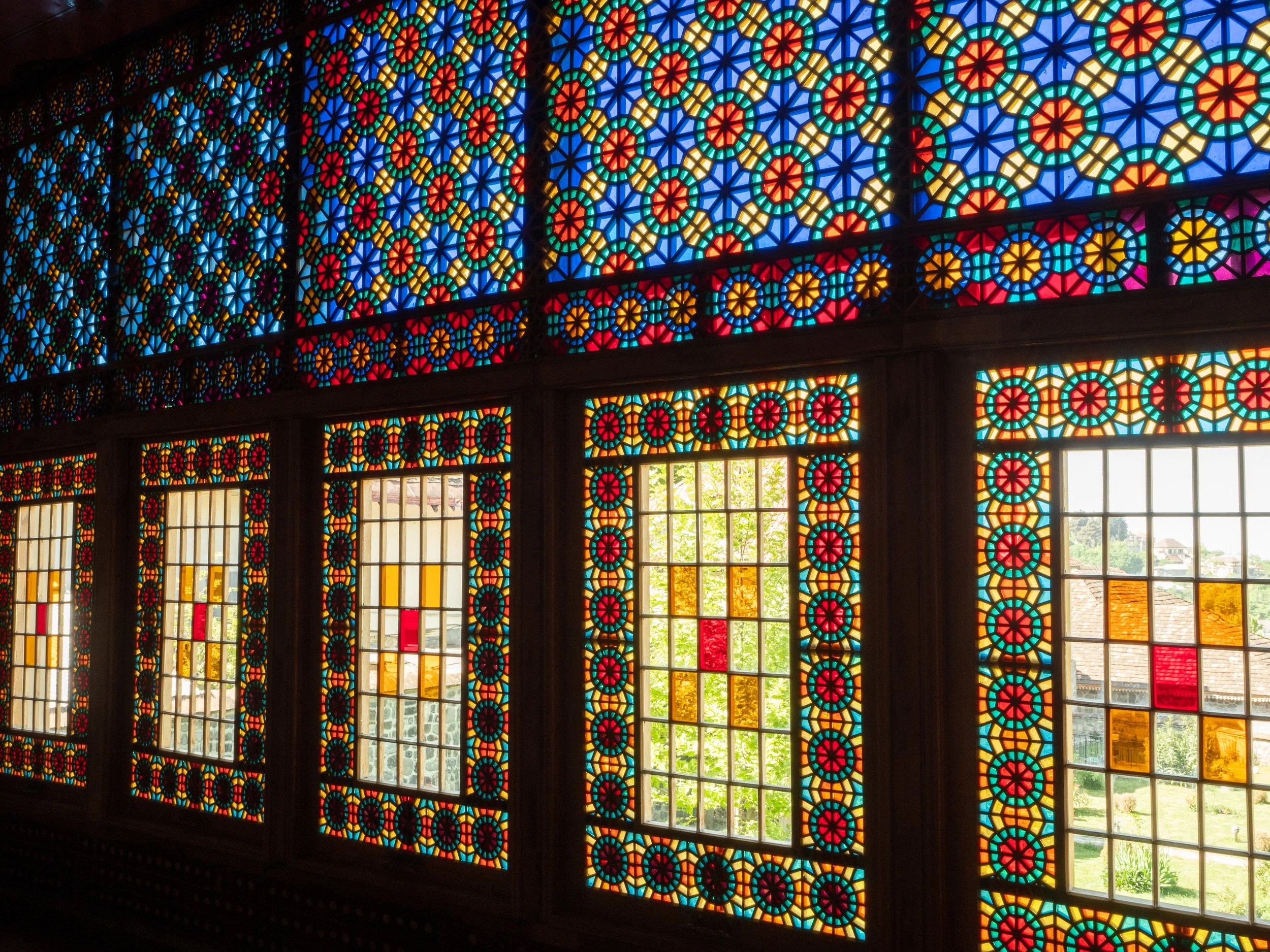
    For centuries, the southern slopes of the Greater Caucasus formed part of the Silk Road. Merchants, pilgrims and armies moved through these mountain corridors, linking the Caspian basin with Anatolia and the wider Mediterranean world, and the towns of western Azerbaijan still preserve traces of these long exchanges. Departing Baku this morning, we travel west across the plains toward Shamakhi, once a capital of the Shirvan Shahs. Here we visit the Juma Mosque, whose origins date to the 8th century, making it among the earliest Islamic monuments in the Caucasus. After lunch together at a local restaurant, we continue into the foothills of the Greater Caucasus to Sheki, a key trading centre shaped by Persian, Ottoman and Russian influence. Our walking tour includes the 18th-century Khan’s Palace, renowned for its intricate stained glass and painted interiors, and the historic caravanserai, where merchants once lodged with their goods and animals. Following our tour, we settle into our hotel before gathering again in the evening for dinner. Overnight Sheki (B, L, D)

  • Day 5 | Monday 14 June
    Into Georgia – Kakheti & The Legacy of St Nino

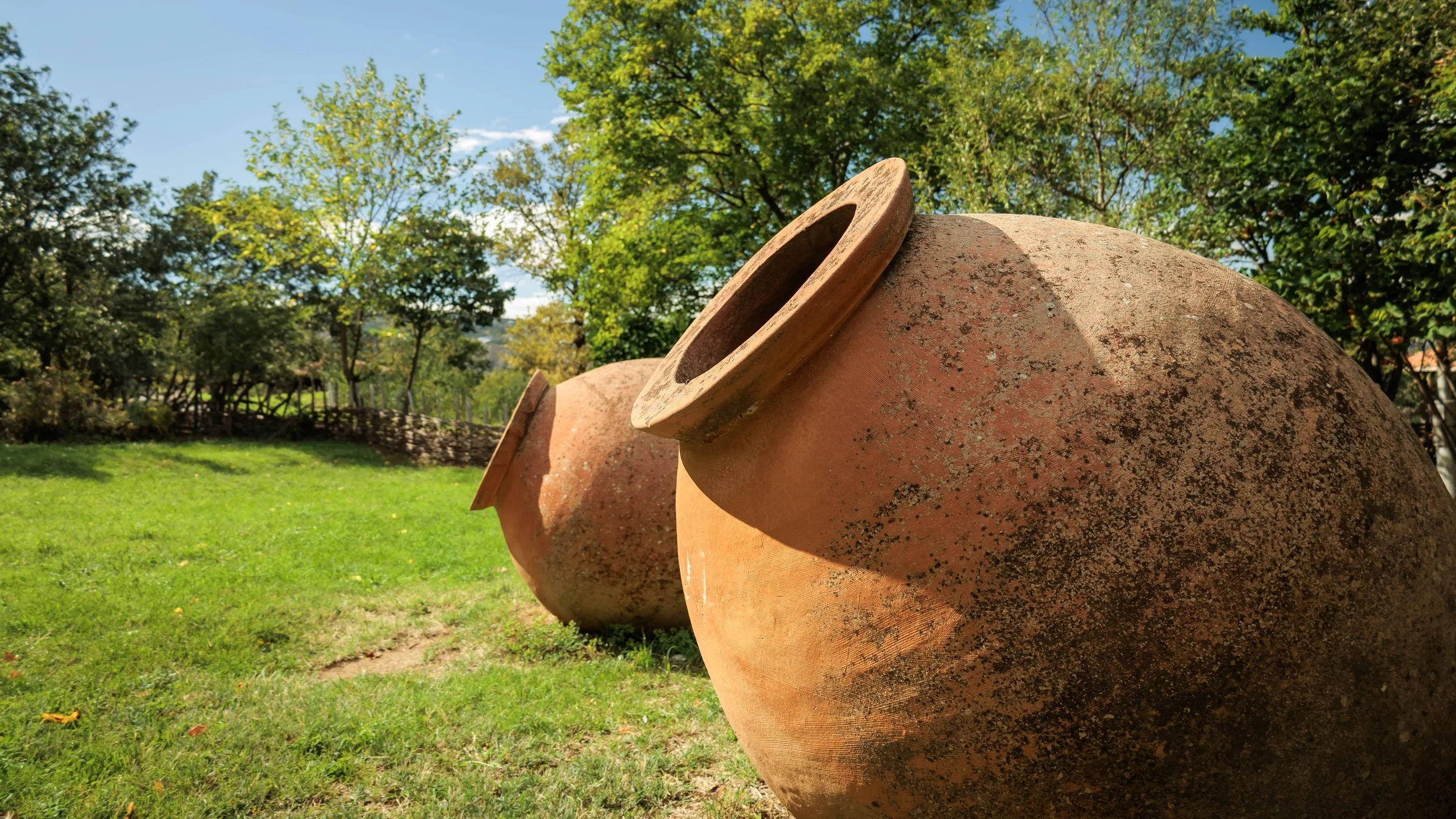
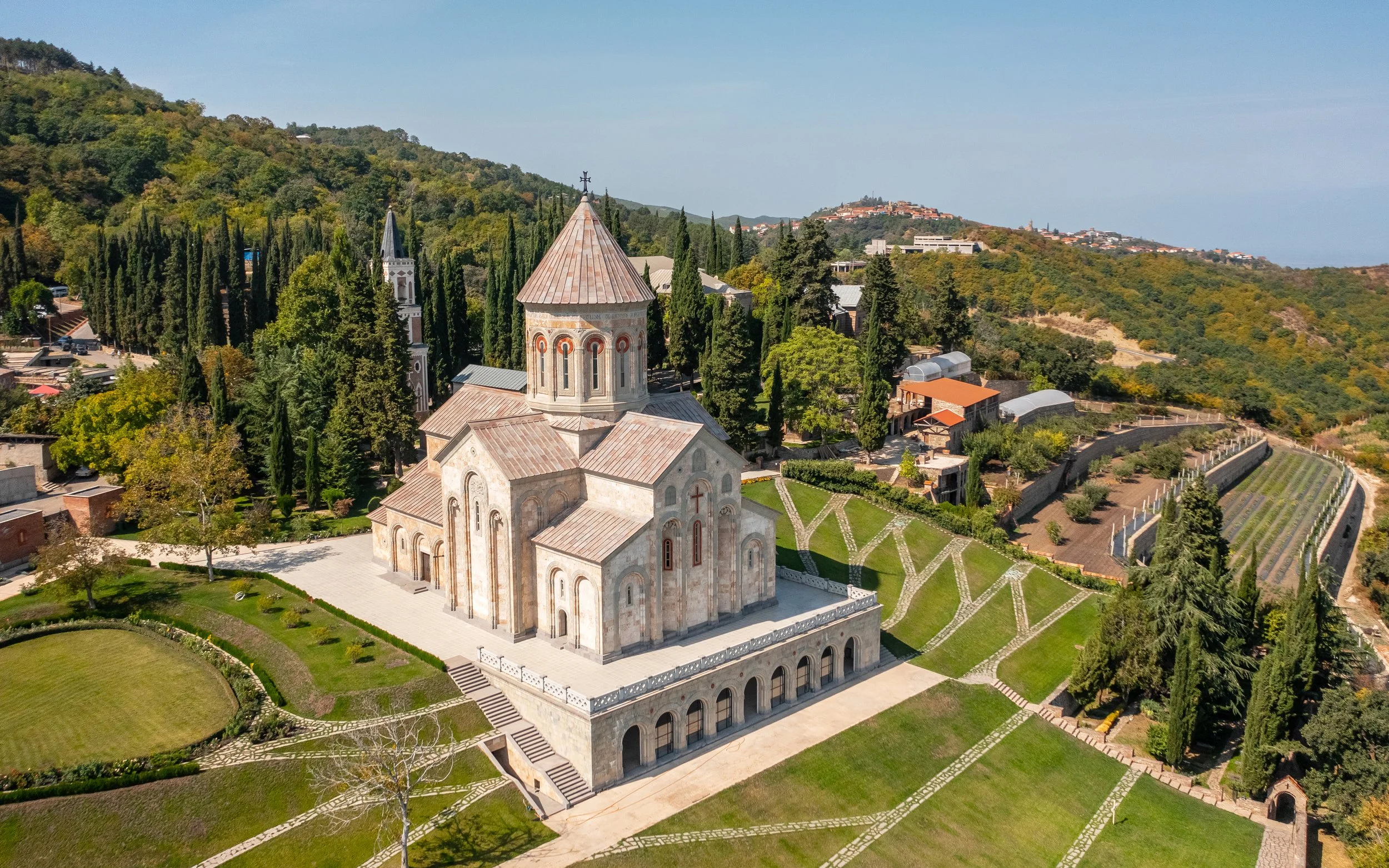
    Georgia’s eastern province of Kakheti lies at the centre of the country’s religious life. It was here that the story of Georgia’s conversion to Christianity in the 4th century took root, associated with St Nino, who according to tradition fashioned her cross from grapevines. Viticulture therefore carries both practical and symbolic weight in Georgian society – wine is part of everyday hospitality, but also deeply embedded in the ritual of the Orthodox Church. Crossing the border this morning, a lecture on the coach introduces Georgia’s early Christian history and the legend of St Nino. On arrival into the Kakheti region, we visit Pheasant’s Tears Winery to explore the ancient qvevri method of fermentation before enjoying a Georgian table-style lunch accompanied by local polyphonic singing. In the afternoon, we visit the nearby Bodbe Convent, where St Nino is buried, and walk to the nearby holy spring. The final stretch of our drive brings us to our exclusive five-star resort in Tsinandali, where the remainder of the evening is at leisure. Overnight Tsinandali (B, L)

  • Day 6 | Tuesday 15 June
    Telavi & Tsinandali

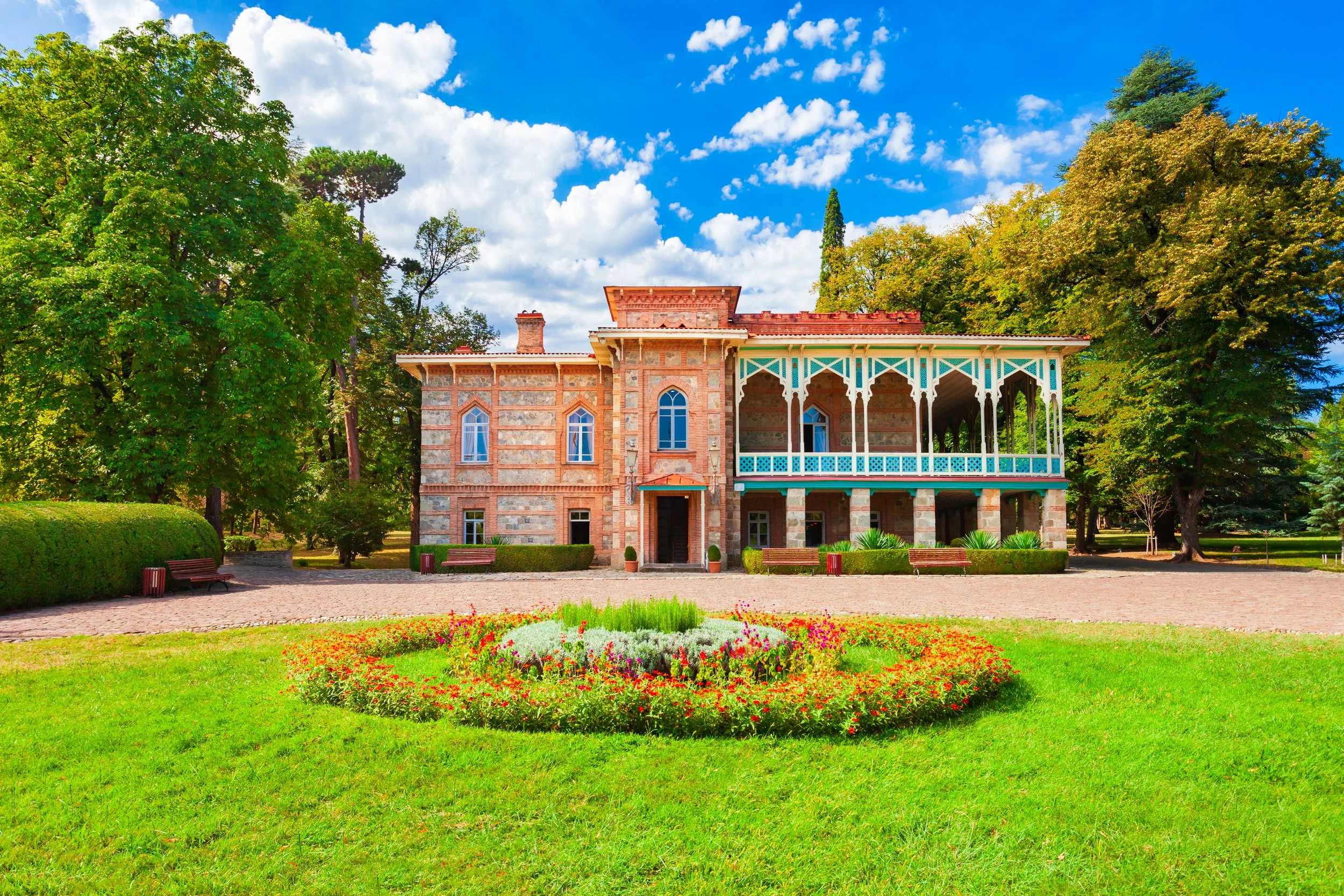
    Kakheti’s political and cultural history reflects Georgia’s shifting position between Persian, Ottoman and Russian spheres of influence. From the 17th century, Telavi emerged as the capital of the eastern Georgian kingdom of Kakheti after the destruction of Gremi, and it remained a centre of royal authority until its incorporation into the Russian Empire in the early 19th century. A morning lecture in the hotel traces Georgia’s development from its earliest origins to the arrival of Russian rule. We then travel to Telavi to explore Batonis Tsikhe, the 17th-century fortress and royal residence associated with King Erekle II, whose reign marked a decisive period in Georgian diplomacy. Time is also set aside to observe the rhythms of daily life in the local market before a break for lunch. Returning to Tsinandali, we spend our afternoon at the estate of poet and reformer Alexander Chavchavadze, whose family pioneered modern Georgian winemaking. A tour of the historic cellars includes a tasting of the estate’s wines before we return to our hotel. The evening is at leisure – an opportunity to relax, perhaps with a swim in the hotel’s infinity pool overlooking the vineyards and the distant Caucasus range. Overnight Tsinandali (B, T)

  • Day 7 | Wednesday 16 June
    Mtskheta & the Georgian Military Highway

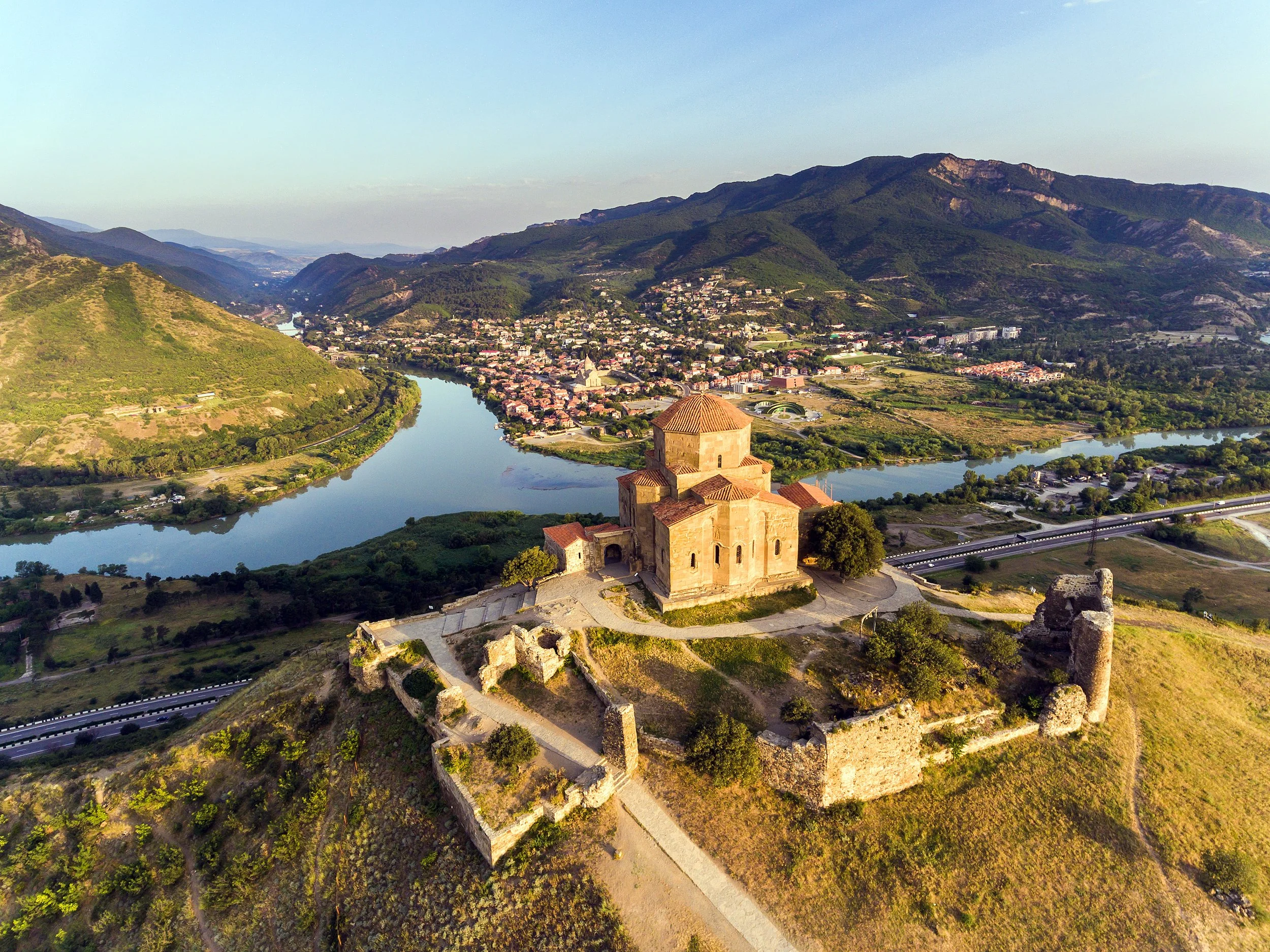
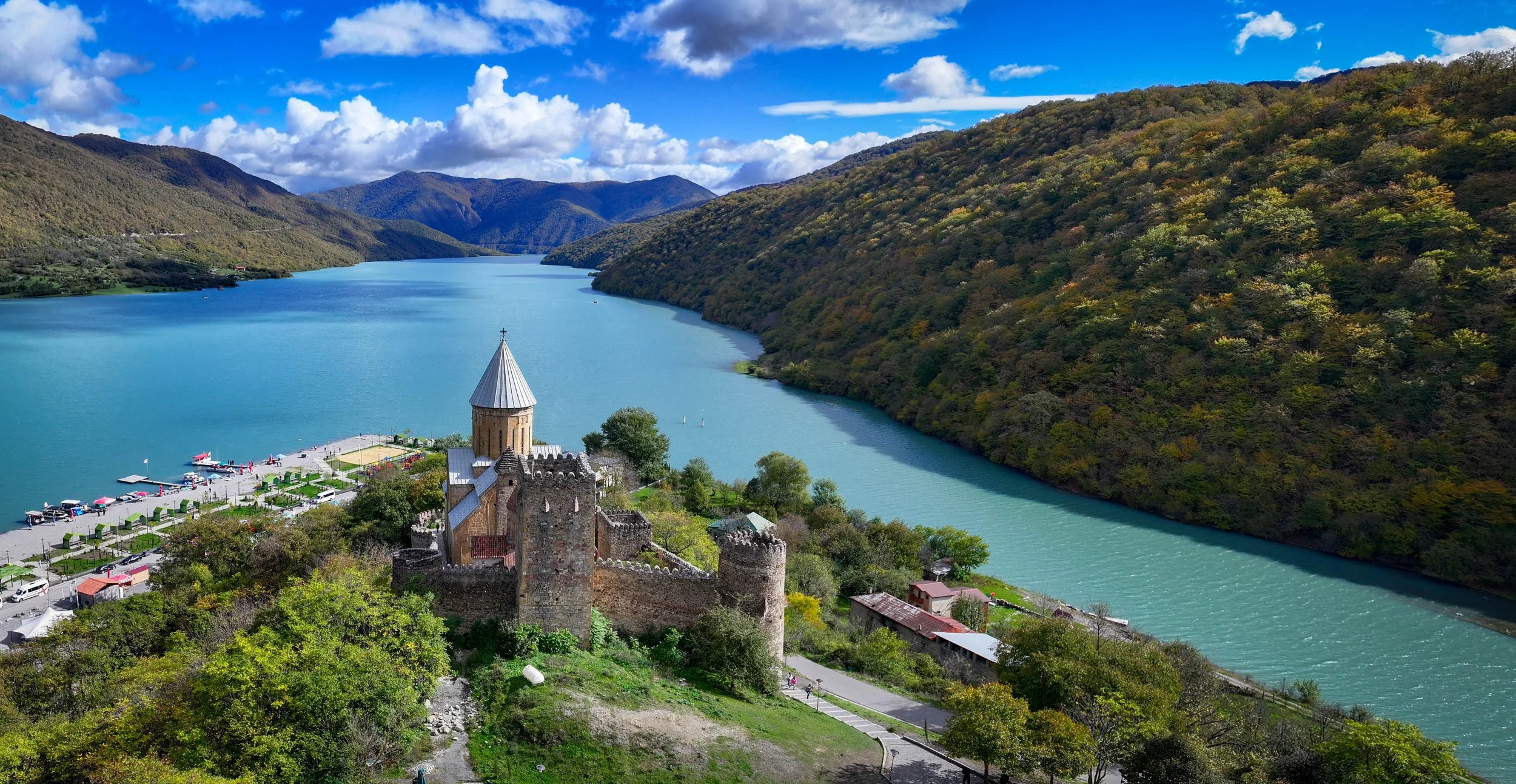
    Few places in Georgia express the intertwining of monarchy, Orthodoxy and national identity more clearly than Mtskheta. As the early capital of the eastern Georgian kingdom of Iberia and the site of the country’s conversion to Christianity in the 4th century, it remains central to Georgian historical memory. Departing Tsinandali for Kazbegi today, a lecture on the coach considers Georgia under the Russian Empire and the emergence of modern political thought. En route, we first visit the 6th-century Jvari Monastery, dramatically positioned above the confluence of the Kura and Aragvi rivers. Next, in Mtskheta itself, we explore Svetitskhoveli Cathedral, the spiritual heart of the Georgian Church, and the nearby Samtavro Convent. Following a break for lunch, we continue along the Georgian Military Highway, long a strategic artery across the Caucasus. A stop at the 17th-century fortress of Ananuri, dramatically set above the turquoise waters of the Zhinvali Reservoir and framed by forested slopes, precedes our ascent into the high mountains. By early evening we arrive in Kazbegi, where dinner is enjoyed at our hotel. Overnight Kazbegi (B, D)

  • Day 8 | Thursday 17 June
    Kazbegi & The High Caucasus

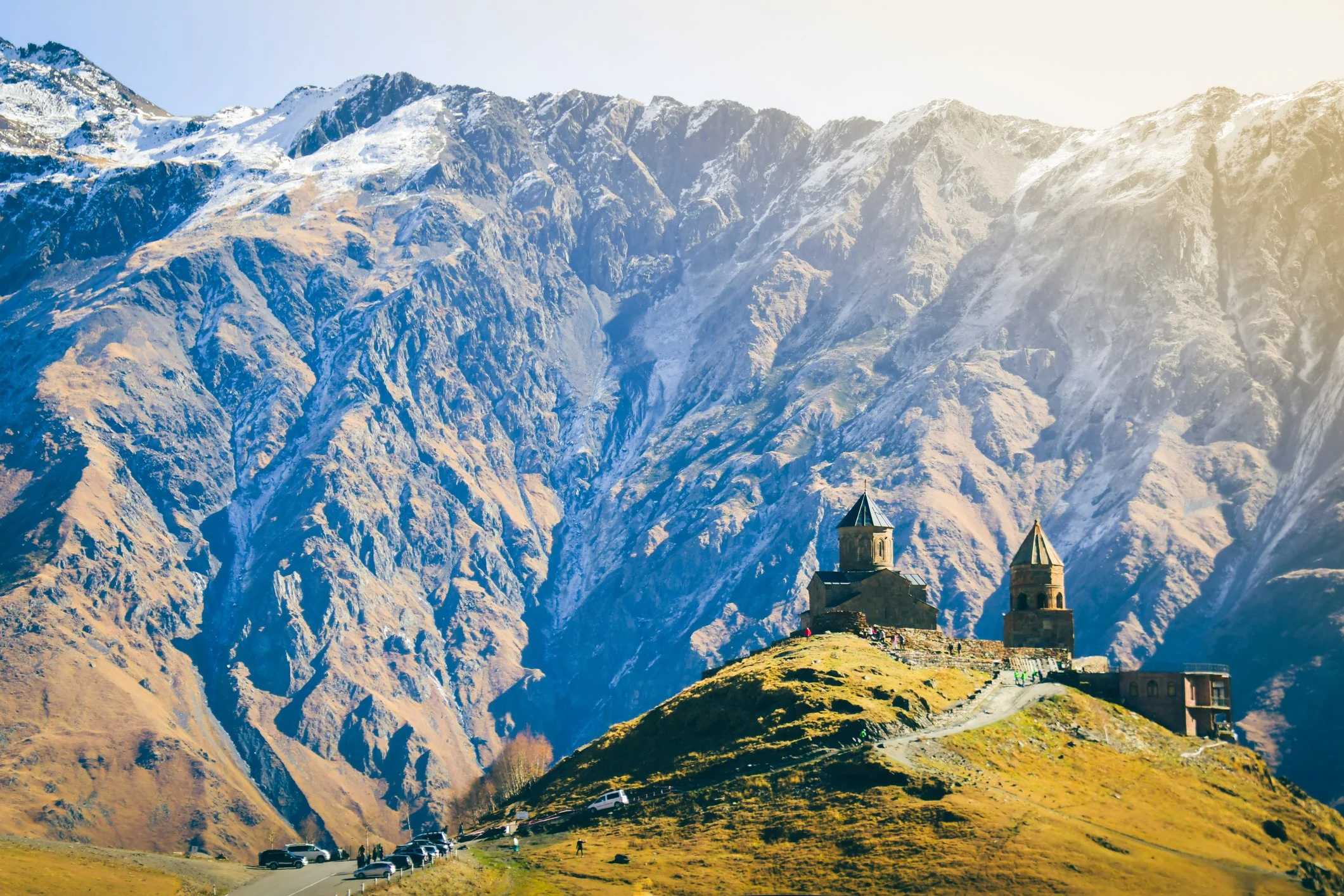
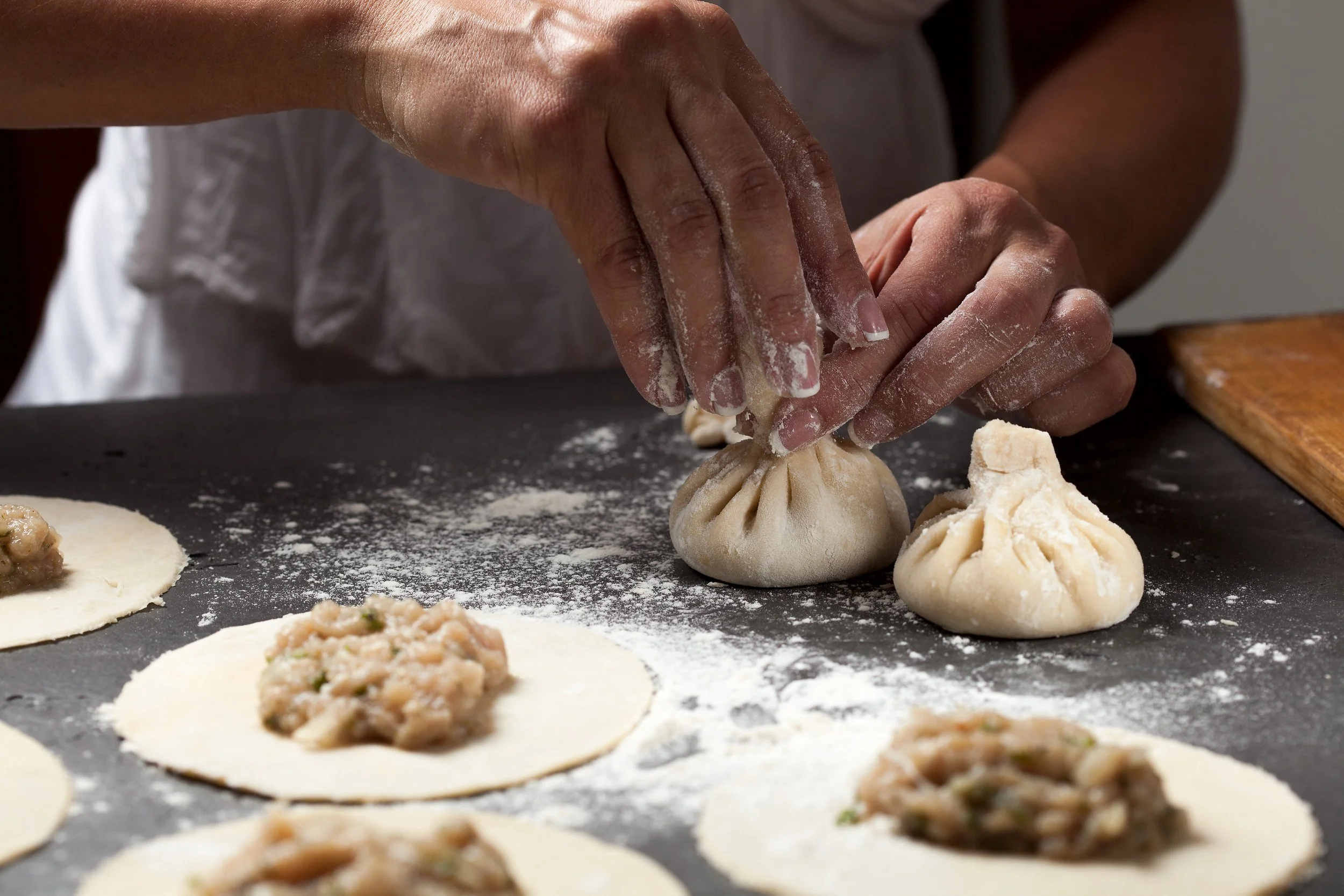
    The high Caucasus has long served as both frontier and sanctuary – a formidable landscape where geography shaped political boundaries, patterns of defence and expressions of faith. Rising above the region is Mount Kazbek, whose dramatic silhouette has become inseparable from images of Georgia itself. Here we also find the 14th-century Gergeti Trinity Church, set at 2,170 metres on a solitary ridge, its stone walls framed by vast skies and alpine peaks. Built during King Giorgi V’s reign to symbolise the religious revival and reunification of Georgia after its liberation from the Mongol Empire, it remains one of the most well-preserved churches in Georgia. Following our visit, we continue to the village of Tsdo, where we are welcomed into the home of a local family for lunch. Together we learn to prepare khinkali, the region’s distinctive dumplings, whose seasoning reflects mountain culinary traditions. In the later afternoon we visit the Dariali Pass, historically one of the principal gateways through the Caucasus, stopping at the monastery before returning to Kazbegi. Overnight Kazbegi (B, L)

  • Day 9 | Friday 18 June
    Gori

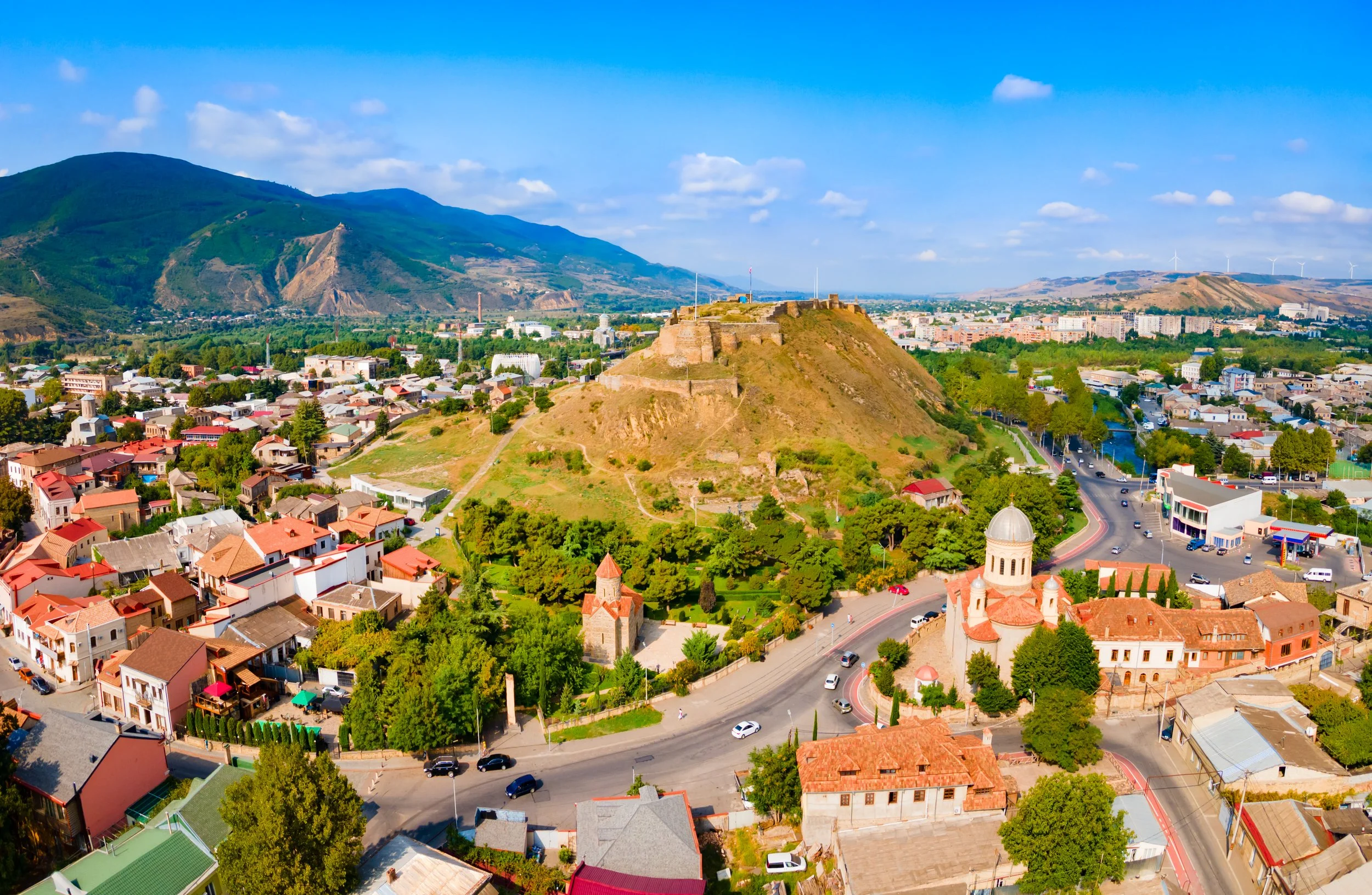
    The 20th century left an indelible mark on Georgia, nowhere more so than in the legacy of Soviet rule. The life of Joseph Dzhugashvili – later known as Stalin – connects this small Caucasian nation to the vast political machinery of the USSR and its global consequences. Departing Kazbegi today, a lecture on the coach examines Georgia under Soviet authority and the tensions between national identity and imperial control. We first travel south to Gori, Stalin’s birthplace, where we visit the museum complex, which documents his early life and rise to power. The exhibitions here present personal artefacts, archival material and the modest house in which he was born, offering insight into both the cult of personality and the mechanisms of Soviet power. Lunch is enjoyed together at a nearby restaurant before we continue to Tbilisi. By mid-afternoon we arrive in the Georgian capital, our base for the next four nights, with a light dinner is shared this evening in a local restaurant. Overnight Tbilisi (B, L, D)

  • Day 10 | Saturday 19 June
    Historic Tbilisi

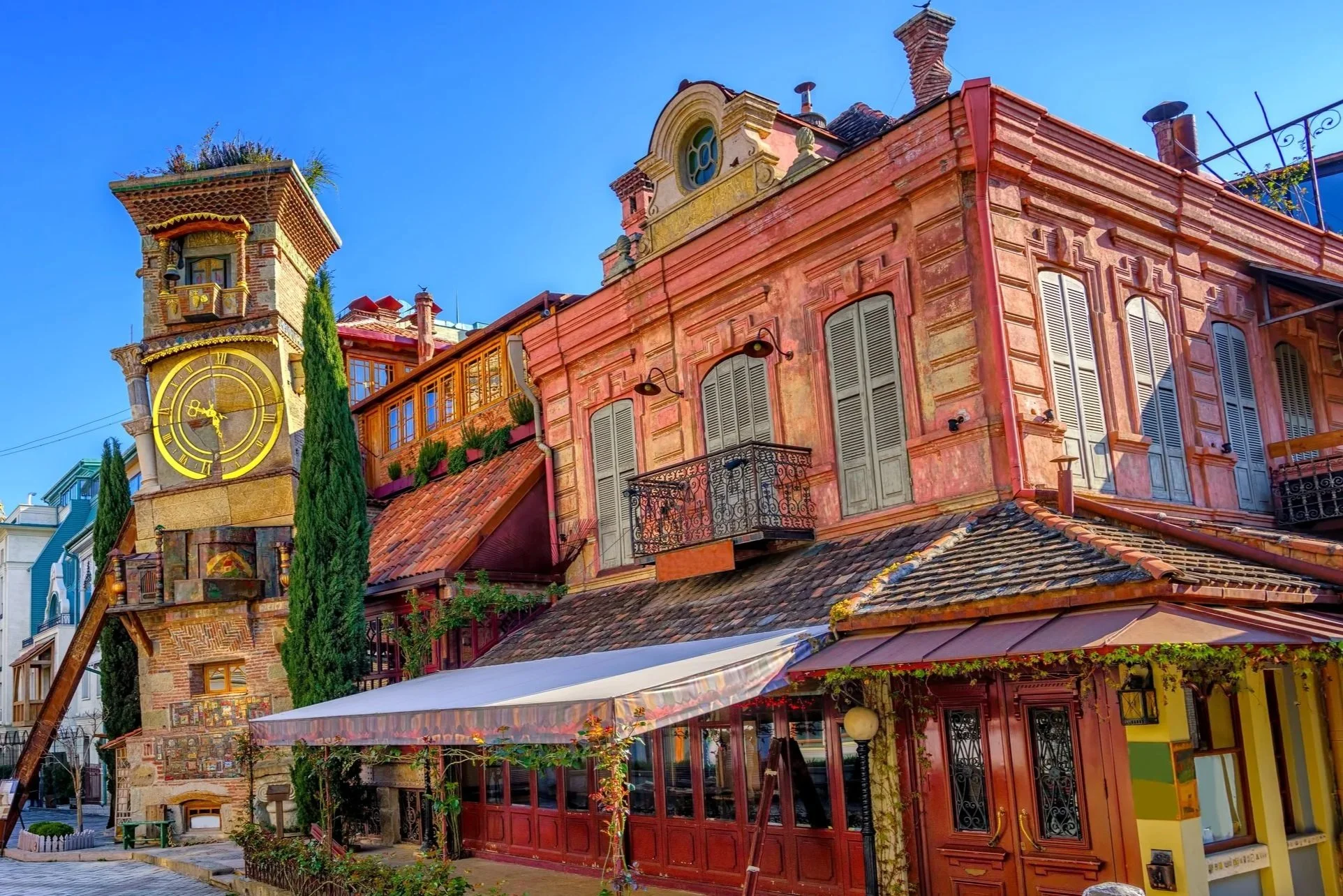
    Straight from the pages of a gothic fairytale, Tbilisi was founded in the 5th century by King Vakhtang I Gorgasali and became the grand city of the ancient Silk Road, coveted by the Roman Empire, Parthia, Sassanid Persia, Muslim Arabs, the Byzantine Empire and the Seljuk Turks. Our walking tour this morning begins in the Old Town, where narrow streets follow the curve of the Mtkvari River. A cable car ascent to Narikala Fortress provides a clear sense of the city’s topography before we descend on foot, pausing at Bethlehem Church and the ruins of a former Zoroastrian fire temple. We then visit Sioni Cathedral and Anchiskhati Basilica, among the city’s oldest surviving churches, and walk along Iona Shavteli and Erekle II Streets. A break for lunch is taken in the Old Town, before our afternoon is spent enjoying tea at the House of Blue Laces, offering insight into Tbilisi’s 19th-century cultural life. The evening is at leisure on return to our hotel. Overnight Tbilisi (B, AT)

  • Day 11 | Sunday 20 June
    Art, Archaeology & Modern Georgia

    Modern Georgia continues to balance its position between powerful regional neighbours and its stated ambition to align more closely with Europe. Tbilisi’s cultural institutions reflect this evolving identity, presenting stories that move from prehistoric settlement and medieval statehood to the complexities of the Soviet era and independence. A morning lecture in the hotel examines Georgia since independence and the question of its European future. We then walk to the Shevardnadze National Gallery, where works by early 20th-century artists such a Niko Pirosmani, Lado Gudiashvili and Davit Kakabadze illuminate the creative ferment – and later repression – of the modernist period. After a break for lunch, we continue to the Georgian National Museum, including the S. Janashia Museum, whose collections range from early hominid remains to intricate goldwork and the powerful Soviet Occupation exhibition. We return to our hotel in the afternoon, with time to freshen up before dinner at Rigi Restaurant. Set within Tbilisi’s Old Town, the restaurant offers views across the illuminated rooftops and church domes of the historic quarter. Overnight Tbilisi (B, D)

  • Day 12 | Monday 21 June
    Statehood, Faith & Georgian Cuisine

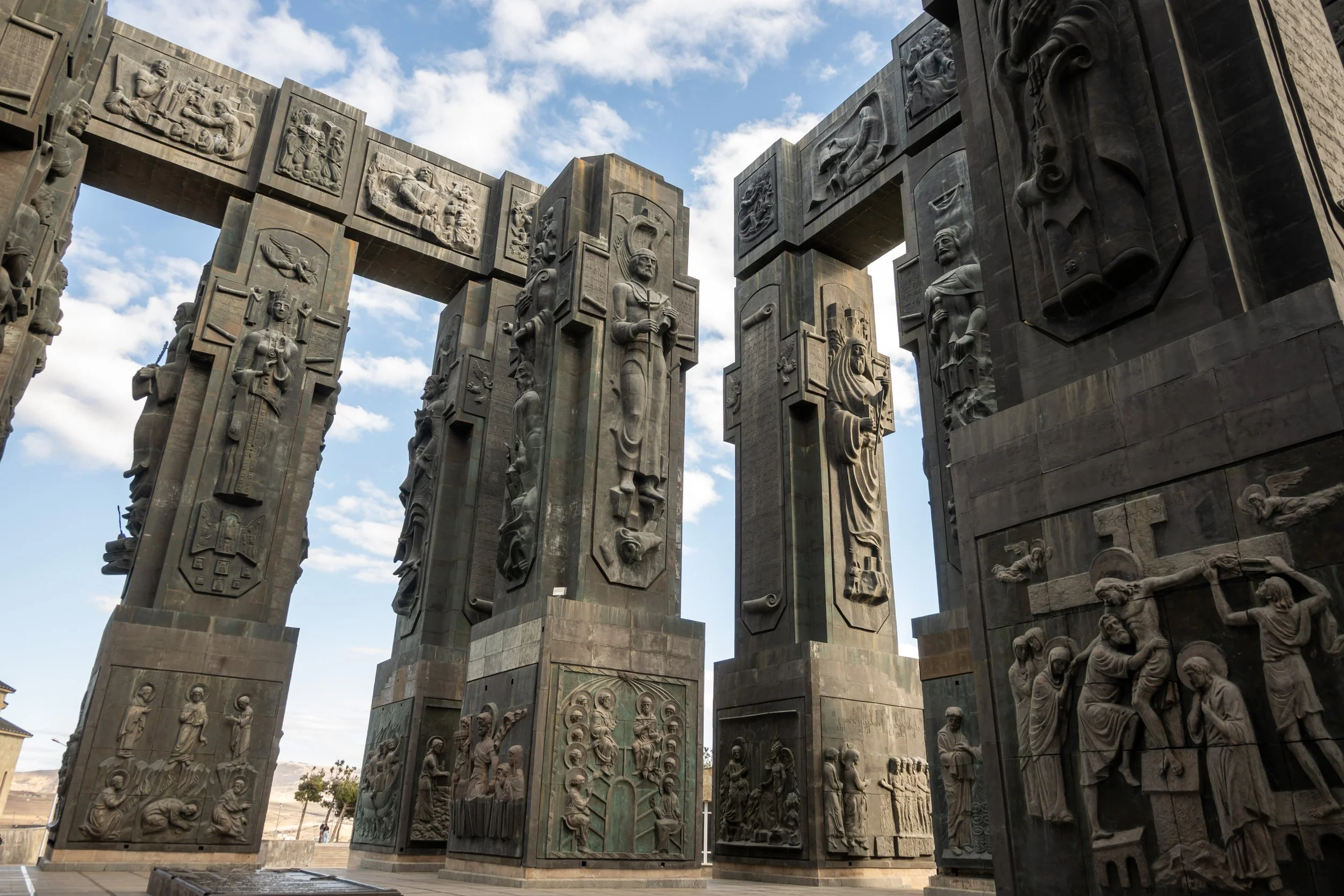
    Few monuments express modern Georgia’s effort to articulate its historical identity more clearly than the Chronicles of Georgia. Conceived in the late Soviet period and rising above the Tbilisi Sea, its monumental pillars are carved with rulers, saints and biblical scenes, presenting 3,000 years of statehood alongside 2,000 years of Christianity. We travel to the monument in the late morning, considering its symbolism within post-Soviet nation-building. Returning to the city, we then participate in a hands-on cooking class, focused on khachapuri, Georgia’s traditional cheese-filled bread. Lunch follows, featuring the dishes we have prepared together. In the afternoon, those who wish may take the funicular to the top of wooded Mount Mtatsminda, also known as the ‘Holy Mountain’, the highest point in Tbilisi with breathtaking views of the entire city. The remainder of the evening is at leisure. Overnight Tbilisi (B, L)

  • Day 13 | Tuesday 22 June
    Into Armenia – Haghpat & Sanahin

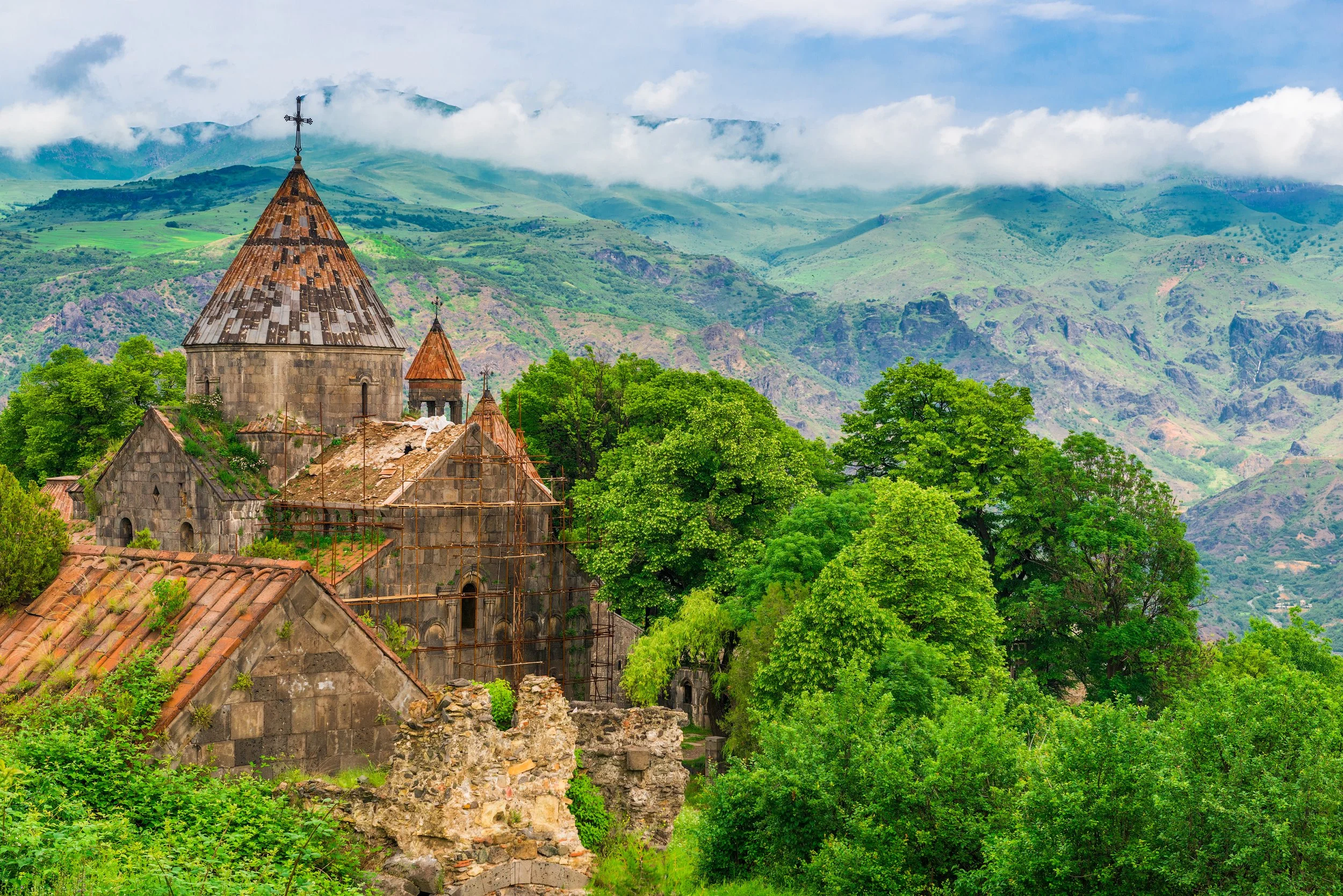
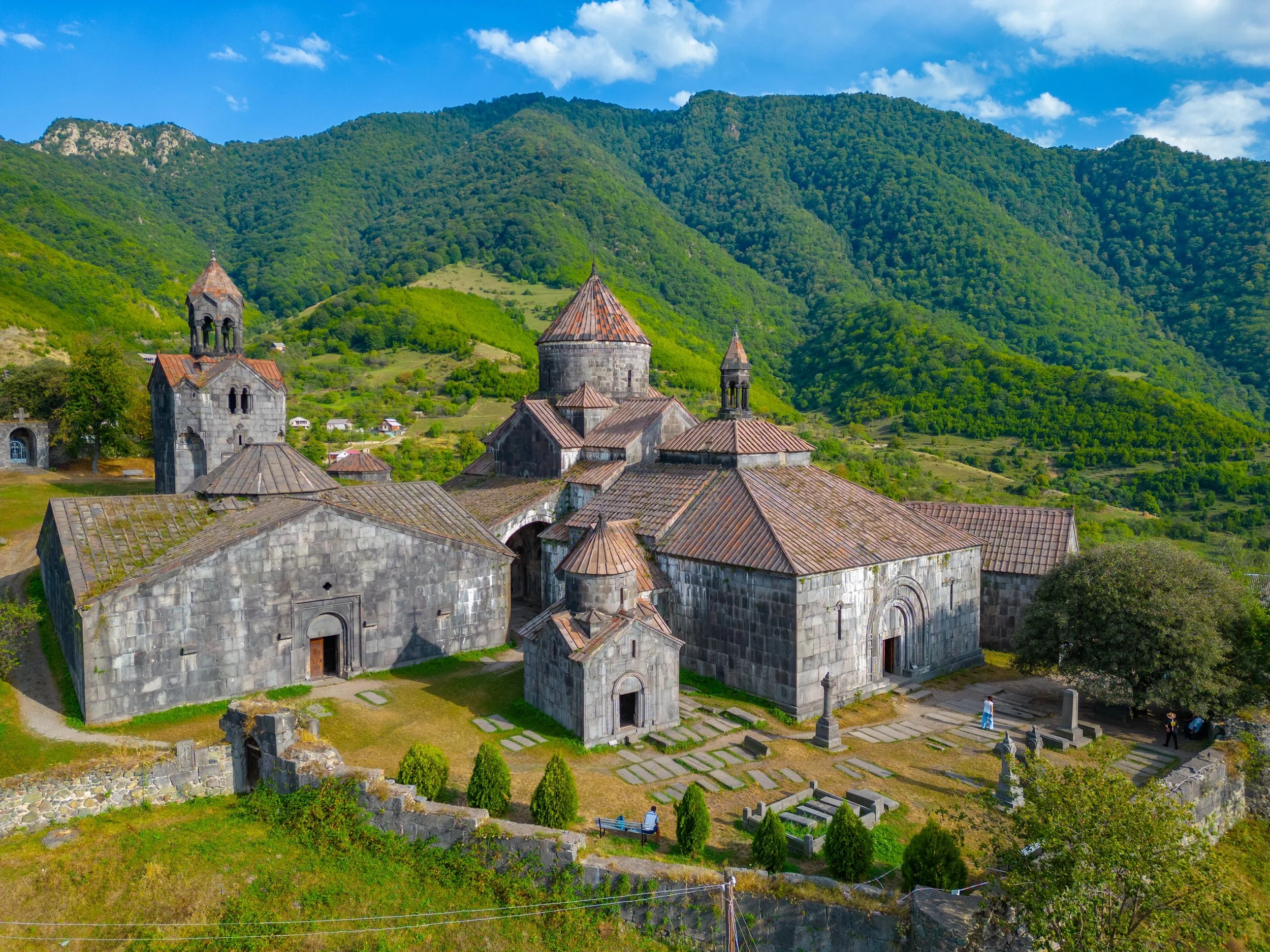
    Armenia is among the world’s oldest Christian nations, adopting Christianity as a state religion in the early 4th century. Its monasteries, often built in dramatic mountain settings, reflect a tradition shaped not only by faith but also by learning and the need to endure through centuries of political upheaval. Departing Tbilisi today, we cross the border into Armenia, where a brief lecture onthe coach introduces the country’s early history and enduring identity. We then arrive in the Debed Canyon, where we visit the UNESCO World-Heritage sites of Haghpat and Sanahin, monastic complexes founded between the 10th and 13th centuries during the Bagratid and Kiurikian periods. Their churches, libraries and academies were centres of manuscript production and learning, while sculpted stone crosses and relief decoration reflect Armenia’s unique ecclesiastical tradition. Lunch is enjoyed at a nearby restaurant before continuing our exploration. By late afternoon we arrive in Dilijan, a former spa town set among forested hills, where we settle in for the evening. Dinner is served in the hotel. Overnight Dilijan (B, L, D)

  • Day 14 | Wednesday 23 June
    Lake Sevan & The Silk Road Landscapes

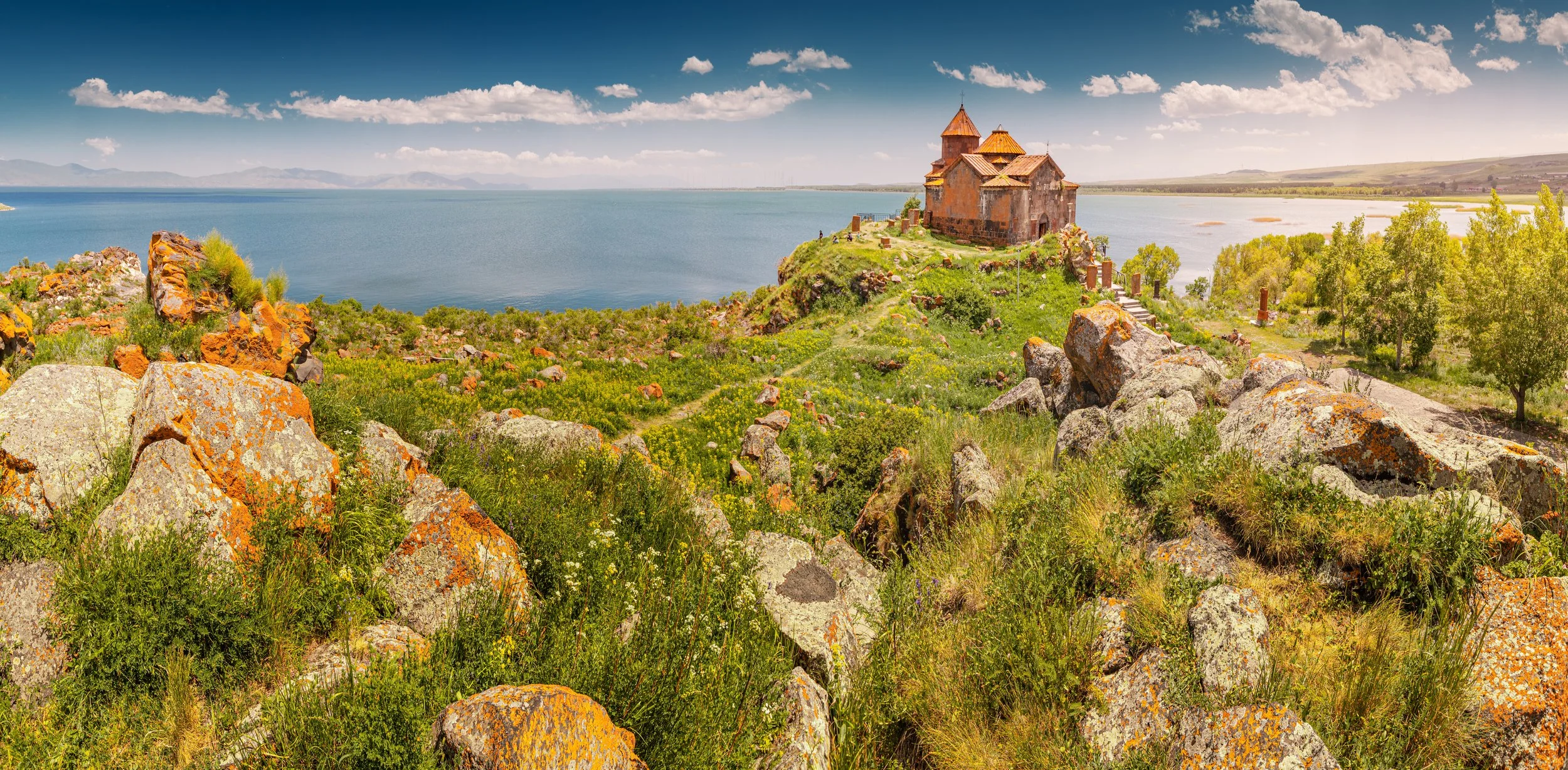
    Armenia’s highlands reveal a landscape shaped by faith and long-distance trade. Monasteries stand above vast lakes and mountain passes, while caravan routes once carried merchants between Persia, Anatolia and the Black Sea. Continuing onwards from Dilijan, we travel to Lake Sevan to visit Hayravank Monastery, founded in the 9th century and built from dark volcanic stone overlooking the water. We then make our way to Noraduz Cemetery, where hundreds of finely carved khachkars – Armenia’s distinctive stone crosses – record centuries of devotion and memory. Crossing into Vayots Dzor Province, we stop at the 14th-century Orbelian Caravanserai, remarkably preserved and evocative of the Silk Road merchants who once sheltered here. Lunch is enjoyed at Old Bridge Winery in the Vayots Dzor region, where we sample local wines and consider Armenia’s long viticultural history. The nearby village of Areni has yielded archaeological evidence of some of the world’s earliest known winemaking, underscoring the depth of this tradition. We then continue to our final hotel in Yerevan, where a light dinner is served this evening. Overnight Yerevan (B, L, D)

  • Day 15 | Thursday 24 June
    Historic Yerevan – Manuscripts & Memory

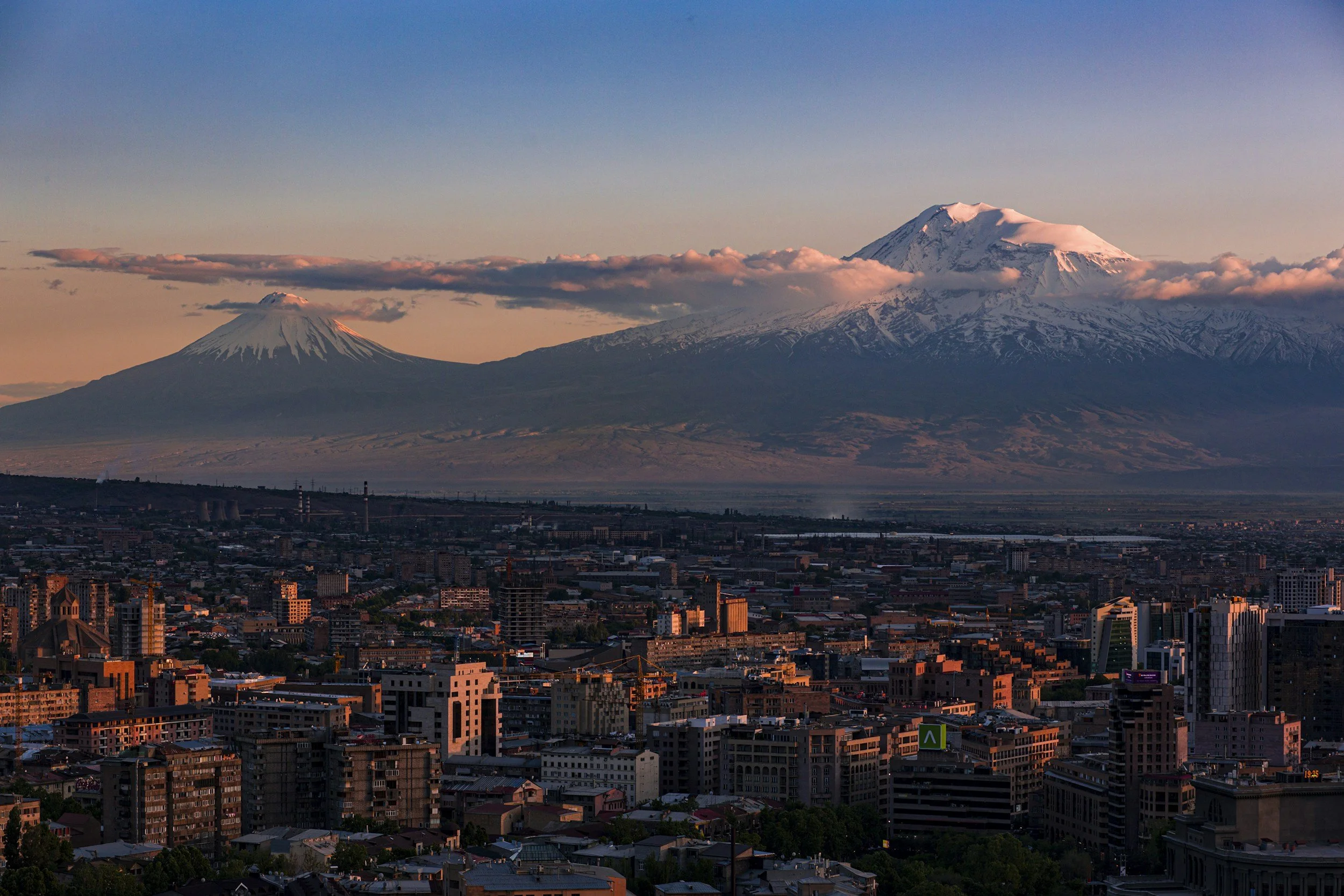
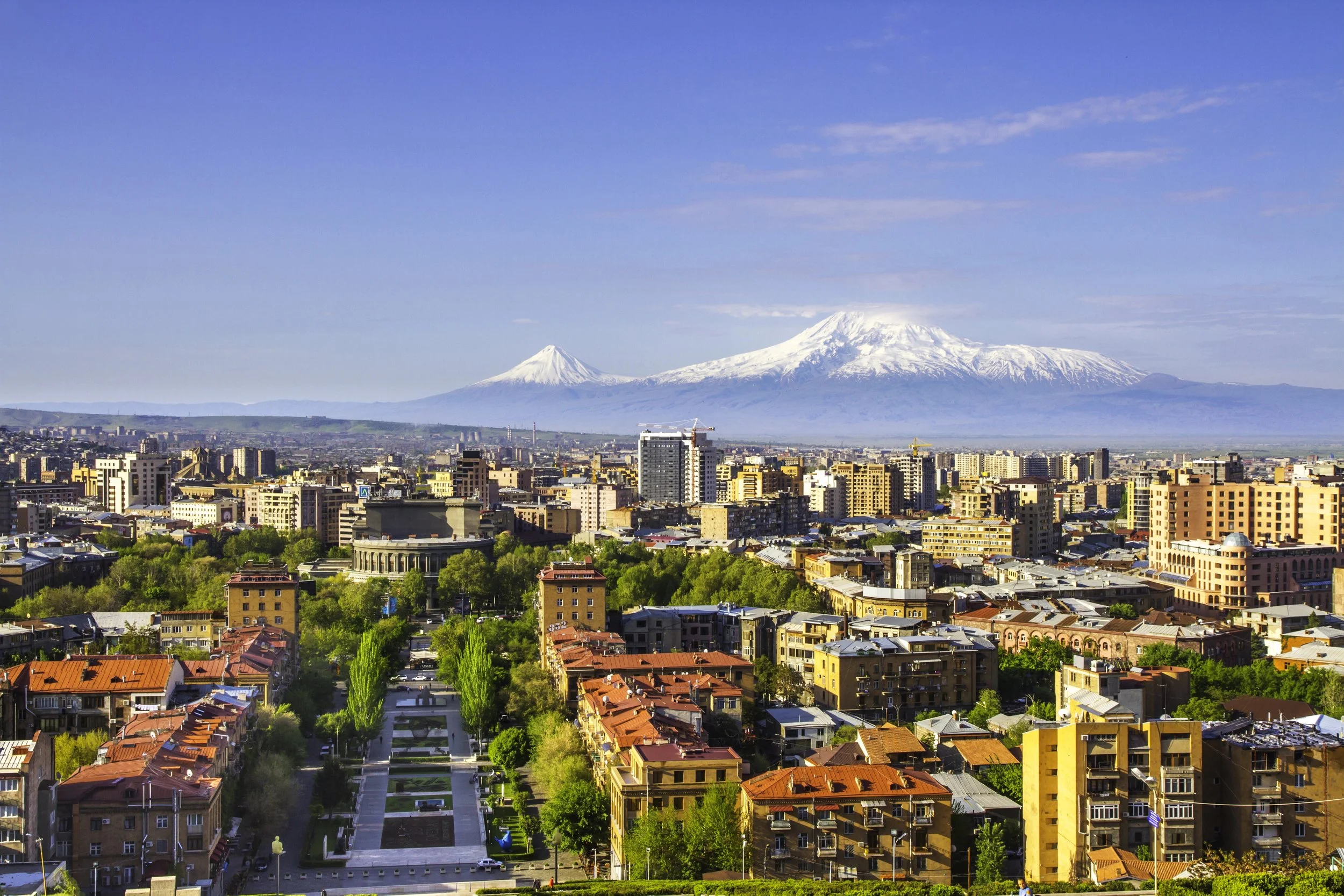
    Yerevan’s wide avenues and pink stone facades reflect a city shaped by ancient kingdom, imperial rule, Soviet planning and modern independence. It was Pablo Neruda who once declared, “Yerevan, which is built from volcanic tuff and is harmonic like a rose, is one of the most beautiful cities in the world.” Its museums help tell that long story, and a morning lecture in the hotel explores Armenia’s modern history under Ottoman and Russian domination and the path to independence. We then visit the National History Museum, where artefacts from Urartian times to the 20th century trace the endurance of Armenian culture. After a break for lunch, we continue to the Matenadaran Institute of Ancient Manuscripts. Set in a magnificent building designed by architect Mark Grigorian, its collection of biblical texts, theological writings and scientific works speaks to the central role of the Church in preserving learning across the centuries. Later in the afternoon, we visit the Cascade Complex and the Cafesjian Center for the Arts, combining contemporary art with expansive views across the city toward Mount Ararat. Before returning to our hotel, there is time to enjoy dinner in one of Yerevan’s many well-regarded restaurants. Overnight Yerevan (B)

  • Day 16 | Friday 25 June
    Khor Virap & Echmiadzin

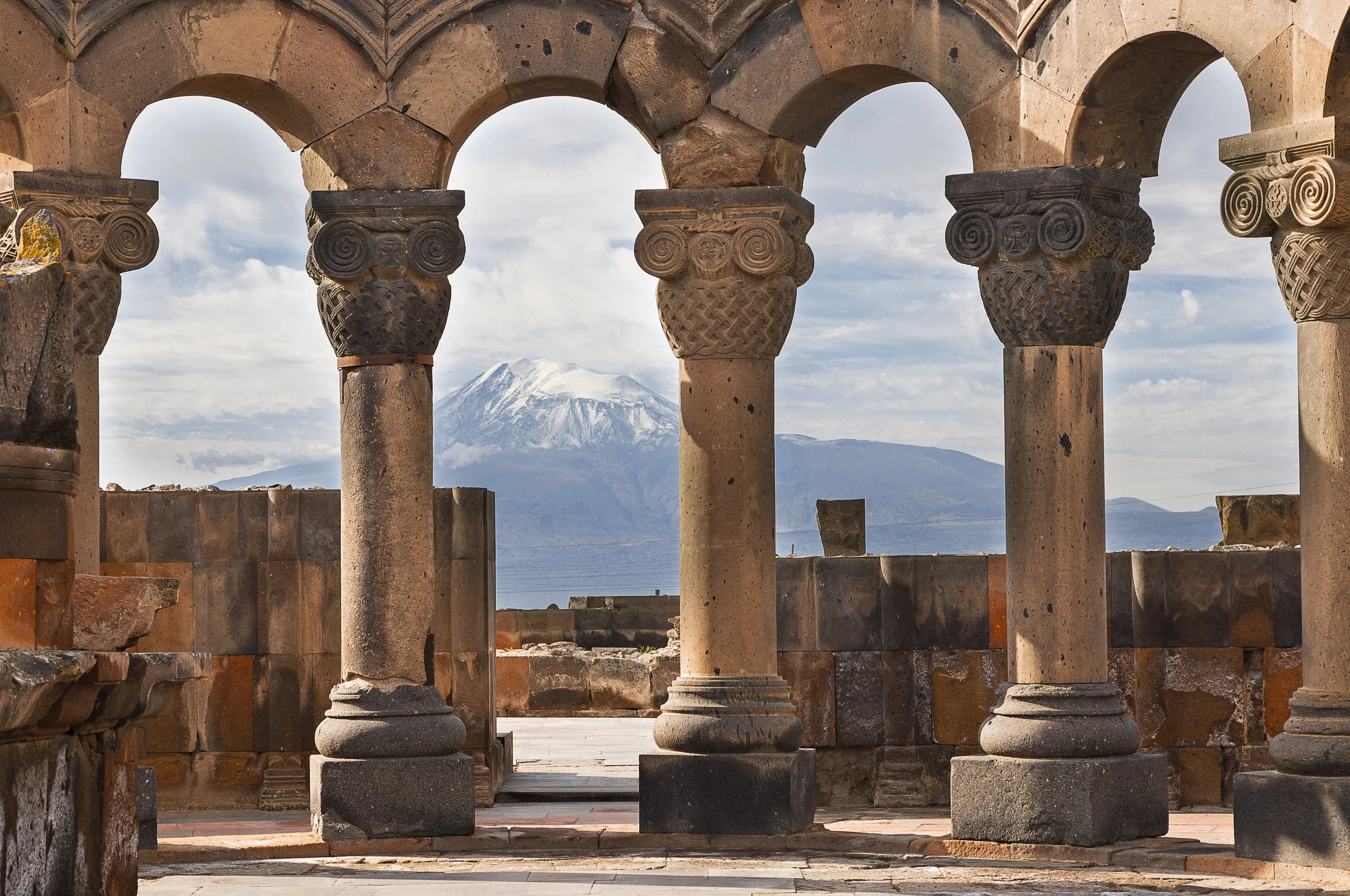
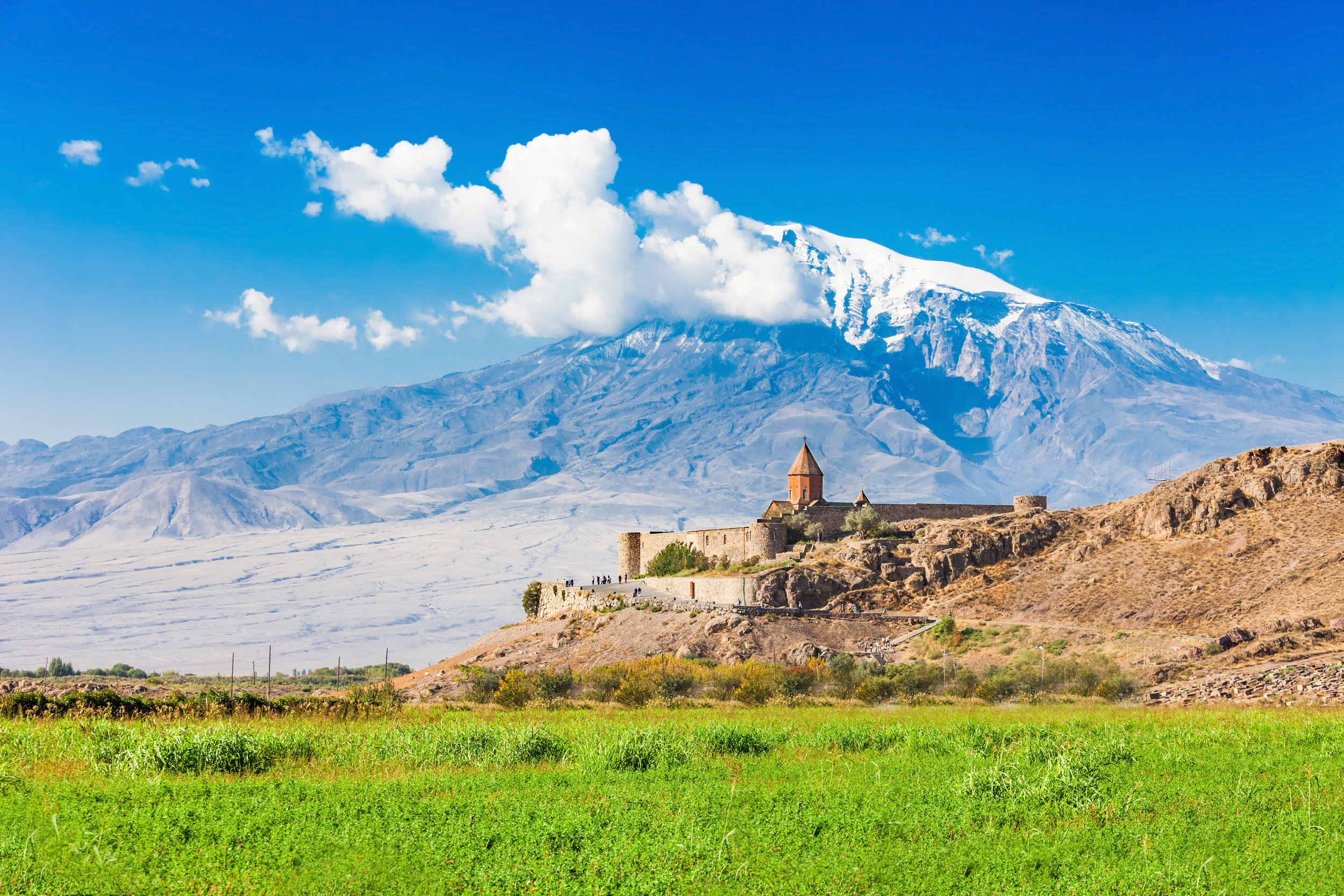
    Few figures loom larger in Armenia’s spiritual imagination than St Gregory the Illuminator. His story – imprisonment, endurance and eventual triumph – has shaped the country’s understanding of faith under pressure, and his legacy remains central to the identity of the Armenian Apostolic Church. Venturing out of Yerevan today, a lecture on the coach recounts the legend of Gregory’s imprisonment at Khor Virap, set against the dramatic backdrop of Mount Ararat. The monastery marks the site where he was held for 13 years before emerging to transform the kingdom’s religious life. After taking in the stunning vista, we then continue to Echmiadzin, the spiritual centre of the Armenian Apostolic Church. Lunch is enjoyed in the monastery refectory before visit Echmiadzin Cathedral, traditionally believed to stand on the spot where Gregory experienced a vision of Christ descending to earth. Just nearby we also find the ruins of Zvartnots, another cathedral, built to surpass Echmiadzin in beauty. Returning to Yerevan, this evening we attend a private duduk performance, whose distinctive, resonant tones provide a contemplative close to the day. Overnight Yerevan (B, L)

  • Day 17 | Saturday 26 June
    Garni, Geghard & Modern Memory

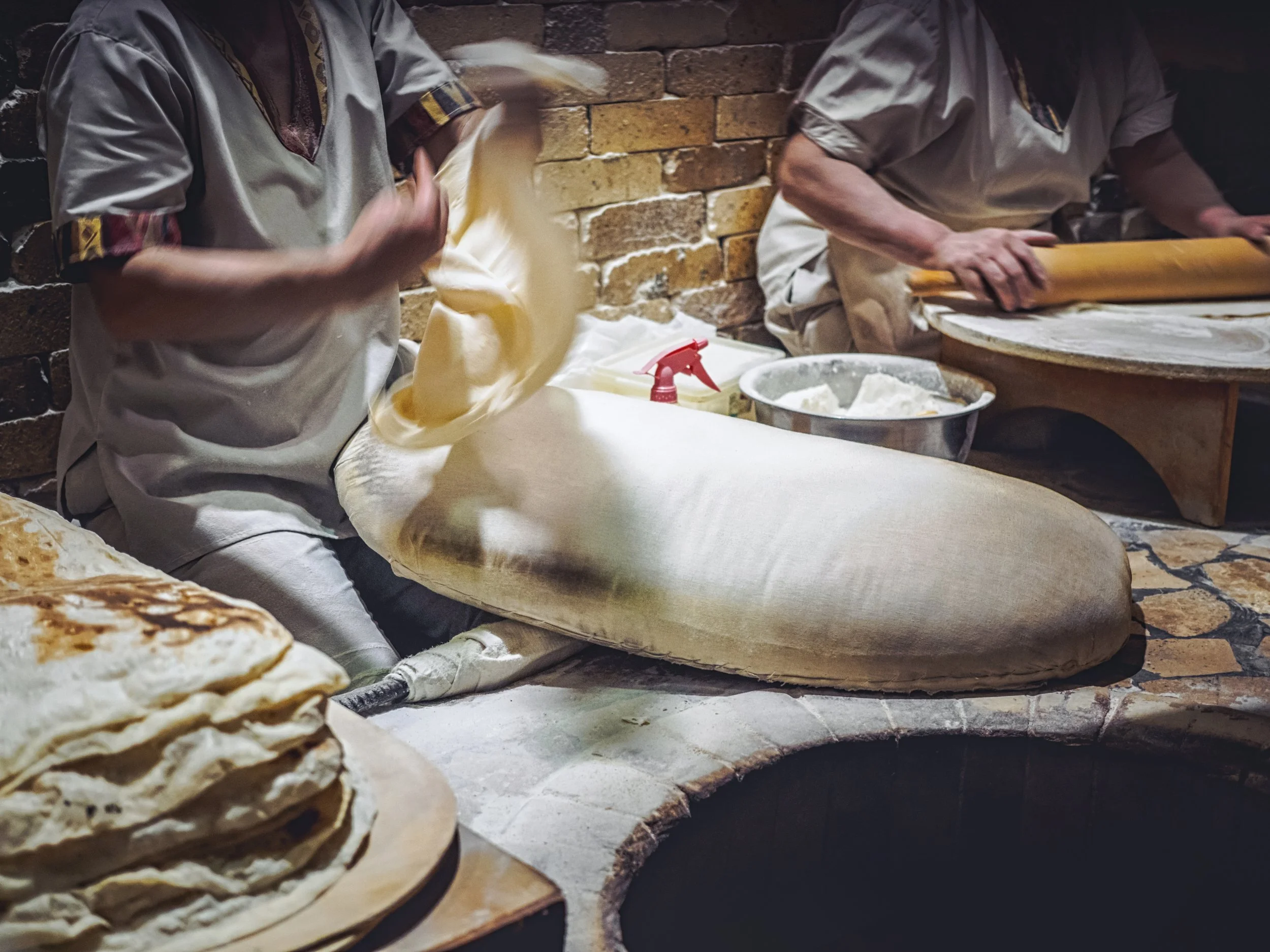
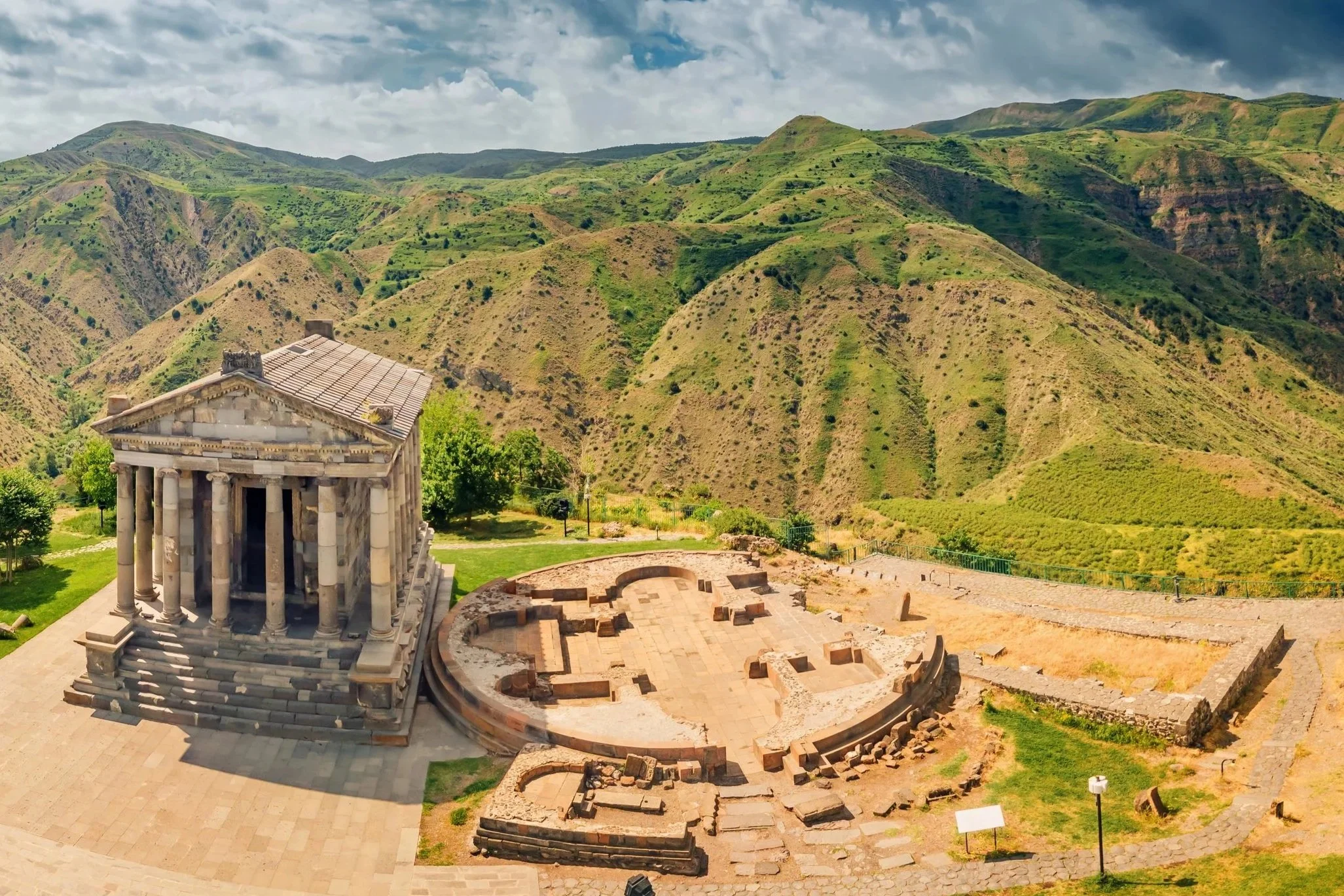
    Armenia’s landscape brings together layers of belief that stretch from the classical world to early Christianity and into the modern era. Temple, monastery and memorial together reflect how faith and national identity have developed across centuries of change. Travelling first to Garni today, we find the only surviving Greco-Roman colonnaded temple in the Caucasus. Built in the 1st century CE, it offers a rare glimpse of Armenia before its Christian conversion. We then continue to Geghard Monastery, founded in the 4th century and expanded through the medieval period, its chapels carved directly into the surrounding rock. A cappella performance within the monastery’s stone interior highlights its remarkable acoustics before we continue to a nearby village for lunch, where we observe the preparation of traditional lavash bread. Returning to Yerevan in the afternoon, we then visit the Armenian Genocide Memorial and Museum, providing historical context to the events of 1915–1922. An evening lecture draws together the themes explored across the Caucasus, followed by a private farewell dinner on the hotel’s terrace overlooking the city. Overnight Yerevan (B, L, D)

  • Day 18 | Sunday 27 June
    Depart Yeravan

    The tour concludes after breakfast this morning, with a transfer to Zvartnots Airport for outbound flights. (B)

Hotels have been selected principally for their central location. All hotels are a comfortable four-star standard.

Tour Accommodation

tour booking

$17,990 AUD per person, twin share (land content only)
$3,420 AUD supplement for sole use of a hotel room

A $1,000 deposit is required per person to confirm your booking on tour. This deposit is non-refundable.

Hold a Place

Still deciding? We are happy to hold a tentative place for 7 days while you make your final arrangements.

Book Online

To secure your place(s) on tour, book online below with “Athena”, our virtual tour consultant.

DOWNLOAD FORM

Download a printable booking form. You can also complete the form on screen and submit via email.

your tour consultant

The consultant for this tour is Jamal Fairbrother. For further information or to discuss the tour, please call 9235 0023 (Sydney) or 1800 639 699 (outside Sydney) or email jamal@academytravel.com.au

have you thought about?

Academy Travel is more than just a tour operator. We are also a full-service travel agency who can assist you with all aspects of your travel, including flights, transfers, pre-tour arrival, additional travel and comprehensive travel insurance.

can’t make this departure?

If these dates don't work for you, register to hear about the next tour.