The five stans

uzbekistan, turkmenistan, tajikistan, kyrgyzstan & kazakhstan

Follow the footsteps of travellers past, journeying through the Silk Road cities that linked Europe and the Far East.

TOUR STATUS

Places Available | Maximum 16

TOUR DATES

Apr 15 - May 8, 2027 | 24 Days

TOUR LEADER

Chris Bradley | View Bio

snapshot

OVERVIEW

Across Central Asia, geography has shaped history as decisively as empire. River-fed oases, desert corridors, mountain passes and open steppe carried merchants, armies, religions and ideas between Persia, China and the wider Eurasian world. Across Uzbekistan, Turkmenistan, Tajikistan, Kyrgyzstan and Kazakhstan, these connections survive in Zoroastrian sites, Sogdian cities, Islamic centres, Timurid monuments and the legacies of Russian and Soviet rule.

Led by Chris Bradley, this comprehensive 24-day journey travels west to east across the five Stans, from Tashkent and the Aral Sea to Khiva, Ashgabat and Merv, before returning to Uzbekistan for Bukhara and Samarkand and crossing into Tajikistan to explore ancient Penjikent and the wider Sogdian world. The landscape then shifts east to Kyrgyzstan’s Tian Shan and Issyk Kul, where nomadic traditions come to the fore, before the journey crosses into Kazakhstan for Charyn Canyon and Almaty.

Travellers may complete the full five-country itinerary or conclude in Tashkent after the first three countries.

A NOTE ON THE ITINERARY

The full 24-day itinerary travels through all five countries. Travellers may book the complete tour or conclude in Tashkent on Sunday 2 May after the 18-day Uzbekistan, Turkmenistan and Tajikistan section,
with separate pricing available.

Please note, travel in parts of Central Asia can be demanding, with variable standards, lengthy border crossings and occasional itinerary changes, particularly in Turkmenistan. A good level of fitness, patience and flexibility is required.
tour highlights

Trace the great Silk Road cities of Central Asia, exploring centres of trade, learning and art

Chris Bradley

your expert tour leader

Chris is a cultural historian with a deep expertise in the religion and art of the Middle East and Central Asia. With over 40 years of experience leading tours across the Islamic world, he brings an exceptional depth of knowledge and passion to every journey. Chris has designed and led numerous itineraries through Saudi Arabia, Libya, Algeria, Iran, Uzbekistan, Turkmenistan, Ethiopia and Eritrea, combining major highlights with lesser-known treasures.

Read full bio >

Accompanied by an Experienced Tour Manager

Alongside your expert tour leader, an experienced tour manager will accompany for the entirety of the tour. They oversee logistics, ensure your comfort and safety, and provide friendly support – whether offering tips for free time, sharing a chat over dinner, or giving you space to relax.

tour ITINERARY

Tashkent (1 night), Nukus (2 nights), Khiva (2 nights), Ashgabat (3 nights), Mary (1 night), Bukhara (3 nights), Samarkand (4 nights),
Tashkent (1 night), Bishkek (2 nights), Issyk-Kul (1 night), Karakol (1 night), Almaty (2 nights)

Included meals are shown with the letters B, L and D

  • Day 1 | Thursday 15 April
    Arrive Tashkent

    Tashkent provides the starting point for a journey across the oasis cities, deserts, mountains and steppe of Central Asia. Travellers arrive at Tashkent International Airport at various times, with individual or group transfers arranged to the hotel. After checking in and time to settle, we meet in the lobby before dinner together at the hotel. Overnight Tashkent (D)

  • Day 2 | Friday 16 April
    Tashkent to Nukus

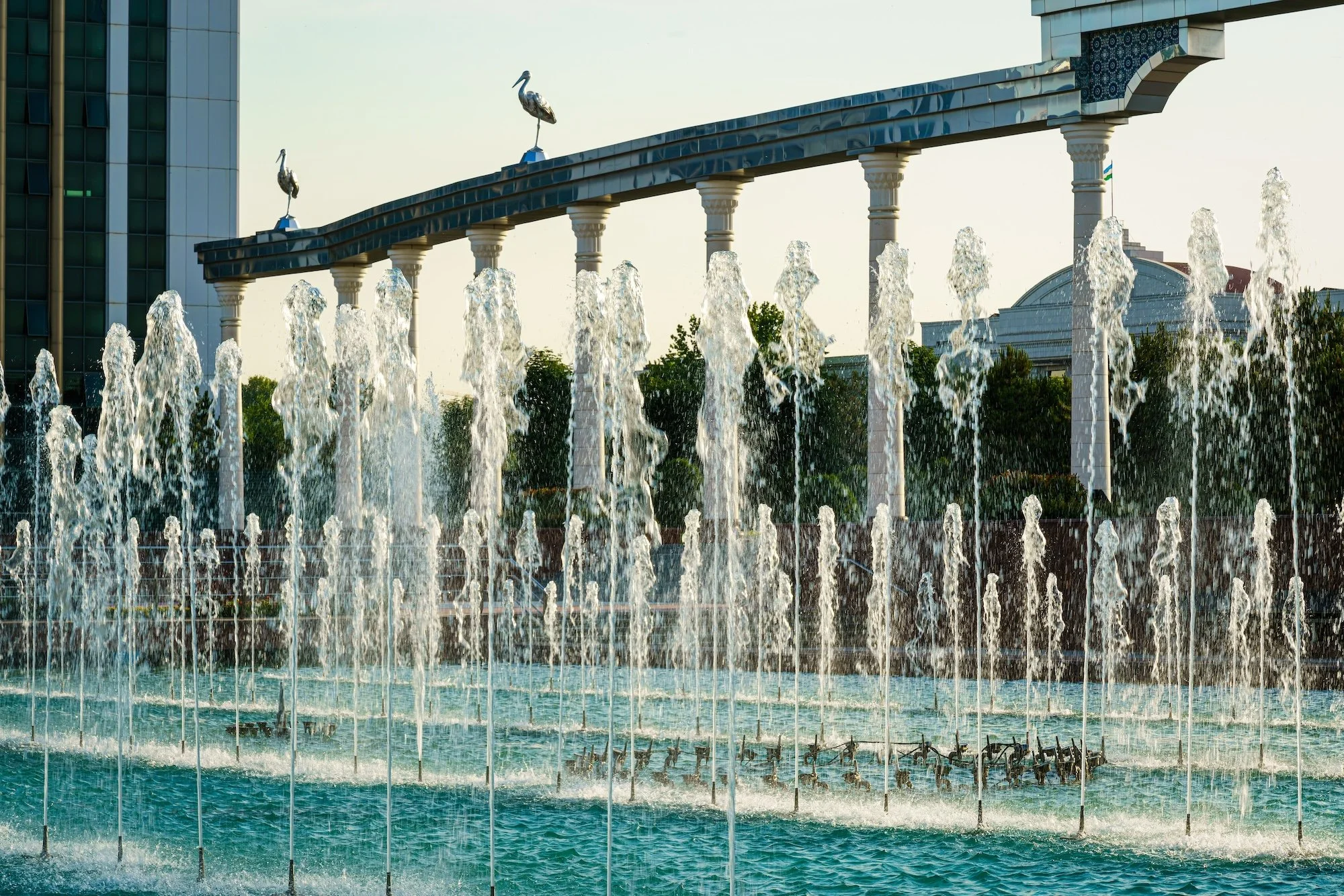
    For more than two millennia, Tashkent has occupied a strategic position at the crossroads of Central Asia. Its urban fabric reflects successive periods of Islamic learning, Russian conquest, Soviet reconstruction and modern Uzbek nationhood. After a talk in the hotel, we begin our day at the Monument of Courage, commemorating the city’s
    recovery from the 1966 earthquake, before continuing to the Hazrati Imam complex and Museum of Islamic Civilization. The precinct’s mosques, madrasas and manuscript collections include the reputed Uthman Qur’an, among the oldest surviving Qur’anic manuscripts. Lunch at Afsona introduces contemporary Uzbek cuisine, followed by Amir Temur Square, Independence Square and the Second World War memorial. On return to our the hotel in the late afternoon, we collect an early takeaway dinner before our evening flight west to Nukus. Overnight Nukus (B, L, D)

  • Day 3 | Saturday 17 April
    Muynak and the Aral Sea

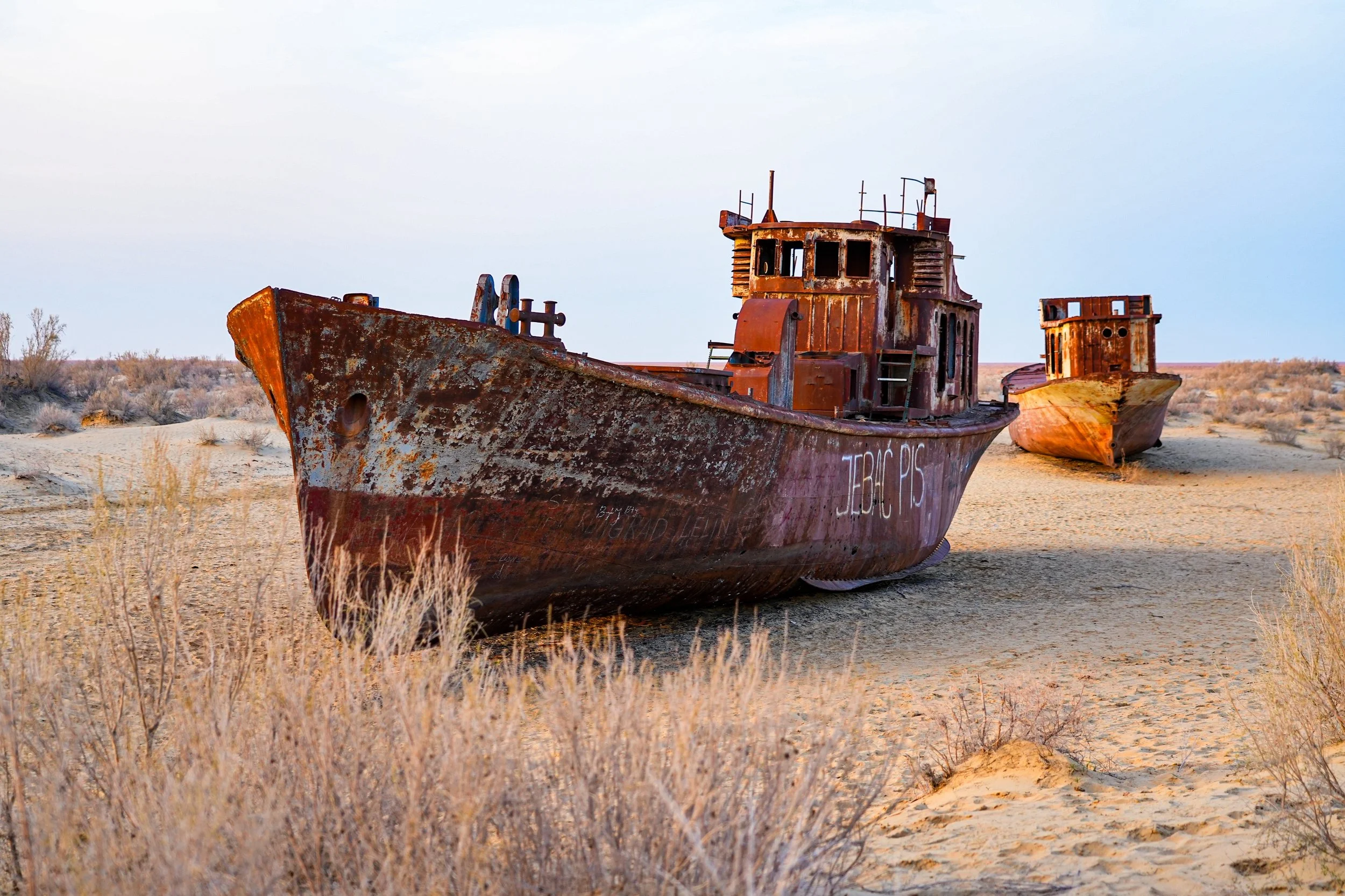
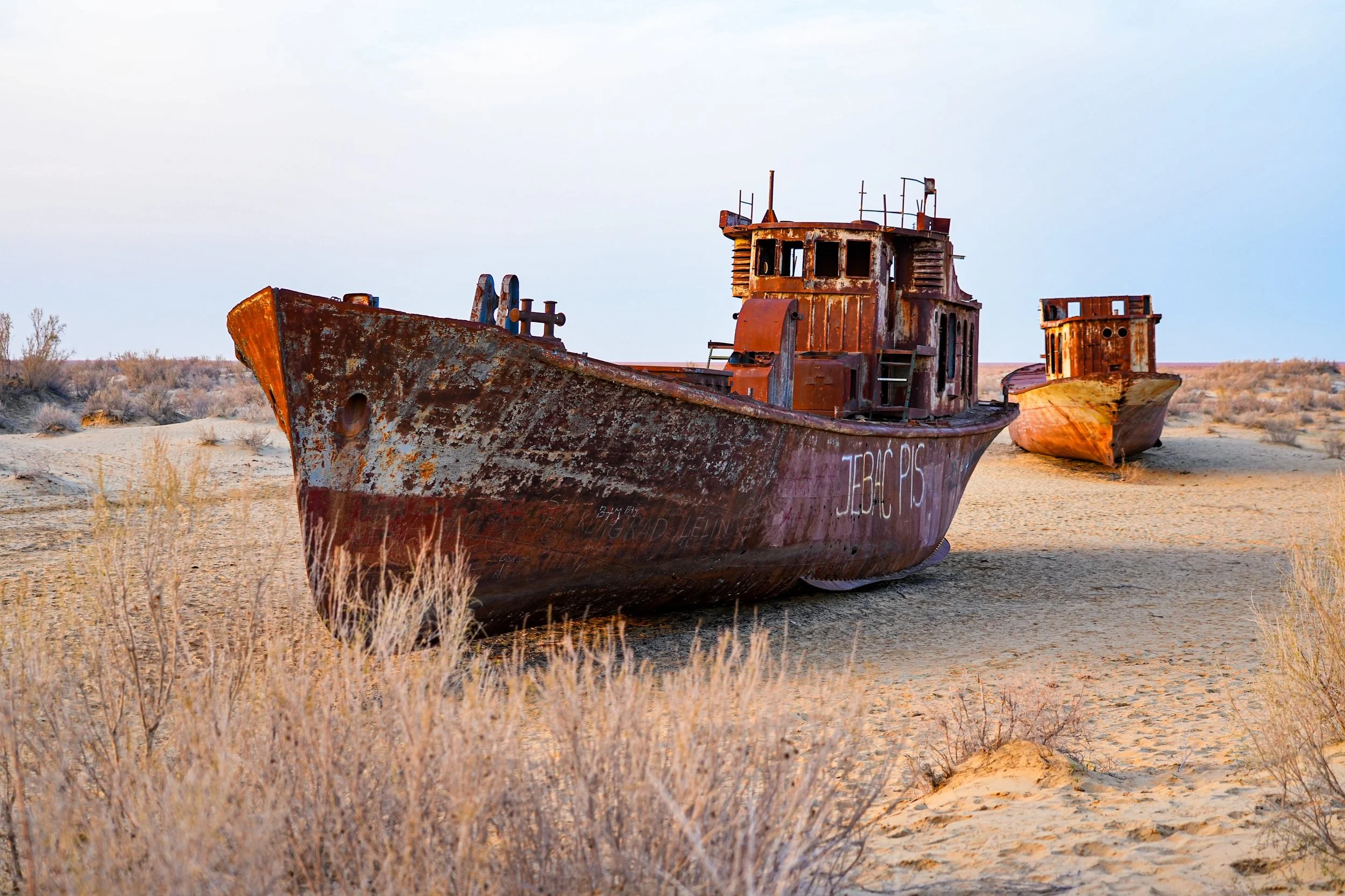
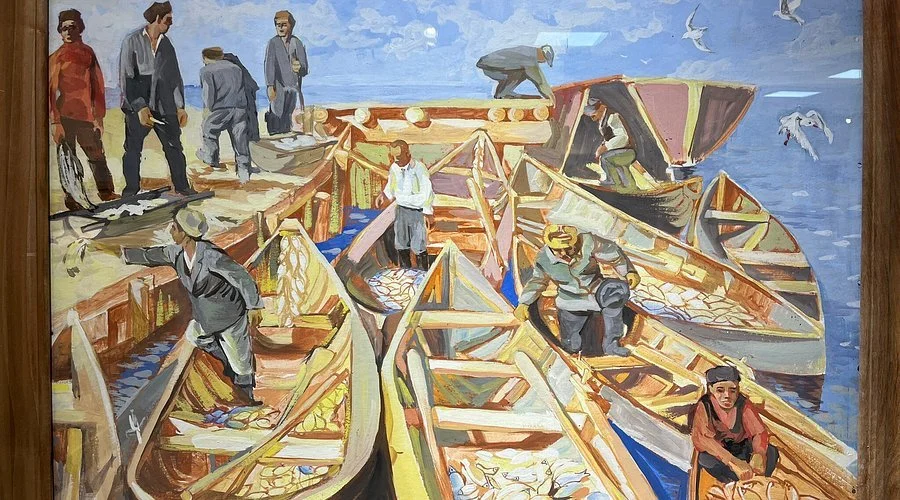
    The Aral Sea once sustained fishing towns, ports and communities across the deserts of western Central Asia. Its rapid contraction, caused by the diversion of the region’s major rivers for large-scale Soviet irrigation, transformed both the landscape and the lives built around it. Today we travel north across this increasingly arid landscape to Muynak, a town that once stood on the shores of the Aral Sea and supported a thriving fishing fleet and cannery. After lunch in a local guesthouse on arrival, we visit the so-called ‘ship cemetery’, where rusting vessels now lie marooned on the former seabed – a stark measure of how far the water has retreated. At the local history museum, photographs, paintings and exhibits evoke Muynak before the sea’s collapse, tracing the transformation of a port community by one of Central Asia’s most profound environmental disasters. Returning to Nukus in the early evening, we conclude the day with dinner in our hotel. Overnight Nukus (B, L, D)

  • Day 4 | Sunday 18 April
    Savitsky and the Road to Khiva

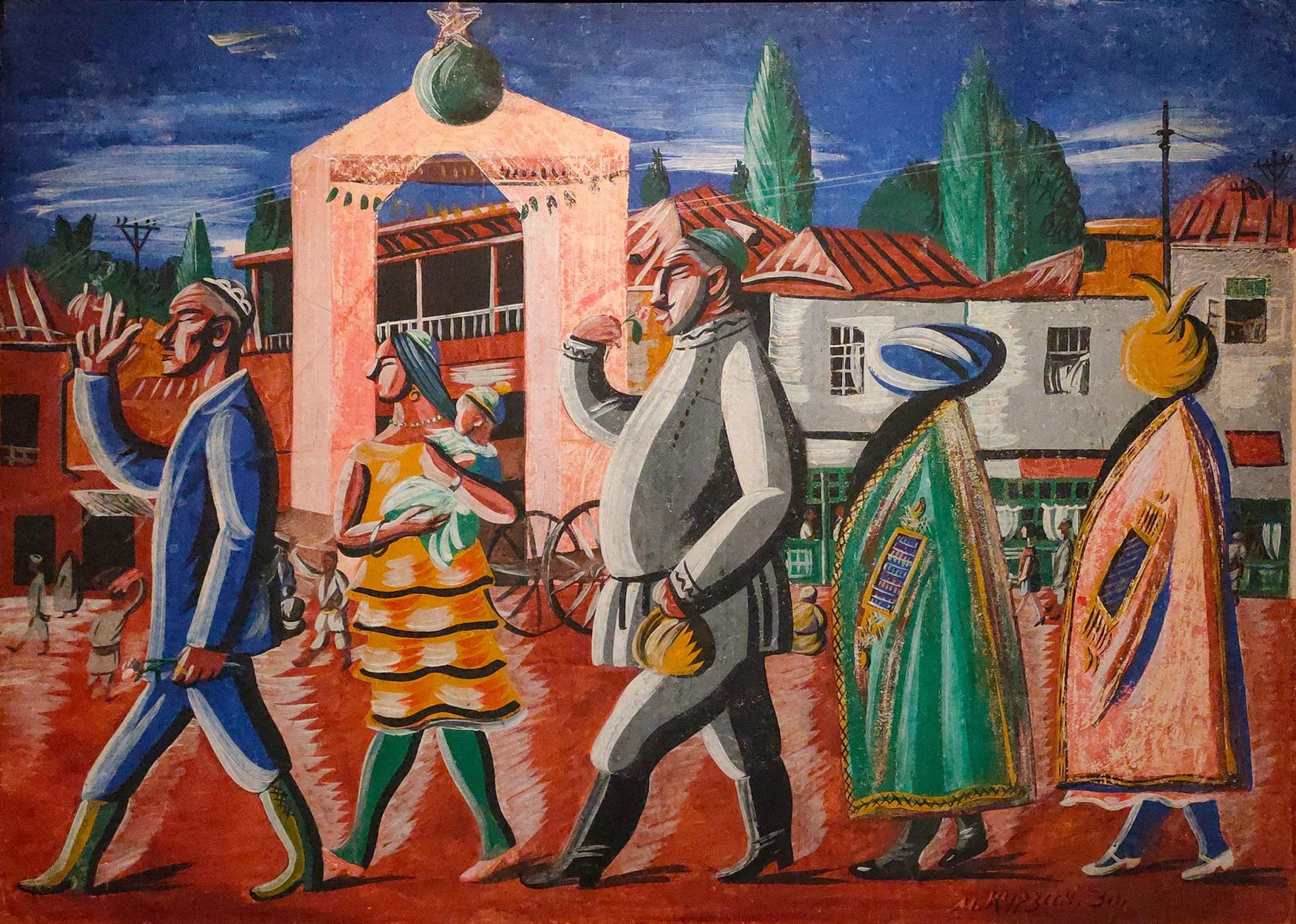
    Nukus is distinguished by the unexpected presence of one of Central Asia’s most significant museum collections. It was here that Igor Savitsky assembled an extraordinary body of Russian and Central Asian avant-garde art, much of it created outside the boundaries of officially sanctioned Soviet culture. Today, these works are held in the Savitsky Art Museum, where we begin our day, alongside archaeological and ethnographic collections that provide broader context for the history and material culture of Karakalpakstan. Lunch in Nukus follows before we turn south towards Khiva. En route, we stop at Chilpik Dakhma, a circular Zoroastrian Tower of Silence rising above the Amu Darya plain. Dating from around the 1st century BCE, the site evokes religious traditions that long predate the Islamic cities encountered later in the tour. We reach Khiva in the late afternoon with time to freshen up before dinner together. Overnight Khiva (B, L, D)

  • Day 5 | Monday 19 April
    Khiva

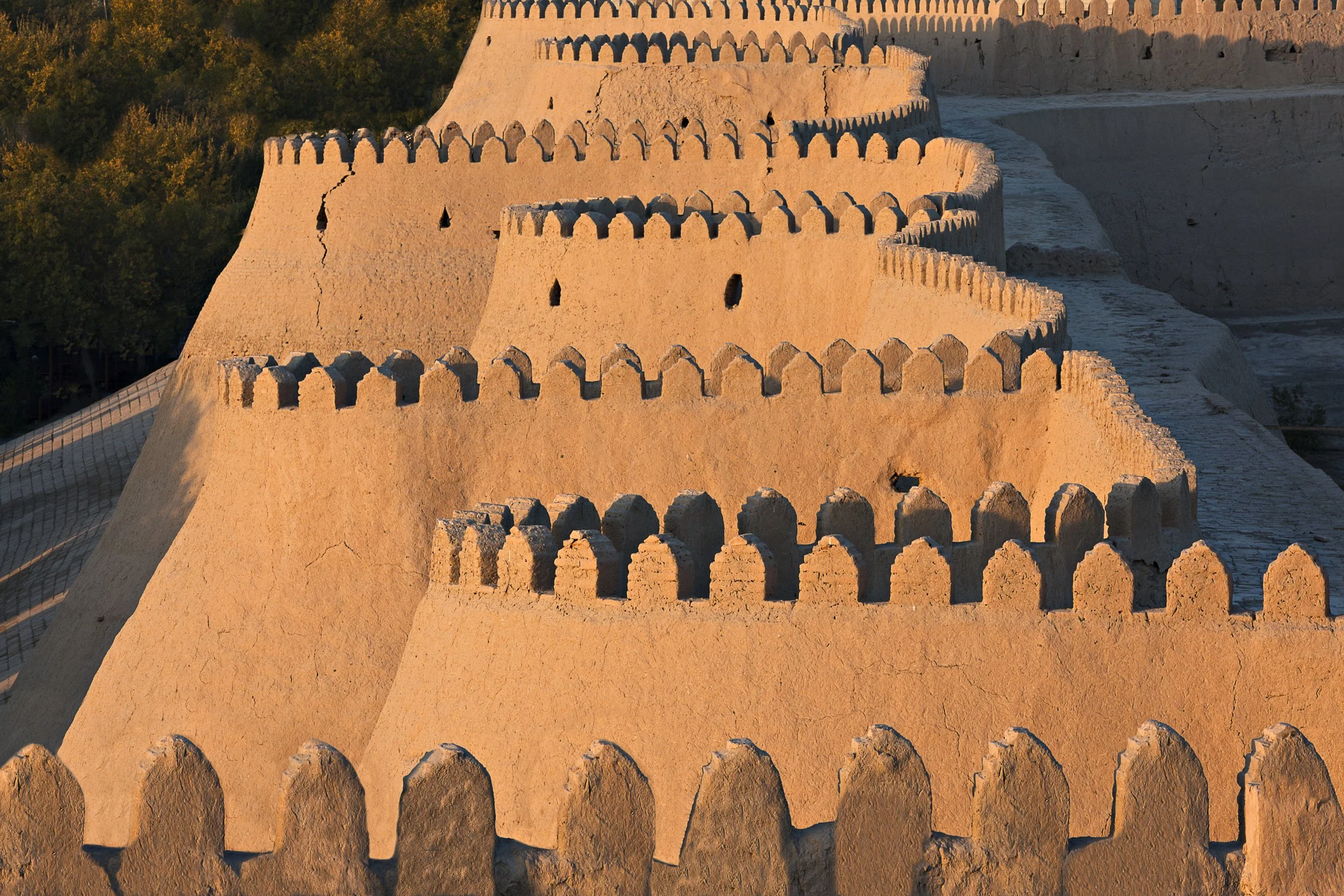
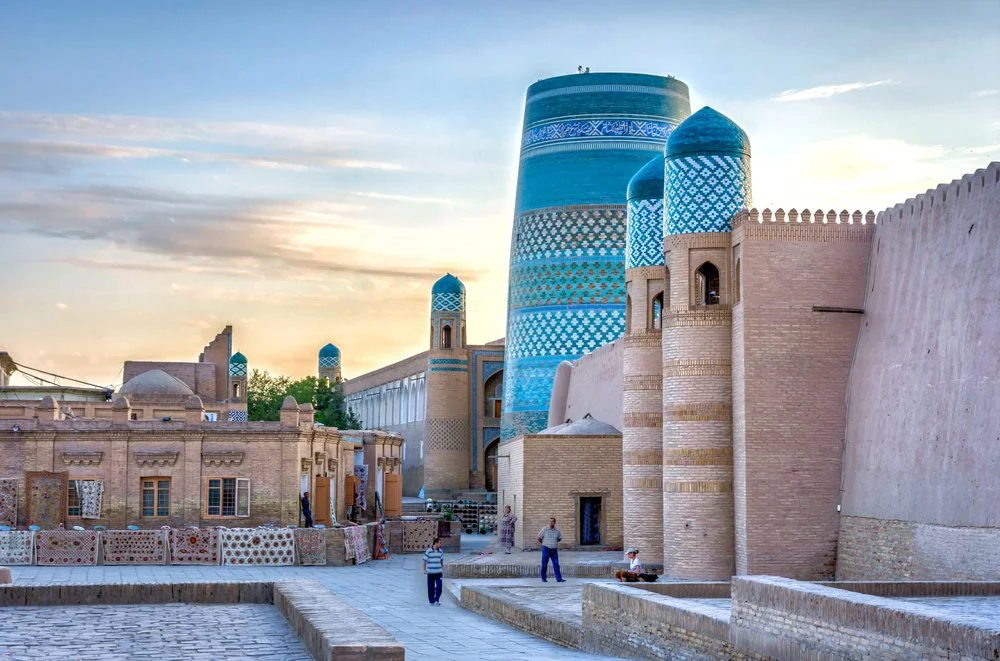
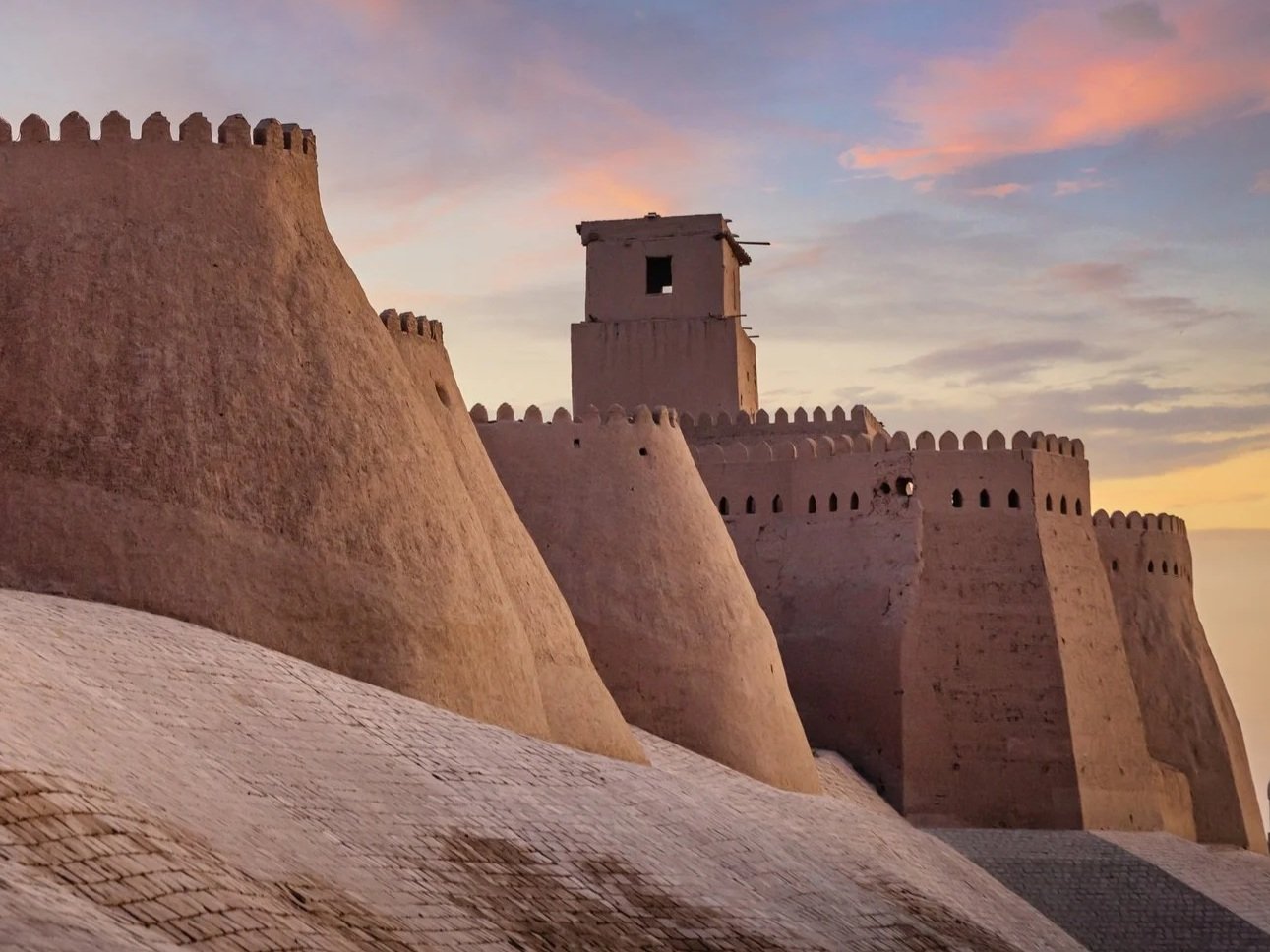
    From the 8th century, Khiva developed as a fortified trading city on the western approaches to the great oasis routes of Central Asia. At its heart lies Ichan Qala, the compact inner walled city that formed the political, religious and commercial centre of the khanate. Enclosed by massive mud-brick walls, it preserves an exceptionally coherent ensemble of mosques, minarets, madrasas and palaces from the khanate period. Our walking tour this morning begins at the Kunya Ark, the citadel and administrative centre of Khiva’s rulers, before passing through the old city gates and examining the emirs’ palace complexes. We then continue to the richly decorated Pakhlavon Mahmud Mausoleum, the resting place of Khiva’s patron saint and one of the city’s most important places of pilgrimage. Its later development as a dynastic burial complex also reveals the close relationship between religious devotion and the authority of Khiva’s ruling khans. We pause for lunch together during our sightseeing and a late afternoon lecture at the hotel brings the days historical themes together before dinner this evening. Overnight Khiva (B, L, D)

  • Day 6 | Tuesday 20 April
    Across the Turkmen Frontier

    The frontier south of Khorezm has long marked a zone of movement between settled oasis communities, desert routes and competing political powers. Following a morning at leisure and lunch together in Khiva, we leave the Khorezm oasis behind and travel south across the flat, increasingly arid landscape towards the Dashoguz border crossing, where we complete formalities between Uzbekistan and Turkmenistan. Once across the border, we meet our Turkmen guide and coach before an early dinner in Dashoguz. We then continue to the airport for our evening flight to Ashgabat. Arrival in the Turkmen capital introduces a markedly different urban landscape, where ancient regional histories sit beside the monumental architecture of the modern state. We transfer directly to our hotel on arrival. Overnight Ashgabat (B, L, D)

  • Day 7 | Wednesday 21 April
    Parthian Nisa and Ashgabat

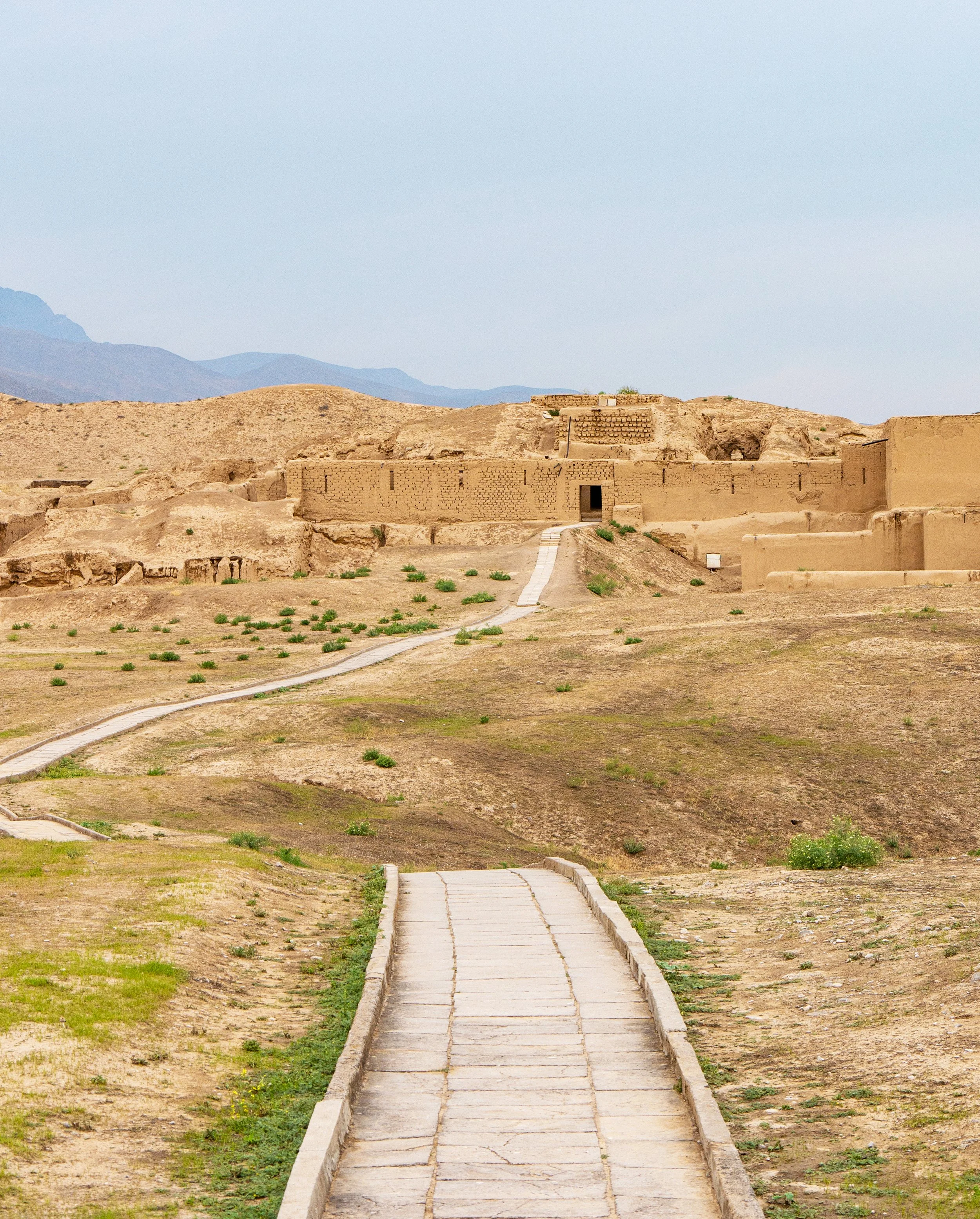
    The foothills west of Ashgabat once formed part of the heartland of the Parthian Empire, a major power linking Central Asia, Iran and the Near East from the 3rd century BCE. Today this short drive west brings us to Nisa, a UNESCO World-Heritage site and former royal centre of the Parthian Empire. Within its fortified precinct, ceremonial halls, temples and storage complexes reveal the scale of the settlement and the political and ritual life of the Parthian court. At nearby Gypjak, the Turkmenbashi Mosque and Mausoleum present a very different expression of power – a vast modern memorial complex created for Turkmenistan’s first president. Lunch together follows before we return to Ashgabat to examine the country’s renowned weaving traditions at the Turkmen Carpet Museum, home to monumental hand-woven carpets and regional designs. Our final visit of the day is the Ertogrul Ghazi Mosque, whose Ottoman-inspired form adds another layer to the capital’s architectural language. Dinner is served at the hotel this evening. Overnight Ashgabat (B, L, D)

  • Day 8 | Thursday 22 April
    Modern Ashgabat and the Akhal-Teke

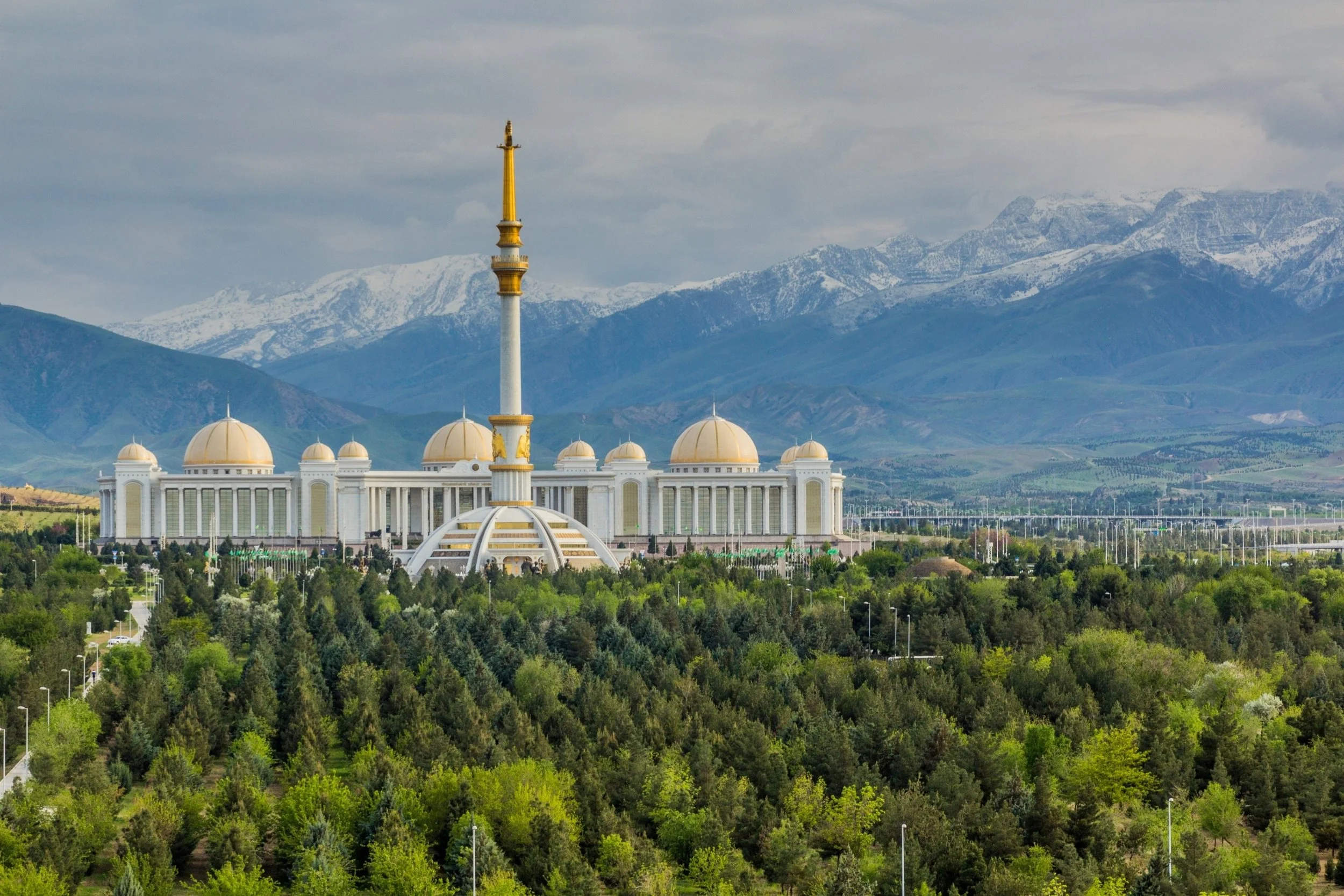
    Ashgabat was comprehensively reshaped after independence to express the ideals and authority of the modern Turkmen state. Against the Kopet Dag Mountains, white-marble government buildings, broad avenues and monumental parks now form one of Central Asia’s most distinctive planned capitals. To place this modern vision within the much longer history of the region, our day begins at the National Museum of Turkmenistan, whose archaeological and ethnographic collections trace Turkmenistan’s development from ancient settlements to the present. Our city tour then takes in the Neutrality Arch, Independence Park and the Rukhnama Monument, each associated with the political symbols and public rituals of post-Soviet Turkmenistan. Following lunch at a local restaurant, we spend the afternoon at a private Akhal-Teke stable. Bred for endurance across the desert, the Akhal-Teke is one of Turkmenistan’s most celebrated horse breeds, recognised for its slender build and distinctive sheen. Our visit offers a closer look at the horses themselves, their breeding traditions and the place they continue to hold in Turkmen culture. Dinner this evening is enjoyed at a local restaurant. Overnight Ashgabat (B, L, D)

  • Day 9 | Friday 23 April
    Mary and Merv

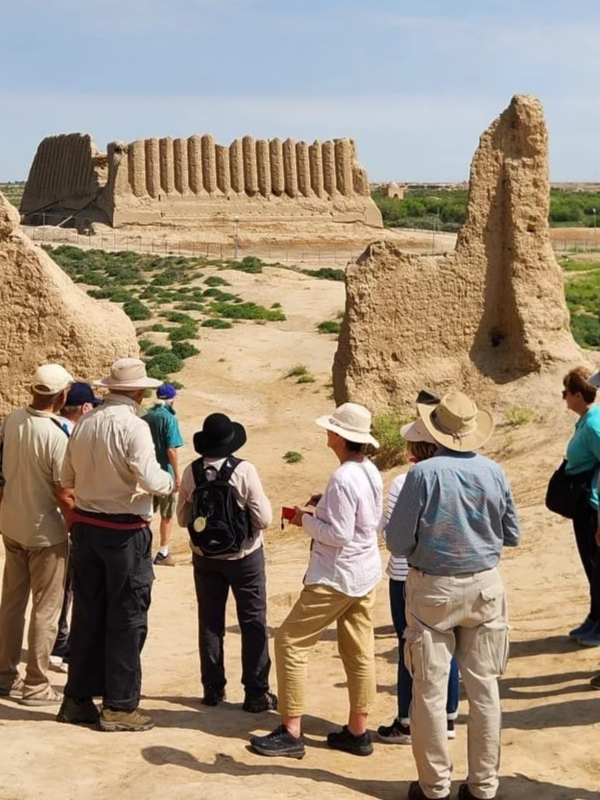
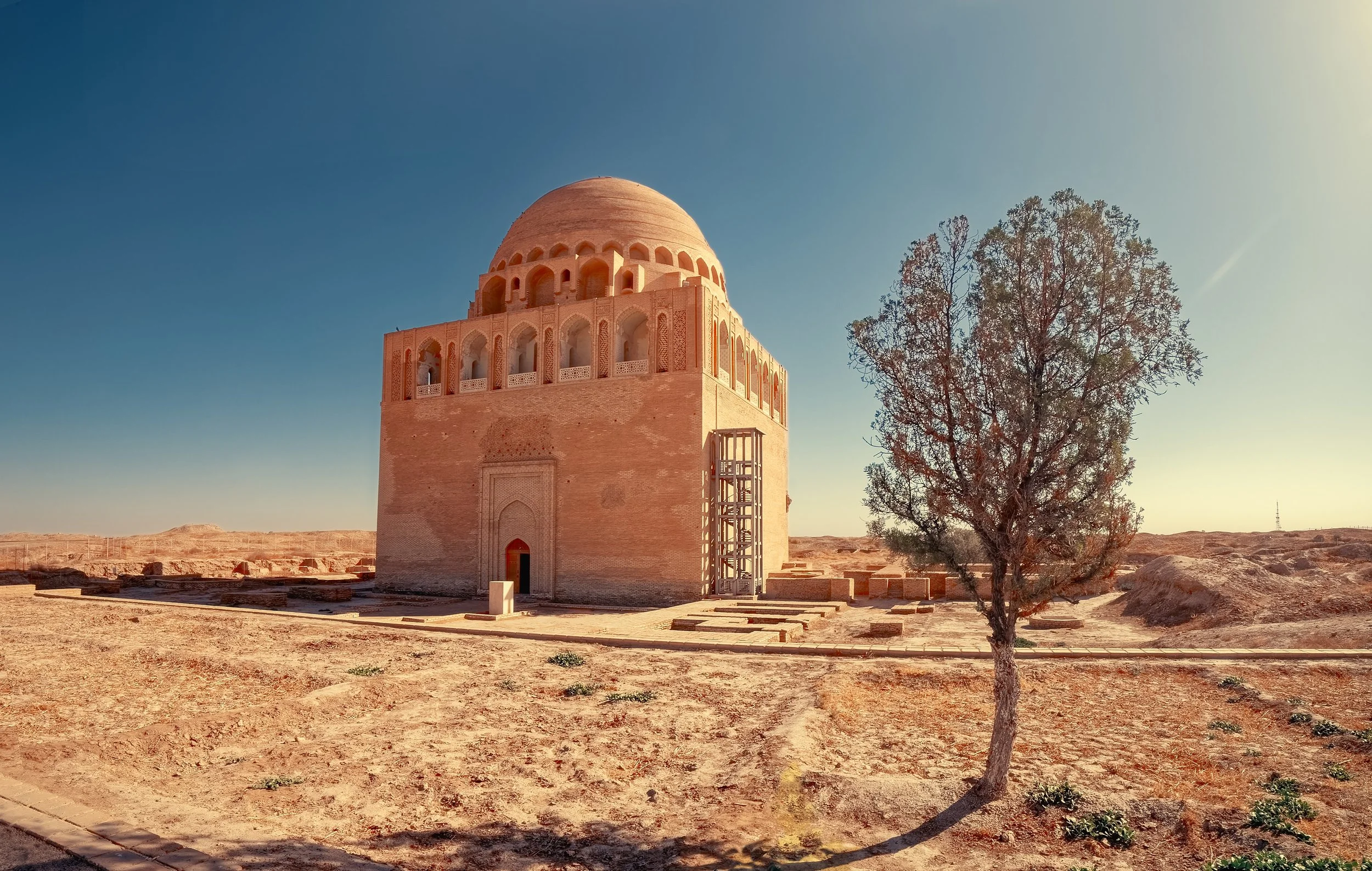
    The oasis of Merv sustained one of Central Asia’s great urban centres, its prosperity built on an intricate irrigation system and a strategic position on the routes between Iran, Central Asia and the wider Islamic world. Successively ruled by Persian, Arab and Turkic dynasties, Merv became a major centre of commerce and learning before its destruction by Mongol forces in 1221. Leaving Ashgabat early today, we drive east to Mary and pause for lunch before continuing to this now UNESCO World-Heritage site. At Gyaur Kala, massive walls enclose the remains of the Sasanian city, while nearby Sultan Kala represents Merv’s medieval zenith under the Seljuks. The Mausoleum of Sultan Sanjar, restored above the surrounding ruins, also recalls the scale and sophistication of the 11th and 12th-century capital. In the late afternoon, we make our way back to Mary to check in to our hotel. A lecture precedes dinner together this evening. Overnight Mary (B, L, D)

  • Day 10 | Saturday 24 April
    Across the Karakum to Bukhara

    Our route back to Uzbekistan crosses the Karakum and the Amu Darya corridor, landscapes that have long connected the oasis cities of Turkmenistan and Transoxiana. This is a substantial overland day, beginning with an early departure from Mary and continuing via Turkmenabat to the Farap border. Lunch is included en route before we complete border formalities again and meet our Uzbek driver and guide on the opposite side. From here, we continue to Bukhara, where the dense fabric of the old city – narrow lanes, trading domes and tiled religious complexes – marks a striking return from Turkmenistan’s desert sites and monumental modern capital to one of Central Asia’s great historic urban centres. We arrive later in the day, with time to check in and freshen up before dinner together. Overnight Bukhara (B, L, D)

  • Day 11 | Sunday 25 April
    Bukhara

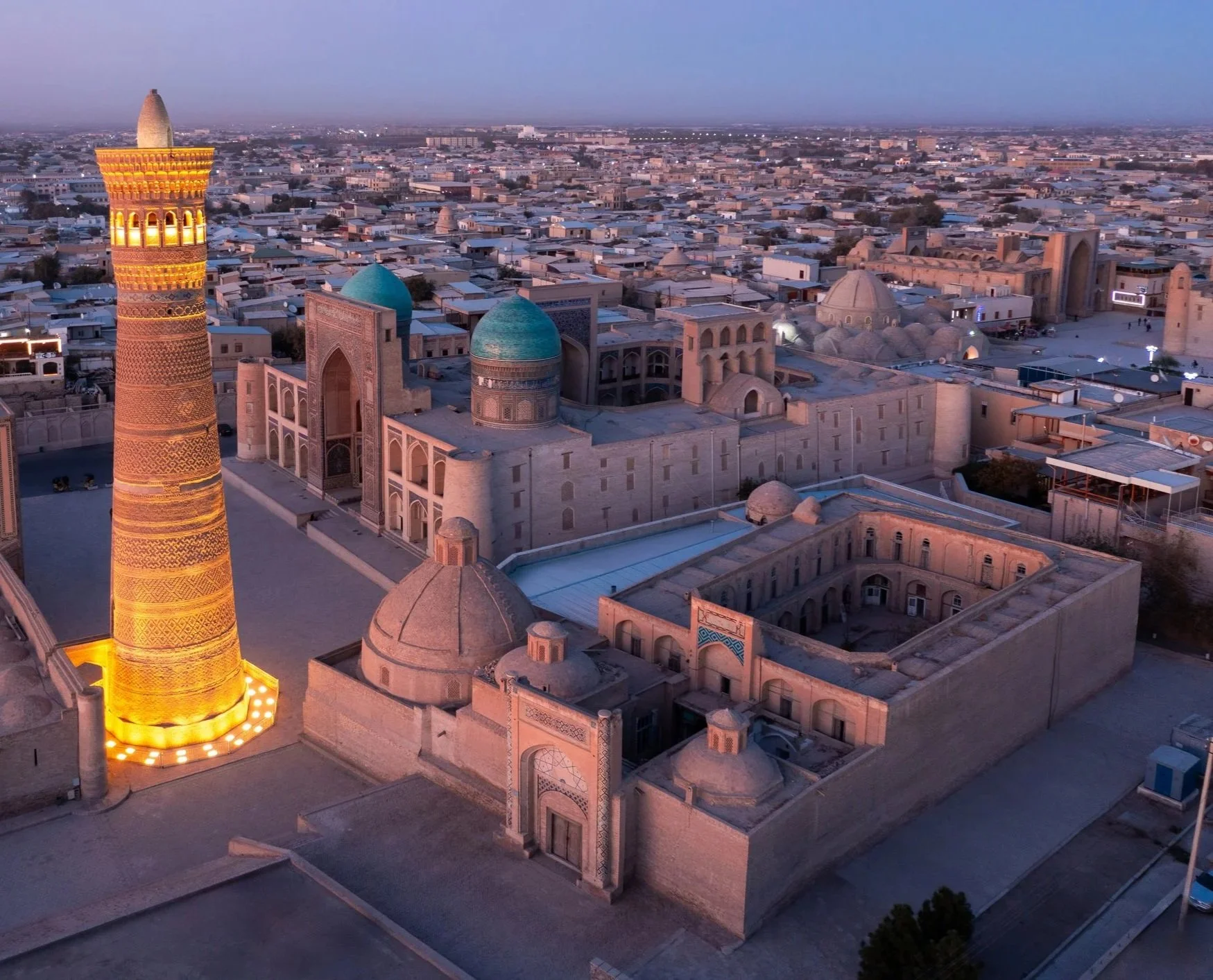
    Within the old city, Bukhara’s long history is visible in the close layering of monuments from different periods – from early Islamic mausoleums to later madrasas, trading domes and the fortified seat of the emirs. We begin this chronology with one of its earliest surviving monuments, the 10th-century Ismail Samani Mausoleum, whose intricate patterned brickwork marks a formative moment in Central Asian Islamic architecture. Nearby, we continue to the Chashma-Ayub Mausoleum before turning to the Ark Fortress, once the fortified seat of the city’s rulers. Next, at the Kalon ensemble, the mosque and soaring minaret form Bukhara’s principal spiritual landmark, while the Miri-Arab Madrasah reflects the city’s continuing role as a centre of Islamic education. Lunch is then enjoyed in the Old Town and in the afternoon, we compare the restrained Timurid decoration of the Ulugbek Madrasa with the later exuberance of the Abdulazizkhan Madrasa. We then continue through the trade domes to Lyabi-Hauz and the ancient Magoki-Attori Mosque before the day concludes with a folk dance and costume presentation in the courtyard of a historic madrasa. Overnight Bukhara (B, L)

  • Day 12 | Monday 26 April
    Sacred Bukhara

    Away from the great monuments explored yesterday, Bukhara’s religious life is expressed on a more intimate scale through neighbourhood shrines, smaller madrasas and places of pilgrimage. We begin today at Char Minar, the distinctive four-towered gatehouse of a vanished madrasa, whose compact form and varied decoration offer a striking contrast to Bukhara’s larger monumental ensembles. We then continue to the Naqshbandi Mausoleum, one of Uzbekistan’s most important pilgrimage destinations and the burial place of Bahauddin Naqshband, founder of the influential Naqshbandi Sufi order. The complex remains an active place of devotion, giving us insight into a spiritual tradition that spread from Bukhara across much of the Islamic world. The afternoon and evening are at leisure to revisit the Old Town, browse the trading domes or relax at the hotel. Overnight Bukhara (B)

  • Day 13 | Tuesday 27 April
    From Emirate to Timurid Capital

    The final chapter of our time in Bukhara turns to the last decades of the Emirate, when the court increasingly absorbed European decorative influences while maintaining local traditions of craftsmanship. Beginning our day at Sitorai Mokhikhosa, the former summer palace of the Bukharan emirs, we explore mirrored halls, ornate plasterwork and richly worked local interiors alongside imported furnishings, reflecting the cosmopolitan tastes of the court in the late 19th and early 20th centuries. We then enjoy lunch together at Zaytoon before transferring to the railway station for the afternoon train to Samarkand, moving from the later world of the Bukharan Emirs towards the monumental legacy of the Timurids. On arrival, we transfer to our hotel and settle in before dinner together. Those wishing to continue independently may later walk to Registan Square for the evening sound-and-light display, subject to the local schedule. Overnight Samarkand (B, L, D)

  • Day 14 | Wednesday 28 April
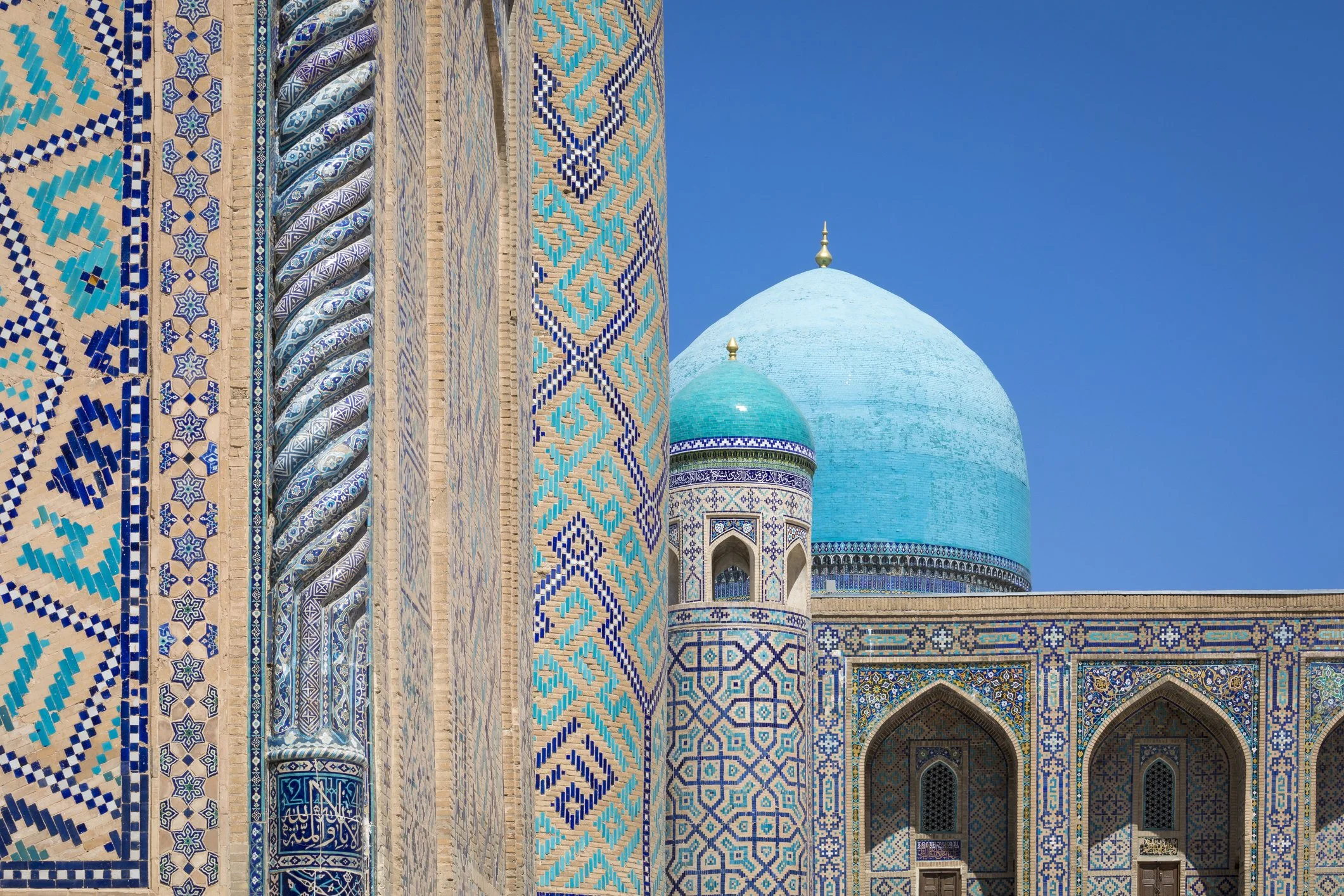
    Timurid Samarkand

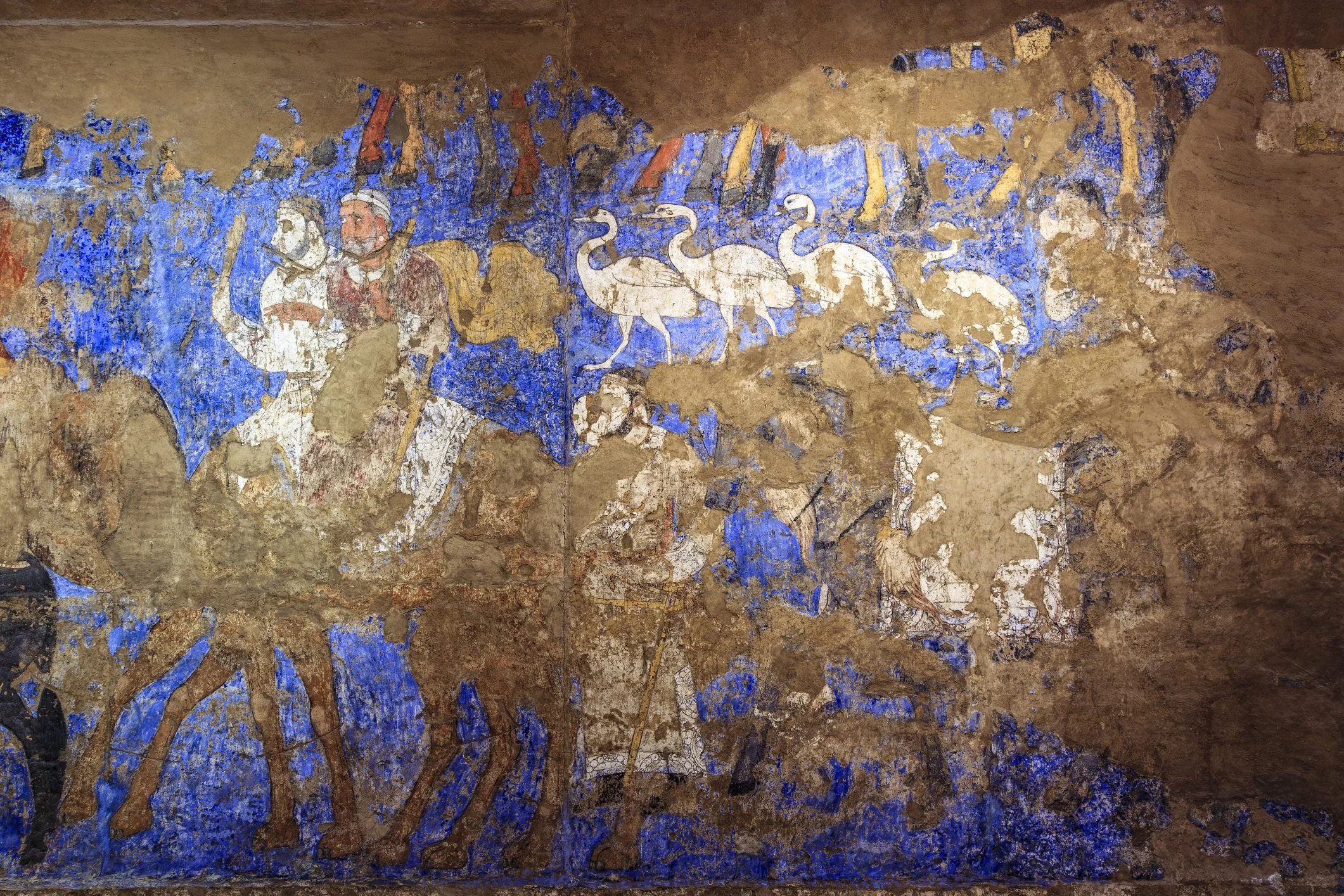
    Under Timur and his successors, Samarkand was transformed into an imperial capital where architecture and patronage projected political authority across Central Asia. That ambition is immediately apparent at Registan Square, framed by three monumental madrasas whose tiled facades and vast portals express the Timurid ideal of a city devoted to learning and power. After our morning visit here, we continue to the Gur-e Amir Mausoleum, the dynastic tomb of Timur and his descendants. Its ribbed dome and richly ornamented interior would influence funerary architecture far beyond Samarkand. Lunch together follows before we turn to the city’s deeper past at the Afrosiab Museum, where archaeological finds from ancient Samarkand reveal the Sogdian city that preceded the Timurid capital and the long continuity of settlement and exchange at this site. An evening lecture at the hotel draws together these successive historical layers, with dinner at leisure. Overnight Samarkand (B, L)

  • Day 15 | Thursday 29 April
    Science and Sacred Space

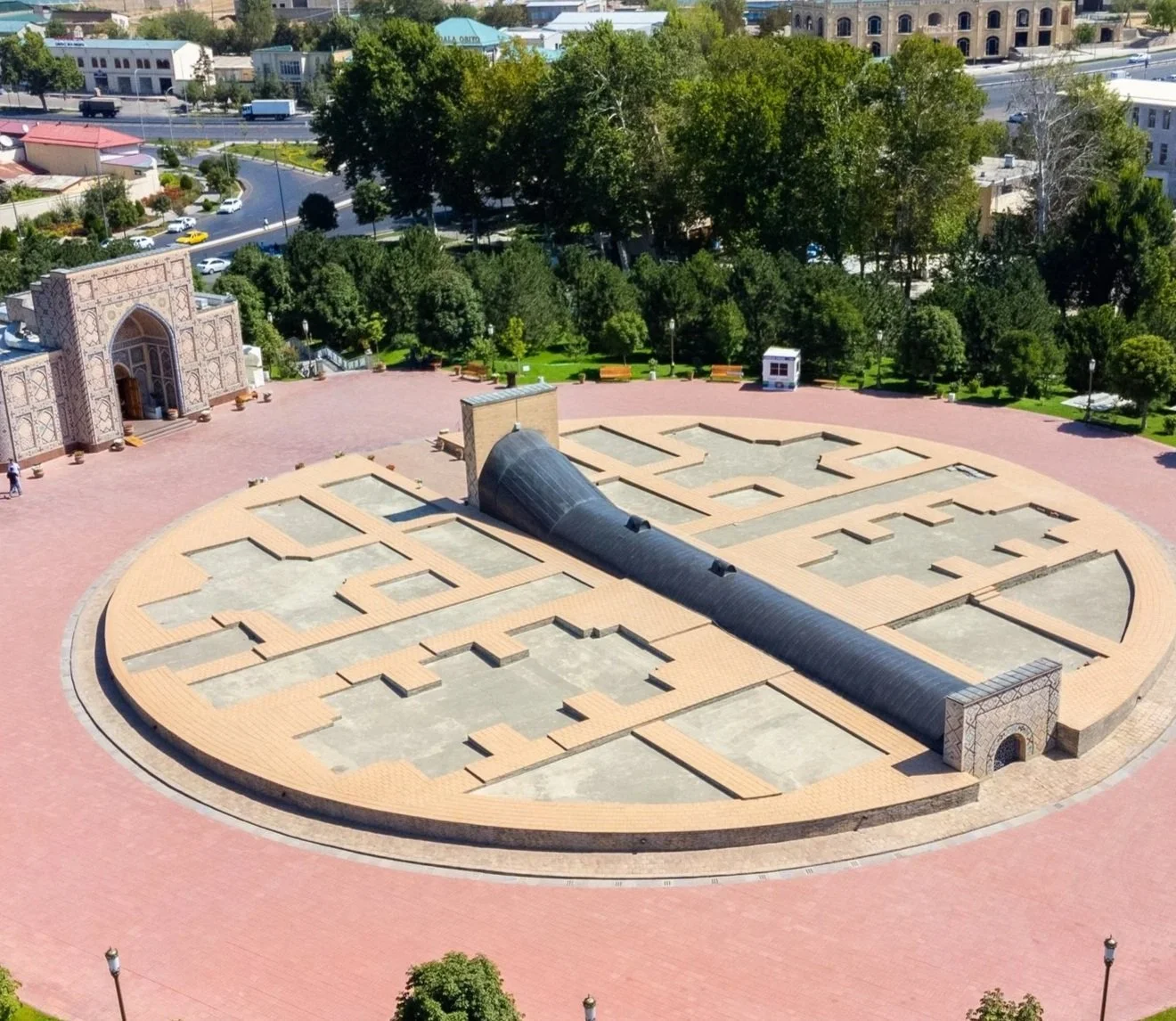
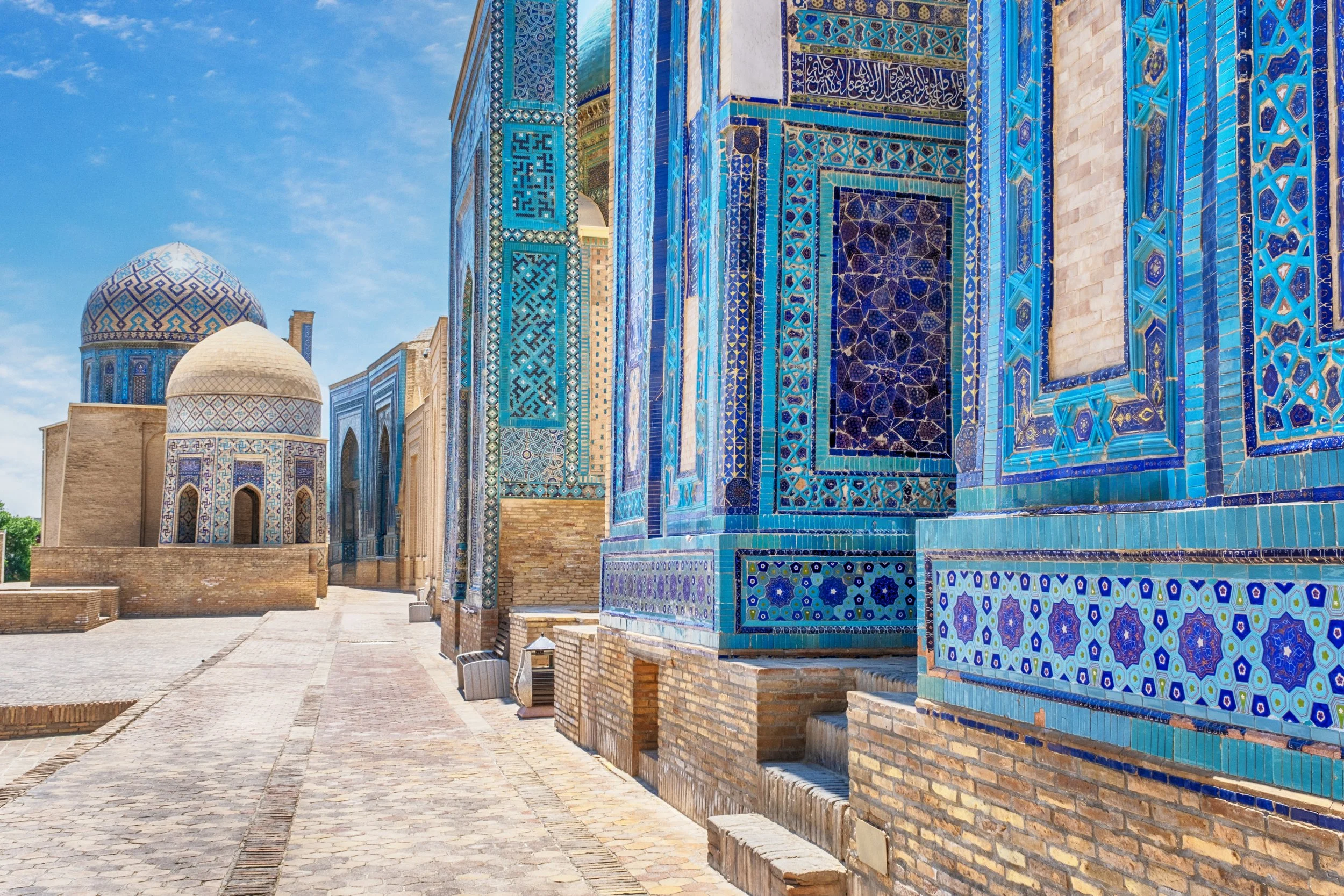
    By the 14th and 15th centuries, Samarkand had become a city in which dynastic ambition, religious patronage and artistic experimentation were closely intertwined. Nowhere is this visual language more concentrated than at Shah-i-Zinda, the great avenue of mausoleums developed as both a sacred precinct and a prestigious burial place. Its facades form an almost continuous surface of colour – turquoise, cobalt and deep blue set against white – worked in glazed tiles, mosaic faience and intricate geometric and calligraphic patterns. Moving through the narrow ensemble this morning, we can trace changing decorative techniques and tastes as successive patrons sought to distinguish their monuments. We then continue to the Ulugbek Observatory, where the remains of a vast 15th-century astronomical instrument testify to the ruler-scholar’s ambitious program of observation and calculation. Rediscovered by archaeologists in the early 20th century, the site provides a striking contrast between the permanence of Samarkand’s monuments and the recovery of knowledge from fragmentary remains. Lunch is included near the hotel, after which the remainder of the afternoon is at leisure. Overnight Samarkand (B, L)

  • Day 16 | Friday 30 April
    Penjikent and the Sogdian World

    The modern border between Uzbekistan and Tajikistan cuts across a much older cultural landscape. Long before today’s national boundaries, the Zeravshan Valley formed part of the Sogdian world, linking prosperous towns such as Samarkand and Penjikent through networks of trade, language and artistic exchange. Our exploration of this history takes us into the third country of our journey today, as we drive east from Samarkand and cross the Uzbekistan–Tajikistan border. On arrival in modern Penjikent, we visit the Rudaki Museum, which introduces the Persian literary heritage of the region, together with the local bazaar and mosque. After lunch, we continue to the nearby ruins of ancient Penjikent, where the remains of streets, houses and public buildings reveal an urban centre that flourished before the Arab conquest. In the mid-afternoon, we return across the border and continue back to our hotel in Samarkand. Overnight Samarkand (B, L)

  • Day 17 | Saturday 1 May
    Samarkand to Tashkent

    After several days exploring Samarkand and the wider Sogdian world, our final day in Uzbekistan brings us back to the modern capital, linking the historic centres of the Silk Roads with the country that has emerged around them. The morning is at leisure before we check out and travel to the Koni-Ghil paper mill for lunch. Here, traditional papermaking methods recall the transmission of craft knowledge through Central Asia’s commercial and intellectual networks. We then board the train to Tashkent, arriving later in the day and transferring to our hotel. In the evening, we gather for dinner at a local restaurant on our final night together in Uzbekistan. Overnight Tashkent (B, L, D)

  • Day 18 | Sunday 2 May
    Depart Tashkent or Continue to Bishkek

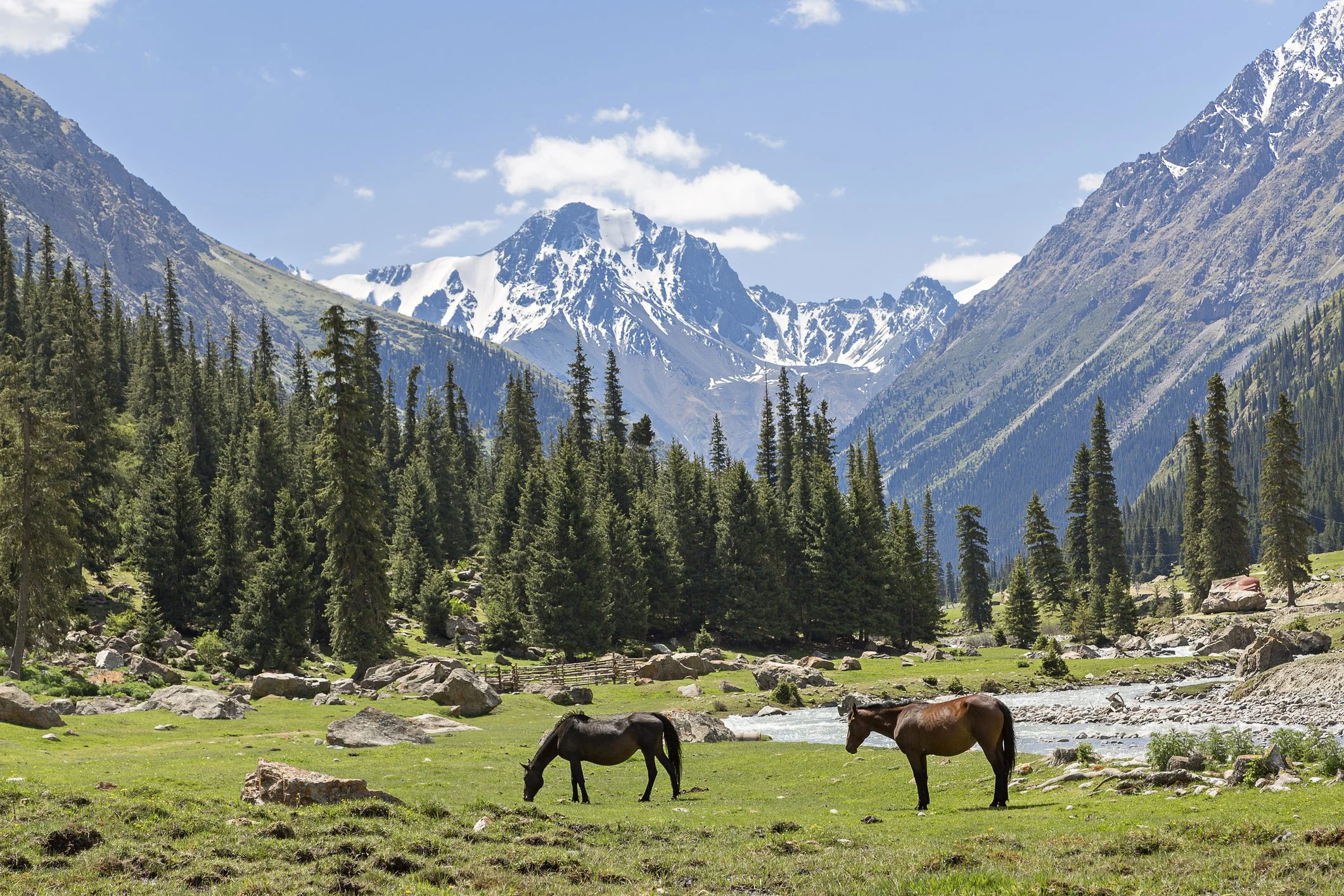
    Tashkent forms a natural dividing point within the wider five-country itinerary. Travellers completing the Uzbekistan, Turkmenistan and Tajikistan section transfer to Tashkent airport for their onward flights, with breakfast included. Those continuing on the full journey fly this afternoon to Bishkek, Kyrgyzstan, where the landscape and cultural emphasis change markedly. The oasis cities and imperial monuments of the first three countries give way to the Tian Shan Mountains, highland lakes and traditions shaped by pastoral mobility. On arrival in the Kyrgyz capital, we transfer to our hotel before dinner at a local restaurant. Overnight Bishkek (B, D)

  • Day 19 | Monday 3 May
    Bishkek and Ala Archa

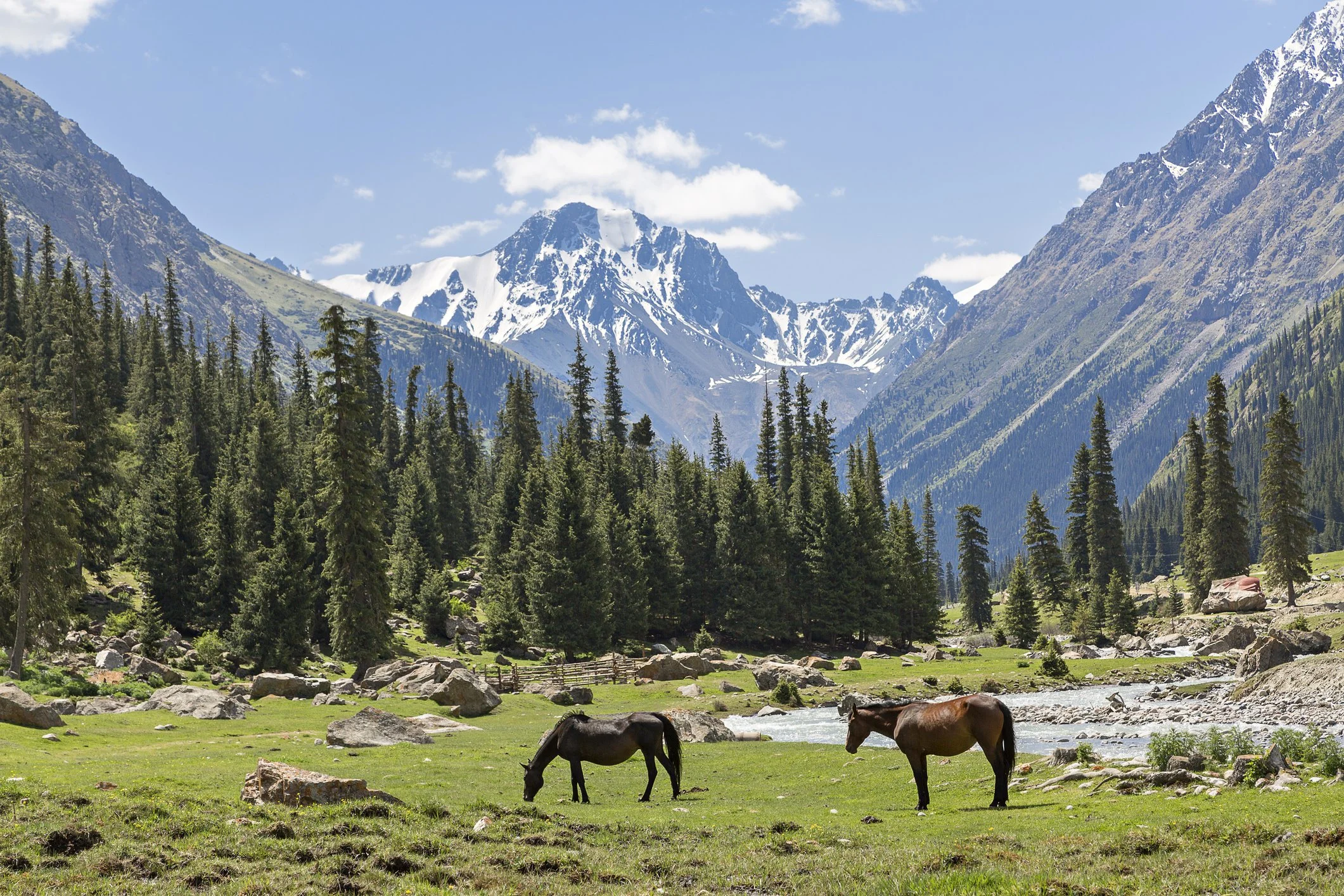
    At the northern edge of the Tian Shan, Kyrgyzstan’s capital occupies a landscape where the mountains rise abruptly beyond the broad avenues of a largely Soviet-planned city. This proximity to the high country introduces a defining feature of Kyrgyzstan – the enduring relationship between alpine landscapes and traditions of pastoral life. We begin our day by leaving the city behind and driving south into Ala Archa National Park, where a steep gorge, snow-fed rivers, juniper woodland and high peaks provide our first close encounter with the Tian Shan. There is time to walk in the park and take in the mountain scenery before returning to Bishkek for a break for lunch. The afternoon then shifts from Kyrgyzstan’s alpine landscape to the political and cultural life of its capital. At Osh Bazaar, crowded stalls and trading halls reveal the city’s everyday commercial rhythms, before we continue to Ala-Too Square, the Manas Monument and the Kurmanzhan Datka Monument, which reflect the figures and narratives central to modern Kyrgyz identity. We conclude at Victory Square, where Soviet-era commemoration remains embedded in the city’s public landscape. The evening is at leisure. Overnight Bishkek (B)

  • Day 20 | Tuesday 4 May
    The Shores of Issyk Kul

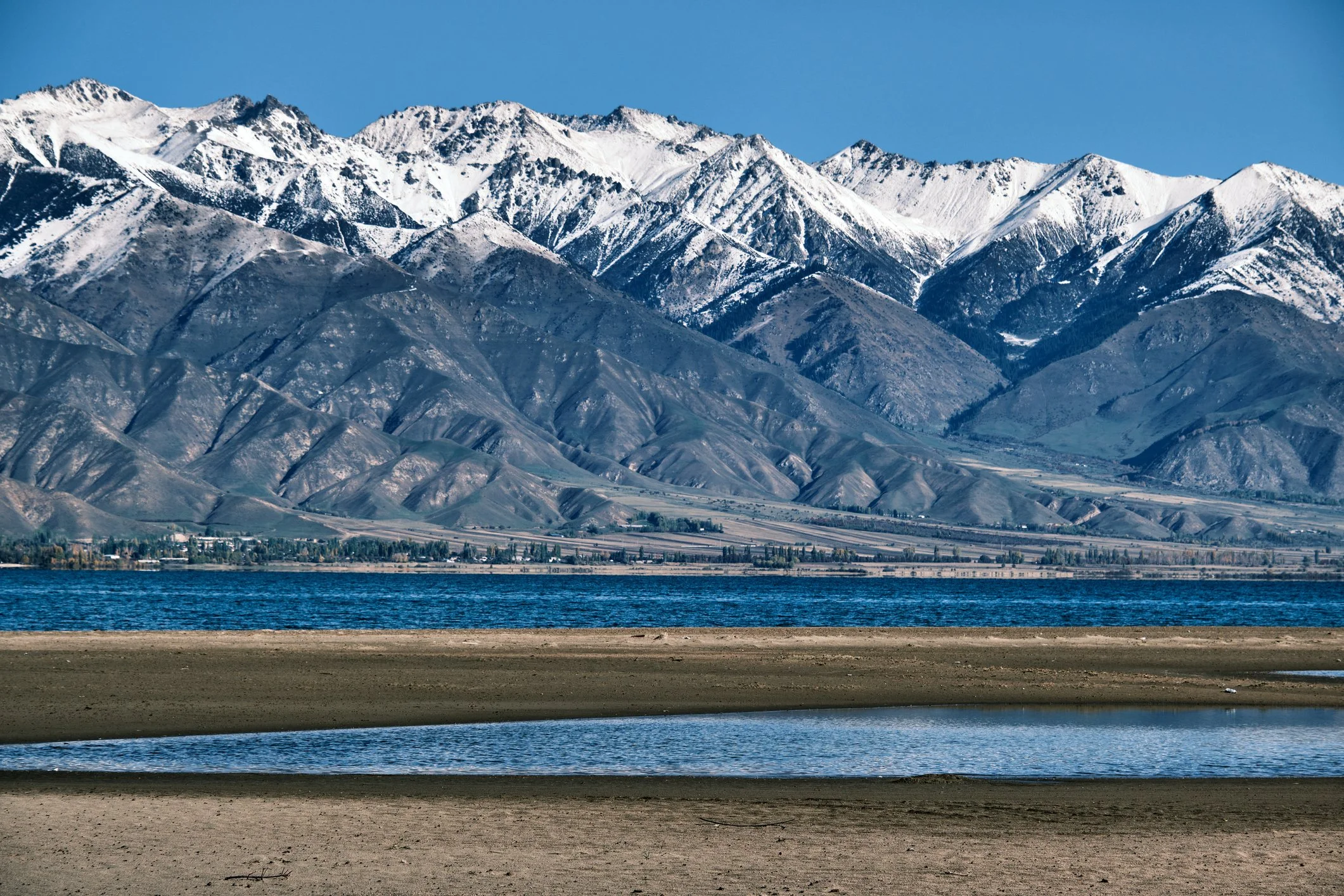
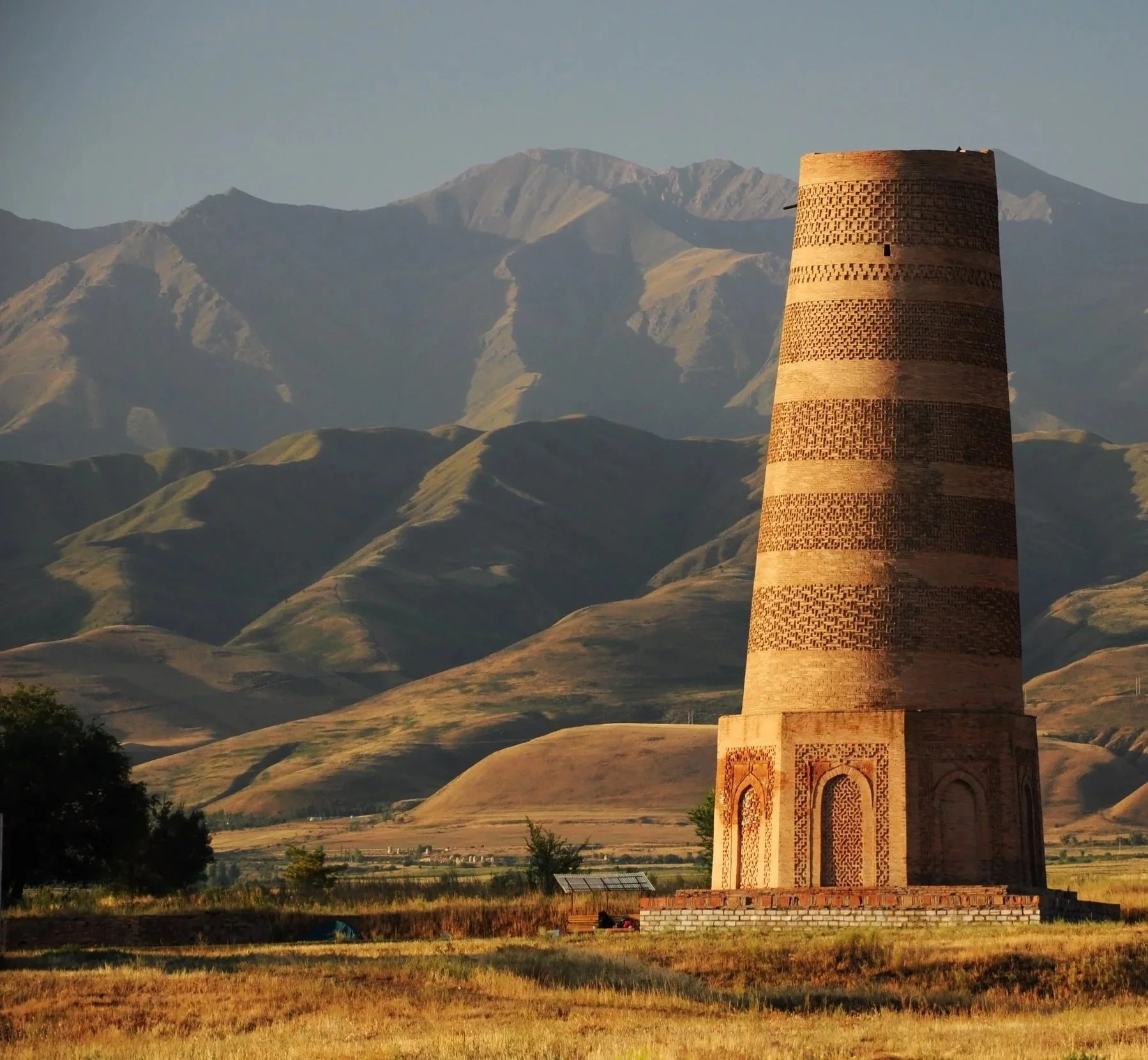
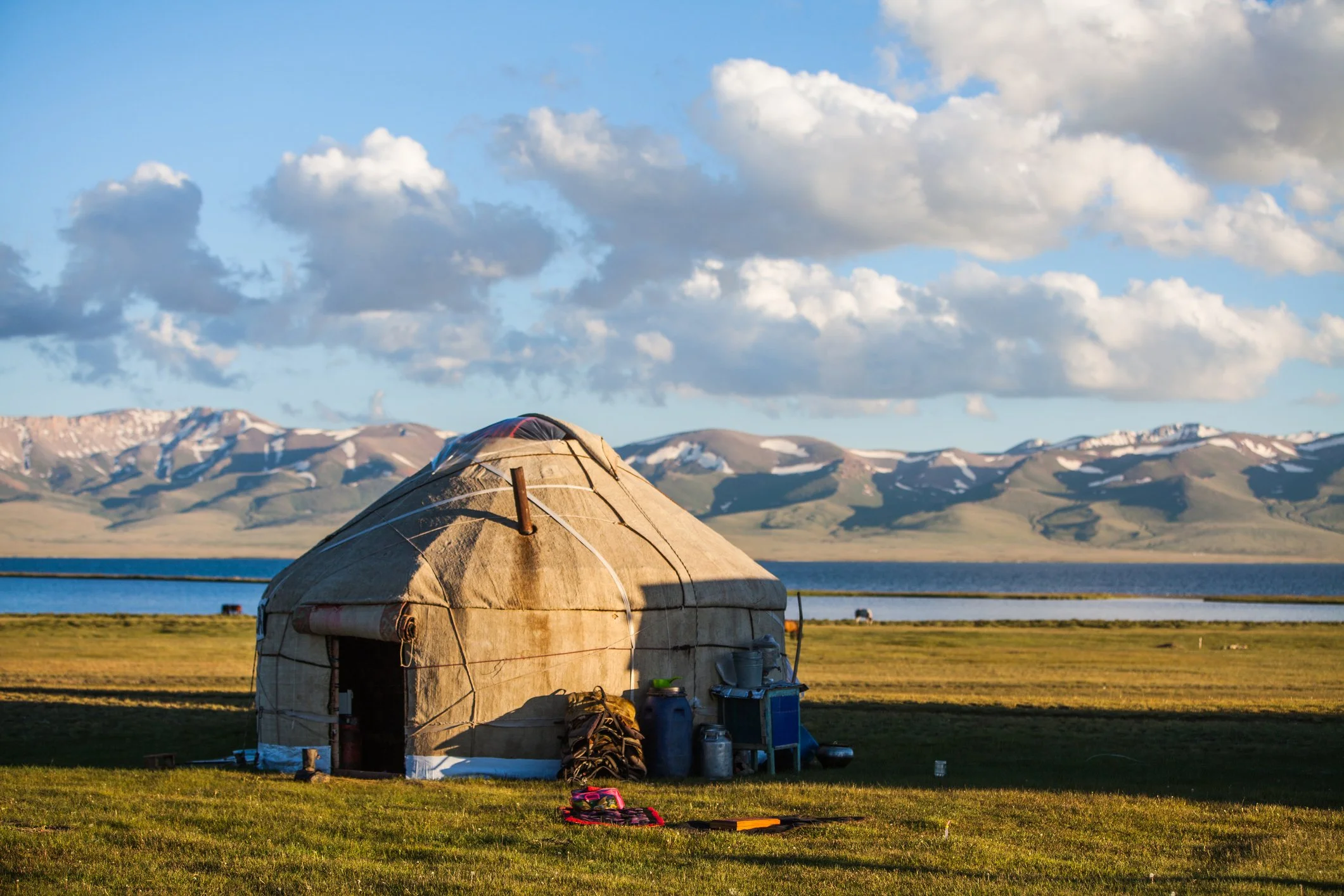
    Ringed by the Tian Shan, Issyk Kul has long provided a corridor between mountain valleys, pastoral communities and the routes crossing eastern Kyrgyzstan. Departing Bishkek early, we travel through the Chuy Valley to the Burana Tower, the 11th-century minaret that survives from the medieval city of Balasagun. Nearby balbals – carved stone figures associated with early Turkic burial traditions – introduce the region’s pre-Islamic past. Continuing east, we then reach Balykchy at the western end of Issyk Kul for lunch before beginning our journey along the lake, with its broad blue waters framed by the snow-capped ranges beyond. Following the shoreline, we stop at Kyzyl Tuu village for a yurt installation demonstration, revealing the ingenuity of nomadic domestic architecture, followed by an eagle show reflecting traditional hunting practices. Further along the lake, we explore Skazka Gorge, where bands of wind-eroded sandstone rise in vivid contrast to the water and surrounding mountains. We end the day at our yurt camp beside Issyk Kul with dinner together. Overnight Issyk Kul (B, L, D)

  • Day 21 | Wednesday 5 May
    Karakol and Jety-Oguz

    At the eastern end of Issyk Kul, the cultural landscape changes again, reflecting the movement of Kyrgyz pastoral communities alongside Russian settlement and the migration of Dungan and Uyghur peoples into the region. We begin today in the nearby Jety-Oguz Gorge, where striking red sandstone cliffs rise against the forested slopes of the Tian Shan and have inspired a number of local legends. Returning towards Karakol, we then visit the Museum of N. M. Przhevalsky, examining the Russian explorer’s expeditions in Central Asia. After a break for lunch in the town centre, we continue to the Dungan Mosque, a colourful wooden structure built in the early 20th century using Chinese architectural forms, followed by Karakol’s timber Russian Orthodox church. Later this evening, we are welcomed into a Uyghur family home for dinner, accompanied by a Kyrgyz folklore performance that brings together several of the cultural traditions encountered throughout the day. Overnight Karakol (B, D)

  • Day 22 | Thursday 6 May
    Across the Steppe to Almaty

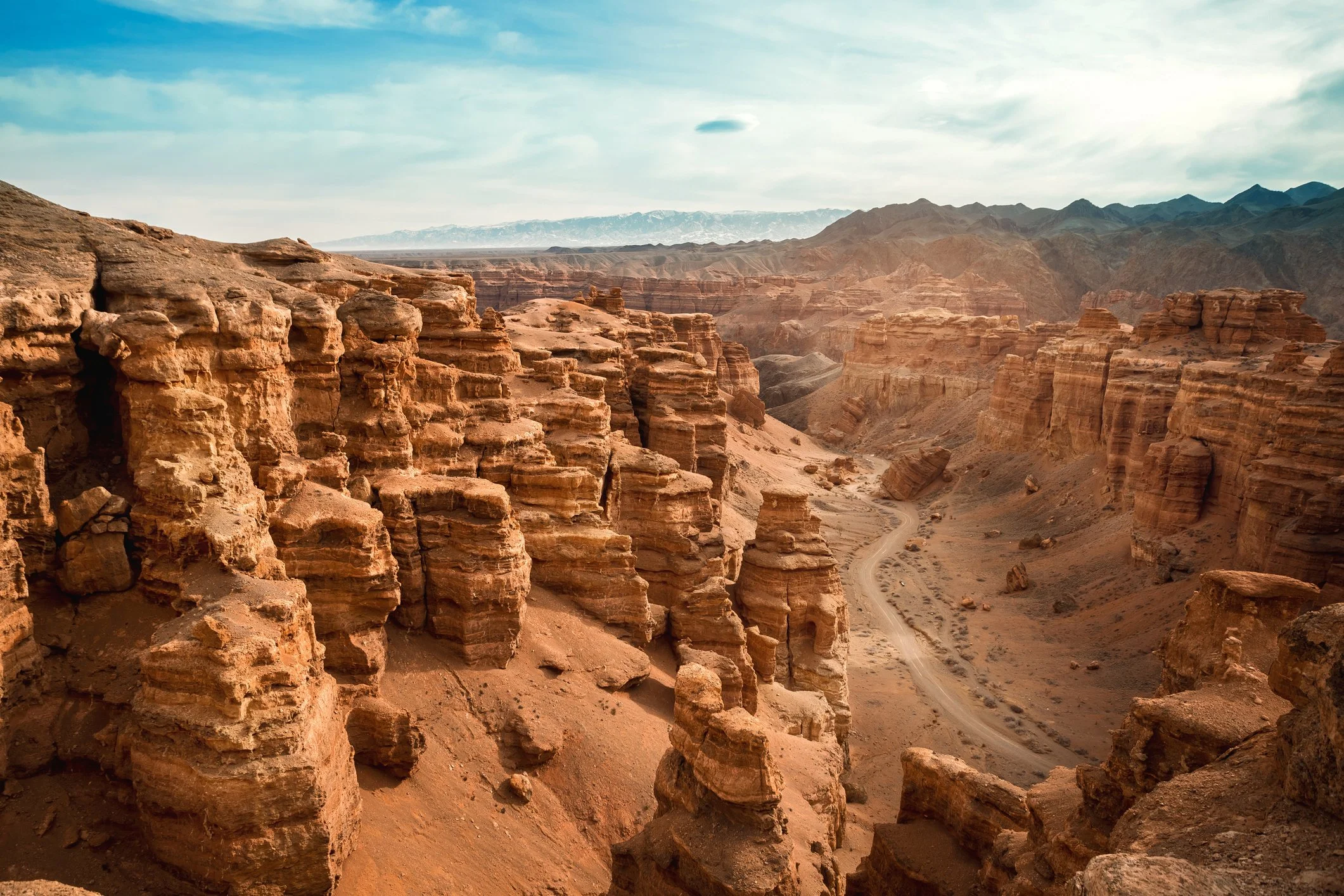
    Our journey enters its fifth and final country today as we leave the eastern Tian Shan and cross into Kazakhstan, where the mountains begin to open onto the broad steppe landscapes of the south-east. After an early departure and border formalities, we continue to Charyn Canyon, a vast system of gorges carved through layers of red sedimentary rock by the Charyn River. We descend into the canyon, where sheer walls, towers and weathered pinnacles rise above the valley floor, before enjoying a picnic lunch beside the river. In the afternoon, we continue west towards Almaty, with the Tian Shan remaining a constant presence along the southern horizon. Arriving later in the day, we check in to our hotel before reconvening for dinner together. Overnight Almaty (B, L, D)

  • Day 23 | Friday 7 May
    Almaty

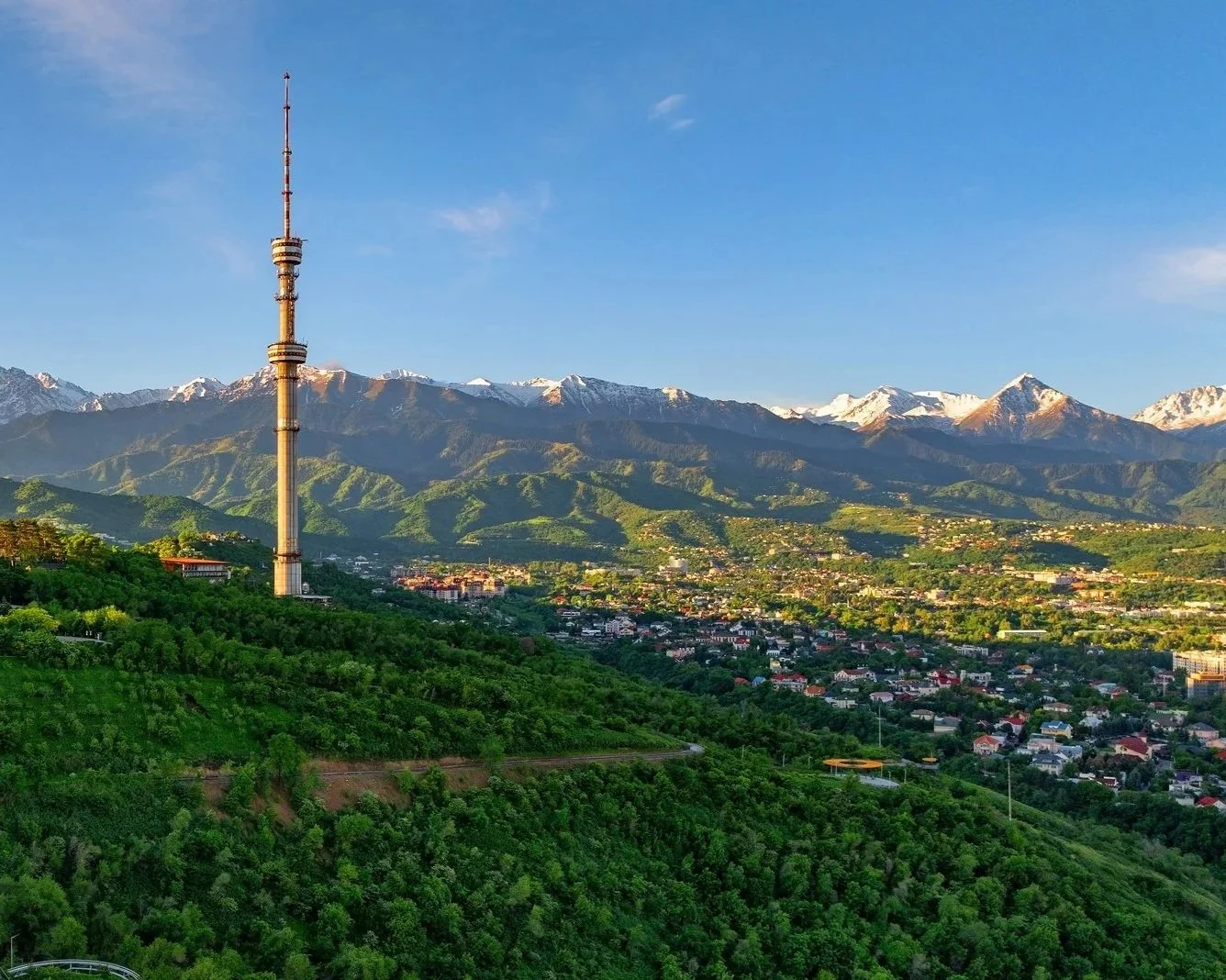
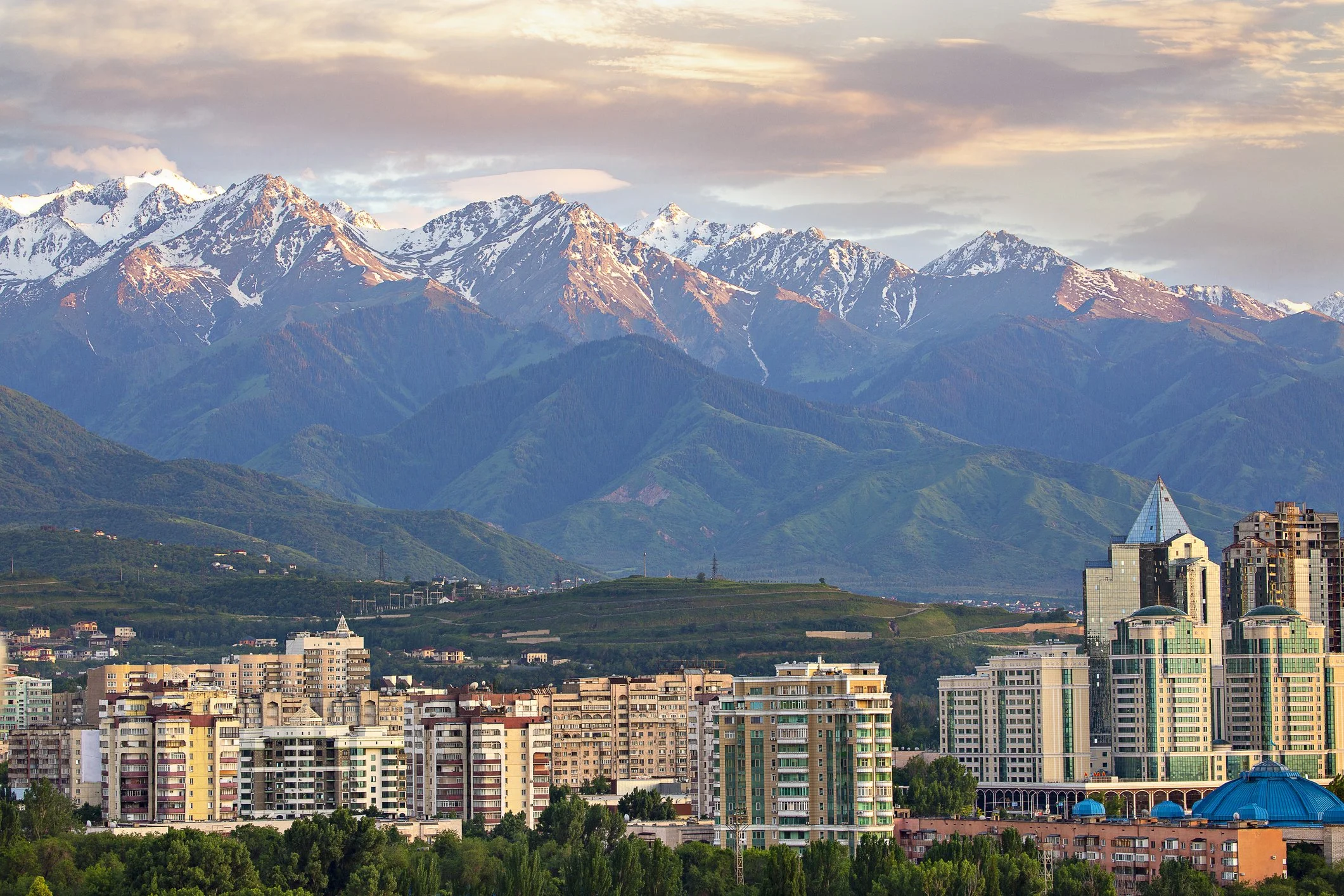
    Set beneath the northern slopes of the Tian Shan, Almaty grew from a Russian frontier settlement into the principal political and cultural centre of Soviet Kazakhstan, a role still visible in its broad avenues, parks and monuments. We begin our morning at the National Museum, whose archaeological, ethnographic and historical collections provide a wider context for Kazakhstan’s development from early steppe cultures to the modern state. After a break for lunch, we then continue through Panfilov Park to the colourful wooden Zenkov Orthodox Cathedral, one of the most distinctive survivals of the tsarist city, before entering the Zelyony, or Green, Bazaar, where produce, spices and regional foods fill its busy trading halls. Republic Square then brings us into the political landscape of modern Kazakhstan, before we take the cable car to Kok Tobe Hill for broad views across Almaty and the mountains that have framed our final days in Central Asia. A farewell dinner at a local restaurant brings our five-country journey to a close. Overnight Almaty (B, D)

  • Day 24 | Saturday 8 May
    Depart Almaty

    The tour concludes in Almaty after breakfast this morning. Transfers from the hotel to Almaty airport will be arranged to meet departing flights. (B)

Hotels on this tour vary from 4 and 5-star to more simple three-star hotels, according to what is available. Some hotels are large constructions and lack any distinctive atmosphere. Others are small and simple, but well located. Please also note that the standard of service in the hotels is not necessarily at the same level as other countries.

Tour Accommodation

  • Tashkent, Hyatt Regency | 2 Nights, total

  • Nukus,Hotel Jipek Joli | 2 Nights

  • Khiva,Orient Star | 2 Nights

  • Ashgabat,Yyldyz Hotel | 3 Nights

  • Mary,Hotel Mary | 1 Night

  • Bukhara, Hotel Shahriston | 3 Nights

  • Bishkek, Orion Hotel | 2 Nights

  • Issyk Kul, Yurt Camp with ensuite yurts | 1 Night

  • Karakol, Karagat Hotel | 1 Night

  • Almaty, Rixos Hotel | 2 Nights

tour booking

$19,980 AUD per person, twin share (land content only)
$3,620 AUD supplement for sole use of a hotel room

A $2,000 deposit is required per person to confirm your booking on tour. This deposit is non-refundable.

Hold a Place

Still deciding? We are happy to hold a tentative place for 7 days while you make your final arrangements.

Book Online

To secure your place(s) on tour, book online below with “Athena”, our virtual tour consultant.

DOWNLOAD FORM

Download a printable booking form. You can also complete the form on screen and submit via email.

your tour consultant

The consultant for this tour is Lucy Yeates. For further information or to discuss the tour, please call 9235 0023 (Sydney) or 1800 639 699 (outside Sydney) or email lucy@academytravel.com.au

have you thought about?

Academy Travel is more than just a tour operator. We are also a full-service travel agency who can assist you with all aspects of your travel, including flights, transfers, pre-tour arrival, additional travel and comprehensive travel insurance.

can’t make this departure?

If these dates don't work for you, register to hear about the next tour.