tunisia & Sicily

From carthage to the normans

Trace the intertwined legacies of Carthaginian, Greek and Roman civilisation across the central Mediterranean.

TOUR STATUS

Places Available | Maximum 16

TOUR DATES

Jan 21 -Feb 5, 2027 | 16 Days

TOUR LEADER

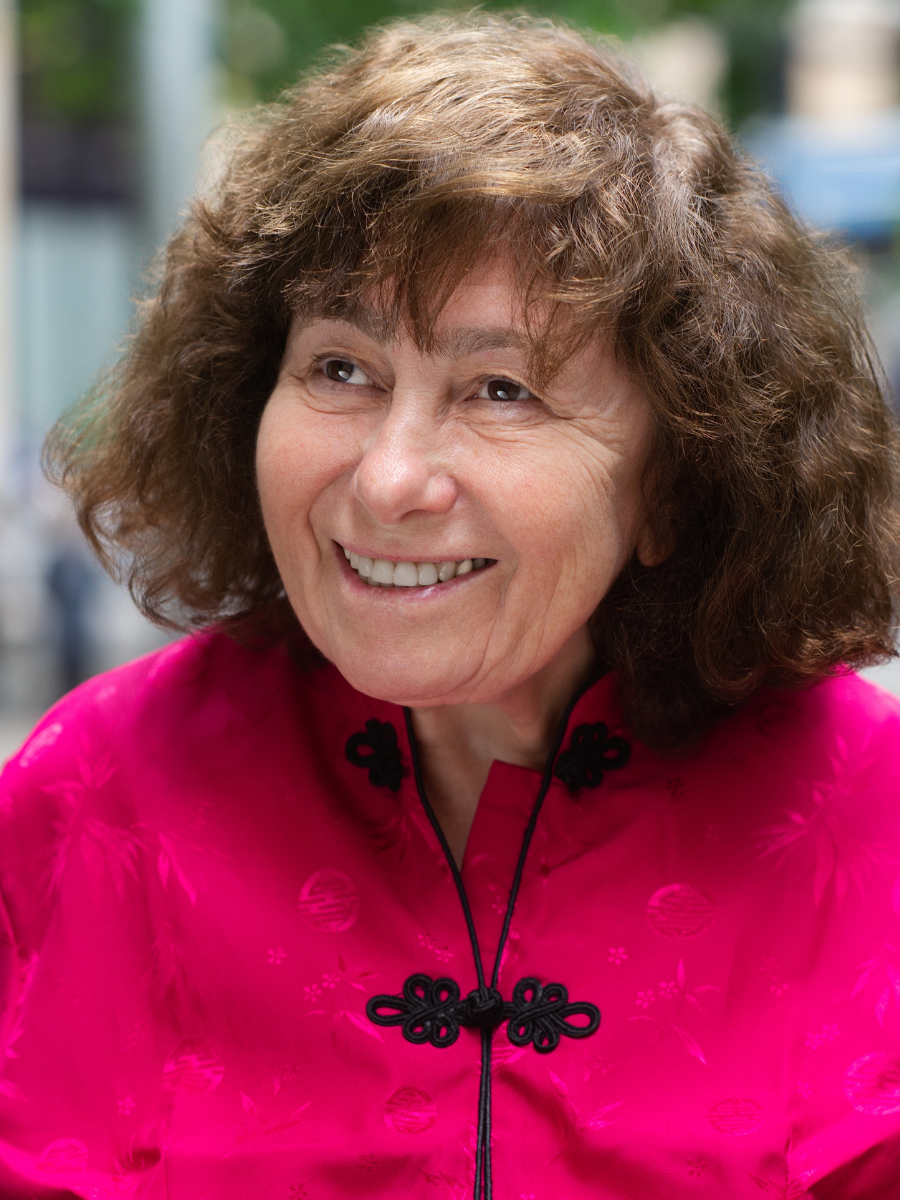
Dr Estelle Lazer | View Bio

snapshot

  • The tour starts at 6.00pm on Thursday 21 January, at The Residence Tunis.

    The tour ends after breakfast on Friday 5 February, at the Grand Hotel Piazza Borsa, followed by a group transfer to Palermo Airport for onward flights.

  • Grade Three
    This tour is among our most physically demanding. This tour requires you to negotiate challenging historic and archaeological sites.

    View all requirements >

  • 15 nights’ accommodation in centrally located 4 & 5-star hotels. Airport-Hotel transfers as indicated. All breakfasts, 7 lunches and 6 dinners. Services of an expert tour leader and an experienced tour manager throughout. Internal Economy flights as indicated,
    all ground transport, entrance
    fees and tipping.

    View standard tour inclusions >

  • $15,680 AUD per person, twin share (land content only)
    $3,690 AUD supplement for sole use of a hotel room

    A $1,000 AUD non-refundable deposit is required per person to confirm your booking on tour

OVERVIEW

Positioned at the crossroads of Africa and Europe, Tunisia and Sicily have long been pivotal players in the history of the Mediterranean. Their coastlines, ports and cities witnessed the rise and fall of Carthaginian naval power, Greek colonisation, Roman imperial rule and Arab-Norman kingdoms.

Led by Dr Estelle Lazer, this new 16-day tour explores the intertwined legacies of these two Mediterranean civilisations. Beginning on the North African coast, we uncover Tunisia’s pivotal role in antiquity with visits to the legendary ruins of Carthage, as well as its Phoenician trading ports, Roman aqueducts and the remarkably preserved cities of Dougga
and El Jem, once thriving centres of Africa Proconsularis.

Crossing to Sicily, we follow the arc of Carthaginian expansion and Greek resistance through a landscape rich in archaeological remains. From Palermo’s Arab-Norman palaces and Phoenician tombs to the grand Doric temples of Agrigento and Selinunte, we trace how empire, migration and cultural exchange forged the island’s unique identity at the heart of the Mediterranean.

tour highlights

Discover the interconnected histories that have shaped the shores of the central Mediterranean

Dr estelle lazer

your expert tour leader

Estelle is an Honorary Research Associate at the University of Sydney. Her work on the human victims from Pompeii has been published in academic journals and books, most notably, in an academic volume, Resurrecting Pompeii. Estelle’s research has been included in three documentaries over the past few years: Pompeii: New Secrets Revealed with Mary Beard for the BBC (and the Smithsonian and Arte), Pompeii’s Final Hours: New Evidence (a three-part series for Channel Five in the UK) and Pompeii: Secrets of the Dead for National Geographic.

Read full bio >

Accompanied by an Experienced Tour Manager

Alongside your expert tour leader, an experienced tour manager will accompany for the entirety of the tour. They oversee logistics, ensure your comfort and safety, and provide friendly support – whether offering tips for free time, sharing a chat over dinner, or giving you space to relax.

tour ITINERARY

Tunis (4 nights), Sousse (3 nights), Agrigento (2 nights), Marsala (2 nights), Palermo (4 nights)

Included meals are shown with the letters B, L and D
  • Day 1 | Thursday 21 January
    Arrive Tunis

    Strategically located on the Gulf of Tunis, the Tunisian capital has long served as a crossroads of empire. From the days of Phoenician traders and Roman colonists to the Arab caliphates and French protectorate, Tunis encapsulates the wider story of Mediterranean exchange and contest. Travellers will arrive into Tunis at various times, with individual or group transfers arranged by Academy Travel to our hotel in the coastal suburb of Gammarth. In the early evening, we meet for introductions over welcome drinks in the hotel bar, before enjoying dinner at a nearby restaurant. Overnight Tunis (D)

  • Day 2 | Friday 22 January
    Carthage & Sidi Bou Said

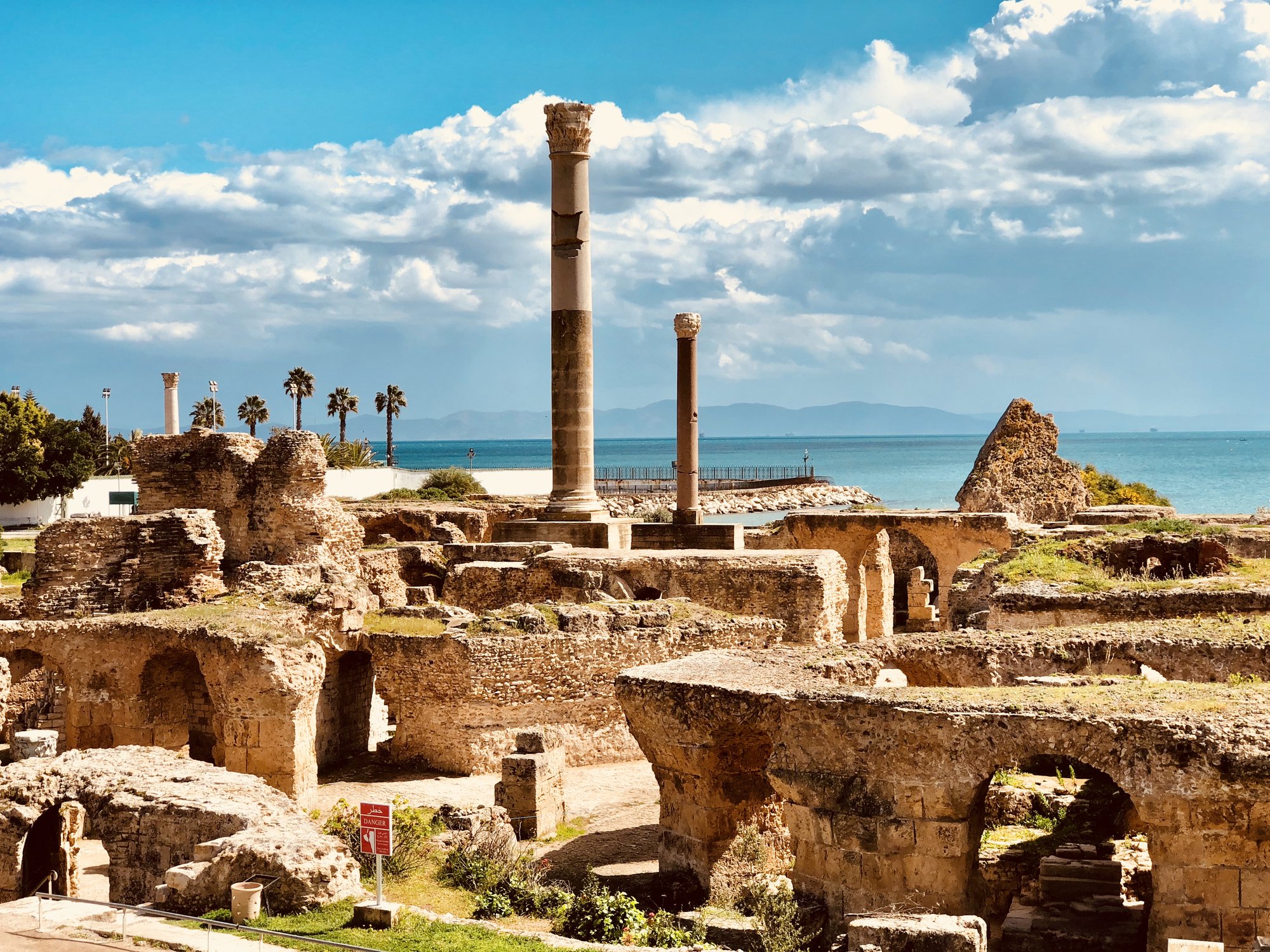
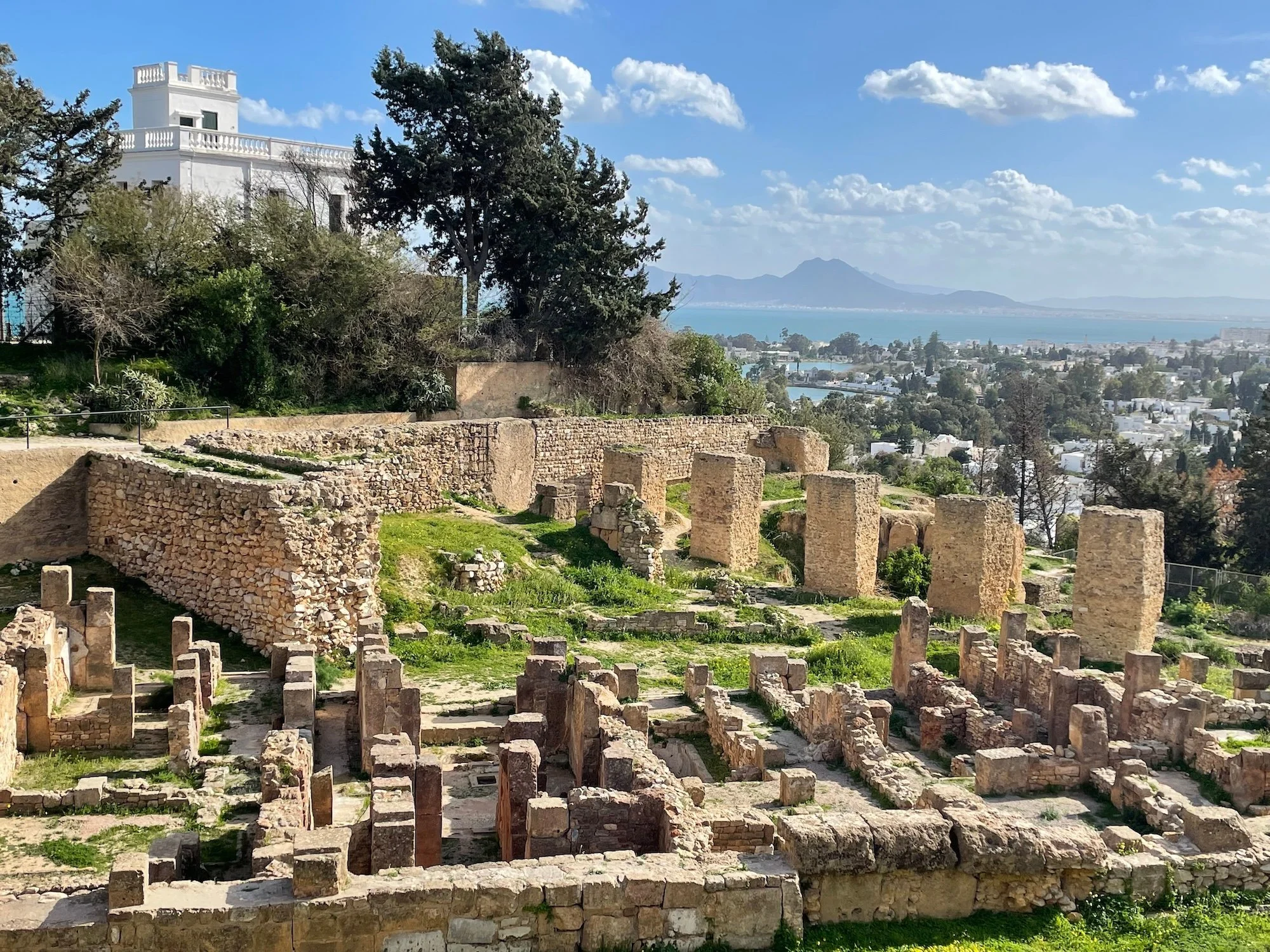
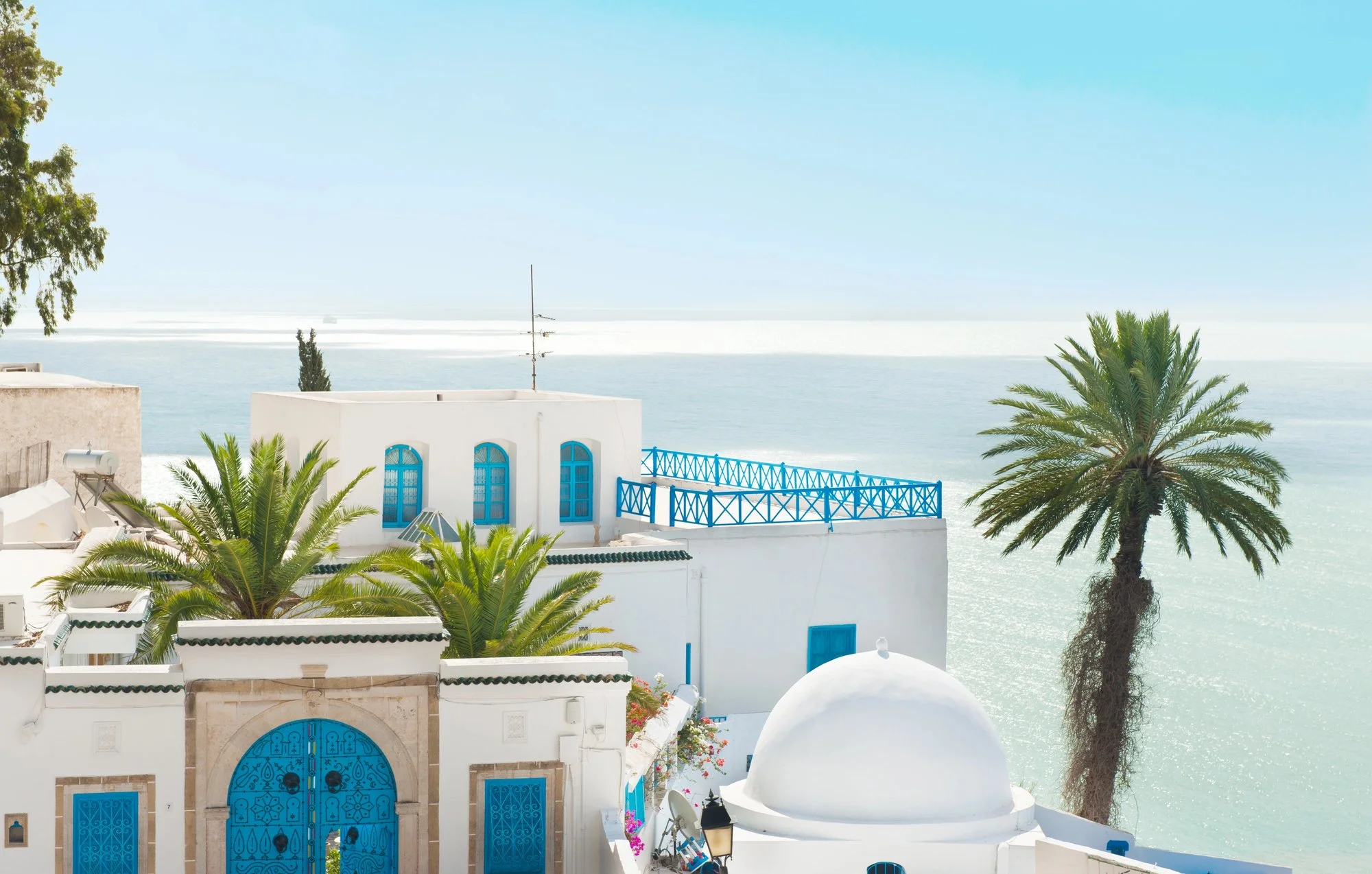
    Founded by Phoenician settlers from Tyre in the 9th century BCE, Carthage grew into one of the greatest maritime powers of the ancient world, dominating North African trade routes and fiercely contesting Rome for control of the Mediterranean. Following a talk in our hotel this morning, we begin our exploration at Byrsa Hill, the ancient citadel of Carthage, whose sweeping views and layered ruins evoke the city’s legendary past. We then visit the Salambo Tophet, a sacred Punic sanctuary associated with votive offerings to the deities Tanit and Baal Hammon, followed by a tour of the remains of the Punic and Roman harbours – a remarkable feat of naval engineering and a testament to Carthage’s naval might. Our morning concludes at the vast Antonine Baths, some of the largest ever built in the Roman Empire. After lunch together in a local restaurant, we continue to Sidi Bou Said, a picturesque clifftop town beloved by artists and writers for its striking Moorish architecture and blue-and-white colour palette. This tranquil setting provides the perfect backdrop to reflect on Carthage’s enduring legacy before returning to our hotel in the late afternoon for an evening at leisure. Overnight Tunis (B, L)

  • Day 3 | Saturday 23 January
    Bardo Museum & Tunis Medina

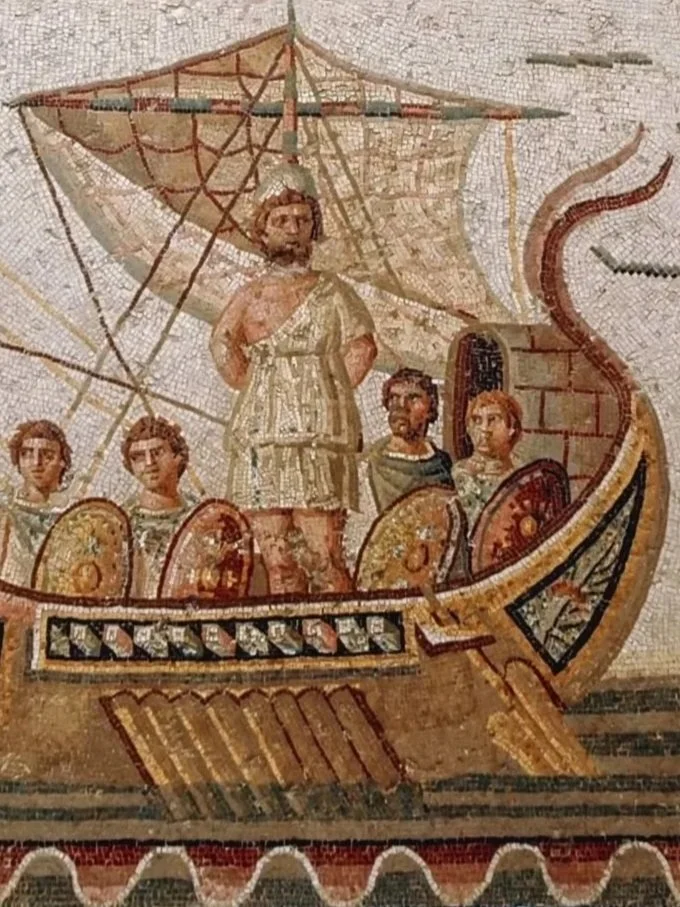
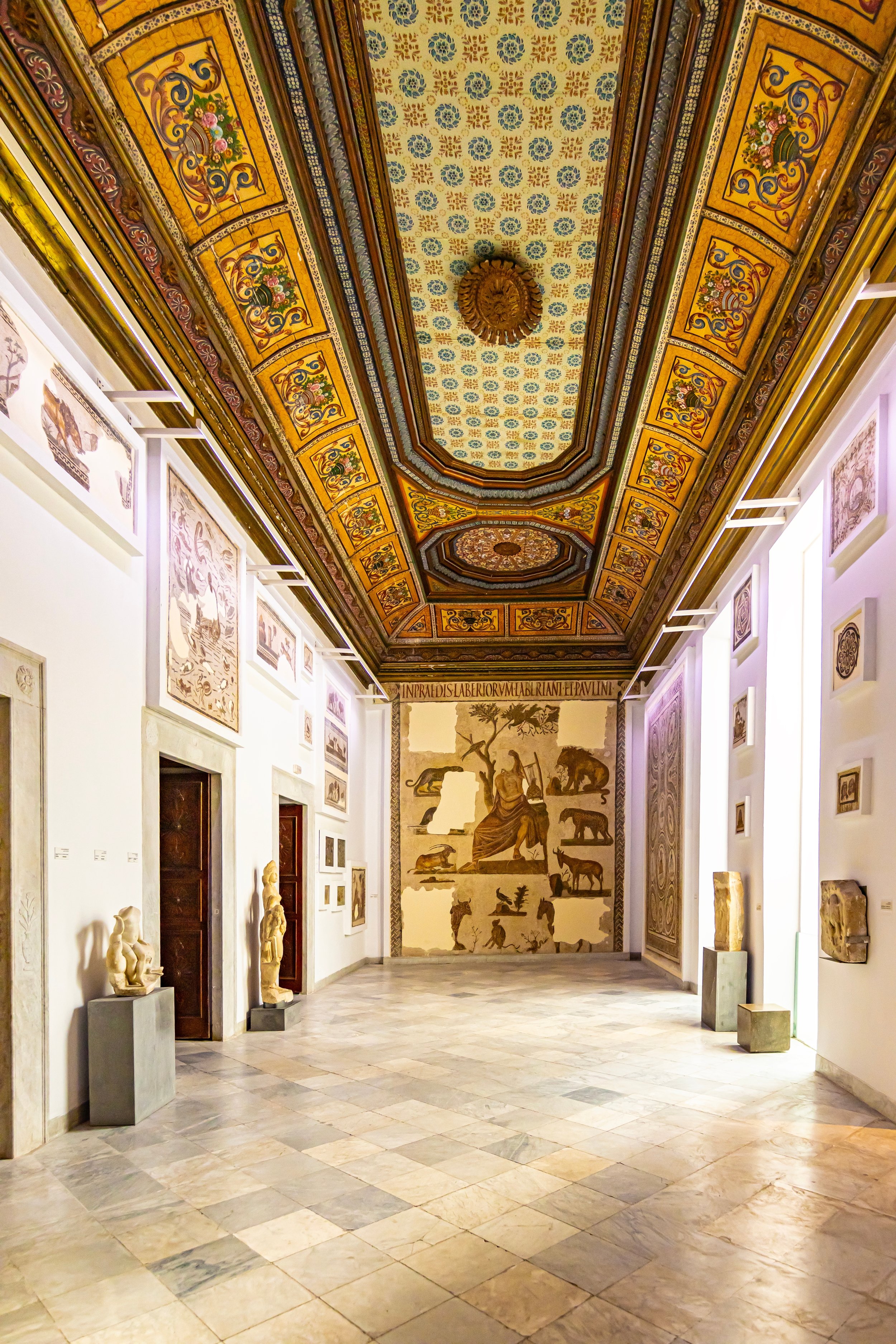
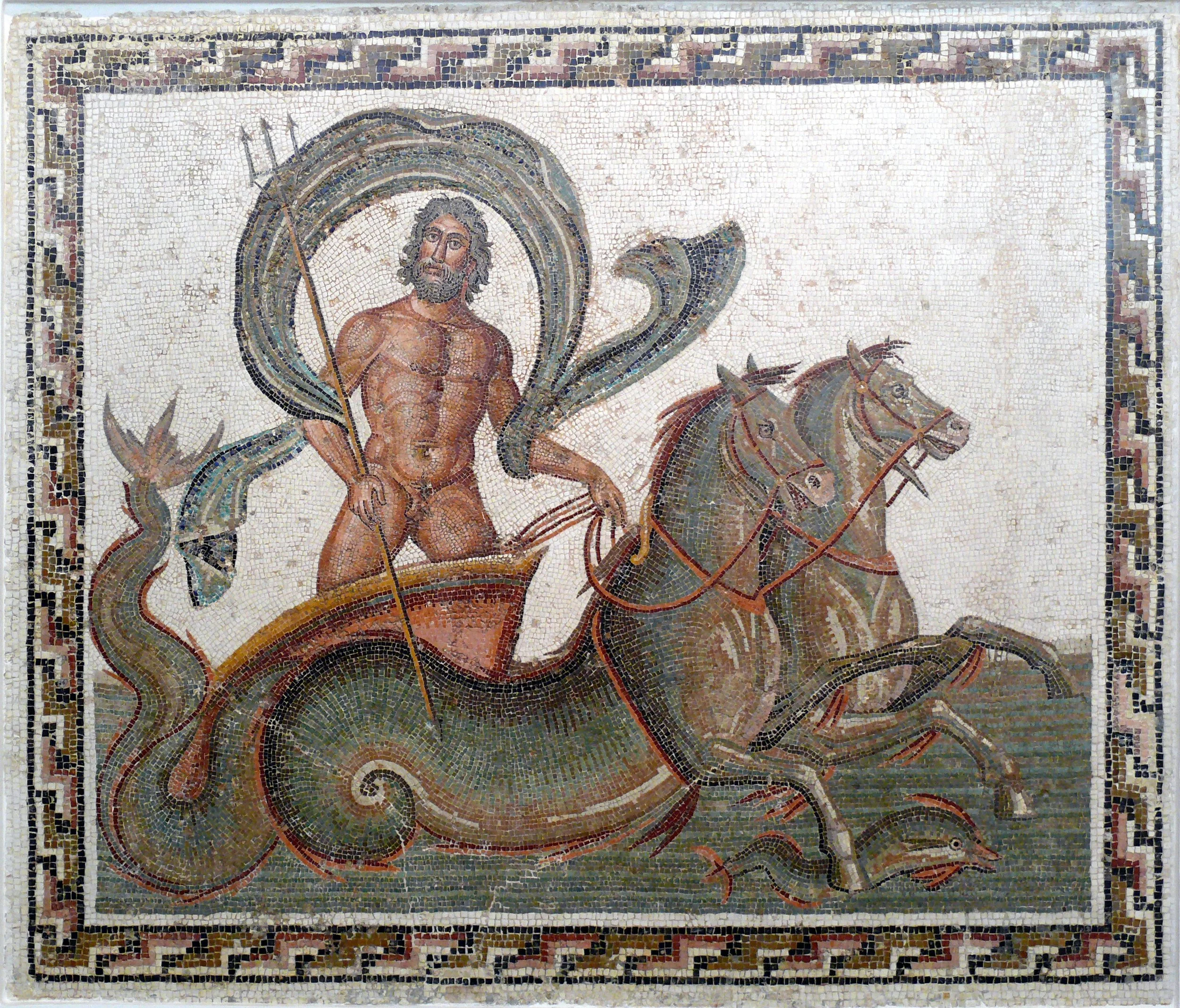
    Housed in an opulent 19th-century Beylic palace, the Bardo Museum is home to the world’s largest and most important collection of Roman mosaics. Salvaged from villas, baths and temples across Tunisia, these exceptionally well-preserved works now cover more than half the museum’s galleries. This morning we explore this extraordinary collection, featuring vivid portrayals of Neptune and Dionysus, intricate hunting scenes and a renowned mosaic of Virgil – who wrote of the entwined destinies of Carthage and Rome. Following lunch in a traditional restaurant within the medina, we turn our attention to the historic heart of Tunis. Winding through its narrow lanes, we visit the Zitouna Mosque – spiritual and scholarly centre of the city – as well as the Youssef Dey Mosque and surrounding souks. We return to our hotel in the late afternoon, with time to relax by the pool overlooking the Gulf of Tunis. Overnight Tunis (B, L)

  • Day 4 | Sunday 24 January
    Hillside Power at Dougga

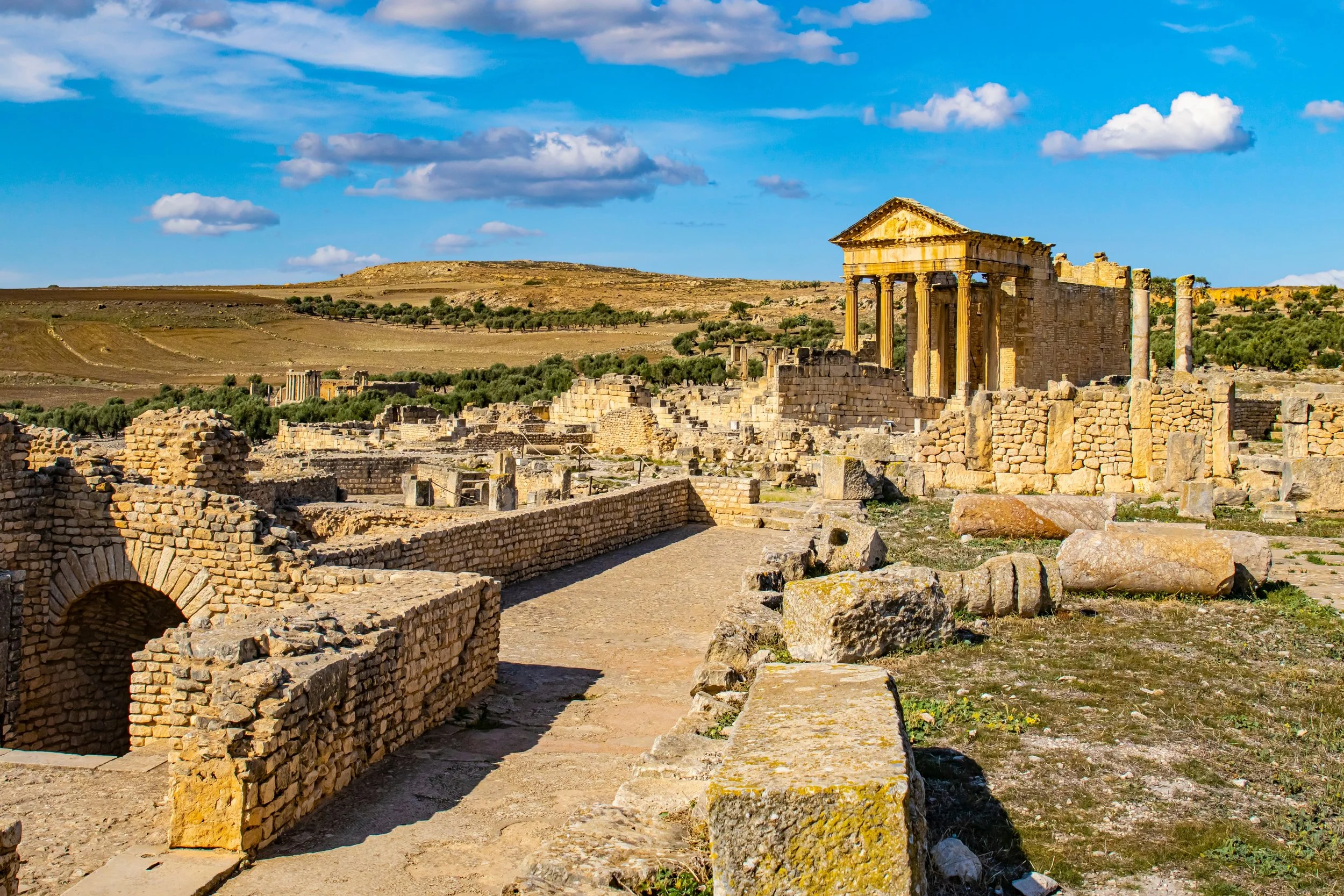
    The highlands of northern Tunisia were once the domain of the Numidian kings, later drawn into the expanding orbit of Rome. Travelling westward today, we pause first at Medjez el Bab, then continue to the Andalusian-influenced town of Testour – a legacy of the Moriscos expelled from Spain in the 17th century, whose culture enriched the Maghreb. Our journey continues to Dougga, one of the best-preserved Roman cities in North Africa and a site that still bears the imprint of its pre-Roman past. Set amid olive groves and open countryside, Dougga’s theatre, forum and hilltop Capitolium evoke both Roman grandeur and deep-rooted northern African identity. More than a provincial outpost, Dougga offers a compelling glimpse into how Rome negotiated – and appropriated – the cultural complexity of its African provinces. After lunch together in a nearby restaurant, we return to our hotel in the late afternoon, gathering again in the early evening for a talk. Overnight Tunis (B, L)

  • Day 5 | Monday 25 January
    Sousse and the Aqueduct to Carthage

    Once known as Hadrumetum, the coastal city of Sousse has served as a vital port since Phoenician times, later flourishing under Roman, Byzantine and Islamic rule. Its long history as a centre of trade and culture is etched into its medina walls and sunlit harbour. Departing Tunis for Sousse this morning, we follow the line of the great aqueduct that once carried water across the plains of northern Tunisia. At Oudna, surviving arches and channels reveal the scale of Roman hydraulic ambition, before we continue to the Zaghouan Nymphaeum, the monumental sanctuary built around a natural spring that formed the aqueduct’s principal source. Together, these sites illuminate the engineering networks that sustained the cities of Roman Africa. On arrival in Sousse, lunch is enjoyed in a local restaurant within the medina before we explore the Archaeological Museum housed in the city’s 11th-century Kasbah. Its impressive collection boasts the second most extensive collection of mosaics globally, surpassed only by the Bardo. We conclude the day by checking into our hotel, where there is time to relax by the pool or enjoy the seaside setting. Overnight Sousse (B, L)

  • Day 6 | Tuesday 26 January
    El Jem and Monastir

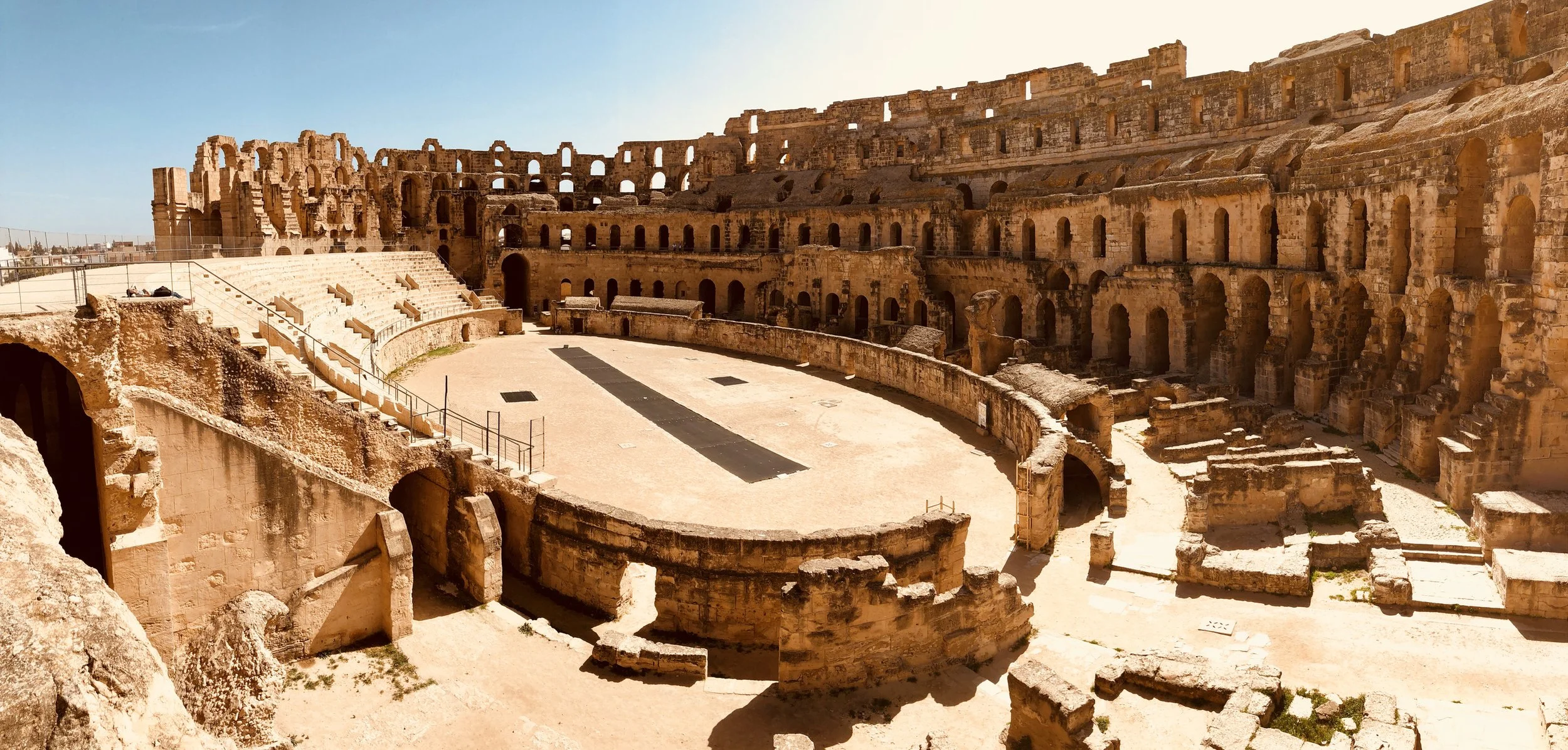
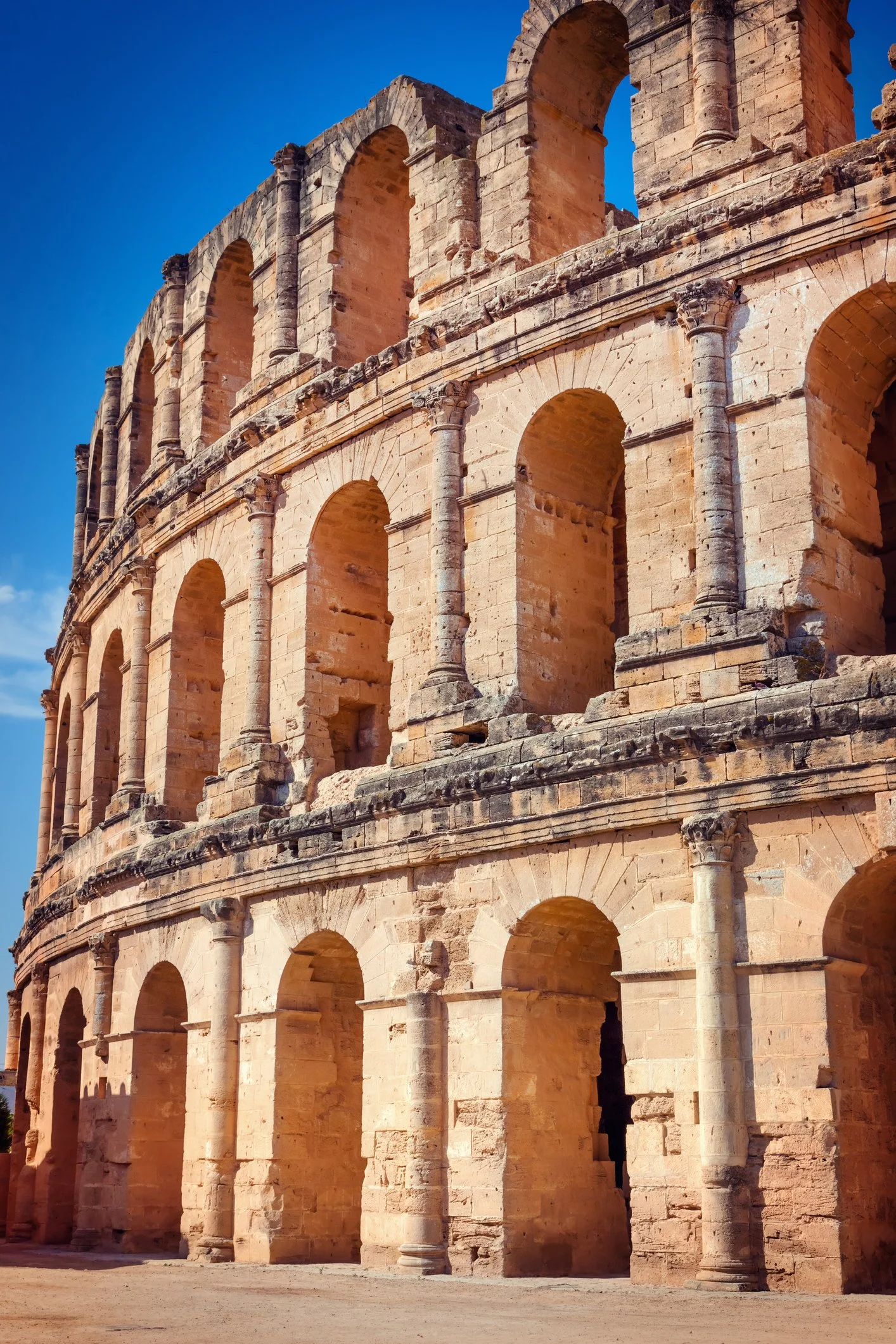
    The prosperity of Roman Africa found monumental expression at Thysdrus, modern El Jem, whose amphitheatre ranks among the largest in the Roman world. Built in the early 3rd century CE, its vast elliptical form could seat more than 30,000 spectators, a statement of civic wealth grounded in olive cultivation and trade. Venturing out of Sousse this morning, we travel south to explore the amphitheatre’s upper tiers and subterranean chambers, before visiting the nearby museum and the reconstructed ‘House of Africa’, which together illuminate the domestic life of the region’s elite. Lunch is enjoyed in El Jem before we continue along the coast to Monastir. Here the focus shifts from Roman spectacle to early Islamic power. The Ribat of Harthema, founded in the 8th century, stands as one of North Africa’s oldest surviving fortresses, its austere walls overlooking the Mediterranean. Nearby, the Bourguiba Mausoleum commemorates Tunisia’s first president, linking the region’s medieval past with its modern nationhood. We return to Sousse in the late afternoon, with the evening at leisure. Overnight Sousse (B, L)

  • Day 7 | Wednesday 27 January
    Kairouan and the Islamic Golden Age

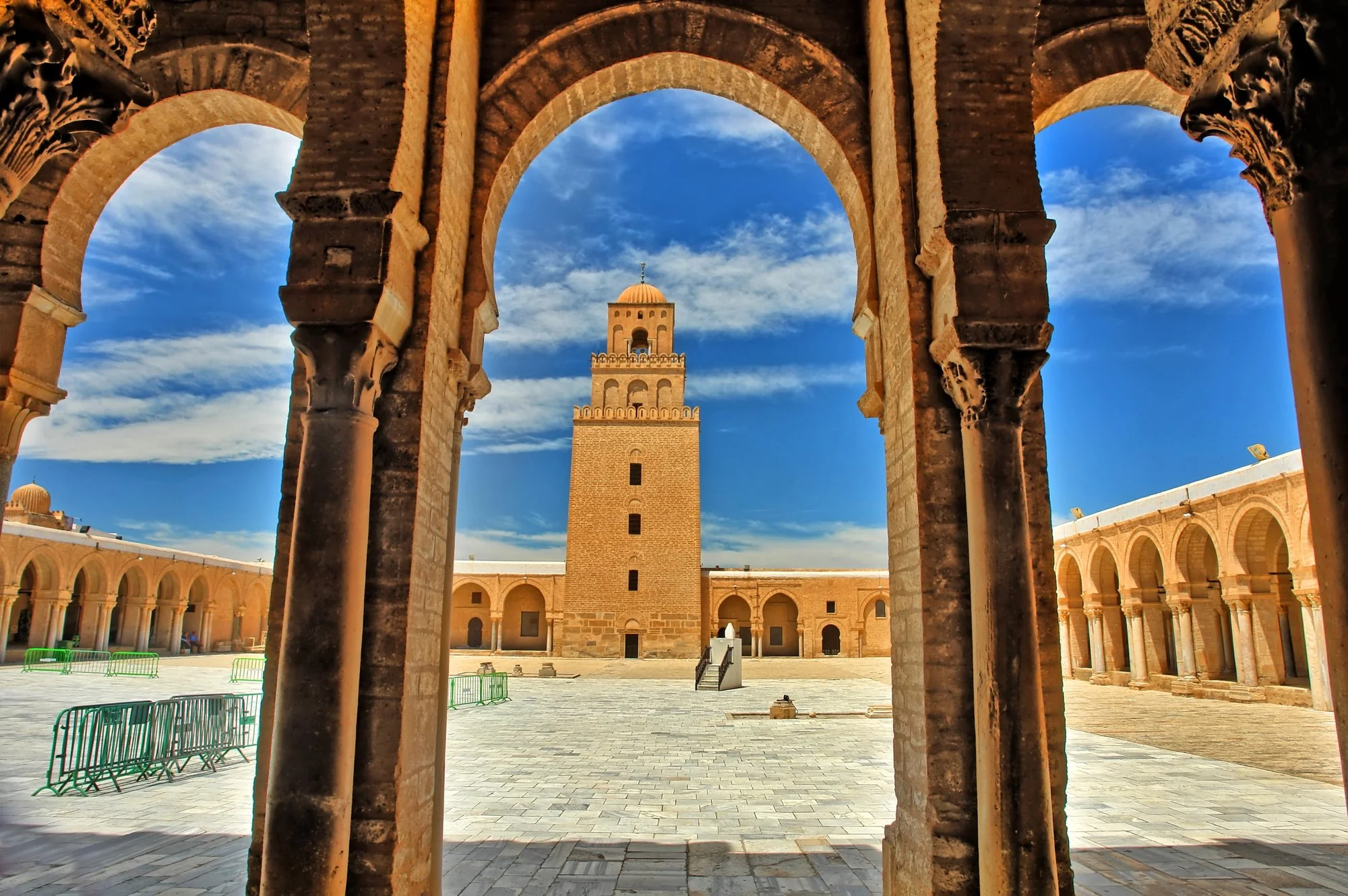
    Founded in the 7th century CE, Kairouan became the capital of the Aghlabid dynasty and a major centre of Islamic scholarship, commerce and architecture. The city’s rise followed the decline of Roman North Africa, marking a new cultural epoch in the region’s long history. Travelling inland this morning, we arrive in Kairouan to explore the monuments that defined it as the spiritual heart of Muslim Tunisia. We begin at the Aghlabid Basins, vast 9th-century reservoirs whose sophisticated hydraulic design sustained the growing city. From here we visit the Barber’s Mosque, one of the city’s oldest religious sites, before reaching the monumental Great Mosque of Kairouan. Constructed using hundreds of repurposed Roman columns – many believed to have come from Carthage – it represents the architectural continuity and cultural dialogue between antiquity and Islam. After a break for lunch in the medina, we return to Sousse, where the late afternoon is at leisure before gathering for dinner together in a local restaurant. Overnight Sousse (B, D)

  • Day 8 | Thursday 28 January
    Crossing the Sea – From Tunisia to Sicily

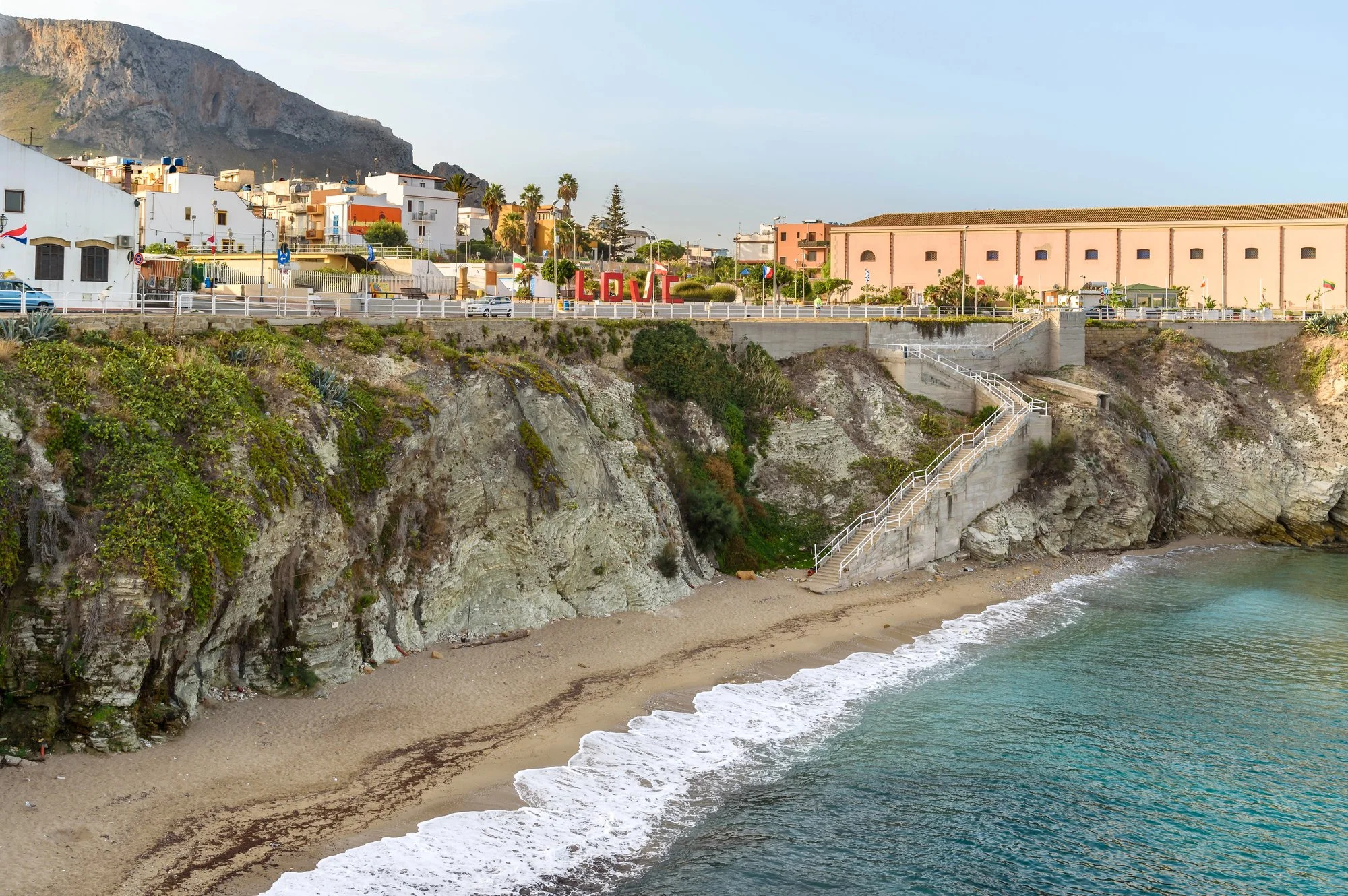
    The Mediterranean, once a theatre of war and trade between Carthage and Syracuse, today offers a more peaceful passage as we transfer from North Africa to Sicily. This crossing marks a pivotal moment in our journey, echoing the ancient routes taken by Carthaginian generals, Roman senators and Greek settlers. An early departure brings us to the airport for our flight to Palermo, where we continue our journey west along the island’s northern coast. Lunch is enjoyed in the seaside town of Terrasini before we arrive at Agrigento. Here, overlooking the temples of ancient Akragas, we settle into our hotel for the coming nights, with dinner this evening in a local restaurant. Overnight Agrigento (B, L, D)

  • Day 9 | Friday 29 January
    Agrigento – Splendour on the Edge of Empire

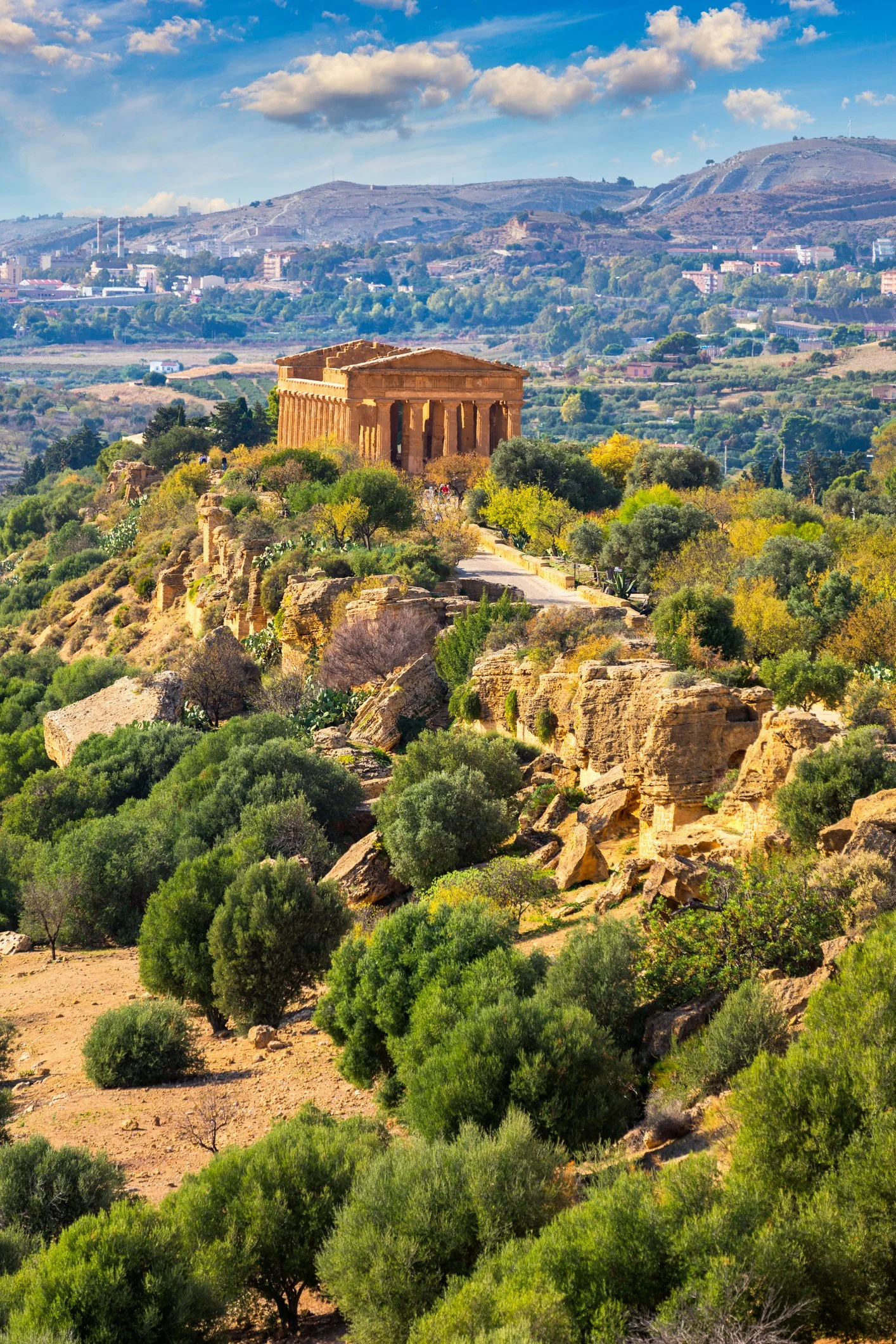
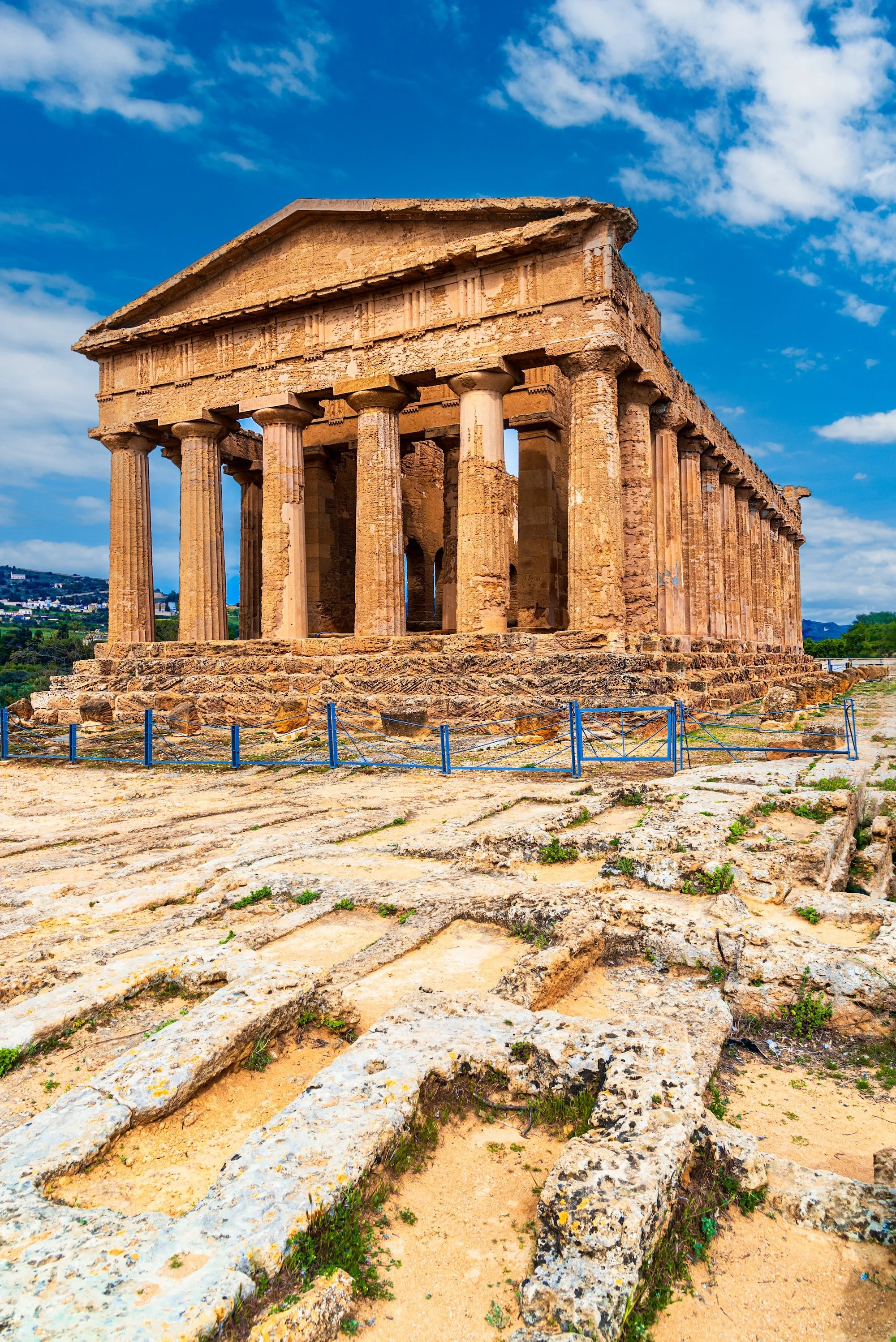
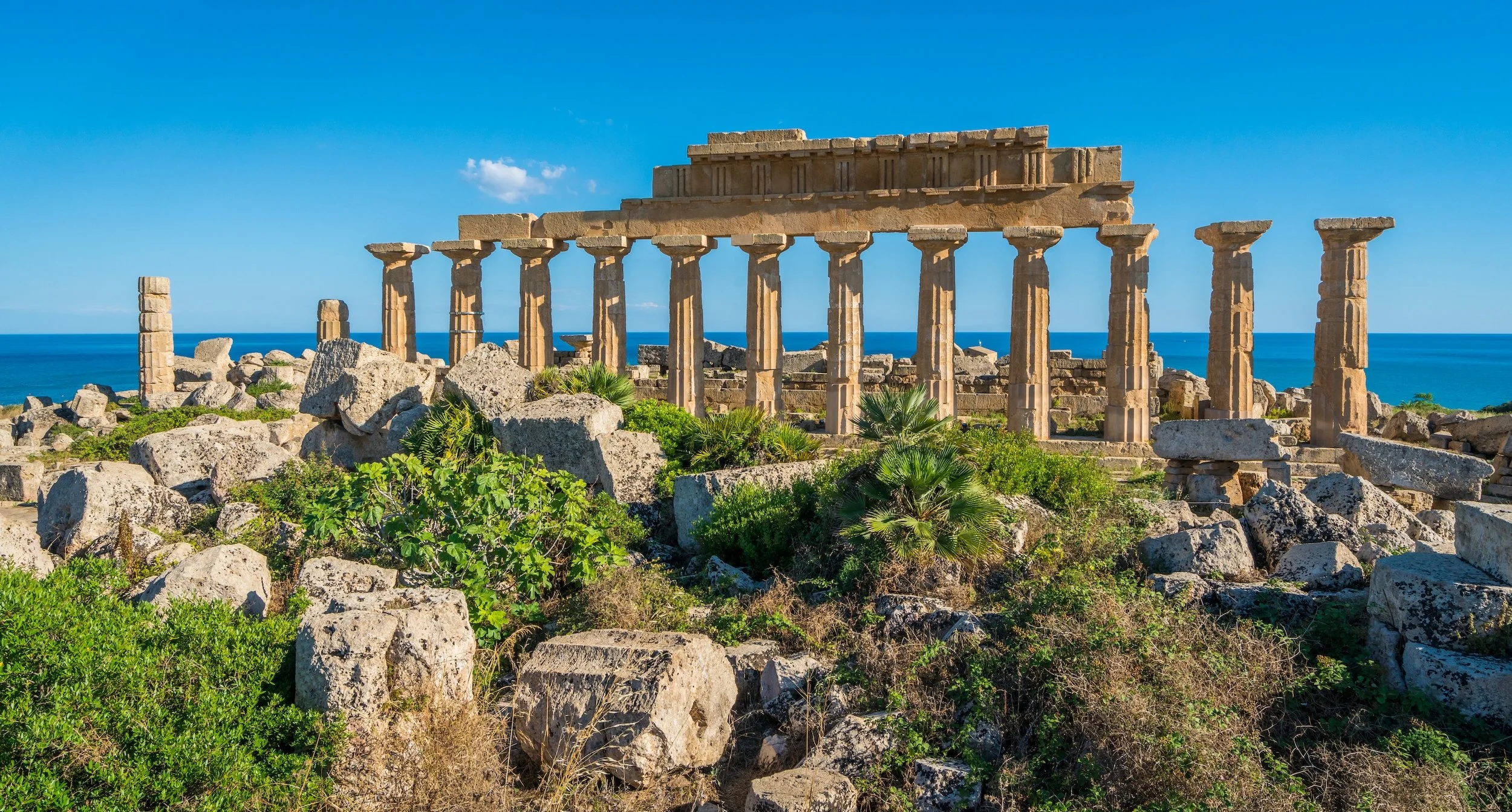
    In the 5th century BCE, Akragas (Agrigento) stood at the western frontier of Magna Graecia – a city of immense wealth whose prosperity drew both admiration and hostility. Positioned between the Greek and Carthaginian spheres, it became a focal point in the struggle for control of Sicily. A morning talk in the hotel provides the historical framework for the day before we depart for the Valley of the Temples. Set along a rocky ridge overlooking the sea, this extraordinary archaeological landscape preserves a sequence of monumental Doric temples dedicated to deities including Hera and Concordia. Their scale and refinement speak to the ambitions of a city at its zenith, while traces of destruction recall its sack by the Carthaginians and later incorporation into the Roman world. After time at leisure for lunch, the remainder of the day is free to explore Agrigento independently. Overnight Agrigento (B)

  • Day 10 | Saturday 30 January
    Selinunte and the Phoenician Shore

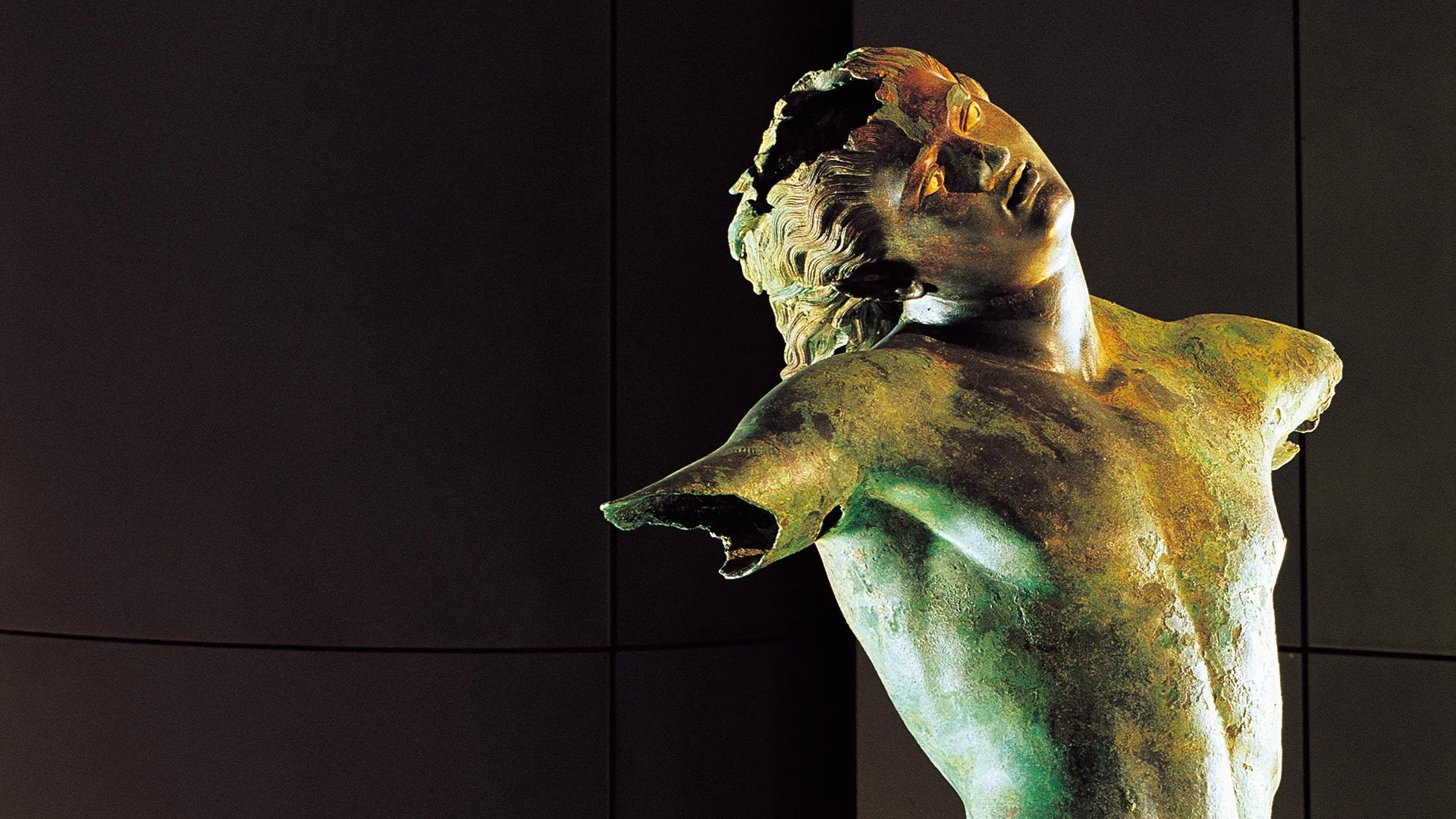
    On Sicily’s southwestern coast lies Selinunte, one of the island’s most powerful Greek colonies until its dramatic destruction by the Carthaginians in 409 BCE. Once a city of wealth and ambition, Selinunte’s temples and acropolis now rest in evocative ruin, scattered across windswept plateaus overlooking the sea. Departing Agrigento this morning, we travel west to explore the vast archaeological park, followed by free time for lunch in nearby Mazara del Vallo. Here we also visit the Museum of the Dancing Satyr, where a rare Hellenistic bronze recovered from the sea in 1998 evokes the maritime networks that connected Sicily to the wider Mediterranean world. Continuing to Marsala, we check into our hotel before concluding our day with dinner together in a local restaurant. Overnight Marsala (B, D)

  • Day 11 | Monday 1 February
    From the Western Frontier to Palermo

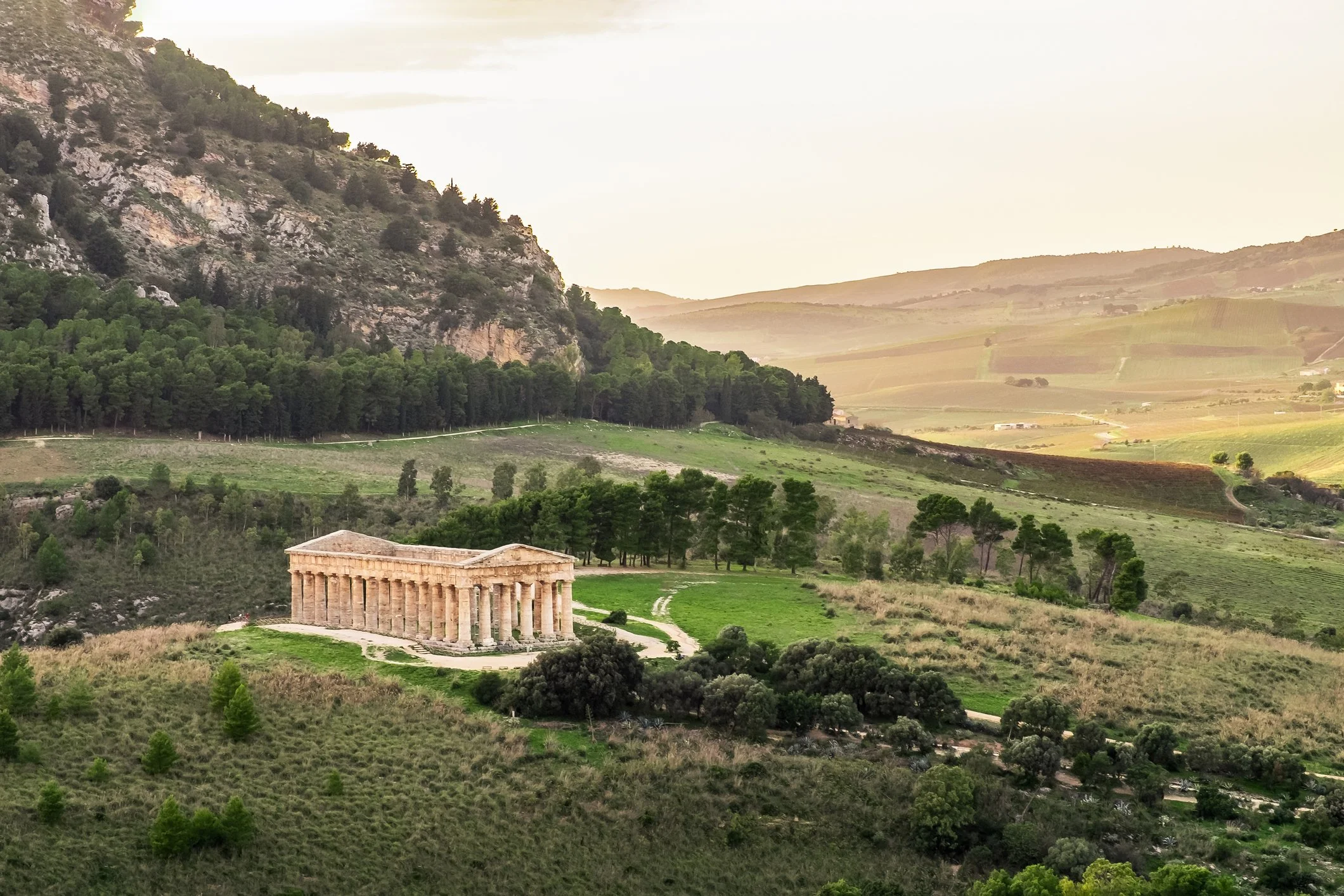
    Western Sicily formed a shifting frontier between Indigenous communities, Greek settlers and Carthaginian expansion, before its eventual incorporation into the Roman world. Departing Marsala for Palermo today, we travel north to Trapani, whose historic centre projects into the sea in a narrow crescent of streets shaped by centuries of maritime exchange. On arrival, we explore its Old Town, reflecting the city’s strategic importance along Sicily’s western coast, before continuing inland to Segesta. Set in an isolated valley, the Doric temple of Segesta rises in striking solitude, begun in the 5th century BCE by the Elymians – a people navigating the competing pressures of Greek and Carthaginian power. Nearby, the theatre commands sweeping views across the surrounding hills, underscoring the site’s political aspirations. By late afternoon we arrive in Palermo, whose complex history will frame the final stage of our tour. Dinner this evening is enjoyed in a local restaurant. Overnight Palermo (B, D)

  • Day 12 | Tuesday 2 February
    Palermo
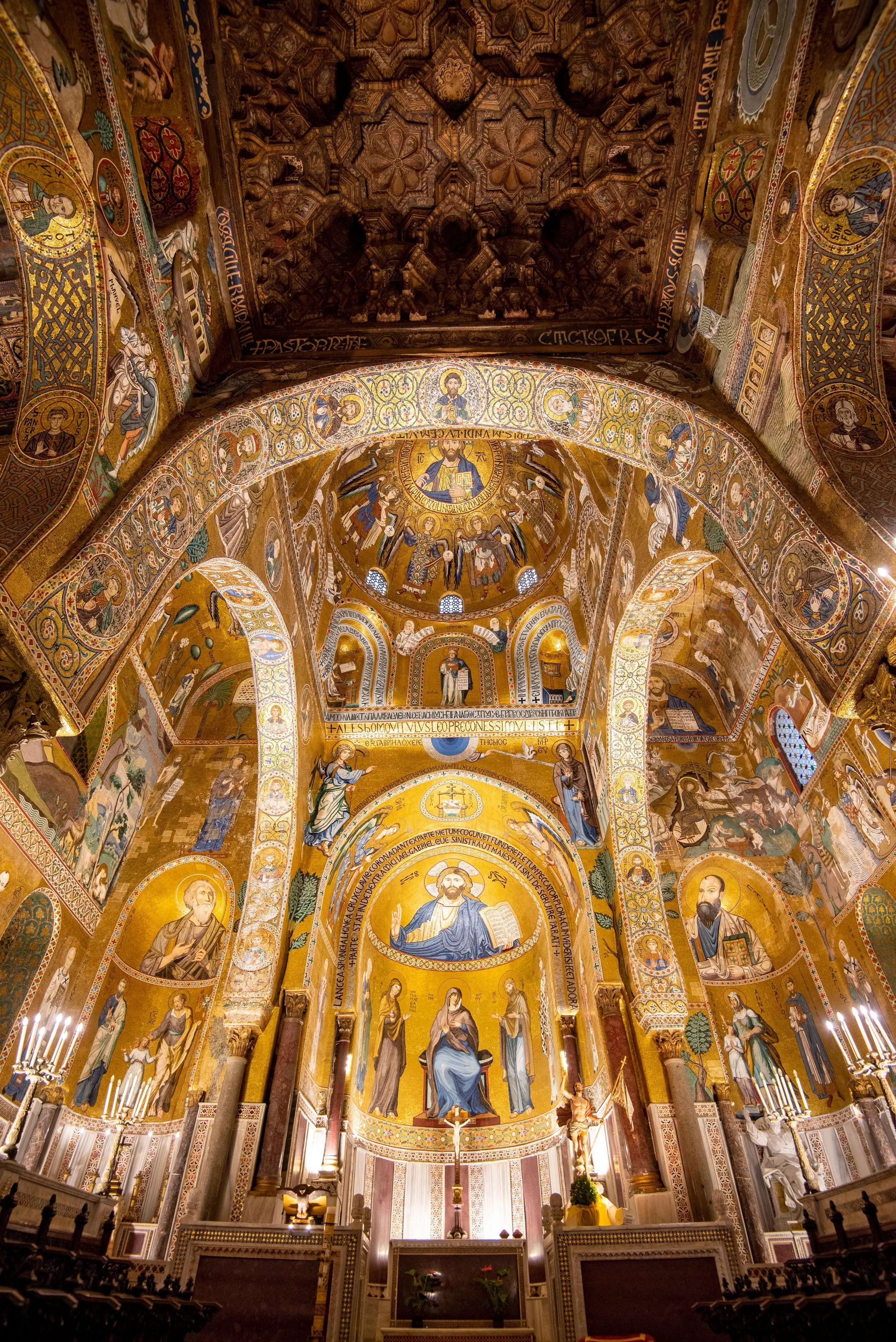
    Founded by Phoenician traders and later shaped by Roman administration, Arab innovation and Norman rule, Palermo embodies the layered civilisations that define Sicily’s past. After a morning talk in the hotel, we set out on foot to explore this fascinating city, beginning at San Cataldo and La Martorana, whose architecture and interiors reveal a remarkable synthesis of Byzantine mosaic, Islamic ornament and Latin Christian form – an expression of Palermo’s 12th-century cosmopolitan court culture. We then continue to Palazzo Chiaramonte Steri, once the seat of noble power and later associated with the Spanish Inquisition. After time at leisure for lunch, we spend our afternoon in the ‘Antonino Salinas’ Regional Archaeology Museum, whose collections trace Sicily’s past from prehistoric settlement to the classical world, providing broader context for the sites explored throughout the tour. We conclude our day at the historic Palazzo dei Normanni. Within its walls, the Cappella Palatina stands as one of the great monuments of medieval Europe, commissioned by the Norman kings and adorned with shimmering gold mosaics and an intricate muqarnas ceiling. Overnight Palermo (B)

  • Day 13 | Wednesday 3 February
    Monreale and the Norman Kingdom

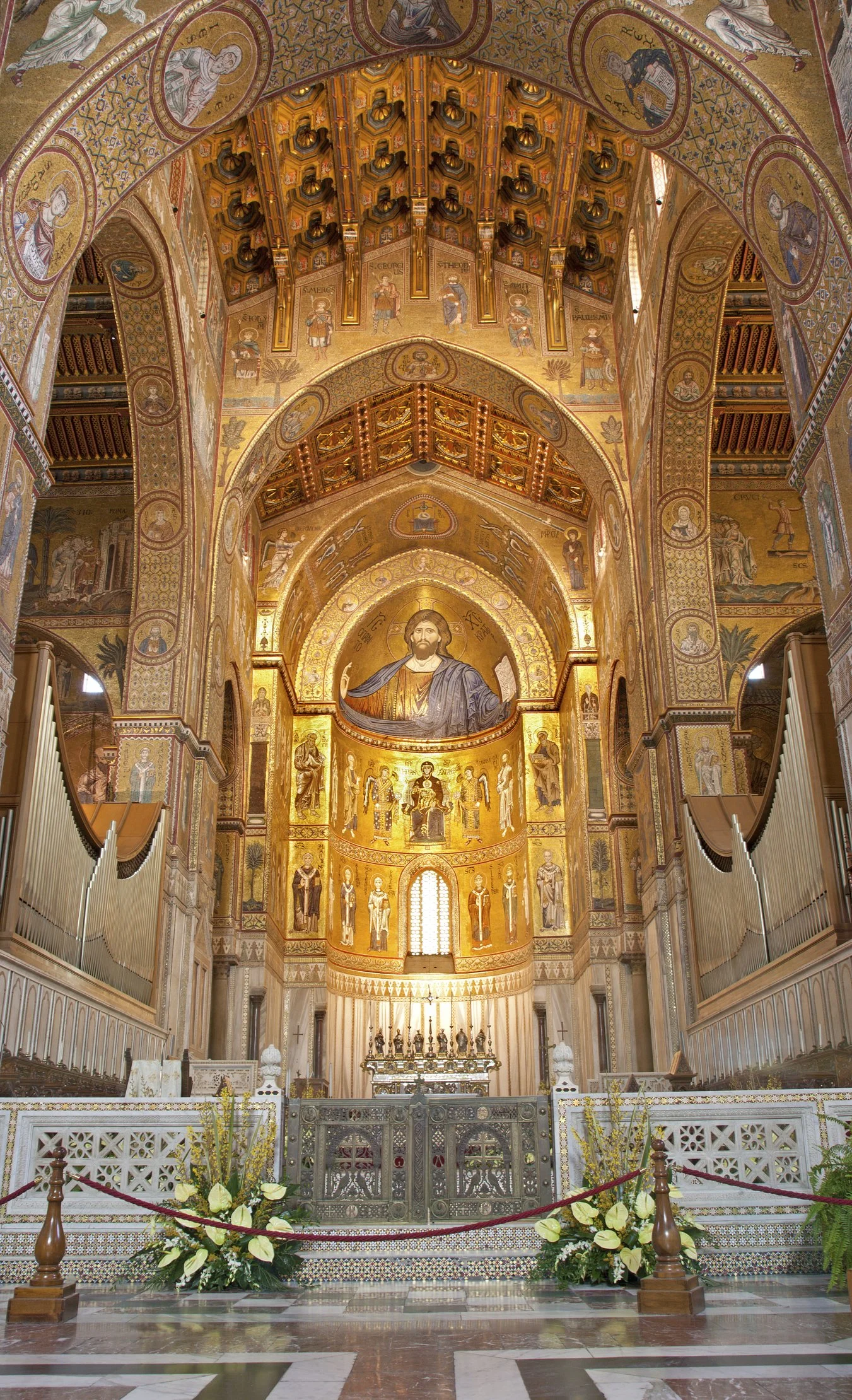
    Rising above the Conca d’Oro valley, Monreale Cathedral stands as one of the most powerful statements of Norman authority in 12th-century Sicily. Commissioned by King William II, it reflects a court culture that consciously drew upon Byzantine craftsmanship and Islamic artistic traditions. Travelling to the hillside town of Monreale this morning, we visit the cathedral and its cloister. Inside, more than 6,000 square metres of gold-ground mosaics narrate biblical history in luminous detail, while the adjacent cloister’s carved capitals reveal a synthesis of classical, Romanesque and Islamic motifs. After time at leisure for lunch, we return to Palermo to explore La Zisa, a Norman palace whose very name derives from the Arabic al-Aziz – ‘the glorious’. Designed as a pleasure residence, its architecture demonstrates the continued influence of Islamic building traditions under Norman rule. We also make a private visit to the Phoenician necropolis, where tombs carved into the rock face recall the city’s earliest Semitic settlers. The evening is then at leisure. Overnight Palermo (B)

  • Day 14 | Thursday 4 February
    Cefalù and the Norman Legacy

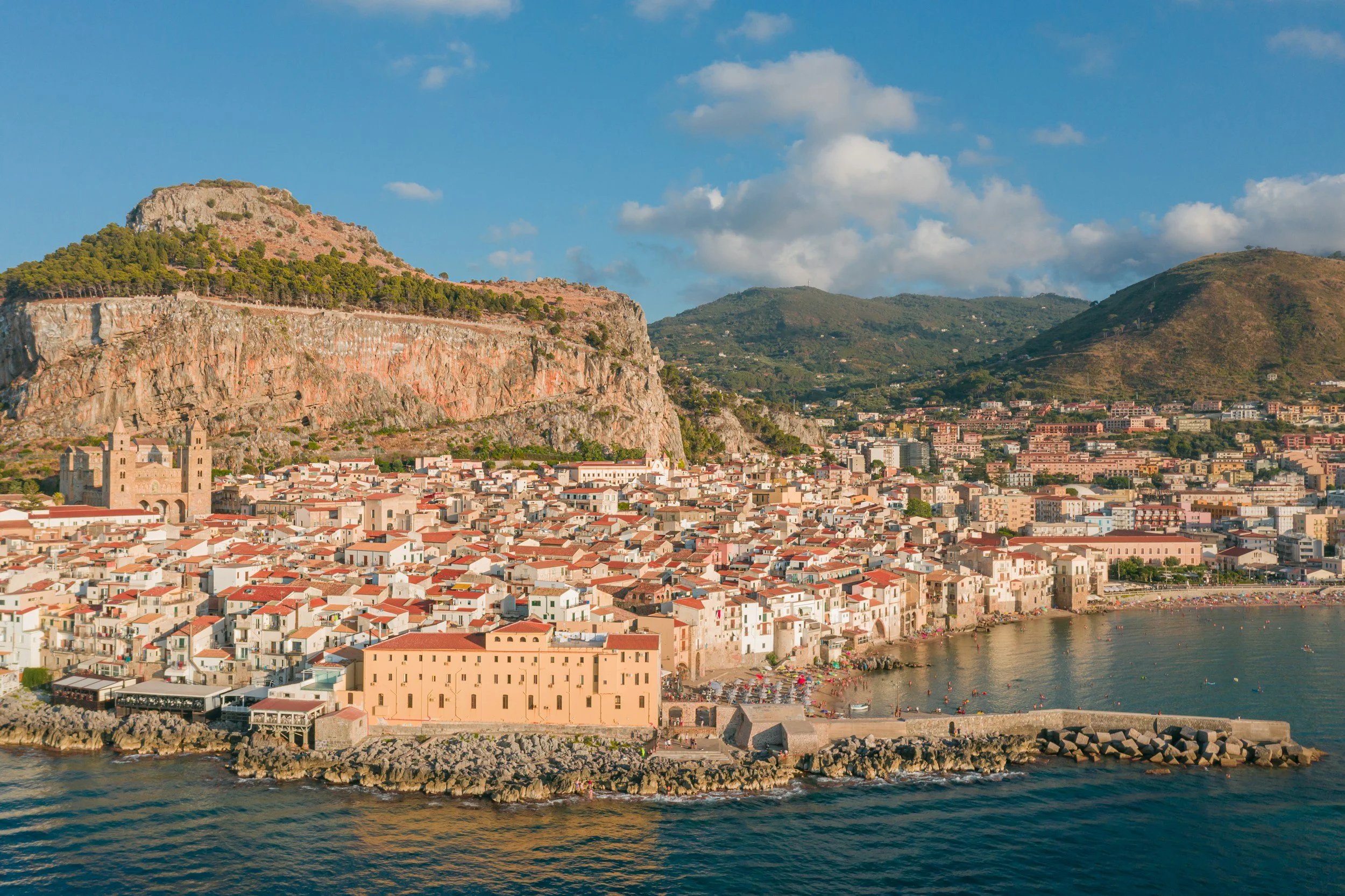
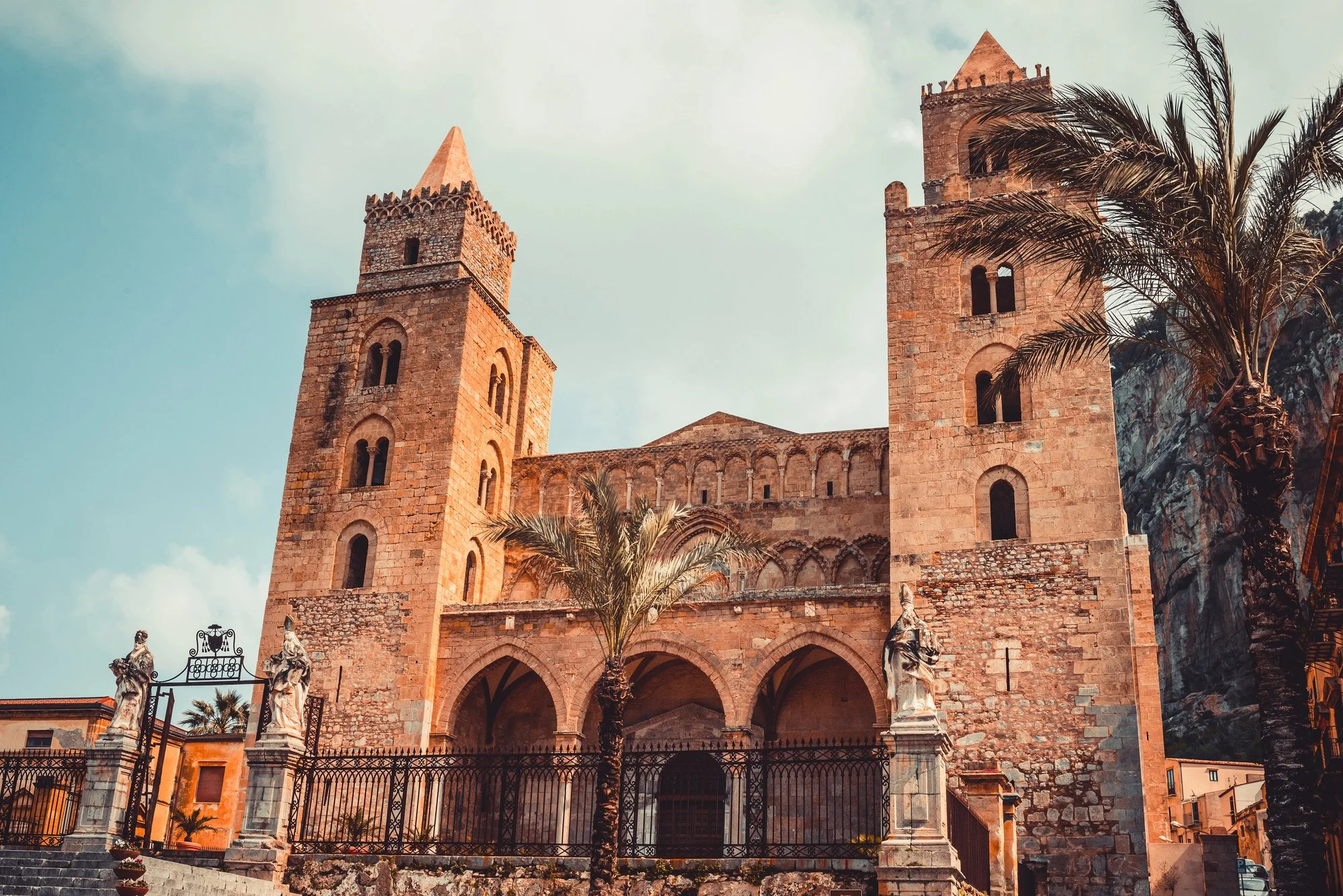
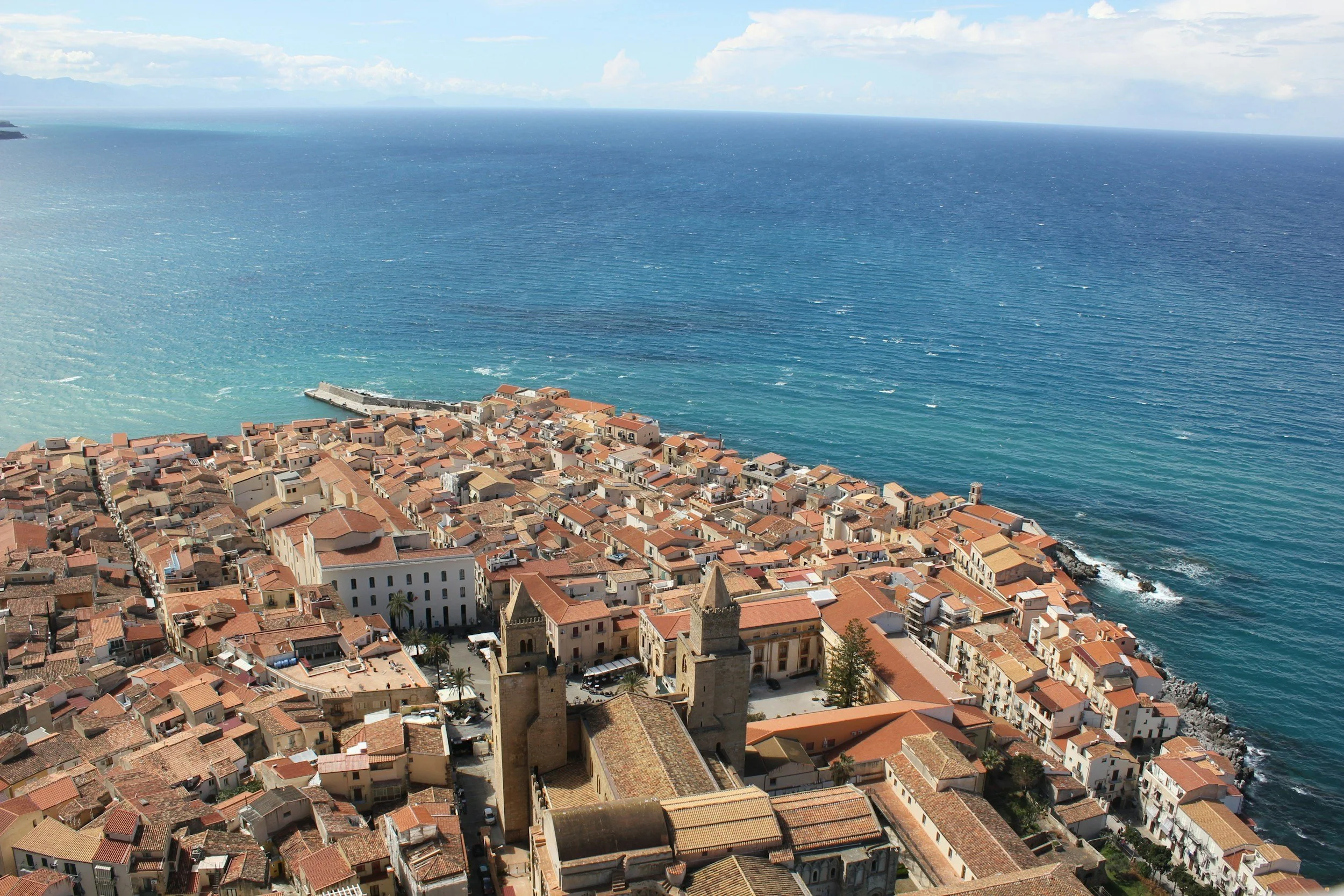
    On Sicily’s northern coast, Cefalù bears further witness to the island’s medieval transformation under Norman rule. Founded in antiquity and later reshaped by successive powers, the town achieved renewed prominence in the 12th century when King Roger II established his cathedral here. Travelling by train to this scenic coastal city today, we walk to the cathedral to admire its apse mosaic of Christ Pantokrator – a luminous image executed by Byzantine craftsmen and emblematic of the cultural synthesis that characterised Norman Sicily. There is time to explore Cefalù’s historic centre, its narrow streets unfolding between sea and rock beneath the looming Rocca, before we return by train to Palermo. This evening we gather for a farewell dinner in a local restaurant, reflecting on our exploration of North Africa and Sicily’s layered past. Overnight Palermo (B, D)

  • Day 15 | Friday 5 February
    Depart Palermo

    Our tour concludes this morning with a transfer to Palermo Airport, arriving in time for onward flights. (B)

Hotels have been selected principally for their central location and proximity to sites visited.
All hotels are excellent four and five-star standard.

Tour Accommodation

tour booking

$15,680 AUD per person, twin share (land content only)
$3,690 AUD supplement for sole use of a hotel room

A $1,000 deposit is required per person to confirm your booking on tour. This deposit is non-refundable.

Hold a Place

Still deciding? We are happy to hold a tentative place for 7 days while you make your final arrangements.

Book Online

To secure your place(s) on tour, book online below with “Athena”, our virtual tour consultant.

DOWNLOAD FORM

Download a printable booking form. You can also complete the form on screen and submit via email.

your tour consultant

The consultant for this tour is Sharon Williams. For further information or to discuss the tour, please call 9235 0023 (Sydney) or 1800 639 699 (outside Sydney) or email sharon@academytravel.com.au

have you thought about?

Academy Travel is more than just a tour operator. We are also a full-service travel agency who can assist you with all aspects of your travel, including flights, transfers, pre-tour arrival, additional travel and comprehensive travel insurance.

can’t make this departure?

If these dates don't work for you, register to hear about the next tour.