Venice & The Dolomites

A Journey though Art & Landscape

Explore Venice and its mainland through Palladian villas, historic towns, and the Alpine landscapes of Northern Italy.

TOUR STATUS

Places Available | Maximum 16

TOUR DATES

May 31 - Jun 13, 2027 | 14 Days

TOUR LEADER

Kate Bolton-Porciatti | View Bio

snapshot

  • The tour starts at 3.00pm on Monday 31 May at Hotel La Calcina, Venice.

    The tour ends after breakfast on Sunday 13 June at Hotel Lamm, Kastelruth, with coach transfers to Milan MXP Airport and Milano Centrale main station.

  • Grade Two.
    This tour is designed for people who lead active lives. You should be able to comfortably participate in up to five hours of physical activity per day, including walking at a regular pace, sometimes on uneven terrain, with only short breaks.

    View all requirements >

  • 13 nights’ accommodation in
    centrally located 4 and 5-star hotels. Airport-Hotel transfers as indicated. All breakfasts, 3 lunches and 5 dinners. Services of an expert tour leader and an experienced tour manager throughout. All ground transport, entrance fees and tipping.

    View standard tour inclusions >

  • $18,620 AUD per person, twin share (land content only)
    $4,280 AUD supplement for sole use of a hotel room

    A $1,000 AUD non-refundable deposit is required per person to confirm your booking on tour

OVERVIEW

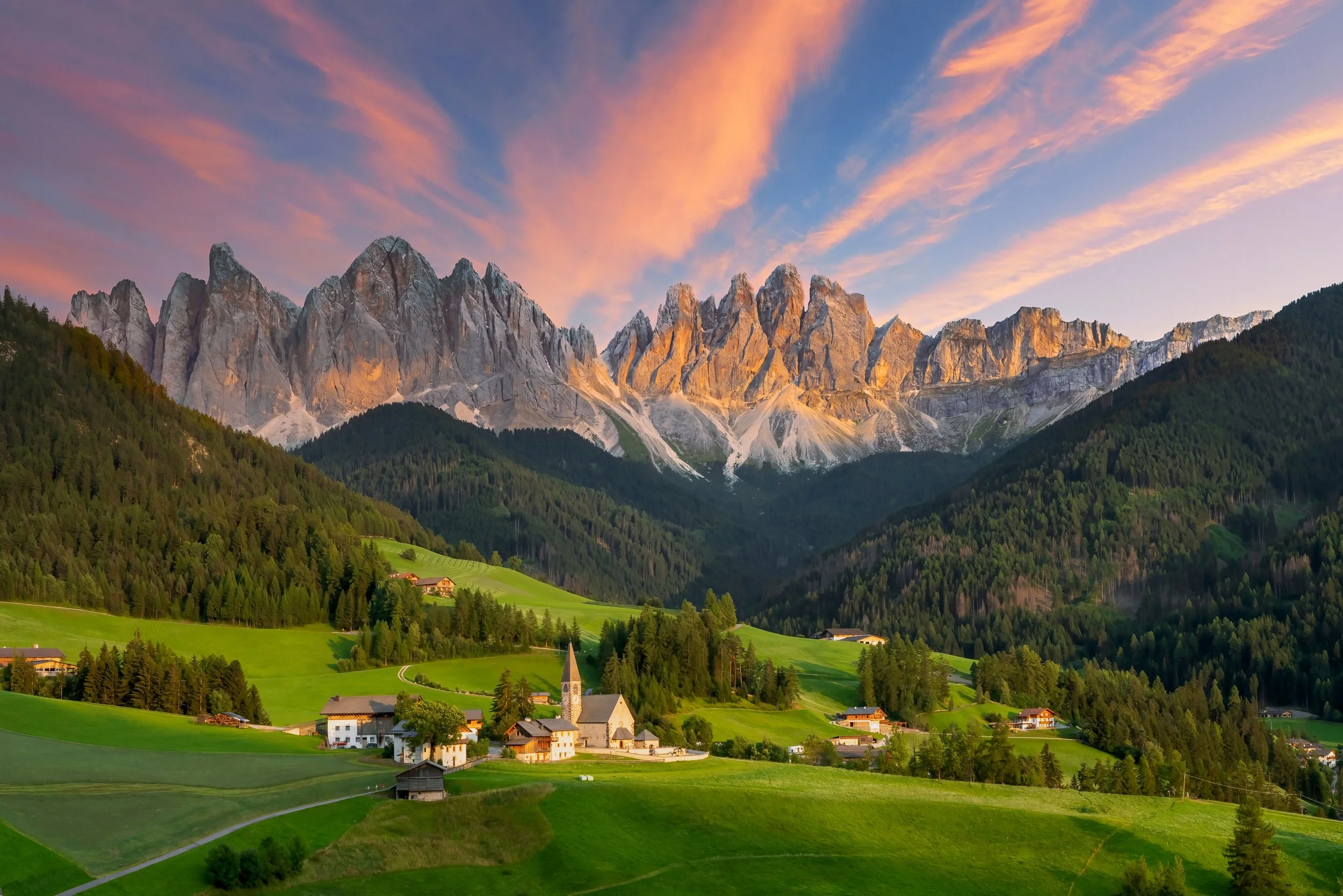
Northeastern Italy presents a sequence of distinct but connected worlds, shaped by trade, geography and cultural exchange. From the lagoon environment of Venice – long oriented toward the eastern Mediterranean – the landscape extends across the plains and cultivated hills of the Veneto before rising into the Dolomites, where Alpine conditions and a shared Italian–Germanic heritage have produced a markedly different cultural and architectural tradition.

On this 14-day tour, led by Kate Bolton-Porciatti, we trace this progression from sea to mountain. Beginning in Venice, we explore its artistic and civic history, alongside the early settlements of the lagoon islands. The journey continues through the Palladian countryside and the cultural centre of Asolo, before moving north through the Trentino to South Tyrol, where medieval towns, archaeological discoveries and long-standing trade routes shape the experience.

We conclude in the Dolomites, where time is spent across valleys and high plateaus, and where Ladin and Tyrolean traditions remain visible in daily life.

tour highlights

Trace the transition from Venice’s lagoon to the Dolomites

Kate Bolton-Porciatti (MPhil.)

your expert tour leader

Kate is a Florence-based cultural historian, academic and writer specialising in Italian cultural history and music. She holds an MPhil in Italian cultural history and teaches at leading institutions including the Istituto Lorenzo de’ Medici. A former BBC Arts and Classical Music producer, Kate brings a rare combination of scholarly depth, media experience and on-the-ground knowledge to her tours, offering informed and engaging insight into Italy’s cultural landscapes.

Read full bio >

Accompanied by an Experienced Tour Manager

Alongside your expert tour leader, an experienced tour manager will accompany for the entirety of the tour. They oversee logistics, ensure your comfort and safety, and provide friendly support – whether offering tips for free time, sharing a chat over dinner, or giving you space to relax.

tour ITINERARY

Venice (4 nights), Asolo (3 nights), Bolzano (3 nights), Castelrotto (3 nights)

Included meals are shown with the letters B, L and D
  • Day 1 | Monday 31 May
    Arrive Venice

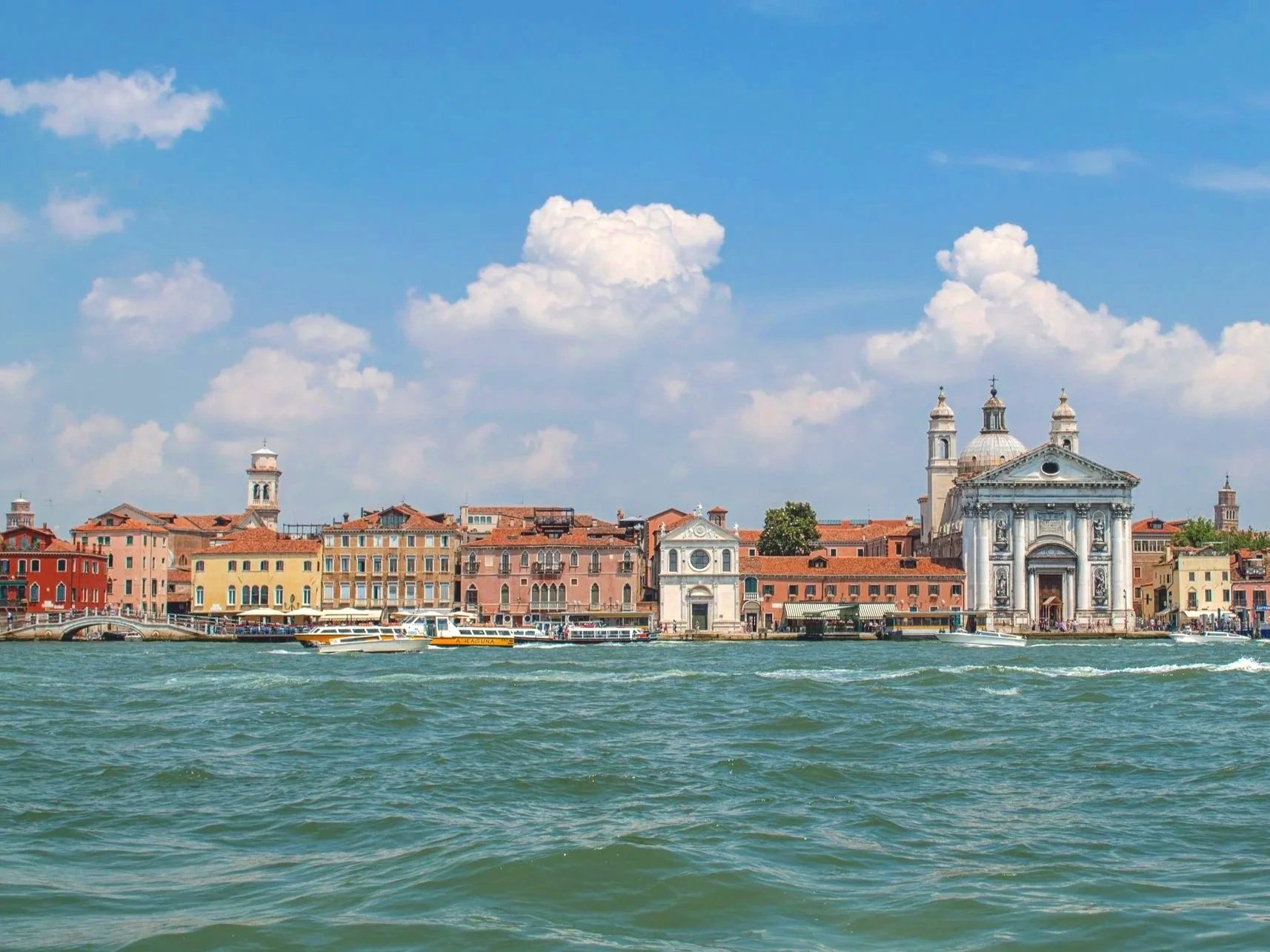
    Venice occupies a unique place in the history of Europe, shaped by its lagoon setting and its long role as a centre of trade, diplomacy and artistic patronage. Built across a network of islands, the city developed a distinct urban and cultural identity that reflects both its maritime connections and its independence as a republic, and it is into this setting that we arrive, with individual water taxi transfers to our hotel arranged by Academy Travel. In the afternoon, we gather for welcome drinks at the hotel bar before an introductory stroll along the Giudecca promenade, where the broad southern waterfront opens onto views across the lagoon. As evening approaches, we take to the water by gondola, gliding along quieter canals and sections of the Grand Canal beneath the facades of Venice’s great palazzi. A welcome dinner at a local restaurant concludes our day. Overnight Venice (D)

  • Day 2 | Tuesday 1 June
    Trade, Devotion & The Art of the Republic

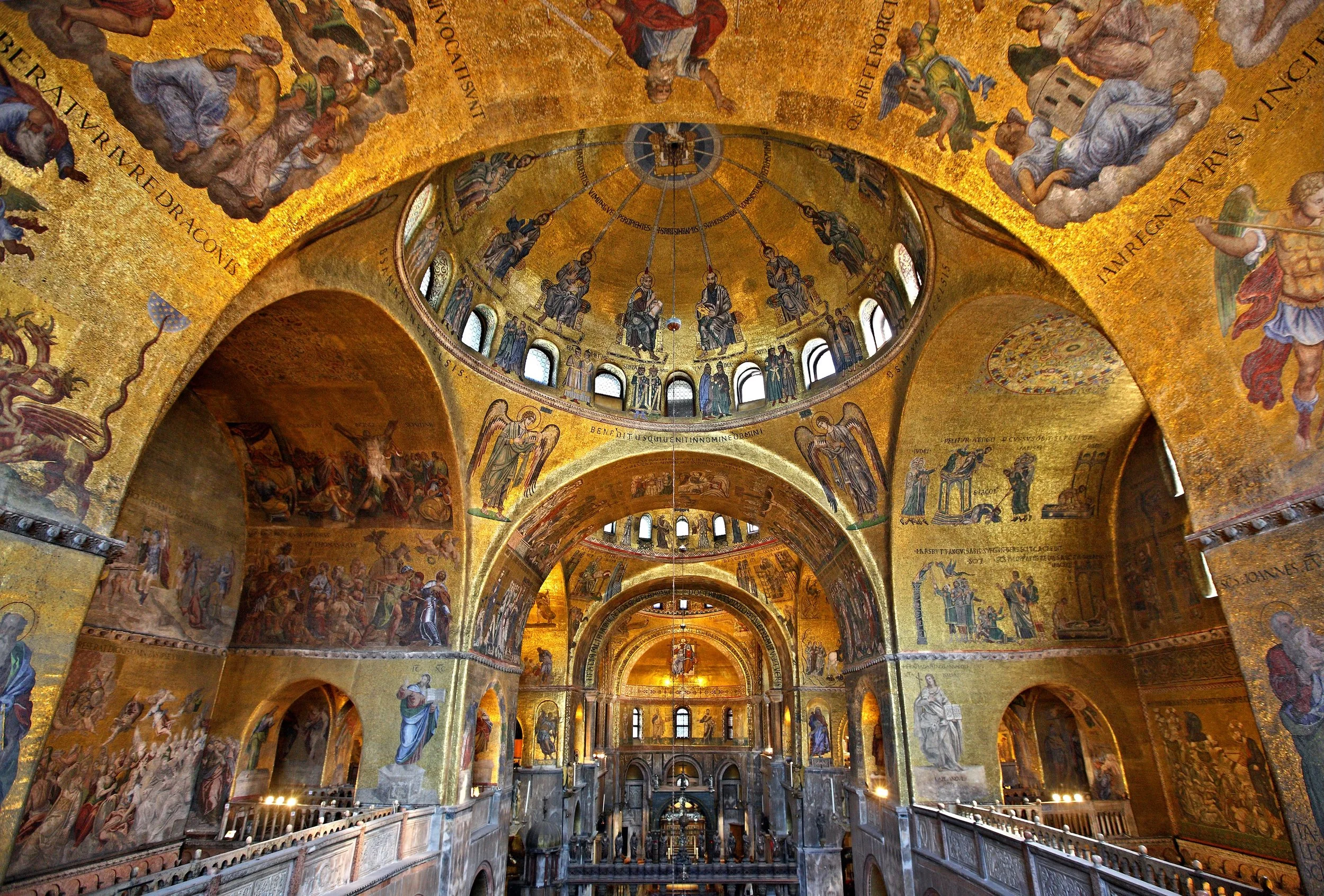
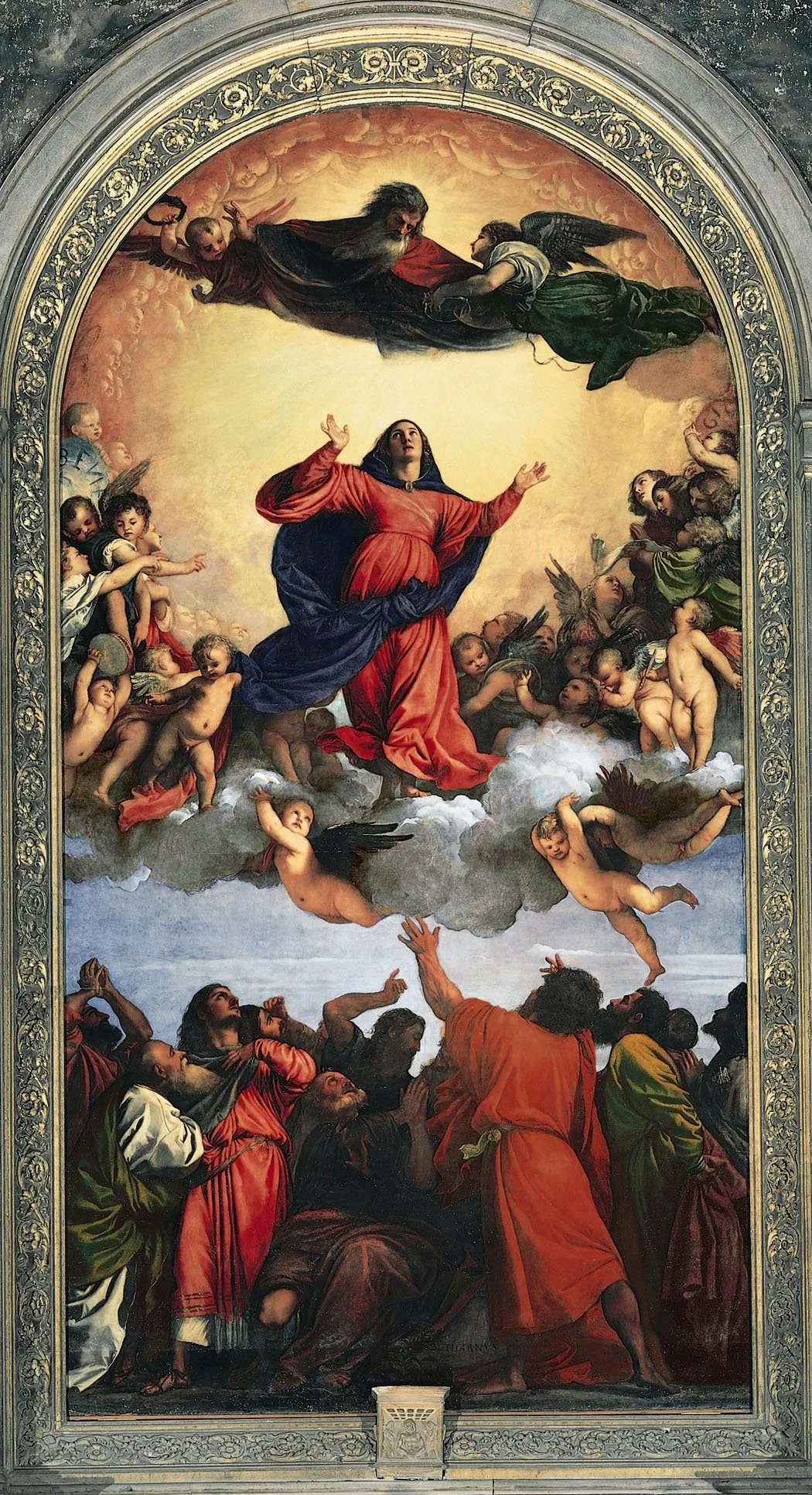
    Venice’s rise as a maritime republic was built on trade – a vast commercial network linking the Byzantine East with the markets of Western Europe. Wealth flowed through the Rialto, the historic mercantile centre where merchants, bankers and traders shaped the economic life of the city. Our exploration begins here, among the arcades and market spaces that still echo this commercial past, before crossing the Rialto Bridge into the sestieri of San Polo and Santa Croce. At the great Gothic basilica of Santa Maria Gloriosa dei Frari, the artistic ambitions of the Republic find expression in Titian’s Assumption of the Virgin, whose monumental scale and luminous colour dominate the high altar. Nearby, the Scuola Grande di San Rocco reflects the role of lay confraternities in Venetian society. Here, Tintoretto’s vast cycle of paintings, completed over more than two decades, unfolds across its halls in a dramatic sequence of biblical scenes. After a break for lunch near the Rialto Bridge, we return to our hotel for an afternoon at leisure. Reconvening in the early evening, we make our way to the Basilica of San Marco for a special private after-hours visit, where the cathedral’s extraordinary mosaics – covering some 8,000 square metres – can be experienced in the stillness without the crowds. Overnight Venice (B)

  • Day 3 | Wednesday 2 June
    Torcello, Burano & San Francesco del Deserto
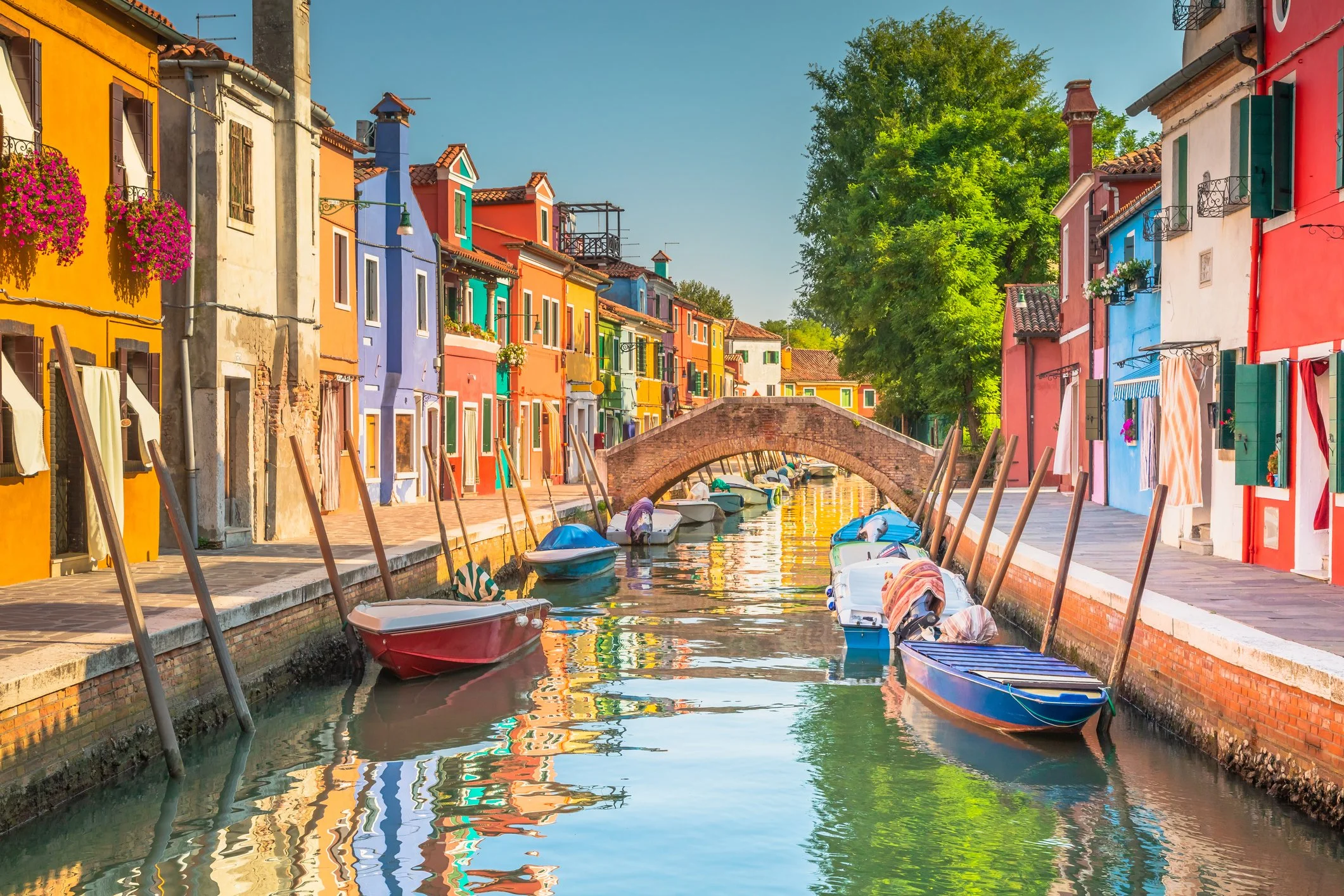
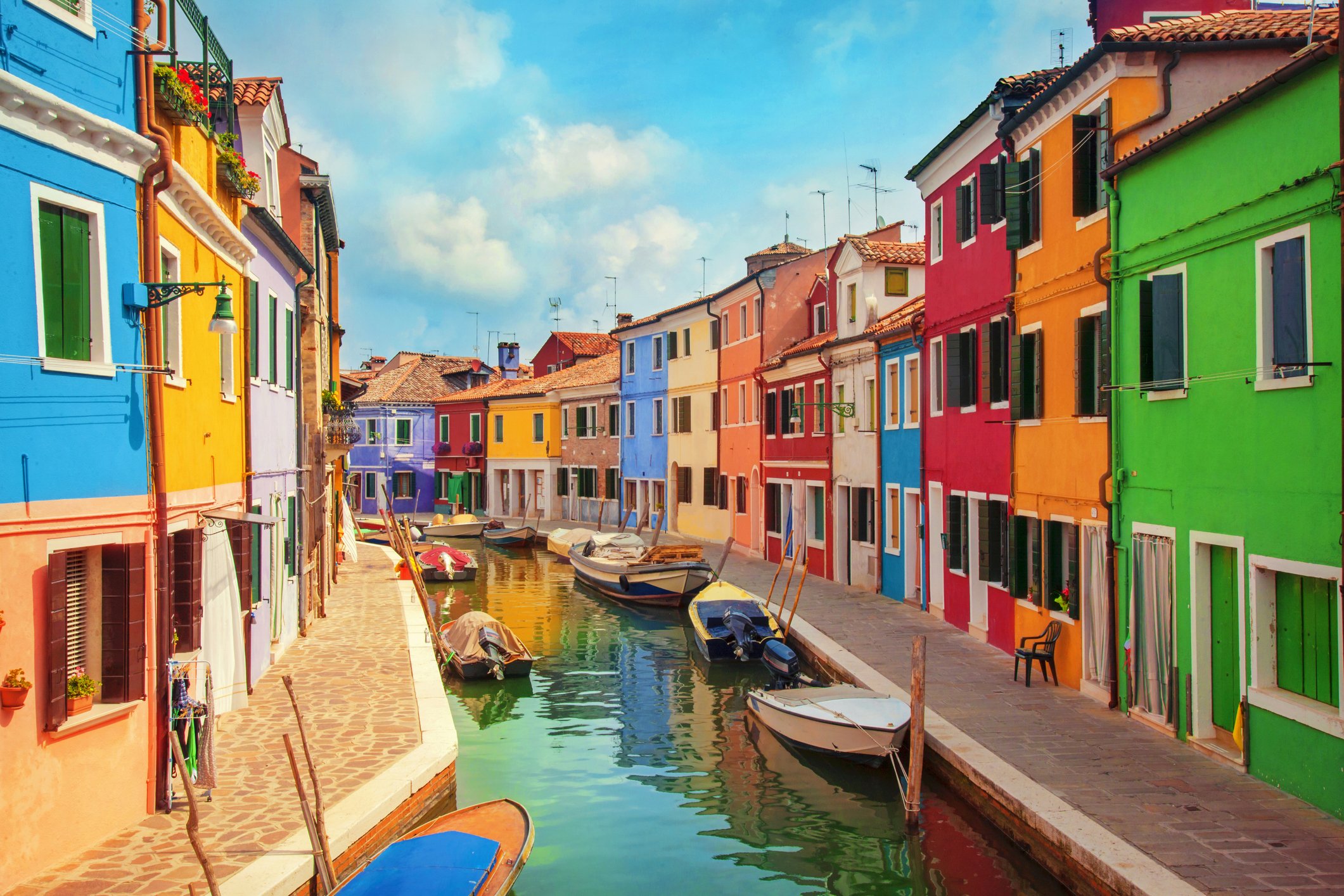
    The islands of the Venetian lagoon preserve the earliest phases of settlement in this unstable environment, where communities adapted to mudflats, shifting channels and the constant interplay of land and water. Before Venice rose to prominence, islands such as Torcello were among the lagoon’s earliest centres of settlement, shaped by patterns of refuge, trade and religious life, and it is here that our exploration begins. At the Basilica of Santa Maria Assunta, the great 11th-century mosaics – including the imposing Last Judgement – reflect strong Byzantine influence and the island’s early prominence. Nearby, the Church of Santa Fosca offers a refined example of early medieval architecture. We continue by private boat to Mazzorbo, where lunch is enjoyed at Venissa – a working vineyard cultivating the rare Dorona grape within its walled lagoon estate. A walk across the Ponte Longo leads to Burano, known for its vividly painted houses and long tradition of lace-making, with time to explore the island at leisure. From here, we continue by boat to San Francesco del Deserto, a quiet monastic island long associated with the Franciscan order. Its 13th-century monastery, still active today, is traditionally linked to a visit by St Francis of Assisi in 1220, and remains a place of seclusion, with simple cloisters, a small church and gardens tended by the resident friars. We return to our hotel by private boat in the early evening. Overnight Venice (B, L)

  • Day 4 | Thursday 3 June
    Gondolas, Palladio & Venetian Painting | Performance
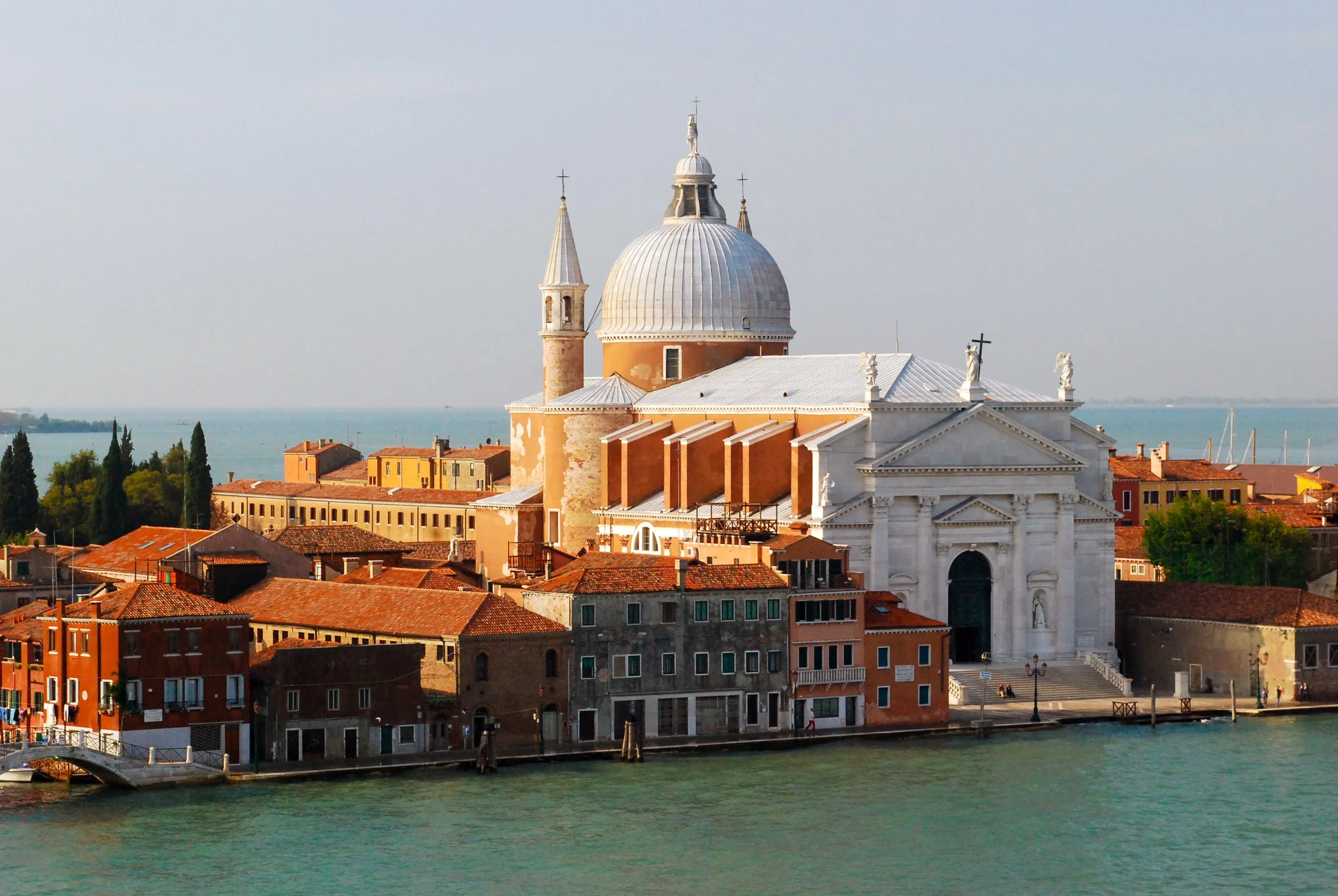
    Venice’s identity has always been inseparable from its boats, with the gondola emerging over centuries as the city’s most recognisable and highly specialised vessel. Developed to navigate narrow canals and shallow lagoon waters, its asymmetrical form and refined construction reflect a long tradition of craftsmanship passed down through generations of boatbuilders. Our morning begins at one of the last remaining gondola workshops in Venice, Lo Squero di San Trovaso, where we gain insight into the techniques used to construct and maintain these iconic boats. From here, we travel by Vaporetto to the island of Giudecca to visit the Church of the Redentore, Palladio’s architectural masterpiece. After time to explore the church and its gardens, we continue to the Gallerie dell’Accademia – the principal collection of Venetian art from the Middle Ages to the 18th century. Its holdings trace the evolution of the Venetian school, with major works by Bellini, Carpaccio, Giorgione, Titian, Tintoretto and Tiepolo, illustrating the city’s distinctive approaches to colour, narrative and devotion. Following our visit, there is time to relax and refresh at our hotel before an evening performance at one of Venice’s historic venues (schedule permitting). Overnight Venice (B)

  • Day 5 | Friday 4 June
    From Venetian Masters to Modernism
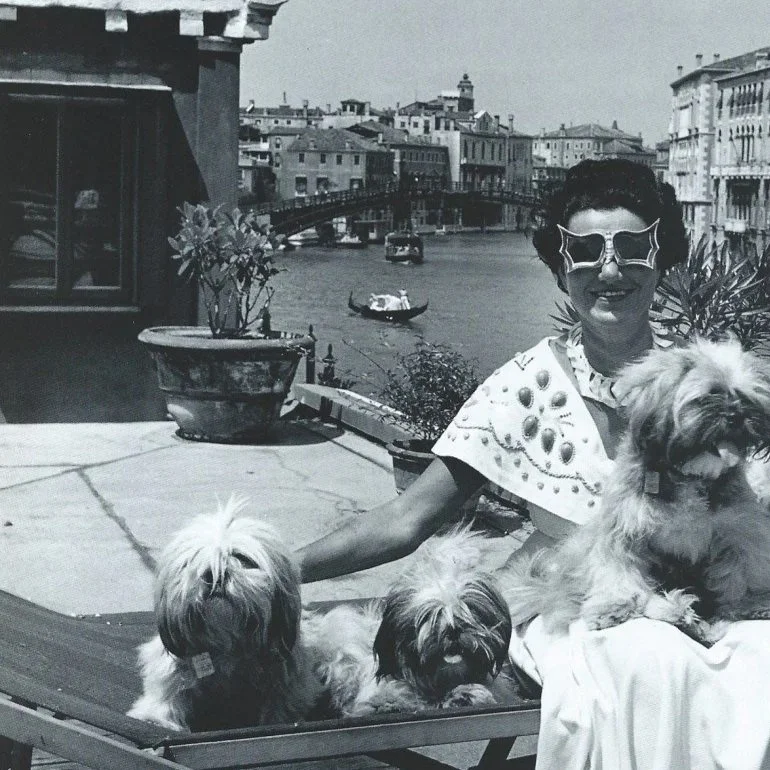
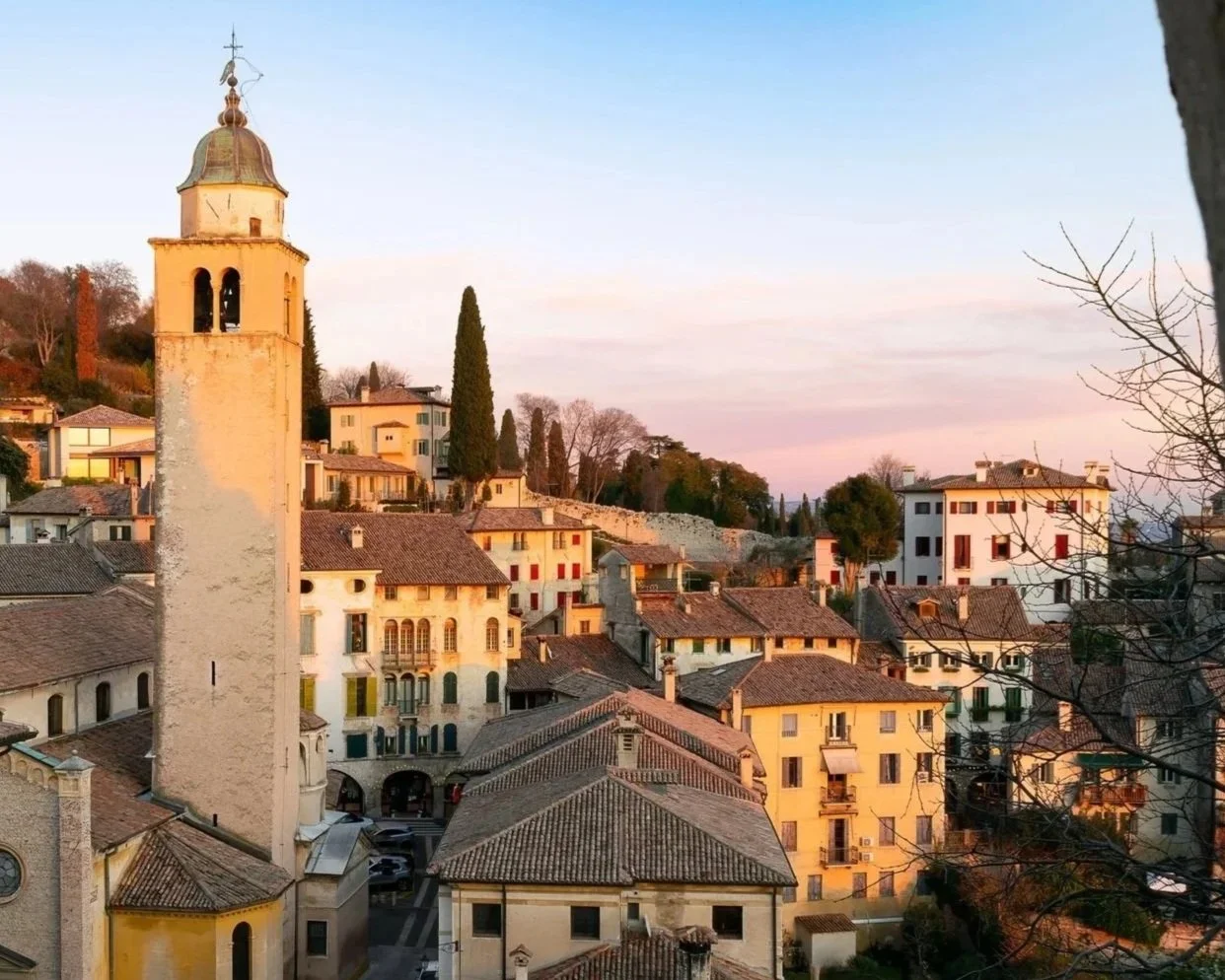
    The Venetian painting encountered at the Accademia exerted a lasting influence well beyond the Renaissance, shaping later developments in European art. By the 20th century, Venice again became a meeting point for artistic innovation, as collectors and patrons brought the avant-garde into dialogue with the city’s historic fabric. Among the most significant of these was Peggy Guggenheim, and our morning is devoted to her collection, housed in her former home on the Grand Canal. The collection traces key movements in modern art, from Cubism and Surrealism to Abstract Expressionism, with works by Picasso, Braque, Dalí, Ernst, Mondrian and Pollock displayed within an intimate domestic setting. There is time to explore the galleries and sculpture garden before we depart Venice, travelling by water taxi to the mainland, where we continue by coach to Asolo. Set among the hills of the Veneto above the Venetian plain, Asolo occupies a distinctive place in Italy as a long-standing centre of cultural retreat, valued for its quiet setting and artistic nature. After time to check in on arrival, we gather again this evening for dinner in a local restaurant. Overnight Asolo (B, D)

  • Day 6 | Saturday 5 June
    Asolo – Court, Culture & Retreat
    Asolo developed as a small but culturally significant centre under Venetian rule, where political patronage and intellectual life combined to shape its enduring character. Its most notable period began in the late 15th century, when Caterina Cornaro, former Queen of Cyprus, established her court here, attracting artists and scholars and giving the town a reputation as a place of cultivated retreat. Our walking tour today explores this layered history through the compact medieval centre, including the Asolo Museo Civico, where a dedicated exhibition room is devoted to Eleonora Duse. One of Italy’s most important stage actresses, she spent her final years in Asolo and is buried here, her presence closely associated with the town’s cultural identity. We also visit Villa Freya, the former home and garden of the British travel writer Freya Stark, who lived in Asolo for many years. Set on the edge of the town, the Villa enjoys fine views across the Venetian plain. For those who wish, the afternoon offers a walk to the Rocca, the hilltop fortress overlooking Asolo, while the remainder of the day is at leisure to explore the town further. Overnight Asolo (B)

  • Day 7 | Sunday 6 June
    Palladio’s Villa Barbaro & Canova’s Possagno
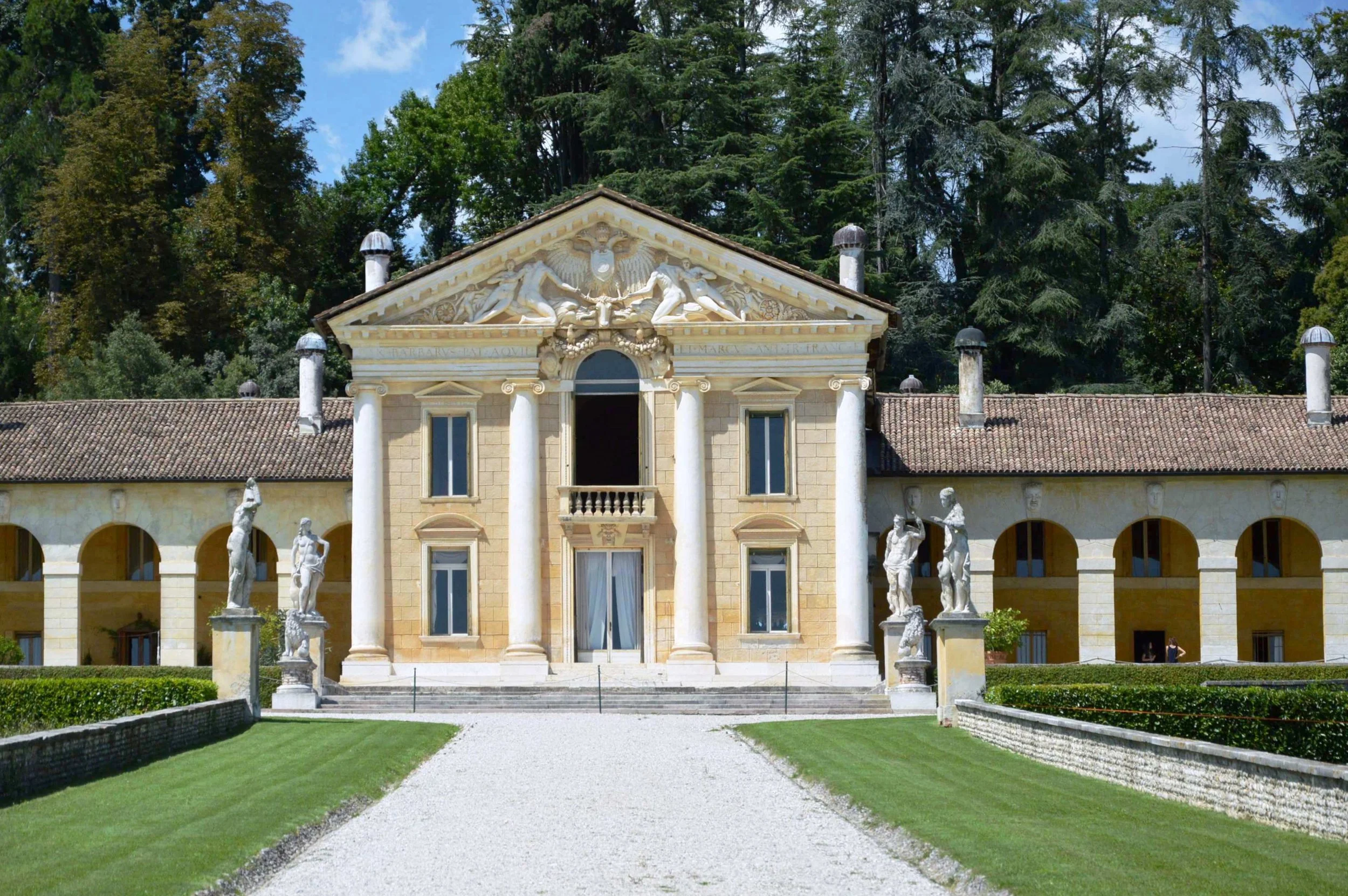
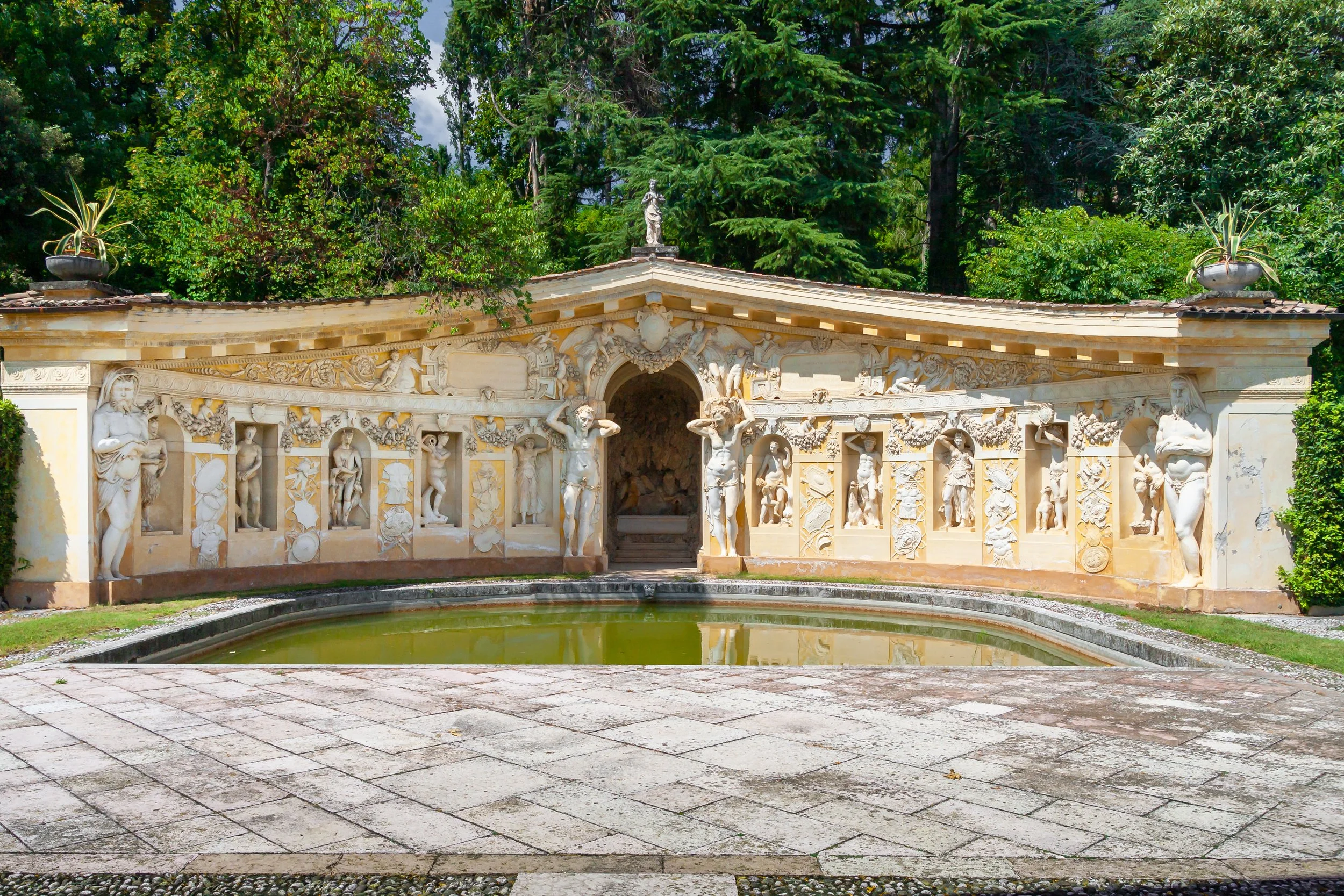
    The Veneto provided the setting for some of the most influential developments in Renaissance architecture and later neoclassical art, with figures such as Andrea Palladio and Antonio Canova shaping ideas that extended far beyond the region. Their work reflects both the intellectual ambitions of Venetian patrons and a sustained engagement with classical forms. We begin our day at Villa Barbaro in Maser, designed by Palladio in the 1550s for the Barbaro family. Its interiors are richly decorated with frescoes by Paolo Veronese, whose illusionistic schemes extend the architecture into painted space. A wine tasting and lunch at the villa’s estate vineyard follows. In the afternoon, we continue through the foothills of the Veneto to Possagno, birthplace of Antonio Canova. Here, the Gypsotheca museum, adjacent to his former home, houses an extensive collection of plaster models, including full-scale casts and preparatory studies that reveal the stages through which his marble sculptures were conceived. Following our visit, we return to Asolo for an evening at leisure. Overnight Asolo (B, L)

  • Day 8 | Monday 7 June
    To Bolzano
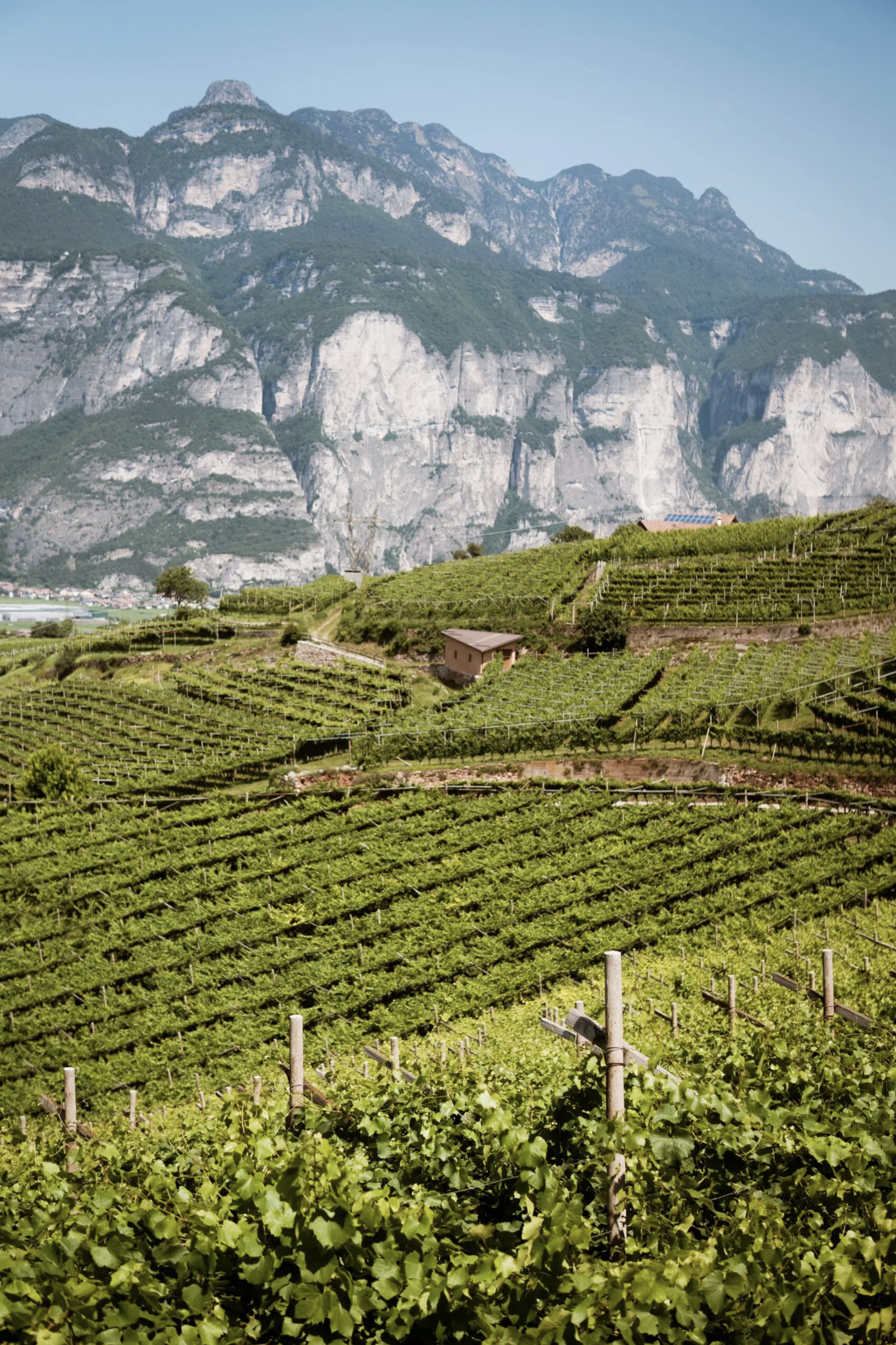
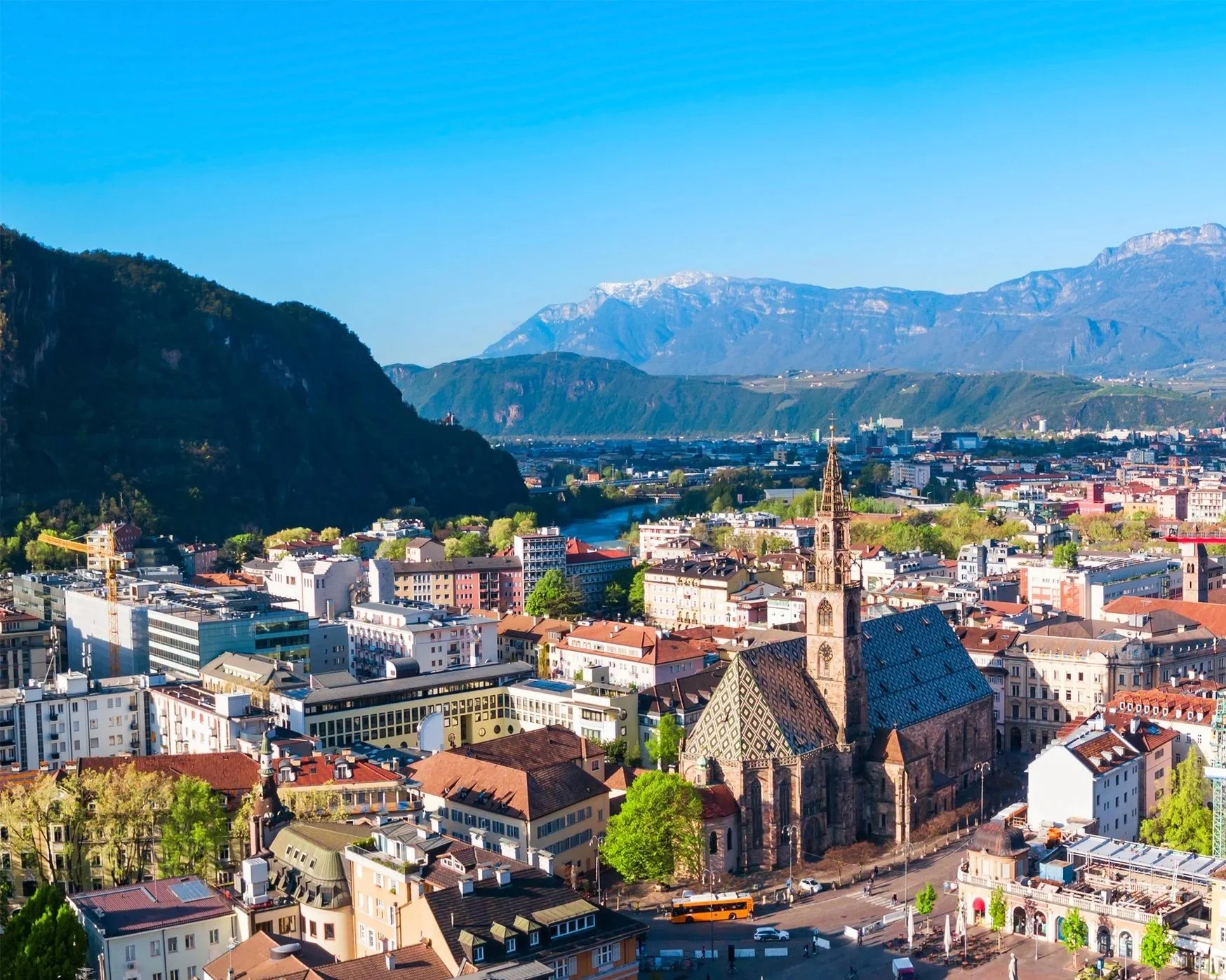
    The transition from the Veneto to South Tyrol marks a clear shift in both landscape and culture, as the lowlands give way to Alpine valleys and a region shaped by centuries of Habsburg rule before its incorporation into Italy in 1919. This borderland retains a distinct character, evident in its architecture, language and long-standing role as a trading corridor between north and south. Departing Asolo, we travel through the vineyards and orchards of the Trentino, with a stop in the Mezzacorona wine region for a tasting, where local grape varieties reflect the area’s position between Italian and Alpine traditions. Continuing north, we arrive in Bolzano, the principal town of South Tyrol, by mid-afternoon. After checking in to our hotel, we take a brief orientation walk through the historic centre, where arcaded streets and merchant houses reflect its long role as a trading centre between north and south. Dinner this evening is at a local restaurant. Overnight Bolzano (B, D)

  • Day 9 | Tuesday 8 June
    Bolzano – Crossroads of the Alp
    Bolzano’s position at the meeting point of Alpine and Mediterranean Europe has shaped its development over centuries, as trade routes crossing the Brenner Pass brought goods, people and cultural influences through the town. This layered history remains visible in its architecture, language and daily life, and is explored during our morning walking tour of the historic centre, including the Gothic Duomo and the Dominican Church. Along the way, we explore Bolzano’s street food traditions, shaped by both Italian and Tyrolean influences, with lunch taken as a series of tastings. In the afternoon, we turn our attention to the South Tyrol Museum of Archaeology for a guided introduction to Ötzi the Iceman, discovered in the Alps in 1991 and dated to around 3,300 BCE during the Copper Age. The museum presents his remarkably preserved, tattooed body alongside clothing and tools, providing unparalleled insights into prehistoric life. Following our visit, the remainder of the day is at leisure. Overnight Bolzano (B, L)

  • Day 10 | Wednesday 9 June
    The Renon High Plateau
    The landscape above Bolzano offers a marked contrast to the town below, where the cultivated valleys give way to upland pasture and forest, long valued as a place of retreat during the summer months. The Renon plateau, rising to around 1,200 metres, has drawn visitors for its cooler climate, open views and access to the Dolomite ranges. This morning we walk from our hotel to the Funivia Renon and ascend by cable car to Soprabolzano. From here, a gentle panoramic walk leads to Maria Assunta, a charming hamlet steeped in the elegance of the old summer retreat tradition. Surrounded by shady woods and dotted with historic villas and little churches, it still preserves the refined, tranquil atmosphere that captivated 19th-century visitors. By late afternoon we return to Bolzano by cable car. Overnight Bolzano (B)

  • Day 11 | Thursday 10 June
    Castel Roncolo & Castelrotto
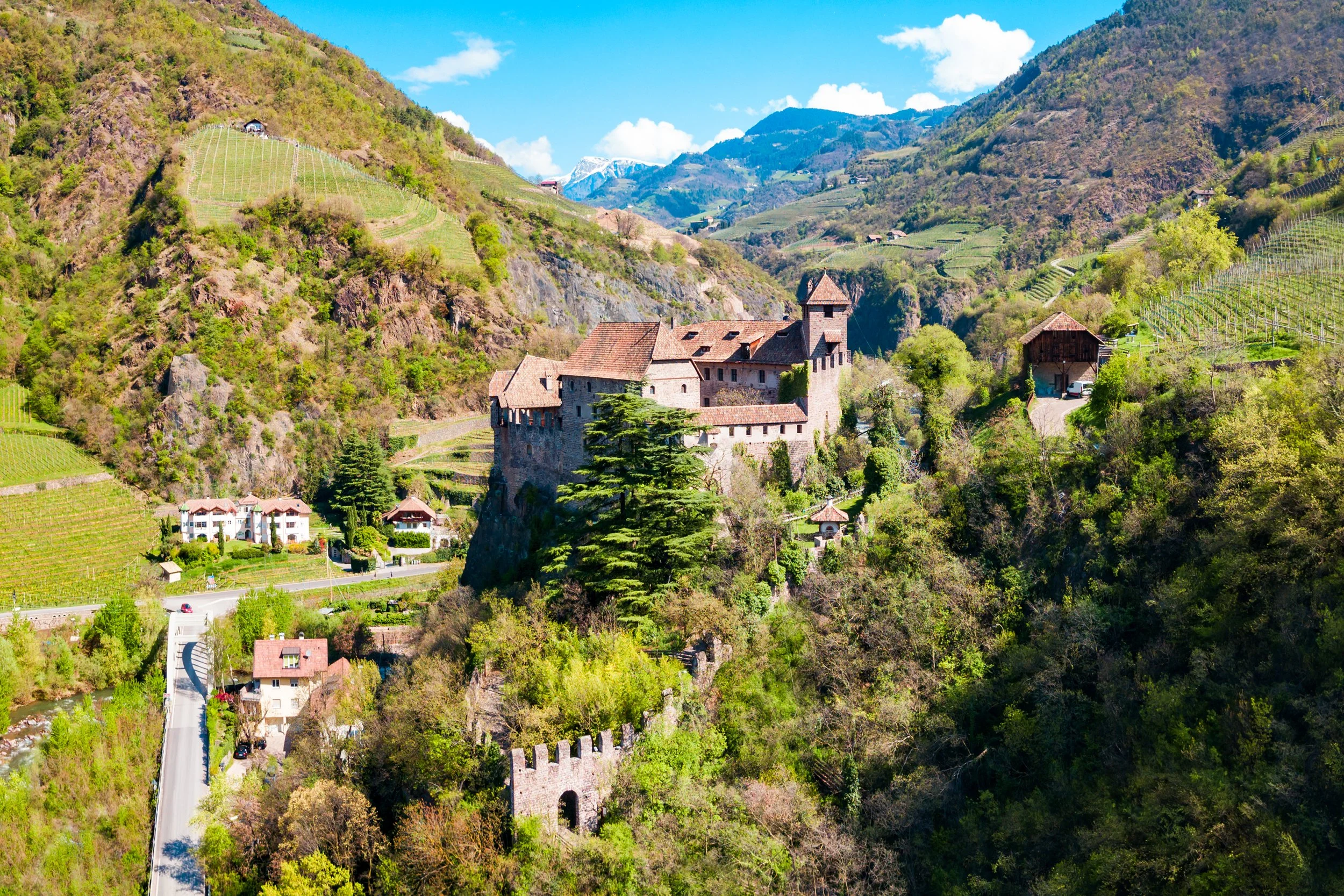
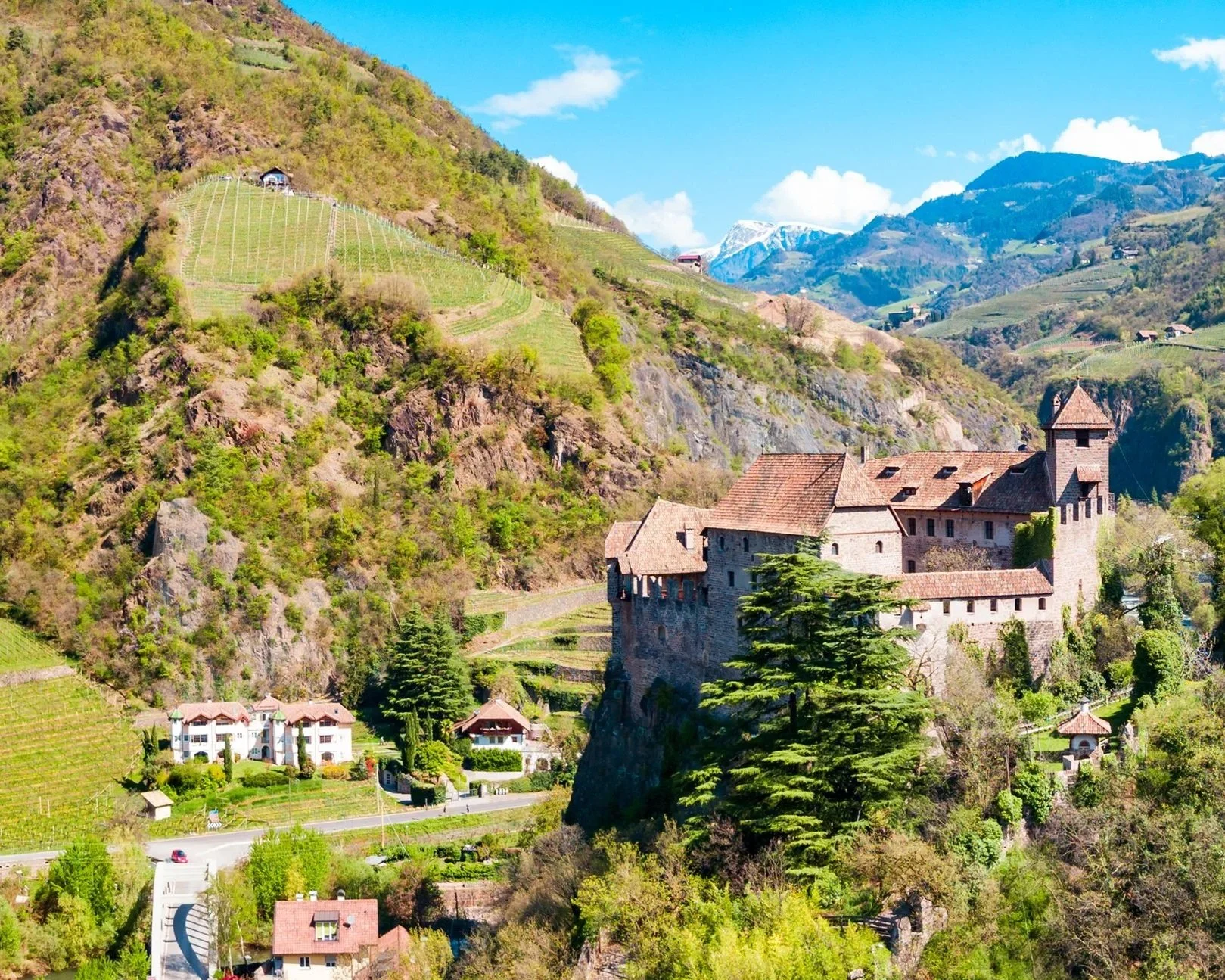
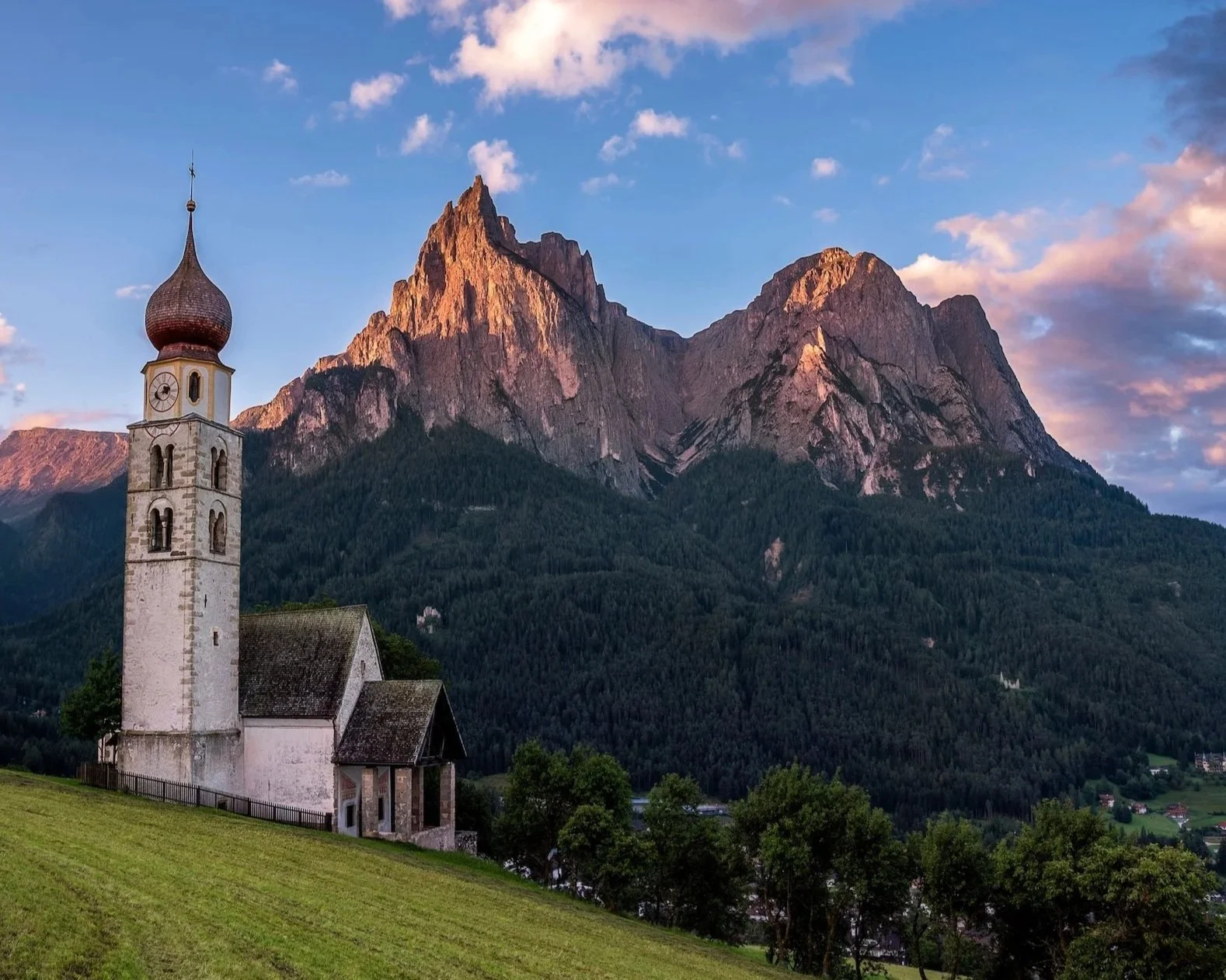
    Set above the Talfer River just north of Bolzano, Castel Roncolo preserves one of the most complete and vivid cycles of secular Gothic frescoes in Europe. Created around 1390–1400, these paintings depict scenes of courtly life, chivalry and legend, including episodes from the Arthurian tradition, offering a window into the ideals and imagination of the late medieval nobility. Departing Bolzano for Castelrotto today, our route brings us first to the Castel Roncolo for an exploration of its richly decorated interiors. There is also time to take in views across the valley from its elevated position. We then continue into the Dolomites, where the landscape shifts to alpine pastures and wooded slopes as we make our way to Castelrotto, set on a plateau overlooking the Val Gardena. After checking in, a walking tour introduces the village, including the parish church of Saints Peter and Paul and the main square, where painted facades and timber buildings reflect its Tyrolean character. Dinner this evening is enjoyed at our hotel. Overnight Castelrotto (B, D)

  • Day 12 | Friday 11 June
    Ortisei & The Seceda Ridgeline
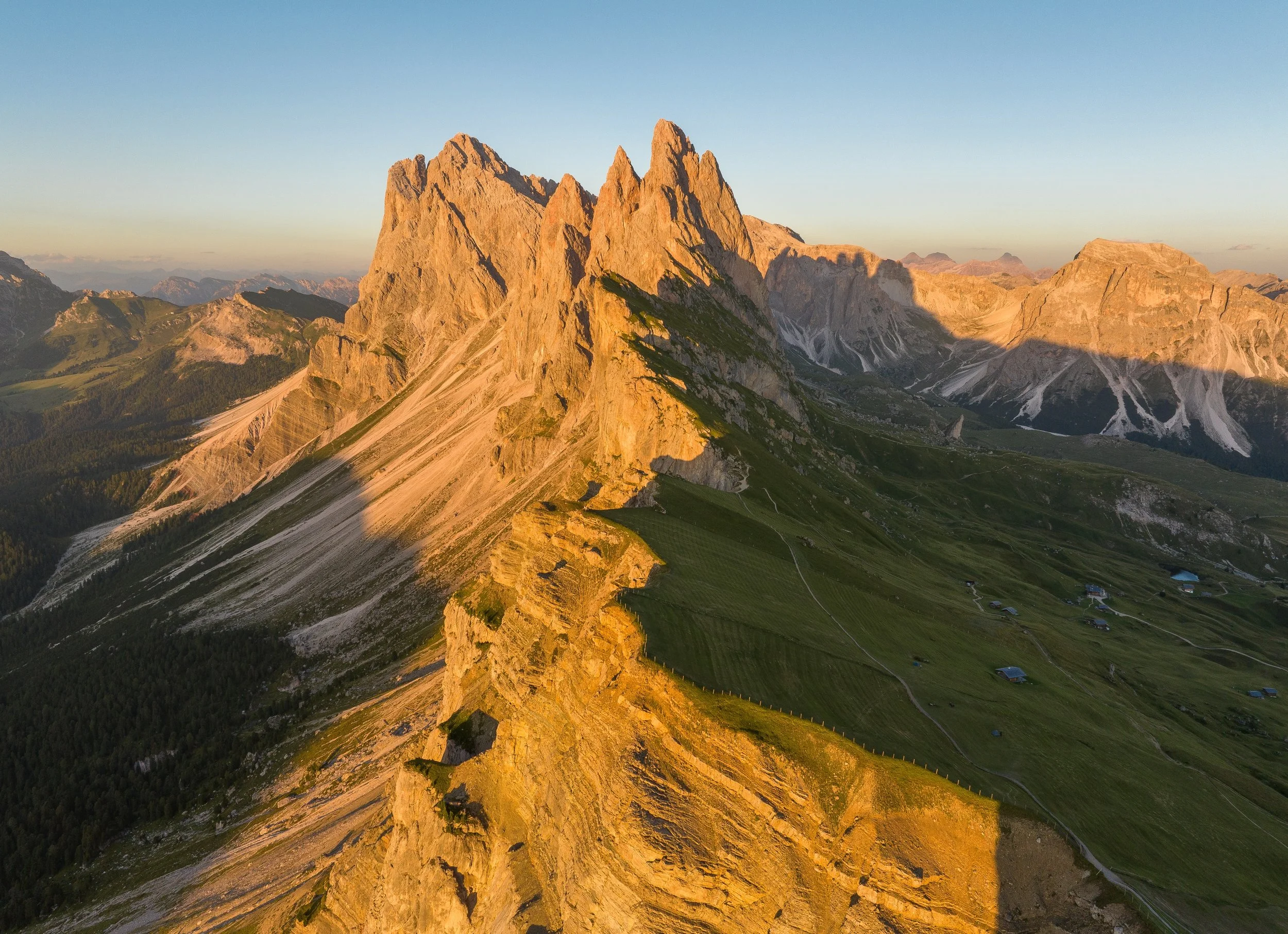
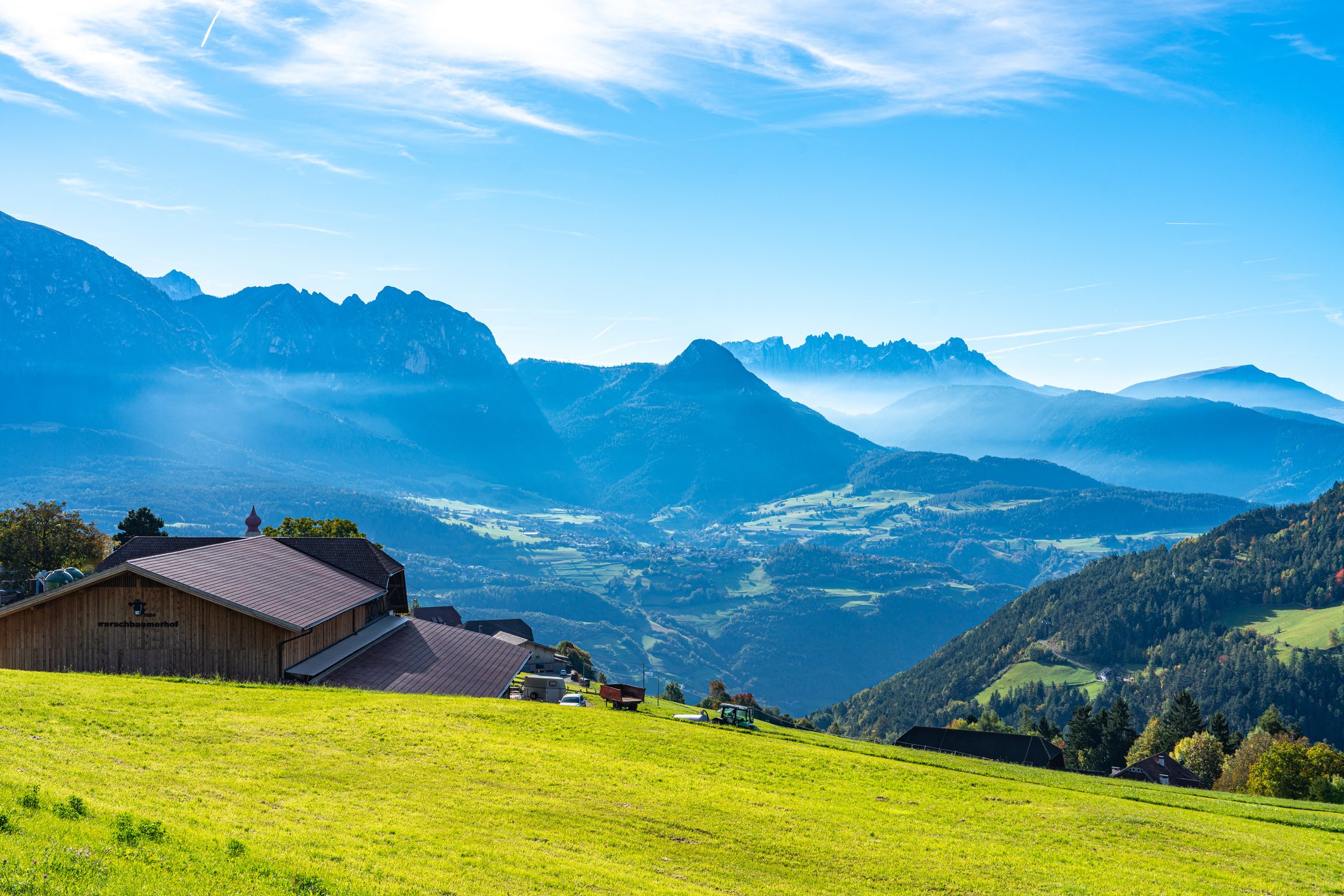
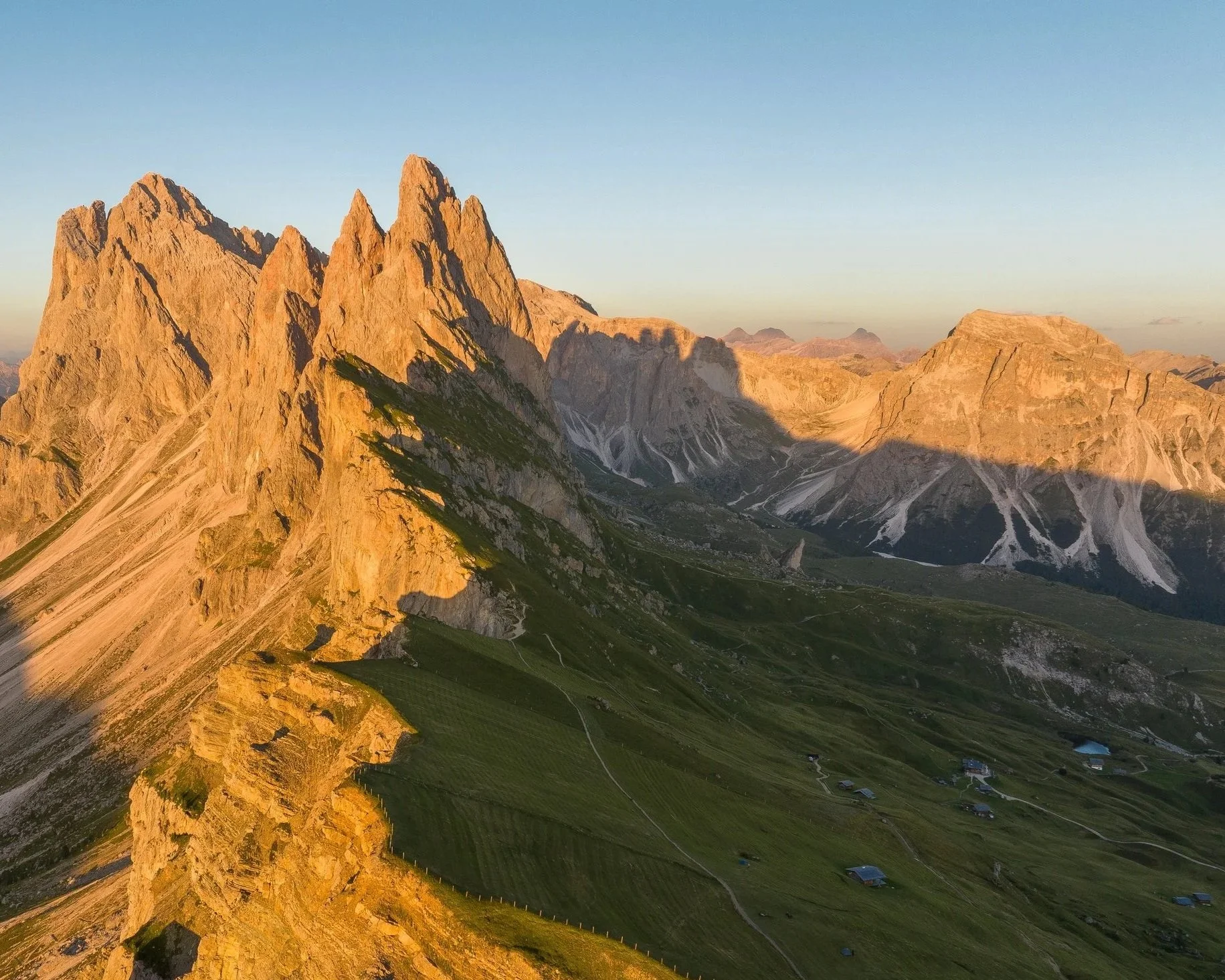
    The Val Gardena is one of the principal valleys of the Dolomites, where geography and language have combined to preserve the distinctive Ladin culture of the region. Centred on the town of Ortisei, it has long been known for its traditions of wood carving, as well as its position within a landscape shaped by dramatic geological forces. Today we depart by coach for Ortisei and begin at the Museum Gherdëina, whose collections introduce the valley’s geology, archaeology and cultural history, with particular focus on the Ladin-speaking communities of the Dolomites. We then walk to the cable car station and ascend in two stages, first by gondola from Ortisei to Furnes and then by cable car to the Seceda ridge, rising to over 2,500 metres. As we climb, forested slopes give way to open alpine pasture and finally to the exposed ridgeline, where expansive views open across the jagged peaks of the Odle Group and the wider Dolomites. Lunch is available at one of the mountain huts, followed by a gentle walk along the ridge. We return to the valley in the afternoon and continue back to Castelrotto by coach. Overnight Castelrotto (B)

  • Day 13 | Saturday 12 June
    Alpe di Siusi
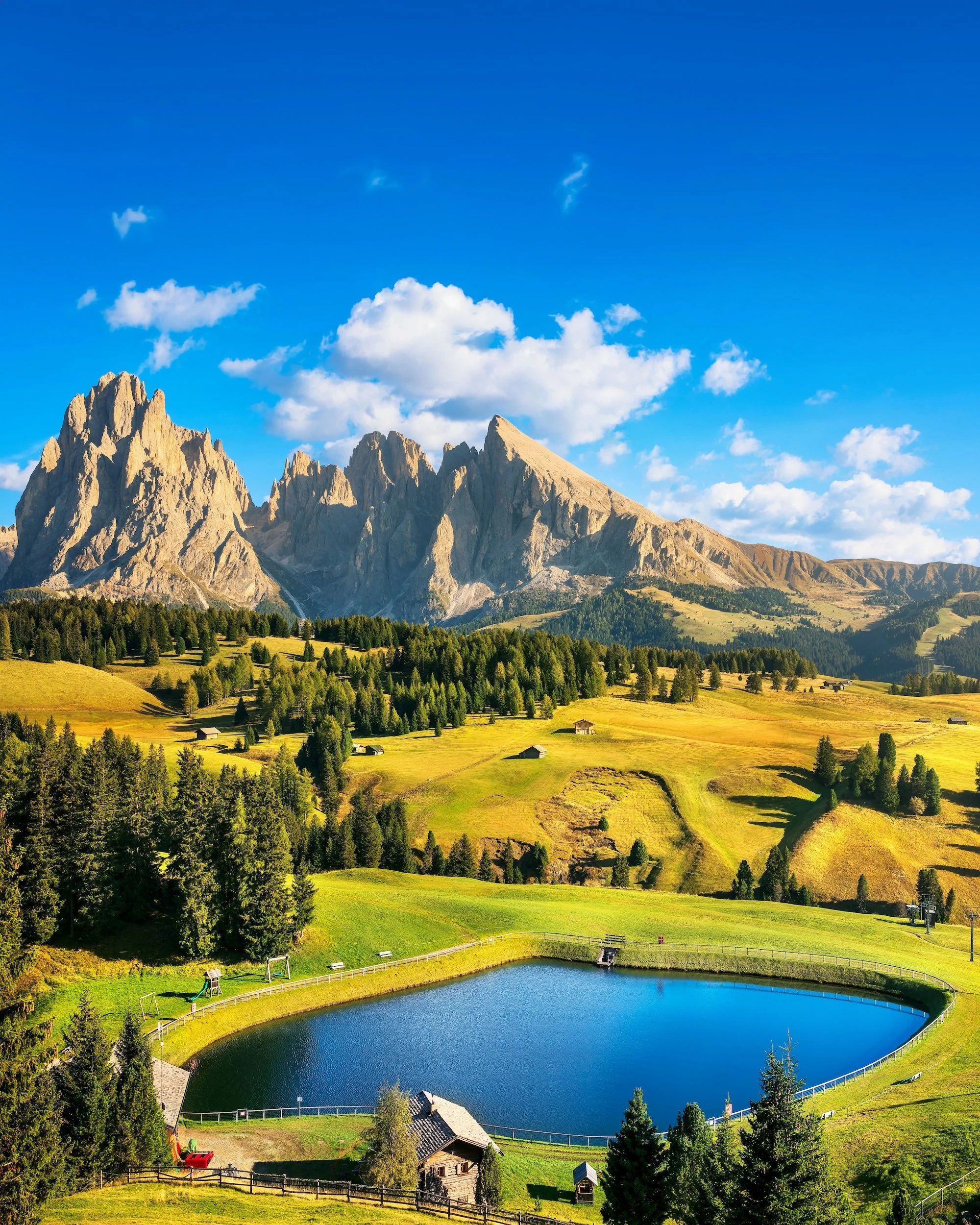
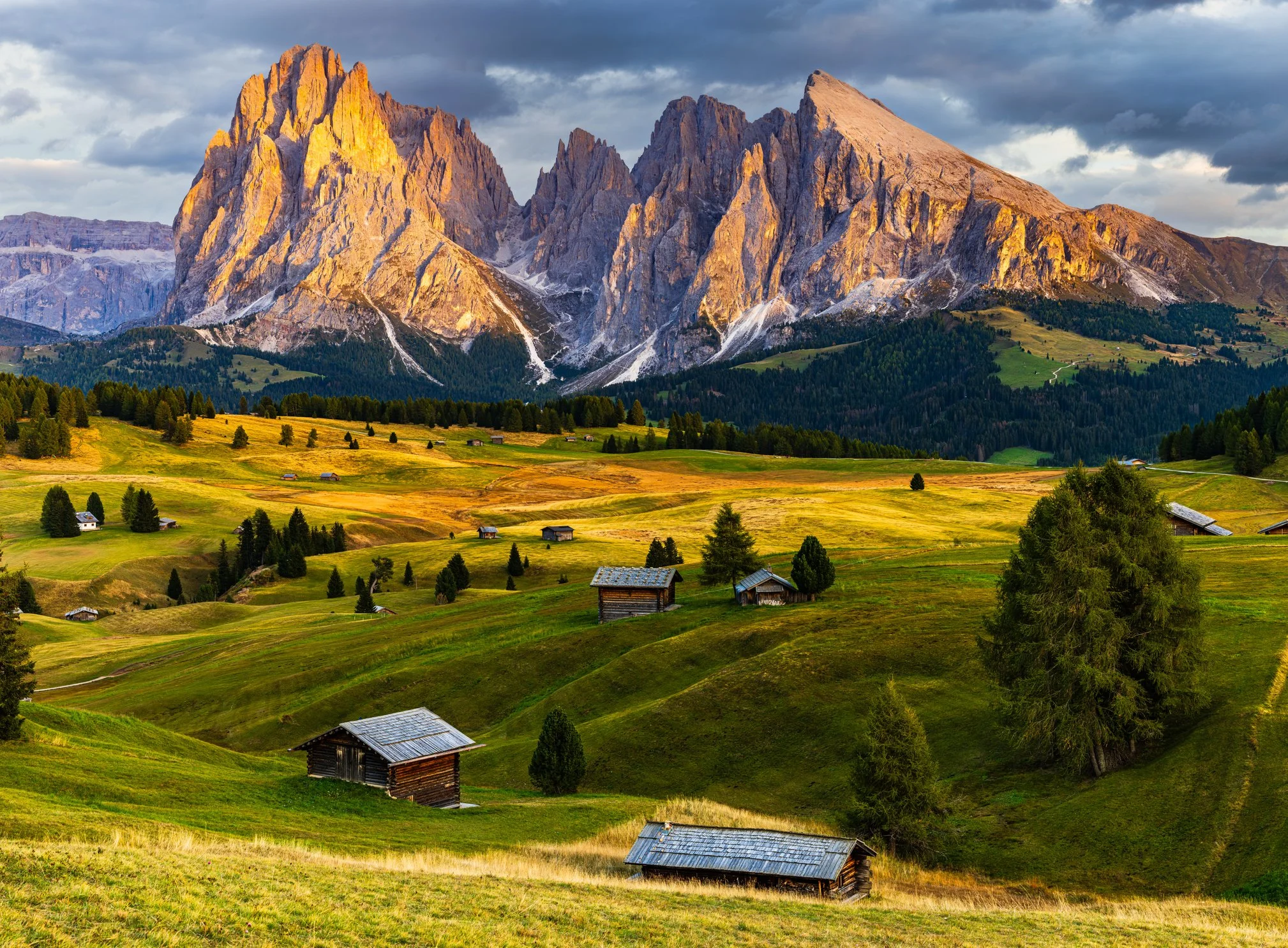
    The Alpe di Siusi – Seiser Alm in German – is the largest high-altitude alpine meadow in Europe, a broad plateau of pasture at around 1,800 metres set against the dramatic backdrop of the Schlern massif and the Dolomite peaks beyond. Used for seasonal grazing since at least the Bronze Age, it remains a working landscape, with scattered wooden farmhouses reflecting long-established alpine traditions. This morning we travel by coach to the Seis cable car station and ascend to the plateau at Compatsch. From here, we continue by horse-drawn carriage, crossing open meadows at a measured pace that reflects the rhythms of life in this environment. There is time for a lunch break at one of the traditional mountain huts, followed by the option of a short walk across the plateau or a chairlift ascent for wider views of the surrounding Dolomites. We return to Castelrotto in the afternoon, with a farewell dinner this evening enjoyed in our hotel. Overnight Castelrotto (B, D)

  • Day 14 | Sunday 13 June
    Depart to Milan

    Our journey concludes this morning as we depart Castelrotto by coach, descending from the Dolomites and crossing the Lombardy plain. Transfers are provided to Milano Centrale railway station and Milan Malpensa Airport for onward travel. (B)

Accommodation is in a carefully selected range of centrally located four and five-star hotels, chosen for their character and connection to each destination.

Tour Accommodation

tour booking

$18,620 AUD per person, twin share (land content only)
$4,280 AUD supplement for sole use of a hotel room

A $1,000 deposit is required per person to confirm your booking on tour. This deposit is non-refundable.

Hold a Place

Still deciding? We are happy to hold a tentative place for 7 days while you make your final arrangements.

Book Online

To secure your place(s) on tour, book online below with “Athena”, our virtual tour consultant.

DOWNLOAD FORM

Download a printable booking form. You can also complete the form on screen and submit via email.

your tour consultant

The consultant for this tour is Sharon Williams. For further information or to discuss the tour, please call 9235 0023 (Sydney) or 1800 639 699 (outside Sydney) or email sharon@academytravel.com.au

have you thought about?

Academy Travel is more than just a tour operator. We are also a full-service travel agency who can assist you with all aspects of your travel, including flights, transfers, pre-tour arrival, additional travel and comprehensive travel insurance.

can’t make this departure?

If these dates don't work for you, register to hear about the next tour.